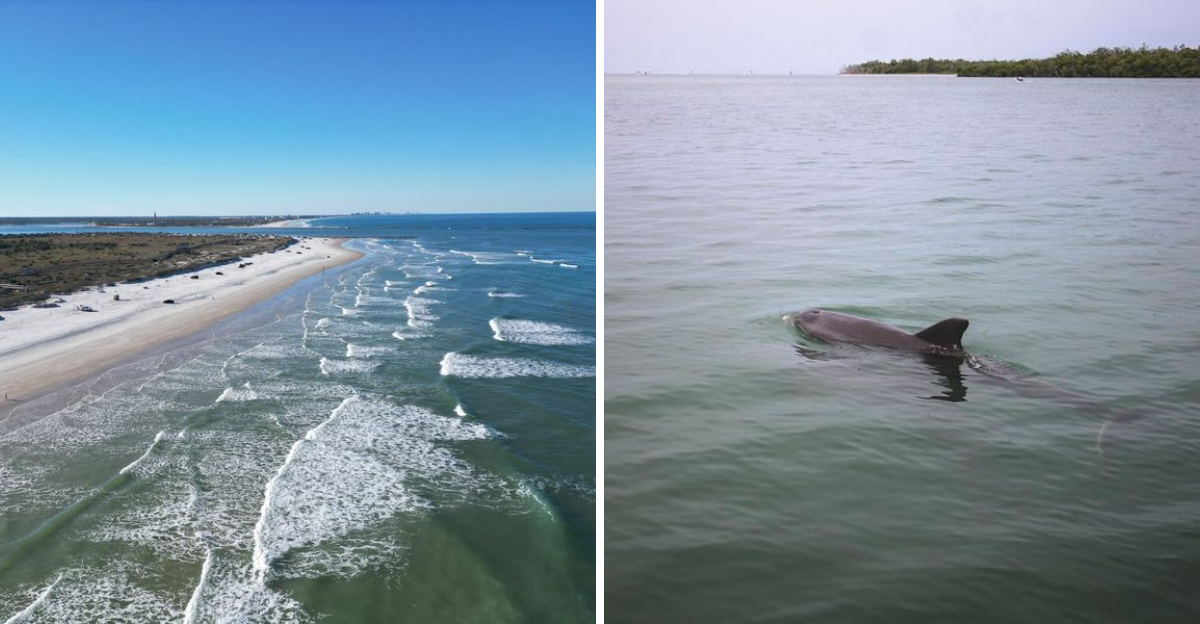
Florida has a secret that locals have known for years: you don’t need a ticket or a tour boat to see wild dolphins.
These intelligent, playful animals show up on their own terms, in their own time, at beaches and waterways all across the state.
From the Gulf Coast to the Atlantic shore, certain spots just seem to attract them naturally.
Pack your patience and your binoculars, because these 14 locations give you a real shot at a genuine wild dolphin moment.
New Smyrna Beach
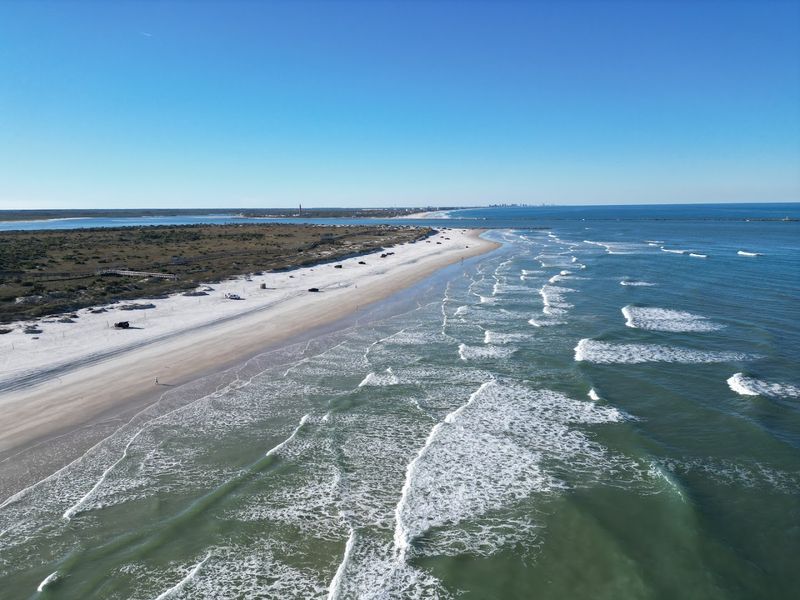
Locals who walk the beach at dawn here will tell you the same thing: the dolphins practically have a schedule. New Smyrna Beach, especially near Ponce Inlet, is one of the most reliably productive stretches of Florida’s Atlantic coast for spotting wild dolphins without any organized effort on your part.
The inlet draws fish in impressive numbers, and where fish gather, dolphins follow. Small pods often cruise just beyond the breakers, surfacing in smooth, rhythmic arcs that are easy to spot once you know what to look for.
Early morning and late afternoon are your strongest windows, when feeding activity tends to peak.
Bring polarized sunglasses to cut the glare off the water. Standing at the inlet jetty gives you an elevated vantage point that makes spotting much easier.
There’s no fee to walk the beach or stand at the jetty, which makes this one of Florida’s most accessible free wildlife experiences. Patience is your only real investment here, and most visitors find it pays off quickly.
Playalinda Beach
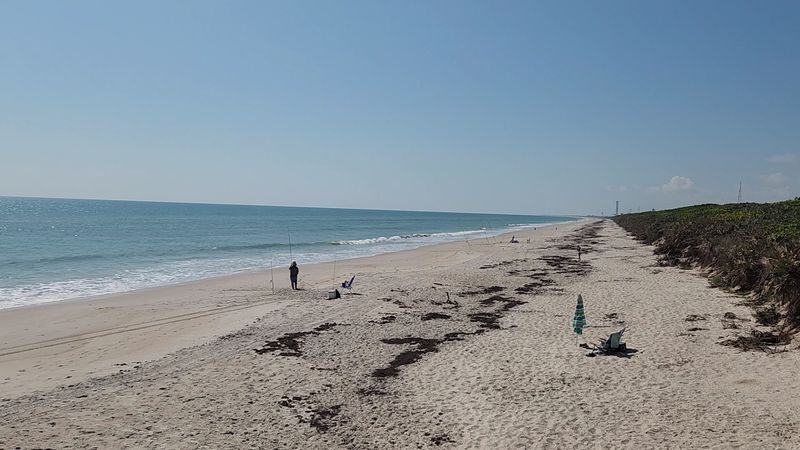
There’s something almost cinematic about standing on Playalinda Beach and watching dolphins move through the water with no hotels or condos in sight. Part of Canaveral National Seashore, this stretch of coastline is deliberately kept undeveloped, which means the wildlife here behaves more naturally than at busier tourist beaches.
Dolphins pass close to shore in small, tight pods, often undisturbed by the noise and boat traffic that pushes them farther out elsewhere. The lack of crowds seems to make them bolder, and sightings from the waterline are genuinely common.
You might spot fins breaking the surface just twenty yards out.
Getting here requires a short drive through the national seashore, and there’s a small entrance fee for the park itself. That fee, however, buys you access to miles of quiet shoreline where wildlife encounters feel earned rather than manufactured.
Weekday visits in the off-season offer the best combination of solitude and dolphin activity. Keep noise low and movements slow near the water’s edge, and you may be rewarded with a sighting that feels completely wild and unscripted.
Amelia Island
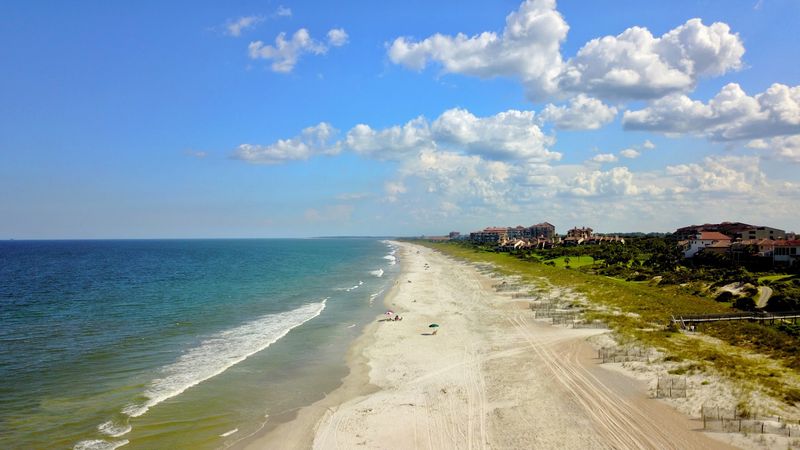
Amelia Island sits at the northeastern tip of Florida, where freshwater rivers meet the Atlantic Ocean and create a rich mixing zone that marine life absolutely loves. Near Fort Clinch State Park and the tidal inlets that cut through the island, dolphins regularly patrol shallow waters in search of fish pushed around by shifting tides.
What makes sightings here feel special is how close the action happens. Because the inlets are narrow and the water is relatively shallow, dolphins often work these channels in tight formations, corralling fish against the banks.
Watching that kind of coordinated hunting behavior from dry land is genuinely thrilling and surprisingly accessible.
The state park charges a small entrance fee, but the fishing pier and shoreline areas near the fort offer outstanding viewing angles. Sunrise visits are particularly rewarding because the water is usually calm and the light is soft, making it easier to spot fins and backs breaking the surface.
Amelia Island also has a charming historic downtown nearby, so you can pair a morning dolphin watch with a relaxed breakfast at one of the local cafes. It’s a low-key, high-reward kind of place.
Clearwater Beach
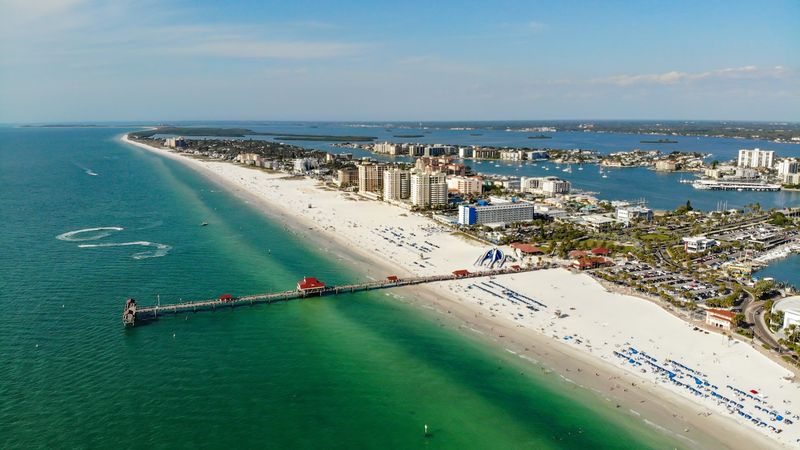
Clearwater Beach gets a lot of attention for its dolphin tour boats, but here’s what the brochures don’t always mention: you can skip the boat entirely. The Gulf waters just off Clearwater are shallow, warm, and loaded with fish year-round, which keeps a healthy dolphin population close to shore on a pretty consistent basis.
Pier 60, the long fishing pier stretching into the Gulf, is one of the best free vantage points on the entire Gulf Coast. Standing above the water gives you a clear sightline over a wide area, and dolphins frequently pass beneath or alongside the pier without any apparent concern for the humans above.
Early mornings before the beach crowds arrive offer the calmest conditions and the most reliable sightings.
The beach itself stretches for miles, and walking along the shoreline at a relaxed pace is often more productive than standing still. Dolphins tend to move parallel to the beach while feeding, so covering ground increases your chances.
Clearwater is also highly walkable and packed with food options, making it easy to build a whole day around a casual dolphin-watching morning. No reservations, no tickets, just timing and a little luck.
Destin Beach
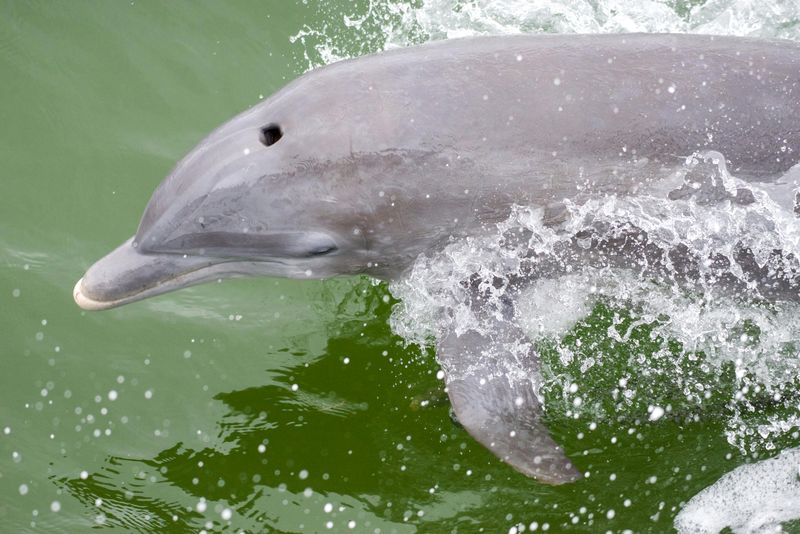
The water at Destin has a color that doesn’t look real at first glance. That distinctive emerald-green shade comes from the white quartz sand on the seafloor, and it creates some of the clearest inshore water on the entire Gulf Coast.
That clarity is great for beachgoers, but it’s even better for dolphin watching because you can often see them well before they surface.
Dolphins here tend to feed actively in the mornings, especially near the East Pass where tidal currents funnel fish through a narrow channel. Watching from the jetties at East Pass gives you an elevated position over some seriously productive water.
Small pods of bottlenose dolphins work this area regularly, and the shallow water means their dorsal fins and backs are almost always visible.
Destin’s beaches are popular in summer, so arriving early on weekday mornings gives you both the best wildlife conditions and the most peaceful experience. The Destin Harbor Boardwalk area is also worth checking, as dolphins occasionally cruise the harbor itself, especially during early morning hours when fishing boats are heading out.
The whole scene has a relaxed Panhandle energy that makes even a quiet morning without a sighting feel worthwhile.
Fort Myers Beach
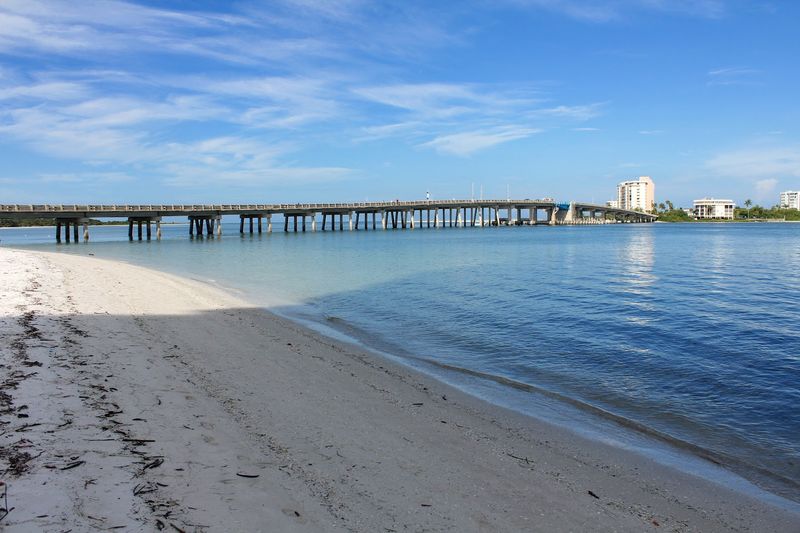
Fort Myers Beach sits alongside Estero Bay, a protected estuary that functions like a giant cafeteria for marine wildlife. The bay’s shallow, calm waters and abundant fish populations make it one of the most reliable spots in Southwest Florida to encounter wild dolphins without any organized effort.
Some days you can spot them from a dock before you’ve finished your morning coffee.
The dolphins that live and feed in Estero Bay are considered resident animals, meaning they don’t migrate away seasonally. That residency makes sightings consistently possible throughout the year rather than just during certain windows.
Kayakers and paddleboarders regularly encounter them at close range, and the experience of sharing calm water with a wild dolphin pod is genuinely hard to describe.
Several small parks and public access points along the bay offer free shoreline viewing. Lynn Hall Memorial Park on the beach side and the various boat ramps around the bay are all solid starting points.
The nearby shrimp boats that work Estero Bay are worth watching too, because dolphins have learned to follow them and pick off fish disturbed by the trawling process. It’s a fascinating behavior that turns a simple dock visit into something genuinely educational and entertaining.
Marco Island
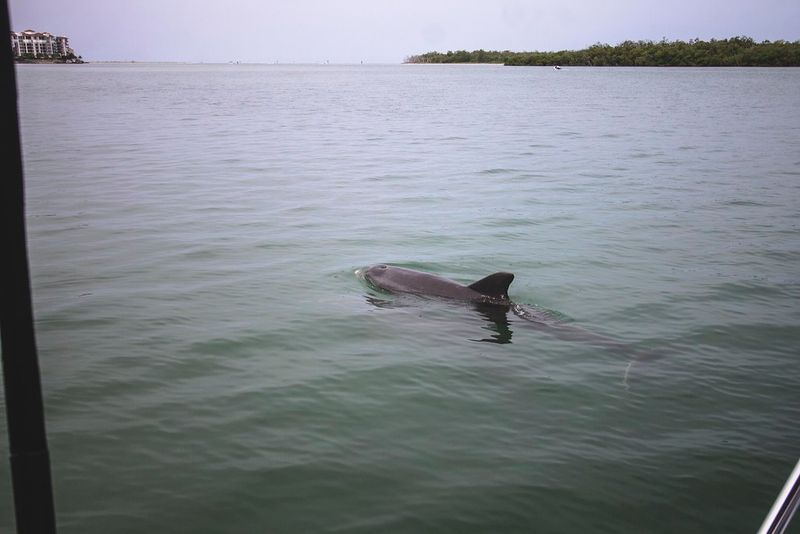
Marco Island is surrounded by a maze of shallow bays, tidal flats, and sandbars that dolphins have essentially claimed as their personal hunting grounds. Fish school heavily in these protected, sun-warmed shallows, and dolphins take full advantage by working the edges of sandbars and mangrove lines in coordinated feeding runs that are remarkable to watch from shore.
Tigertail Beach on the island’s northern end is a particularly productive viewing spot. The lagoon behind the beach and the tidal flat that extends into it attract dolphins that chase mullet and other small fish into shallow water where escape is difficult.
Watching a dolphin strand-feed or herd fish against a sandbar from just a few yards away is one of those wildlife moments that sticks with you.
The beach itself is free to access, though parking has a fee. Morning low tides tend to concentrate both fish and dolphins in the shallowest areas, making that timing ideal for sightings.
Marco Island also has a quieter, more residential feel compared to some of Florida’s louder beach towns, which means the wildlife encounters here tend to feel more intimate and less like a tourist attraction. Bring water shoes for the tidal flats and walk slowly to avoid spooking the animals.
Sanibel Island
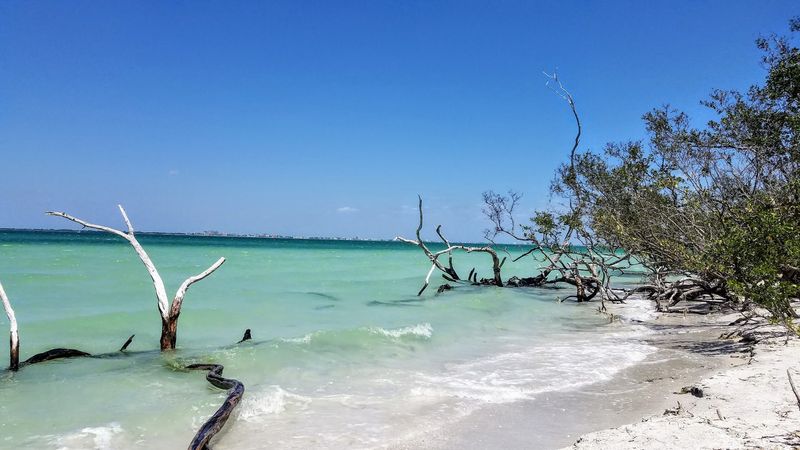
Sanibel Island is famous worldwide for its shelling, but the wildlife story here goes well beyond what washes up on the beach. The island’s position at the mouth of San Carlos Bay and its proximity to the Caloosahatchee River creates a nutrient-rich marine environment that supports a robust dolphin population year-round.
On calm mornings when the Gulf is flat and glassy, dolphin fins are almost a given along the shoreline. They tend to travel in loose groups, moving parallel to the beach in that unhurried, rolling way that makes them look like they have nowhere particular to be.
Lighthouse Beach Park at the eastern tip of the island is one of the best free spots to watch, with views of both the Gulf side and the bay side from a single location.
Sanibel’s strict development controls mean the island has retained much of its natural character, and that quietness extends to the wildlife. Dolphins here don’t seem particularly bothered by people standing calmly on the shore.
Renting a kayak from one of the island’s outfitters and paddling the bay side at dawn is an even more immersive option. Just keep a respectful distance and let the animals come to you rather than the other way around.
Captiva Island
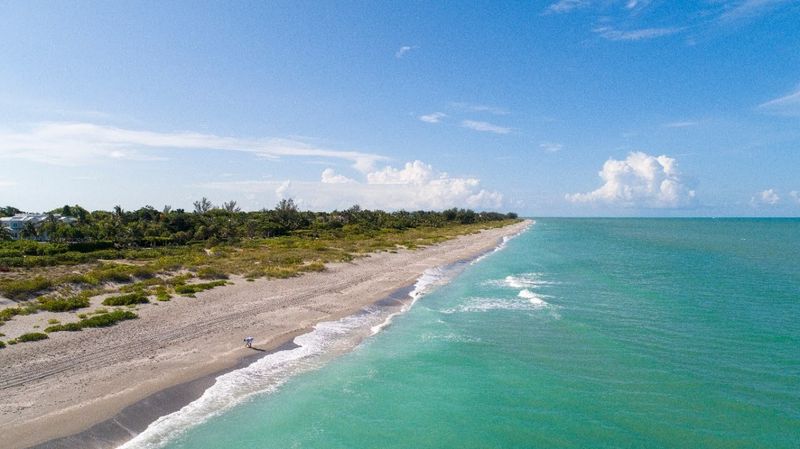
Connected to Sanibel by a short bridge, Captiva Island has a distinctly different personality. It’s smaller, quieter, and far less visited, which gives the whole place a tucked-away quality that wildlife seems to appreciate just as much as people do.
The beaches here are narrower and more intimate, and dolphin sightings feel personal rather than performative.
The shallow Gulf waters off Captiva’s western shore are a reliable feeding corridor for resident dolphins, especially during the cooler months when fish behavior becomes more predictable. Small pods work the nearshore zone in the early morning, and because foot traffic on the beach is light, they don’t get pushed offshore the way they might at busier spots.
South Seas Island Resort occupies much of the northern end of the island, but the public beaches on the southern end are accessible and peaceful. Walking the beach at low tide in the early morning is the simplest and most effective strategy here.
The combination of calm water, minimal crowds, and a genuinely unhurried atmosphere makes Captiva one of those places where a dolphin sighting feels like a gift rather than a goal. If you happen to miss them on the Gulf side, try the Pine Island Sound side for a different angle on the same resident population.
Indian River Lagoon
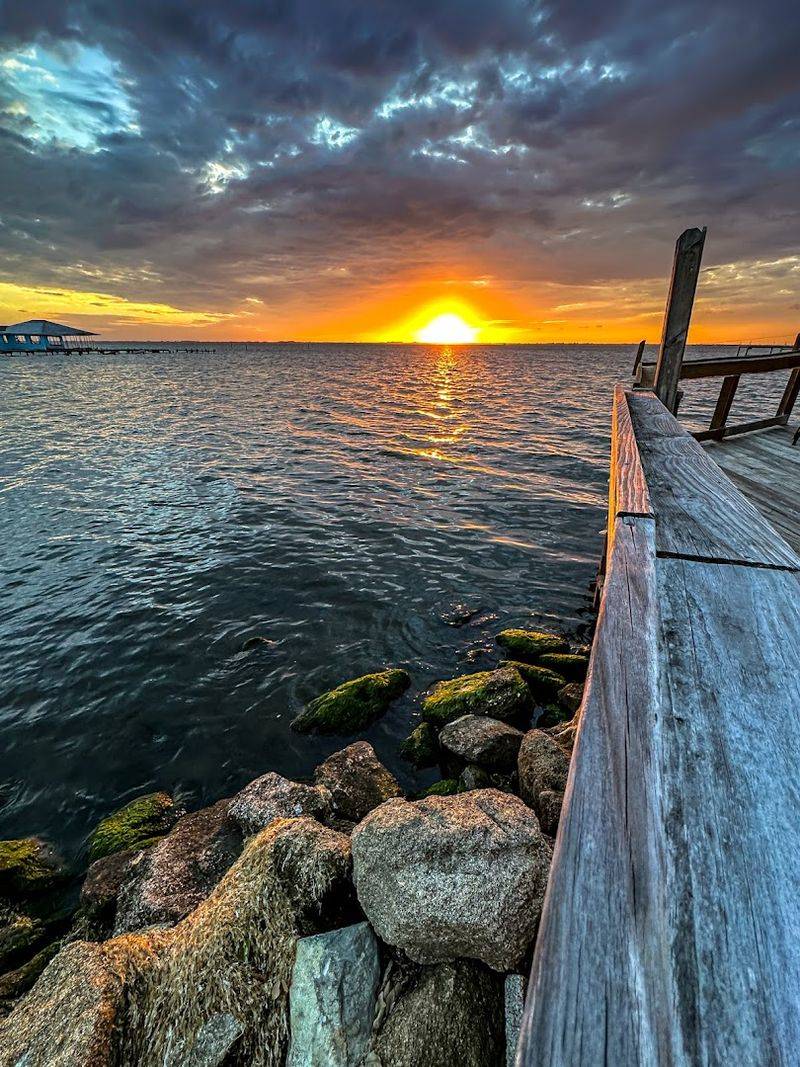
Scientists who study marine mammals consider Indian River Lagoon one of the most important dolphin habitats in the entire southeastern United States. Stretching roughly 156 miles along Florida’s Atlantic coast, this shallow estuary is home to a resident population of several hundred bottlenose dolphins that rarely if ever leave.
That residency makes sightings from shore not just possible but genuinely routine.
The lagoon borders multiple towns and cities, and waterfront parks, fishing piers, and boardwalks give public access to its edges at dozens of points. Spots near Sebastian Inlet, Vero Beach’s riverside parks, and the Titusville waterfront are all consistently productive.
Dolphins here are accustomed to human presence and often surface close to observation points without any apparent concern.
What makes Indian River Lagoon particularly fascinating is the ecological complexity surrounding every sighting. The lagoon supports over 4,300 species of plants and animals, so a dolphin hunting near a mangrove edge is part of an intricate food web happening right in front of you.
Bring a field guide and a pair of binoculars and you’ll leave with far more than just a dolphin photo. Early morning visits offer the calmest water and the best light for watching surface activity across the lagoon’s wide, open shallows.
Jupiter Inlet
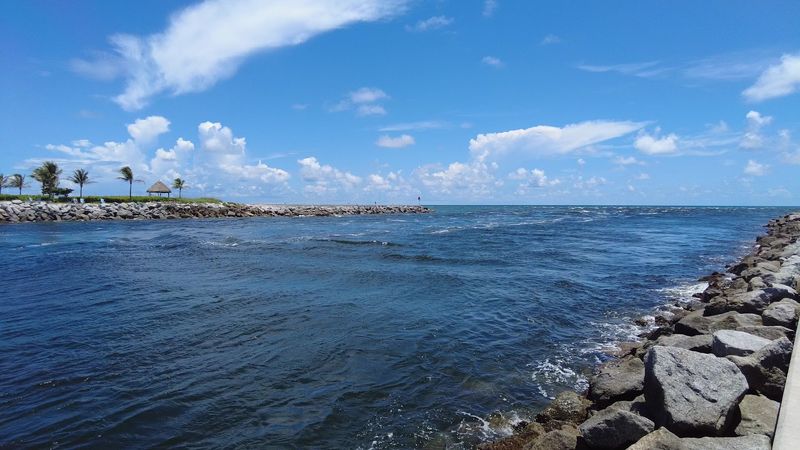
Jupiter Inlet has earned a strong reputation among local wildlife watchers, and the reason is simple: the physics of the inlet work in the dolphin’s favor. Tidal currents funnel water through the narrow opening between the jetties, concentrating baitfish in a way that dolphins have learned to exploit with impressive efficiency.
On an incoming tide especially, the action can be almost non-stop.
Standing on either the north or south jetty puts you directly above the most productive water. Dolphins work the current edges and the turbulent zones where fast water meets slower water, and they surface frequently enough that you rarely have to wait long between glimpses.
The inlet also connects to the Loxahatchee River, and dolphins sometimes push upstream into the river during feeding frenzies.
Jupiter Inlet Lighthouse Outstanding Natural Area manages the land around the inlet and offers free public access to the jetty and surrounding shoreline. The lighthouse itself is worth a visit for the elevated view it provides over the inlet and adjacent ocean.
Local anglers fish the jetty daily and have an encyclopedic knowledge of dolphin activity here, so striking up a conversation with someone who’s been fishing there for years can give you insights that no guidebook captures. Mornings after a strong tide are the gold standard timing.
Lemon Bay
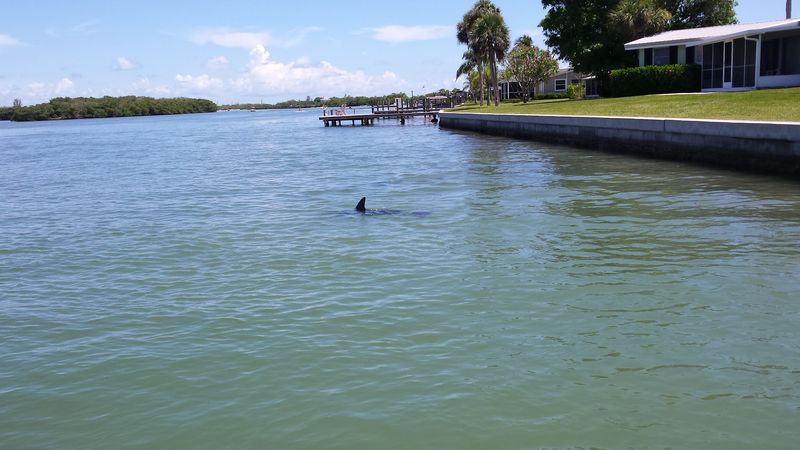
Lemon Bay doesn’t get the same tourist attention as some of Florida’s flashier coastal destinations, and that’s exactly what makes it worth knowing about. This quiet, protected bay runs between Englewood and Cape Haze on the Gulf Coast, and its calm, shallow waters are a consistent feeding ground for a local dolphin population that treats the bay like a private pantry.
The combination of seagrass beds, mangrove edges, and shallow tidal flats creates ideal conditions for the mullet, snook, and other fish that dolphins prefer. Watching a dolphin work the edge of a mangrove line, using the roots as a natural barrier to trap fish, is one of the more elegant wildlife behaviors you’ll ever see from a public shoreline.
Lemon Bay Park and Preserve in Englewood offers free access to the bayshore with walking paths that parallel the water for a good stretch. The park is quiet and well-maintained, and the viewing conditions from its shoreline are excellent during calm mornings.
Kayak rentals are available nearby for those who want to get closer to the mangrove edges where dolphin activity tends to concentrate. The bay’s protected status keeps boat traffic relatively light, which means the dolphins here behave more naturally than in heavily trafficked waterways.
It’s a genuinely underrated spot.
Ten Thousand Islands
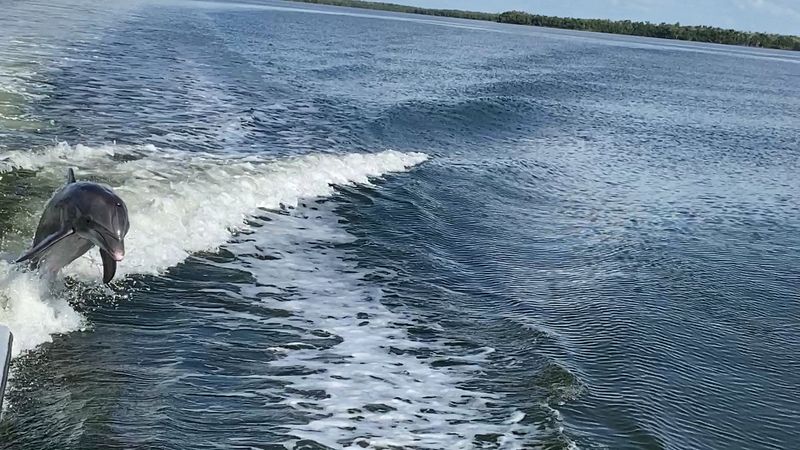
The name alone tells you something about the scale of this place. Ten Thousand Islands is a vast, remote network of mangrove islands, tidal channels, and open bays that forms the northern edge of Everglades National Park.
It’s one of the wildest and least-visited coastal environments in the continental United States, and the marine life here reflects that undisturbed quality in every way.
Dolphins navigate these channels and open water areas with obvious familiarity, using the maze of islands to their advantage when hunting. Because the area is so remote and boat traffic is relatively sparse, the dolphins here often behave in ways you simply won’t see in more developed coastal areas.
Watching a pod work a tidal channel from a kayak or canoe is the kind of experience that reframes your sense of what Florida actually is.
Access points near Goodland and Everglades City serve as launching pads for paddlers and small boat users. Some shoreline and dock viewing is possible near Goodland, but the real reward here comes from getting on the water.
Ranger-led programs through Everglades National Park occasionally include paddling routes through prime dolphin habitat. The remoteness requires preparation, including water, sunscreen, navigation tools, and a healthy respect for tidal currents, but the payoff is unlike anywhere else on this list.
Shell Key Preserve
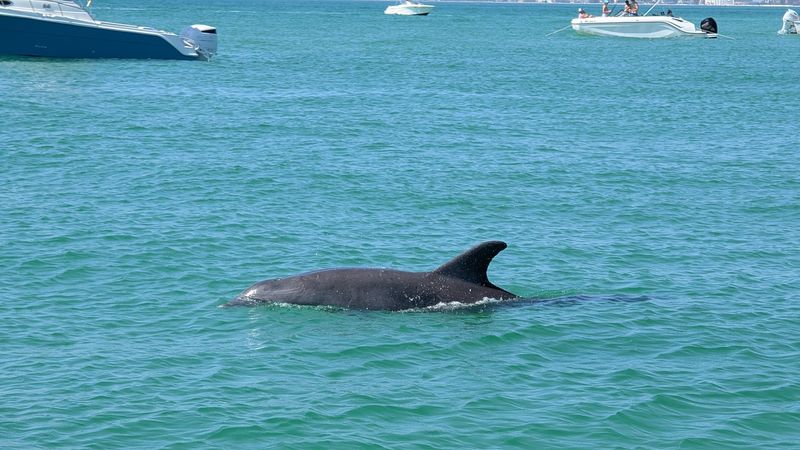
Shell Key Preserve is the kind of place that feels like it belongs to a different era of Florida. This undeveloped barrier island sits just offshore from the Pinellas County coast near St. Petersburg, and because it has no permanent structures, no roads, and no commercial activity, the wildlife around it operates on its own schedule entirely.
Dolphins are a consistent presence in the surrounding waters, particularly during the quieter shoulder seasons.
The clear, shallow water around the island makes dolphin activity easy to observe from the shoreline. Small pods move through the area feeding on fish concentrated near the island’s sandy edges and the seagrass beds that extend into the surrounding flats.
Sightings from the beach require no special equipment beyond your own eyes and a bit of patience.
Reaching Shell Key requires a short boat ride, either by private vessel, kayak, or the seasonal ferry that operates from Fort De Soto Park. The ferry option makes access straightforward even without your own watercraft.
Once you’re there, the absence of crowds and development creates a stillness that amplifies every wildlife encounter. A dolphin surfacing fifty yards offshore feels like a completely different event here than it would at a busy beach.
Pack a picnic, plan for a half-day, and let the island’s unhurried pace work on you. You won’t regret the trip.