At Leonard Harrison State Park in Wellsboro, Pennsylvania, the road itself feels like part of the landscape rather than simply a path through it.
The approach along the eastern rim slowly builds tension through forested curves, sudden elevation changes, and unforgettable views over Pine Creek Gorge.
What makes this route exceptional is not only what appears beyond the windshield, but the way each mile gradually changes the mood inside the car.
By the time the destination finally comes into view, that quiet sense of anticipation gives way to the immense panorama of Leonard Harrison State Park itself.
Yet the spectacular scenery of Pennsylvania’s Grand Canyon is only the beginning of the experience.
The real depth of this place reveals itself after the engine is turned off, when the pavement ends and the trails begin descending toward the heart of the gorge below.
The road before the canyon appears
Long before the gorge comes into view, the approach creates a mood that feels unusually deliberate.
The pavement threads through tall hardwoods, and each bend seems to hold something back, as if the landscape understands the power of timing.
Instead of offering instant drama, the drive builds through restraint, using narrow glimpses of sky, darker bands of shade, and the faint sense that the ground is gradually falling away somewhere beyond the trees.
Traffic rarely disturbs that slow accumulation of expectation, so engine noise, tire hum, and wind moving across the windshield become part of the experience.
Cool air presses through cracked windows with the scent of leaf litter, damp bark, and distant water that cannot yet be seen.
By the time the first true opening appears, the road has already transformed the arrival into something cinematic.
The anticipation builds gradually, making the final reveal feel even more powerful.
Quiet Overlooks Above Pennsylvania’s Grand Canyon
Standing near the rim creates the kind of silence that immediately changes the pace of the day.
Far below, the canyon floor disappears into layers of dense forest while long ridges fade softly into the distance beneath shifting light and drifting cloud shadow.
The overlooks feel powerful not because they are crowded with attractions or dramatic structures, but because the landscape itself carries enormous visual weight without needing embellishment.
Wind rises steadily from the gorge, bringing cool air scented with pine, damp stone, and wet earth, while the scale of the cliffs makes ordinary conversation seem quieter and less important.
During morning hours, fog often settles deep inside the canyon, hiding entire sections beneath pale mist before sunlight gradually reveals the terrain piece by piece.
Afternoon changes the atmosphere again, sharpening colors across the trees and exposing the full depth of the valley walls.
By evening, shadows begin filling the lower sections while warm light touches the upper ridges, creating a contrast that makes the canyon appear even larger.
Few places in Pennsylvania combine openness, stillness, and natural scale with such consistency from sunrise until dusk.
Forest Trails That Keep the Canyon Close
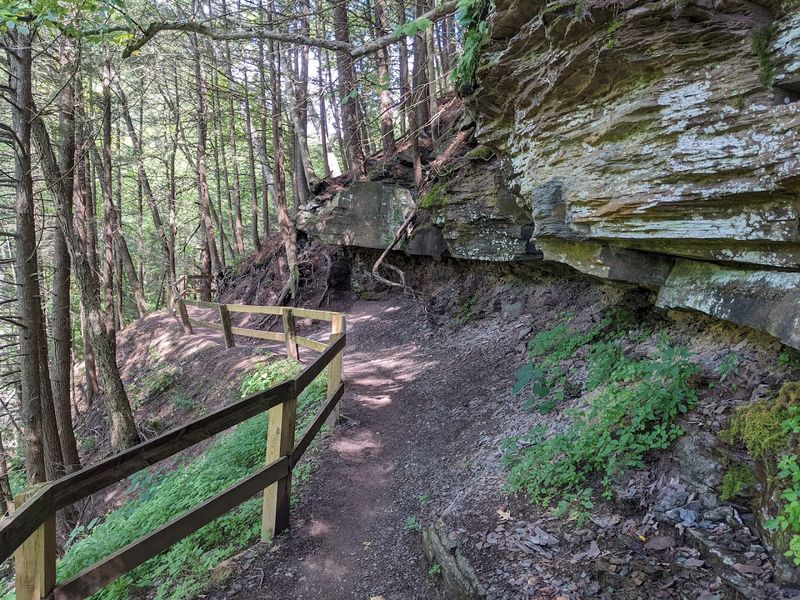
Even away from the main overlooks, the landscape never loses its sense of scale.
Trails move through dense forest where tall hardwoods block much of the sky, yet the presence of the canyon always feels nearby through sudden openings between trees and the constant movement of cool air rising from below.
Roots twist across the ground, fallen leaves soften footsteps, and long stretches of shade create a calm atmosphere that feels completely separated from highways, towns, and daily noise.
Instead of dramatic elevation changes at every moment, the paths build tension gradually, allowing the terrain to reveal itself through small details rather than immediate spectacle.
Ferns crowd the edges after rain, moss darkens rocks beside the trail, and distant bird calls echo softly through the woods without disturbing the stillness.
During autumn, scattered leaves drift continuously through the forest, adding motion even when the air feels completely still.
Summer brings a heavier canopy and deeper greens, while colder months expose longer views through bare branches that make the cliffs appear sharper and more severe.
The result feels immersive without becoming overwhelming, giving the park a rhythm that encourages slower movement and longer attention.
Open Views From the Canyon Rim
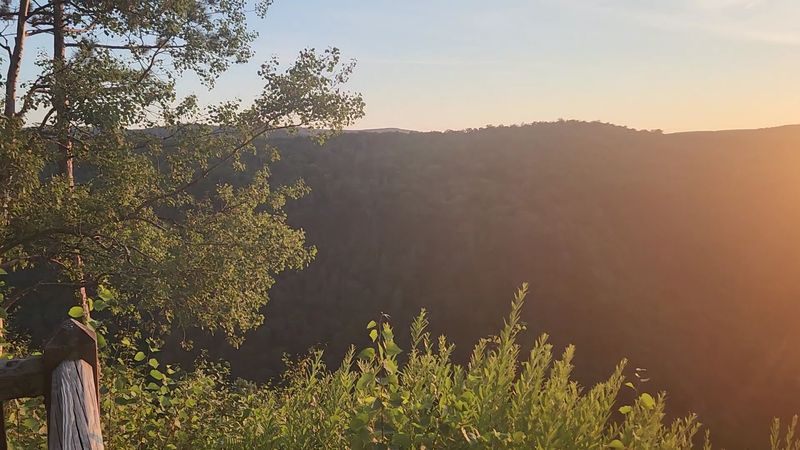
Certain sections near the rim open so suddenly that the entire scale of the canyon feels almost disorienting at first glance.
Dense forest gives way to enormous uninterrupted distance, revealing long ridges layered one behind another beneath constantly shifting skies.
The elevation becomes impossible to ignore here. Looking downward reveals steep slopes dropping sharply toward the valley floor where Pine Creek cuts quietly through the center of the gorge far below.
Sunlight moves unevenly across the terrain, leaving some sections glowing while others remain buried beneath cool shadow.
Birds often glide at eye level along rising air currents near the cliffs, making the overlooks feel even higher above the landscape.
Benches placed near the edge encourage people to stay longer than expected, especially once the eye begins noticing smaller details hidden within the vastness of the view.
Narrow tree lines, exposed stone, and winding sections of water slowly emerge from the distance the longer the canyon is observed.
Pine Creek Flowing Through the Gorge Below
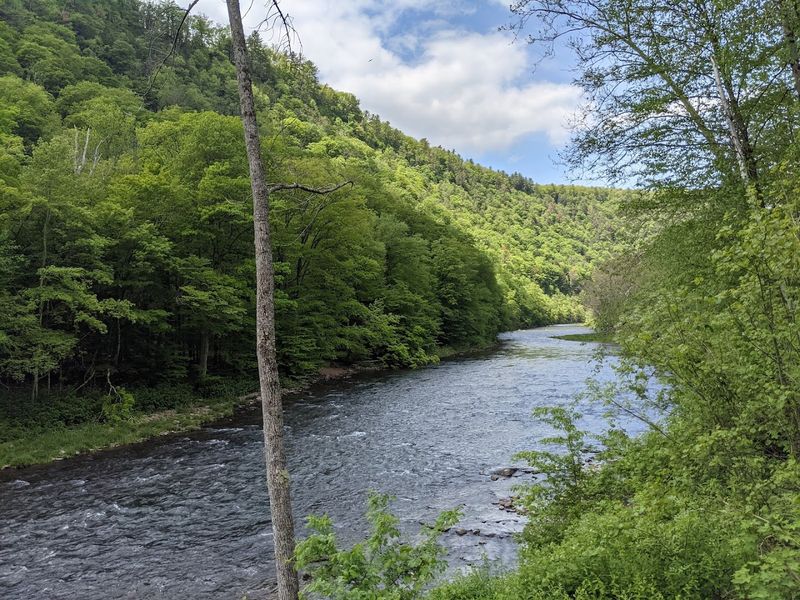
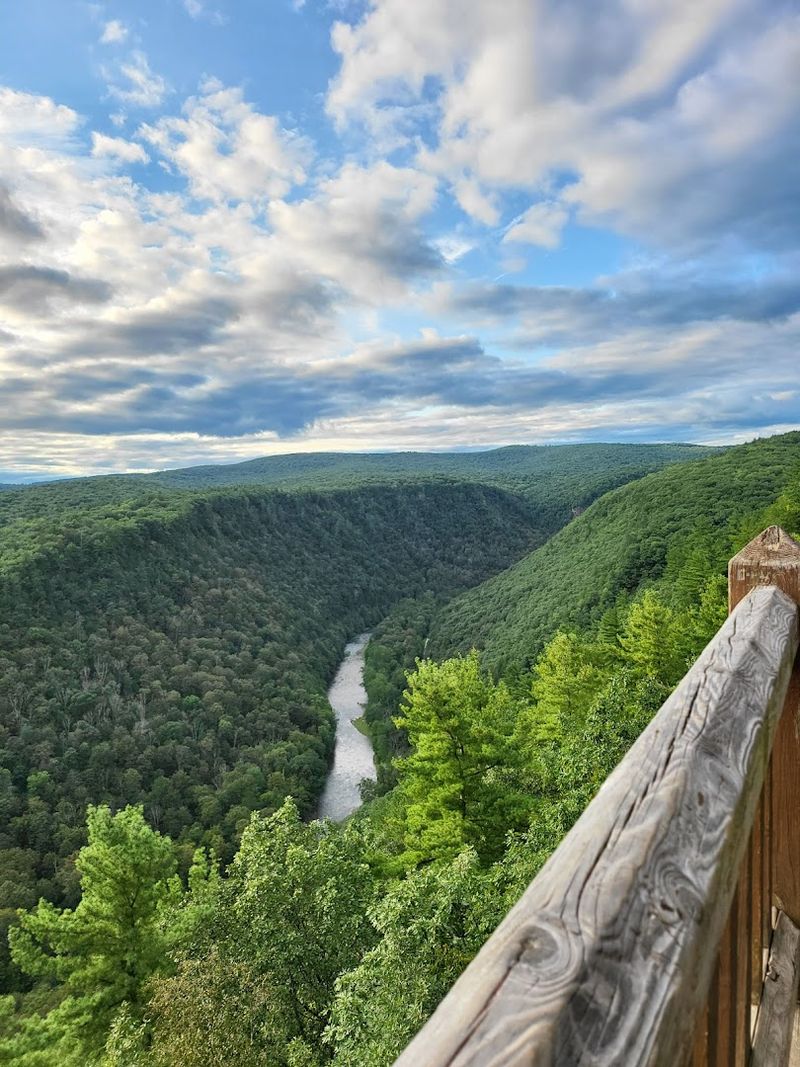
From most overlooks, Pine Creek appears almost surprisingly small against the enormous scale of the canyon surrounding it.
The water cuts through the valley floor in soft curves that become easier to notice the longer the eye follows the landscape into the distance.
Bright sunlight sometimes turns sections of the creek silver, while cloudy weather blends it into darker tones beneath the forest canopy.
The contrast creates a strong sense of depth across the gorge because the eye constantly shifts between the massive ridges above and the narrow ribbon of water far below.
Certain viewing areas provide clearer angles toward the creek, especially where gaps between trees open wider along the rim.
From those points, movement becomes part of the scenery.
Reflections flicker across the surface, shadows drift slowly over the valley, and the winding shape of the water helps guide attention through the entire canyon.
Rather than dominating the landscape, the creek quietly anchors it, giving the immense space below a sense of flow and direction that makes the panorama feel more complete.
Steep Cliffs and Layered Rock Walls
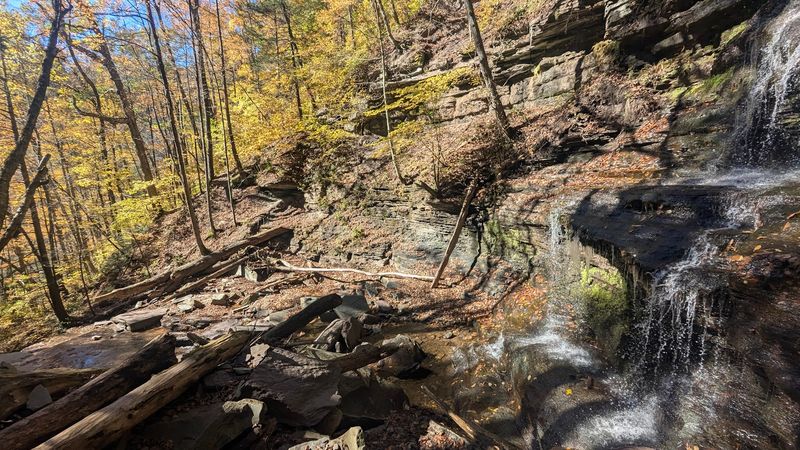
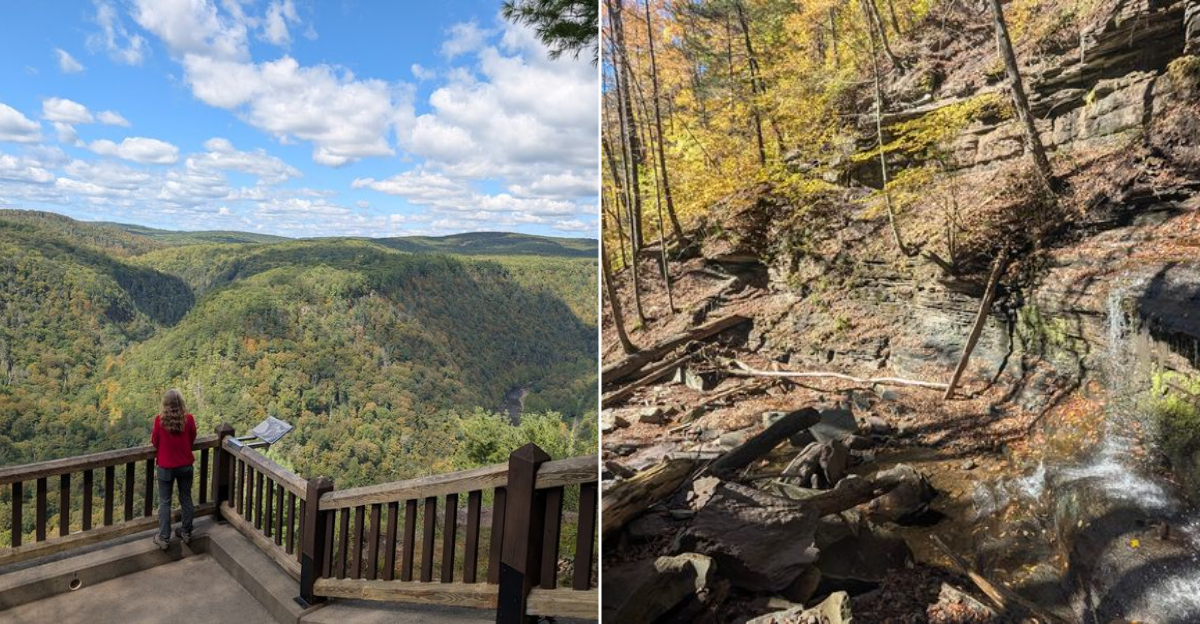
Large rock formations scattered throughout the park give the landscape a rougher and more rugged character than many visitors expect.
Some sections of the canyon wall appear smooth from a distance, while others break apart into jagged ledges and uneven layers that catch sunlight differently throughout the day.
From the overlooks, the terrain feels less polished and more raw, especially where exposed stone interrupts the endless stretches of forest below.
Small patches of vegetation cling to narrow cracks in the cliffs, creating sharp contrasts between dark rock and bright green growth during warmer months.
After storms, moisture settles across the stone surfaces and deepens the texture of the canyon walls, making shadows appear heavier and more dramatic.
Cooler air gathers near these rocky sections, especially during morning hours when sunlight reaches the cliffs unevenly and leaves parts of the gorge hidden beneath shade.
The combination of exposed stone, dense forest, and enormous elevation changes gives the park a stronger sense of wilderness than many scenic overlooks across the state.
Wooden Viewing Platforms Above the Valley
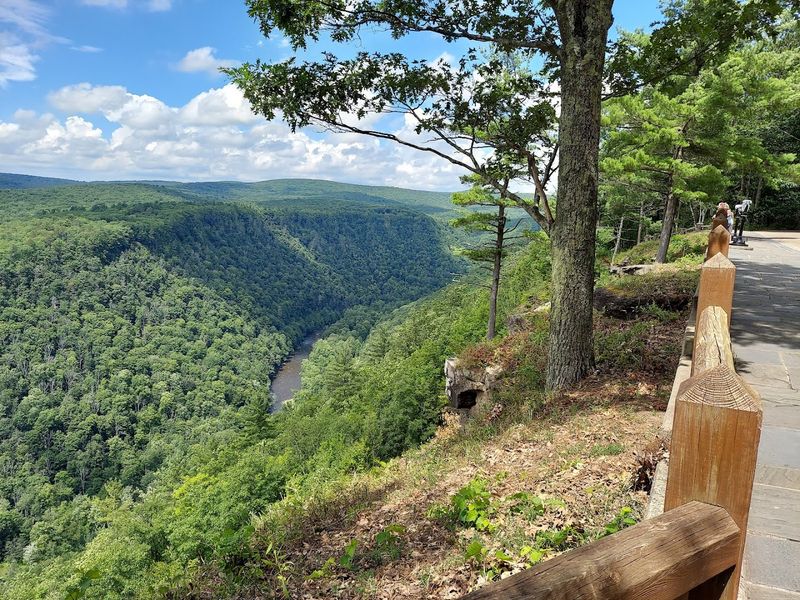
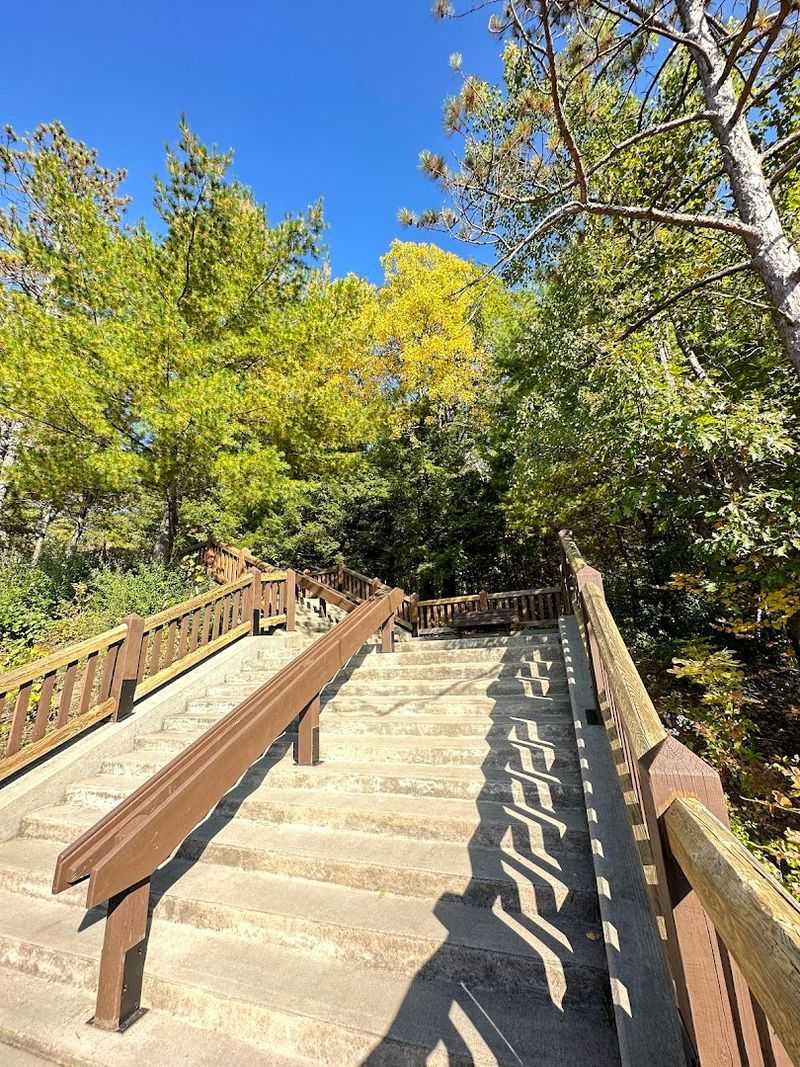
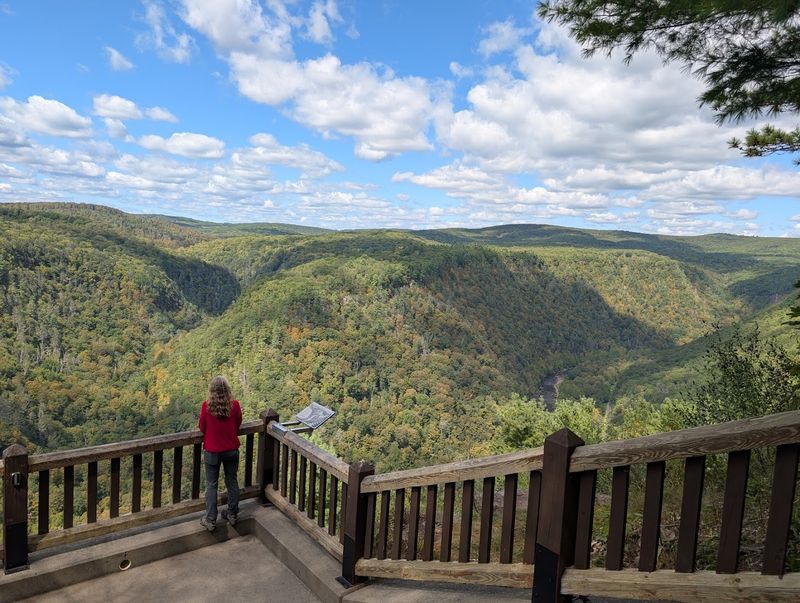
Several wooden viewing platforms extend outward near the rim, giving visitors a direct and uninterrupted look across the canyon.
Unlike crowded observation towers or enclosed scenic structures, these areas remain simple and open, which makes the surrounding landscape feel even larger.
Railings frame enormous stretches of forested ridges while the valley floor sits far below beneath layers of shadow and shifting sunlight.
During windy afternoons, the platforms creak softly beneath footsteps as cold air rises from the gorge and moves steadily across the overlook.
Cameras lower quickly here because the experience becomes less about capturing a perfect image and more about standing still long enough to absorb the scale of the scenery.
Early morning often leaves the wood damp with condensation, while autumn covers corners of the platforms in scattered leaves blown upward from the canyon below.
Certain overlooks face directly toward the broadest sections of the gorge, allowing the terrain to unfold in long uninterrupted lines that seem to continue endlessly into the distance.
Picnic Areas Surrounded by Endless Forest
A few picnic tables sit surprisingly close to the canyon rim, placed beneath tall trees that filter sunlight into scattered patches across the ground.
Coolers, coffee cups, and backpacks rest quietly beside railings while the forest stretches outward in every direction beyond the clearing.
The setting feels unusually calm for such a dramatic landscape.
Instead of loud crowds and constant movement, most people lower their voices naturally after arriving, as though the size of the canyon changes the mood without needing to demand it.
Fresh air carries the scent of pine needles, dry wood, and soil warmed by sunlight beneath the trees.
A simple lunch here feels different because the surroundings constantly pull attention outward toward the ridges and distant valleys.
Children wander toward the overlooks, cameras remain resting on tables between photographs, and long pauses settle naturally into conversation.
Even ordinary moments seem slower in a place where the horizon remains visible through openings in the forest for nearly the entire afternoon.