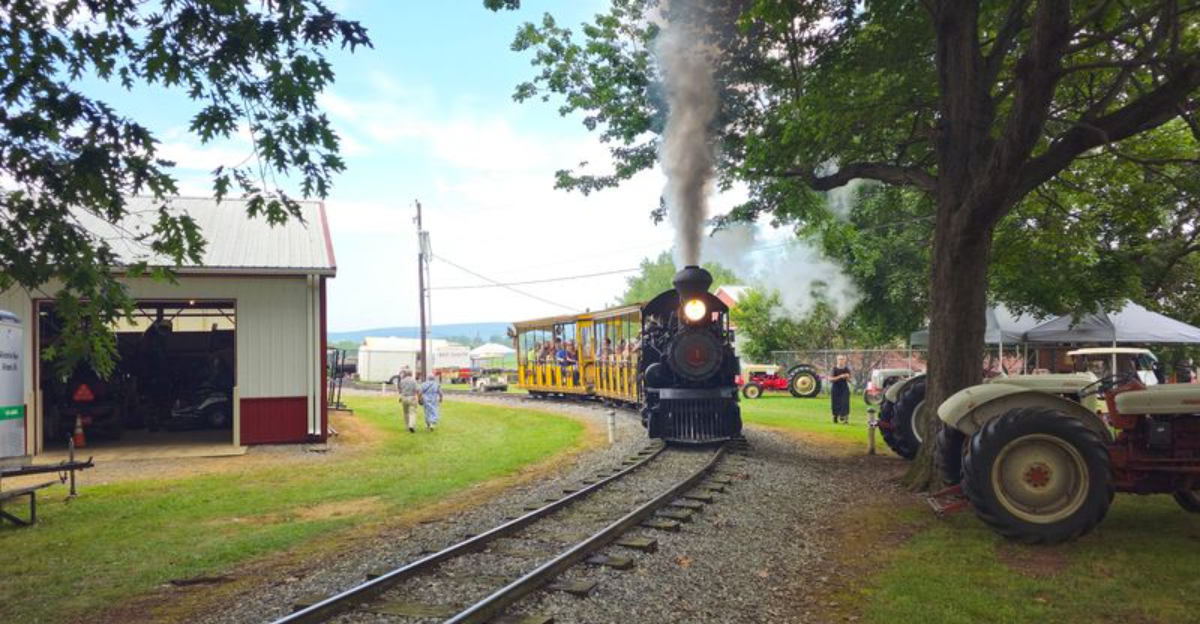
Deep in Pennsylvania Dutch Country, something extraordinary happens when colossal machines from America’s industrial past fire up their boilers and spring back to life. The Rough & Tumble Engineers Historical Association in Kinzers transforms 33 acres into a living museum where century-old steam engines don’t just sit behind glass—they rumble, hiss, and actually work.
Volunteers who’ve mastered forgotten skills demonstrate how these mechanical giants once powered everything from farms to factories, giving visitors a chance to experience history with all their senses. Whether you’re a history buff, machinery enthusiast, or simply curious about how things worked before electricity, this remarkable place offers an unforgettable journey into America’s steam-powered heritage.
Massive Steam Traction Engines Thunder Across the Fields
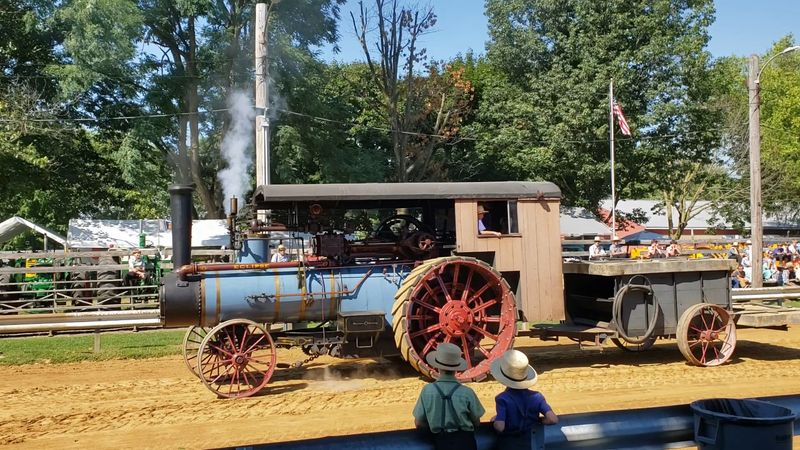
Picture a locomotive that left its tracks and learned to roam free across open fields. Steam traction engines are exactly that—mobile powerhouses that could haul loads, plow fields, or belt up to other machines to run them.
Some of these beasts weigh over 20 tons and tower more than 12 feet tall.
When you see one of these giants firing up at Rough & Tumble, the ground actually vibrates beneath your feet. Black smoke pours from the tall stack as the engineer builds pressure in the massive boiler.
The rhythmic chuffing sound and the smell of coal smoke transport you straight back to the 1800s when these machines revolutionized farming.
What makes this place special is that you don’t just look at these engines behind velvet ropes. They actually drive around the grounds, pulling equipment and demonstrating real work.
Volunteers who’ve spent years learning the craft explain how to fire the boiler, read the gauges, and control these temperamental machines.
During special events, you might see 30 or more traction engines lined up side by side, creating a spectacular display of American industrial might. Kids especially love watching the enormous flywheels spin and hearing the distinctive steam whistle that could be heard for miles across farmland.
The Famous Threshermen’s Reunion Draws Thousands Each August
Every August for over 70 years, something magical happens in Kinzers. The Threshermen’s Reunion transforms this quiet Lancaster County location into one of the most impressive antique machinery shows in America.
For four straight days, from Wednesday through Saturday, thousands of visitors and hundreds of exhibitors gather to celebrate agricultural history.
This isn’t your typical antique show where you peek at dusty relics. Everything here works, moves, and demonstrates how farmers once harvested their crops before modern combines existed.
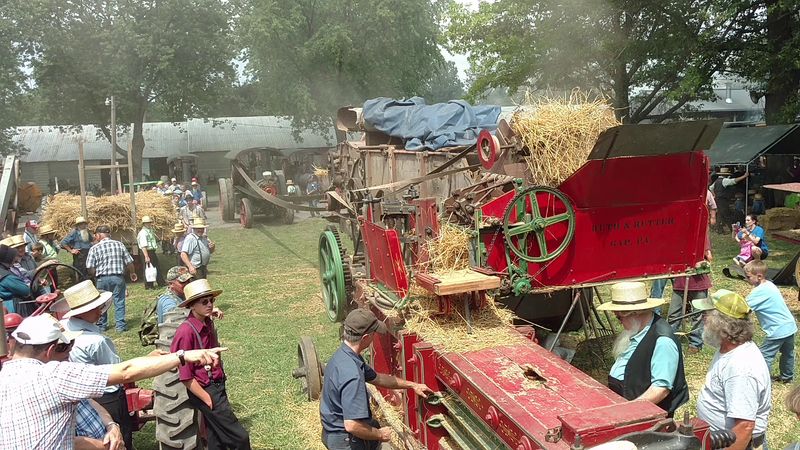
You’ll witness actual threshing operations where wheat gets separated from chaff using belt-driven equipment powered by steam engines, just like great-grandpa did.
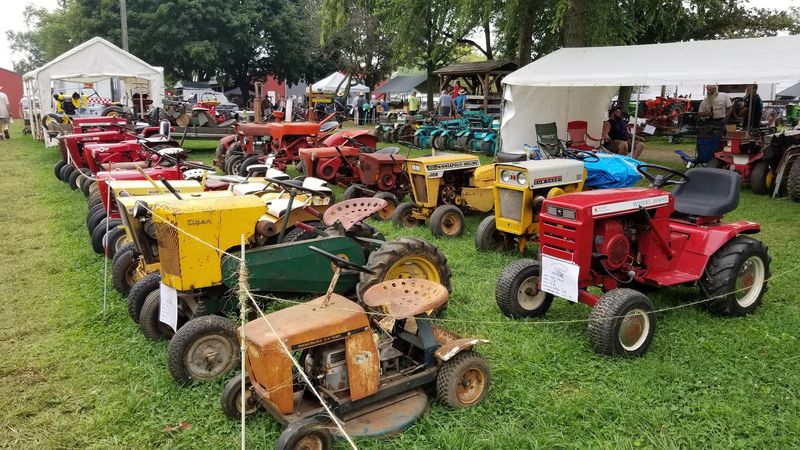
The event sprawls across the entire 33-acre site, with different areas showcasing specific types of equipment. One section features roaring hit-and-miss engines, another displays perfectly restored antique tractors, while steam locomotives chug visitors around the grounds.
Craftspeople demonstrate blacksmithing, sawmilling, and other period skills that kept rural communities running.
Hungry visitors enjoy authentic Pennsylvania Dutch food cooked right on site. The friendly atmosphere includes many Amish and Mennonite families who still appreciate these traditional farming methods.
Parking fills up fast, but tractor shuttles help visitors reach the entrance from overflow lots.
Stationary Steam Engines Showcase Raw Industrial Power
Before electricity reached rural America, stationary steam engines provided the muscle for entire factories, sawmills, and workshops. These weren’t designed to move around like traction engines—instead, they stayed in one spot and used long leather belts to transfer power to multiple machines at once.
Some feature flywheels taller than a grown person.
Walking through Rough & Tumble’s collection feels like stepping into an old-time machine shop. Engineers fire up these beauties during demonstrations, and suddenly everything makes sense about how past generations manufactured goods.
The rhythmic thumping of the piston, the whirring of the flywheel, and the slapping of drive belts create an unforgettable symphony of motion.
Volunteers love explaining how a single steam engine could run an entire workshop through an ingenious system of overhead shafts and pulleys. You’ll see how woodworkers, metalworkers, and other craftspeople tapped into this central power source by simply dropping a belt onto the spinning shaft above their workbench.
Many of these engines are incredibly ornate, with polished brass fittings, decorative paint schemes, and manufacturer’s plates dating back to the 1880s. Companies took pride in their products, adding artistic flourishes that made functional machinery beautiful.
Some engines even have governors—mechanical devices that automatically control speed—that are mesmerizing to watch in operation.
Hit-and-Miss Engines Pop and Bang With Personality
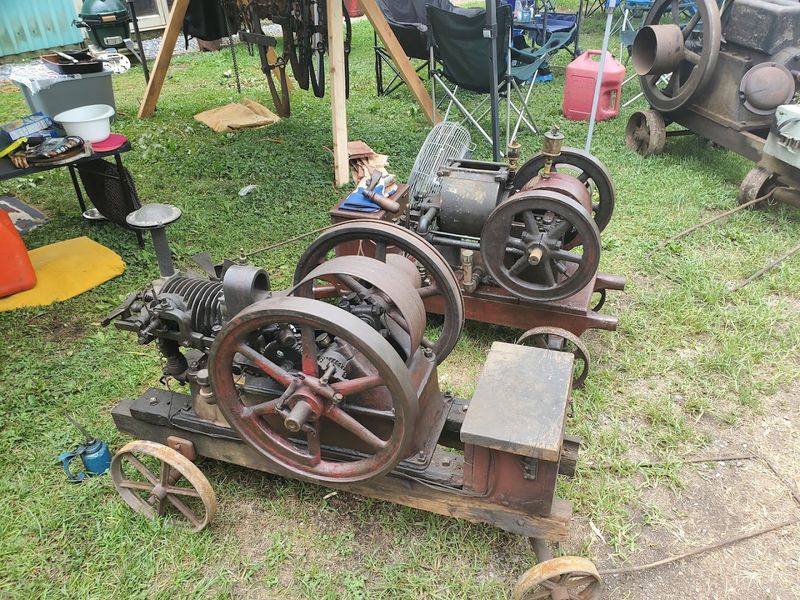
Here’s where things get quirky and fun. Hit-and-miss engines earned their name from their unusual operating style—they only fire when they need to, then coast until power drops.
This creates a distinctive “pop-pop-pop-coast-coast-pop-pop” rhythm that’s absolutely addictive to listen to. Once you’ve heard it, you’ll understand why collectors become obsessed with these machines.
These smaller gasoline engines powered everything from water pumps to cream separators on early 20th-century farms. Before rural electrification, a reliable hit-and-miss engine meant the difference between prosperity and failure.
Farmers depended on them daily for dozens of essential tasks.
Rough & Tumble displays hundreds of these engines in various sizes, from tiny one-horsepower models you could lift yourself to massive multi-cylinder versions requiring several strong people to move. During events, volunteers demonstrate them running actual equipment like corn shellers, water fountains, and grinding wheels.
The variety is astounding—different manufacturers used wildly different designs to solve the same problems.
Kids find these engines especially fascinating because they’re small enough to understand but powerful enough to be exciting. Watching the exposed mechanisms—the governor balls flying out, the spark plug firing, the crankshaft spinning—provides a perfect mechanical education.
Many young visitors leave inspired to learn more about engineering and how things work.
Live Threshing Demonstrations Bring Harvest History to Life
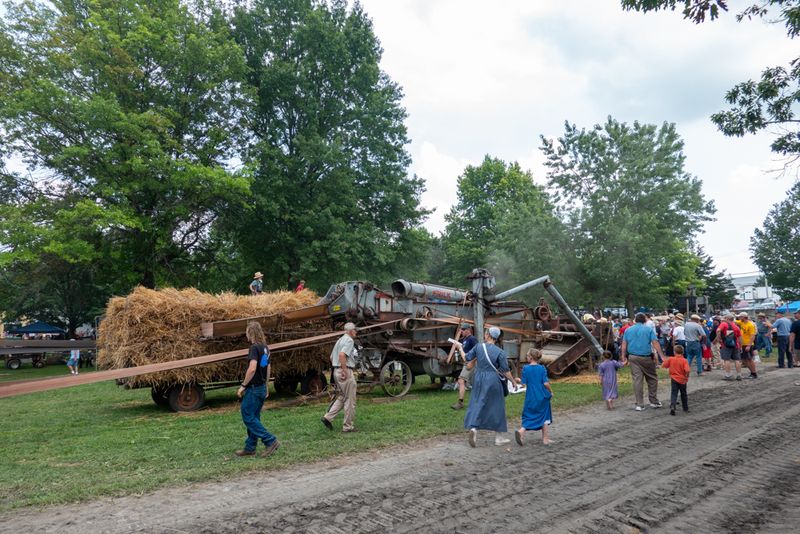
Ever wonder how farmers harvested grain before John Deere invented the modern combine? Watching a live threshing demonstration answers that question in spectacular fashion.
A crew of volunteers recreates the entire process, from pitching wheat bundles into the threshing machine to collecting the separated grain that flows from the other end.
The star of the show is the threshing machine itself—a complex contraption of shakers, sieves, and fans designed to separate wheat kernels from straw and chaff. A long leather belt connects it to a steam traction engine positioned nearby, which provides the rotational power to run everything.
When the engineer engages the belt and the thresher roars to life, you’re witnessing technology that fed America for generations.
What really brings the experience home is the teamwork required. Historical threshing wasn’t a one-person job—it took crews of a dozen or more workers coordinating their efforts.
Some fed bundles into the machine, others managed the steam engine, while additional helpers handled the grain output and straw removal.
The sights, sounds, and even smells of threshing create powerful memories. Dust hangs in the air as golden wheat kernels pour from the machine.
The rhythmic chugging of the steam engine provides a steady beat. Volunteers dressed in period clothing explain each step, helping modern visitors appreciate the backbreaking work their ancestors tackled every harvest season.
Authentic Steam Train Rides Delight All Ages
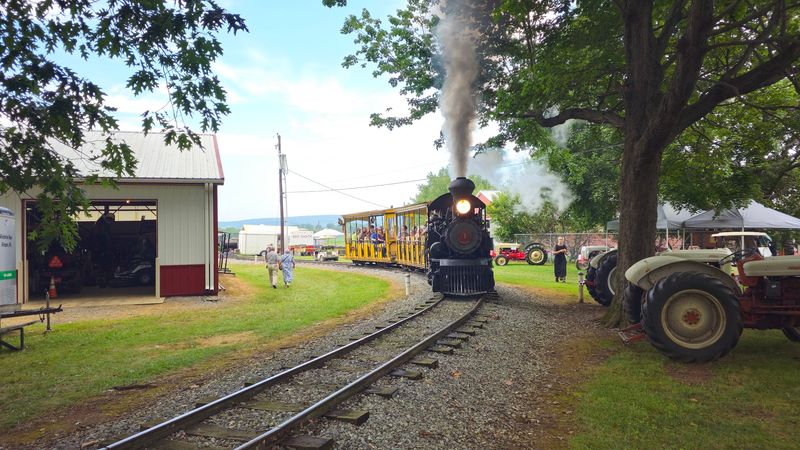
All aboard! Nothing captures childhood imagination quite like a working steam train, and Rough & Tumble delivers with authentic rides around their sprawling property.
These aren’t electric trains disguised to look old—they’re genuine steam-powered locomotives that huff, puff, and whistle just like the real McCoy. Engineers actually fire the boiler with coal and manage steam pressure throughout the journey.
The ride takes passengers past various exhibits and demonstrations, offering a perfect overview of the entire site. From your seat in an open-air car, you’ll spot towering steam traction engines, hear the pop of hit-and-miss engines, and wave at blacksmiths working their forges.
The gentle rocking motion and rhythmic chuffing sound provide a relaxing way to experience the grounds.
Train rides are particularly popular with younger children who might find walking the entire 33-acre property challenging. Parents appreciate the break, while kids stay entertained watching the engineer work the controls.
The whistle blasts always bring smiles and often startle first-time riders with their surprisingly loud volume.
During special events, multiple locomotives might be operating simultaneously, creating a miniature railway system complete with passing tracks and coordinated schedules. Serious train enthusiasts can chat with the volunteer engineers who love sharing technical details about boiler pressure, valve timing, and the challenges of keeping century-old technology running safely.
Antique Gas Tractors Parade in Colorful Glory
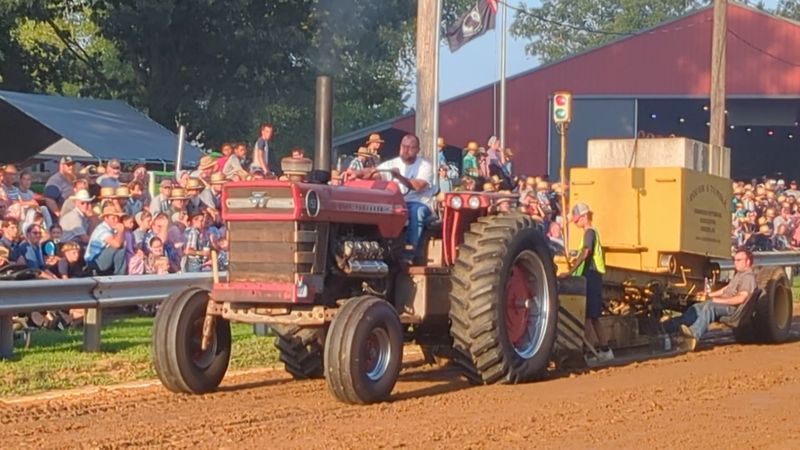
Imagine a rainbow made of metal, rubber, and gasoline rumbling past in perfect formation. The antique tractor parade showcases dozens of meticulously restored machines from the 1920s through 1960s, each one painted in the signature colors of legendary brands like John Deere green, International Harvester red, and Allis-Chalmers orange.
These aren’t just pretty faces sitting still behind velvet ropes. Every tractor fires up and drives under its own power, piloted by owners who’ve spent countless hours bringing them back from rusty retirement.
Some sport massive steel wheels with cleats that could grab any soil, while others roll on early rubber tires.
The parade lets you compare how tractor design evolved year by year. You’ll spot tiny one-cylinder models that put-put along beside hulking six-cylinder workhorses built for the biggest farms.
Blacksmiths Hammer Out Red-Hot Iron All Weekend Long
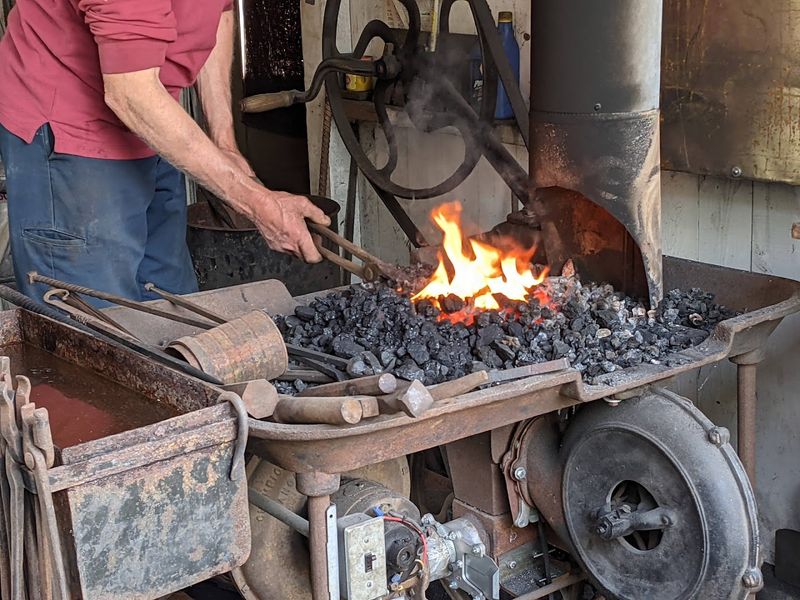
The rhythmic clang of hammer on anvil rings out from the blacksmith shop all day, every day of the show. Real craftspeople heat iron until it glows cherry-red, then shape it into hooks, hinges, horseshoes, and decorative pieces using techniques unchanged for centuries.
The coal forge blazes hot enough to make you step back even from several feet away.
What makes this special is watching metal bend to human will right before your eyes. One minute you’re looking at a straight bar of steel, and five minutes later it’s been twisted into a graceful S-hook or pounded into a flat blade.
Kids especially love seeing the sparks fly with each hammer strike. Many blacksmiths gladly explain their tools and answer questions between projects, making ancient metalworking feel surprisingly accessible.
Steam Whistles Blast Haunting Calls Across the Showgrounds
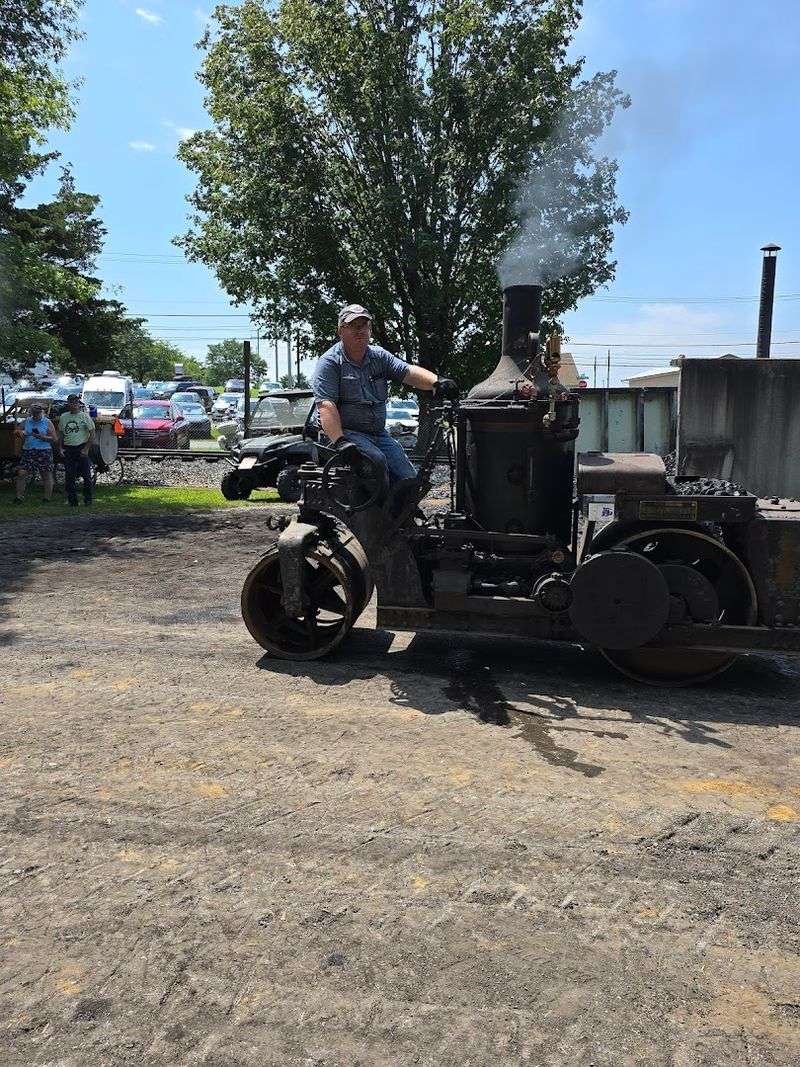
Nothing announces steam power quite like the deep, mournful wail of a proper steam whistle. Throughout the day, engineers sound off their whistles in a tradition that once signaled lunchtime, quitting time, or emergencies across industrial America.
Each whistle has its own unique voice—some high and shrill, others low and rumbling like foghorns.
The sound carries for miles across Lancaster County farmland, just as it did when these machines were working equipment rather than treasured antiques. Engineers take pride in their whistles and often collect multiple sizes to create different tones and musical notes.
Hearing a dozen whistles go off in sequence during the grand salute gives you goosebumps. It’s a sound that modern factories with their electronic beepers will never reproduce.