A lighthouse can make a coastline feel like a storybook, especially when you stand beneath one and imagine the ships that once searched for its beam. Along South Carolina’s shores, these historic towers have watched over shifting sands, busy harbors, marshy islands, and generations of sailors.
South Carolina’s historic lighthouses offer more than striking views. Some remain standing landmarks, while others survive as protected historic sites, each revealing a different piece of the state’s maritime past.
From windswept islands to quiet coastal communities, visiting them can add history, scenery, and a sense of discovery to a road trip.
There is something rewarding about following the shoreline to places built for another era, then pausing to take in the water from the same landscape that once guided ships. These 9 historic South Carolina lighthouses offer plenty of memorable stops along the way.
Hunting Island Lighthouse
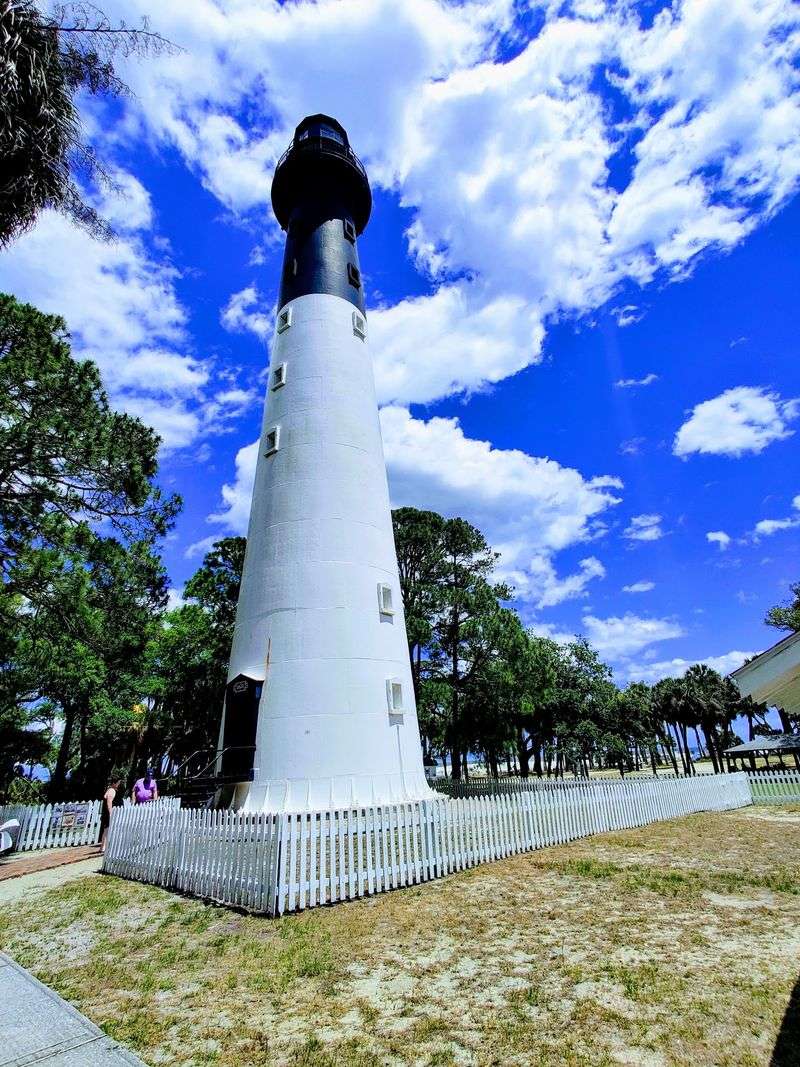
Salt hangs in the air before you even spot the tower through the trees. The walk feels easy and wild at the same time, with palmettos, sandy paths, and the sound of waves somewhere close by.
That slow reveal is part of what makes Hunting Island Lighthouse so memorable.
Set inside Hunting Island State Park near St. Helena Island, this lighthouse has lived several lives. The original structure was destroyed during the Civil War, and the cast iron tower standing today was rebuilt in 1875.
It was even taken apart and moved inland when erosion threatened the coast.
Climbing to the top is the big draw, and the view rewards every step. You can see forest, marsh, beach, and open water in one sweep.
Afterward, many visitors stop for a picnic or drive to the fishing pier before heading home.
Morris Island Lighthouse
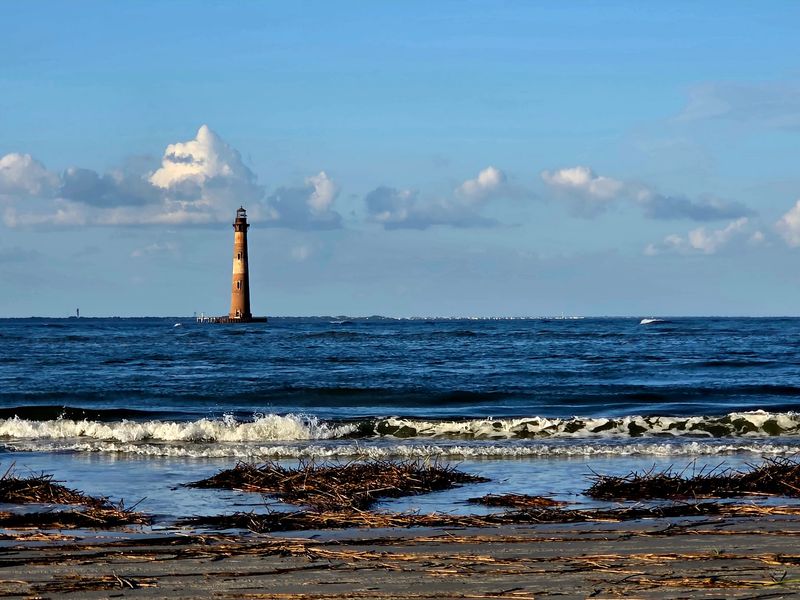
From the beach, it looks almost unreal, like a lighthouse placed in the sea by accident. Water now surrounds the base, and that lonely setting gives Morris Island Lighthouse a haunting beauty.
Few places along the South Carolina coast feel so dramatic without trying too hard.
Near Folly Beach and Charleston Harbor, the tower once stood on solid land. Years of erosion changed everything, slowly pulling the shoreline away until the lighthouse was left offshore.
Built in the nineteenth century, it became both a navigational landmark and a clear reminder of how fast a coast can change.
The best visit here is simple. Walk the beach at sunrise or late afternoon, bring a camera, and watch the light shift across the brick.
Nearby seafood spots on Folly make a good ending, especially if you pair the outing with a harbor view and she crab soup.
Sullivan’s Island Lighthouse
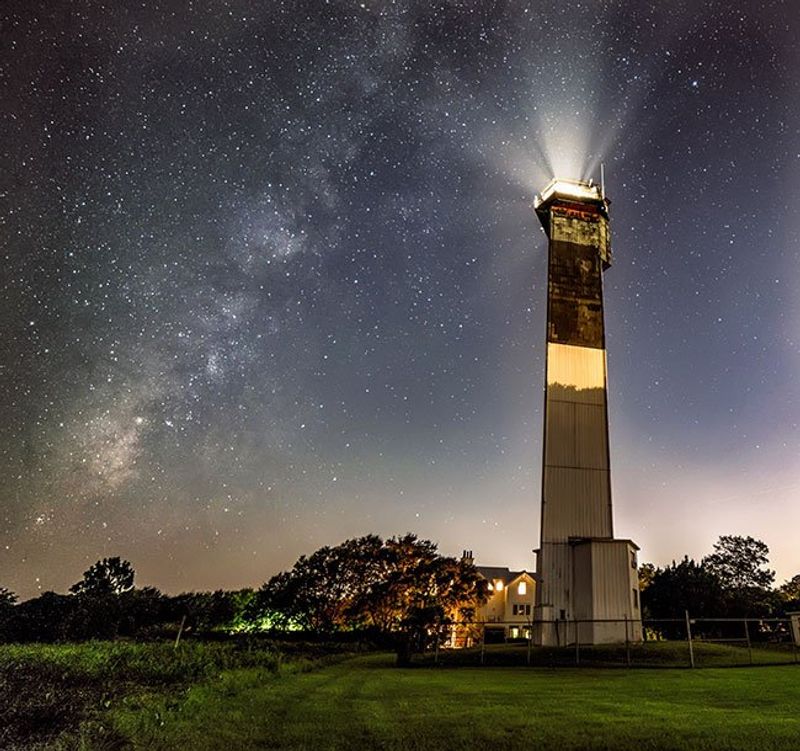
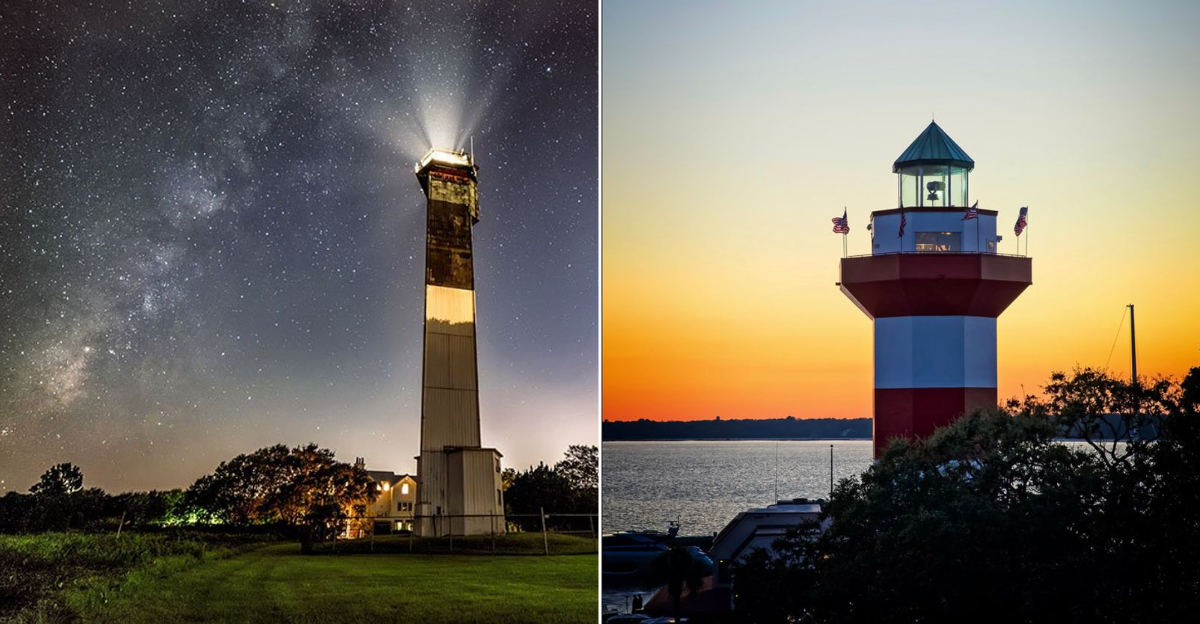
Not every lighthouse looks like the picture in a storybook, and that surprise is exactly why this one stays with you. Clean lines, sharp angles, and a bold shape give Sullivan’s Island Lighthouse a different kind of presence.
It feels more like modern sculpture than an old coastal relic.
Also called Charleston Light, it stands on Sullivan’s Island near Charleston. Built in 1962, it was the last major lighthouse constructed by the federal government.
Its triangular form broke with tradition, yet the purpose stayed the same, helping guide ships safely along a busy stretch of shore.
You cannot count on climbing it, but seeing it in person still feels worthwhile. Pair the stop with a beach walk, views of nearby Fort Moultrie, and lunch from a local cafe.
The setting blends military history, ocean air, and striking design in one easy day trip.
Hilton Head Rear Range Lighthouse
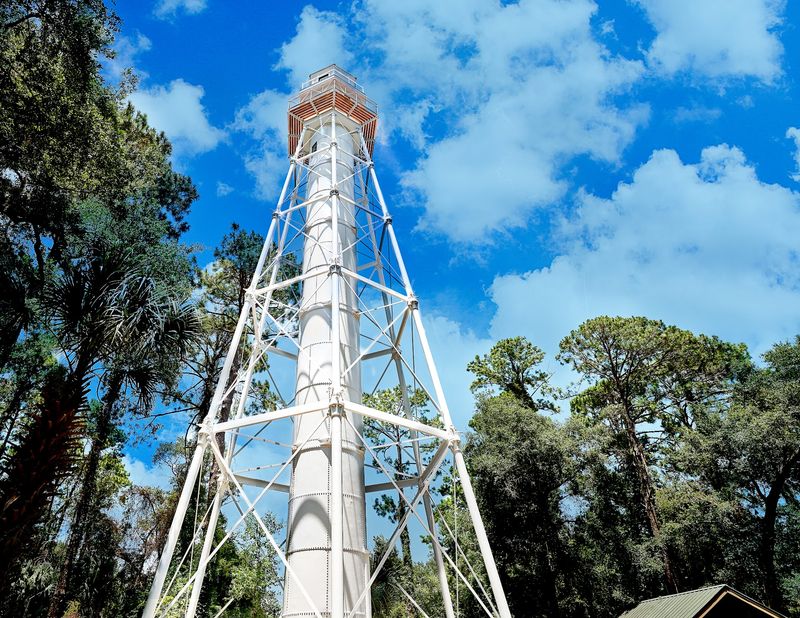
Tucked into a quiet part of Hilton Head, this lighthouse feels like a secret many beachgoers miss. There is no crashing first impression here, just a graceful structure that slowly earns your attention.
The calm setting makes the history feel even more surprising.
The Hilton Head Rear Range Lighthouse, also known as the Leamington Lighthouse, dates to 1879 and 1880. It helped guide ships through Port Royal Sound as part of a range light system, working with another light to line up a safe channel.
That practical job shaped trade, travel, and everyday coastal life.
Visitors often enjoy the grounds as much as the tower itself. Mossy oaks, tidy paths, and a peaceful neighborhood mood make it an easy stop between beach hours.
If you are exploring Hilton Head by bike, this is one of the island’s most rewarding detours, quiet, historic, and unexpectedly charming.
Cape Romain Lighthouse – New Tower
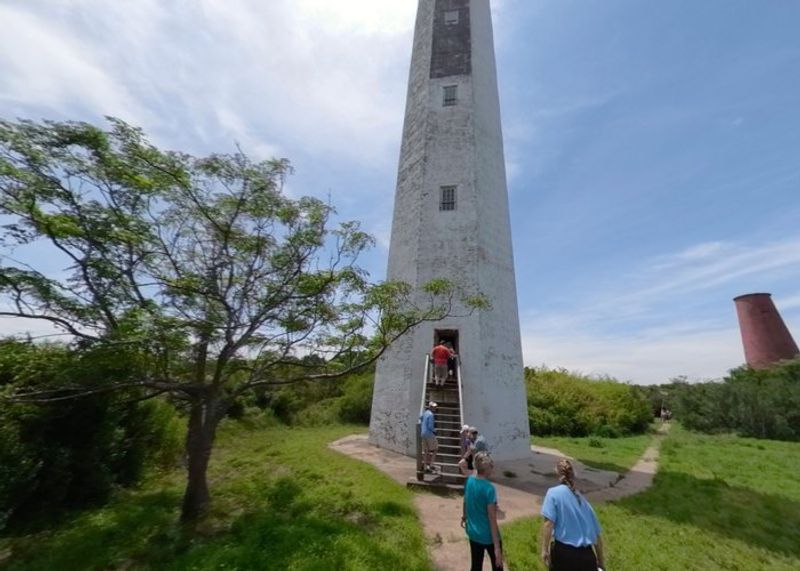
Silence feels bigger out here. Wind, birds, and water do most of the talking, and the isolation gives the place a rare kind of power.
Reaching Cape Romain’s newer lighthouse is not the fastest outing, but the remoteness is exactly what makes the trip feel special.
Standing on Lighthouse Island inside Cape Romain National Wildlife Refuge, the taller brick tower was built in 1857. It replaced an earlier structure and watched over one of the state’s trickiest coastal stretches.
Mariners depended on it, especially where shifting shoals and rough weather could turn a routine passage into real danger.
A visit usually means planning ahead, often by boat, and that effort adds to the story. Bring water, sun protection, and plenty of time to notice the refuge around you.
Pelicans, marsh views, and open sky make the lighthouse feel connected to a much larger world than the map suggests.
Haig Point Lighthouse
Getting to Daufuskie already feels like stepping sideways out of regular time. The ferry ride, the slower roads, and the hush of the island set a different mood before the lighthouse even appears.
Haig Point Lighthouse fits that feeling perfectly, small in scale but rich in atmosphere.
Located at Haig Point on Daufuskie Island, this nineteenth century range light helped guide vessels through surrounding waters. It was part of a working system, not just a pretty landmark, and that practical past gives it weight.
The island itself adds another layer, with deep ties to Gullah history and Lowcountry life.
Visitors often remember the whole setting as much as the structure. Moss drapes from trees, golf carts hum instead of heavy traffic, and the waterfront catches changing light beautifully.
A stop here feels intimate rather than grand, which is exactly why it stays with people long after the boat ride back.
Harbour Town Lighthouse
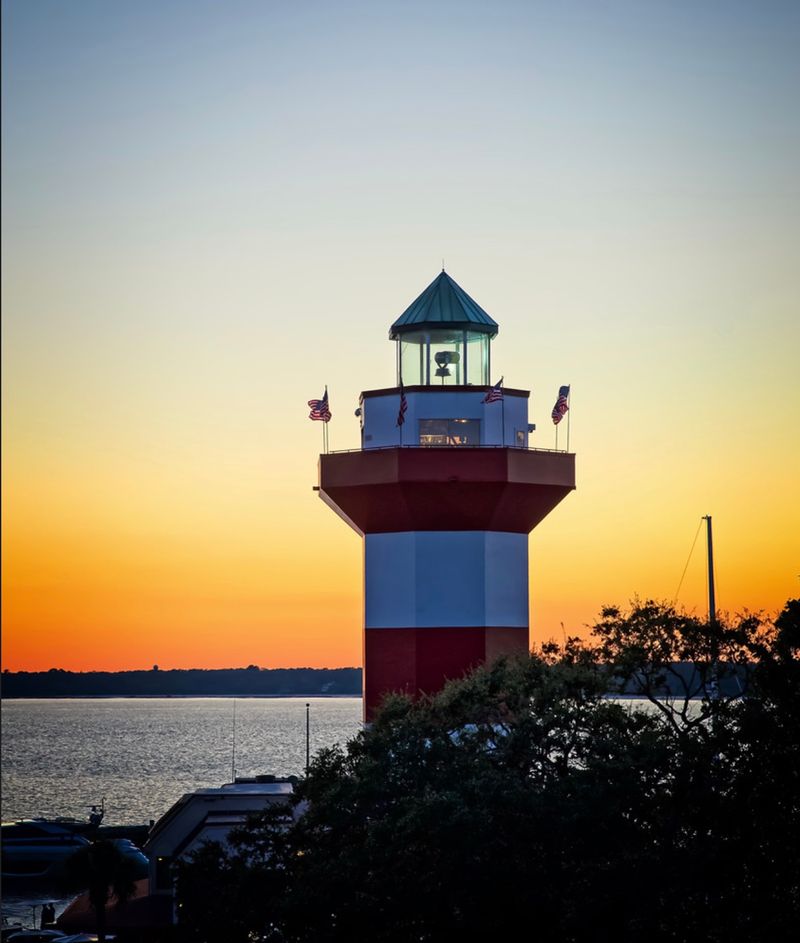
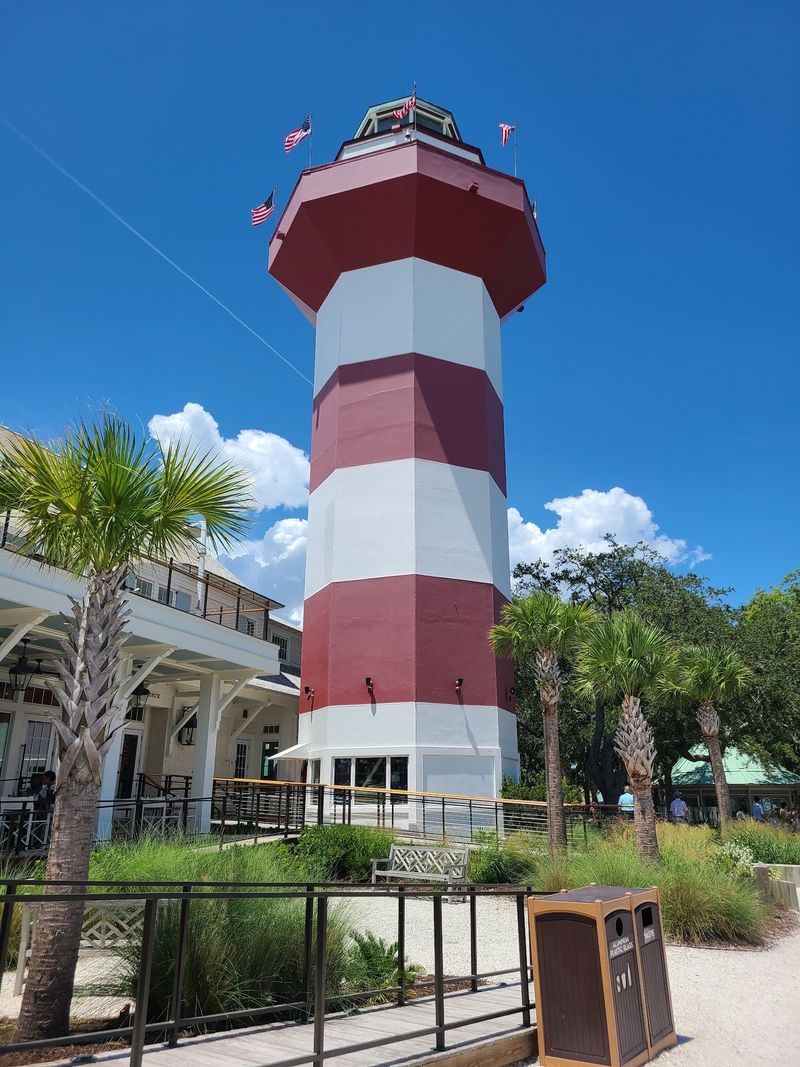
Standing above Harbour Town Marina, the candy-striped Harbour Town Lighthouse has become one of Hilton Head Island’s most recognizable landmarks. Completed in 1970 as part of Sea Pines founder Charles Fraser’s vision for the resort community, the 93-foot tower was designed more as a welcoming symbol and destination than as a traditional navigational lighthouse.
Today, visitors can climb all 114 steps to the top, with historical exhibits along the way offering glimpses into Hilton Head Island’s past. At the observation deck, the reward is a sweeping panorama of the Harbour Town Yacht Basin, Calibogue Sound, surrounding marshes, and the famous Harbour Town Golf Links.
The lighthouse also houses the Harbour Town Lighthouse Museum and a gift shop at the top. With its vivid red-and-white exterior and unforgettable views, it offers a beautiful way to experience Hilton Head from above.
Cape Romain Lighthouse – Old Tower
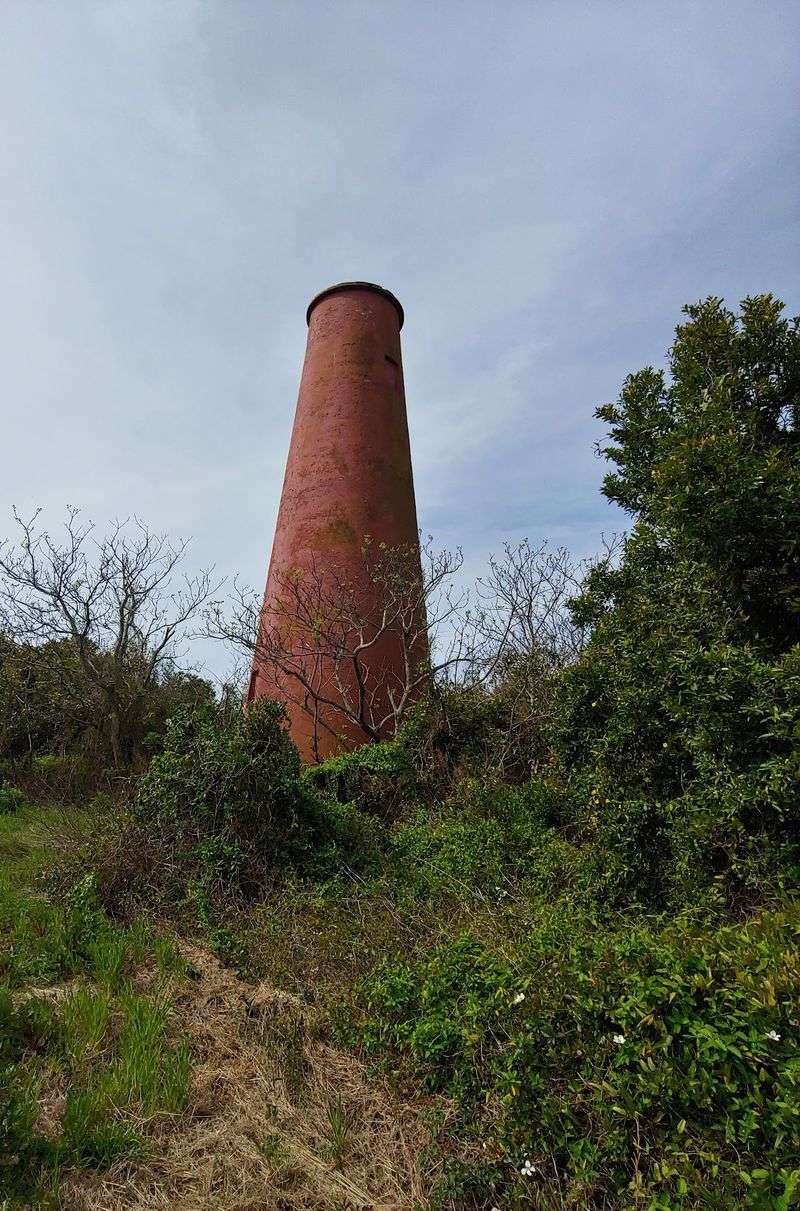
Fog, marsh grass, and open sky set the mood long before the ruins come into view. Reaching this remote spot feels like discovery, not sightseeing.
Far out near Bulls Bay, Cape Romain Lighthouse – Old Tower stands as a weathered reminder of ship traffic, storms, and coastal change over time here.
You cannot climb it, but boat tours and wildlife trips can bring you close enough for great photos. Bring sunscreen, water, and binoculars for birds.
The worn brick and lonely setting give it a different kind of beauty. For travelers who like quiet history, this stop leaves a lasting impression.
Georgetown Lighthouse
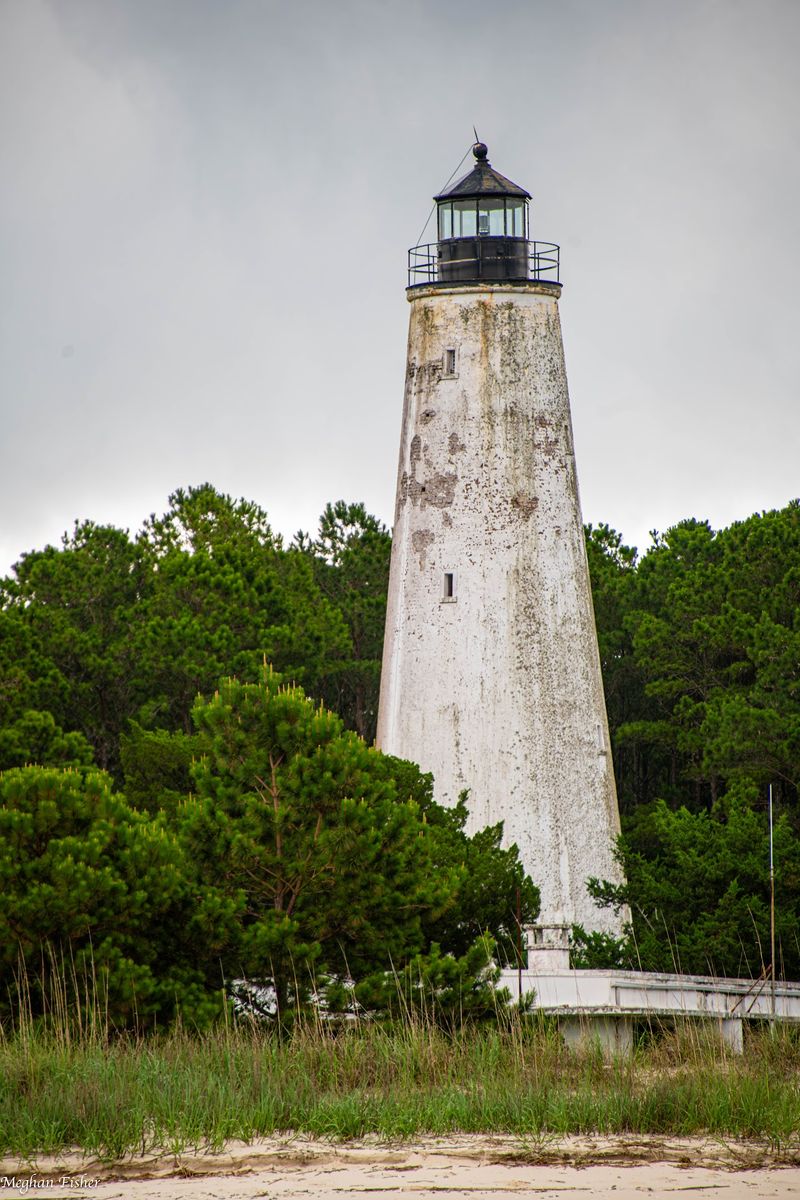
The Georgetown Lighthouse sits on North Island at the entrance to Winyah Bay, carrying more than two centuries of South Carolina maritime history. First lit in 1801, it is the state’s oldest active lighthouse, although the current tower dates to its 1867 rebuilding after the Civil War.
The conical, white structure rises about 85 feet above the island, with its black lantern room creating a striking silhouette against the surrounding marshes and water.
Unlike many coastal lighthouses, Georgetown Lighthouse is located on an isolated island and is not generally open to the public, so visitors experience it primarily by boat or from the surrounding waterways. Its remote setting gives it an especially peaceful character, surrounded by the natural beauty of Winyah Bay.
The lighthouse was also used as a Confederate observation post during the Civil War, adding another fascinating chapter to its long history.