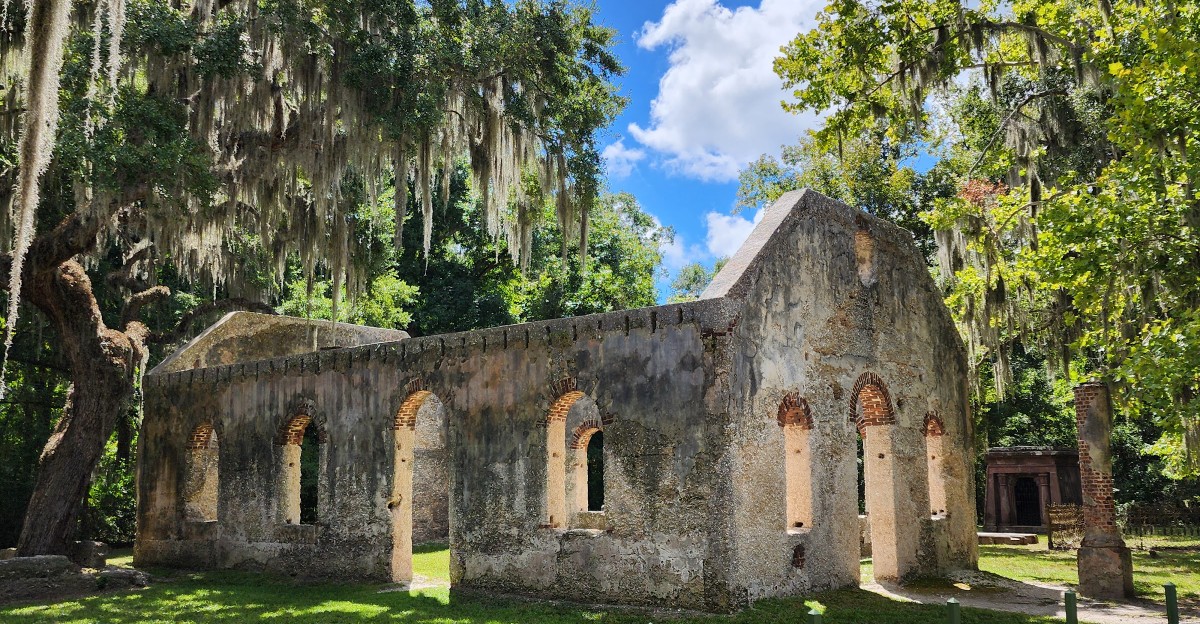
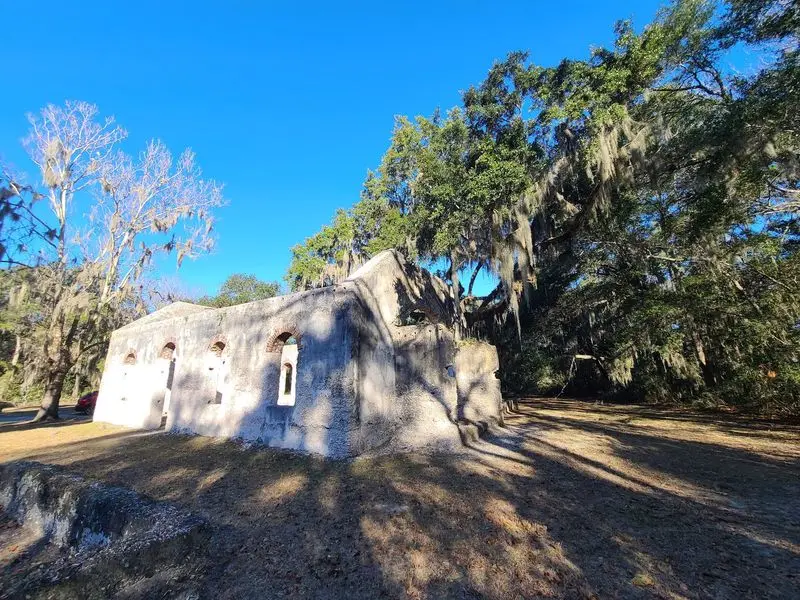
The walls of this old church are packed with oyster shells, and you can still see them poking out. They have stood for more than 270 years.
A fire took the roof in 1886, but those shell walls refused to fall.
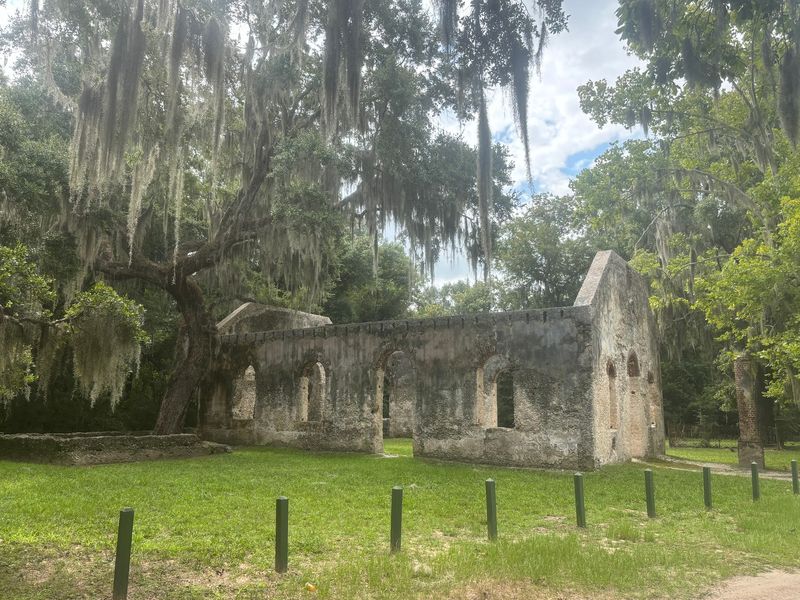
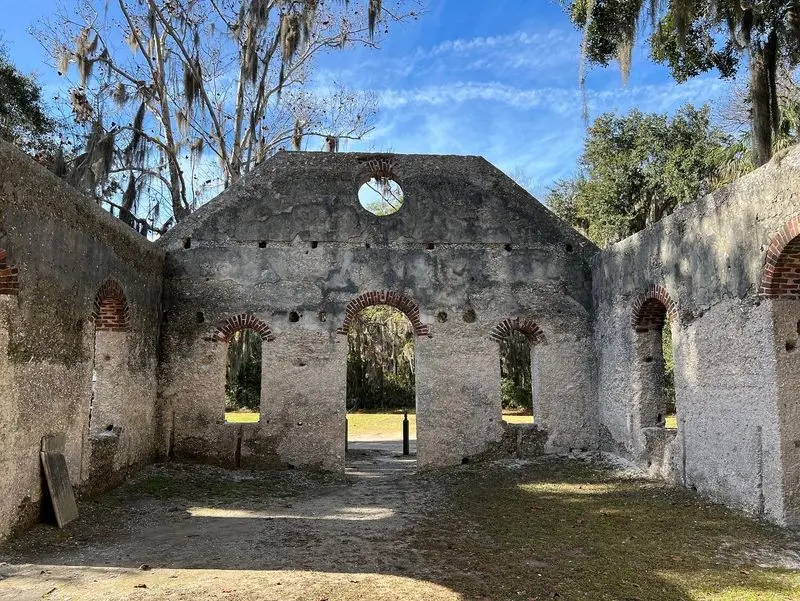
Nobody ever rebuilt it. So today, the ceiling is just open sky and twisting oak branches hung with Spanish moss.
I like how this spot sits right beside a quiet country road in South Carolina. You can pull over and wander through history in minutes.
There’s an old graveyard, a strange half-sealed tomb, and plenty of ghost stories waiting nearby.
I can’t imagine a better place to feel the past breathing down your neck. Ready to meet a church that kept standing long after everyone left?
Those Shell-Studded Walls Are Tougher Than They Look
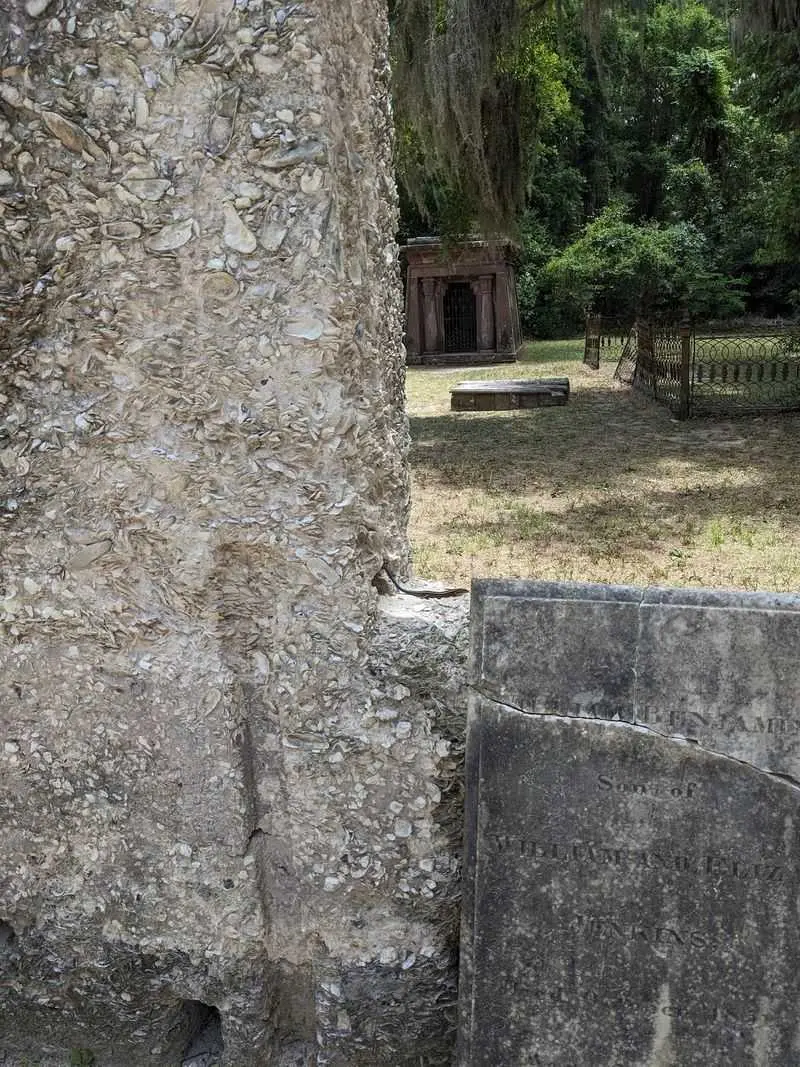
Oyster shells built this church, and that’s not a figure of speech. The St. Helena Parish Chapel of Ease Ruins are made of tabby, an old Lowcountry building mix.
Builders burned oyster shells to make lime. Then they mixed that lime with sand, water, and whole or broken shells.
The result hardened into something close to concrete. That explains why these walls are still standing after centuries of storms and humid summers.
Step close and you’ll spot shells sticking right out of the surface. Some upper sections also show traces of a smooth finish that once covered the rough material.
Historians count this as an important example of mid-1700s tabby construction. That matters because many tabby buildings didn’t survive this long.
You’ll also notice brick details mixed into the structure. Those came from early 1800s changes, when the chapel was enlarged to hold more people.
So the walls tell two stories at once. One belongs to the original colonial builders, and the other belongs to a growing island congregation.
Bring your phone for close-up photos. The shell textures look amazing when side light hits them.
A Church Built Because Beaufort Was Just Too Far
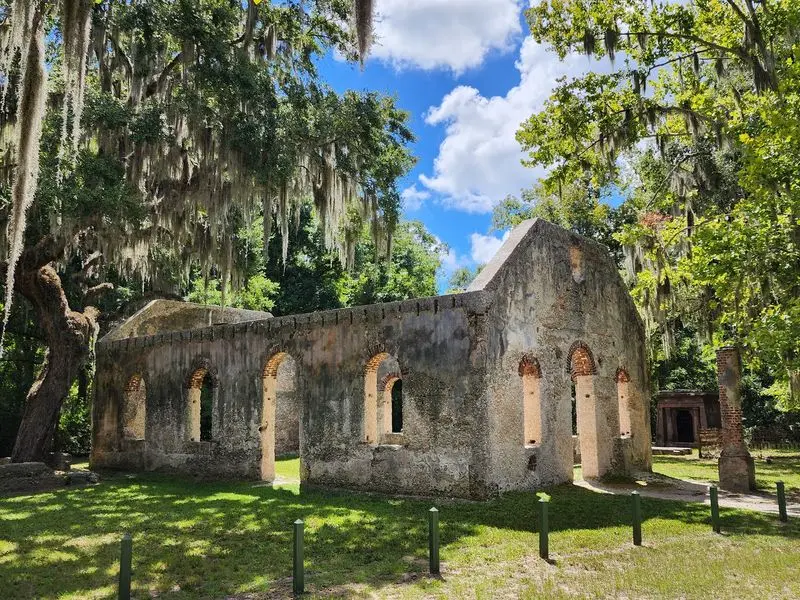
Long before cars, getting to church could take a whole day. That was the problem for Anglican planters living on St. Helena Island in the 1700s.
The main parish church sat in Beaufort, across the water. Regular Sunday trips were simply too hard for many families.
So around 1740, they built a chapel of ease. Some sources place construction between 1742 and 1747.
A chapel of ease is a smaller church for people who live far from the main one. The name sounds cozy, and honestly, the idea was pretty practical.
Folks once called it the White Church. The lime and oyster shell walls gave the building a bright white glow.
That must have been quite a sight among the dark green oaks. Today, the walls look weathered and gray, but the old nickname still makes sense when you picture them new.
By 1812, the island’s population had grown a lot. The chapel was then named a parish church in its own right.
Not bad for a building that started as the backup option.
Look Up And Find Moss Where The Roof Used To Be
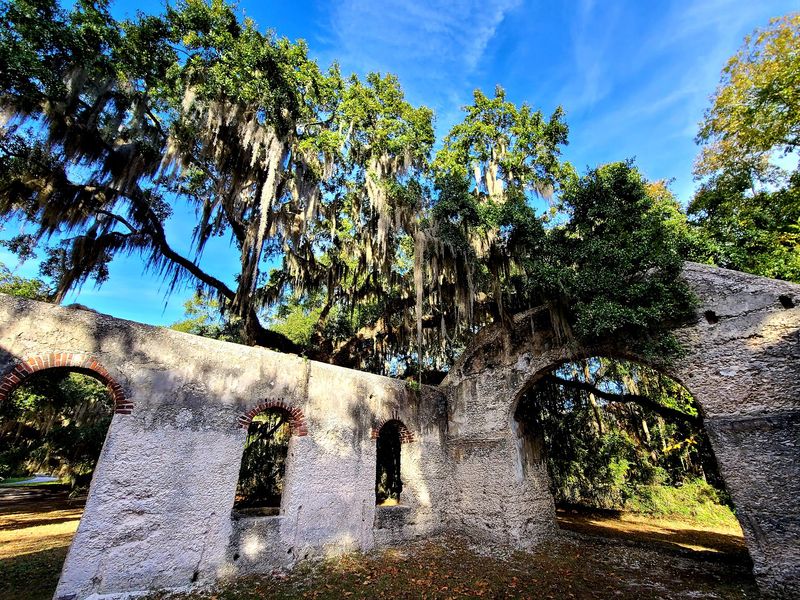
Stand inside the walls and tilt your head back. Instead of rafters, you’ll see sky and big oak limbs dripping with Spanish moss.
That open ceiling comes from a forest fire in February 1886. The flames destroyed the chapel, and nobody ever rebuilt it.
Losing a roof sounds sad, and it was. Still, the result is one of the most striking scenes in coastal South Carolina.
The ancient live oaks around the ruins frame everything like a living cathedral. Their moss sways a bit in the breeze, which adds a soft, almost dreamy feel.
Photographers love this setting for good reason. Sunrise and sunset can paint the walls in warm colors.
A rainy day works too, if you like moody pictures. The gray sky makes the shells and moss stand out even more.
Here’s a practical tip from Lowcountry life: bring bug spray. Those shady oaks and damp air can attract biting insects, especially in warmer months.
Nothing ruins a peaceful moment faster than a mosquito with an appetite.
The Half-Bricked Tomb Has Quite A Story
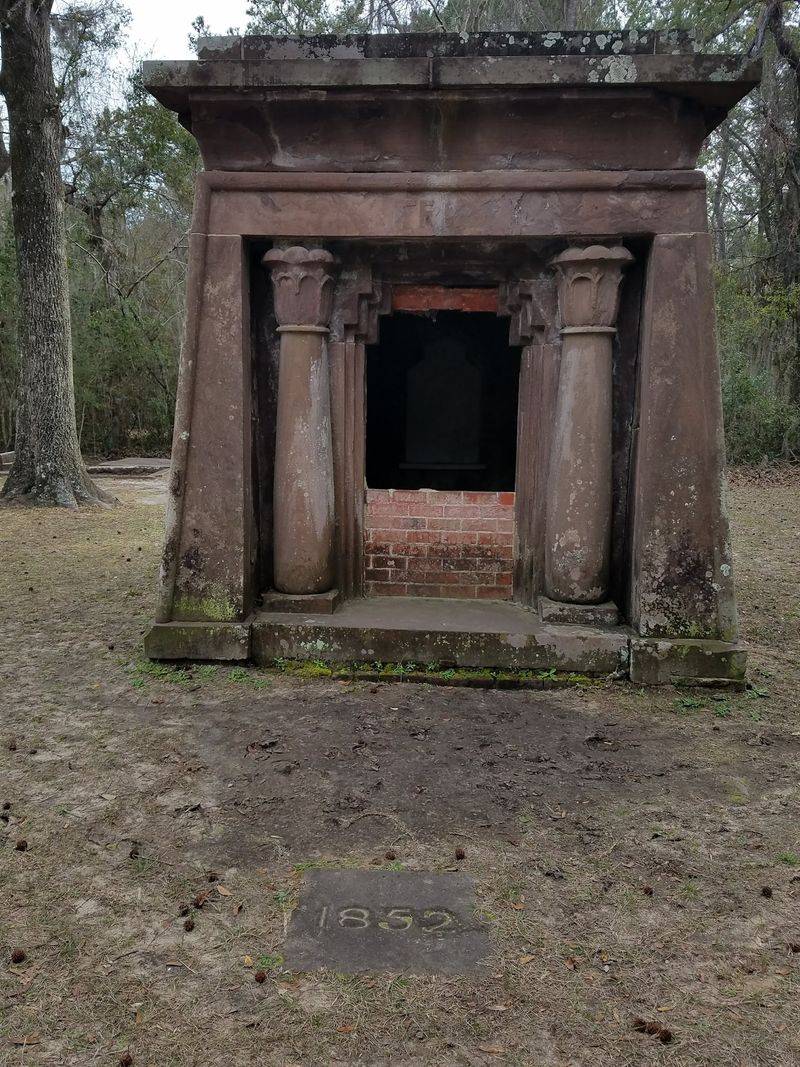
Right in the little cemetery stands a stone mausoleum with an odd look. Part of its opening is bricked up, and part isn’t.
Charleston stone-cutter W.T. White built it for Edgar and Eliza Fripp.
Its style leans toward Egyptian Revival, which feels unexpected in a Lowcountry churchyard.
Now for the local lore. During the Civil War, Union soldiers supposedly broke into the tomb hunting for treasure.
Later, people tried to seal it back up. According to legend, unexplained forces kept undoing the work.
Whether you believe that or not, the tomb remains only partly closed today. It’s one of the most talked-about spots on the grounds.
Please treat it with respect. It’s a burial place, not a prop, so keep hands off and leave everything as you found it.
The surrounding graveyard has many old headstones, plus a damaged wrought-iron grave enclosure. Several stones date to the 1800s, though some are broken or hard to read.
Take your time reading what you can. Every name links back to island history.
Ghost Stories Follow This Place Everywhere
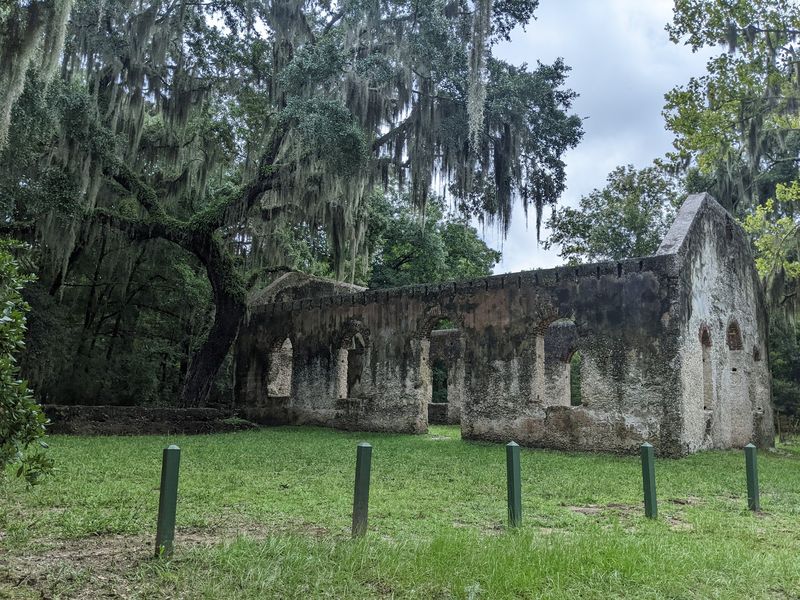
Few ruins in the Lowcountry carry more spooky tales than this one. The St. Helena Parish Chapel of Ease Ruins have a strong haunted reputation.
Stories mention whispered prayers and faint singing drifting through the empty walls. Others describe figures wearing clothes from the 1700s.
There’s also a tale of a lady in white holding a child. Nobody can prove any of it, which is kind of the fun.
The most romantic legend involves two young lovers named Eliza and Edgar. They planned to marry at the chapel, and their spirits are said to reunite there.
Notice the names? They match the couple linked to the mausoleum, so the stories blend together in interesting ways.
Even skeptics can enjoy the mood here. The quiet road, the shade, and the crumbling shell walls feel mysterious all on their own.
Visiting alone at dusk might give you chills. Bringing a friend gives you someone to grab if a branch snaps.
Either way, keep voices low and respect the graves. Ghost hunting is fine as a story, not as an excuse for mischief.
After 1861, A New Chapter Began Inside These Walls
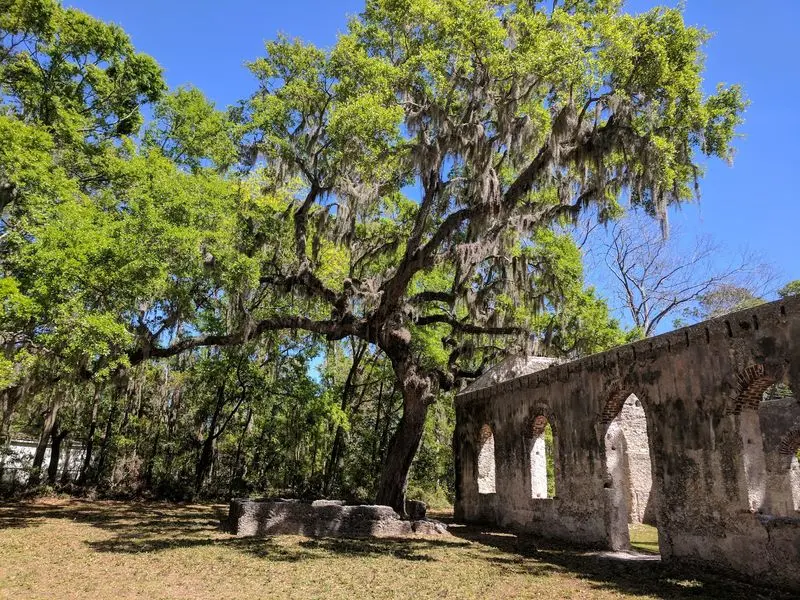
History took a sharp turn here in the fall of 1861. Union forces arrived, and the planters fled St. Helena Island.
The chapel was largely left behind. But the building didn’t stay empty for long.
After the Civil War, freedmen used it as a place of worship. Methodist freedmen were holding services there by 1868.
Northerners who came to teach and train newly freed people also used the space. So a church first built for planters became part of a story about freedom and education.
That shift matters a lot on this island. St. Helena has deep roots in Gullah Geechee history and culture.
Some Gullah Geechee heritage tours include a stop at the chapel. Joining one can add stories and context that a single marker can’t fit.
A historical marker does stand at the site, so read it before wandering. It gives a quick summary of the chapel’s long life.
Standing between these walls, you’re seeing more than old shells and lime. You’re looking at a place that served very different communities over time.
Finding It Is Easier Than Pronouncing Frogmore
Good news for anyone who hates complicated directions. Reaching this ruin takes just a few turns.
The official address is 17 Lands End Road, St. Helena Island, SC 29920. It sits in the Frogmore area of South Carolina.
From Sea Island Parkway, also known as US Highway 21, turn right onto Martin Luther King Drive. Keep going as the road becomes Lands End Road.
The ruins appear on your left. A small pull-over area gives you space to park close to the walls.
Visiting costs nothing, which is always a pleasant surprise. The site is self-guided, so you can explore at your own pace.
Most people treat it as a fairly quick stop. Still, give yourself time to see both the chapel and the cemetery without rushing.
The road is narrow and feels like a true back road. Drive slowly and watch for others pulling in or out.
Wear sturdy shoes, since the ground can be uneven around old graves. And pack water on hot days, because shade only helps so much.
Say I Do Here, But Read The Fine Print First
Plenty of couples dream about a wedding under moss and open sky. These ruins deliver that look in a big way.
There’s a catch, though. The site is managed by The Parish Church of St. Helena in Beaufort.
Couples who want to marry at the chapel ruins must be members of that parish. So this isn’t a book-online kind of venue.
A sign at the site also notes that events need permission. Planning a photo shoot or gathering?
Check with the parish before showing up with chairs and flowers.
Honestly, that rule helps protect the place. Old tabby and historic graves don’t mix well with big crowds and heavy equipment.
Casual visitors are still welcome to wander through. Just remember you’re on grounds still connected to a living church.
Engagement photos taken nearby can look stunning, especially in soft evening light. The tall walls make a natural frame for any couple.
Leave no trash, no confetti, and no trampled grave markers behind. Future couples, and future history fans, will thank you.
Pair Your Visit With More Island History Nearby
One stop rarely feels like enough on St. Helena Island. Luckily, more history awaits nearby.
Penn Center is also located on the island. Established in 1862 as Penn School, it provided education to formerly enslaved people and remains an important place to learn about Gullah Geechee heritage.
Visiting both sites in one day makes a lot of sense. The chapel’s post-Civil War history and Penn Center’s educational mission offer complementary perspectives on the island’s past.
Heading toward the beach? Hunting Island State Park is a worthwhile addition to your trip, with its beaches, marshes, and coastal scenery.
That makes the chapel ruins an easy stop on a coastal day trip. You can explore local history in the morning and enjoy ocean breezes later.
Fort Fremont is another nearby historical attraction. Its preserved coastal fortifications offer a different glimpse into the region’s past.
The Chapel of Ease ruins were added to the National Register of Historic Places on October 6, 1988. The listing recognizes the site’s historic and architectural significance, including its distinctive tabby construction.
When planning a South Carolina coastal trip, save room for this roofless beauty. It might be the quietest stop on your itinerary, and the one you remember longest.