Georgia’s landscape holds more than beautiful scenery and southern charm.
Hidden across the state are historic parks that preserve powerful stories spanning thousands of years, from ancient Native American civilizations to Civil War battles and presidential retreats.
These sites offer windows into the people, conflicts, and transformations that shaped the American South.
Walking through these parks means stepping into living history where the past comes alive through preserved buildings, earthworks, and landscapes that witnessed pivotal moments.
Ocmulgee Mounds National Historical Park (Macon)
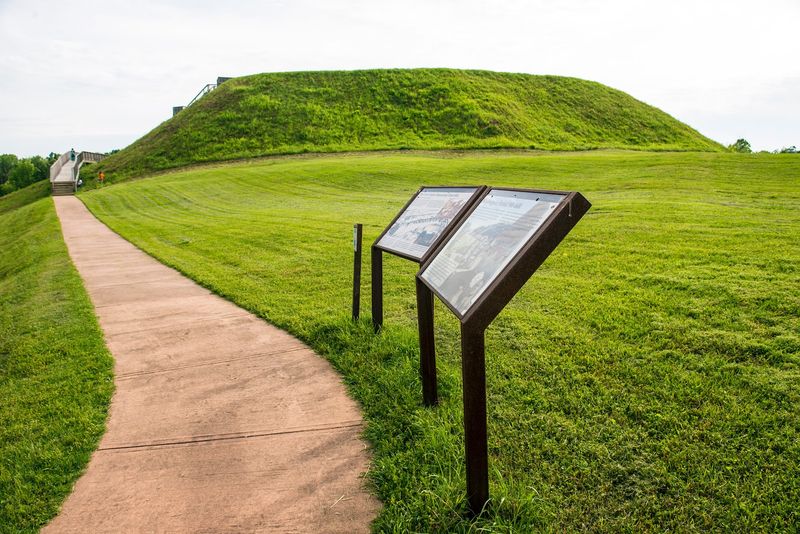
Seventeen thousand years of continuous human habitation makes Ocmulgee one of North America’s most remarkable archaeological treasures. The massive earthen mounds rising from the landscape weren’t built overnight but represent generations of sophisticated Indigenous engineering and cultural achievement.
The Mississippian people constructed these ceremonial centers between 900 and 1100 CE, creating a complex society complete with government structures, trading networks, and religious practices. Visitors can actually walk inside the reconstructed Earth Lodge, sitting where tribal leaders once gathered for important ceremonies and decisions.
The circular clay floor features raised seating around a central fire pit, preserved exactly as it was discovered.
Beyond the impressive Great Temple Mound, the park protects burial mounds, village sites, and defensive trenches that tell stories of daily life, spiritual beliefs, and community organization. Trails wind through landscapes that witnessed countless generations building, farming, and thriving long before European exploration changed everything.
The park stands as a testament to Indigenous innovation and resilience across millennia.
New Echota State Historic Site (Calhoun)
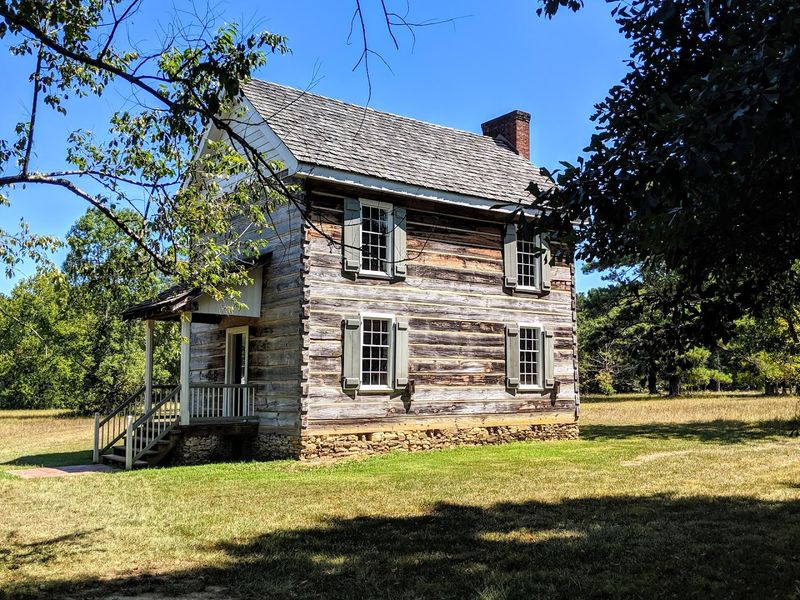
Hearts break a little when you learn that this peaceful site was once the thriving capital of the Cherokee Nation. From 1825 to 1838, New Echota represented Cherokee self-governance, culture, and remarkable adaptation to changing times.
The Cherokee created their own written language, established a newspaper, and formed a constitutional government modeled after the United States.
Walking through reconstructed buildings like the Supreme Court and print shop where the Cherokee Phoenix newspaper was published, visitors witness a sophisticated nation fighting for survival and sovereignty. The Worcester House honors Samuel Worcester, a missionary who stood with the Cherokee against forced removal, even going to prison for his beliefs.
His case reached the Supreme Court but couldn’t prevent tragedy.
Then came the devastating Trail of Tears in 1838. Federal troops gathered Cherokee families from their homes throughout the Southeast, forcing them westward on a deadly march that killed thousands.
New Echota preserves this painful chapter honestly, honoring Cherokee resilience while acknowledging the injustice that destroyed their homeland.
Andersonville National Historic Site (Andersonville)
Few places capture the horror of war quite like Andersonville. During just 14 months of operation from 1864 to 1865, Confederate Camp Sumter imprisoned nearly 45,000 Union soldiers in conditions so desperate that 13,000 died from disease, malnutrition, and exposure.
The numbers tell only part of the story. Overcrowding turned the 26-acre stockade into a living nightmare where men dug holes in the ground for shelter and fought over a contaminated stream.
Without adequate food, medicine, or sanitation, prisoners watched helplessly as comrades weakened and died daily. The suffering wasn’t intentional cruelty but rather the result of the Confederacy’s own resource shortages and logistical failures during war’s final desperate stages.
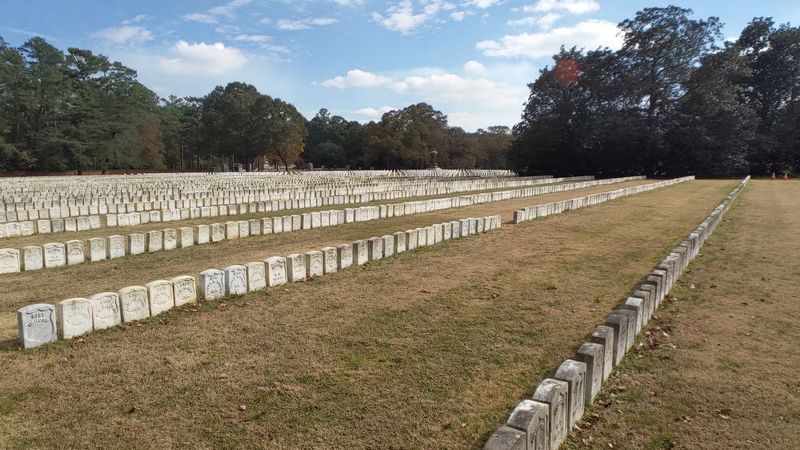
Today, the national cemetery’s neat rows of white headstones honor those who perished, many marked simply as unknown. The preserved prison site helps visitors understand the human cost of conflict beyond battlefield heroics.
A museum explores prisoner experiences through artifacts, letters, and photographs. Andersonville reminds us that war’s greatest casualties often happen far from glory, in places of hunger, disease, and despair.
Fort Pulaski National Monument (Savannah)
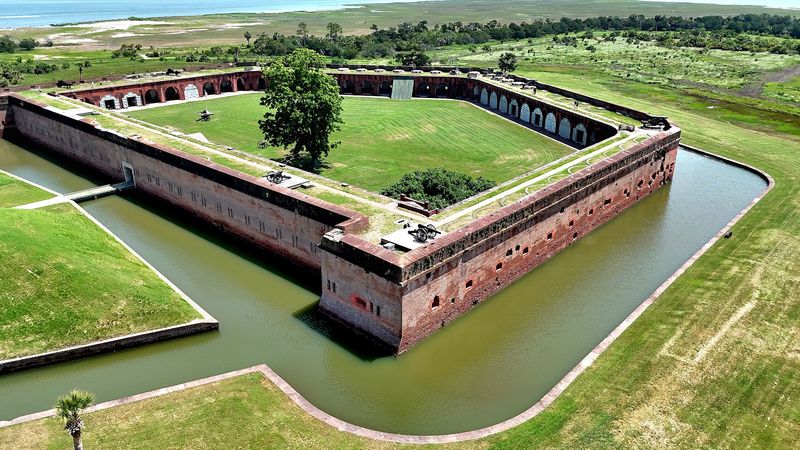
Cannons changed warfare forever at Fort Pulaski in April 1862. Engineers had designed this massive brick fortress to withstand traditional smoothbore artillery, believing its five-foot-thick walls made it virtually impregnable.
Confederate defenders felt confident behind those imposing barriers guarding Savannah’s harbor approaches.
Then Union forces unveiled rifled cannons firing elongated projectiles with unprecedented accuracy and penetrating power. After just 30 hours of bombardment from over a mile away, the new weapons punched gaping holes through walls considered indestructible.
The breach forced immediate Confederate surrender and rendered brick fortifications obsolete overnight. Military architects worldwide suddenly needed new defensive strategies.
Visitors today can explore remarkably preserved fortifications, walking through powder magazines, officer quarters, and along ramparts while examining battle damage still visible in the walls. Drawbridges, moats, and massive iron doors showcase pre-battle confidence.
The surrounding saltwater marsh and coastal landscape add natural beauty to historical significance. Fort Pulaski brilliantly demonstrates how technological innovation transforms military tactics, marking a pivotal moment when medieval-style fortresses gave way to modern warfare.
Wormsloe State Historic Site (Savannah)
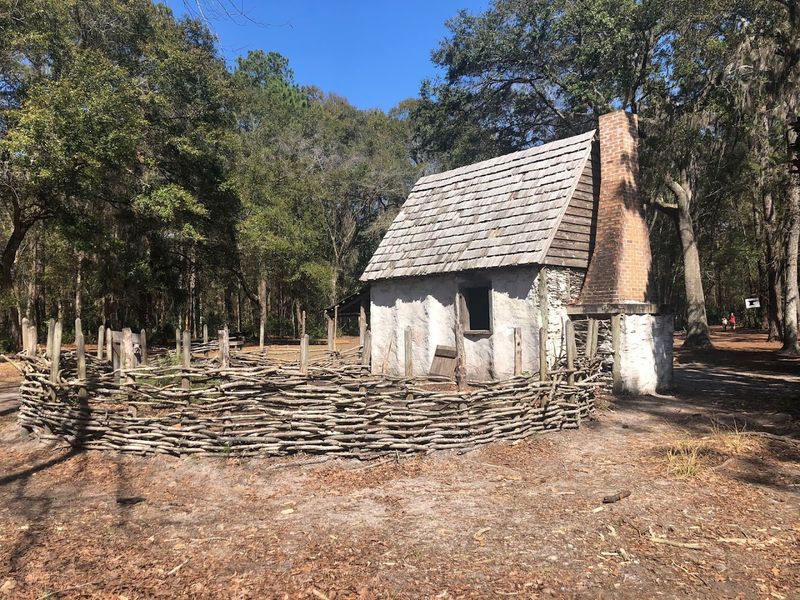
Spanish moss drapes like curtains from massive live oaks forming a breathtaking natural tunnel stretching a mile and a half. This iconic entrance to Wormsloe immediately transports visitors backward through Georgia’s colonial layers.
Photography enthusiasts flock here for that perfect shot where twisted branches intertwine overhead, creating shadows and light that seem almost magical.
Noble Jones, a carpenter who arrived with General Oglethorpe in 1733, established this coastal estate as one of Georgia’s earliest settlements. Tabby ruins from his fortified home still stand, their oyster-shell concrete walls testament to colonial building techniques.
Jones wasn’t just a settler but a physician, soldier, and surveyor who helped defend the new colony against Spanish threats from Florida.
The museum and living history demonstrations reveal how colonists carved civilization from wilderness, dealing with harsh conditions, disease, and constant uncertainty. Wormsloe later became a working plantation, adding complex chapters about enslaved labor and agricultural economy.
The site honestly explores both colonial ambition and the human costs that built Georgia. Walking these grounds connects visitors to centuries of transformation along Georgia’s coast.
Hofwyl-Broadfield Plantation Historic Site (Brunswick)
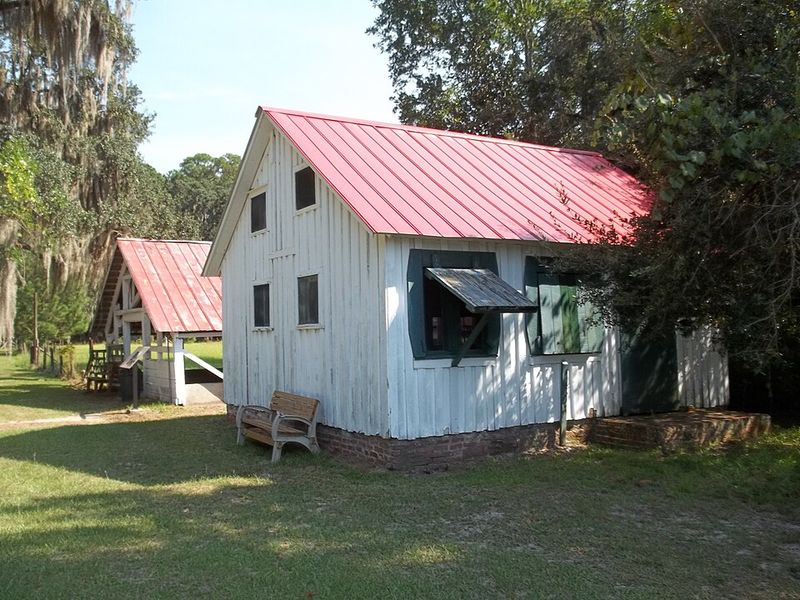
Golden marsh grasses stretch endlessly toward the horizon where land meets saltwater in coastal Georgia’s Lowcountry. Hofwyl-Broadfield sits amid this landscape that once produced vast rice crops through backbreaking labor in mosquito-infested fields.
Rice made fortunes for plantation owners but cost everything for enslaved people who created that wealth.
The Dent and Troup families operated this plantation for seven generations, adapting from rice cultivation before the Civil War to dairy farming afterward. The preserved main house and outbuildings show how plantation life evolved across eras, including surprisingly humble interiors for a wealthy family.
Furnishings and personal belongings reveal daily routines spanning antebellum prosperity through twentieth-century decline.
Interpretation doesn’t shy from difficult truths about slavery’s central role in Lowcountry economy. Enslaved workers managed complex flooding systems, planted and harvested in brutal conditions, and possessed agricultural knowledge essential to rice production.
Their stories deserve remembering alongside planter narratives. Nature trails wind through former rice fields now reclaimed by marsh, where herons and alligators inhabit spaces once dominated by human agricultural ambition.
The landscape itself tells stories of transformation.
Fort King George State Historic Site (Darien)
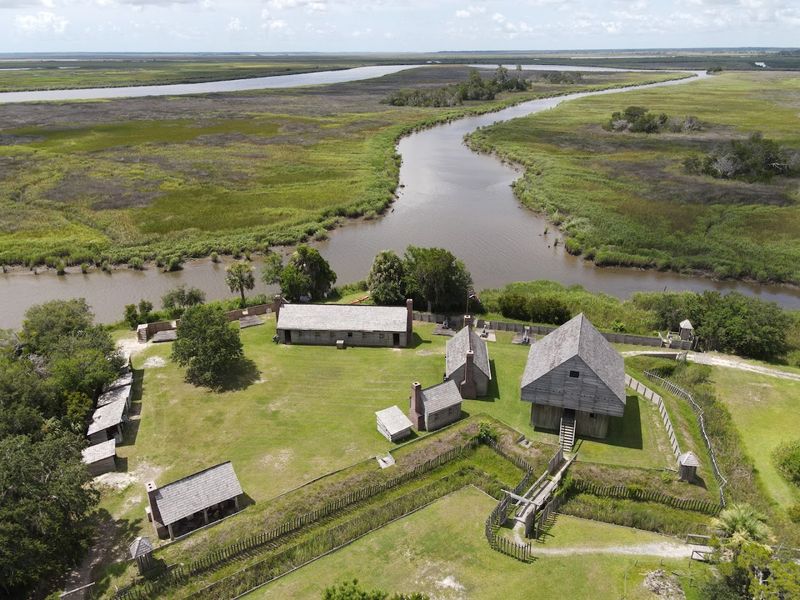
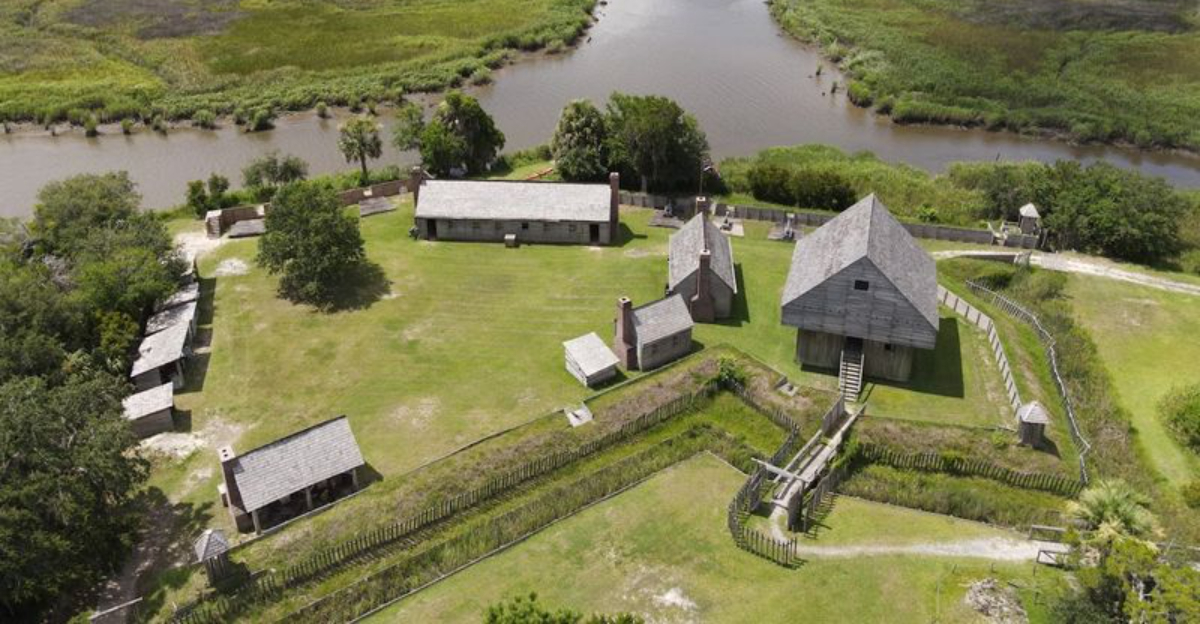
Britain, Spain, and France battled for control of Georgia’s coast during the early 1700s, and Fort King George represented England’s bold claim to disputed territory. Established in 1721 as the southernmost British outpost in North America, this frontier fort marked the empire’s ambitious push into Spanish-claimed lands.
Soldiers here stood on the front lines of colonial rivalry.
Life proved incredibly harsh for garrison troops isolated in malarial swampland surrounded by potential enemies. Disease killed more soldiers than combat ever did.
Supplies arrived irregularly from South Carolina, leaving men hungry and poorly equipped. The wooden blockhouse offered little comfort against summer heat or winter cold.
Most soldiers probably wondered what they’d done to deserve such miserable posting.
Today’s reconstructed fort and blockhouse give visitors authentic glimpses into 18th-century military life on the colonial frontier. The towering blockhouse dominates the landscape just as it would have centuries ago, providing defensive views across the Altamaha River.
Museum exhibits explain complex territorial politics, Native American interactions, and the everyday struggles of frontier soldiers far from home. Fort King George preserved a crucial but often forgotten chapter of Georgia’s colonial beginnings.
Jarrell Plantation State Historic Site (Juliette)
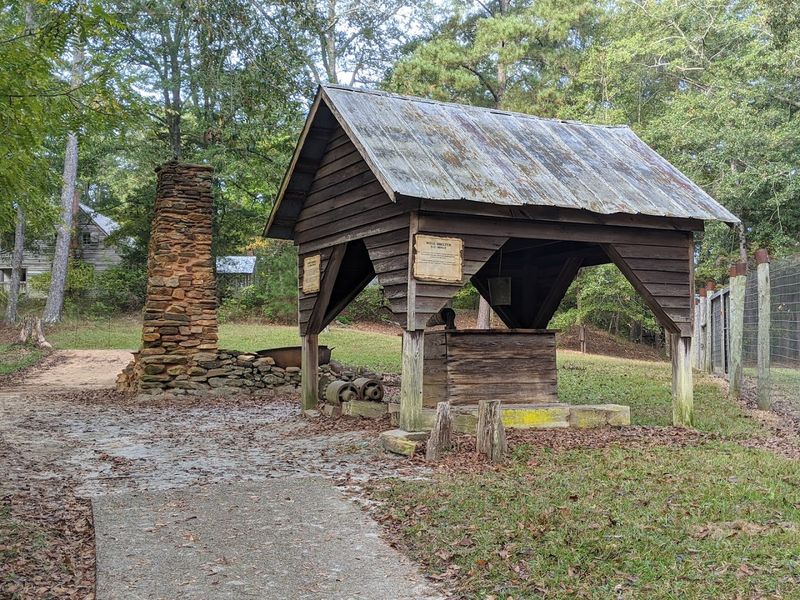
Most plantations showcase grand mansions and manicured gardens, but Jarrell tells a different, more representative story of rural Southern life after the Civil War. Here, middle-class farming families worked their own land rather than relying primarily on enslaved labor.
The Jarrell family built this self-sufficient farm operation from the 1840s through the 1940s, preserving an authentic record of how ordinary Georgians lived.
Twenty historic buildings remain remarkably intact, including the main house, cotton gin, sawmill, gristmill, blacksmith shop, and workers’ quarters. Rusting farm equipment sits where it was last used, and the landscape retains its working-farm character.
You can practically hear echoes of daily life: roosters crowing, mill wheels turning, and hammers ringing at the forge.
Jarrell especially illuminates Georgia’s difficult transition from plantation slavery to sharecropping and small-farm agriculture during Reconstruction. Economic hardship affected everyone, Black and white, as the old system collapsed and families struggled adapting to new realities.
The site honestly explores how rural Georgians navigated poverty, hard work, and gradual modernization through generations. It’s history without romanticism, showing both resilience and real struggles.
Roosevelt’s Little White House State Historic Site (Warm Springs)
Franklin D. Roosevelt first visited Warm Springs in 1924 searching for relief from polio’s devastating effects.
The naturally heated mineral springs seemed to ease his paralysis, giving hope when medical science offered little. He loved this place so deeply that he built a modest cottage retreat where he could escape presidential pressures, swim in therapeutic pools, and connect with ordinary Americans facing their own hardships.
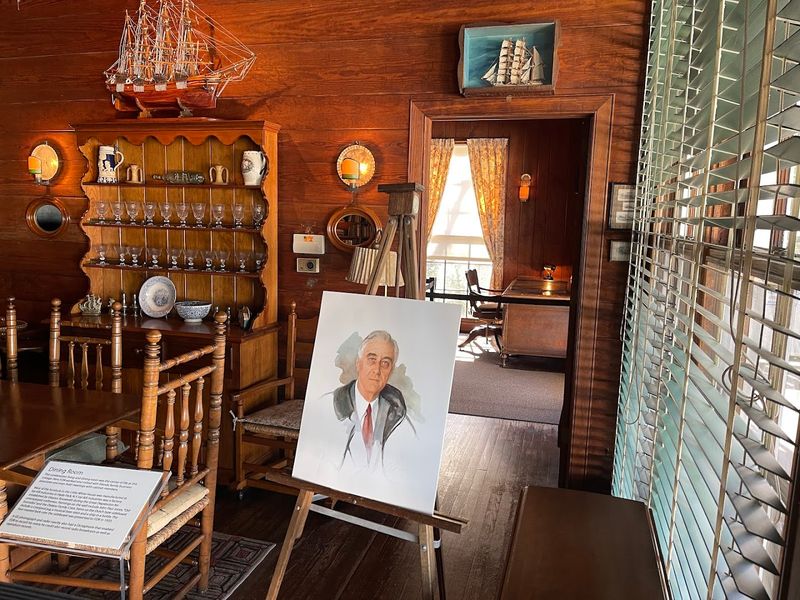
The unfinished portrait sitting on its easel captures a haunting moment frozen in time. Roosevelt posed for artist Elizabeth Shoumatoff on April 12, 1945, when he suddenly complained of a terrible headache and collapsed.
He died that afternoon in the bedroom, never seeing the Allied victory he’d worked so desperately to achieve. The clock stopped at 3:35 PM.
Touring the cottage feels intensely personal, like visiting someone’s actual home rather than a museum. Roosevelt’s belongings remain exactly as he left them, including his wheelchair, favorite books, and the hand-controls on his specially modified car.
Warm Springs represented more than presidential escape; it symbolized hope, determination, and Roosevelt’s genuine connection to everyday people struggling through Depression and war.
Pickett’s Mill Battlefield State Historic Site (Dallas)
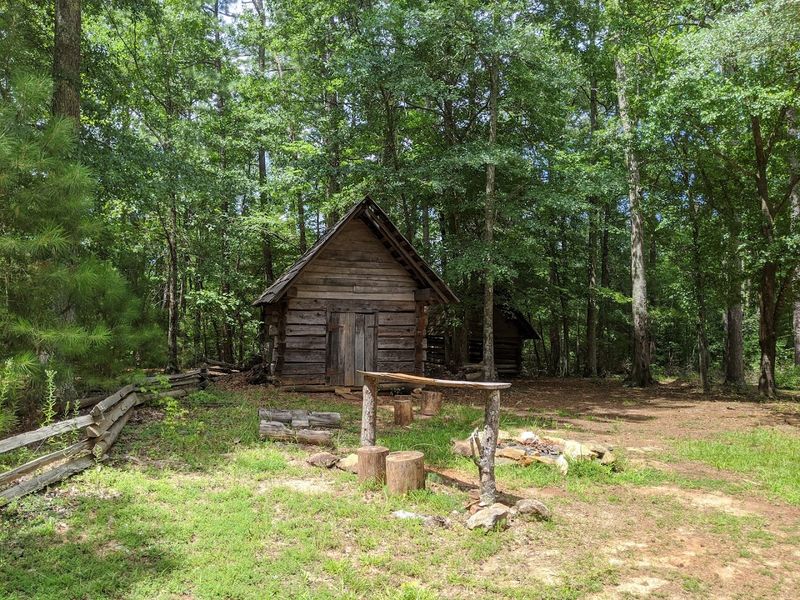
Most Civil War battlefields have been developed over, paved, or built upon until original landscapes disappear beneath modern progress. Pickett’s Mill stands remarkably different as one of America’s best-preserved battlefields, looking much as soldiers saw it during the bloody Atlanta Campaign of May 1864.
Walking these trails means experiencing authentic battlefield terrain rather than imagining it.
Confederate defenders dug trenches and earthworks still visible throughout the woods, creating defensive positions that proved devastatingly effective. Union forces under General Oliver O.
Howard attacked uphill through dense forest against entrenched enemies, suffering terrible casualties in just a few hours. The battle demonstrated how modern defensive tactics had made frontal assaults nearly suicidal, lessons commanders were slow to learn.
Interpretive trails guide visitors along attack routes, defensive lines, and key positions where men fought and died. The wooded landscape, ravines, and slopes forced soldiers into confused, desperate close-quarters combat unlike open-field battles.
Living history demonstrations help visitors understand soldier experiences beyond statistics. Pickett’s Mill preserves not just a battlefield but the actual ground-level reality of Civil War combat in forests and ravines throughout the South.