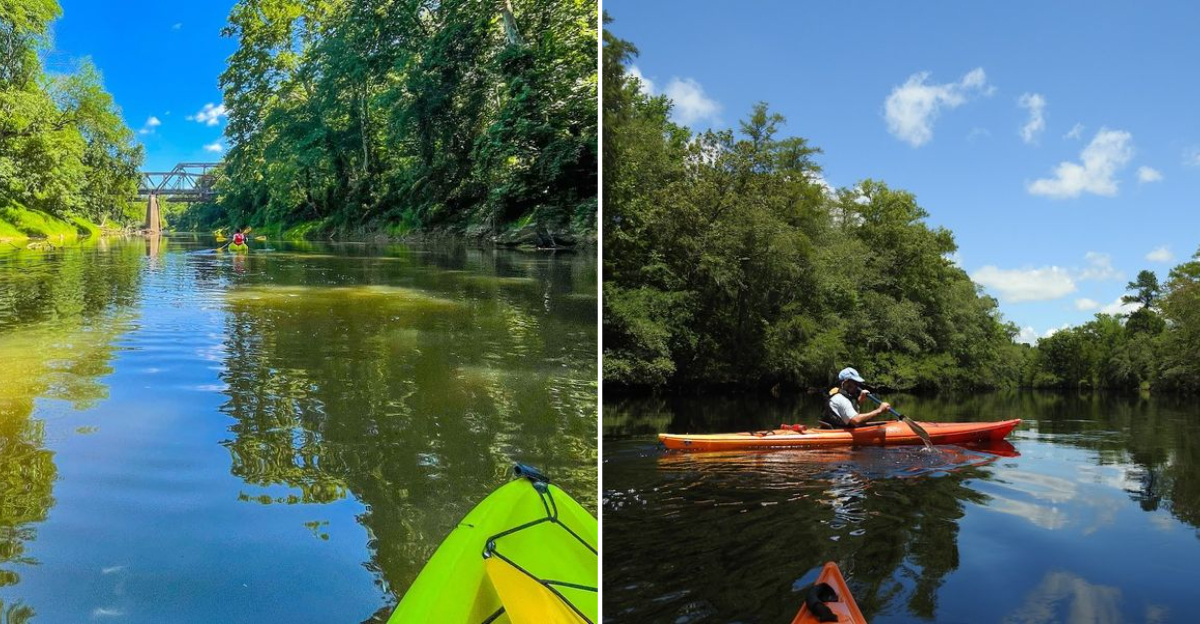
Some North Carolina paddles feel less like open water and more like slipping through a living green hallway. On these routes, cypress limbs, hardwood branches, and rhododendron thickets knit together so tightly that the world above nearly disappears.
If you love quiet water, filtered light, and the strange thrill of drifting through a natural tunnel, this list will pull you in fast. Here are 11 of the state’s best kayak trails where the trees steal the show.
Black River
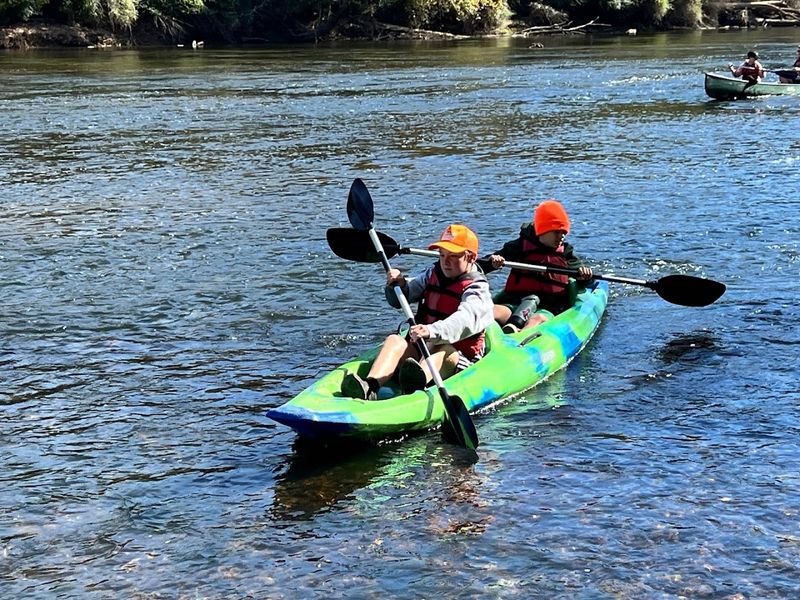
The Black River feels like a cathedral built by trees instead of stone. Ancient bald cypress line the banks, and in several stretches their limbs lean so far over the water that you paddle inside a dim, hushed corridor.
The dark water doubles every trunk and branch, making the whole place feel deeper and older.
This river is famous for some of the oldest trees in the eastern United States, and you can feel that age around every bend. I would come here for a quiet, contemplative trip rather than a fast mileage day.
The beauty is subtle at first, then completely overwhelming.
Because access points and conditions can vary, it helps to check water levels and local guidance before heading out. A small, maneuverable kayak works especially well in tighter sections.
If your ideal paddle involves blackwater, cypress giants, and immersive shade, the Black River absolutely delivers.
It is haunting, peaceful, and unforgettable.
Northeast Cape Fear River
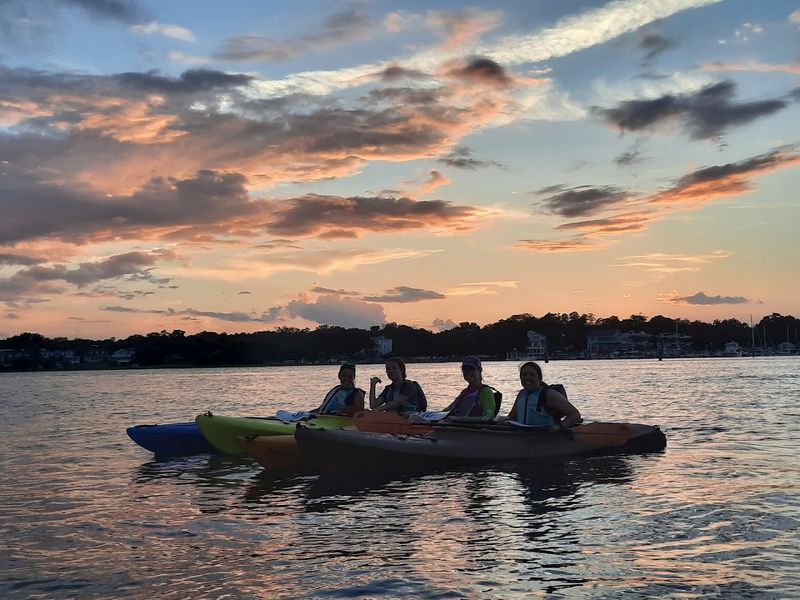
The Northeast Cape Fear River offers the kind of blackwater paddling that feels half hidden from the rest of the state. In its quieter stretches, the river slides beneath heavy overhanging trees, and the canopy can get so thick that the light turns rich and green.
It feels remote even when you are not far from Wilmington.
This is a great choice if you want a longer river feel without sacrificing that enclosed, forested mood. I would recommend paying attention to current, access logistics, and local conditions because some sections feel more isolated than others.
That sense of separation is part of the appeal.
The scenery here leans more shadowy and mysterious than postcard pretty, which is exactly why many paddlers love it. You will pass under leaning limbs, through quiet bends, and beside thick swamp growth that muffles sound.
For a canopy heavy coastal river trip with a wilder edge, this route stands out.
Come for solitude and stay alert.
Haw River
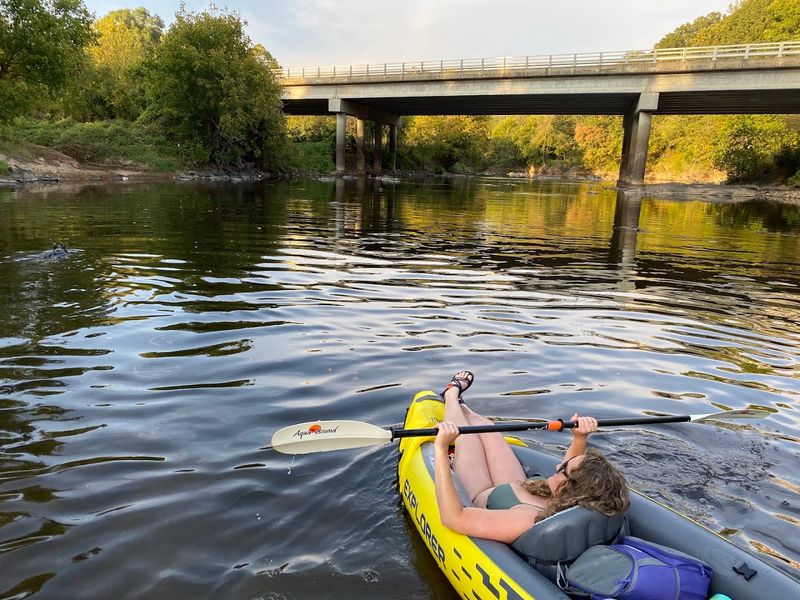
The Haw River proves you do not have to head to the coastal plain for a canopy rich paddle. Around Saxapahaw and other forested sections, hardwoods line the banks, shaded bends stack up one after another, and the river feels surprisingly enclosed despite its broader Piedmont character.
The light here flickers instead of fully opening.
I love this route for variety because you get wooded banks, occasional bluffs, and that steady sense of moving through a living corridor. It is not as tunnel like as a cypress swamp, but it absolutely delivers stretches where the trees dominate your view.
The scenery changes constantly.
Depending on section and water level, the Haw can include shoals or mild current features that deserve attention. That makes trip planning important, especially if you are newer to river paddling.
For paddlers who want a more dynamic route without losing the feeling of shade, forest, and immersion, the Haw River is a smart choice.
It feels energetic, grounded, and beautifully green.
Deep River
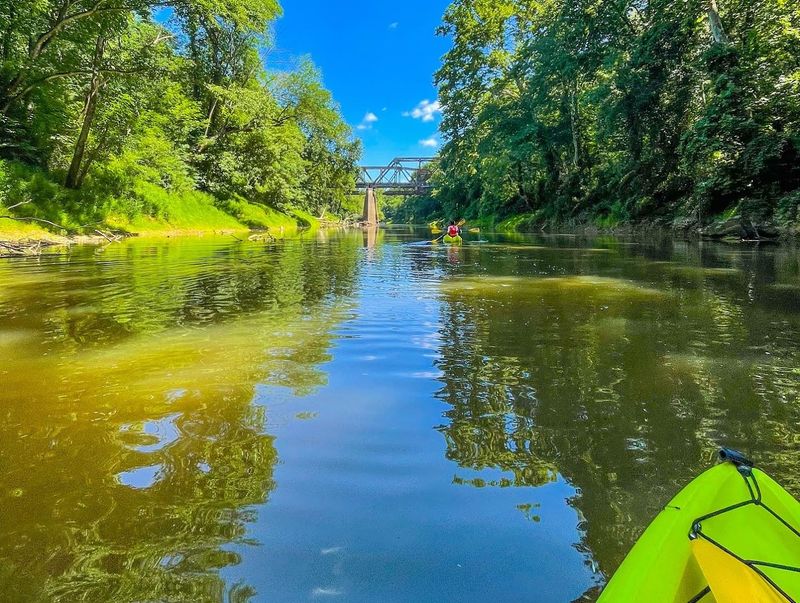
The Deep River has long stretches where overhanging hardwoods create exactly the kind of leafy cover that makes summer paddling feel cooler and quieter. The banks stay largely forested in many sections, and the river’s bends often hide the view ahead under layers of green.
It feels pleasantly removed from nearby towns.
I would recommend the Deep for paddlers who enjoy a more classic river outing with a wooded backdrop that rarely lets up. The canopy is not always dramatic in a tunnel sense, but it consistently shapes the mood of the trip.
You are paddling through forest, not beside it.
Section choice matters here, since water levels, shoals, and access can change the character of your day. A little homework helps you match the trip to your comfort level.
For a Piedmont paddle that mixes moving water, rural scenery, and plenty of shade from mature hardwoods, the Deep River is an easy route to appreciate.
Expect steady beauty and a relaxed pace.
Uwharrie River
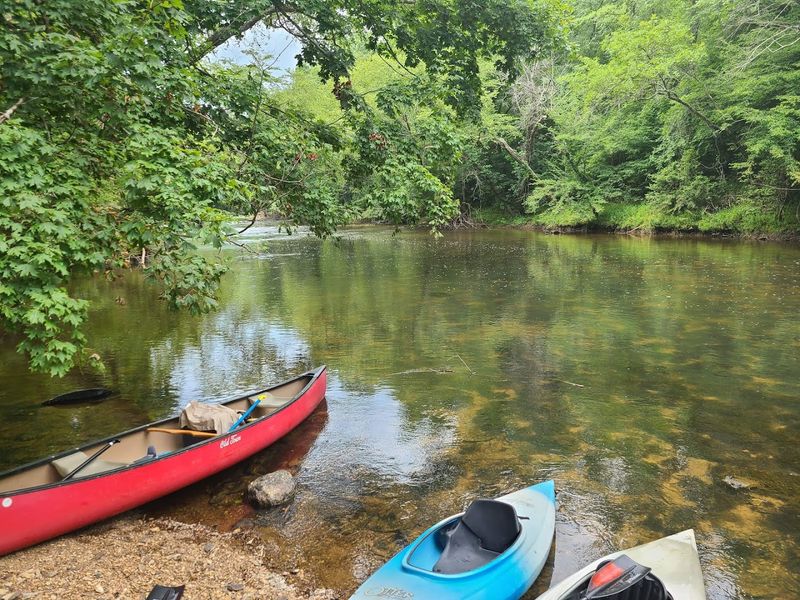
The Uwharrie River feels remote in a way that sneaks up on you. As the river winds through dense hardwood forest near Troy, the banks close in, the shade deepens, and the outside world starts to feel far away.
It is one of those paddles where the canopy shapes the whole experience.
I would point newer explorers here only after they have checked conditions and chosen an appropriate section. The appeal is absolutely the seclusion, but that same seclusion means you should show up prepared.
Once on the water, though, the quiet and tree cover can be incredibly rewarding.
The river often carries you through a corridor of layered greens, with long stretches where branches and trunks dominate every angle of view. There is a calm, backcountry mood here that many Piedmont routes cannot match.
If you want a forest first paddle that feels immersive, peaceful, and a bit removed, the Uwharrie River is a standout.
Bring patience and enjoy the hush.
French Broad River (Forest Sections)
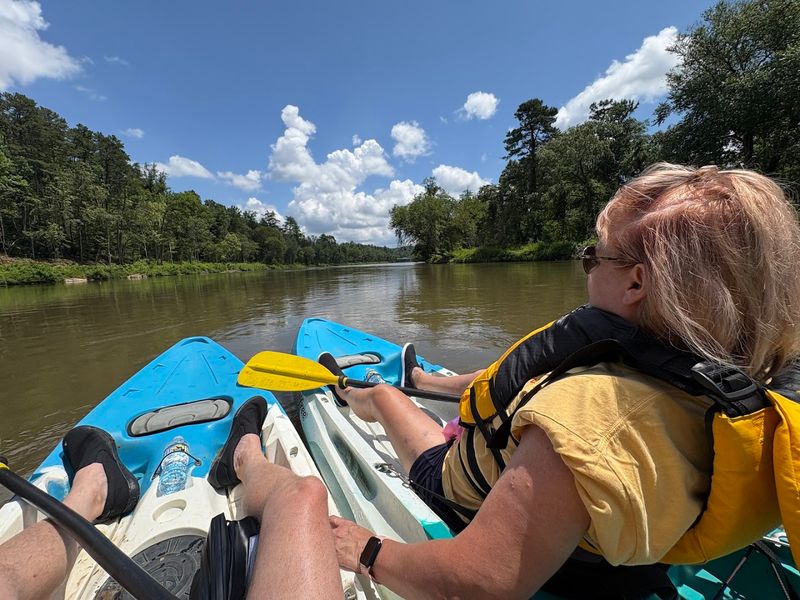
The French Broad is often associated with broad views and popular floats, but its forested sections reveal a different personality. In quieter bends, trees along the banks cast long shade across the water, and cliffside growth narrows your sense of space just enough to create a canopy mood.
It feels expansive and enclosed at the same time.
I like this route for paddlers who want mountain scenery without giving up that tucked under the trees feeling. You may catch glimpses of ridges, but the best moments happen when the river curves and the canopy takes over.
Those transitions keep the trip visually rich.
Because this is a larger river, choosing the right section matters if shade and atmosphere are your priorities. Look for less urban stretches with stronger tree cover and fewer distractions.
For a mountain paddle that combines moving water, wooded banks, and moments of genuine overhead green shelter, the French Broad absolutely deserves consideration.
It is lively, scenic, and more intimate than expected.
Tuckasegee River
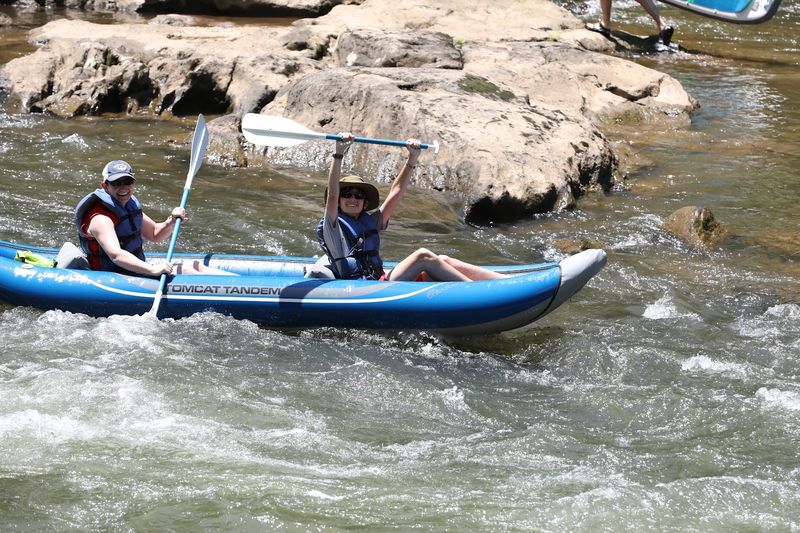
The Tuckasegee River flows through forested valleys that can feel wonderfully enclosed, especially where rhododendron and hardwoods overhang the banks. In those stretches, the river takes on a softer, more sheltered personality than you might expect from a mountain waterway.
The shade adds a calm layer to the trip.
I would suggest the Tuck for paddlers who like a balance of easy scenery and a bit of current awareness. It is approachable in many sections, but still lively enough to keep you engaged.
The forested edges make even straightforward paddling feel immersive and visually rich.
What stands out most is the combination of moving water and leafy enclosure. You get mountain freshness, changing light, and moments where the trees frame the river like a corridor.
If you want a western North Carolina paddle that feels green, cool, and inviting without losing a sense of flow, the Tuckasegee is an excellent pick.
It is refreshing, scenic, and easy to love.
Nantahala River (Lower Sections)
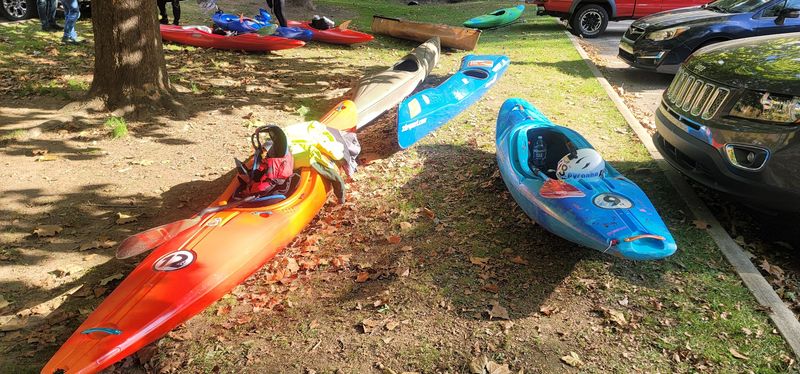
The lower sections of the Nantahala bring a gorge setting that makes the forest feel even taller and more enclosing. Dense trees rise above shaded canyon walls, and the light narrows into cool bands that make the river seem tucked beneath the mountains.
It is a powerful visual experience.
I would not describe this as a lazy drift, so section choice and skill level matter a lot. Still, if you are looking for tree canopy drama rather than swampy stillness, the Nantahala offers a completely different flavor of overhead immersion.
The forest here feels steep, vertical, and close.
Even when the river opens briefly, the surrounding slopes and thick growth keep you wrapped in green. The sound of moving water, cool air, and limited sky combine to create a memorable sense of being inside the landscape.
For paddlers who want a mountain route where shade comes from a forested gorge, this one stands apart.
It is exhilarating, cool, and gorgeously enclosed.
New River
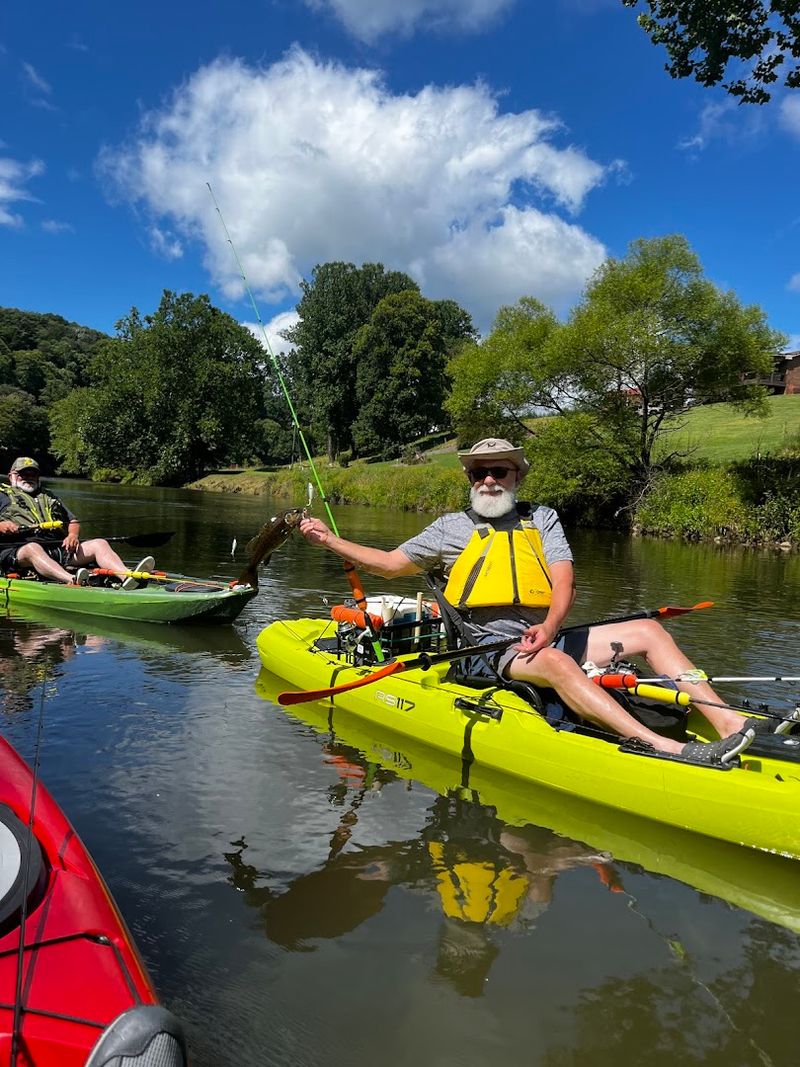
The New River is wider than many routes on this list, but do not let that fool you into expecting full exposure. In many bends near Jefferson, overhanging sycamores and tree lined banks create broad ribbons of shade that soften the openness.
The result is a paddle that feels spacious yet still wrapped in forest.
I like the New for relaxed floats where the current does some of the work and the scenery never feels forced. You can settle into an easy rhythm, watch the tree cover shift with each turn, and enjoy a quieter kind of mountain foothill beauty.
It is gentle, not flashy.
The best canopy moments happen where the river curves and the banks pull closer, letting the branches reach farther across the water. Those stretches are especially lovely on bright summer days.
If you want a scenic, approachable paddle with enough tree cover to keep the mood cool and immersive, the New River is a strong choice.
It is mellow, classic, and deeply pleasant.
White Oak River
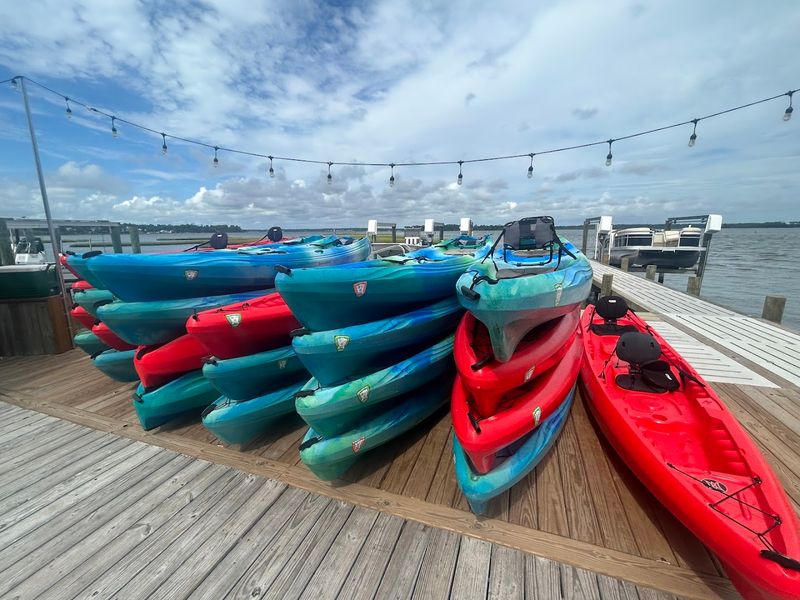
The White Oak River near Swansboro gives you a coastal version of the canopy effect, and it is unlike anything inland. In the right creeks and sheltered stretches, overhanging live oaks and marsh edged channels create shady passageways where the water feels tucked beneath a softer, salt touched green ceiling.
It is wonderfully atmospheric.
I would time this paddle with tides and wind in mind because that can dramatically shape how easy and enjoyable your route feels. The payoff is a landscape that shifts between open estuarine views and surprisingly enclosed, tree framed corridors.
That contrast keeps the trip engaging from start to finish.
Look for side channels and protected sections where the branches lean lower and the shoreline feels more intimate. Those are the places where you can almost forget the coast is nearby.
For paddlers who want a canopy rich trail with brackish character, live oaks, and a calmer tidal rhythm, the White Oak is a fantastic choice.
It is coastal, shady, and wonderfully distinctive.
Lumber River
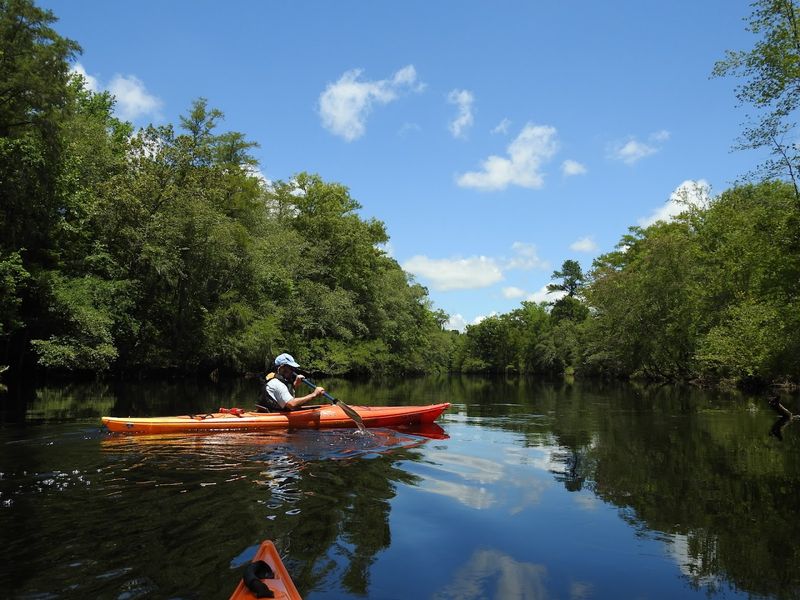
The Lumber River settles into a slow, tea-colored glide that feels made for quiet strokes and long looks upward. Cypress, tupelo, and bay trees lean across the channel until the light turns soft and green.
In the most enclosed sections, the river seems to narrow into a tunnel, with reflections doubling every branch. You drift through it almost whispering, because the whole corridor carries that hushed, backswamp stillness.
Sandbars appear now and then, but the real draw is the canopy itself and how completely it wraps the water. It is the kind of paddle that makes distance feel irrelevant again.