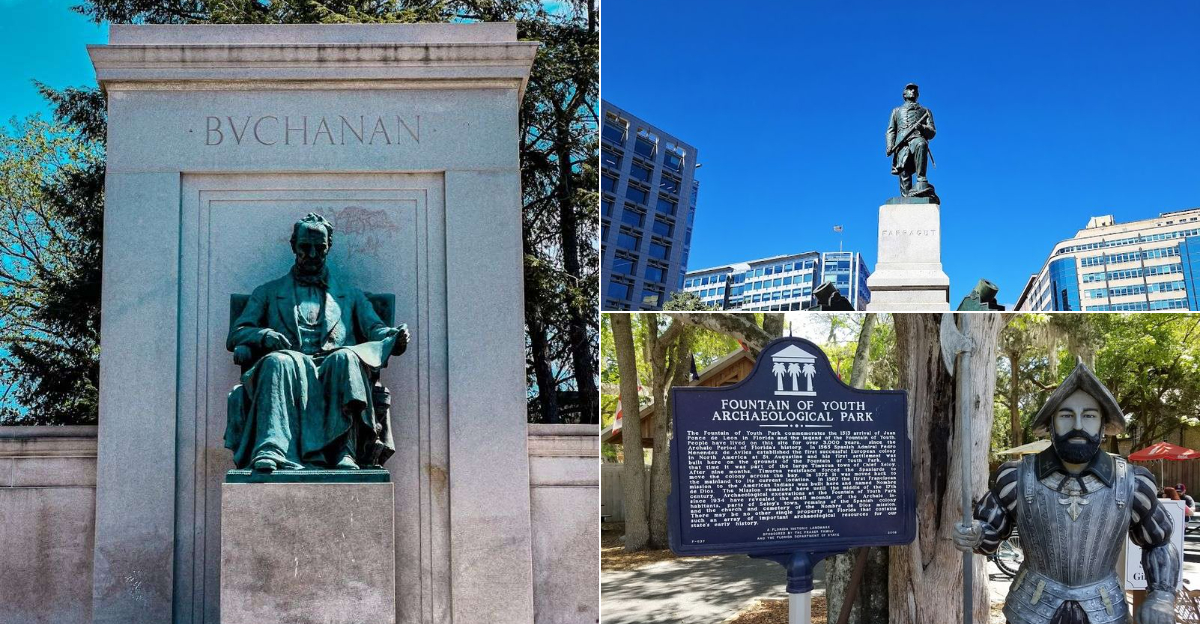
Florida knows how to show off, and its statues prove that sunshine pairs surprisingly well with drama, memory, and a little stone cold swagger.
From solemn memorials to larger than life explorers, these works do more than decorate a plaza.
They tell stories about migration, courage, conflict, scholarship, and the dream of starting fresh in a place ringed by palms.
You can wander from Miami to St. Augustine to Gainesville and find art that feels both deeply local and bigger than the map, the kind of landmarks that make you stop mid stroll, squint at a plaque, and suddenly care a lot about history.
If you are ready for a road trip with beauty, brainpower, and a few excellent photo ops, these ten statues deserve a spot on your Florida list, because each one brings the past off the pedestal and right into your day.
1. The Birth of the New World Statue
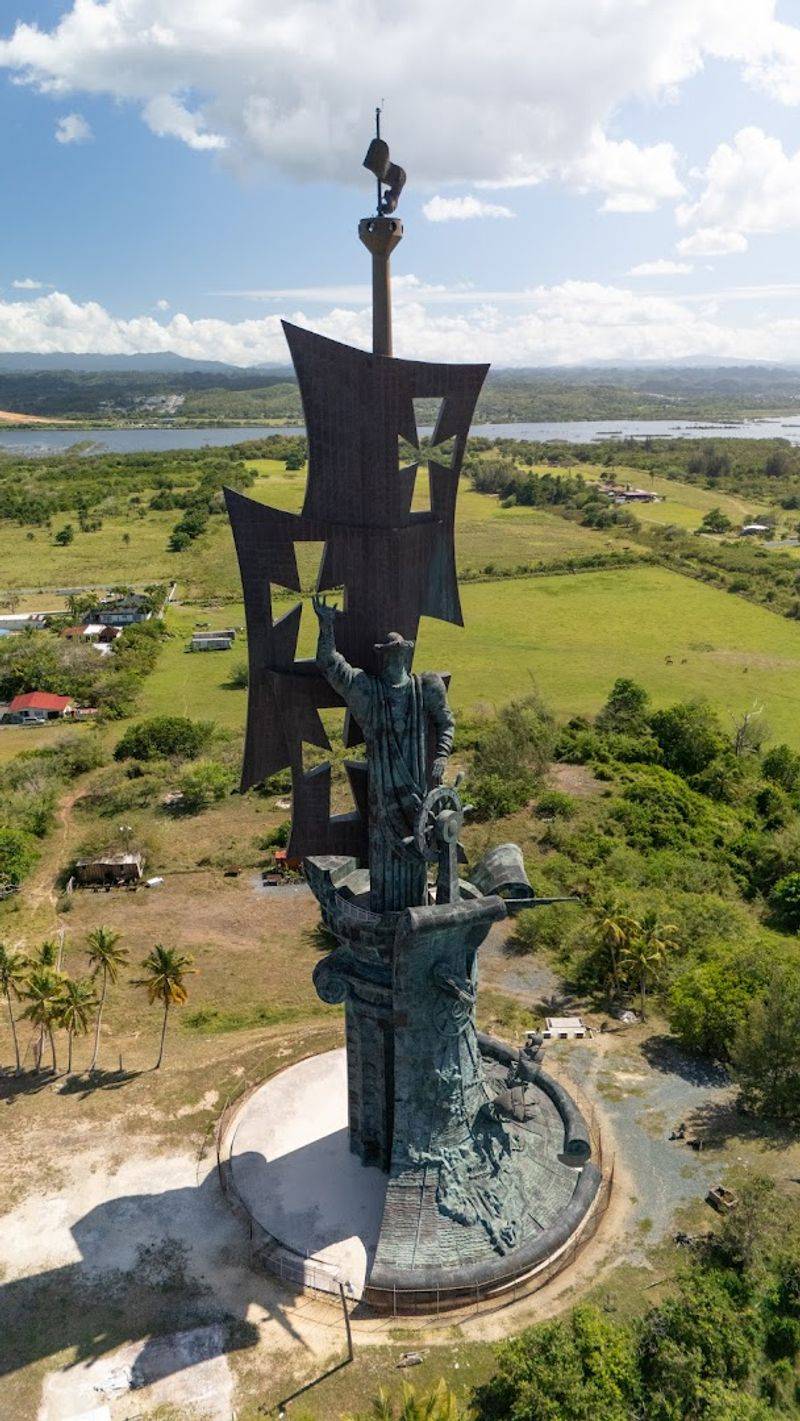
Sunlight hits this giant bronze like it knows it is the star of the block.
The Birth of the New World Statue in Aventura is hard to miss, and honestly, it is not trying to be subtle.
Standing near NE 183rd Street in the heart of the city, this towering work celebrates Christopher Columbus with theatrical scale and plenty of visual muscle.
Sculpted by Zurab Tsereteli, the monument rises dramatically with Columbus lifting a cross, framed by movement, folds, and symbolic detail.
Even if you arrive with mixed feelings about the subject, the craftsmanship pulls your attention fast.
The textures, the sheer size, and the carefully staged base make it feel part history lesson, part blockbuster set.
What makes this statue memorable is the way it sparks conversation instead of simply posing for postcards.
Aventura is better known for shopping and sleek modern living, so finding a massive historical monument here feels delightfully unexpected.
Bring your camera in the morning or late afternoon, when the light softens the bronze and gives every contour extra drama.
If you like public art that demands a reaction, this one earns the stop.
It is ambitious, controversial, and undeniably impressive, which is a combination Florida wears rather well.
You may come for the spectacle, but you will leave thinking about how monuments shape memory.
2. The Freedom Tower Statue / Cuban Refugee Memorial
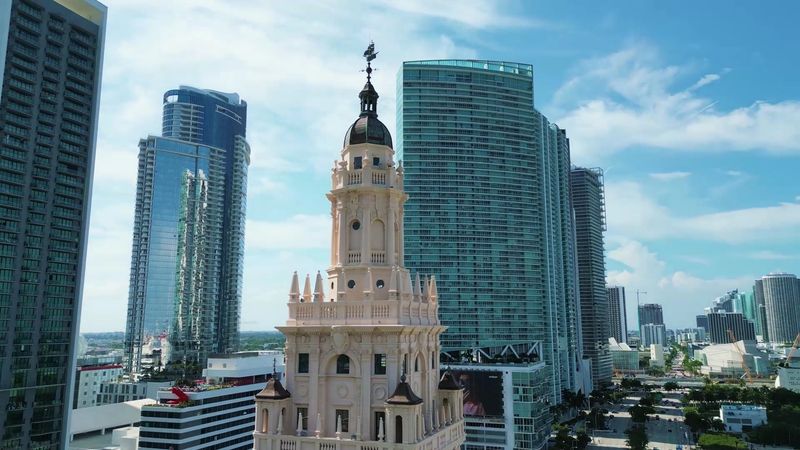
Few places in Miami carry emotion quite like the area around the Freedom Tower.
Near this landmark in downtown Miami, the Cuban Refugee Memorial honors the people who arrived seeking safety, dignity, and a new beginning.
The statue and surrounding setting give the story a human face, grounding a sweeping chapter of Florida history in a deeply personal way.
The memorial resonates because Miami is not just its backdrop.
Miami is part of the story.
For many Cuban families, the Freedom Tower symbolized processing, hope, uncertainty, and the first steps into American life.
Seeing the sculpture near the tower adds gravity, especially when traffic hums nearby and modern towers remind you how many futures grew from those difficult arrivals.
Artistically, the memorial favors feeling over flash, and that restraint works.
Its forms, gestures, and placement invite reflection rather than spectacle, which makes you pause longer than expected.
This is not the kind of stop you rush through while checking boxes on a sightseeing list.
Visit with a little time to read the historical markers and look up at the Freedom Tower itself.
Together, the architecture and sculpture create one of South Florida’s strongest pairings of art and memory.
It is moving, beautifully situated, and essential if you want to understand Miami beyond the beach.
3. Andrew Jackson Statue
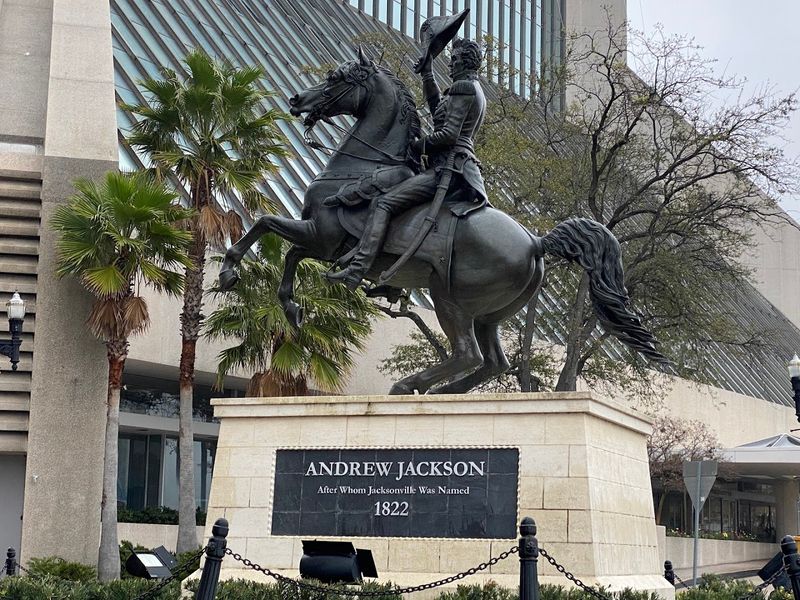
Right in the middle of downtown, history steps into the square with a complicated smile.
The Andrew Jackson Statue in Jacksonville’s James Weldon Johnson Park connects the city to one of the most consequential and debated figures linked to early Florida history.
Set within a lively public park, the monument sits where everyday movement meets the longer currents of memory.
The surrounding park adds layers that make the experience richer.
Named for the celebrated writer, educator, diplomat, and civil rights leader James Weldon Johnson, the space already carries deep cultural meaning.
That contrast between place name and statue subject encourages questions, which is exactly what strong public art should do.
Visually, the sculpture offers classic monument language: commanding pose, clear symbolism, and a sense of authority shaped in bronze.
Yet the most interesting part may be how the statue reads today, surrounded by office workers, visitors, events, and the pulse of modern Jacksonville.
It feels less like a frozen relic and more like an invitation to consider who gets honored, why, and how interpretations change.
This is an easy stop if you are exploring downtown on foot.
Take time to enjoy the park’s shade, look up local history, and let the setting deepen what you see.
The statue is visually strong, historically important, and never quite as simple as it first appears.
4. The Spirit of American Youth
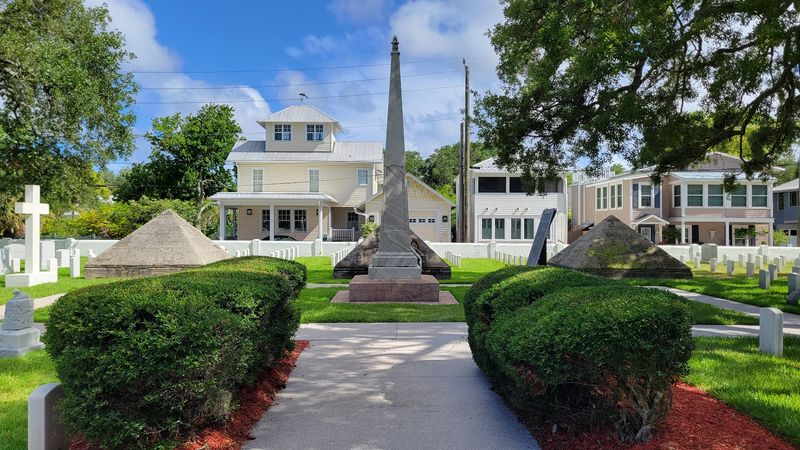
Silence does a lot of the talking here.
The Spirit of American Youth in St. Augustine National Cemetery carries a solemn grace that feels instantly different from the city’s more tourist friendly landmarks.
Surrounded by ordered rows, mature trees, and the quiet weight of remembrance, the statue honors sacrifice with tenderness instead of theatrical force.
The figure is elegant, youthful, and deeply symbolic, expressing national memory through beauty rather than noise.
Its placement in the cemetery matters just as much as its sculptural form, because the setting turns every detail into part of a larger act of respect.
You notice the posture, the stillness, and the emotional restraint, all of which make the monument especially affecting.
St. Augustine is famous for forts, old streets, and layered colonial stories, but this site reveals another side of the city.
It invites a slower pace and a more reflective mood, which can be surprisingly powerful after a busy day of sightseeing.
If you appreciate memorial art, this statue is one of the most meaningful stops in Florida.
Visit gently and give yourself a few unrushed minutes.
The beauty here is not flashy, and that is exactly why it lingers.
The Spirit of American Youth turns stone and space into a heartfelt conversation about loss, honor, and the fragile cost of freedom.
5. Ponce de Leon Statue
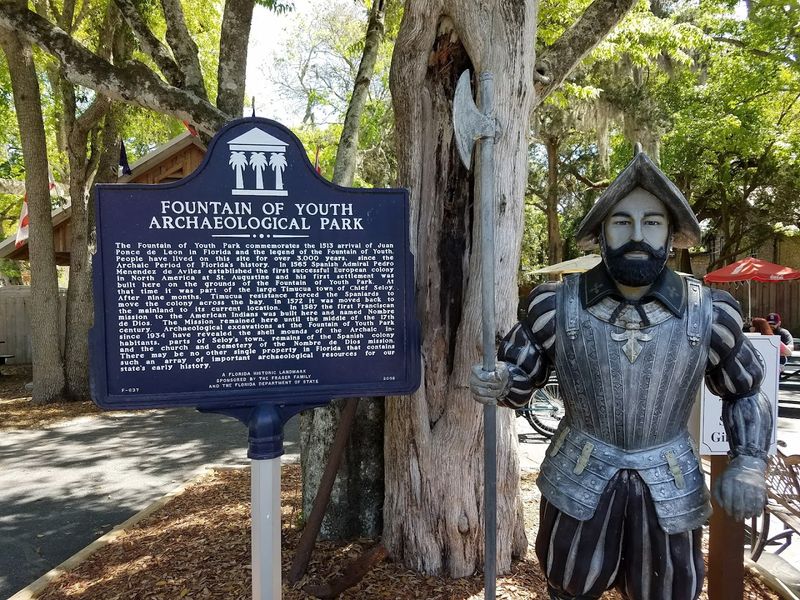
If any statue in Florida seems ready for adventure, it is this one.
The Ponce de Leon Statue at Ponce de Leon’s Fountain of Youth Archaeological Park in St. Augustine leans fully into the city’s legendary explorer energy.
Set within one of the state’s most atmospheric historic sites, it blends myth, tourism, and colonial history into one very photogenic stop.
The monument presents Juan Ponce de Leon with the kind of bold presence that suits a man forever linked, fairly or not, with the dream of miraculous water.
Around it, the park layers archaeology, waterfront views, interpretive exhibits, and old world ambiance.
That setting gives the statue extra life, because you are not just looking at a figure – you are stepping into a carefully staged story world.
Artistically, it works because it is both approachable and theatrical.
Visitors can admire the sculpted details, then pivot toward peacocks, cannons, gardens, and bayside breezes without missing a beat.
History here never feels dry, which may be the most St. Augustine quality imaginable.
Go with curiosity and a willingness to enjoy a little legend alongside fact.
The statue captures Florida’s talent for turning history into experience, complete with sun, spectacle, and just enough mystery.
If fountains of youth remain unconfirmed, the charm of this place definitely is not.
6. The Coquina Cross
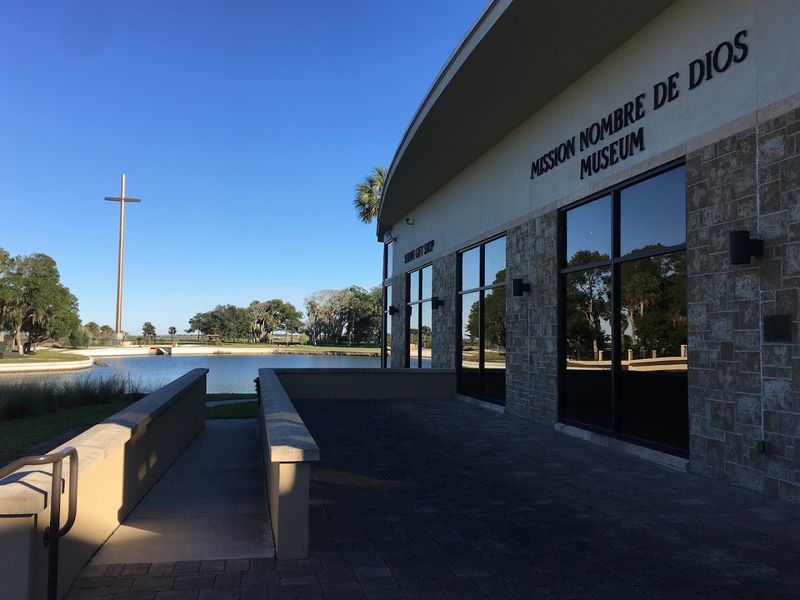
Against the sky, the Coquina Cross looks both simple and commanding.
Located at Mission Nombre de Dios in St. Augustine, this towering cross is one of the city’s most recognizable religious monuments.
Built from coquina, the shell based stone that defines so much local architecture, it ties spiritual history directly to the landscape of Florida’s oldest city.
The site marks the early Catholic presence in what became the United States, and that alone gives the monument major historical significance.
Yet the beauty of the cross is not only in its symbolism.
Its texture, scale, and position near the water create a serene visual experience that feels grounded, luminous, and unmistakably St. Augustine.
Mission Nombre de Dios offers gardens, pathways, museum spaces, and sweeping views, so the cross becomes the focal point of a broader contemplative visit.
You can stand below it and feel the contrast between immense stone and quiet air, which is a pretty effective recipe for awe.
This is sacred space, but it is also great design, and the two work beautifully together.
Morning light gives the coquina a soft glow, while late afternoon adds stronger shadows and richer texture.
Whether you come for faith, history, or architecture, the monument leaves a lasting impression.
The Coquina Cross proves that beauty does not need ornament when scale, place, and meaning already do the heavy lifting.
7. The Admiral David Farragut Statue
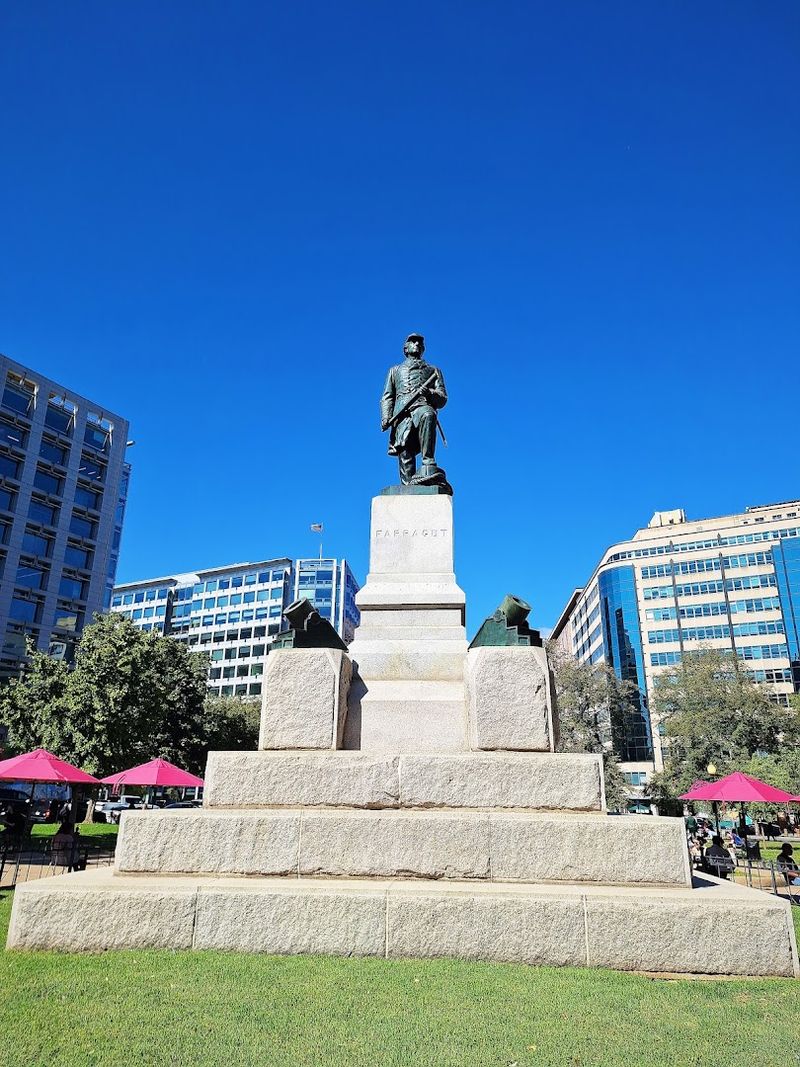
Admiral David Farragut’s statue in Key West brings a quiet sense of naval history to one of the most energetic public spaces in the Florida Keys.
Positioned near the waterfront at the edge of the Mallory Square area, the monument honors the Civil War naval commander best known for his decisive leadership and the famous command, “Damn the torpedoes, full speed ahead.”
The statue itself carries a traditional, almost classical dignity, with Farragut depicted in uniform, standing firmly as if still overseeing the waters he once helped secure.
Its placement is what gives it particular strength; set against the backdrop of shifting tides, harbor views, and the constant movement of boats entering and leaving port.
Unlike monuments placed in quiet parks or formal squares, this one lives within the rhythm of Key West’s daily life, where street performers, sunset crowds, and travelers pass within steps of its base.
That contrast between solemn remembrance and lively atmosphere creates a layered experience for visitors.
The craftsmanship emphasizes clarity and authority rather than ornamentation, reflecting the discipline of naval service.
Over time, the statue has become part of the cultural landscape of Mallory Square, offering a moment of pause amid celebration.
It reminds visitors that even in a place known for leisure and color, history remains anchored just beneath the surface.
8. Pedro Menéndez de Avilés Statue
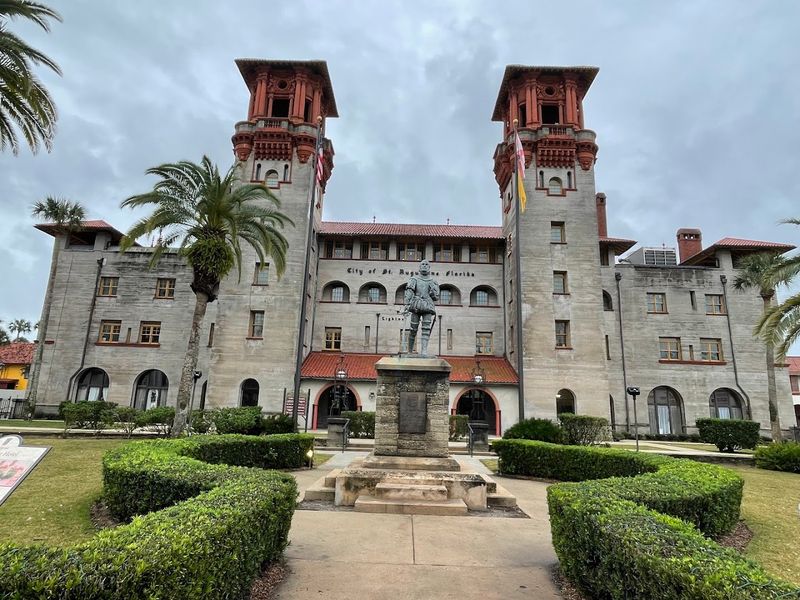
The Pedro Menéndez de Avilés statue in St. Augustine carries a quiet authority that fits naturally into the layered history of the Mission Nombre de Dios Shrine area.
Set within one of Florida’s most historically significant landscapes, the monument honors the Spanish admiral credited with founding the first permanent European settlement in what would become the United States.
Its presence near the Mission Nombre de Dios shrine adds a deeper sense of continuity between faith, exploration, and early colonial history.
The sculpture itself is restrained yet dignified, reflecting the seriousness of the era it represents rather than attempting dramatic flourish or modern reinterpretation.
Visitors often encounter it as part of a broader historic walk through the site, where multiple monuments and markers collectively tell the story of St. Augustine’s origins.
There is a calmness to the setting that encourages reflection rather than haste, allowing the statue’s meaning to unfold gradually.
In a state filled with grand memorials and expressive public art, this one stands out for its historical weight and understated craftsmanship.
It remains a place where history feels close, personal, and still very much alive in the present landscape of St. Augustine.
Few statues connect past and place so seamlessly.
9. The Unconditional Surrender Statue
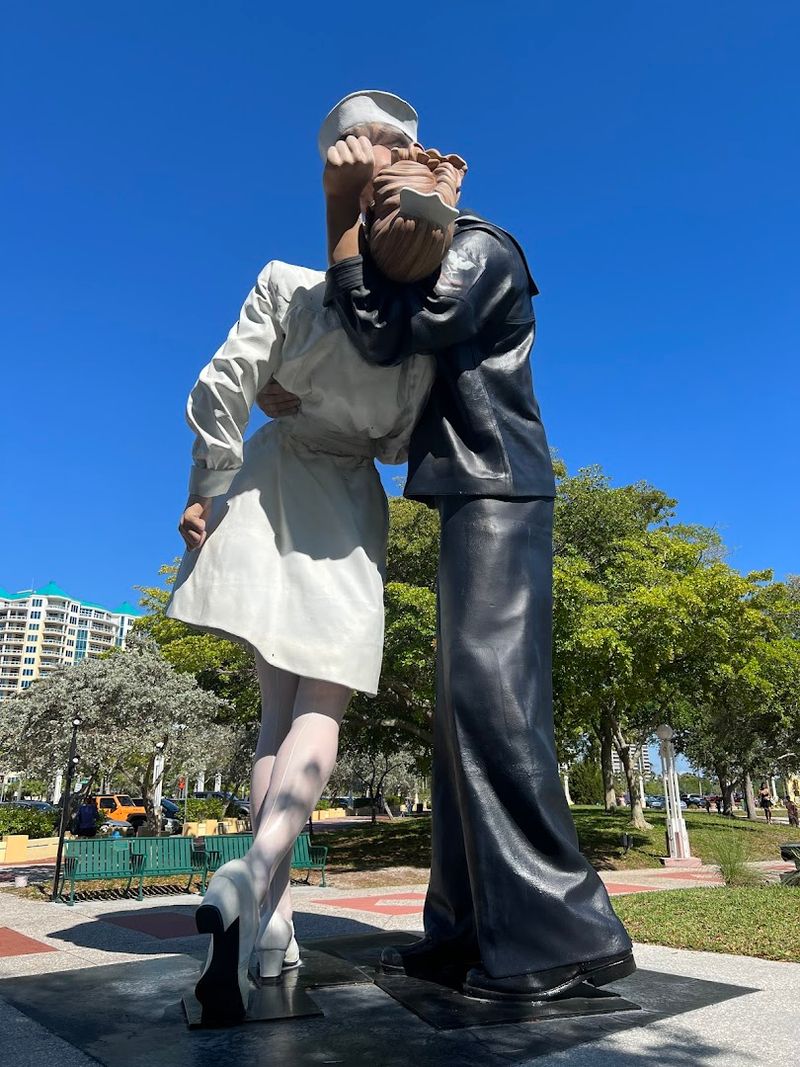
Few statues capture a single moment in history as dramatically as the Unconditional Surrender Statue in Sarasota.
Standing along the waterfront at Bayfront Park, this towering sculpture recreates the famous World War II photograph of a sailor kissing a woman in Times Square after the announcement of Japan’s surrender.
Its larger-than-life scale immediately draws attention, turning a historic image into a powerful public artwork.
The statue’s impact comes from its ability to freeze a moment filled with emotion.
It represents celebration, relief, and the overwhelming joy felt at the end of a global conflict.
The detailed craftsmanship captures movement and human connection, making visitors stop not only to admire the size of the piece but also to think about the story behind it.
Sarasota’s waterfront setting adds another layer to the experience.
With the bay as a backdrop, the sculpture feels open, accessible, and connected to the community around it.
It has become a recognizable landmark where visitors take photos, reflect on history, and appreciate the artistry involved in transforming a famous photograph into a monumental tribute.
Like many of Florida’s most memorable statues, Unconditional Surrender proves that public art can do more than decorate a space.
It can preserve a feeling, spark conversation, and remind visitors that some moments in history are too powerful to leave behind.
10. Buchanan Statue
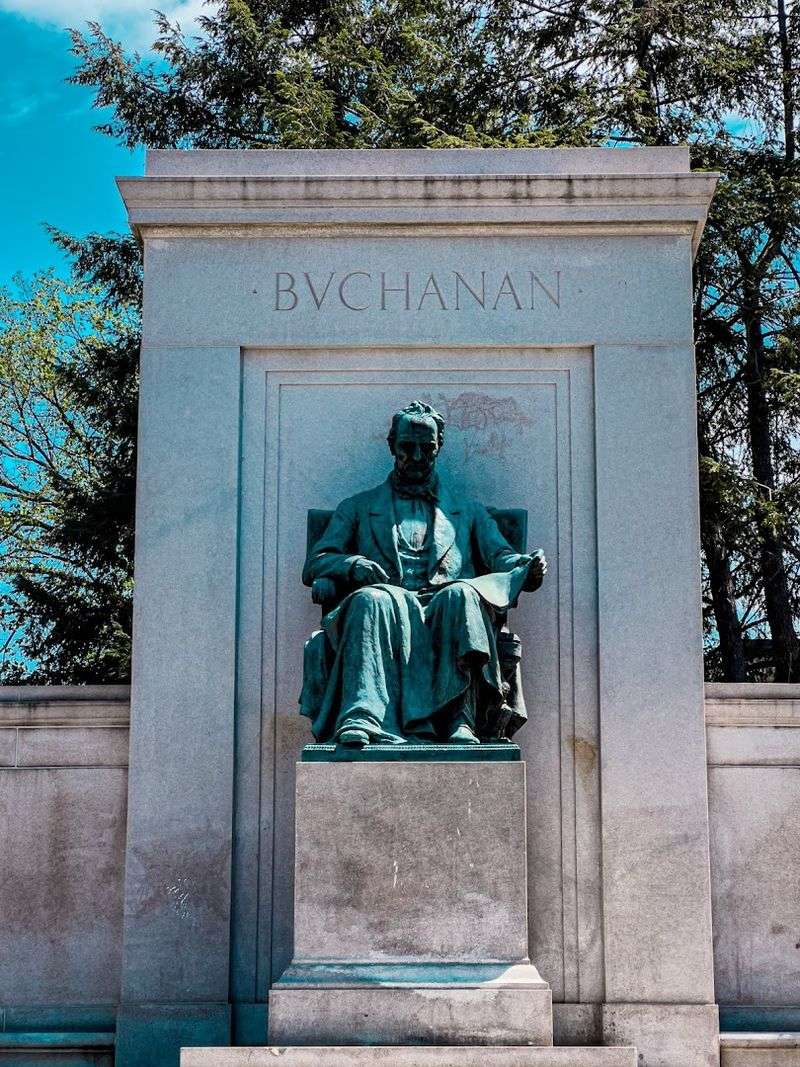
Capitol grounds usually feel serious, but this statue adds a little old fashioned stage presence.
The Buchanan Statue in Tallahassee stands on the Florida State Capitol grounds, where politics, memory, and public space mingle under wide skies and live oaks.
Its location gives it immediate weight, because monuments placed near centers of power always say more than their plaques admit.
This figure, rendered with formal dignity, reflects the commemorative style that shaped many American civic spaces.
The sculpture rewards a slower look, especially if you pay attention to posture, clothing details, and the way the pedestal elevates authority into art.
It may not shout for attention, yet it has the quiet confidence of someone who assumes the room will eventually listen.
Tallahassee is full of history, and the statue fits naturally into a larger walking experience around the capitol complex.
You can pair it with nearby memorials, government buildings, and museums for a fuller picture of how Florida presents its past in public.
That context matters, because statues become most interesting when you read them alongside the place that hosts them.
Come early or near sunset for softer light and fewer distractions from office bustle.
The Buchanan Statue may not be the flashiest monument in the state, but it captures the formal beauty of civic art with real poise.
Sometimes elegance whispers, and this one knows exactly how.