A bronze-style statue of Andrew Jackson on horseback once sat on top of a 120-foot ammunition factory. For nine whole years, from 1872 to 1881.
I still can’t decide if that was patriotic or just hilarious.
The tower itself is the real star, though. Workers poured molten lead from the top.
The drops fell through the hollow column and cooled into nearly perfect little spheres.
That clever trick happened right here in Iowa, along the Mississippi River. The stone and brick tower survived a money panic, a fire, and decades without a roof.
It still stands today, quietly watching the river.
Most people zip right by without a second look. That feels like a mistake.
A building with this many plot twists deserves at least ten minutes of your time.
A Rain of Hot Lead Built This Tower’s Whole Reputation
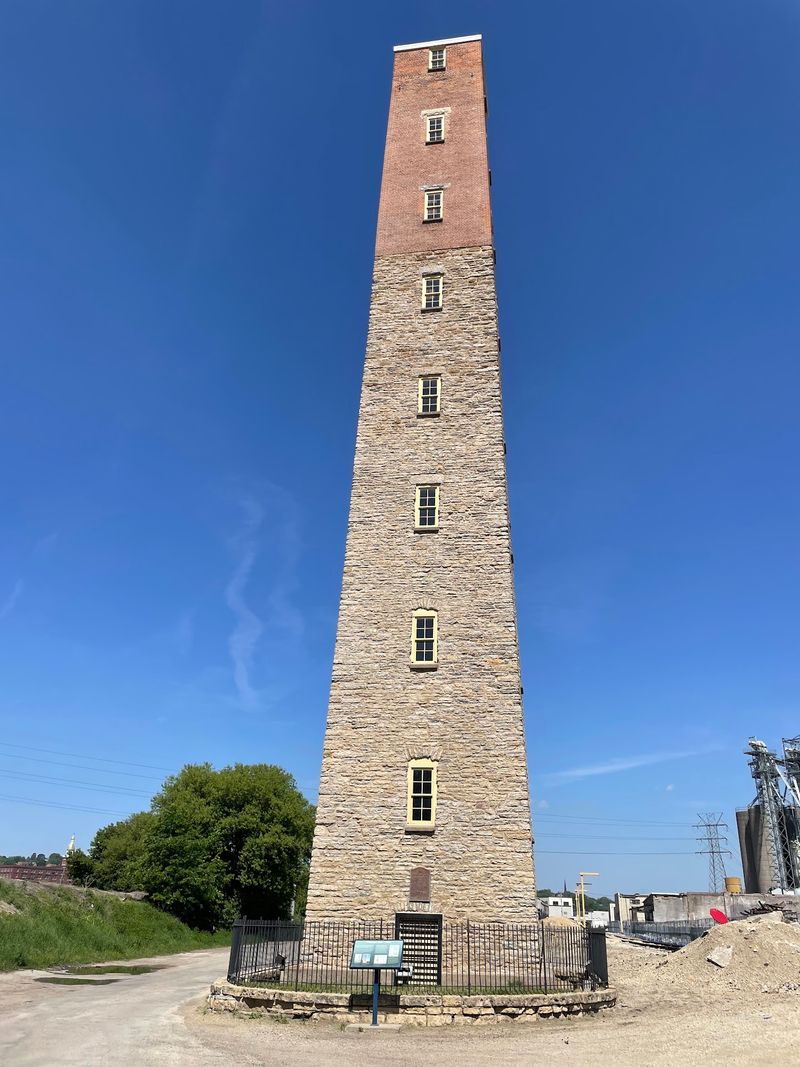
Gravity did the heavy lifting at the Dubuque Shot Tower. Built in 1856 by George W.
Rogers and Company, it existed for one job: making lead shot for firearms.
The process sounds wild, but it worked beautifully. Workers poured molten lead through grates at the very top of the tower.
As the droplets fell down the hollow column, they cooled into round balls. They landed in water vats at the bottom, ready to be collected.
That simple drop created nearly perfect spheres. No fancy machines were needed, just height, heat, and a long fall.
When it ran at full speed, the tower could turn out six to eight tons of shot every day. That’s a whole lot of tiny metal marbles.
The building cost about ten thousand dollars to build back then. For the 1850s, that was a serious investment in a very tall idea.
Today, the tower carries a second name too, the George W. Rogers Company Shot Tower.
Either name points to the same proud landmark in Iowa.
Once you understand the science, the shape of the tower makes total sense. Every foot of height had a purpose.
Look Closely and You Can Spot Where the Stone Stops
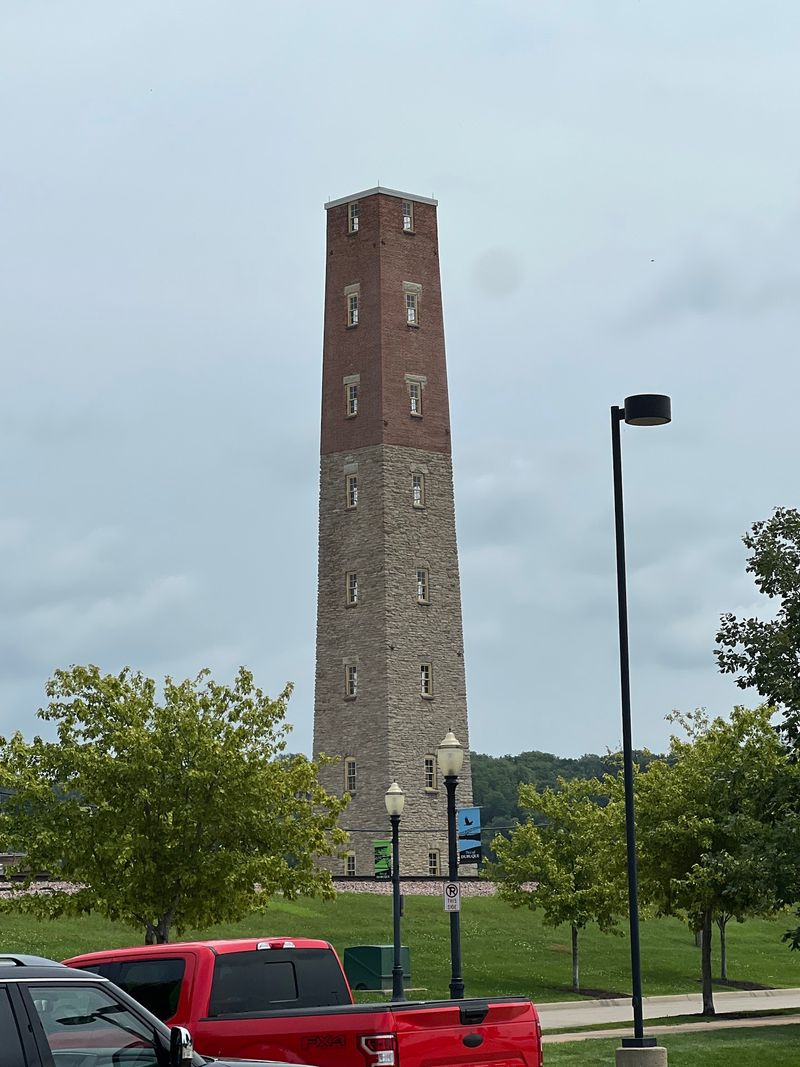
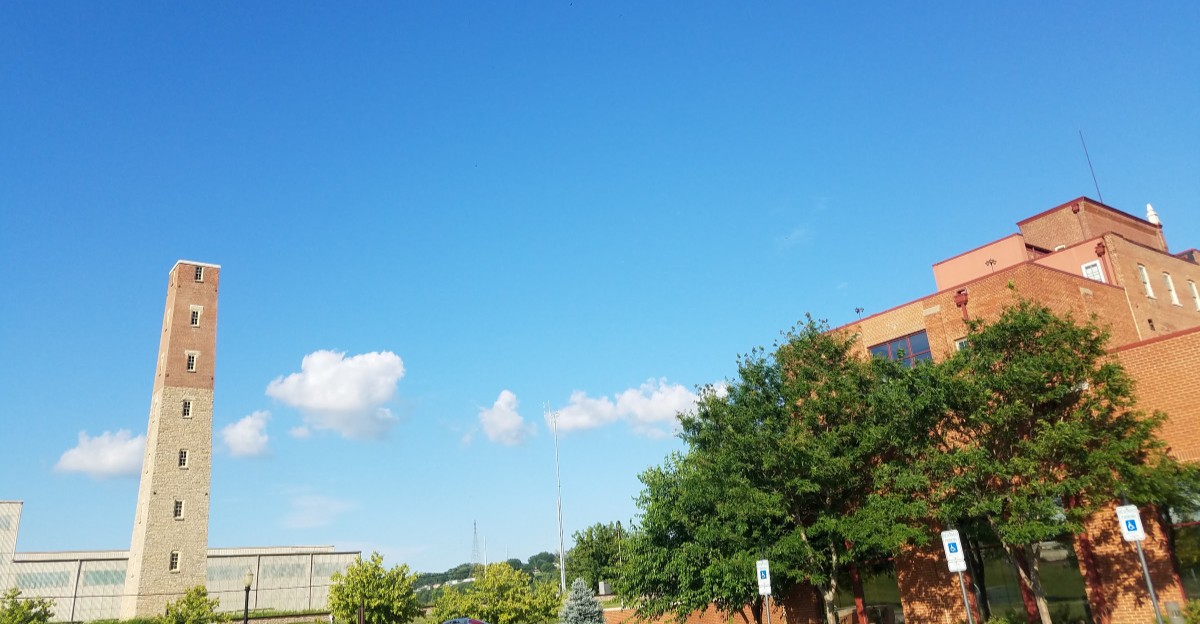
Two building materials share this tower, and the line between them is easy to see. The bottom seven stories are made of Galena Dolomite stone.
That stone section rises 82 feet and 11 inches. It gives the tower a sturdy, rugged base that has held up for well over a century.
Above it, the top three stories switch to soft red brick. Those upper floors add another 37 feet and 6 inches.
Put it all together and you get a total height of 120 feet and 5 inches. That’s taller than many buildings you’d pass downtown.
The color change makes for a fun detail when you stand at the base. Your eyes travel up the pale stone, then suddenly hit warm red brick.
Bring your phone and tilt it straight up. The contrast looks great in photos, especially against a clear sky.
A quick tip for camera fans: step back a bit to fit the whole thing in one frame. Standing too close turns it into a very tall blur.
It’s a small thing to notice. Still, it tells you this tower was built with real care.
Bad Timing Almost Sank the Whole Operation
Talk about rough luck. The tower opened in 1856, and the Panic of 1857 hit almost right away.
That economic downturn slammed businesses across the country. A brand-new ammunition factory was not spared.
The tower struggled from the start. Its owners had a big building, a big goal, and not enough steady business to match.
In 1862, a competitor named Chadburne and Forster bought the place. Some records spell it Chadbourne and Company instead.
Even under new owners, the tower rarely ran at full capacity. All that potential mostly sat waiting.
It’s a little sad when you think about it. Here was a smart design that could make tons of shot each day.
Yet history doesn’t always reward good ideas. Sometimes timing matters more than cleverness.
That shaky start actually makes the Dubuque Shot Tower more interesting today. It wasn’t a smooth success story.
Instead, it became a survivor that kept finding new reasons to exist. Hold that thought, because the next chapters get stranger.
Yes, a President Once Rode a Horse Up Top
Andrew Jackson on horseback, perched 120 feet in the air. That really happened here from 1872 to 1881.
Once lead production faded, the tower needed a new role. Apparently, serving as a giant pedestal was one of them.
Few landmarks can claim a former president parked on the roof. It’s the kind of fact you’ll want to share at dinner.
Big changes kept coming. In 1877, a permanent spiral staircase was added inside.
That staircase made the climb far more practical. Getting to the top no longer felt like an adventure plan.
Then in 1881, the statue era ended. A framed glass observatory was added to the top instead.
So within about a decade, the tower went from factory to statue base to lookout. That’s quite a career change.
Honestly, most buildings pick one job and stick with it. This one kept reinventing itself.
Standing at the base today, try to picture a horse up there. It’s a fun mental image to carry along the riverfront.
Fire Watch Duty Gave It a Brand New Purpose
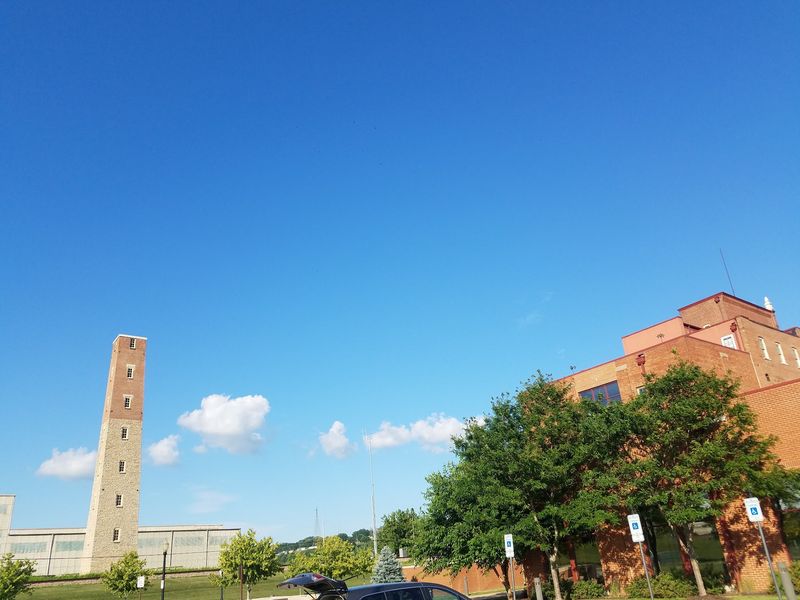
Lumber and fire make a nervous pair. The Standard Lumber Company knew that well when it took over the blocks around the tower.
Starting in 1881, the tower became a fire watchtower. That new glass observatory gave lookouts a clear view of the yards.
From that height, a worker could spot smoke early. In a lumber district, catching trouble fast was everything.
It’s a smart reuse of an old building. A tall tower built for making shot turned into a set of eyes over the neighborhood.
Sadly, the story took a hard turn in 1911. An arson fire gutted the shot tower and wiped out the local lumber industry.
After that, the tower was abandoned. The lookout that once guarded against fire had been hollowed out by one.
It stood roofless for decades after the blaze. Rain, snow, and wind had their way with it.
That it’s still here at all feels a bit remarkable. Plenty of buildings would have been torn down long ago.
Iowa nearly lost this landmark. Luckily, local folks weren’t ready to let it go.
A Campaign With a Catchy Name Came to the Rescue
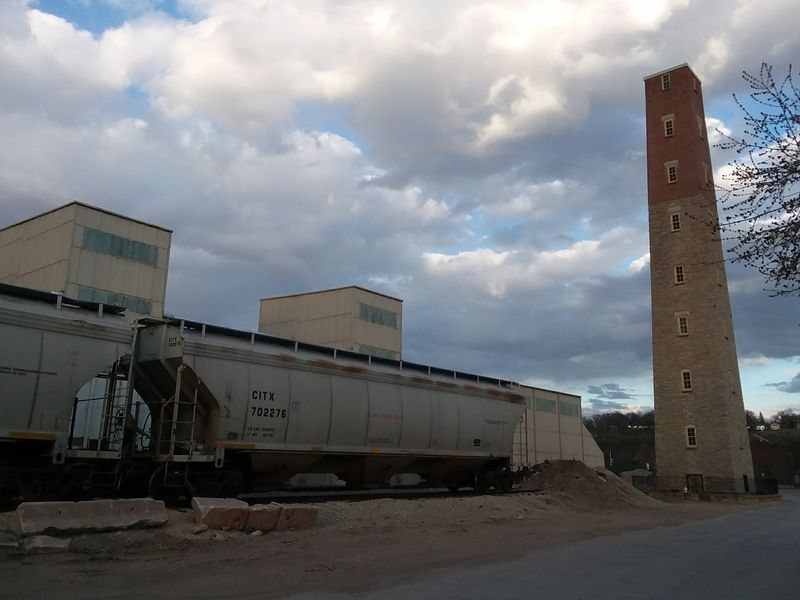
Save Our Shot-tower. That 1959 campaign name sounds like a bumper sticker, and it worked.
After nearly fifty years without a roof, the tower finally got help. Supporters pushed for a concrete cap to protect it.
Work in 1960 and 1961 added that cap. Crews also rebuilt the top floor.
Those repairs kept water out and gave the tower a fighting chance. It was a turning point in its long life.
In 1976, the tower joined the National Register of Historic Places. That was official proof it mattered.
Bigger restoration efforts started in 2004. Grants helped pay for the work, including a Save America’s Treasures grant from the National Park Service.
The State Historical Society of Iowa also chipped in with grants. Teamwork like that is how old buildings survive.
Mayor Roy Buol even named 2006 the Year of the Shot Tower. It marked the tower’s 150th birthday.
Not bad for a building that once sat empty and roofless. The Dubuque Shot Tower clearly has fans.
Dig a Little Deeper and History Literally Shows Up
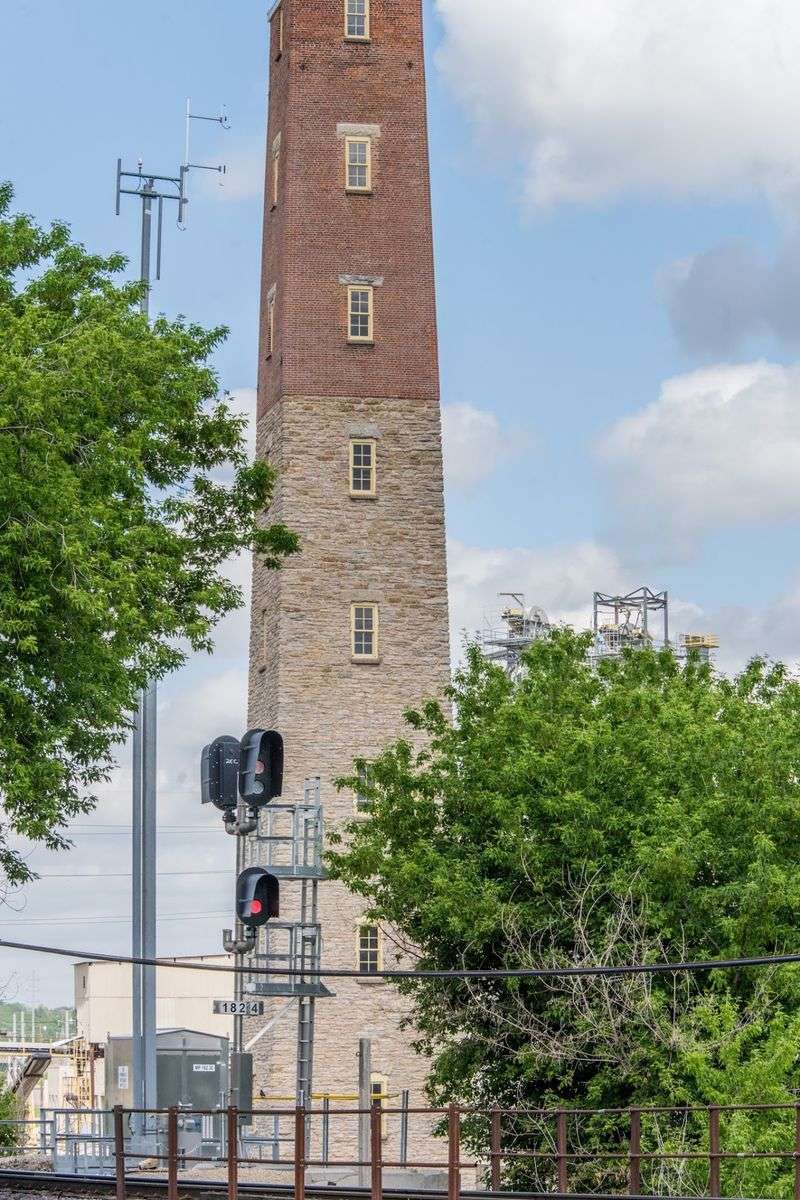
Under the tower, archaeologists found the original well. That’s where the falling lead once splashed down and cooled.
The discovery came during rehabilitation projects. A survey uncovered this key piece of the old production system.
Think about how cool that is. The very spot where tons of shot landed was still hiding below ground.
Plans call for the well to stay exposed. The idea is to make it part of an interpretive experience.
That would let visitors see the top and bottom of the process together. Height above, water below, science in between.
For now, the site is mostly an outdoor stop. There’s an informative plaque that explains how the tower worked.
Take a minute to read it before you leave. The plaque turns a tall pile of stone into a story you’ll remember.
Kids especially might love the lead-dropping explanation. It’s physics they can picture without a textbook.
Bring along a curious mind. This is a landmark best enjoyed by people who like asking how things work.
Plan for an Outside Visit and You’ll Enjoy It More
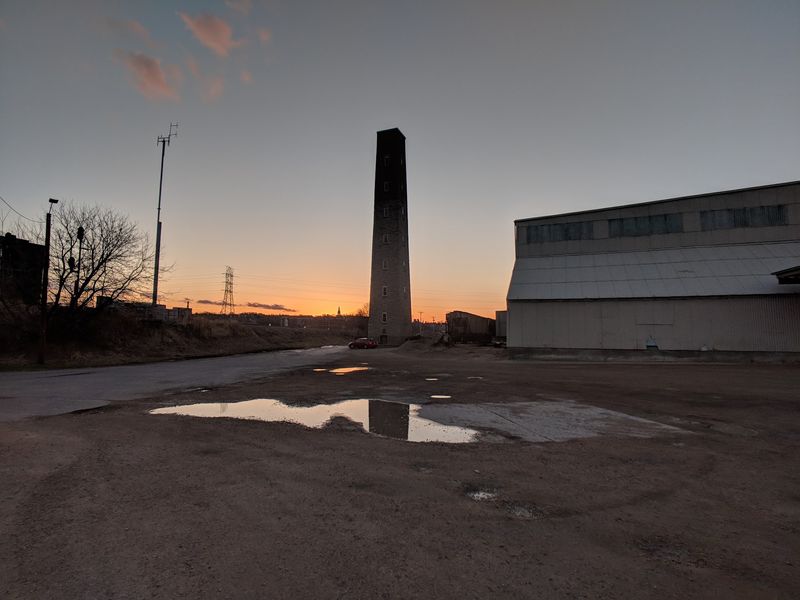
Expectations matter here. The tower is a restored landmark, but the inside is generally closed to the public.
You can still walk around it and look up. The exterior is the main event, and it’s an impressive one.
The Dubuque Shot Tower sits at E Commercial St, Dubuque, IA 52001. It’s listed as open 24 hours, since it’s an outdoor landmark.
A visit doesn’t cost a thing. That makes it an easy add-on to a bigger day in town.
Plan on a short stop rather than a long afternoon. Ten or fifteen minutes is plenty to read, look, and snap photos.
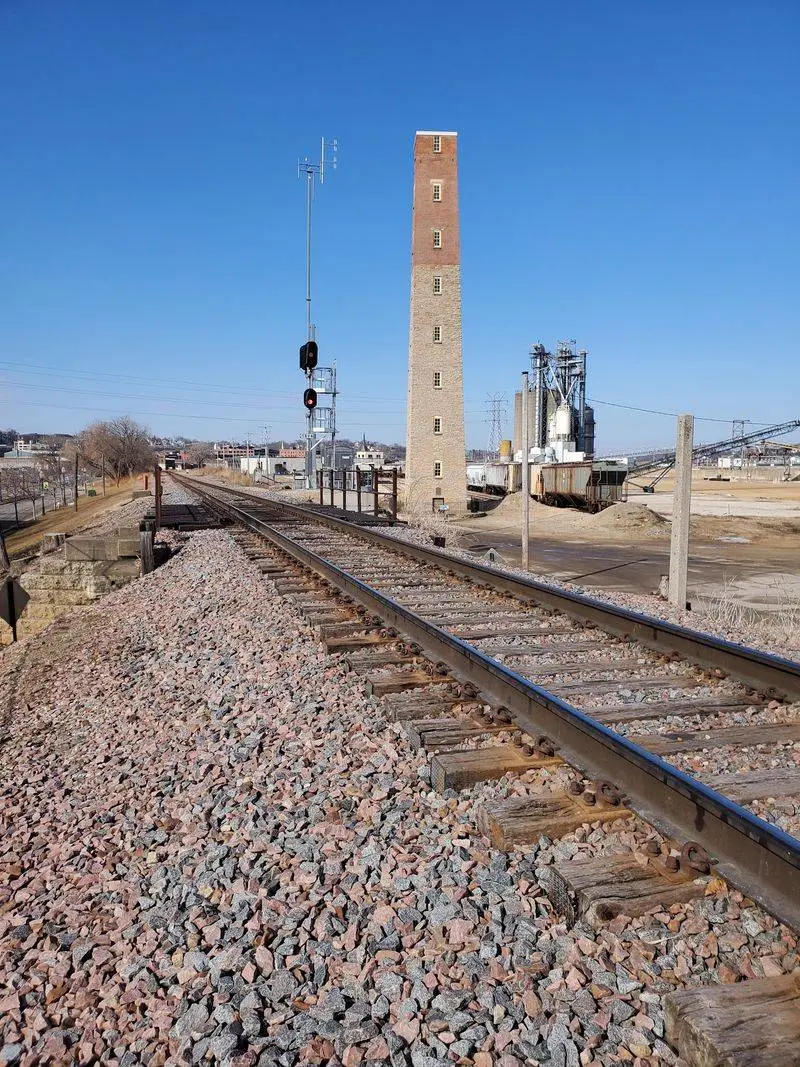
The area around it is industrial, with rail lines nearby. Watch your step and pay attention near any tracks.
Daylight visits are the smart choice. Bring a buddy too, since the spot can feel a bit tucked away from the busier paths.
Comfortable shoes help as well. The approach from the riverfront involves some walking and a few stairs.
A little planning keeps the visit fun. Then you can focus on the history instead of your route.
Pair It With a Riverwalk Stroll for the Best Views
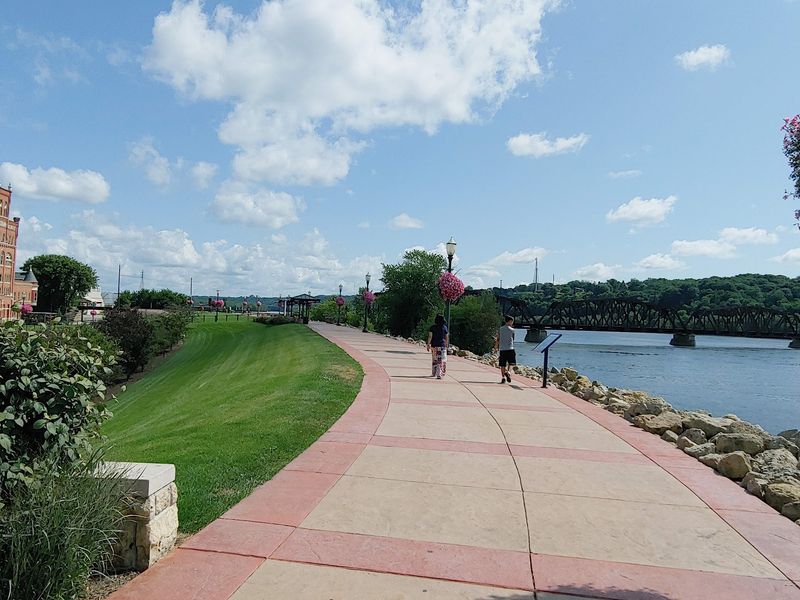
Stroll the Mississippi Riverwalk, and the tower pops up as a landmark on the skyline. It’s easy to spot from the river path.
That makes the Riverwalk a great starting point. From its north end, the tower sits a short walk away.
The route passes near a railroad bridge, so follow signs and stay alert. The journey is part of the charm.
Once you arrive, the river setting adds a lot. Old industry, moving water, and bridges all fit together in one scene.
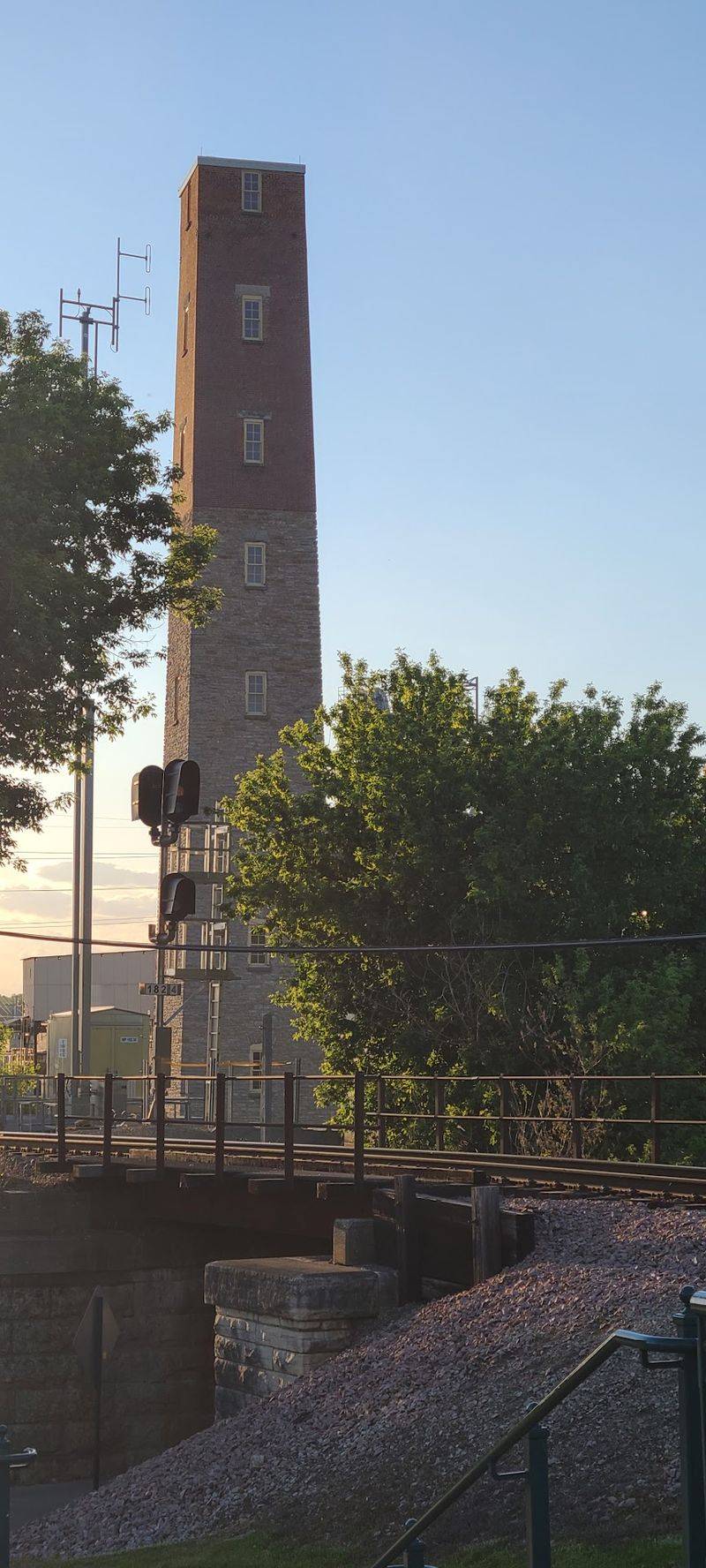
Sunset is a lovely time for photos. A warm sky behind red brick and pale stone is hard to beat.
Dubuque has long celebrated this tower as a symbol of the city. Seeing it from the water’s edge helps explain why.
Iowa doesn’t have many buildings quite like it. A riverside walk lets you appreciate it from several angles.
So next time you’re rushing past town, take the exit. The Dubuque Shot Tower has waited since 1856, and it’s still patiently standing for you.