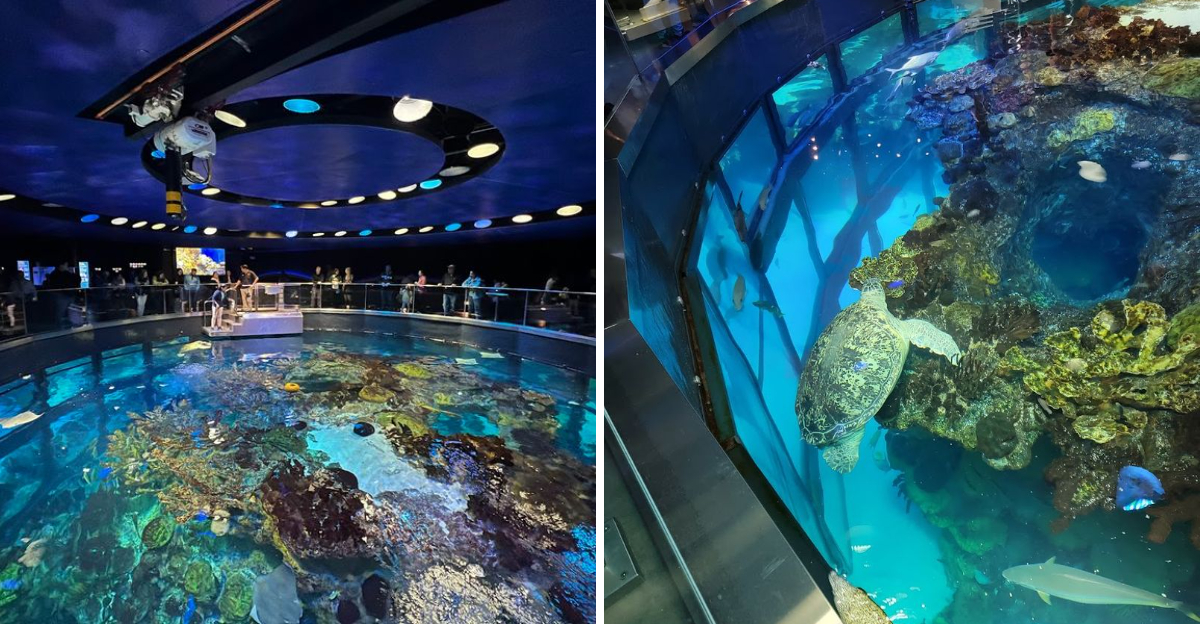
Tucked along Boston’s waterfront, the New England Aquarium is one of those places that genuinely leaves families speechless.
From a four-story coral reef tank to a colony of waddling penguins, this iconic attraction packs an incredible amount of ocean life into one unforgettable visit.
Whether you’re a curious kid or a grown-up who never outgrew a love of the sea, there’s something here that will stop you in your tracks.
If you’re planning a Massachusetts family trip, this aquarium deserves a top spot on your list.
A Landmark Waterfront Attraction in Boston

Sitting right on Boston’s Central Wharf, the New England Aquarium has been welcoming families since it first opened its doors in 1969. That’s over five decades of wonder, discovery, and plenty of wide-eyed kids pressing their faces against enormous glass tanks.
Few attractions in Massachusetts can claim such a long-standing legacy of combining genuine fun with serious science.
Every year, more than a million visitors make their way through the aquarium’s entrance, and it’s easy to understand why. The location alone is stunning — you arrive at the harbor, smell the salt air, and walk straight into an underwater world.
It’s the kind of transition that feels almost magical, especially for younger visitors who may be experiencing ocean life up close for the very first time.
Beyond the exhibits, the aquarium is deeply committed to marine research and conservation. Scientists here work on real-world ocean challenges, from climate change impacts to species protection.
Visiting isn’t just entertaining — it connects families to a broader mission of caring for the planet’s oceans. That combination of education, conservation, and pure excitement is exactly what makes this Boston landmark so special and so enduring year after year.
The Four-Story Giant Ocean Tank
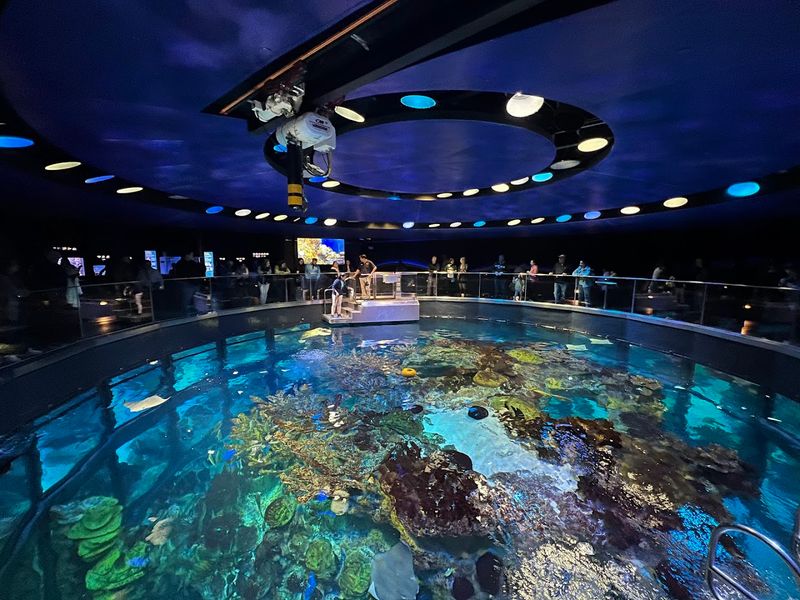
Standing at the center of the New England Aquarium is something that genuinely stops visitors in their tracks — a colossal, cylindrical tank that rises four full stories above the ground floor. Known as the Giant Ocean Tank, this breathtaking structure holds around 200,000 gallons of saltwater and recreates a Caribbean coral reef ecosystem in stunning, living detail.
It is, without question, the crown jewel of the entire aquarium.
More than 1,000 animals call this tank home, including sharks, rays, moray eels, and hundreds of brilliantly colored tropical fish. A spiral ramp winds upward around the outside of the tank, allowing visitors to view the reef from multiple angles and depths as they climb.
At each level, the perspective shifts, revealing new creatures and behaviors that you simply can’t see from a single vantage point.
Fun fact: the original Giant Ocean Tank opened in 1969 alongside the aquarium itself, making it one of the oldest large-scale reef exhibits in the United States. It was later renovated to improve coral health and animal welfare.
Whether you’re watching from the base or peering in from the top, the Giant Ocean Tank delivers a jaw-dropping experience that sticks with you long after you leave.
A Living Coral Reef Experience
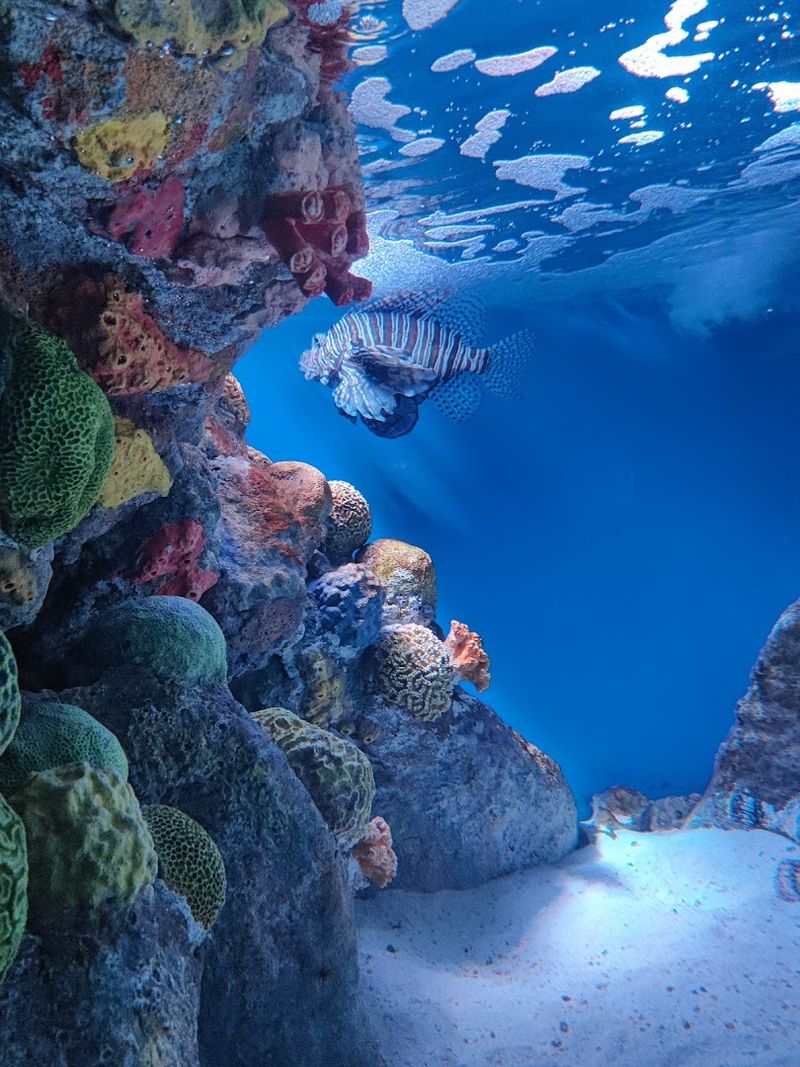
What makes the Giant Ocean Tank truly remarkable isn’t just its size — it’s the fact that it functions as a real, living coral reef. Unlike static displays or artificial decorations, the corals inside this tank are alive, growing, and supporting an entire community of marine animals.
Reef biodiversity this rich is something most people only ever see in nature documentaries or on a scuba diving trip.
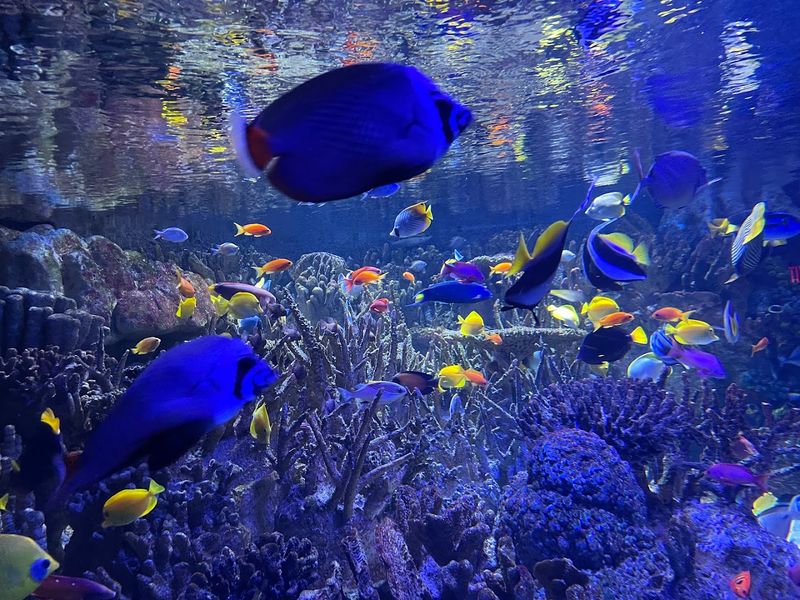
Sea turtles glide effortlessly through the water alongside southern stingrays, nurse sharks, and dozens of tropical fish species. Moray eels peek out from rocky crevices, and schools of fish move in synchronized waves that catch the light beautifully.
Every time you look, there’s something new happening — a feeding moment, a territorial display, or just the hypnotic drift of a ray across the tank floor.
For families with young children, this exhibit sparks genuine curiosity about ocean ecosystems and why coral reefs matter. Reefs cover less than one percent of the ocean floor but support roughly 25 percent of all marine species.
Seeing that biodiversity in person, right here in Boston, makes the abstract concept of reef conservation feel real and urgent. It’s the kind of exhibit that quietly teaches without ever feeling like a lesson.
Penguins Right at the Center
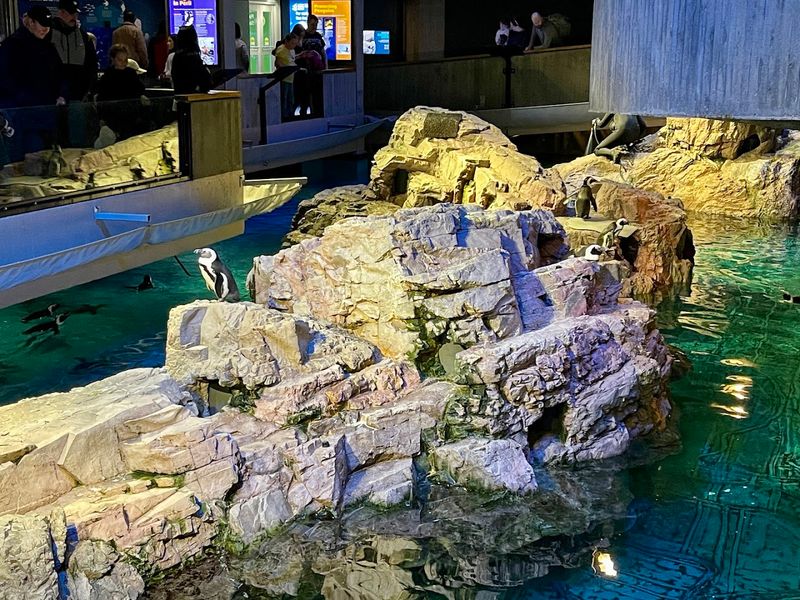
Walk through the main entrance of the New England Aquarium and you’ll almost immediately hear them — a chorus of squawks, splashes, and social chatter that can only come from one source. The penguin exhibit greets visitors right at the base of the Giant Ocean Tank, and it’s one of the most instantly lovable displays in the entire building.
There’s really no better way to kick off a visit.
The colony here includes more than 50 penguins from two distinct species: African penguins and rockhopper penguins. African penguins are recognizable by their black-and-white tuxedo markings and expressive pink patches near their eyes.
Rockhoppers, on the other hand, are the punks of the penguin world — sporting wild yellow eyebrow feathers and an attitude to match. Watching the two species interact is endlessly entertaining.
Kids absolutely love this exhibit because the penguins are active, social, and genuinely curious about their human visitors. You’ll often see them waddling right up to the glass or splashing around in the pool with impressive speed.
Penguins are surprisingly agile swimmers, reaching speeds of up to 15 miles per hour underwater. The exhibit also highlights conservation concerns, as African penguins are currently classified as an endangered species in the wild.
Meet Myrtle the Famous Sea Turtle
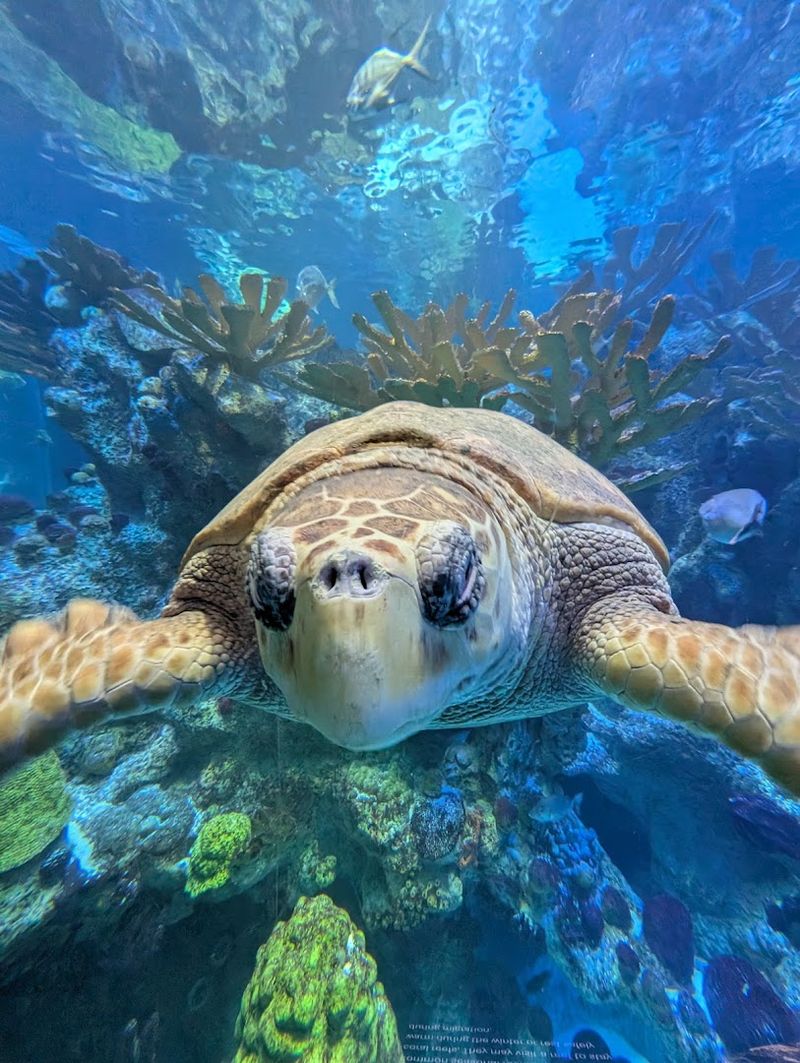
Some aquarium residents become celebrities, and at the New England Aquarium, nobody holds that title more firmly than Myrtle. A green sea turtle who has lived in the Giant Ocean Tank since 1970, Myrtle is believed to be around 90 years old and weighs over 550 pounds.
She has been a resident longer than most of the aquarium’s staff have been alive, which makes her something of a living legend.
Visitors often spot Myrtle cruising slowly through the tank, unbothered by the hundreds of fish darting around her. She has a calm, ancient quality that’s hard to describe — watching her move through the water feels almost meditative.
Aquarium staff know her personally, and she reportedly has strong food preferences, often pushing smaller animals aside to get the best snacks during feeding time.
Myrtle’s story also carries a quiet conservation message. Green sea turtles are listed as endangered globally, facing threats from habitat loss, fishing nets, and ocean pollution.
The fact that Myrtle has thrived for decades under human care demonstrates what dedicated conservation efforts can achieve. For many families, meeting Myrtle — even through glass — becomes the single most memorable moment of their entire aquarium visit.
She really is that special.
Sea Turtles and Ocean Conservation
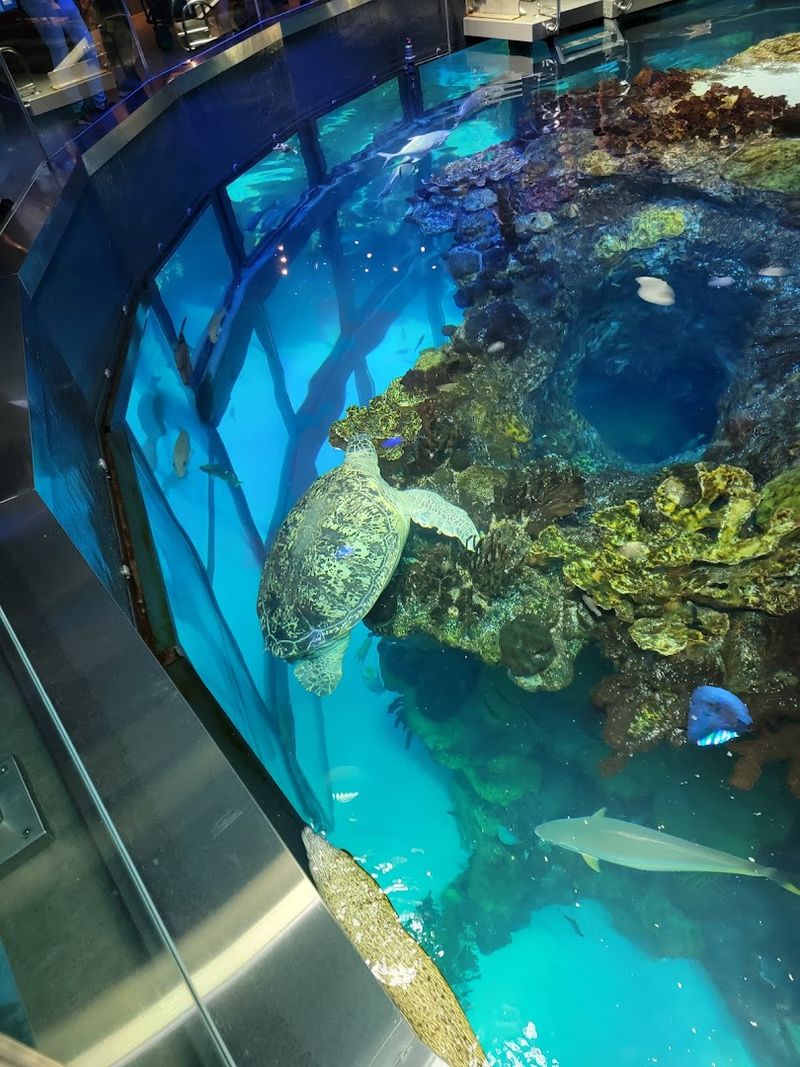
The New England Aquarium doesn’t just display sea turtles — it actively works to save them. Through its Animal Care Center and partnerships with rescue organizations, the aquarium plays a leading role in rehabilitating injured and stranded sea turtles found along the New England coastline.
Cold-stun season each fall brings in dozens of turtles that have become dangerously chilled in rapidly cooling Atlantic waters.
Cold-stunning happens when sea turtles get trapped in Cape Cod Bay as water temperatures drop suddenly. The turtles become lethargic, float to the surface, and wash ashore — sometimes by the hundreds in a single season.
Aquarium staff and volunteers work around the clock to warm, treat, and stabilize these animals before eventually releasing them back into warmer waters. It’s an extraordinary operation that saves real lives.
Families visiting the aquarium can learn about these rescue efforts through exhibits and signage that explain the process in accessible, age-appropriate language. Understanding that the aquarium is a working conservation facility — not just a display space — adds real depth to the visit.
Every ticket purchased helps fund these programs, meaning your family trip directly supports sea turtle survival. That’s a pretty meaningful way to spend a day in Boston, especially for kids who care about animals and the environment.
Multi-Level Exhibits for All Ages
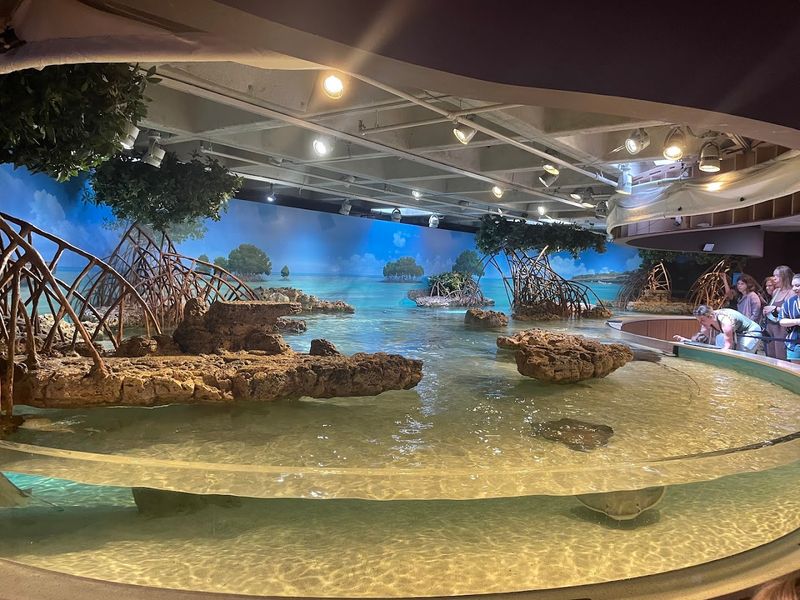
One of the smartest design choices the New England Aquarium ever made was building the visitor experience around a continuous spiral ramp that winds upward through four full floors of exhibits. You never feel like you’re backtracking or missing something — the path flows naturally from one habitat to the next, creating a sense of exploration that keeps energy high throughout the visit.
It’s a layout that works beautifully for families with kids of all ages.
Each level introduces a different aquatic environment. The lower floors focus on tropical reef habitats, while upper levels shift toward temperate ocean zones and freshwater ecosystems.
You might move from a display of Amazon river fish to a tank showcasing cold-water Atlantic species within just a few steps. The variety keeps things fresh and prevents the exhibit fatigue that can set in at less thoughtfully designed attractions.
Smaller side tanks throughout the building offer even more species to discover — jellies drifting like living sculptures, seahorses clinging to swaying plants, and electric eels lurking in shadowy corners. Every turn offers something unexpected.
Older kids and adults tend to appreciate the scientific information panels, while younger children are simply mesmerized by the colors and movement. That ability to engage multiple age groups simultaneously is what makes this multi-level setup genuinely exceptional.
Marine Mammals and Interactive Experiences
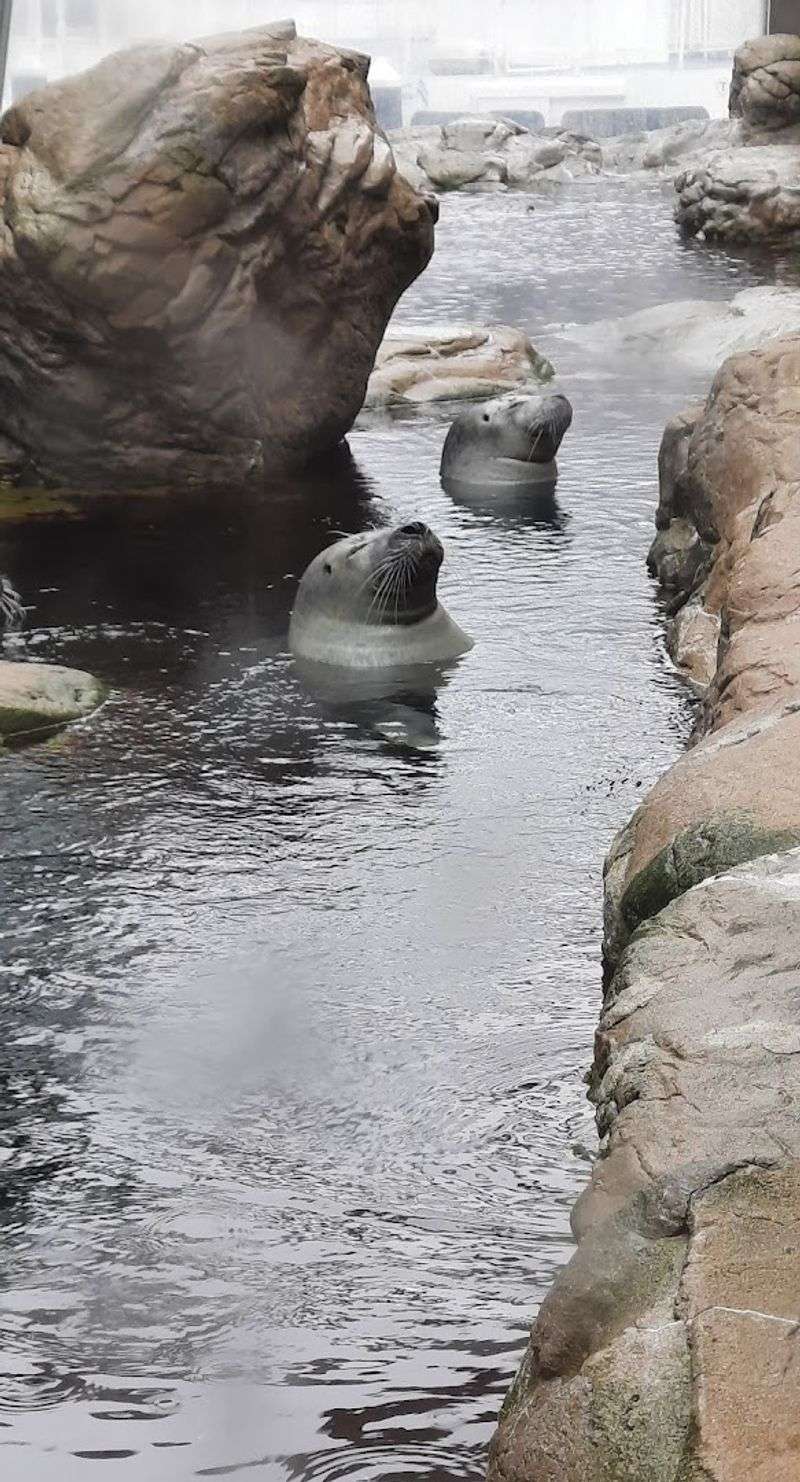
Just outside the main aquarium building, right on the harbor, sits one of Boston’s most charming free attractions — the marine mammal exhibit featuring harbor seals and California sea lions. You don’t even need a ticket to watch these animals from the waterfront viewing area, which makes it a fantastic bonus stop before or after your main visit.
The seals, in particular, are incredibly expressive and seem to genuinely enjoy human attention.
Inside the aquarium, daily feeding demonstrations let visitors watch trainers work with these animals up close. The sessions are educational and entertaining, covering topics like animal behavior, enrichment activities, and the cognitive abilities of marine mammals.
Trainers share fascinating details about each animal’s personality, history, and the science behind positive reinforcement training methods.
For families who want an even more immersive experience, the aquarium occasionally offers special animal encounter programs that allow small groups to interact with select marine animals under staff supervision. These experiences tend to book up quickly, so checking the aquarium’s website in advance is highly recommended.
Whether you’re watching a sea lion glide through the water with effortless grace or listening to a trainer explain seal communication, the marine mammal programs add a memorable human-animal connection to an already outstanding day.
Hands-On and Kid-Friendly Learning
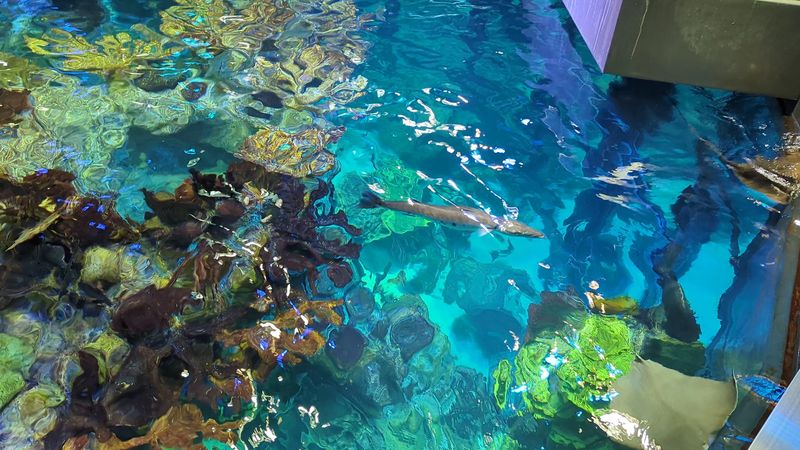
Ask any kid what their favorite part of an aquarium visit is, and there’s a good chance they’ll say the touch tank. At the New England Aquarium, interactive touch experiences let children reach into shallow pools and feel the rough texture of a horseshoe crab, the bumpy surface of a sea star, or the gentle movement of a small ray gliding past their fingers.
These moments of direct contact turn passive observation into genuine discovery.
Beyond touch tanks, the aquarium offers live presentations and feeding demonstrations throughout the day. Educators explain ocean science in kid-friendly terms, answering questions with enthusiasm and patience.
Watching a diver hand-feed fish inside the Giant Ocean Tank while narrating the action over an underwater microphone is the kind of experience that makes science feel genuinely exciting rather than classroom-dry.
Parents often notice that children who seemed distracted or restless become completely focused once they’re hands-on with something real. That’s the power of experiential learning — it bypasses resistance and sparks natural curiosity.
The aquarium’s education team clearly understands this, designing programs that meet kids where they are. Whether your child is five or fifteen, there’s an interactive element here that will hold their attention and leave them asking questions long after you’ve headed home for the day.
Visitor Info and Tips for Planning Your Trip
Planning ahead makes a real difference when visiting the New England Aquarium. The aquarium is located at 1 Central Wharf, Boston, MA 02110, and can be reached by phone at +1 617-973-5206.
The official website, www.neaq.org, is the best place to check current hours, ticket prices, and daily schedules for feedings and presentations, since times can shift seasonally.
Weekday mornings are generally the best time to visit if you want to avoid large crowds. Weekend afternoons, especially during school vacation weeks and summer, can get very busy.
Arriving right when the doors open gives your family the best chance to move through exhibits at a comfortable pace without long waits at popular spots like the penguin area or touch tanks.
Here are a few tips to get the most out of your visit: start at the bottom floor with the penguins and work your way up the spiral ramp — this follows the natural flow of the building and ensures you don’t miss anything. Check the daily schedule for penguin feedings and Giant Ocean Tank diver presentations, as these are highlights worth timing your visit around.
Also, don’t skip the outdoor seal exhibit on the harbor — it’s free to view and a wonderful way to start or end your day on the Boston waterfront.