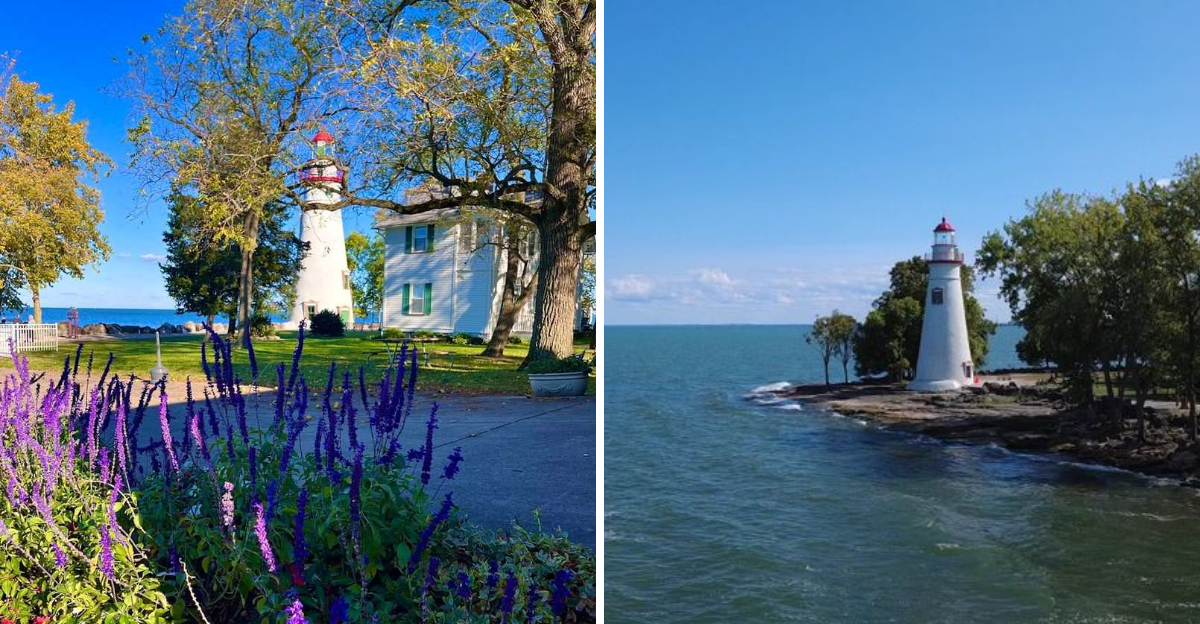
Perched on the tip of the Marblehead Peninsula in Ohio, the Marblehead Lighthouse has been guiding ships across Lake Erie since 1822, making it the oldest continuously operating lighthouse on the entire U.S. Great Lakes.
For over 200 years, this sturdy stone tower has stood as a silent guardian for sailors, fishermen, and travelers navigating one of the country’s most important inland waterways.
Today, the lighthouse is part of Marblehead Lighthouse State Park, welcoming visitors from across the country who come to experience its rich history and stunning lake views.
Whether you love history, photography, or simply a great road trip destination, this Ohio landmark has something truly special to offer.
A Beacon Since 1822
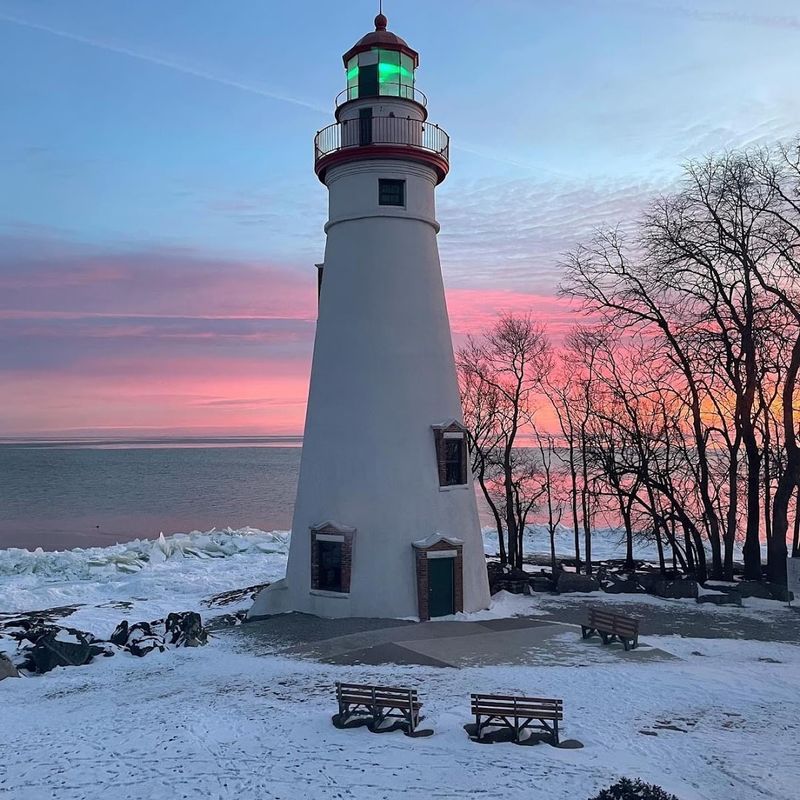
Long before GPS or modern navigation systems existed, sailors on Lake Erie depended entirely on the steady glow of the Marblehead Lighthouse to find their way. First lit in 1822, this tower has never stopped working — not for a single year in over two centuries.
That kind of uninterrupted service is extraordinarily rare, even among the most celebrated lighthouses in American history.
What makes this record even more impressive is everything Lake Erie has thrown at it. Brutal winters, violent storms, and crashing waves have all tested this lighthouse, yet it has kept shining through every single one.
Many other lighthouses along the Great Lakes were eventually replaced, moved, or shut down entirely, but Marblehead simply kept going.
Today, the lighthouse still functions as an active aid to navigation, managed by the U.S. Coast Guard.
Seeing it in person gives you a real sense of just how much history is packed into that 50-foot stone tower. It is not just a pretty landmark — it is a working piece of American maritime heritage that has earned every year of its 200-plus-year legacy.
Built from Local Limestone
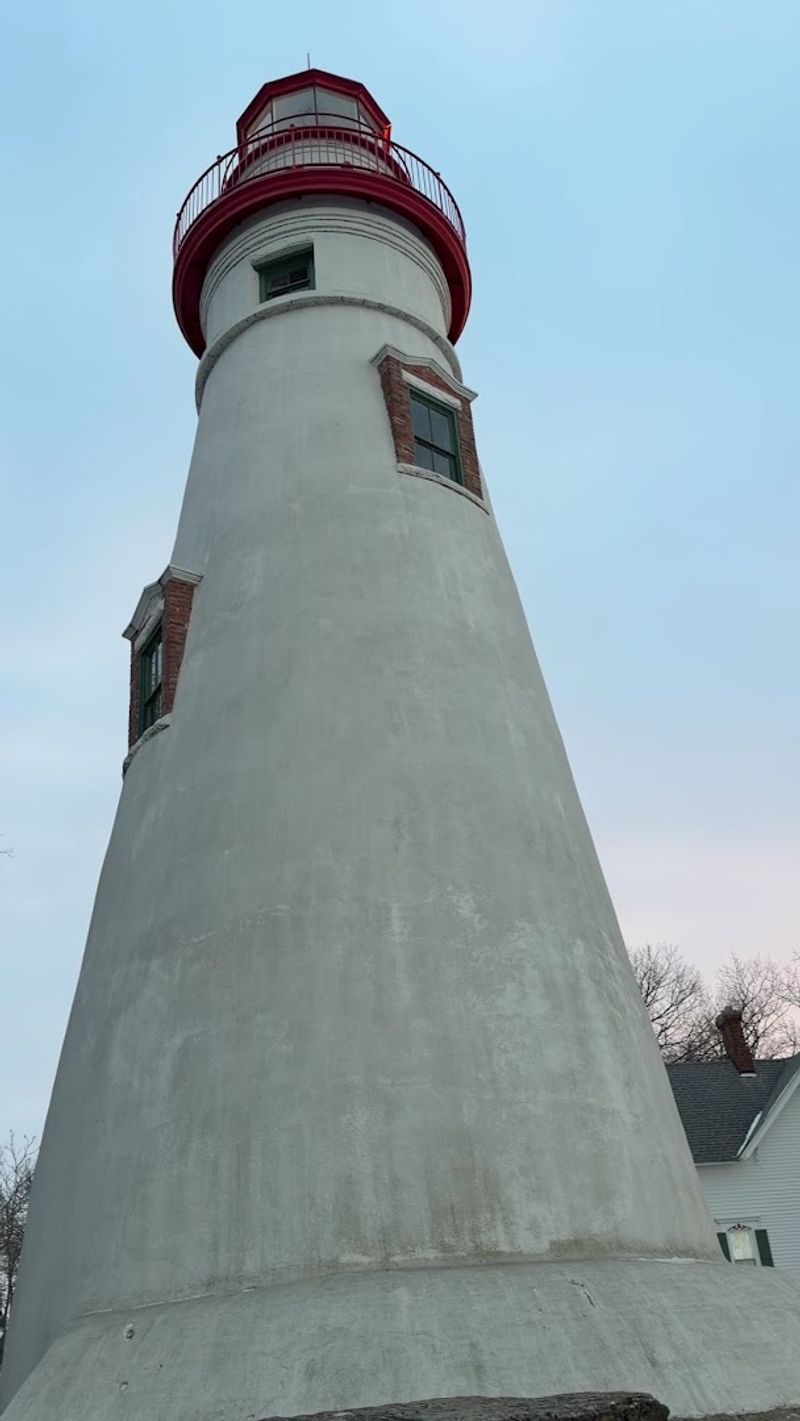
When workers broke ground on the Marblehead Lighthouse in 1821, they did not have to look far for building materials. The tower was constructed using Columbus limestone quarried from nearby sources, giving the structure a natural toughness that has proven itself over nearly two centuries of harsh Great Lakes weather.
Smart building choices made early on are a big reason the lighthouse is still standing strong today.
The walls are notably thick, especially at the base, which helps the tower resist the powerful wind and wave forces that Lake Erie regularly delivers. The slightly tapered, conical shape was not just for looks — it was a deliberate engineering decision that allows wind to flow around the structure rather than slam directly into it.
Early American builders knew what they were doing.
Interestingly, the original construction cost was just around $1,500, which feels almost unbelievable given how long the lighthouse has lasted. Periodic restoration efforts over the years have helped preserve the original stonework while keeping the structure safe for visitors.
Running your hand along those old limestone walls today, you can almost feel the craftsmanship and care that went into building something meant to last forever.
Strategic Location on the Marblehead Peninsula
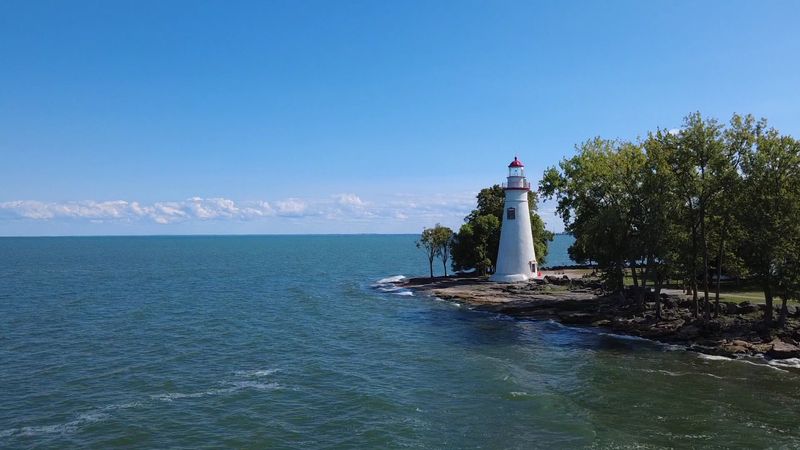
Geography played a huge role in why the Marblehead Lighthouse was built exactly where it was. Sitting right at the entrance to Sandusky Bay, the lighthouse marks one of the most critical navigation points on Lake Erie.
In the early 1800s, Sandusky was a booming port city, and the waterway leading into the bay saw heavy commercial and passenger traffic on a daily basis.
Without a reliable beacon at this location, ships would have been navigating through dark, rocky waters with almost no warning of the hazards ahead. The peninsula juts out into the lake in a way that makes it both a natural landmark and a genuine danger zone for vessels that stray too close.
Placing a lighthouse here was not just smart — it was absolutely necessary for the region’s economic survival.
Even today, the strategic importance of this spot is easy to appreciate when you stand at the tip of the peninsula and look out across the water. You can see how the bay narrows, how the islands dot the horizon, and how a ship captain in the 1800s would have desperately needed that light to feel safe.
Location truly is everything, and Marblehead nailed it from day one.
A Rare Great Lakes Survivor
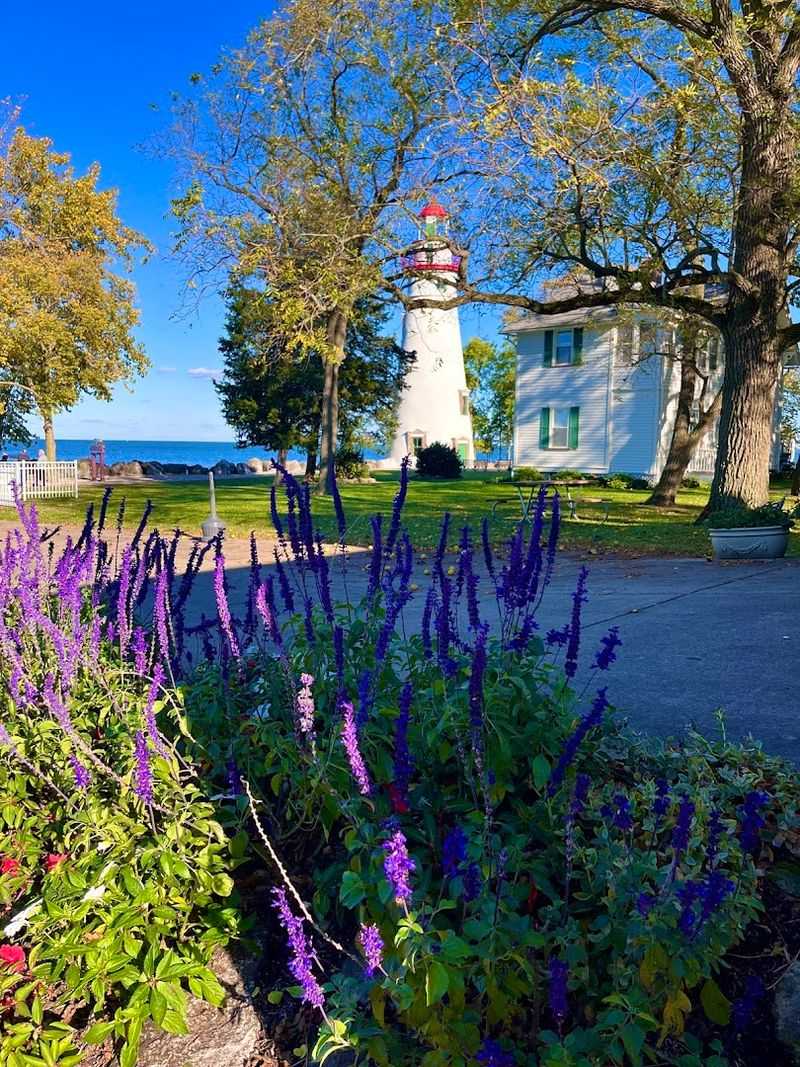
Across the Great Lakes, dozens of early 19th-century lighthouses have been demolished, abandoned, or completely rebuilt over the years. Changing shipping routes, new technology, and simple neglect took out many structures that once played vital roles in keeping sailors safe.
Marblehead, somehow, survived all of it — and that makes it genuinely one of a kind.
Part of its survival story comes down to consistent maintenance and community pride. Local residents and historical societies have fought hard to preserve the lighthouse across multiple generations, pushing back against the forces of time, weather, and bureaucratic indifference.
That kind of passionate local stewardship is rare and worth celebrating.
The U.S. Coast Guard still officially uses the lighthouse as an active navigational aid, which adds another layer of protection to its long-term survival.
A lighthouse that is still doing its job is much harder to decommission than one that has simply been left behind. Marblehead’s continued relevance — both historically and functionally — is what sets it apart from the many Great Lakes lighthouses that exist today only in old photographs and faded records.
Visiting it feels like stepping into a living chapter of American history that somehow refused to close.
Distinctive Architecture
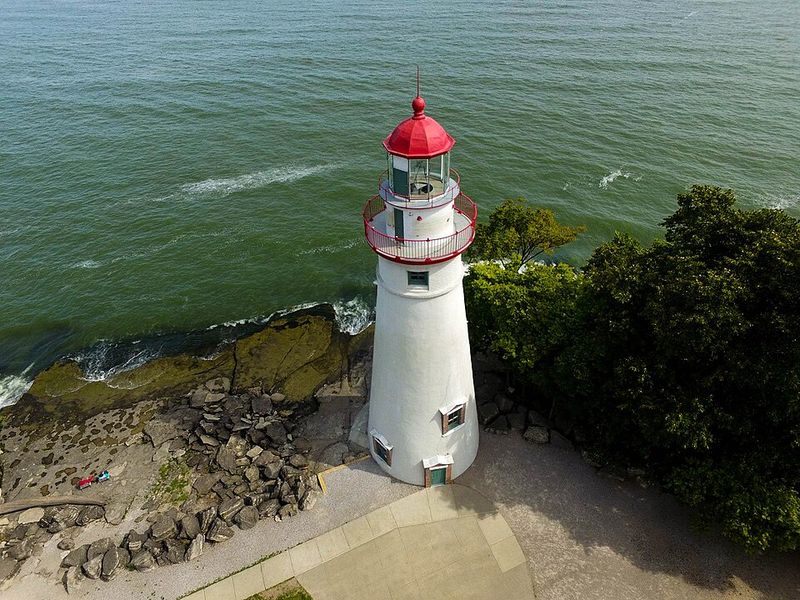
You would recognize the Marblehead Lighthouse in a photograph even if you had never visited before. Its clean white exterior, tapered conical tower, and striking red roof create a visual combination that is both classic and immediately memorable.
Standing about 50 feet tall, the tower is not the largest lighthouse you will ever see, but it has a quiet confidence that bigger structures sometimes lack.
The proportions feel just right — tall enough to be impressive, compact enough to feel personal. Unlike some of the massive industrial lighthouses found along the Atlantic coast, Marblehead has a warmth to its design that invites you closer rather than keeping you at a respectful distance.
It looks like a lighthouse from a storybook, and that is genuinely part of its charm.
Photographers absolutely love this place, and it is easy to see why. Depending on the season and time of day, the lighthouse can look entirely different — glowing golden at sunrise, crisp and bright under a summer noon sun, or hauntingly beautiful against a gray November sky.
Ohio has no shortage of beautiful historic structures, but Marblehead Lighthouse is widely considered one of the most architecturally photogenic spots in the entire state.
The Fresnel Lens Legacy
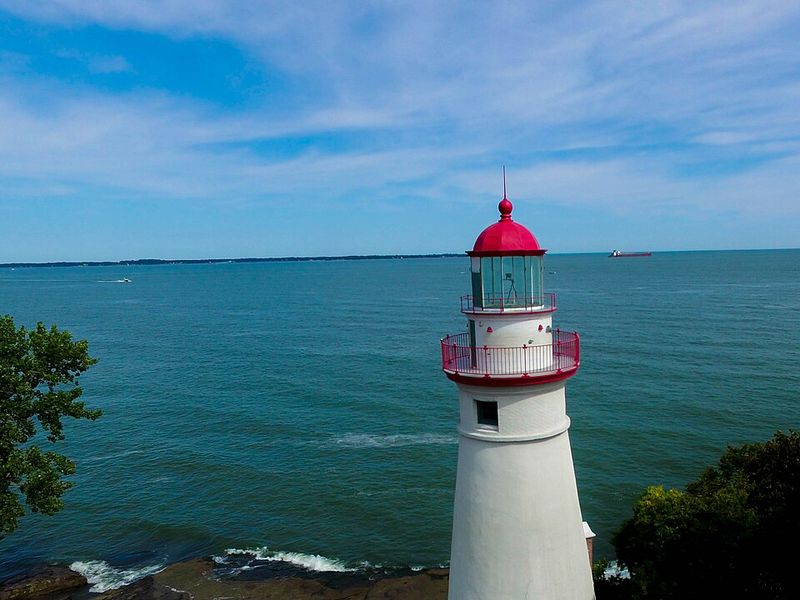
Before the Fresnel lens came along in the early 1800s, lighthouse beams were relatively weak and could only be seen from short distances. French physicist Augustin-Jean Fresnel changed everything when he designed a revolutionary lens system using precisely arranged glass prisms to focus and amplify light with remarkable efficiency.
When this technology eventually made its way to American lighthouses, it was a genuine game-changer for maritime safety.
Marblehead Lighthouse used a Fresnel lens for many years, allowing its beam to cut through fog, rain, and darkness far more effectively than the earlier lamp-and-reflector systems it replaced. Sailors on Lake Erie could spot the light from much greater distances, giving them more time to adjust course and avoid danger.
The lens essentially turned a modest tower into a powerful safety tool.
Today, the original Fresnel lens from Marblehead is no longer in the tower but is preserved and displayed at the nearby Inland Seas Maritime Museum in Vermilion, Ohio — about an hour’s drive away. If you are serious about exploring Great Lakes lighthouse history, making that extra stop is absolutely worth it.
Seeing a Fresnel lens up close helps you understand just how brilliant and beautiful 19th-century optical engineering really was.
Life of Lighthouse Keepers
Imagine living in a small stone house next to a lighthouse on the edge of Lake Erie, responsible for keeping a flame burning every single night regardless of the weather outside. That was the reality for the keepers and their families who called Marblehead home over the years.
It sounds romantic from a distance, but the day-to-day work was physically demanding, sometimes dangerous, and relentlessly repetitive.
Keepers had to trim lamp wicks, polish lens glass, maintain the fog signal equipment, and log detailed records of weather and passing ships. During brutal Ohio winters, when ice formed on the lake and howling winds battered the peninsula, there was no calling in sick or taking a day off.
The light had to burn, and someone had to make sure it did.
One of the most notable keepers in Marblehead’s history was Rachel Wolcott, who served as keeper in the 1820s — one of the earliest female lighthouse keepers on the Great Lakes. Her story adds a fascinating human dimension to the lighthouse’s long history.
Learning about the people who actually lived and worked here transforms a visit from a simple sightseeing trip into something far more meaningful and emotionally resonant.
Museum and Maritime Exhibits
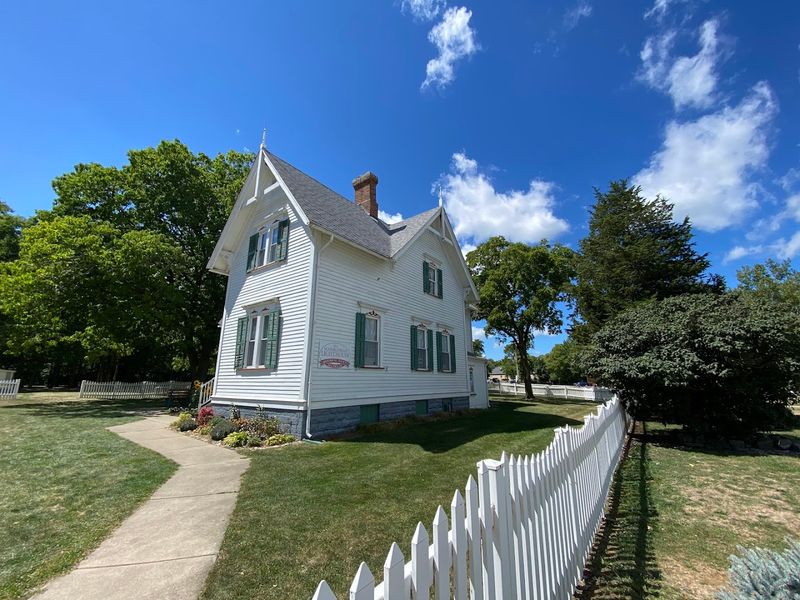
Right next to the lighthouse tower, the original keeper’s house has been transformed into a fascinating museum that tells the broader story of Lake Erie’s maritime heritage. Managed by the Marblehead Lighthouse Historical Society, the exhibits cover topics ranging from dramatic shipwrecks to the surprisingly interesting history of ice harvesting on the lake.
There is genuinely something here for every type of visitor, whether you are a history buff or just casually curious.
Shipwreck displays are a particular highlight — Lake Erie has claimed hundreds of vessels over the centuries, and the museum brings some of those tragic and dramatic stories to life through artifacts, photographs, and detailed accounts. Walking through the exhibits, you get a real sense of just how unforgiving this lake could be for sailors who were unprepared or simply unlucky.
The ice harvesting exhibits might surprise you with how interesting they are. Before refrigeration existed, cutting and storing lake ice was a major industry in this region, and the museum does a great job explaining how it worked and why it mattered.
Plan to spend at least 30 to 45 minutes inside the museum — it adds enormous context to everything you see when you step back outside and look up at the lighthouse tower.
One of Ohio’s Most Photographed Landmarks
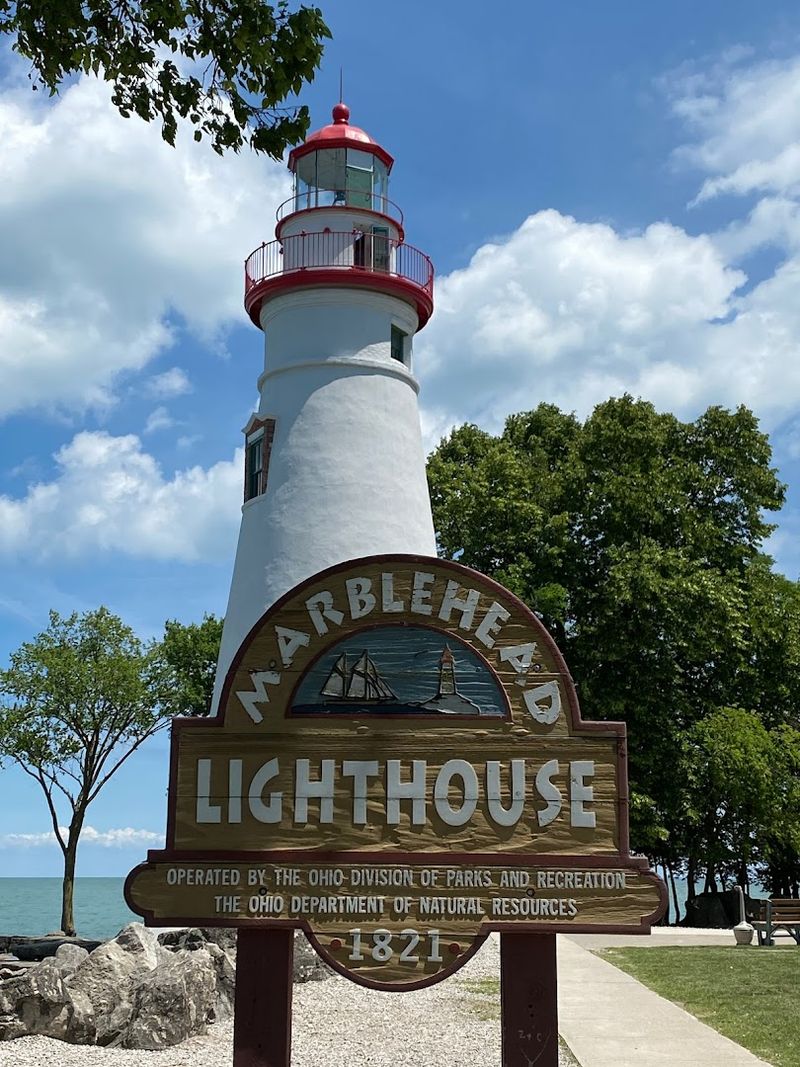
Ask any Ohio travel photographer for their top five must-visit spots, and there is a very good chance Marblehead Lighthouse makes the list. The combination of the historic white tower, the sweeping blue expanse of Lake Erie, and the distant silhouettes of the Lake Erie islands creates a scene that practically takes the photo for you.
Sunrise visits, in particular, are legendary among local photographers.
Standing on the rocky shoreline near the lighthouse at dawn, with the sky turning shades of pink and orange over the lake, is one of those experiences that stays with you long after you drive home. The lighthouse itself glows beautifully in early morning light, and the reflections off the calm water can be absolutely stunning.
It is the kind of place that makes people want to come back every season just to see how it looks different.
Beyond photography, the views here simply make you feel good. You can see Kelleys Island, South Bass Island, and on clear days, even the faint outline of the Canadian shore in the distance.
Bring a blanket, pack a snack, and give yourself permission to just sit and stare for a while. Not every great travel experience needs to involve rushing from one thing to the next.
Visitor Information and Tips
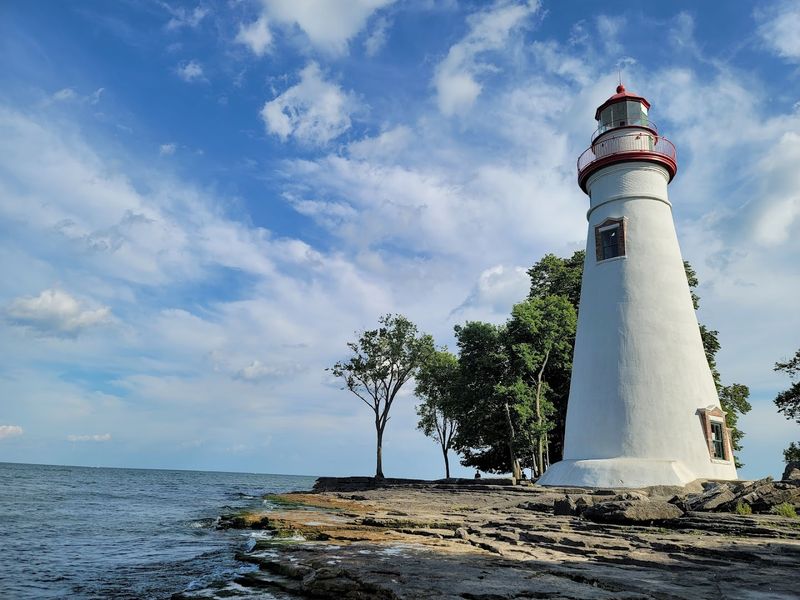
Marblehead Lighthouse State Park is located at 110 Lighthouse Drive in Marblehead, Ohio, and it is one of the easiest day trips you can make from cities like Cleveland, Toledo, or Columbus.
The park grounds are open year-round at no charge, so even a quick off-season visit to walk the shoreline and admire the tower from the outside is completely free and absolutely worth the drive.
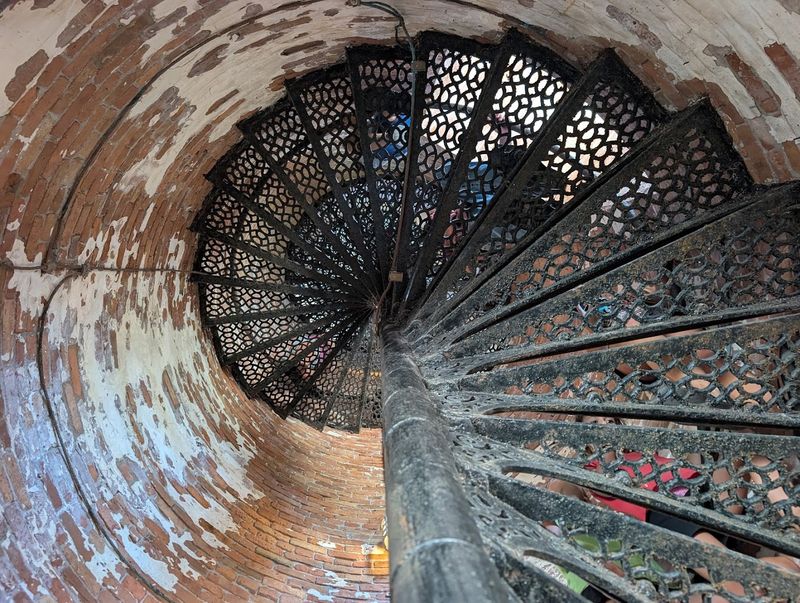
Lighthouse tower tours and museum access are typically available from late spring through early fall, usually running from Memorial Day weekend through October. During peak season, volunteer guides from the Marblehead Lighthouse Historical Society lead tours up the 77 steps to the top of the tower, where you are rewarded with panoramic views of Lake Erie and the surrounding islands.
Arrive early on summer weekends to avoid the longest lines.
Beyond the tower, the park offers a replica U.S. Life-Saving Station, picnic areas with lake views, and easy access to the rocky shoreline for relaxing or skipping stones.
Most visitors find that one to two hours is enough to see everything comfortably. Pair it with a stop in nearby Port Clinton or a ferry ride to Kelleys Island for a full Lake Erie adventure that the whole family will genuinely enjoy.