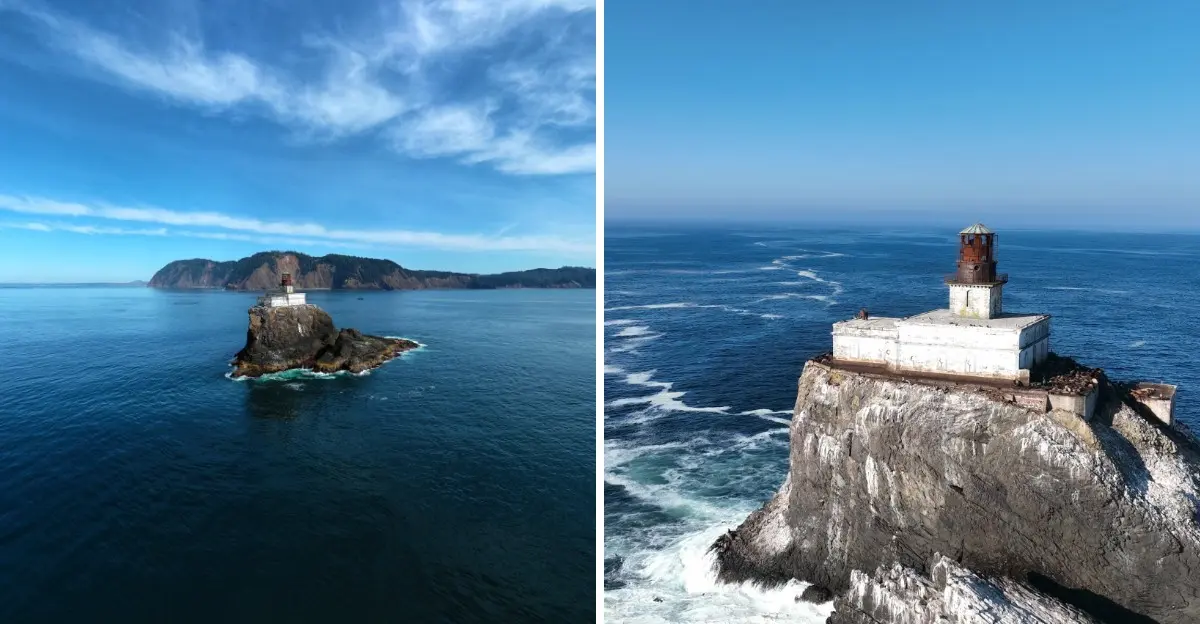
An old lighthouse off the Oregon coast stopped guiding ships decades ago. Then it started holding urns.
Yes, people chose a wave-beaten rock at sea as their final resting place.
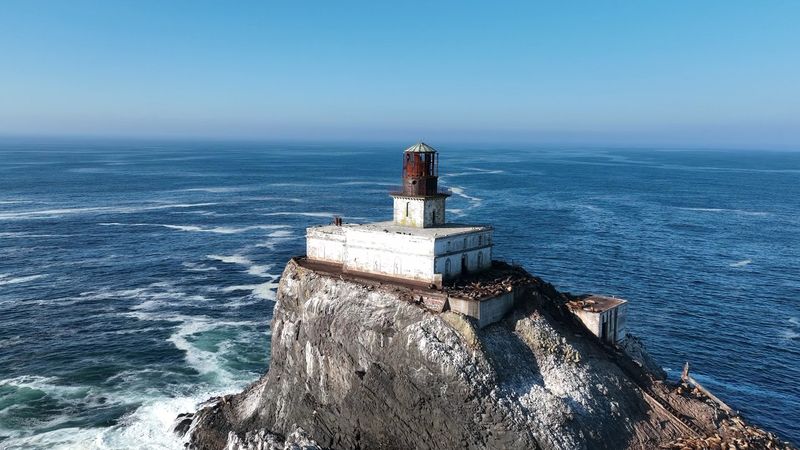
The tower sits about 1.2 miles offshore on a lonely chunk of basalt. It was first lit in 1881.
The trip out there was so rough that keepers earned the lighthouse a spooky nickname.
I like how you can still see it today without a boat. A scenic park near a famous beach town gives you clifftop views, ocean breezes, and maybe a few grazing elk.
Bring binoculars, because the details are worth squinting for.
I can’t imagine a moodier thing to spot on a family road trip. So how did a working lighthouse end up as a resting place, and where should you stand to see it?
A Lonely Tower Sitting Way Out In The Pacific
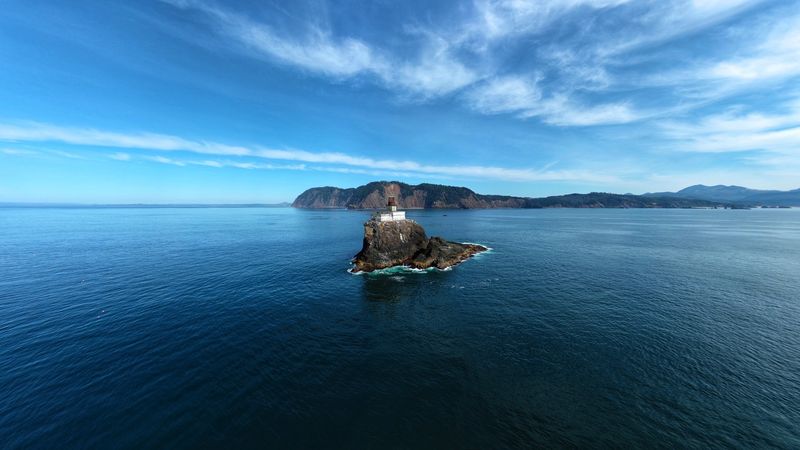
Just over a mile of open ocean separates Tillamook Lighthouse from the Oregon shoreline. That gap is exactly what makes it so fascinating to look at.
The lighthouse stands on a small, steep rock off Cannon Beach, OR. It’s listed as a historical landmark, and it holds a solid 4.6-star rating from about 160 Google reviews.
You won’t walk up and knock on the door, though. The rock sits roughly 1.2 miles offshore, so every view happens from the mainland.
Think of it as a museum piece you admire through the glass.
That distance gives the place a dramatic, island-fortress feel. Waves slam the rock, and the tower looks tiny against the endless gray-blue Pacific.
Many visitors describe the sight as eerie and majestic at the same time. Others compare it to something from a pirate movie, which honestly fits.
For Oregon families, the best part is the price of admission to the view. You only need a park day-use pass and a clear day.
The rest is pure coastal theater, no ticket booth required.
So where did this lonely tower come from? Its story starts back in the 1800s, when ships needed help along a rough coast.
An 1881 Beacon Built For A Dangerous Coastline
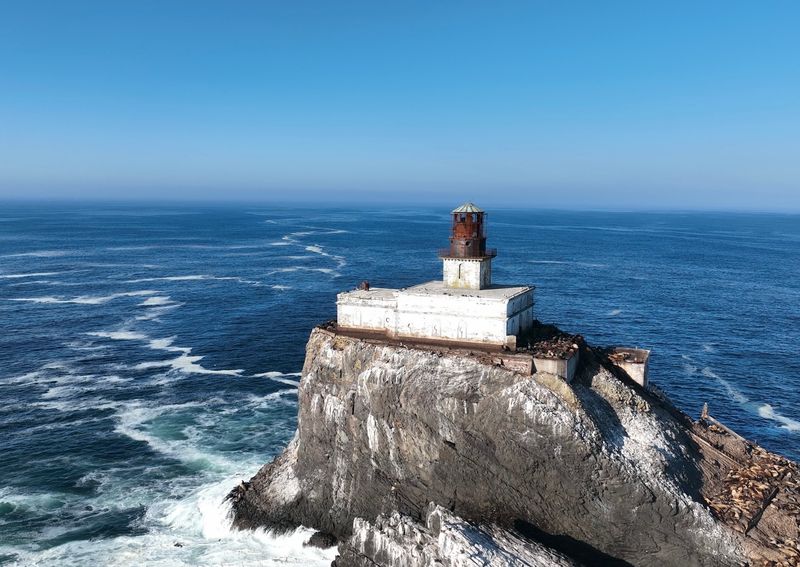
January 1881 marked the first time the lamp glowed on Tillamook Rock. Back then, that light was a big deal for sailors along the northern Oregon coast.
Ships heading toward the Columbia River faced fog, storms, and rugged headlands. A light out on the rock gave them a warning point well before they reached shore.
Building it was no easy task either. Crews had to haul materials onto a steep, slippery rock surrounded by rough water.
The result was one of the earliest lights on the Oregon coast. It served mariners for more than 75 years, which is a long run for any job, let alone one this soggy.
I like how the tower still looks sturdy from shore. It’s weathered and unrestored now, but its shape remains easy to pick out on a clear day.
History buffs will enjoy connecting the dots here. You’re looking at a working piece of 19th-century maritime safety, still parked exactly where it was built.
That longevity is a huge part of the appeal. Few landmarks get to keep their original spot, their original view, and a mysterious second career all at once.
Why Everyone Calls It Terrible Tilly
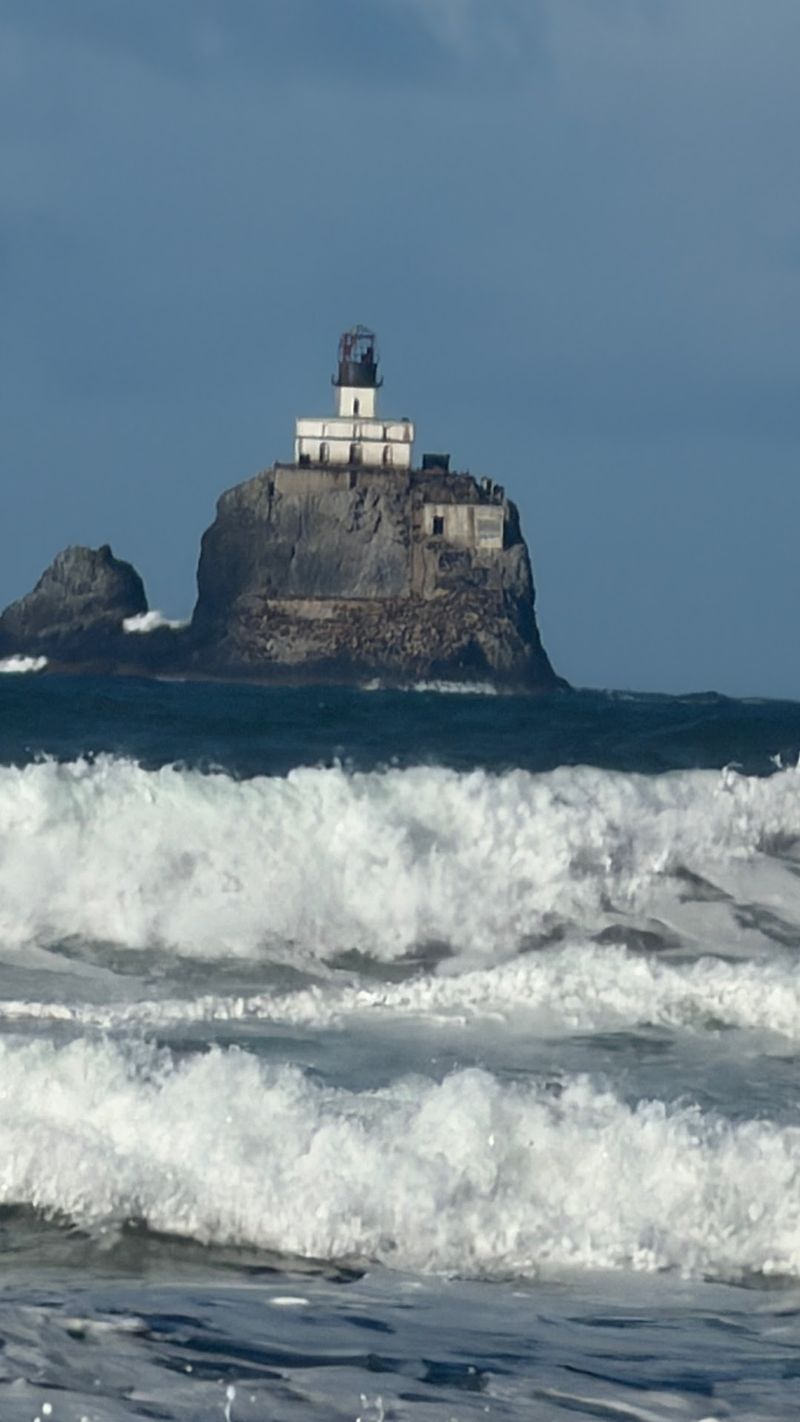
Nicknames don’t come much spookier than Terrible Tilly. Locals have used it for ages, and one look at the rock in a storm explains why.
Waves pound the island from nearly every direction. On rough days, the water explodes against the rock like it’s trying to knock the tower loose.
For the keepers who lived there, that wasn’t just scenery. It meant isolation, wild weather, and very few chances to leave.
The name stuck long after the keepers left. Today, it adds a bit of legend to your clifftop view, especially when the clouds roll in low.
Kids usually love a place with a creepy nickname. It’s a fun way to turn a scenic stop into a storytelling moment on the drive home.
Visitors often call the sight surreal and almost spooky. A lone stone tower on a bare rock does feel like something from a movie set.
Honestly, Terrible Tilly is a far better story than a cheerful name ever could be. It hints at the rough life out there and the strange chapters still ahead.
Good luck not saying it in a dramatic voice.
The Brutal Commute That Ended Its Working Days
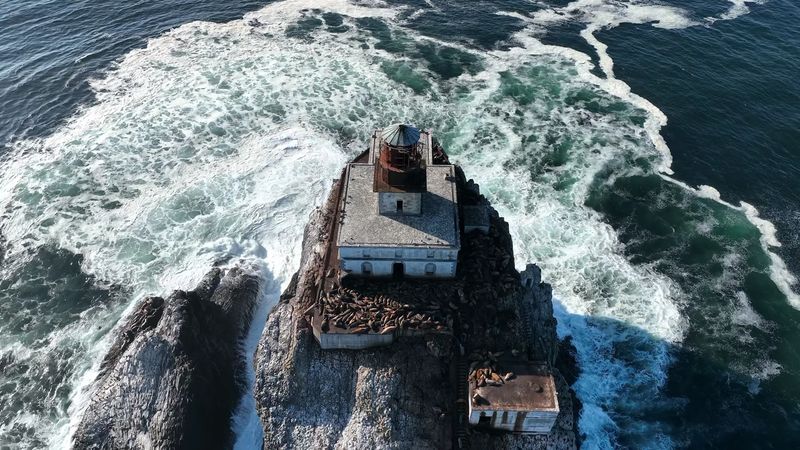
Most of us grumble about traffic on Highway 26. The crews who serviced this lighthouse had a commute that made rush hour look relaxing.
Reaching the rock meant crossing rough open water and landing on a steep, wave-washed island. Supplies and people had to get on and off a rock with no friendly dock.
Over time, that treacherous trip became the deciding factor. Keeping the light running simply cost too much in effort and money.
In 1957, the lighthouse was deactivated. After 76 years, the beam went dark for good.
It’s a little bittersweet when you think about it. A building that worked hard for decades was retired mainly because getting there was too hard.
Modern navigation tools also made offshore lights less essential. Ships could rely on other aids without sending people into such dangerous conditions.
When you look out from the bluff, try spotting a safe landing place. You probably won’t find one, and that tells you everything about the job.
The story didn’t end with the light going out, though. Terrible Tilly still had one more surprising role to play.
From Shipping Beacon To Quiet Resting Place For Urns
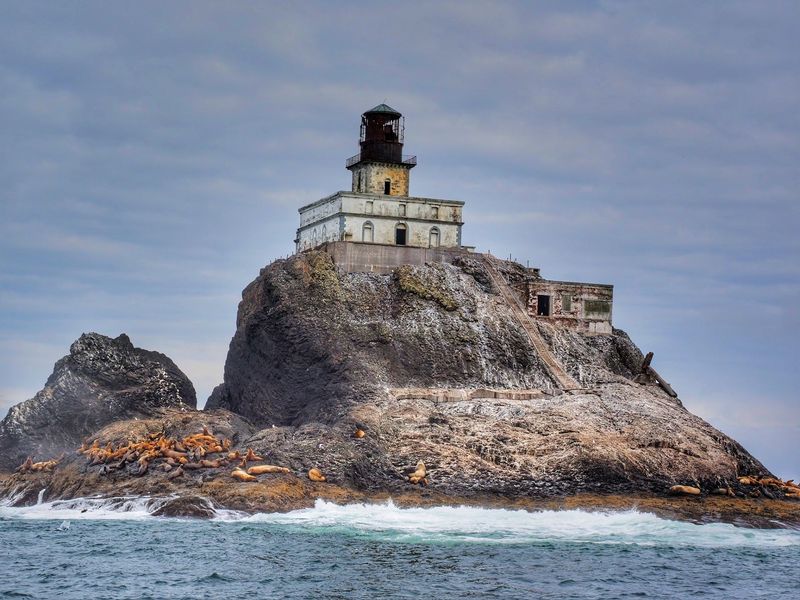
Here’s the twist that makes this landmark famous. After decades of standing empty, the old lighthouse became a columbarium, a place for storing cremated remains.
Private owners turned it into a resting place in the 1980s. Families could choose to have loved ones’ urns placed inside the old tower out at sea.
That choice sounds unusual at first. Yet for people who loved the ocean, a spot surrounded by waves may have felt deeply fitting.
The idea gives the view from shore a whole new layer. You’re not just looking at a lighthouse anymore, you’re looking at a memorial.
I believe that’s why so many people find it both eerie and peaceful. It’s a reminder of the coast’s history and of the people who wanted to stay near it forever.
The arrangement didn’t last as an active operation, but the reputation stuck. Today, Terrible Tilly is often called a lighthouse cemetery.
For families, it’s a respectful conversation starter rather than a scary one. Kids tend to ask big questions here, and the setting makes those talks feel natural and calm.
No Boats, No Tours, And That Is The Point
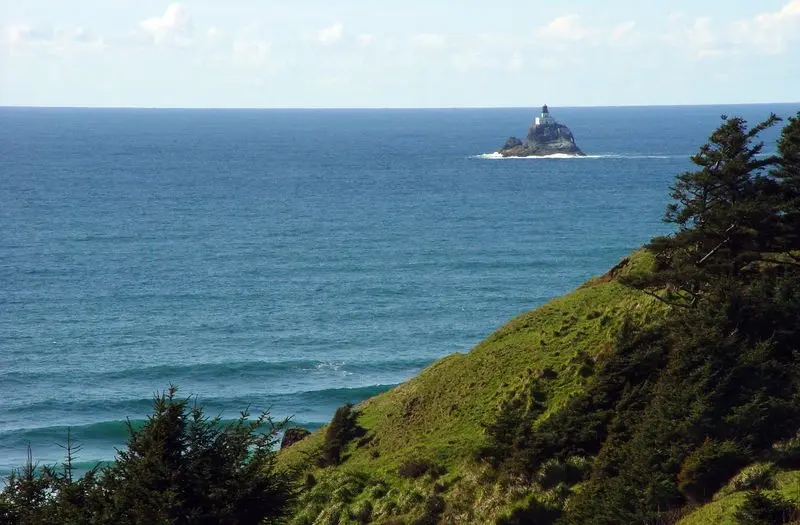
Plenty of lighthouses offer spiral staircases and gift shops. Tillamook Lighthouse offers none of that, and the mystery is half the charm.
The rock is privately owned and off-limits to the public. There’s no ferry, no tour, and no way to step inside.
The lighthouse is also unrestored and showing its age. Some visitors note it’s in rough repair, which makes every viewing feel a little like a now-or-never moment.
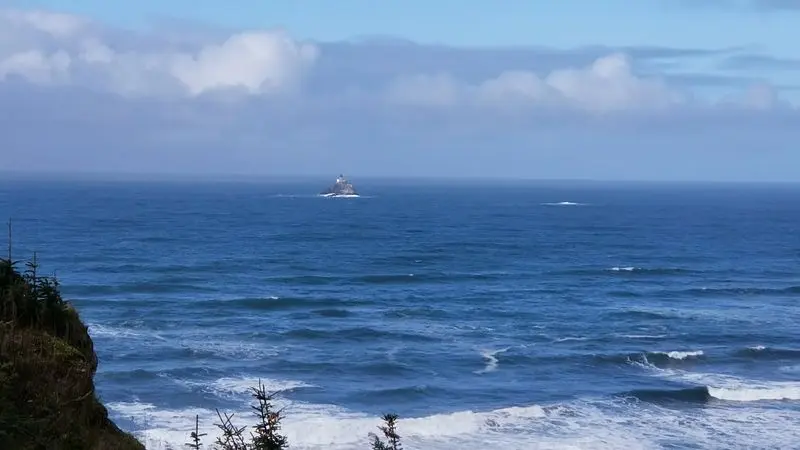
Because of the distance, binoculars make a real difference. A few visitors say that without strong ones, the tower can look pretty small.
That’s worth knowing before you plan your whole day around it. Think of the lighthouse as the star of a bigger coastal outing, not the only event.
The rock is also a protected area for seabirds. Leaving it alone keeps it a safe nesting spot, which feels like a nice ending for such a battered place.
So pack a zoom lens or a good pair of binoculars. Your reward is a clearer look at the weathered stonework and the waves crashing around it.
It’s surprisingly addictive to watch.
Your Front-Row Seat Is Inside Ecola State Park
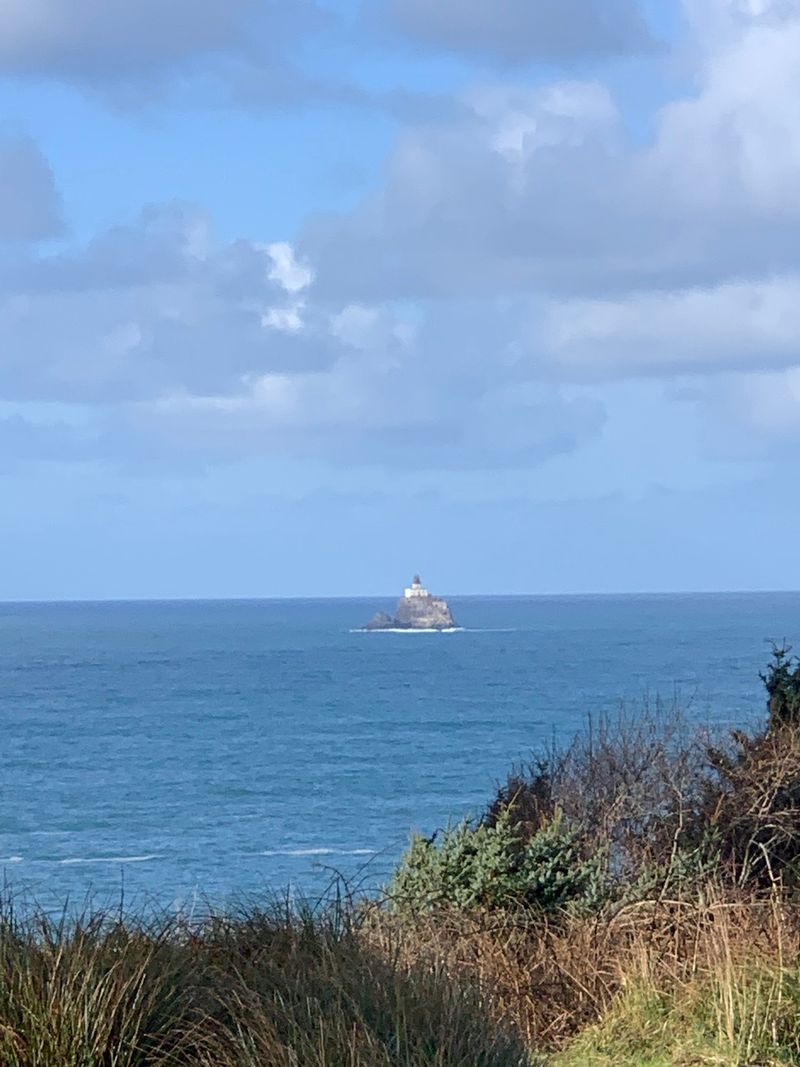
Ecola State Park is where the lighthouse viewing happens. It sits just north of Cannon Beach, OR, and wraps around a rugged stretch of headland and forest.
Visitors often drive the park road as far as it goes, then walk a short way toward the point. One family described parking and walking about 100 feet into the grass before the lighthouse popped into view.
That’s a big win for anyone with tired legs. One visitor with a twisted ankle still got a great look without tackling a trail.
The park charges a day-use fee, so check Oregon State Parks before you go. Fees can change, so it’s smart to confirm the current rate.
Beyond the lighthouse, the park has grassy areas that work nicely for a picnic. Several visitors mention bringing food and a blanket to relax on the lawn.
I like how this turns a quick view into a full family stop. You get ocean views, forest paths, and a legendary lighthouse in one affordable package.
Plan to linger a bit. The views tend to change fast as clouds and sunlight shift over the water.
Pick The Left Trail And Your Calves Will Thank You
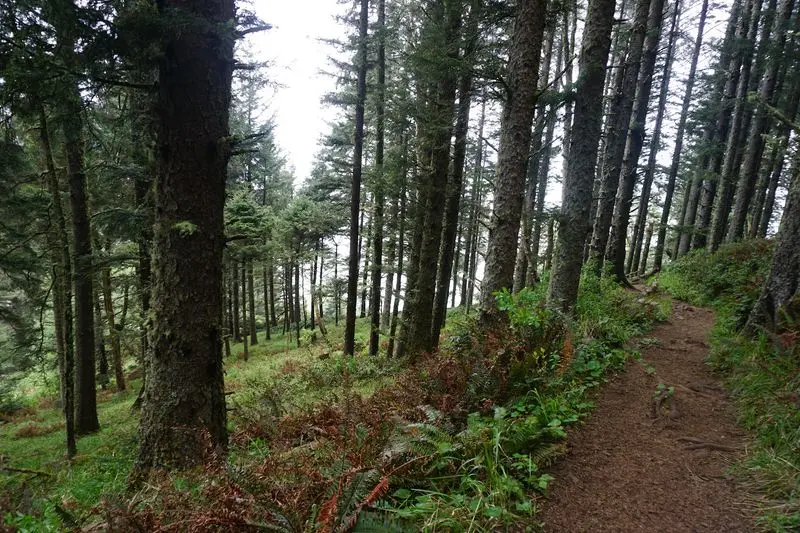
Hikers have strong opinions about the trails here. One popular tip is to take the trail on the left heading up toward the lookout.
The path on the right doubles as a service road and climbs steeply nearly the whole way. The left trail offers a more gradual climb and early glimpses of the lighthouse.
One hiker clocked the loop from the south side at about 3.1 miles round trip. Trail signs list it closer to 2.6 miles, so expect a little extra.
Another visitor described a 2.8-mile loop with two or three spots to view the lighthouse. Either way, it’s a manageable outing for many families.
Don’t expect a flat stroll, though. Several hikers say the route involves more uphill climbing than they expected.
Wear real hiking shoes and pack water. Those simple steps make the difference between a fun hike and a grumpy one.
The woods along the way have mossy trees and small critters to spot. Visitors also mention the trail being well groomed, which helps when kids are setting the pace.
It’s a rewarding walk with a lighthouse payoff.
Longer Routes For Hikers Who Want The Whole Headland
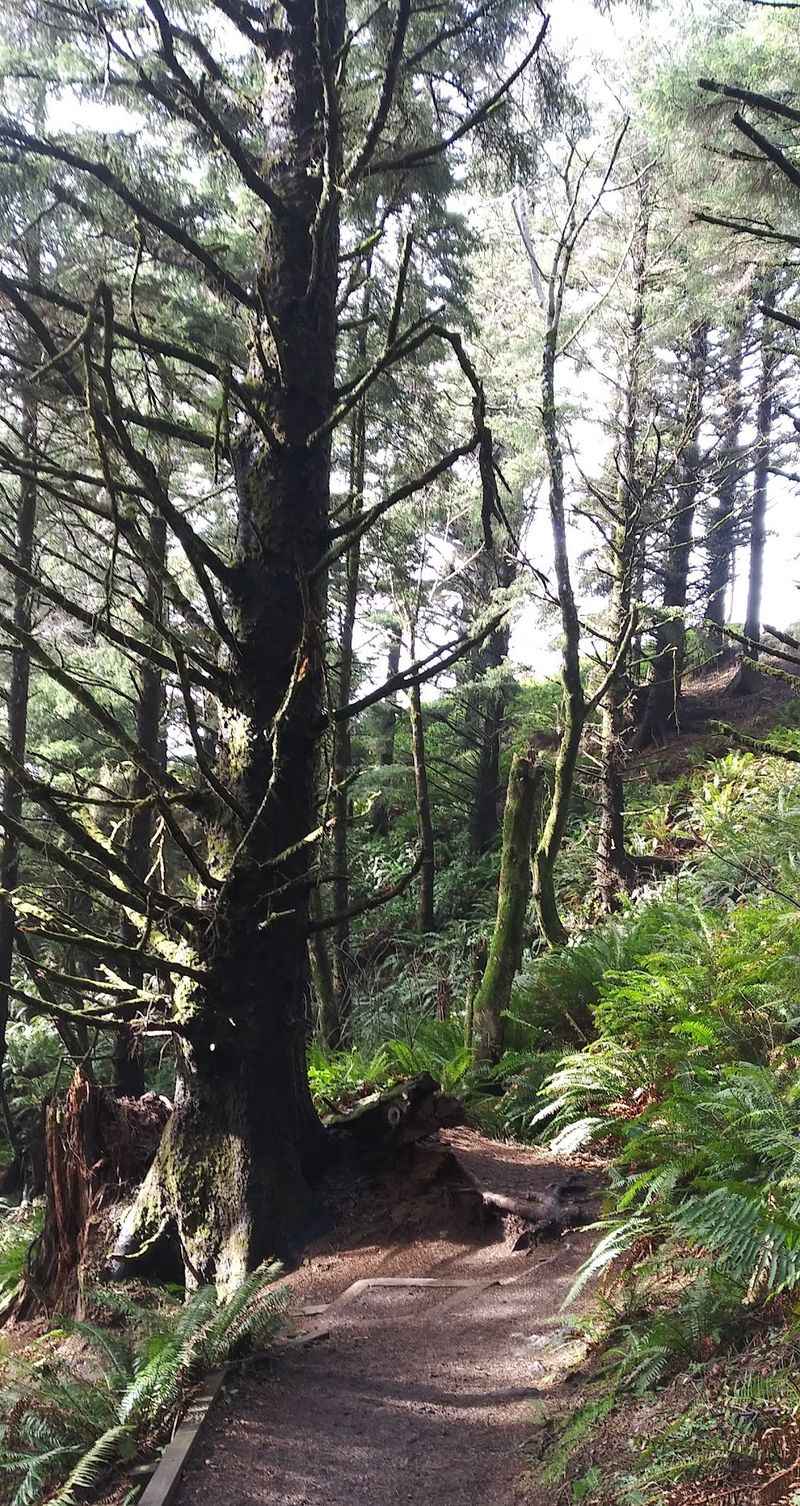
Some people want a short peek. Others want a full day of boots-on-dirt adventure, and Tillamook Head delivers that too.
Trails run all the way back toward Seaside, roughly 7 miles across the headland. It’s a serious trek, not a casual after-lunch walk.
One hiker tried the route from the Seaside side and found it muddy. Their round trip came out to about eight miles.
The south side approach from Ecola is much shorter. For most families, that’s the smarter choice.
Another option starts at Indian Beach and climbs toward the lighthouse view. Visitors call that route fairly difficult, with about half the hike going uphill.
The views at the top tend to win people over anyway. Plenty of hikers mention breathtaking coastline scenes along with the lighthouse.
Mud is a real factor on this part of the Oregon coast. Check recent trail conditions, and give yourself extra time after rainy spells.
Teens and active parents might love the challenge. Younger kids may be happier with the shorter loop and a picnic waiting at the end.
Choose the route that fits your crew’s energy.
Low Tide Views From Indian Beach
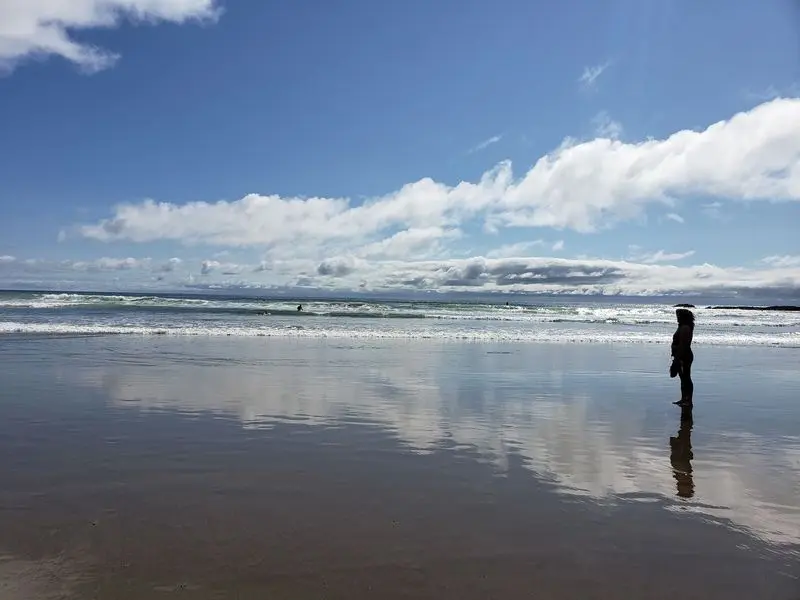
Sand between your toes and a lighthouse on the horizon is a pretty great combo. Indian Beach, inside Ecola State Park, offers exactly that.
One visitor shared a handy tip for spotting the tower here. Go at low tide, walk to the beach, cross the first shallow creek, then turn and look right.
Timing matters on any Oregon beach. Check a tide chart before you go, and keep an eye on the water while exploring.
Indian Beach is fun even without the lighthouse. Visitors mention collecting seashells and sand dollars along the shore.
Surfers also show up here, which adds some entertainment while you wait for clouds to clear. One visitor mentioned watching surfing along with the lighthouse views.
Some explorers enjoy the caves and rock formations nearby. Others simply sit on a rock and soak up golden hour as the sun drops toward the ocean.
For families, the beach balances the history lesson with pure play. Kids can dig and hunt for shells while adults stare dreamily at Terrible Tilly.
Everybody wins, and nobody needs a hiking pole.
Elk Herds, Sea Lions, And Other Locals Worth Spotting
Some visitors get greeted by a welcoming committee with antlers. Wild elk have been spotted lounging in the open meadow near the Ecola parking area.
One visitor described them grazing calmly as if they owned the place. Honestly, they kind of do.
Always give elk plenty of space. They’re wild animals, and a zoom lens is a much better idea than a close-up selfie.
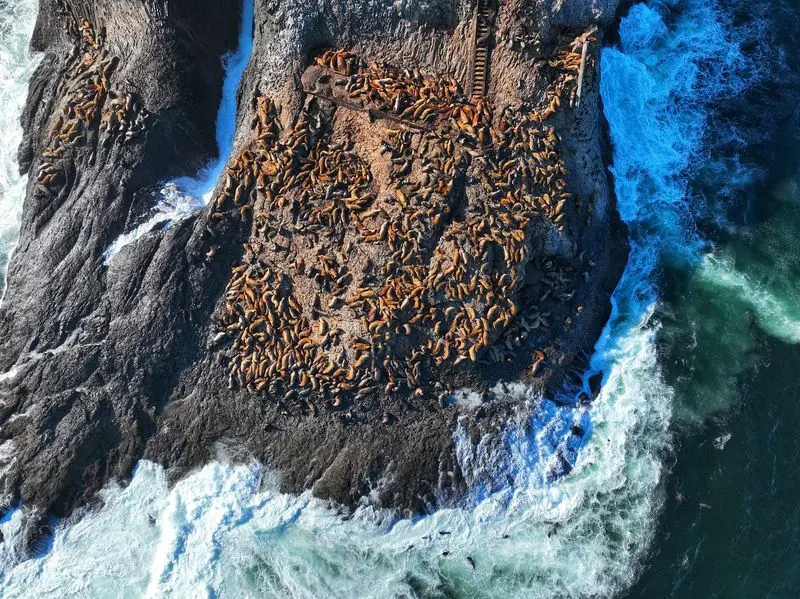
The ocean side has its own wildlife show. A few visitors mention seeing sea lions from the viewpoints.
The forest trails add smaller surprises too. Expect mossy trees, ferns, and little creatures worth pointing out to curious kids.
Bring binoculars for double duty here. They’ll help you study the lighthouse and also scan the water for marine life.
The rock around the lighthouse is protected for seabirds, so it isn’t empty out there. Even though people can’t visit, birds still treat Terrible Tilly as prime real estate.
Wildlife makes the trip feel bigger than a single landmark. A family that came for a spooky lighthouse might leave talking mostly about the elk.
Movie-Famous Scenery Right Next Door
Hey, you guys! Fans of The Goonies will feel right at home on this stretch of the Oregon coast.
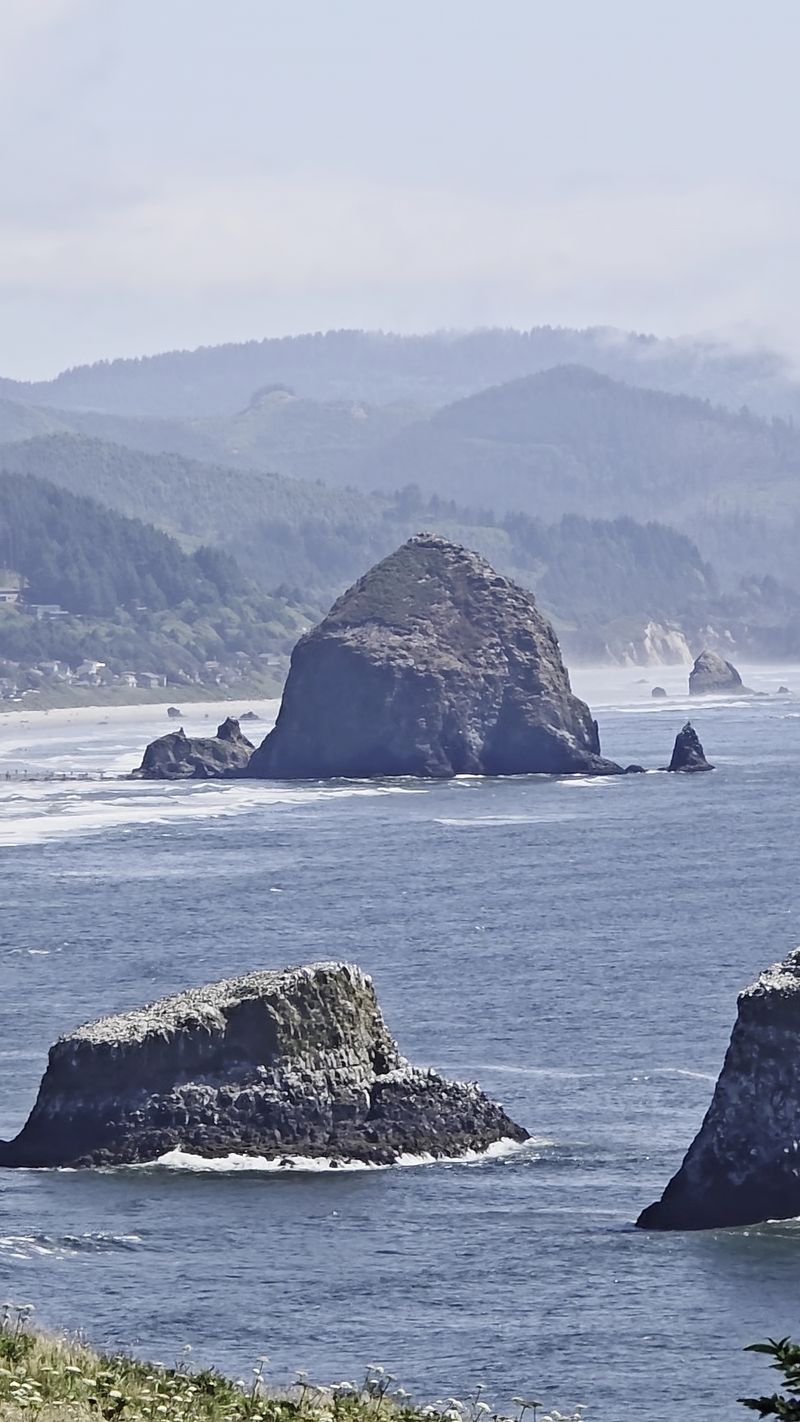
Visitors to Ecola State Park often point out the famous sea stack associated with the movie. One visitor said standing there made them feel like a kid again.
That nostalgia factor is a big bonus for parents. You can share a favorite 1980s film moment while the kids enjoy the scenery for its own sake.
The area’s cinematic look isn’t a coincidence. Rugged cliffs, crashing waves, and sea stacks make it a natural backdrop for filmmakers.
Terrible Tilly fits right into that movie mood. Several visitors say the lighthouse looks like something straight out of a pirate film.
It’s easy to turn the day into a mini film tour. Pair the lighthouse views with nearby movie spots, and the kids may forget they’re technically learning history.
Bring a camera and take your time. The light changes quickly here, and every angle seems to offer a new scene worth framing.
Few road-trip stops combine a lighthouse legend and movie nostalgia this neatly. It’s an easy sell for every generation in the car.
Parking, Crowds, And Smart Timing Tips
Popularity comes with a catch here. On busy days, the Ecola parking area can fill up completely.
One recent visitor found no parking, long restroom lines, and even a line at the overflow lot outhouse. They left without seeing the lighthouse, which is nobody’s dream outing.
Summer tends to bring the biggest crowds. Arriving early in the day gives you a better shot at a spot near the viewpoints.
Going in the off-season is another smart move. One visitor who explored over two days recommended it for anyone who dislikes crowds.
Weather plays a huge role too. The lighthouse is easiest to see on clear days, and fog can hide it entirely.
Plan your route around Cannon Beach, OR, since Ecola sits just north of town. It makes an easy add-on to a coastal weekend or a drive from Portland.
Drone pilots have enjoyed photographing the landmark from afar. Check current park and wildlife rules first, since the rock is a protected seabird area.
Hours and fees can change, so confirm details with Oregon State Parks before you leave. A little planning saves a lot of circling.
A Spooky, Affordable Oregon Coast Stop Worth Planning
Not many road-trip stops mix history, mystery, and ocean views for the price of a park pass. Tillamook Lighthouse pulls it off with style.
You get an 1881 beacon, a famously scary nickname, and a surprising second life as a resting place. That’s a lot of story packed onto one small rock.
It works best as part of a bigger day. Combine a hike, a picnic, some beach time, and maybe a few elk sightings.
Families with little kids can stick to the short viewpoint walk. Active crews can tackle the trails for a sweaty, scenic payoff.
Expect a distant view, not an up-close tour. Binoculars and a clear day turn that distance into part of the drama.
I believe the lighthouse feels special because it’s untouched. It stands weathered and alone, and nobody knows exactly how long it’ll keep standing.
That makes a visit feel timely. Seeing Terrible Tilly now is a story worth sharing with relatives back home.
So next time you’re heading to the Oregon coast, swing by Ecola. Wave at the old lighthouse, and let it keep its secrets.