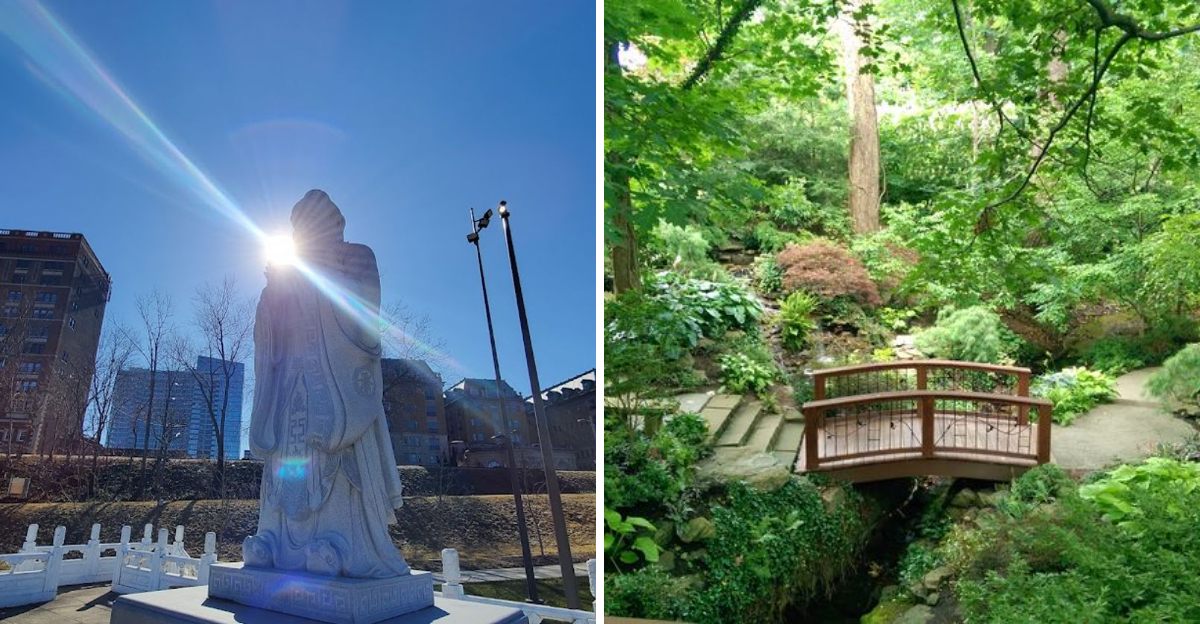
Hidden among Cleveland’s bustling University Circle sits a peaceful escape that feels like stepping into Japan itself.
The Cleveland Botanical Garden’s Japanese Garden, known as Gan Ryuu Tei, brings together centuries-old design traditions with Ohio’s natural beauty.
This carefully crafted space offers visitors a chance to slow down, breathe deeply, and experience the calming power of Japanese garden philosophy.
Whether you’re seeking quiet reflection or simply curious about Japanese culture, this garden delivers an experience that stays with you long after you leave.
A Hidden Corner of Japan in the Heart of Cleveland

Cleveland Botanical Garden feels worlds away from the busy streets surrounding it, yet it sits right in the heart of University Circle. The carefully designed landscapes blend seamlessly with quiet cultural spaces that invite contemplation rather than hurried glances.
Walking into this attraction, you immediately sense a shift in atmosphere. The Japanese Garden section adds a meditative quality that makes the surrounding city noise fade into the background, creating an unexpected oasis.
University Circle itself is known for its cultural institutions, but this botanical treasure often surprises first-time visitors. Many people don’t expect to find such authentic Japanese garden design in the middle of Ohio’s second-largest city.
The garden’s location makes it accessible yet secluded enough to maintain its peaceful character. Morning visits offer especially quiet moments when sunlight filters through trees and the garden feels like your own private discovery.
The Story Behind the Japanese Garden

Gan Ryuu Tei translates roughly to “The Garden of Dragon’s Dream,” a name that captures the mystical quality embedded in its design. This wasn’t just thrown together by well-meaning gardeners hoping to create an Asian-themed space.
Landscape architect David Slawson brought authentic expertise to the project, having trained directly under Kinsaku Nakane, one of Japan’s most respected garden masters. That lineage matters because traditional Japanese gardens follow complex rules about proportion, symbolism, and spatial flow that take years to understand properly.
The garden reflects principles rooted in both Zen Buddhism and Shinto beliefs about nature’s sacred qualities. Every element serves a purpose beyond decoration, whether representing mountains, islands, or the journey through life itself.
Understanding this background changes how you experience the space. You’re not just looking at pretty rocks and pruned trees—you’re walking through centuries of refined philosophical thinking about humanity’s relationship with the natural world.
Stone Paths, Water Features, and Symbolic Design

Nothing in this garden appears randomly placed, though achieving that natural look requires tremendous skill. The weathered stones you see were chosen for specific textures, colors, and shapes that work together like notes in a musical composition.
Water features serve as focal points that draw your eye and ear simultaneously. The gentle sounds create natural white noise that helps your mind settle, while the reflective surfaces add visual depth to relatively small spaces.
Clipped evergreens maintain their shapes year-round, providing consistent structure even when deciduous plants lose their leaves. These sculptural trees get pruned following techniques that emphasize asymmetry and age rather than perfect geometric forms.
The paths themselves encourage slow, deliberate walking. Their winding nature prevents you from rushing through, while carefully positioned rocks create natural stopping points where views open up in particularly pleasing ways.
Each curve reveals something new while maintaining overall harmony.
Japanese Culture Woven Into the Landscape

Traditional stone lanterns stand throughout the garden, their weathered surfaces telling stories of seasons past. These aren’t just decorative accessories—they historically lit pathways to tea houses and marked sacred spaces in Japanese temple grounds.
Japanese maples steal the show during autumn months, their delicate leaves turning brilliant shades of red, orange, and burgundy. Even outside peak color season, their elegant branching patterns and refined foliage maintain visual interest that Western maples can’t quite match.
Tea garden influences shape the overall minimalist approach you’ll notice immediately. Rather than overwhelming visitors with endless flower beds, the design emphasizes restraint, negative space, and subtle seasonal changes that reward careful observation.
Balance trumps symmetry here, reflecting a fundamentally different aesthetic philosophy than typical Western landscapes. This cultural difference becomes obvious when you compare the Japanese Garden to other sections of the botanical complex, each representing distinct worldviews expressed through plants and stones.
A Garden Designed for Calm and Reflection

Step inside and your breathing naturally slows without conscious effort. The garden’s design actively encourages this physiological response through carefully controlled sightlines, sound dampening plants, and gentle path curves that prevent rushing.
Secluded seating areas pop up at intervals, positioned to maximize privacy while offering views worth contemplating. These spots become particularly valuable during weekday mornings when you might have entire sections to yourself for extended periods.
Spring afternoons bring a different quality of light that makes even familiar corners feel freshly discovered. The interplay between shadows, water reflections, and emerging foliage creates constantly shifting compositions that photographers and artists particularly appreciate.
Unlike louder tourist attractions demanding your attention through spectacular displays, this destination requires active participation. You need to slow down, notice details, and let silence work its magic rather than expecting entertainment to come find you.
That’s precisely what makes it special for those willing to meet it halfway.
More Than Just the Japanese Garden

While the Japanese Garden rightfully draws attention, it represents just one section of a much larger botanical complex worth exploring. The Eleanor Armstrong Smith Glasshouse alone deserves an hour of your time with its dramatically different climate zones under one roof.
Costa Rican rainforest and Madagascar desert environments occupy separate wings of the glasshouse, creating stark contrasts in humidity, temperature, and plant life. Exotic orchids, towering palms, and bizarre succulents transport you to ecosystems you’d normally need plane tickets to experience.
Rose gardens outside offer classic beauty during summer months, their fragrance mixing with birdsong to create sensory experiences quite different from the Japanese Garden’s contemplative minimalism. Woodland trails wind through native Ohio plants, showing how stunning local ecosystems can be when thoughtfully curated.
Restorative gardens demonstrate practical landscaping ideas you might adapt for home use. The variety means different family members can find areas matching their interests, making this destination more flexible than single-theme attractions.
Seasonal Beauty Makes Every Visit Different

Spring cherry blossoms create magic for roughly two weeks each year, their delicate pink flowers symbolizing life’s beautiful impermanence in Japanese tradition. Catching peak bloom requires timing and luck, but even early or late visits show buds forming or petals falling—both poetic in their own right.
Summer greenery transforms the garden into a lush retreat where shade becomes precious. The deeper colors and fuller canopy create intimacy that spring’s bare branches don’t provide, changing how spaces feel and function.
Autumn foliage delivers the most dramatic color show when Japanese maples ignite in fiery reds against evergreen backgrounds. This contrast emphasizes the design’s bones while celebrating seasonal change that Japanese aesthetic philosophy treasures deeply.
Winter textures surprise people who assume gardens close or become uninteresting. Snow on sculpted evergreens, ice crystallizing on water features, and bare branching patterns revealed without leaf cover offer stark beauty that quiet admirers find especially moving.
Each season rewards different temperaments.
A Cultural Stop in Cleveland’s University Circle

University Circle packs more cultural institutions into one neighborhood than most cities can claim across their entire footprint. The botanical garden sits among heavyweight attractions including Cleveland Museum of Art, Cleveland Museum of Natural History, and Cleveland History Center within easy walking distance.
This density makes planning full-day cultural explorations remarkably simple. You might spend your morning examining ancient artifacts or contemporary paintings, break for lunch, then decompress in the garden’s peaceful environment before tackling another museum.
The contrast between indoor and outdoor experiences prevents museum fatigue that strikes when you visit too many similar attractions consecutively. Gardens provide mental breaks that refresh your ability to absorb new information at subsequent stops.
Parking once and walking between venues beats driving around searching for spots at each location. The neighborhood’s pedestrian-friendly layout encourages spontaneous detours when something catches your eye, creating organic days that feel less rigidly scheduled than typical tourist itineraries following guidebook orders.
Why This Ohio Destination Deserves More Attention

Major botanical gardens in tourist-heavy cities often feel crowded and commercialized, their popularity creating the opposite atmosphere gardens should provide. Cleveland’s Japanese Garden flies under the radar nationally, which ironically enhances its meditative quality by keeping visitor numbers manageable.
Size works in its favor here. While not as massive as famous competitors, the intimate scale allows designers to perfect every detail rather than filling acres with repetitive plantings that dilute impact through sheer volume.
The combination of authentic cultural design, horticultural expertise, and genuine tranquility makes this one of Ohio’s most underrated peaceful destinations. People seeking similar experiences often overlook Midwest options, assuming coasts hold monopolies on quality cultural attractions.
History enthusiasts, horticulture students, and stressed-out adults all find value here for different reasons. That versatility combined with accessibility makes it puzzling why more travelers don’t include Cleveland’s University Circle on their cultural tourism circuits when planning trips through the Great Lakes region.
Visitor Information

Cleveland Botanical Garden calls 11030 East Boulevard home, situated squarely in University Circle’s cultural district. Finding it proves straightforward whether you’re coming from downtown Cleveland or surrounding suburbs, with clear signage marking the turn-off from major roads.
Operating hours typically run Tuesday through Saturday from 10 a.m. to 5 p.m., with Sunday hours starting at noon and ending at 5 p.m. These schedules can shift seasonally or for special events, so checking their website before visiting saves potential disappointment.
Single admission covers both outdoor gardens and indoor Glasshouse exhibits, providing solid value compared to paying separate fees at multiple attractions. Family-friendly pricing and membership options make sense for locals planning repeat visits throughout the year.
Parking availability in nearby lots removes the stress of circling blocks searching for street spots. The facility welcomes families year-round, though parents with very young children should remember that contemplative spaces require more supervision than playground-style attractions to maintain the peaceful atmosphere other visitors seek.