Pennsylvania hides more sparkle than most road trippers expect, and some of its best treasures sit in road cuts, old mining zones, creek beds, and ridges just waiting for a sharp eye and a little patience.
If you have ever wanted a day outdoors with the thrill of a mini treasure hunt, these crystal hunting spots deliver history, scenery, and the very real chance of going home with quartz, calcite, pyrite, or other fascinating finds tucked into your pack.
We pulled together ten places across the state that rockhounds keep talking about, from famous cave country near Kutztown to rugged areas around Lancaster County, and the hills above Slatington, with practical location context so you know where each adventure begins.
Grab your gloves, bring a bucket, check local rules before you dig, and keep reading, because Pennsylvania may be about to turn your next weekend into a glittery little obsession.
1. Phoenixville Mineral Area
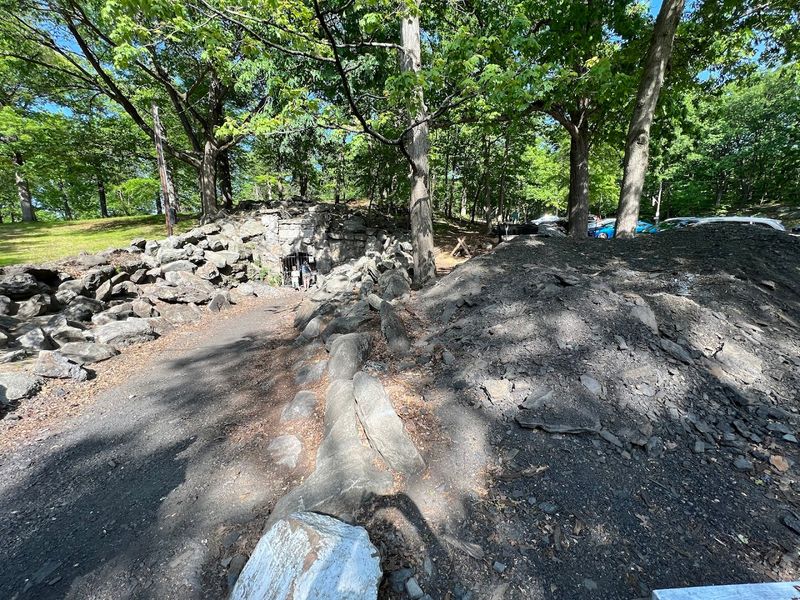
A riverside town with a surprisingly rocky personality sets the stage for Phoenixville’s mineral hunting reputation.
Phoenixville Mineral Area in Chester County sits in the heart of southeastern Pennsylvania’s complex geology, where old industrial footprints meet natural rock exposures.
Collectors are drawn here not to a single mine, but to scattered zones along creeks, cuts, and historical excavation sites where minerals still occasionally reveal themselves.
Quartz fragments, secondary iron minerals, and weathered crystallized pieces have been reported in surrounding rock formations.
The Schuylkill River corridor adds another layer of possibility, constantly reshaping exposed ground and occasionally uncovering fresh material.
Urban edges blend into natural outcrops, making this a rare “city meets geology” experience.
Visitors often explore cautiously along permitted public areas, since much of the land is mixed ownership.
The thrill here comes from unpredictability rather than guaranteed finds.
One moment you are walking past cafés, and the next you are eyeing a suspiciously shiny rock near a retaining wall.
Local hikers sometimes double as accidental rockhounds after noticing unusual mineral glints along trails.
Photography works well here because light bouncing off river stones can highlight subtle crystal textures.
Phoenixville Mineral Area in Phoenixville rewards patience, curiosity, and a willingness to look twice at ordinary ground.
2. Mount Pisgah / Susquehanna River Rockhounding Areas
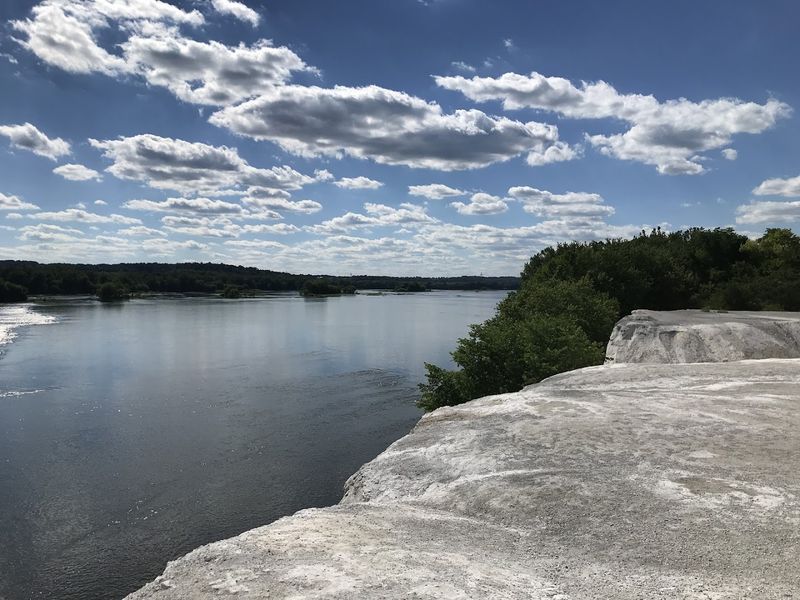
The Susquehanna River has a way of rewriting the landscape every time it floods, and Mount Pisgah sits right in that story.
This Lancaster County rockhounding region is less a single site and more a stretch of river-access zones where minerals occasionally wash into view.
Quartz, jasper, and assorted river-tumbled stones are among the most commonly reported finds.
Mount Pisgah’s elevated overlook adds a dramatic backdrop before you even start searching below.
Collectors focus on gravel bars and exposed sediment areas during low water levels.
The river’s constant movement acts like a natural sorting machine, concentrating heavier minerals in specific pockets.
Access is generally limited to public river lands and designated recreational areas, so respect for boundaries is essential.
Boots and patience are far more useful than fancy tools here.
The sound of flowing water mixes with the occasional clink of rocks shifting underfoot, creating a calming rhythm for exploration.
Birds circle overhead while you scan for anything that looks unusually angular or glassy.
This Pennsylvania destination offers a peaceful, ever-changing hunting ground shaped entirely by water and time.
3. Cornwall Iron Mines Area
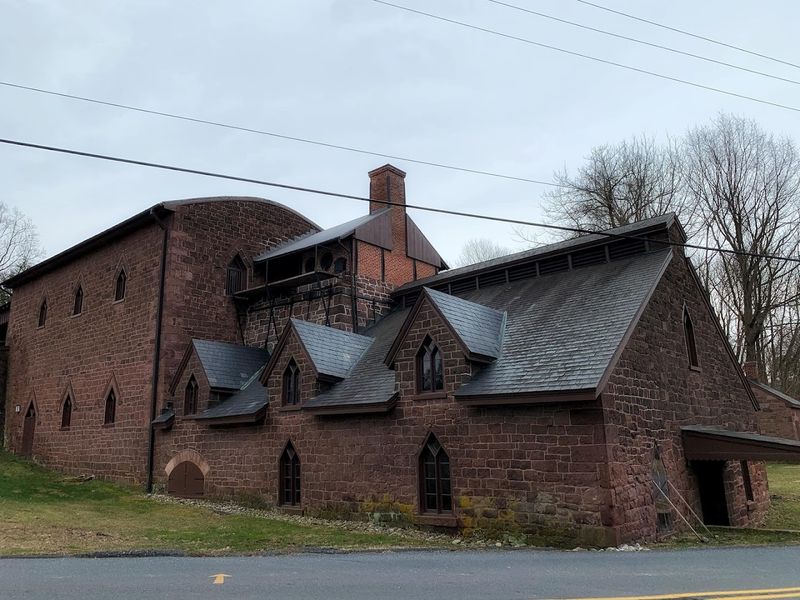
Iron may be the headline here, but Cornwall hides more geological drama than its name suggests.
The Cornwall Iron Mines Area in Lebanon County is one of the most historically significant mining regions in Pennsylvania.
Massive iron deposits shaped both the local economy and the terrain, leaving behind pits, tailings, and mineral-rich exposures.
While iron ore dominates, quartz and associated minerals can still be found in surrounding rock zones.
The site is also known for its deep mining history, once producing vast quantities of ore for regional industry.
Today, parts of the area function as historical and educational spaces rather than active mines.
Visitors can explore designated trails that pass near old mining features and interpretive displays.
The contrast between forest growth and industrial remnants creates a striking visual mix.
Collectors are encouraged to focus only on permitted areas due to preservation rules.
Even without collecting, the geology tells a powerful story of extraction and transformation.
Light catches iron-stained rock faces in deep reds and browns that feel almost painterly.
Cornwall Iron Mines Area is a grounded reminder that Pennsylvania’s crystals often come with heavy industrial history.
4. Greenwood Furnace State Park Area
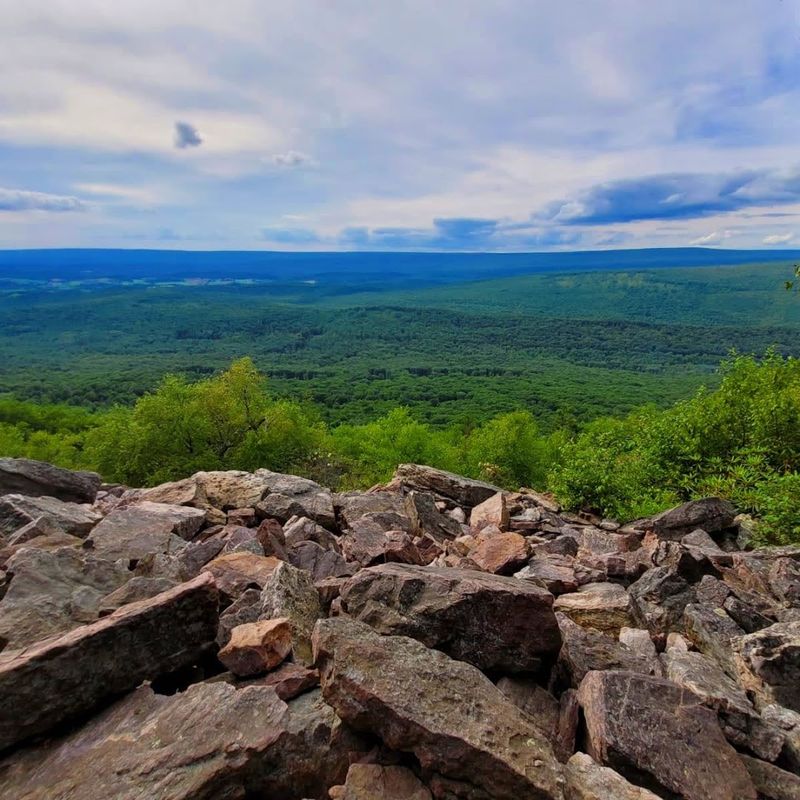
Steam-era echoes still linger in Greenwood Furnace State Park, where nature has reclaimed an old iron-making settlement.
This Huntingdon County location blends history, hiking, and subtle rockhounding opportunities into one wooded package.
The surrounding geology includes sandstone, shale, and mineral-bearing formations typical of central Pennsylvania.
Quartz fragments and small mineral pieces can occasionally be found in streambeds and eroded slopes.
Most visitors come for the scenery, but observant hikers notice sparkling hints in gravel trails.
The park’s restored furnace ruins add an industrial contrast to the lush forest setting.
Streams run cool and clear, cutting through layers of rock that have been exposed over time.
Rockhounding here is casual and observational rather than heavy-duty collecting.
Wildlife sightings often compete with rock spotting for attention, especially deer and woodland birds.
Interpretive signs throughout the park help explain the iron industry that once dominated the region.
The peaceful environment makes it easy to slow down and scan carefully.
Greenwood Furnace State Park Area in Huntingdon County feels like a quiet conversation between geology and history.
5. Lehigh Gap / Blue Mountain Area
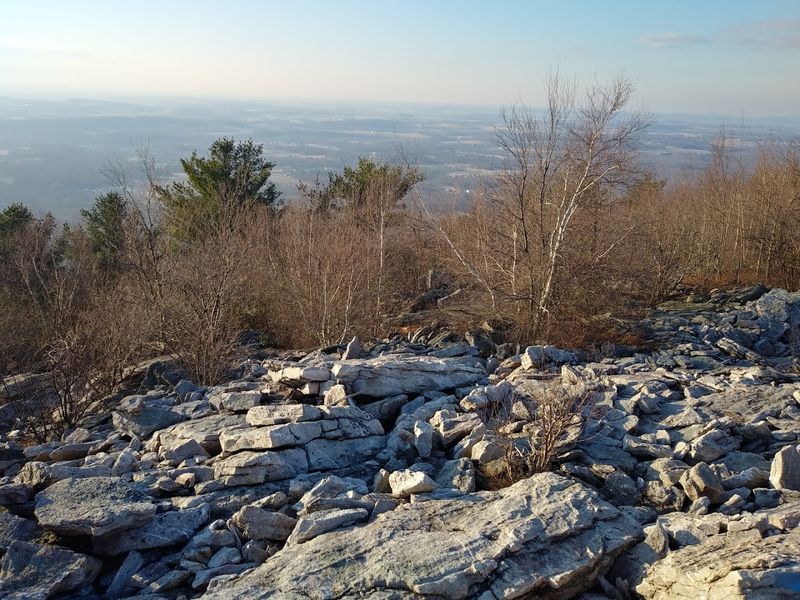
Where the Appalachian Trail slices through a dramatic ridge, the Lehigh Gap area delivers rugged rockhounding terrain.
Blue Mountain near Slatington in Carbon and Lehigh counties is known for exposed quartz veins and metamorphic rock formations.
The landscape feels raw, with steep slopes, talus fields, and weathered rock faces.
Quartz crystals and mineral fragments are often found in loose rock along trails and cuts.
The area is also a restoration success story, as parts were once heavily impacted by industrial pollution.
Today, vegetation recovery mixes with exposed geology to create a striking visual contrast.
Hikers climbing the ridge often pause not just for views, but for interesting rock textures underfoot.
Collecting is limited to surface finds in permitted public areas.
Wind sweeping across the ridge adds a constant soundtrack to exploration.
Photographers love the interplay of light on quartz-rich rock in late afternoon sun.
The terrain demands sturdy shoes and careful footing, especially after rain.
This Slatington area delivers a challenging but rewarding crystal-hunting environment shaped by time and elevation.
6. Valley Forge–Wissahickon Schist Areas
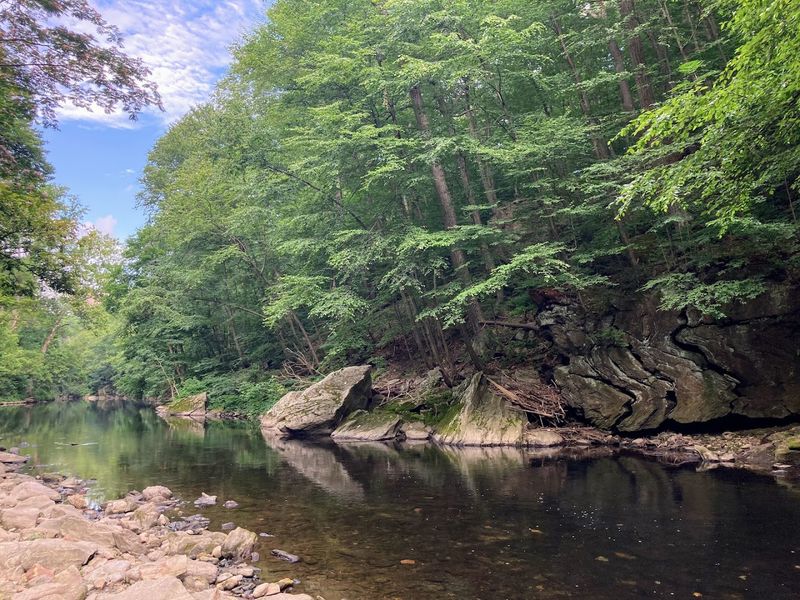
Cracked sidewalks and creekside cliffs in the Philadelphia region hide more geology than most city walks suggest.
The Valley Forge and Wissahickon Schist areas expose some of the oldest metamorphic rocks in southeastern Pennsylvania.
Schist formations often contain shimmering mica and occasional quartz veins that catch light unexpectedly.
Wissahickon Creek especially offers accessible rock exposures along its winding wooded corridor.
Valley Forge National Historical Park adds another layer where history and geology overlap in surprising ways.
Visitors walking trails often notice glittering rock faces that seem almost artificial at first glance.
These minerals formed under intense heat and pressure long before the region was inhabited.
Collecting is generally restricted in protected park zones, so observation is the main activity.
Still, the visual experience is rewarding enough for casual rock enthusiasts.
The contrast between urban proximity and ancient rock formations is part of the appeal.
Even joggers and cyclists occasionally pause to inspect unusual stone textures.
Valley Forge–Wissahickon Schist Areas offer a rare chance to see deep geological time inside a modern metropolitan backdrop.
7. Crystal Cave Park
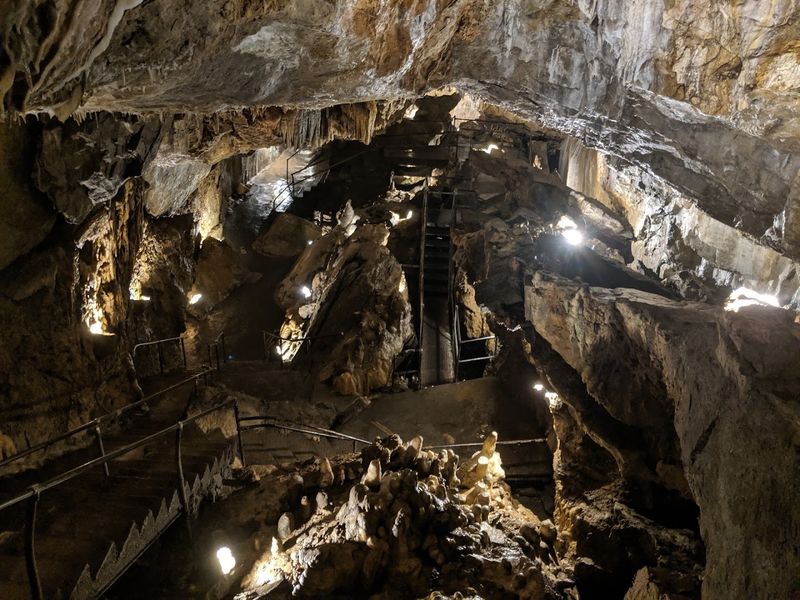
A literal underground glitter vault hides beneath the rolling hills near Kutztown, and it goes by the name Crystal Cave Park.
This Berks County landmark is one of Pennsylvania’s oldest show caves, discovered in 1871 and still dazzling visitors with natural mineral formations.
Inside, walls shimmer with calcite crystals that catch artificial light like frozen sparks suspended in stone.
The guided tour winds through narrow passageways where every turn reveals another textured mineral surface sculpted by water and time.
Unlike outdoor rockhounding spots, this is a controlled environment where the treasures are safely embedded in place rather than collected.
Quartz and calcite formations dominate the cave’s visual identity, giving it that classic “underground treasure chest” atmosphere.
Visitors often describe the experience as walking through nature’s version of a crystal showroom, minus the price tags.
The temperature stays cool year-round, making it a refreshing escape during Pennsylvania’s humid summers.
Interpretive guides explain how groundwater slowly dissolved and redeposited minerals over thousands of years.
The cave also sits above a scenic wooded area where surface geology continues the story in quieter form.
Families, school groups, and curious travelers all find something to admire here, even if they arrive skeptical.
Crystal Cave Park in Kutztown offers a polished, accessible introduction to Pennsylvania’s mineral world without requiring a single shovel swing.
8. French Creek Mines Area
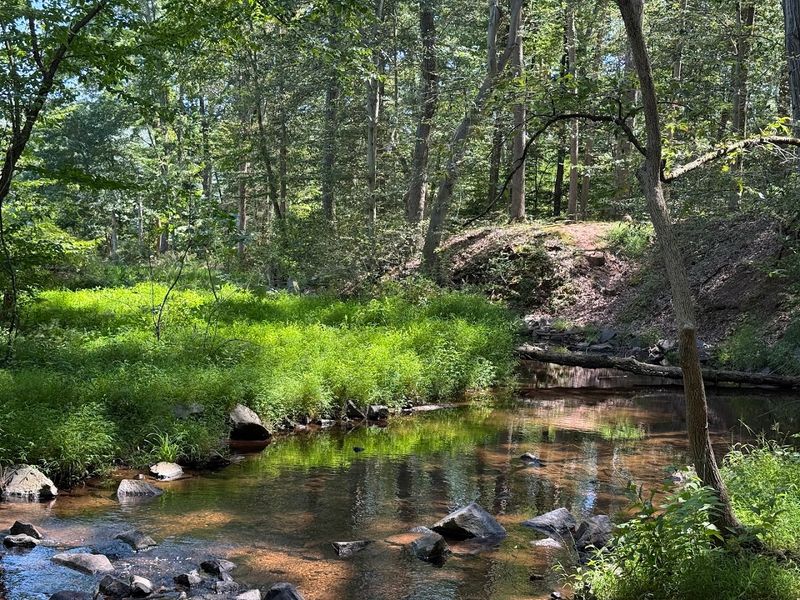
A creek-carved hillside in St. Peters hides one of Pennsylvania’s most legendary mineral stories: the French Creek Mines Area.
Tucked into Chester County near the village of St. Peters, this historic iron and copper mining district dates back to the 19th century and earlier.
The site is famous among collectors for producing sharp pyrite cubes, octahedral crystals, magnetite, chalcopyrite, and occasional garnet in the surrounding metamorphic rocks.
Although much of the original mine ground is now closed to collecting, the area remains a benchmark in East Coast mineralogy.
Historically, the French Creek deposits formed where diabase intrusions met sedimentary rock, creating the heat and pressure needed for crystal growth.
This geological contact zone explains why minerals often show unusually well-formed crystal faces and complex combinations of iron-rich species.
Today visitors exploring Saint Peters Village can still see exposed boulders along French Creek that hint at the underground mineral wealth.
The creek itself winds through dramatic rock outcrops, making it a scenic stop even for travelers who are not actively collecting.
Because the historic dumps have been reclaimed or restricted, responsible rockhounding here focuses more on observation than extraction.
The legacy of French Creek continues to attract mineral enthusiasts researching Pennsylvania’s rich mining history.
9. Hickory Run State Park Boulder Field
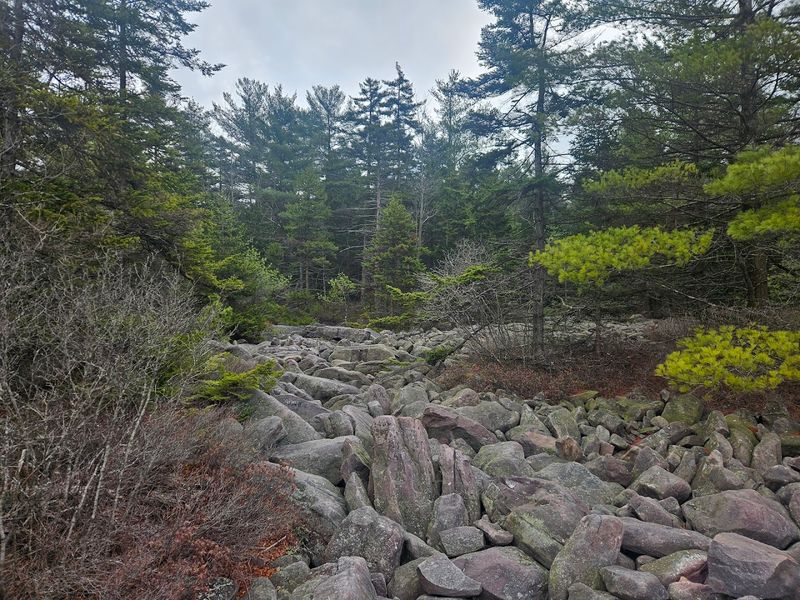
A landscape that looks almost alien appears suddenly in Carbon County, where Hickory Run State Park’s famous Boulder Field stretches farther than most visitors expect.
This glacial relic is less about digging and more about reading the story written in stone, where massive quartzite boulders were dumped and scattered by ancient ice sheets.
The rocks themselves are incredibly hard, many containing quartz-rich formations that have survived thousands of years of freeze and thaw cycles.
Walking across the field feels like stepping onto a frozen wave of stone, with gaps between boulders revealing smaller mineral fragments.
While collecting is restricted in many parts of the park, the geological spectacle alone makes it a favorite stop for rock enthusiasts.
Nearby trails cut through forested terrain where smaller stones and exposed bedrock hint at the region’s ancient metamorphic history.
The contrast between silent woodland and the chaotic boulder expanse creates a surreal, almost cinematic experience.
Even casual hikers end up slowing down, scanning surfaces that glint unexpectedly in the sun.
Geologists often point to Hickory Run as a textbook example of periglacial processes in the Appalachian region.
It is the kind of place where you do not just look for crystals—you learn how entire mountains can be rearranged into fields of stone.
Hickory Run State Park Boulder Field in Carbon County delivers a dramatic, unforgettable reminder that Pennsylvania’s geology is anything but subtle.
10. Tuscarora State Forest
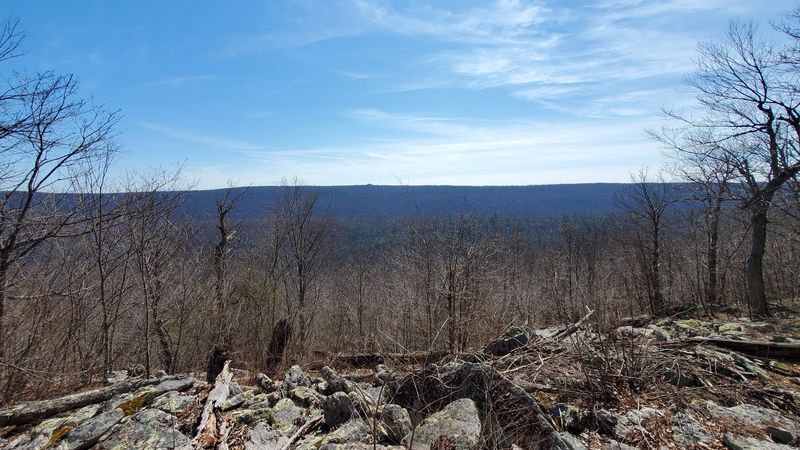
A tucked-away slice of Appalachian geology comes alive at Tuscarora State Forest in eastern Pennsylvania, where forest roads and ridgelines hide quiet opportunities for rock-minded explorers.
Stretching across Schuylkill, Berks, and neighboring counties, this state forest is built on folded sedimentary rock layers that have been slowly exposed through erosion and time.
Quartz fragments, sandstone outcrops, and iron-stained stones are commonly encountered along forest roads, especially where grading has cut into fresh surfaces.
Hikers on the Tuscarora Trail often notice small sparkling inclusions in gravel stretches that hint at quartz-rich parent rock beneath the soil.
Unlike more famous mining districts, this area feels understated, almost like it is casually scattering clues rather than showcasing them.
Streams weaving through the forest expose layered rock faces where mineral veins occasionally appear in thin, glinting lines.
Because it is a working state forest, access is generally open in many zones, but responsible collecting practices and awareness of local regulations are essential.
The quietness here is part of the appeal, with long stretches of trail where the only sound is wind moving through hardwood canopies.
Seasonal changes dramatically affect visibility, as rain and frost can uncover fresh rock surfaces or hide them beneath leaves.
Even when no crystals are found, the geology itself tells a story of ancient pressure, uplift, and erosion shaping the Appalachian landscape.
It is a calm, expansive setting where crystal hunting feels less like a mission and more like a slow conversation with the land.