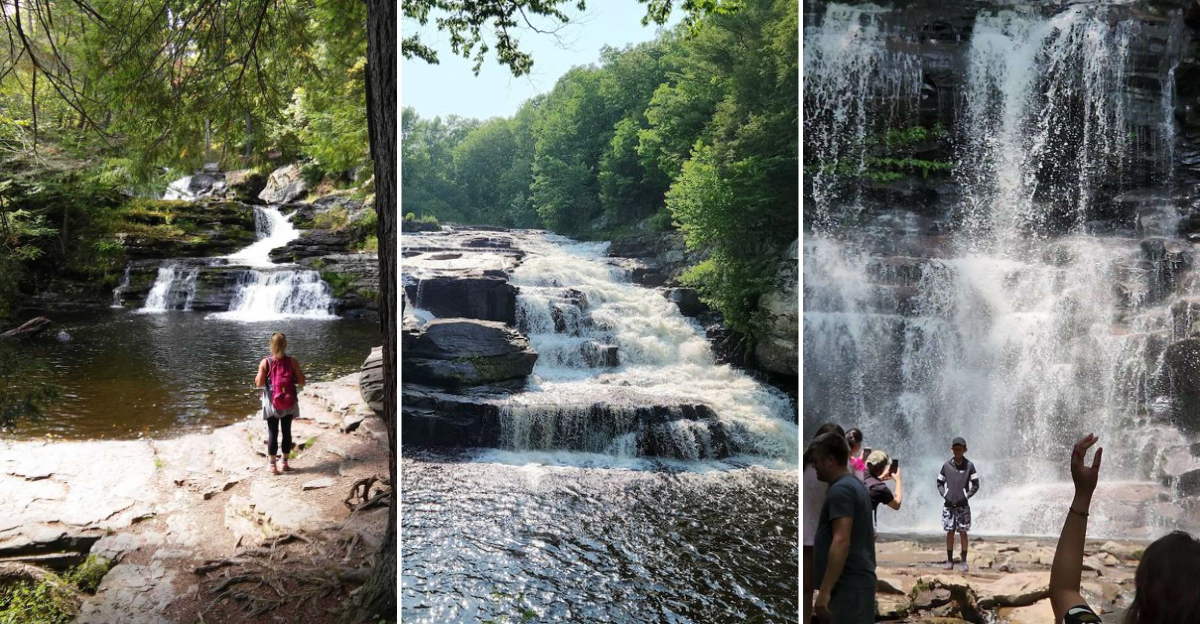
May brings a quiet kind of energy to Pennsylvania’s forests. Waterfalls swell with spring runoff, spilling over mossy rock ledges, while fresh green leaves soften every trail and filter the light into cool, shifting patterns.
It is a season that feels both fresh and steady, when the ground has fully thawed but summer crowds have not yet arrived. The result is a landscape that sounds louder with rushing water, yet feels calmer underfoot—perfect for slow walks and unhurried pauses.
Across the state, tucked into wooded parks and narrow gorges, these waterfalls feel especially alive this time of year. Mist hangs in the air, streams run strong, and even short hikes reward you with moments that feel unexpectedly immersive.
Here are 12 Pennsylvania waterfalls that feel most refreshing during May.
Raymondskill Falls
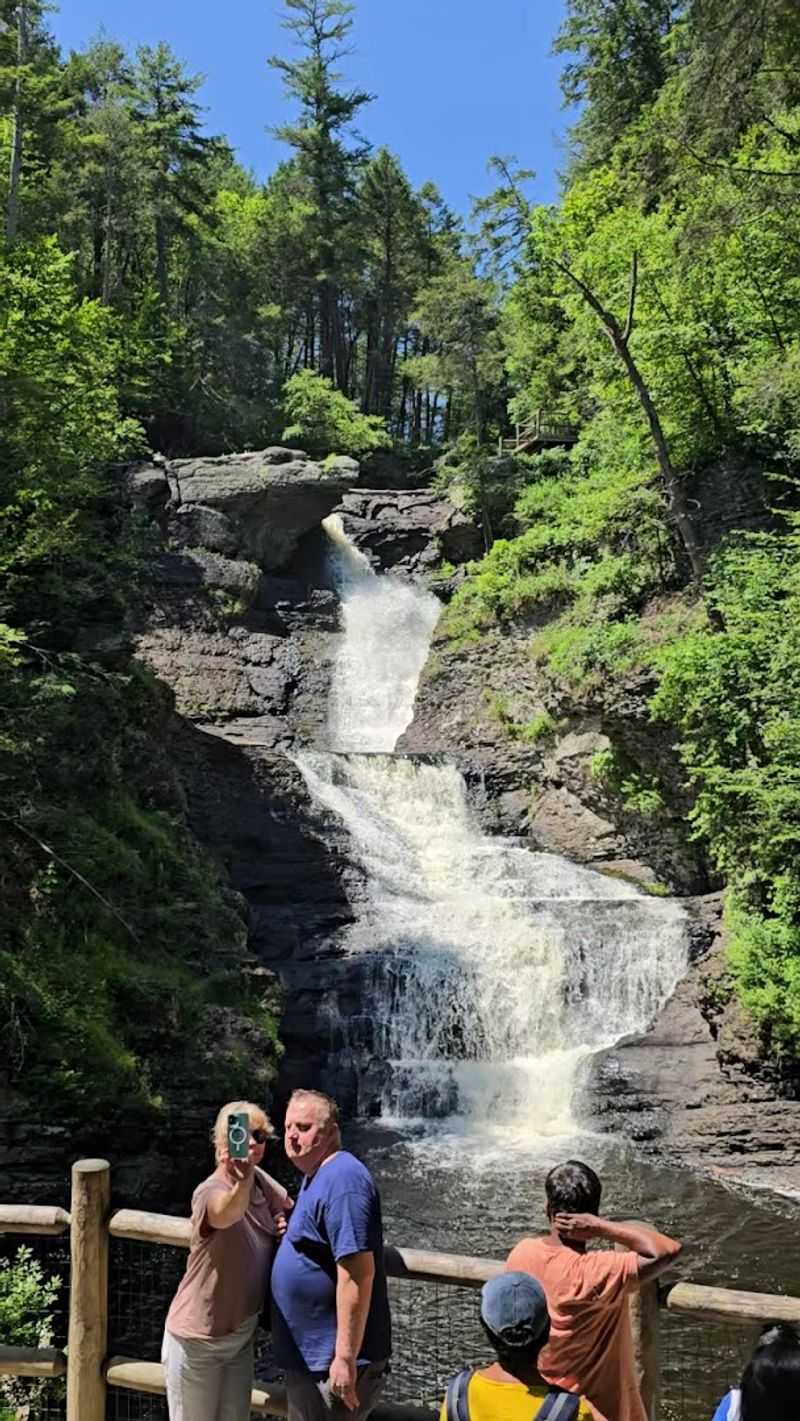
Cold spray hits the air before the full view appears, and that first sound alone makes May feel worth waiting for. Spring runoff gives the forest a charged, newly washed look, while every ledge seems to glisten.
When you finally reach Raymondskill Falls in Delaware Water Gap National Recreation Area near Milford, the scale feels bigger than expected.
Known as the tallest waterfall in Pennsylvania, Raymondskill drops in dramatic tiers that look especially forceful after spring rain and snowmelt. The short trail and viewing platforms make it approachable, but the scene still feels wild enough to stop you in your tracks.
I would plan a morning visit if you want cooler air, fewer people, and softer light on the water.
May is the ideal month here because the flow is usually strong without the dense summer leaf cover blocking every angle. Ferns and fresh understory growth frame the overlook beautifully, giving the entire ravine a saturated green backdrop.
You get that rare mix of easy access and genuine waterfall drama.
Wear shoes with traction, since damp pathways can stay slick after rain. Bring a light layer because the mist can make the overlook feel surprisingly chilly.
If you want one Pennsylvania waterfall that instantly proves spring hiking season has arrived, this is the one.
Dingmans Falls
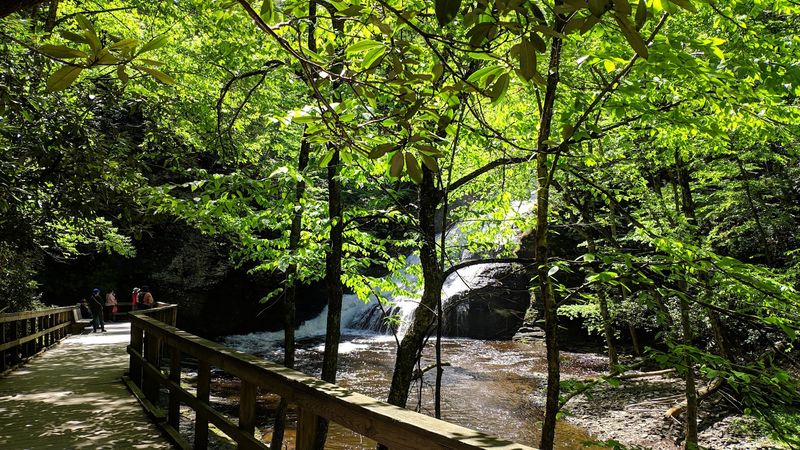
The walk in feels gentle, shaded, and almost meditative, with the kind of cool forest air that makes you slow down on purpose. In May, the sound of rushing water builds steadily beside the boardwalk, and everything looks greener by the minute.
That rising anticipation pays off beautifully at Dingmans Falls near Dingmans Ferry.
This is one of the easiest major waterfall visits in the state, yet it still feels deeply refreshing during spring. The accessible boardwalk passes wetlands and tall trees before ending at a dramatic two-drop cascade in Delaware Water Gap National Recreation Area.
Because the route is so manageable, it is a great choice when you want a waterfall experience without a strenuous hike.
May gives Dingmans Falls some of its best character, since seasonal flow is often strong and the surrounding vegetation is still bright and fresh. The mist carries across the viewing area, making the whole site feel cooler than the temperature suggests.
I especially like how the water contrasts with the dark rock walls and the soft green canopy.
Go earlier in the day if you want a quieter visit and better chances for photos without crowds. Pair it with nearby Silverthread Falls if you want two memorable stops in one outing.
For a waterfall that feels both easy and impressive, Dingmans is hard to beat in spring.
Bushkill Falls
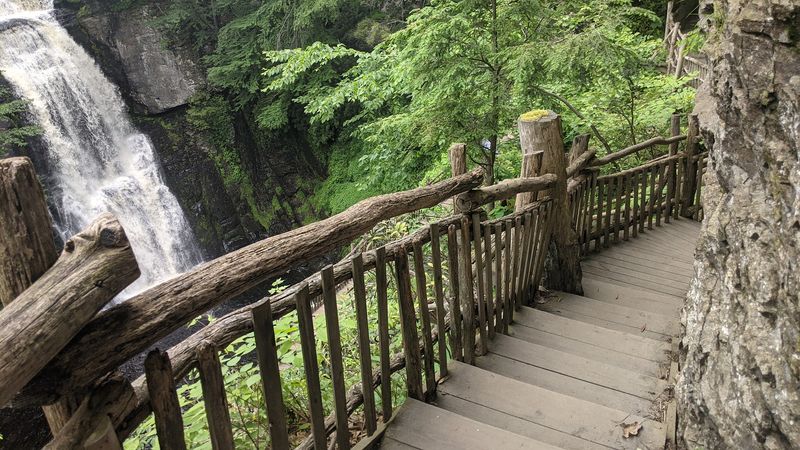
The best part here is that the first waterfall is only the beginning, and the deeper you go, the more the landscape starts to feel like a cool green maze. In May, every staircase, bridge, and trail section seems surrounded by fresh growth and lively water.
That is exactly why Bushkill Falls in the Pocono Mountains earns its reputation every spring.
Often called the Niagara of Pennsylvania, Bushkill Falls is really a collection of waterfalls connected by a privately managed trail system in Lehman Township. Spring rain and runoff usually fill the streams, making the entire route feel louder and more dramatic than later in summer.
If you enjoy variety, this stop delivers multiple cascades, overlooks, and changing angles in one outing.
May is especially refreshing because the forest canopy has not fully closed in, so you get bright greens, better views, and comfortable hiking weather. The longer trail options let you stretch the experience into a half day without feeling repetitive.
I like that you can choose a shorter scenic walk or commit to a loop that reveals more hidden corners.
Expect stairs, damp surfaces, and plenty of photo stops that slow your pace in the best way. Arrive prepared for admission fees and wear shoes you trust on wet wood and stone.
If you want one destination with repeated waterfall payoffs, Bushkill Falls is a satisfying May classic.
Ganoga Falls
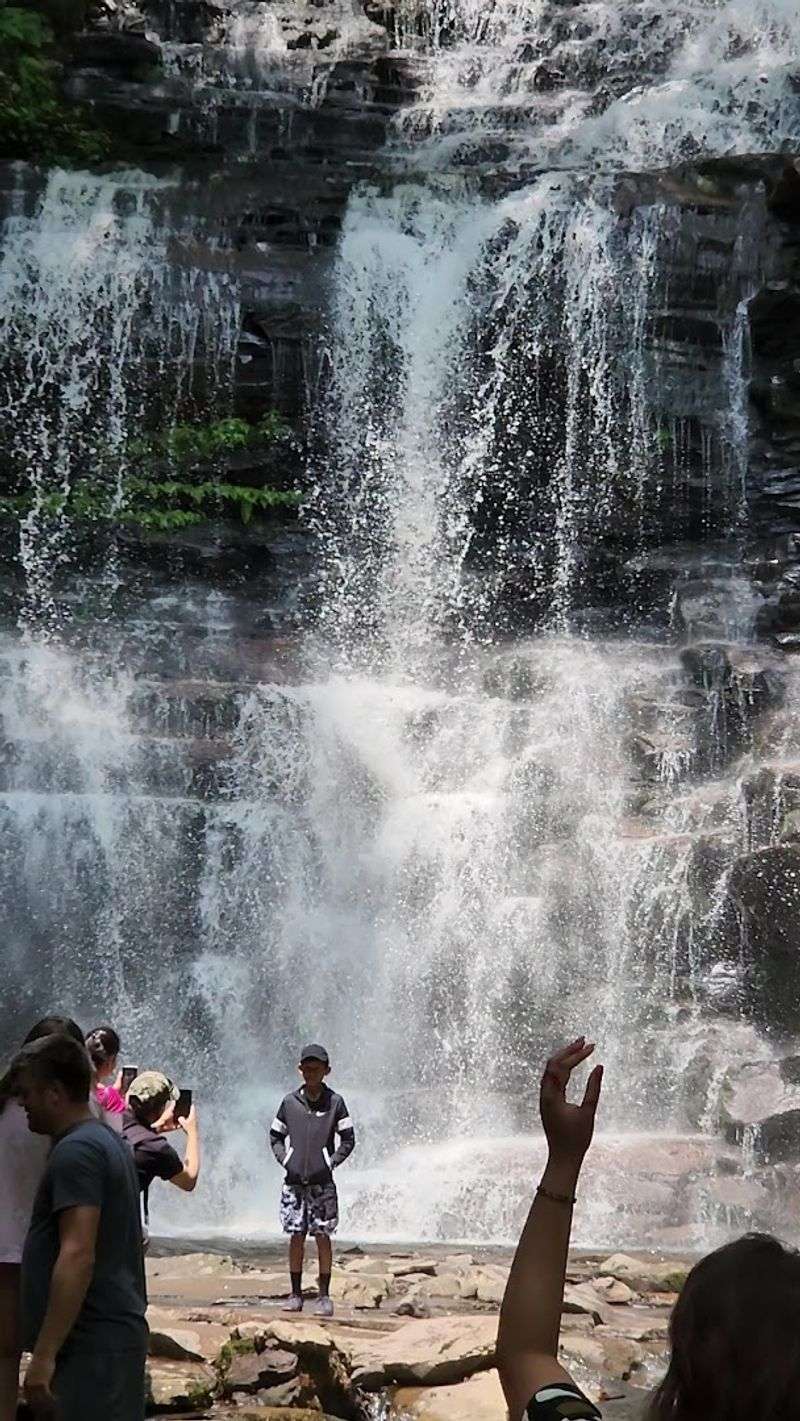
Steep trail sections, slick rocks, and the constant rush of water make this feel like a true spring adventure from the first steps. In May, the whole gorge seems energized, with every cascade sounding fuller and every mossy surface looking newly alive.
That atmosphere reaches its peak at Ganoga Falls in Ricketts Glen State Park near Benton.
At roughly 94 feet, Ganoga is the tallest waterfall on the park’s famous Falls Trail, and it often feels like the grand centerpiece of the entire route. Spring runoff gives the plunge extra force, turning the amphitheater around it into a cool chamber of mist and echoing water.
Even among Ricketts Glen’s many waterfalls, this one usually leaves the strongest impression.
May is one of the best times to go because the water volume is high and the surrounding forest is bursting with fresh leaf-out. The trail can be demanding, but the reward feels larger when the waterfalls are at their most powerful.
I would not call this a casual flip-flop stroll, yet that effort makes the payoff even better.
Use caution on wet stone steps and allow plenty of time for stops along the full trail. Bring water, take your footing seriously, and expect to pause often just to take it all in.
If you want Pennsylvania waterfall drama at full spring strength, Ganoga Falls absolutely belongs on your list.
Hawk Falls
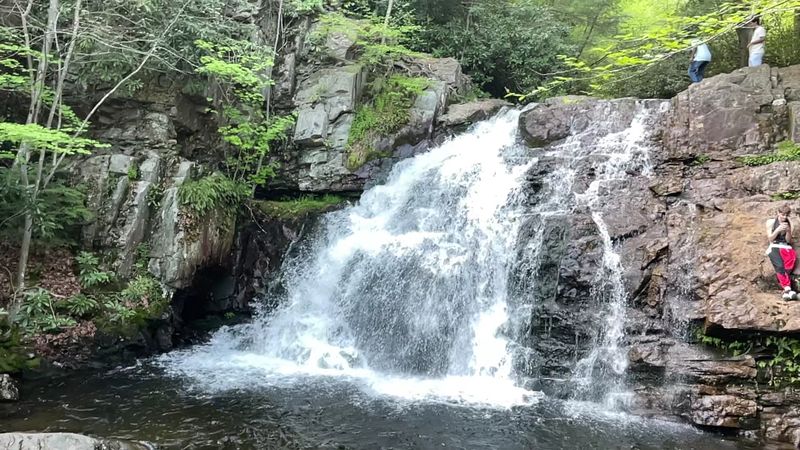
Sometimes the most refreshing waterfall days are the ones that do not require a huge commitment, just good shoes and a little curiosity. The trail is short, the forest feels cool, and May gives the stream enough volume to make the payoff feel immediate.
That easy spring satisfaction is exactly what draws people to Hawk Falls in Hickory Run State Park near White Haven.
This popular cascade is reached by a relatively short hike, making it one of the best choices for families, casual walkers, and anyone fitting a waterfall stop into a bigger day. The path winds through rhododendron and woodland scenery before opening at a broad rock-framed drop.
After spring rains, the water spreads with more force and texture across the ledges.
May is especially appealing here because the temperature is comfortable and the surrounding greenery looks vivid without the heavier crowds of peak summer. The pool and rock area around the falls create that classic cool-air pocket that makes you want to linger.
I like this stop when I want beauty without an all-day trek.
The rocks near the water can be slippery, so keep your footing steady and avoid getting too casual near the edge. Morning visits tend to feel quieter and more peaceful.
For a quick but rewarding Pennsylvania waterfall outing, Hawk Falls feels just right during the heart of spring.
Shohola Falls
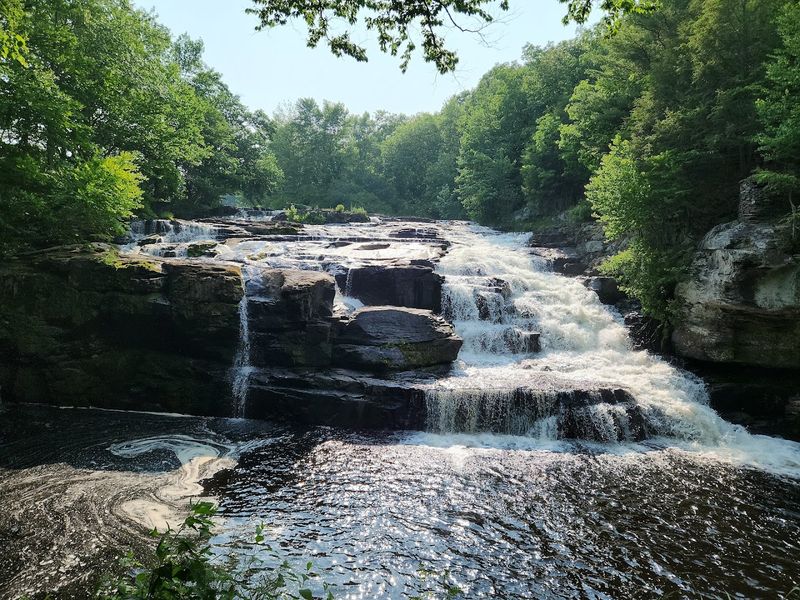
There is something especially satisfying about finding a waterfall that feels impressive without demanding a long backcountry effort. In May, the combination of swollen creek flow and fresh forest color makes the whole scene feel brighter, louder, and cooler.
That easy spring reward is what makes Shohola Falls near Shohola such a memorable stop.
This waterfall tumbles over layered rock in a broad, handsome drop that often looks fuller after seasonal rain. Because it is relatively accessible, Shohola works well for travelers who want scenic payoff with minimal hiking.
The surrounding woods add a tucked-away atmosphere, even though the site is simpler to reach than many of Pennsylvania’s more strenuous waterfall destinations.
May is one of the smartest times to visit because the water tends to be lively and the vegetation has not yet turned dense and shadowy. The result is a balanced view with vibrant greens, visible rock texture, and enough mist to make the air feel crisp.
I think it is the kind of place that surprises people who assumed the biggest rewards always required the biggest hikes.
Bring a camera for the contrast between white water and dark stone, especially after recent rain. Stay mindful around slick surfaces and muddy ground near the viewing area.
If you want a peaceful waterfall stop that feels most alive in spring, Shohola Falls is a strong choice.
Silverthread Falls
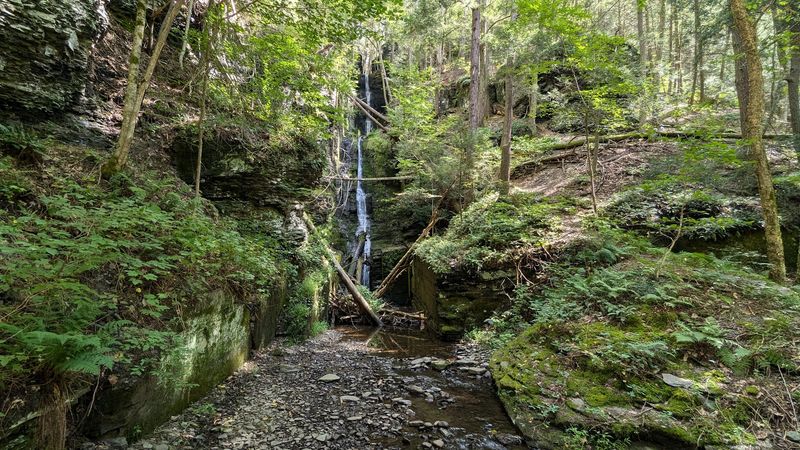
Not every waterfall needs roaring volume to feel unforgettable, and this one proves that delicacy can be just as striking. In May, seasonal flow gives the thin cascade a little more body while the surrounding forest turns intensely green.
That combination makes Silverthread Falls near Dingmans Ferry feel quiet, elegant, and surprisingly photogenic.
Located in Delaware Water Gap National Recreation Area, Silverthread is often paired with nearby Dingmans Falls, but it has a completely different personality. Instead of broad, thunderous power, you get a narrow ribbon slipping down the rock face like a bright line of moving glass.
The effect feels especially graceful during spring, when runoff strengthens the stream without overwhelming its signature shape.
May is the month when this waterfall seems to hit its sweet spot, because the added water makes it more visible and dramatic while preserving its threadlike identity. Short access makes it easy to include on a half-day outing, and the contrast with larger neighboring falls makes the stop even more rewarding.
I like how it offers a softer, more intimate kind of beauty.
Visit after rain if you want the cascade to look fuller, but expect damp ground and slick surfaces nearby. Pairing it with other Delaware Water Gap waterfalls creates a great spring itinerary.
For a subtle waterfall moment that still feels deeply refreshing, Silverthread absolutely earns its place.
Glen Onoko Falls
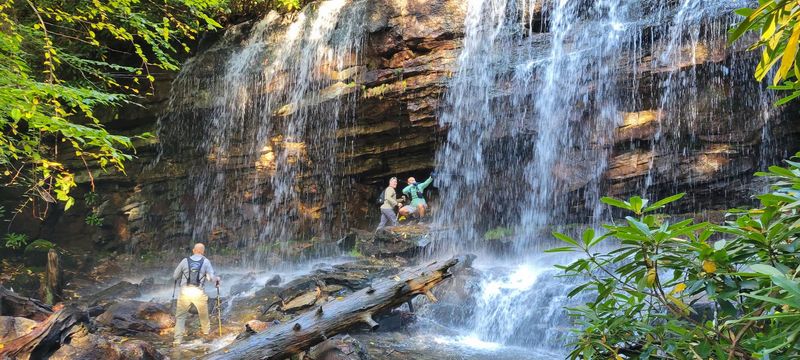
Steep ravines and mountain air give this area a wilder mood than many casual waterfall outings, especially in spring. The runoff in May brings extra movement to every rock channel and makes the gorge feel freshly awakened after winter.
That dramatic setting is why the upper falls area of Glen Onoko near Jim Thorpe still captures so much attention.
Glen Onoko has a complicated history because of safety issues and changing access, so planning carefully and respecting current restrictions is essential. What remains compelling is the landscape itself, where multiple cascades and rugged terrain create one of eastern Pennsylvania’s most dramatic water corridors.
The upper falls area, when viewed legally and responsibly, is most impressive when spring water is still coursing strongly through the ravine.
May is ideal because the flow is lively, the hillsides are bright green, and the cooler temperatures make steep terrain more comfortable to approach from designated areas. Even without a long exploratory trek, the surrounding scenery feels charged with vertical energy.
I think it is best appreciated as a place where caution and admiration should go together.
Always verify current public access, closures, and viewing rules before heading out, since conditions and policies can change. Never treat old social posts as permission to ignore restrictions.
For travelers who value scenery as much as the final waterfall view, Glen Onoko’s upper falls landscape still feels unforgettable in spring.
Adams Falls
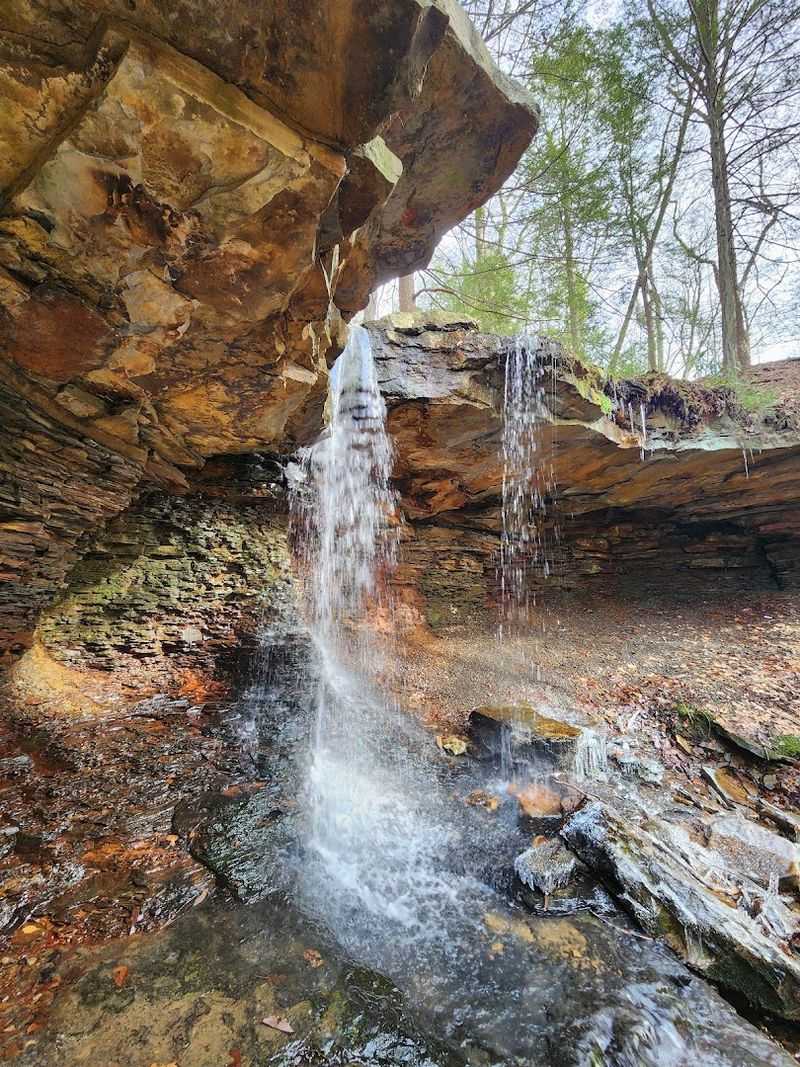
The trail noise changes before the view does, and in spring that rising rush of water feels like a promise. Cool air gathers in the gorge, the rocks shine with moisture, and the forest looks almost too green to be real.
That immersive buildup makes Adams Falls in Ricketts Glen State Park a memorable May stop.
Often encountered as one of the first major waterfalls on the Falls Trail, Adams Falls delivers an early reminder of why this park is considered one of Pennsylvania’s waterfall capitals. The cascade is broad, forceful, and framed by the kind of rugged stone that looks best when soaked with spring runoff.
Even on a longer hiking day, this waterfall can feel like a highlight instead of a warm-up.
May suits Adams Falls especially well because the water is typically lively and the trailside vegetation is still fresh and open enough for clear views. The gorge feels cooler than exposed trail sections, making the stop physically refreshing as well as scenic.
I like how quickly it pulls you into the rhythm of the park.
Good traction matters here, especially if you continue farther along the Falls Trail where surfaces can stay wet and uneven. Take your time on stairs and stone sections, and leave room in your schedule for pauses.
For a waterfall that introduces Ricketts Glen with immediate spring energy, Adams Falls does the job beautifully.
Fulmer Falls
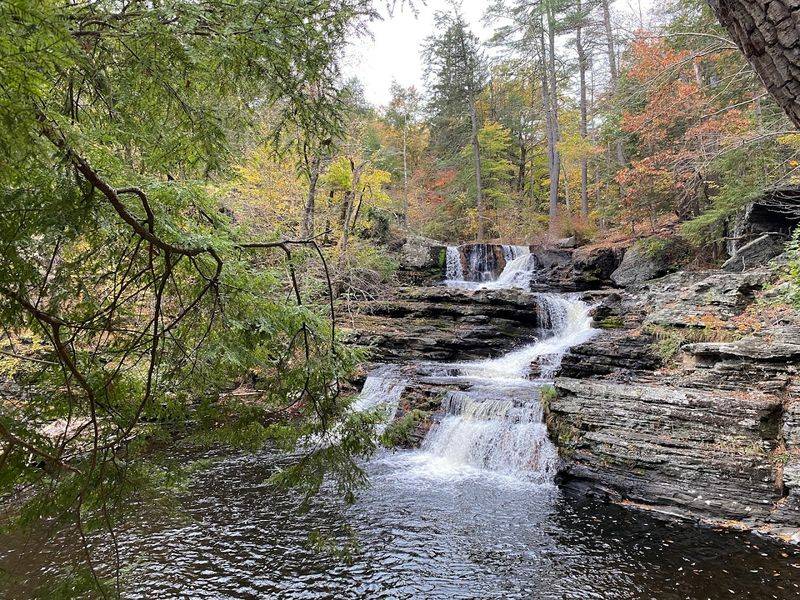
Some waterfalls feel bigger because of the setting around them, and this is one of those places. The forested canyon, echoing water, and chilled spring air combine to create a scene that feels immersive before you even stop walking.
That is the magic of Fulmer Falls in George W. Childs Park near Dingmans Ferry during May.
Fulmer drops with more force than some of its neighbors, and the tight gorge helps amplify both its sound and its presence. Historic walkways and overlooks make the area easy to appreciate without taking away the sense of being inside a rugged stream corridor.
When spring runoff is high, the waterfall becomes a real centerpiece of the park’s waterfall trio.
May makes the experience especially rewarding because the water volume is often strong, the moss and leaves are richly colored, and the temperature remains comfortable for walking. There is a freshness here that feels almost physical, especially when mist catches the breeze near the overlook.
I like visiting in spring because the park seems fully awake but not yet crowded with peak summer traffic.
As always in this area, verify current access conditions before heading out, since openings and closures can change. Keep a careful step on wet paths and do not rush the overlooks.
For a waterfall that combines accessibility with a deep, shaded canyon atmosphere, Fulmer Falls is hard to forget.
Deer Leap Falls
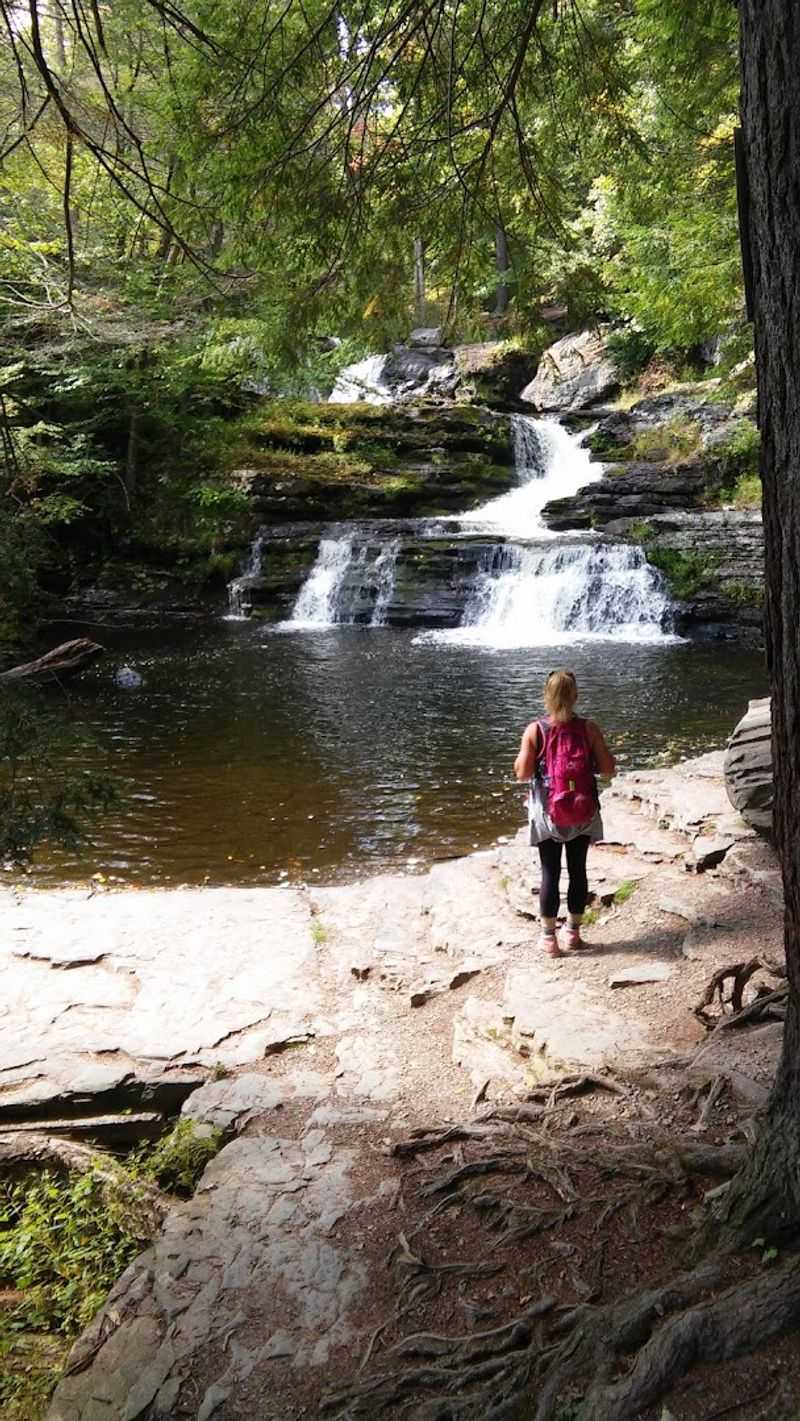
Small shifts in elevation can create surprisingly beautiful water movement, especially when spring rain feeds every shelf and seam in the rock. In May, the whole creek feels animated, and the surrounding forest frames the falls with that bright, just-opened green.
That quiet spring charm defines Deer Leap Falls in George W. Childs Park.
Unlike a single towering plunge, Deer Leap moves over layered rock steps, which gives it a rhythmic, textured look that is easy to appreciate up close. It is part of the same beloved waterfall corridor near Dingmans Ferry that includes Fulmer and Factory Falls, yet it has a softer personality than either one.
The water seems to travel with more grace than force, which makes the stop feel peaceful rather than dramatic.
May is a particularly smart time to visit because seasonal flow usually strengthens each step of the cascade without overwhelming the details. The woods feel cool, shaded, and newly alive, creating a setting that encourages slow walking and longer pauses.
I think Deer Leap is ideal if you enjoy waterfalls that reward attention rather than sheer spectacle.
Check current access updates for the park area before planning a special trip, and wear shoes ready for damp ground. It is worth combining with the nearby falls to understand the character of the whole stream.
For a quieter waterfall moment that still feels deeply refreshing, Deer Leap is a lovely choice.
Ohiopyle Falls
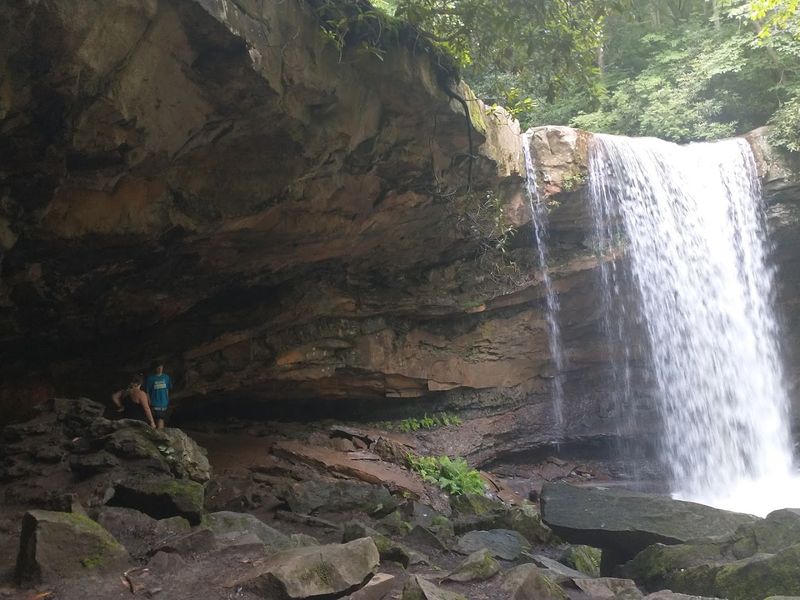
Sometimes refreshing means not gentle mist but raw river power, the kind that makes you stop and listen longer than expected. In May, spring runoff gives the water extra force while the surrounding hills turn fresh green.
That combination makes Ohiopyle Falls in Ohiopyle State Park feel bold, cool, and fully alive.
Unlike narrower woodland cascades, this waterfall spans the Youghiogheny River with a broad, muscular drop that is easy to appreciate from nearby overlooks. The setting blends scenic access with serious natural energy, and that contrast is part of its appeal.
You do not have to hike deep into the forest to feel the intensity here, especially when spring water levels are high.
May is one of the best times to see Ohiopyle Falls because runoff and seasonal rain can make the river especially dynamic without the heavier visitation of midsummer. The whitewater activity in the region also adds to the atmosphere, reminding you that this park is built around moving water.
I like how the falls feel both iconic and immediate, as if the whole river is in motion right at your feet.
Use designated overlooks and stay behind barriers, since river edges and wet rock can be dangerous. Pair the visit with nearby trails if you want a fuller Ohiopyle day.
For travelers who want spring waterfall power with easy access, Ohiopyle Falls is an outstanding finish to the list.