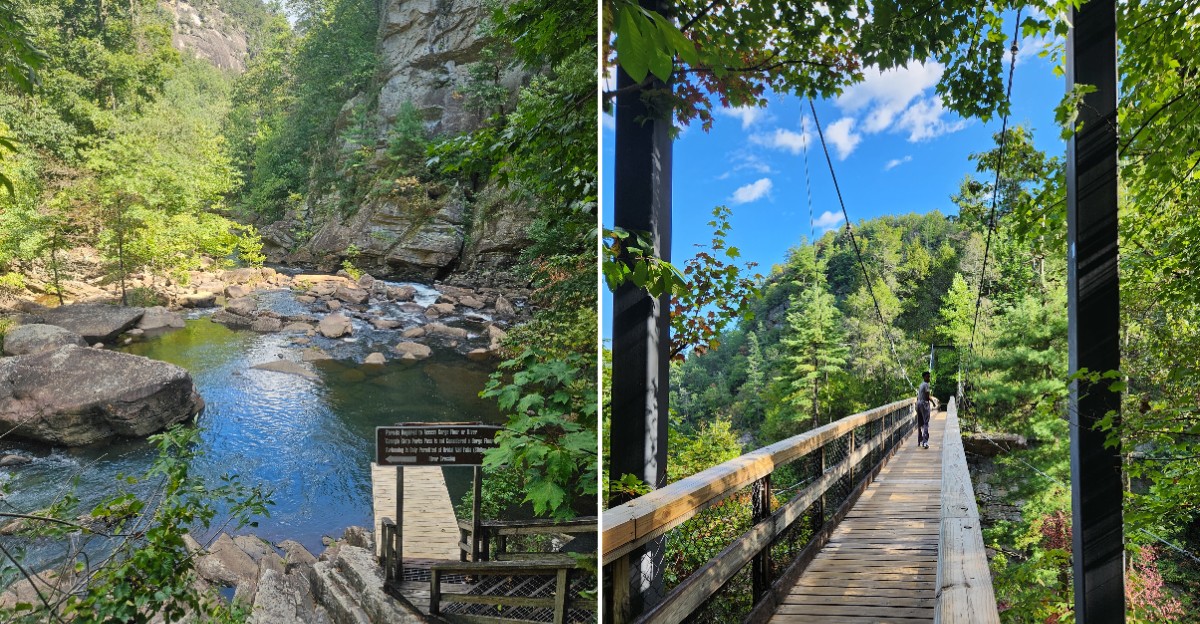
The most memorable part of Tallulah Gorge may be the moment you realize the view from above is only half the story. Far below the rim, the canyon floor brings you closer to rushing water, cool rock walls, and the deep echo of Tallulah River.
But reaching that dramatic spot takes more planning than simply bringing sturdy shoes.
At Tallulah Gorge State Park in Tallulah Falls, Georgia, a floor permit is required whenever the canyon-floor route is open, and daily limits can fill quickly. Water releases and changing conditions can also affect access, making the day you choose especially important.
With a little preparation, you can plan around those details while keeping another scenic route in your plans. Here’s what to know before heading into the gorge and what else is worth seeing along the way.
Every Open Day Requires a Gorge Floor Permit
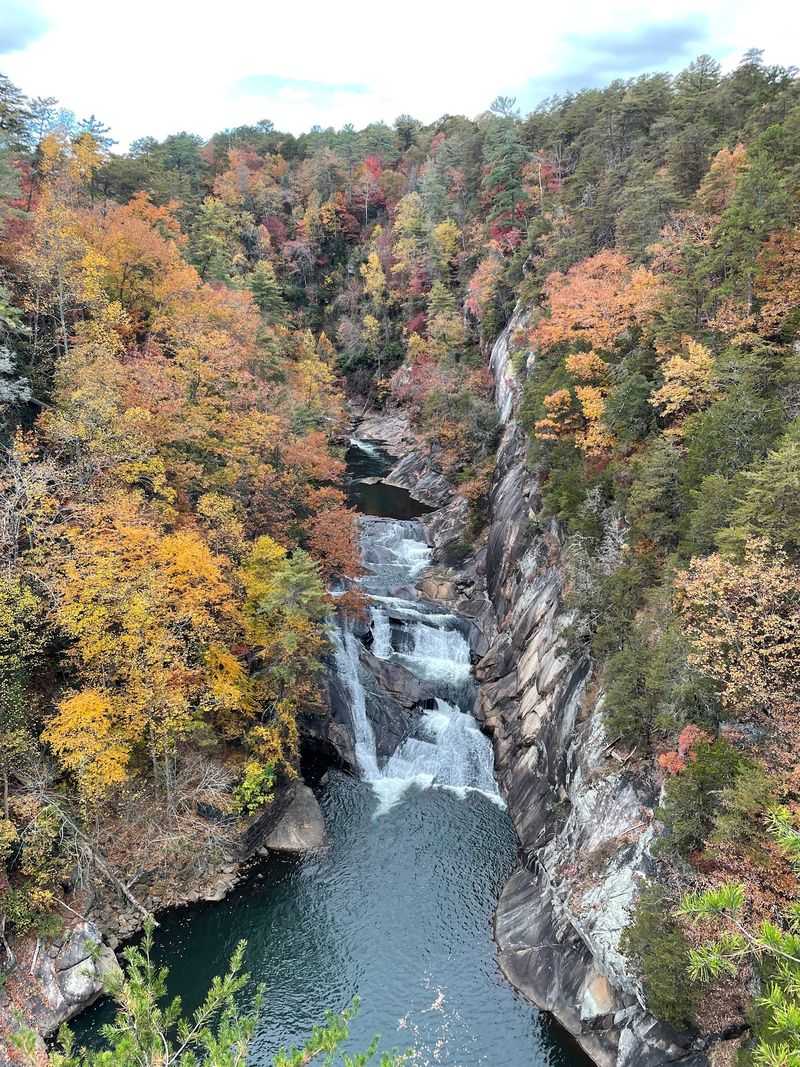
The river looks close enough to tempt you downhill, but the route below comes with a clear rule. At Tallulah Gorge State Park, you need a permit to hike onto the gorge floor whenever access is open.
That requirement applies on weekdays, weekends, and holidays. There is no regular day when visitors can skip the permit simply because the park is quiet, the weather looks pleasant, or the trail entrance seems empty.
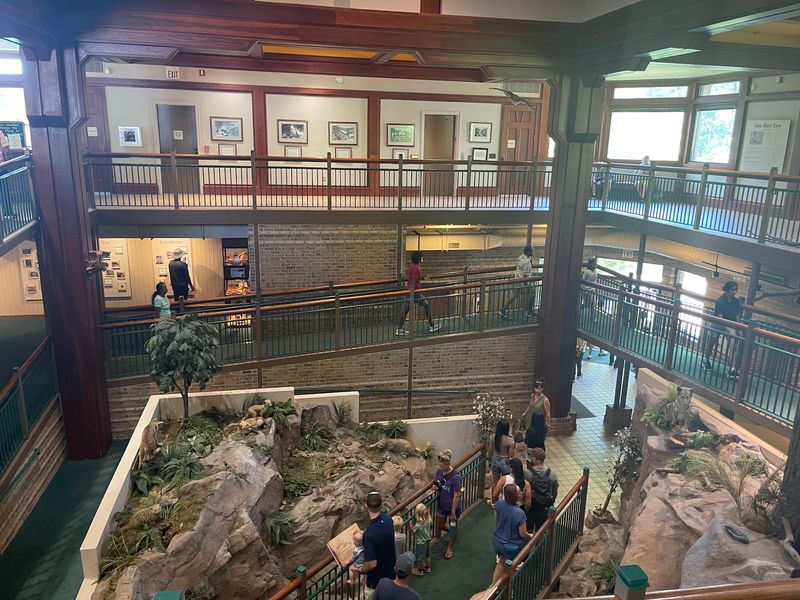
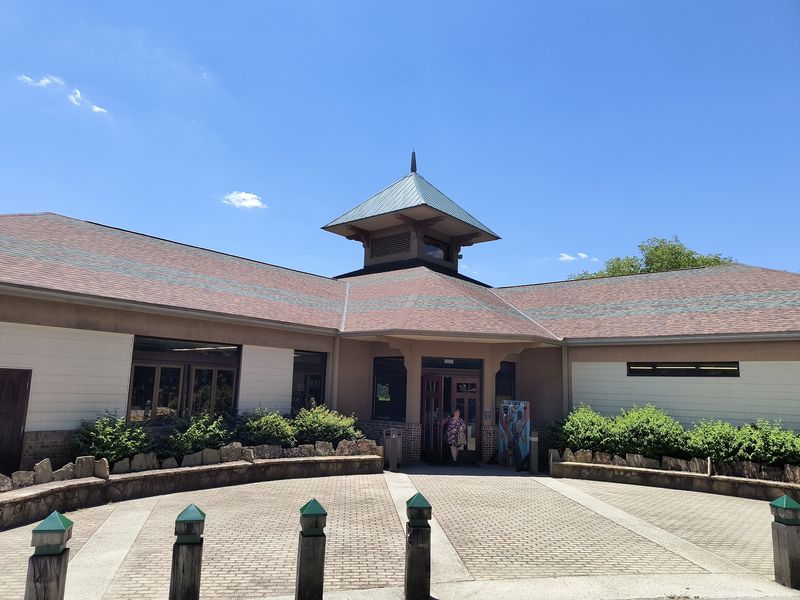
The floor permit is separate from the parking charge, and paying to park does not grant access below. Start at the Jane Hurt Yarn Interpretive Center, where staff can explain current conditions, permit availability, and the route you are allowed to follow.
Think of the permit as the beginning of your adventure rather than an annoying extra step. The canyon reaches roughly 1,000 feet deep, and exploring its rocky bottom demands more planning than strolling along an overlook.
Before leaving home, check the official park website for updates, then confirm the day’s rules with staff before heading toward the stairs. A little preparation protects both your visit and this remarkable landscape.
Quiet Weekdays Still Have a Daily Permit Limit
A quiet parking lot can feel like you have beaten the crowds, but it does not erase the rules. Even on a sleepy Tuesday, reaching the bottom of Tallulah Gorge means securing a floor permit first.
The park generally limits gorge floor access to 100 visitors per day, with permits issued on a first come, first served basis. They cannot be reserved ahead, so a weekday visit may improve your chances without guaranteeing a place.
Check the current permit distribution hours before choosing when to arrive. Getting there early can help, but standing outside before the interpretive center opens does not mean you can start the hike or bypass the required instructions.
Once your plans are settled, enjoy the quieter rhythm around the rim. You might hear birds between bursts of river noise or linger at a viewpoint without feeling rushed.
Pack water and a snack, leave room in your schedule for the safety process, and remember that staff can stop issuing permits when conditions change. A peaceful weekday is an appealing choice, not a promise of access to the canyon floor below.
Weekends and Holidays Call for an Early Backup Plan
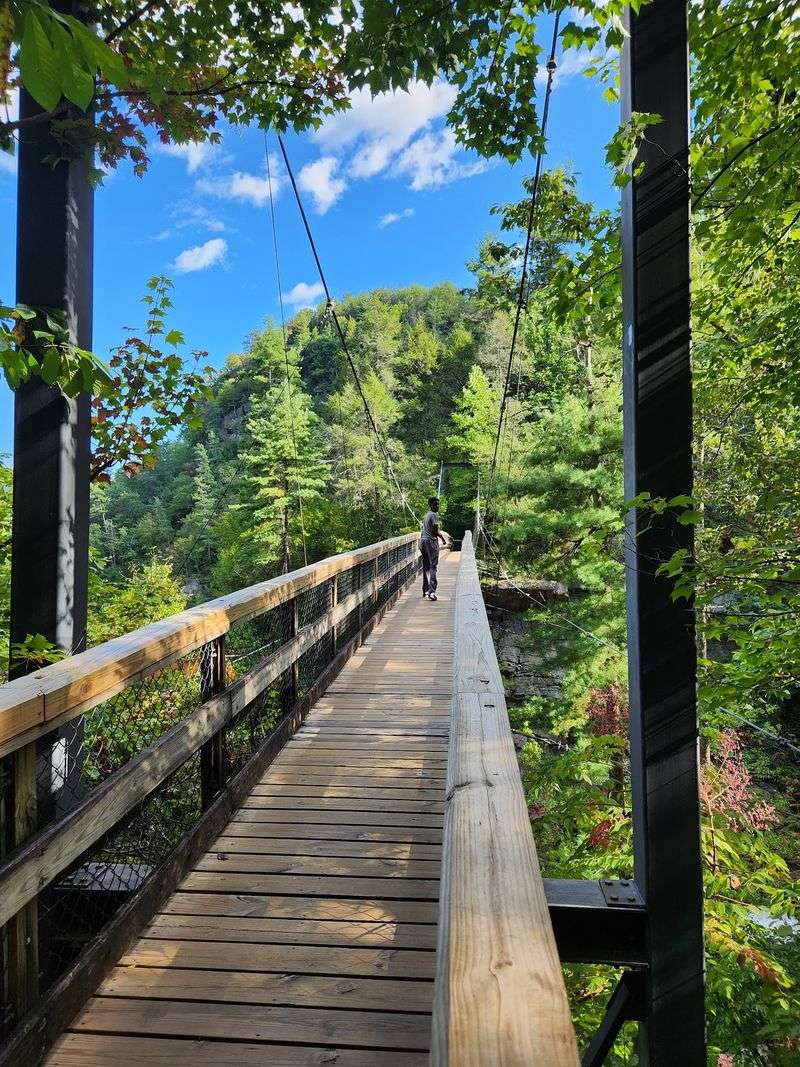
Nobody wants to drive into the mountains and discover that the day’s adventure has already filled up. Popular weekends and holidays can bring more visitors to Tallulah Gorge, making the limited floor permits especially competitive.
The requirement stays the same as it does on weekdays: each visitor entering the gorge floor needs permission. Arriving early improves your position, but there is no guaranteed permit just because you traveled far or booked a nearby campsite.
Build two versions of your outing before you leave. Your first choice might be the demanding floor hike, while your backup includes rim overlooks, the interpretive center, and the suspension bridge if those areas are open.
That second plan is hardly a consolation prize. From above, you can study the steep rock walls and watch white water cut through the canyon without committing to the rougher route below.
Bring a picnic, keep your group flexible, and ask staff which trails fit your available time. A successful holiday visit is not measured by how low you climb, but by enjoying the park without rushing past its best views along the way.
Whitewater Release Days Can Close the Floor
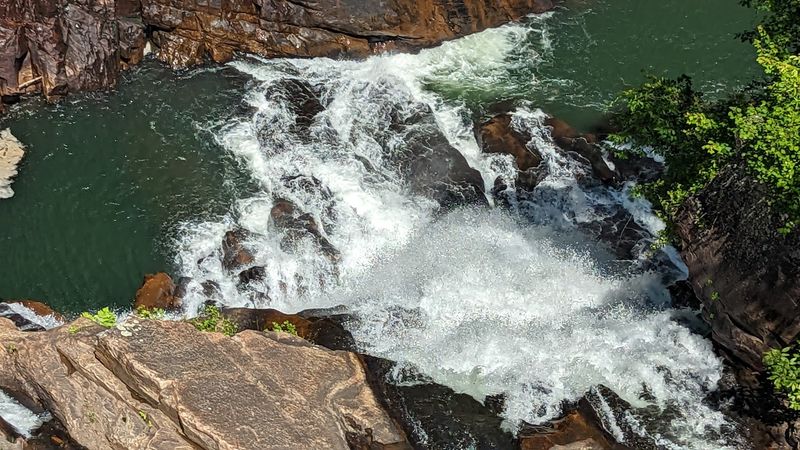
A louder river can turn a familiar canyon into a very different place. During scheduled whitewater releases, extra water moves through Tallulah Gorge, creating conditions that are not suitable for the usual recreational floor hike.
Gorge floor hiking permits are not issued during these release periods. These are not days when you simply need an additional pass; the normal floor route is unavailable because the increased flow changes the risks below.
Whitewater releases are typically associated with selected spring and fall weekends, but do not build your trip around an old calendar. Check the current schedule through the park’s official website and its linked release information before choosing your date.
You can still have a rewarding visit from approved viewing areas, subject to any posted closures. The river’s power becomes part of the experience, with rushing sound rising between the rock walls.
Bring a camera with a secure strap, remain behind barriers, and ask staff where viewing is allowed that day. Seeing the gorge from above offers a memorable alternative without confusing specialized boating access with permission for an ordinary hike along the canyon floor.
Aesthetic Releases Need Their Own Calendar Check
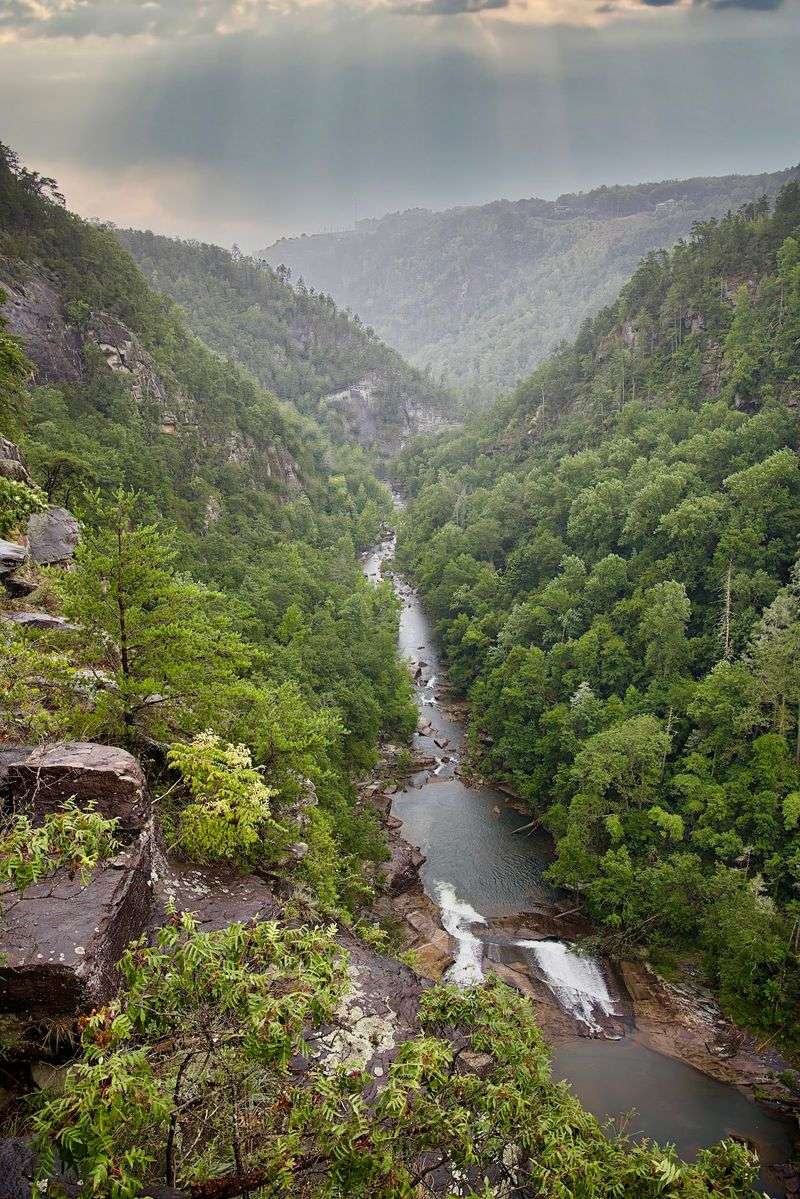
Sometimes the best waterfall photograph comes on a day that is wrong for hiking below it. Aesthetic releases send additional water through Tallulah Gorge to showcase the river and falls, rather than provide normal floor hiking conditions.
Do not assume that a scenic release is safe because it differs from a whitewater event. The park restricts gorge floor access during scheduled water releases, so confirm the specific closure information for the date you hope to visit.
Published schedules can change, and an older travel article may list dates that no longer apply. Use the official park website as your starting point, then call the park if the release calendar or permit notice leaves anything unclear.
For visitors who prefer photographs to rock scrambling, a release day can still be appealing. Waterfall views from open overlooks may offer more movement and sound than you would find during ordinary flow.
Plan a rim walk instead of promising your group a trip to Sliding Rock. Keeping the two experiences separate helps you choose intentionally: a day for watching the river perform, or a suitable day for exploring below.
Rainy Days Can Cancel an Otherwise Good Plan
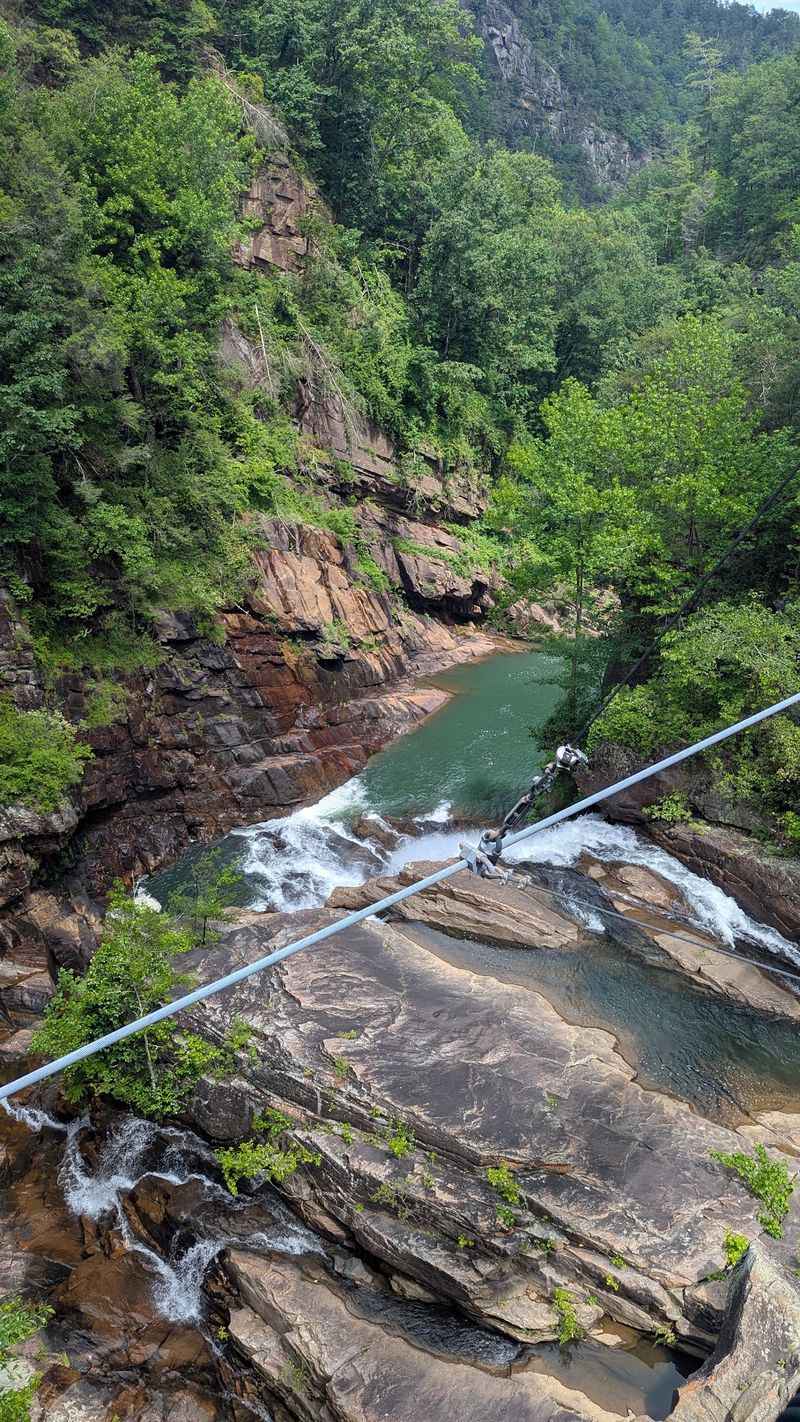
A patch of blue sky above your car does not tell the whole river story. Rain, wet rock, and rising water can make the floor of Tallulah Gorge unsafe even when your planned visit is not a release day.
Park staff may suspend permits because of weather or water conditions. A forecast, an available parking space, or another visitor’s successful hike yesterday cannot confirm that the route will be open when you arrive.
Check park alerts before driving, and ask about conditions again at the interpretive center. If storms are expected, avoid treating the floor hike as something you must finish before the clouds arrive; slippery crossings and a steep exit leave little room for rushed decisions.
A weather change can also reveal a softer side of the canyon. Mist may hang among the trees while the river sounds stronger from an open overlook.
Choose only trails staff say are safe, keep rain gear handy, and turn around when conditions worsen. Missing a permit is disappointing, but returning on a safer day gives you a better chance to enjoy the rocks, water, and climb without pressure.
Hot Summer Days Demand More Than Permission
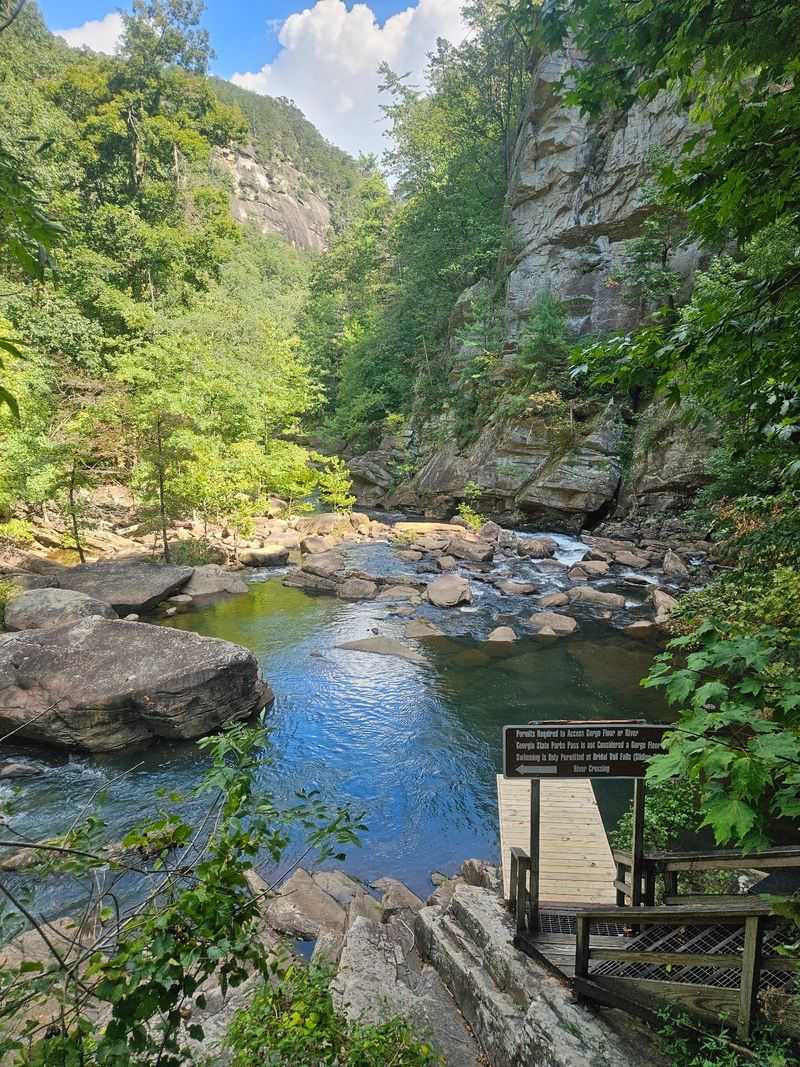
The climb back up can make a warm morning feel much hotter than expected. Summer days at Tallulah Gorge require the same floor permit as other open days, but heat adds another reason to plan carefully.
A permit confirms permission, not your ability to complete the hike comfortably. The floor route includes rough footing, water crossings, and a demanding climb out, so carry enough drinking water and choose companions who understand the effort involved.
Ask staff about current footwear rules, the safety briefing, and the time available for your route. Wear sturdy shoes with reliable grip rather than assuming sandals or lightweight water shoes will meet the park’s requirements for entry.
The cool river may look inviting, especially near Bridal Veil Falls and the area often called Sliding Rock. Follow current rules about where water access is allowed, and never treat moving water as a guaranteed safe swimming spot.
Eat before starting, protect yourself from the sun, and leave energy for the return. A summer floor hike can be exciting, but its best moments come when your group stays comfortable, alert, and within its limits.
Autumn Color Does Not Override Closures
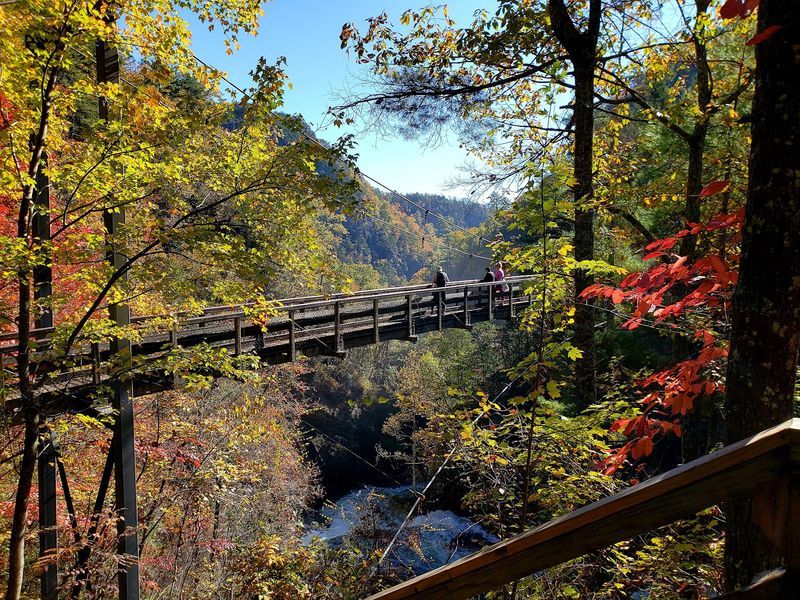
Gold leaves can make the canyon look like a painting, but fall also brings a tricky planning mix. Tallulah Gorge draws leaf watchers while scheduled water releases may affect floor access on selected dates.
Choose your day by checking both the release calendar and current park alerts. A colorful weekend is not automatically a floor hiking weekend, and a permit cannot be issued for a route that is closed.
If your chosen date allows access, expect demand and arrive with a flexible plan. Cool air at the rim can also hide how much effort the climb requires, so bring water, suitable layers, and shoes that grip well on the permitted route.
There is plenty to appreciate above the river when the floor is unavailable. Yellow and orange trees frame the dark canyon walls, and different overlooks reveal changing angles of the water below.
Pause rather than racing between viewpoints, especially if photography is your main goal. Fall rewards visitors who match their plans to the day’s conditions.
Sometimes the best choice is a permitted adventure below; sometimes it is a slower walk along the bright rim.
Bridge and Overlook Days Usually Need No Floor Permit
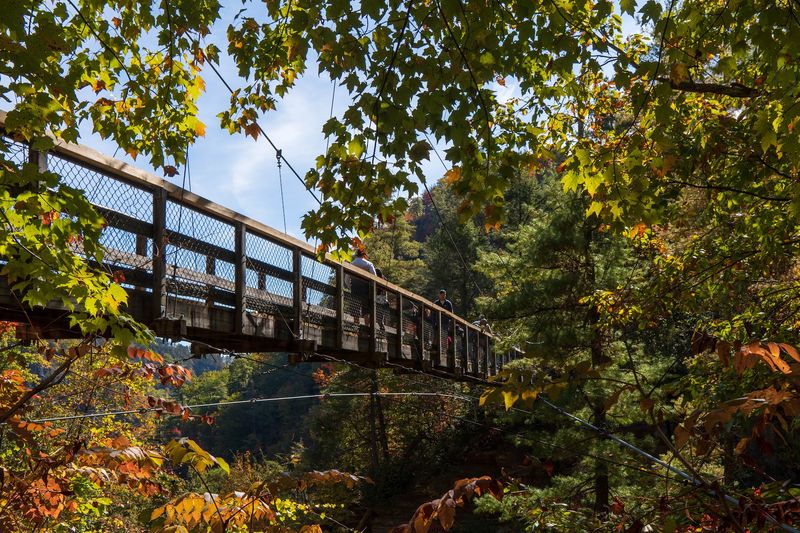
You do not have to scramble along the river to feel surrounded by the canyon. The suspension bridge and designated rim overlooks offer memorable ways to explore Tallulah Gorge without obtaining a gorge floor hiking permit.
Keep the distinction clear: descending stairs to an established viewing area is not the same as entering the restricted floor route. Follow signs and barriers, and ask a ranger if you are unsure where permit controlled access begins.
The bridge hangs about 80 feet above the rocky bottom, giving visitors a striking view into the gorge. Getting there involves many stairs, however, so a permit free outing should not be mistaken for an easy or fully accessible walk.
Choose your turnaround point based on your group’s energy, knees, and comfort with heights. Rim overlooks can provide a satisfying alternative if the stairs feel like too much.
Pets are not allowed on the gorge stairs or suspension bridge, so check permitted pet routes before bringing a dog. Parking charges still apply even when no floor permit is needed.
For many travelers, these views deliver the canyon experience they hoped for without the harder hike.
Your Travel Day Starts With an Official Status Check
The smartest part of your hike may happen before you lace your shoes. A quick official status check can keep your Tallulah Gorge trip from becoming a long drive toward a closed route.
Visit gastateparks.org/TallulahGorge for current notices, release information, and visitor rules. For questions about that day’s floor permits, call the park at 706-754-7981 rather than relying only on social posts or reviews from another season.
Confirm permit hours, the daily limit, required footwear, and any safety briefing before setting your schedule. Use Tallulah Gorge State Park or 338 Jane Hurt Yarn Road in your navigation app; the supplied park listing uses Tallulah Falls, Georgia 30573, rather than the 30523 ZIP in this article’s title.
On arrival, stop at the interpretive center and let staff help match your plans to current conditions. Carry the route information they provide, listen closely to instructions, and do not substitute another hiker’s advice for official guidance.
Then choose your day with confidence: the floor when permits and conditions allow, or the open overlooks when they do not. Either choice leaves room for the river’s sound and the canyon’s scale.