North Carolina played a fierce and pivotal role in the American Revolution, with battles fought across its rolling hills, marshlands, and colonial towns.
From the backcountry skirmishes that shifted the tide of the war to the quiet courthouses where patriots took their stand, the state’s history runs deep.
Many of these storied sites have been preserved and are open for visitors today, offering a powerful window into the past.
Whether you’re a seasoned history buff or a curious traveler looking to explore beyond the usual tourist trail, these destinations won’t disappoint.
Pack your curiosity and some comfortable shoes, because these ten revolutionary war sites across the Tar Heel State are absolutely worth the trip.
1. Guilford Courthouse National Military Park, Greensboro, Guilford County
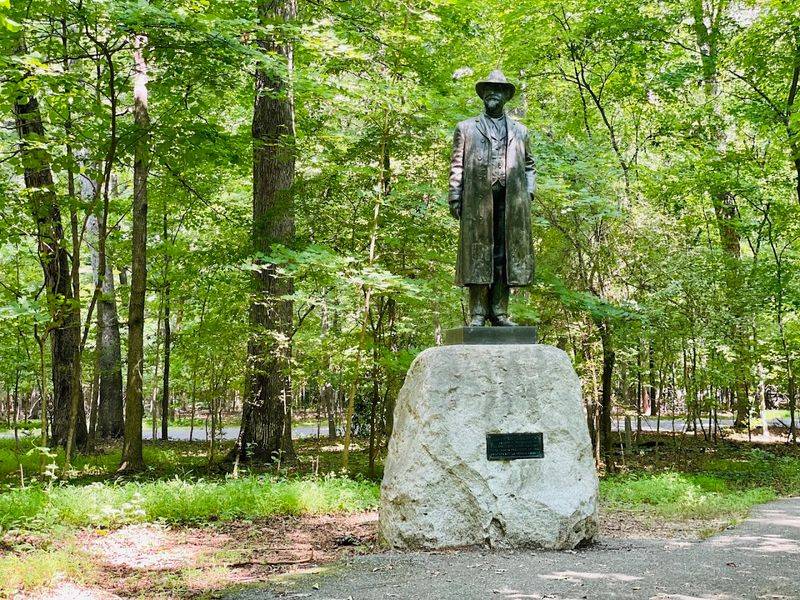
Quiet trails and tall trees make this landscape feel almost too peaceful at first, which is exactly what makes its history hit harder.When you walk here, you are standing on the ground where Nathanael Greene confronted Cornwallis in March 1781.
That clash at Guilford Courthouse National Military Park in Greensboro became one of the war’s most important turning points in the South.
Although the British technically held the field, they paid dearly for it.Cornwallis lost a significant portion of his veteran army, damage he could not easily replace during the southern campaign.
That brutal cost weakened British momentum and pushed him toward Virginia, setting the stage for Yorktown.
The park does an excellent job helping you picture how militia lines, Continental troops, and wooded terrain shaped the battle.Monuments, interpretive stops, and reconstructed features give you a strong sense of movement, confusion, and tactical pressure.
You can see why Greene’s decision to trade space for attrition worked even in apparent defeat.
If you want one North Carolina site that explains how a loss can still change history, this is it.The battlefield shows how endurance, geography, and timing mattered as much as victory claims.
By the time you leave, Guilford feels less like a local story and more like a hinge of the entire Revolution.
2. Moore’s Creek National Battlefield, Currie, Pender County
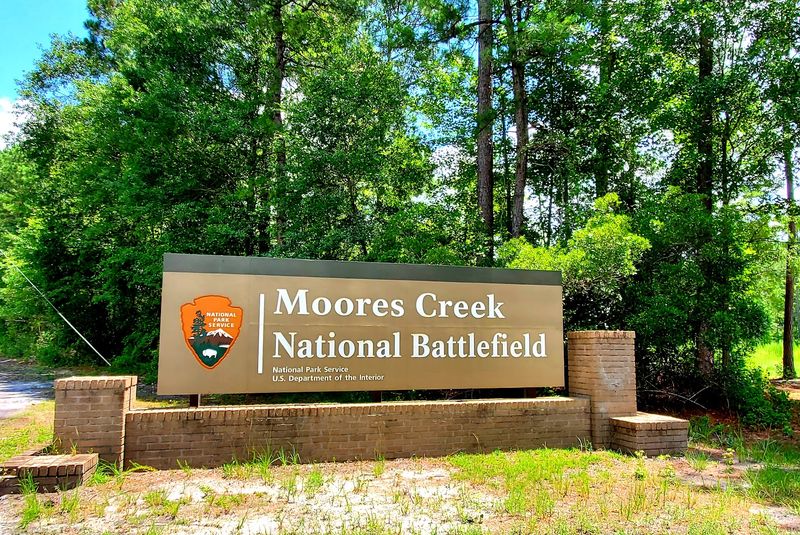
Misty water, low ground, and the sense of an approaching trap give this place a tension you can still feel today.Before independence was even declared, patriots in North Carolina used this creek crossing to stop a Loyalist force marching toward the coast.
At Moore’s Creek National Battlefield in Currie, the brief 1776 fight carried consequences far beyond its size.
Patriot forces removed bridge planks, greased the rails, and positioned themselves to fire on advancing Loyalists at exactly the right moment.The result was a sharp and humiliating defeat for supporters of the Crown, many of whom were Scottish Highlanders expecting a different outcome.
Their collapse disrupted British plans to rally Loyalist strength in the colony.
That victory helped secure North Carolina for the revolutionary cause early in the war.It also encouraged the momentum behind the Halifax Resolves, the first official action by an American colony calling for independence.
When you connect those events, the battlefield suddenly feels much larger than a small creek in the coastal plain.
The site’s trails and exhibits make it easy to understand how terrain and preparation shaped the encounter.You are not looking at a grand European field battle here, but at a precise local action with national effects.
Moore’s Creek proves how quickly Revolutionary history could turn on geography, timing, and nerve.
3. Alamance Battleground, Burlington, Alamance County
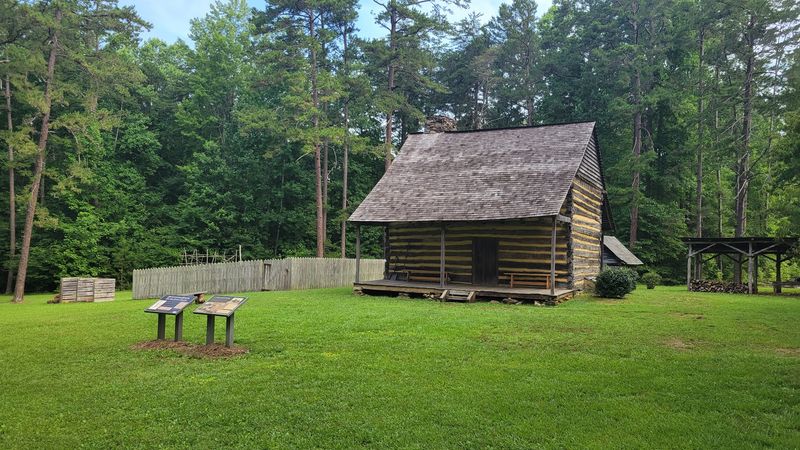
Open farmland and rolling ground give this site a deceptively simple look, but the political pressure that built here was anything but simple.Long before independence was declared, angry backcountry residents challenged corruption, fees, and abuse by colonial officials.
That conflict exploded in 1771 at Alamance Battleground near Burlington, in a violent prelude to the Revolution.
The battle pitted Governor William Tryon’s militia against the Regulators, a reform movement made up largely of farmers and settlers.Although the Regulators were defeated, their grievances revealed how deeply resentment toward distant power had already taken root in North Carolina.
You can feel the beginning of a revolutionary mindset here, even if this was not yet a war for independence.
Visiting the battleground helps you understand that revolutions rarely begin on a single date.They build through local fights over authority, taxation, and representation, often years before formal declarations catch up.
Alamance matters because it shows ordinary people testing how far government power could reach before resistance hardened.
The reconstructed Allen House and museum add context that keeps the site from feeling abstract.Instead, you see families, fields, and communities caught in a struggle over fairness and control.
If you want to trace the roots of rebellion in North Carolina, Alamance is one of the clearest starting points you can visit.
4. House in the Horseshoe, Sanford, Moore County
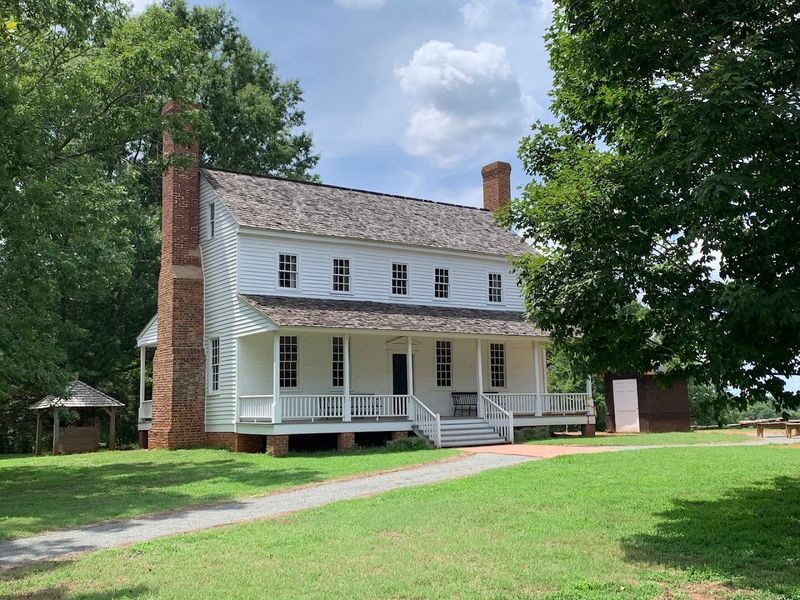
Curving water and quiet woods surround this house so gently that it is easy to forget it once sat in the path of violence.During the chaotic civil war within the Revolution, Patriot and Loyalist tensions reached this bend in the Deep River in 1781.
At House in the Horseshoe near Sanford, the conflict came literally to the doorstep.
Owned by Philip Alston, the house was attacked by Loyalist forces under David Fanning, one of the most effective partisan leaders in the South.Gunfire struck the structure, and the family sheltered inside while the fight unfolded around them.
Bullet marks and the setting itself make the episode feel immediate rather than distant.
This site matters because it reveals a side of the Revolution that big battlefield narratives often miss.North Carolina’s war was not only Patriots against British regulars, but neighbors confronting neighbors in raids, ambushes, and reprisals.
That local fracture helps explain why the southern campaign was so bitter and so unpredictable.
When you visit, the house’s unusual position inside a river horseshoe adds to the sense of isolation and vulnerability.Interpretation here focuses on personal experience, which brings the war down to a human scale you can grasp quickly.
House in the Horseshoe shows how the Revolution entered homes, disrupted families, and turned ordinary landscapes into contested ground.
5. Bethabara Park, Winston-Salem, Forsyth County
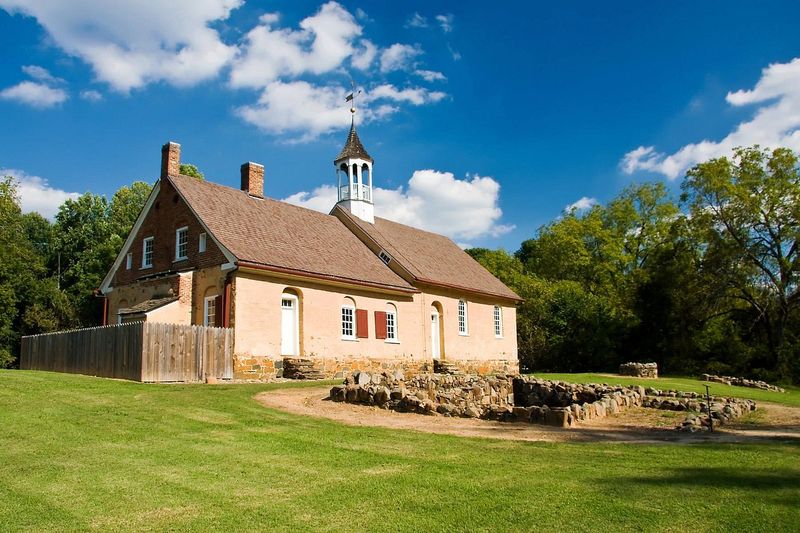
Peaceful meadows and carefully restored buildings create a calm first impression here, but this settlement stood in a world shaped by frontier danger and wartime uncertainty.Founded by Moravians before the Revolution, Bethabara became an important refuge, supply point, and witness to shifting allegiances during the conflict.
At Bethabara Park in Winston-Salem, you can see how war affected communities that were not major battle sites.
The Moravians emphasized faith, work, and relative neutrality, yet they could not escape the war around them.Armies moved through the region, travelers carried news and anxiety, and local residents navigated demands from competing sides.
That tension gives Bethabara a different kind of revolutionary significance.
Instead of focusing on one dramatic clash, the site helps you understand endurance.You see how ordinary people preserved food, maintained defenses, treated visitors, and kept communal life functioning while political upheaval spread.
Those quieter forms of resilience were essential to survival in wartime North Carolina.
Walking the grounds, you get a strong sense of how settlement patterns, religion, and frontier planning influenced daily life.The reconstructed village and interpretation make the eighteenth century feel practical, not decorative.
Bethabara matters because it broadens the story of the Revolution beyond battlefields and reminds you that history also turns on communities that hold together under pressure.
6. Charlotte’s Hezekiah Alexander House, Charlotte, Mecklenburg County
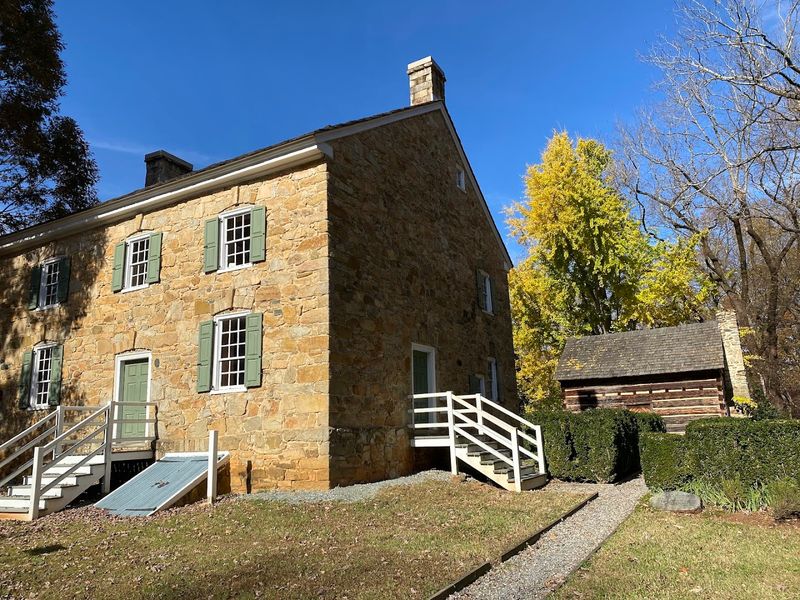
Stone walls, shaded grounds, and a feeling of sturdy independence give this place a strong personality before you even know the full story.
Built in 1774, this home belonged to Hezekiah Alexander, a prominent local figure connected to Mecklenburg’s revolutionary politics.
At Charlotte’s Hezekiah Alexander House, the atmosphere captures the bold local spirit that defined the region early in the war.
Mecklenburg County is closely associated with the contested but enduring tradition of the Mecklenburg Declaration and the Mecklenburg Resolves.
Whether you approach those documents with caution or enthusiasm, they reflect a community already prepared to challenge royal authority.
This house provides a tangible setting for that political mood.
The site is valuable not because a single famous battle happened here, but because it roots the Revolution in everyday leadership.
Men like Alexander helped shape local committees, public sentiment, and resistance networks that made broader military action possible.
As you explore the house and grounds, it becomes easier to picture how ideas circulated through homes, meetings, churches, and county institutions.
The Revolution was argued, organized, and normalized in places exactly like this.
Hezekiah Alexander House matters because it connects Charlotte’s modern identity to an earlier culture of dissent, civic action, and local confidence that helped push North Carolina toward independence.
7. Thomas Gaston House, Dallas, Gaston County
Backcountry quiet and modest architecture make this place feel deeply personal, the kind of site where larger events suddenly become easier to imagine.
The Thomas Gaston House connects visitors to a family embedded in the Revolutionary generation of the North Carolina Piedmont.
In Dallas, this surviving home offers a window into how political change touched the backcountry beyond the most famous battlefields.
Thomas Gaston was part of a broader world shaped by militia duty, local governance, kinship networks, and the practical demands of frontier life.
That matters because the Revolution depended not only on celebrated generals, but on households that sustained labor, communication, and regional stability.
Sites like this help fill in the social ground beneath military history.
When you stand near the house, you can better grasp how loyalty, risk, and opportunity were negotiated close to home.
North Carolina’s western and piedmont communities experienced the war through rumor, musters, supply needs, and changing authority as much as through direct combat.
The house may not have the fame of larger national parks, but its value lies in context and continuity.
It represents the lived environment of people who carried the Revolution forward in quieter, durable ways.
Thomas Gaston House earns a place on this list because it anchors the era in real domestic space, not just in monuments and myth.
8. Mordecai Historic Park, Raleigh, Wake County
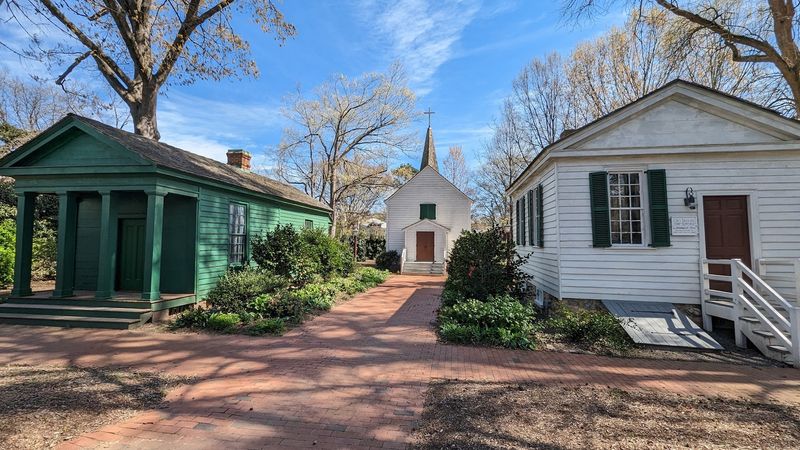
Old trees, broad grounds, and one of Raleigh’s oldest surviving homes create the kind of setting that makes early state history feel close enough to touch.Mordecai Historic Park is best known for layers of nineteenth century history, but its roots extend into the Revolutionary era through Joel Lane and the political world around North Carolina’s capital region.
That connection makes the site useful for understanding wartime leadership and state formation.
Raleigh itself emerged after the war, yet the surrounding Wake County landscape was already home to influential figures shaping public affairs.Nearby homes, plantations, and meeting places linked military service, government planning, and economic change in the difficult years of independence.
Mordecai helps visitors picture that transition from colony to state.
This site matters because revolutions are not finished when battles end.They continue through land decisions, capital planning, elite networks, and the creation of institutions meant to outlast wartime crisis.
Looking at the house and grounds, you can begin to trace that next chapter clearly.
The park also works well as an interpretive bridge for readers who want more than battlefield drama.It places the Revolution within everyday life, property, labor, and political ambition in a changing North Carolina landscape.
Mordecai Historic Park belongs on this list because it expands the story from fighting independence to building a society capable of governing after it was won.
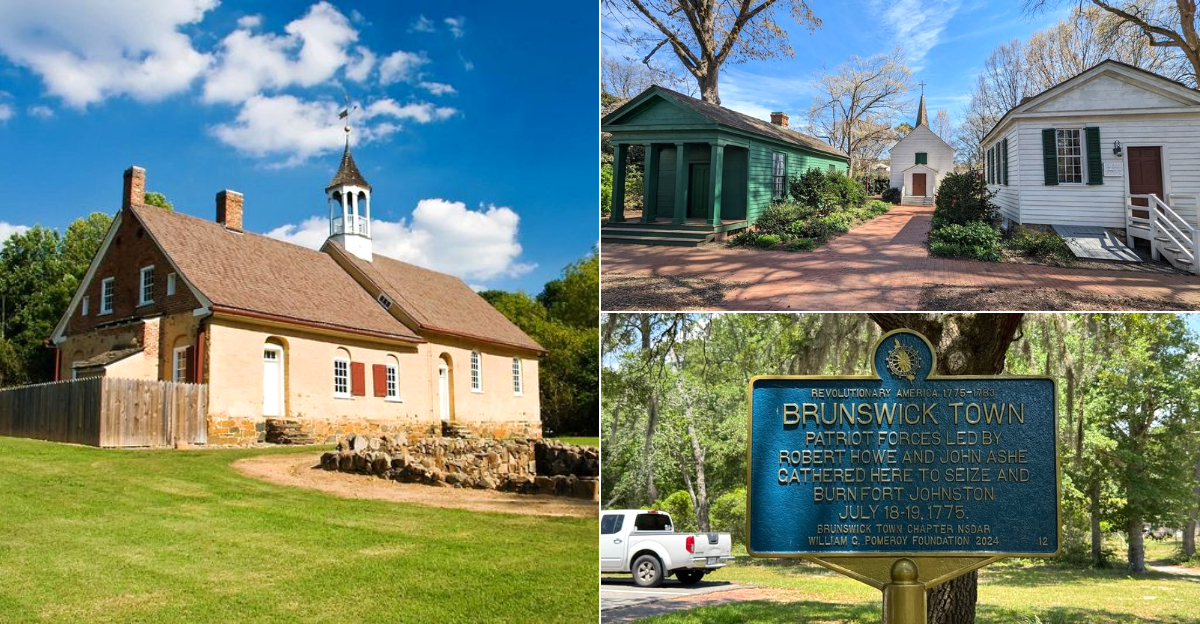
9. Brunswick Town, Winnabow, Brunswick County
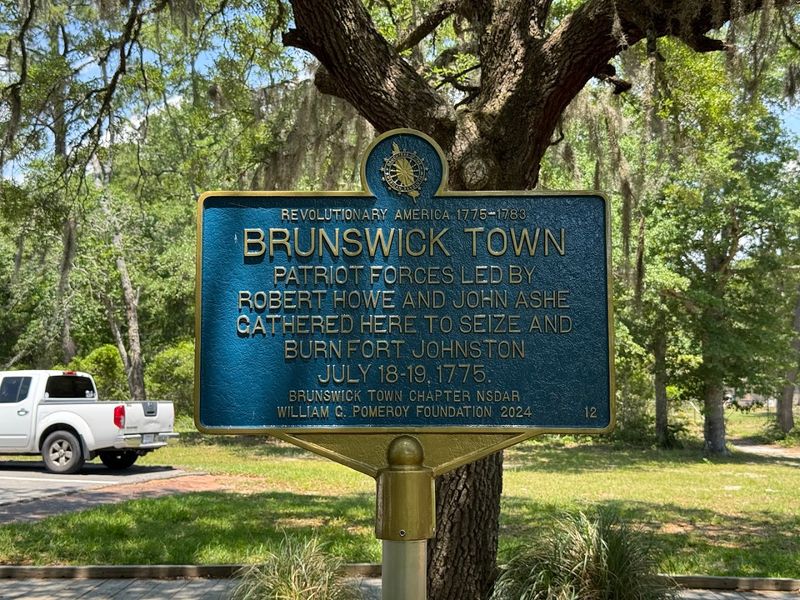
Wind off the Cape Fear and the remains of an abandoned port give this place a haunting quality that is hard to shake.
Brunswick Town had been a major colonial center before the Revolution, and its strategic river location kept it important as war spread through coastal North Carolina.
Near Winnabow, the site connects politics, trade, military movement, and destruction in one powerful landscape.
Patriot resistance and British pressure both touched this region, where control of waterways mattered immensely.
The town had already suffered during the Stamp Act unrest in 1765, and later wartime developments nearby underscored the coast’s vulnerability and value.
Fort Anderson, a later Civil War feature on the site, should not distract from Brunswick Town’s deeper revolutionary significance.
What makes this stop compelling is the way archaeology and ruins let you read absence as history.
You are not just seeing what survived, but imagining a colonial port community that once linked North Carolina to the Atlantic world.
That larger economic context is essential for understanding why the Revolution unfolded as it did.
Walking among foundations and river views, you can feel how empire, commerce, and local resistance overlapped here.
Brunswick Town reminds you that independence was shaped not only inland by militia action, but also along fragile coastal corridors.
10. Hillsborough Historic District, Hillsborough, Orange County
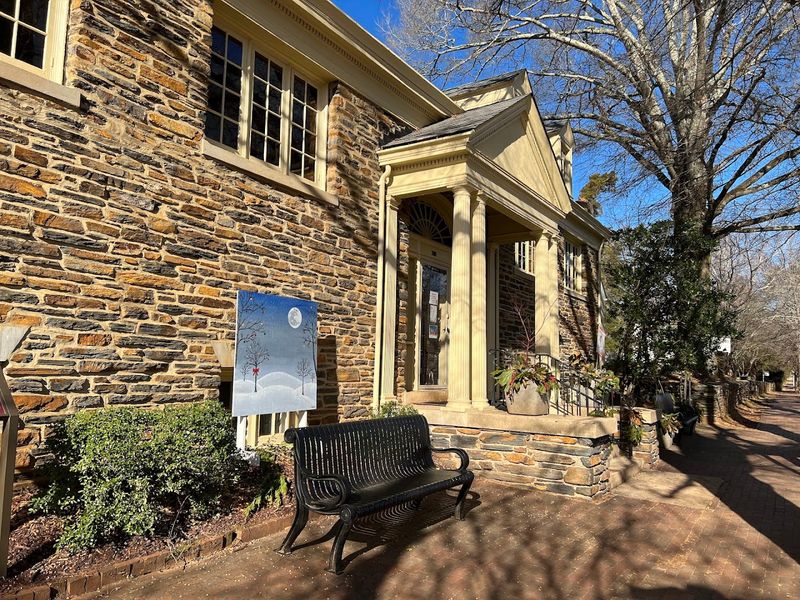
Brick walks, courthouse town energy, and a remarkable concentration of historic buildings make this place feel alive with argument, ambition, and change.
Hillsborough was one of North Carolina’s most important political centers in the revolutionary era, where debates over power, representation, and state identity played out in public view.
In the Hillsborough Historic District, you can follow that story across an entire townscape rather than a single landmark.
The town had earlier connections to the Regulator movement, which already made it a focal point for conflict over governance.
During and after the Revolution, Hillsborough remained central to legislative activity, military movement, and constitutional discussion.
That continuity helps explain why it mattered so much to North Carolina’s path through independence.
Walking here offers something rare.
You can connect taverns, homes, churches, law offices, and public buildings into one political ecosystem where revolutionary ideas were contested and implemented.
Instead of seeing history as isolated episodes, you see how civic life produced momentum over time.
Architecture, street patterns, and preserved institutions make it easier to imagine the people who negotiated the uncertain shift from colony to republic.
Hillsborough belongs at the end of this list because it ties together protest, war, governance, and memory, showing how North Carolina turned revolutionary upheaval into lasting public life.