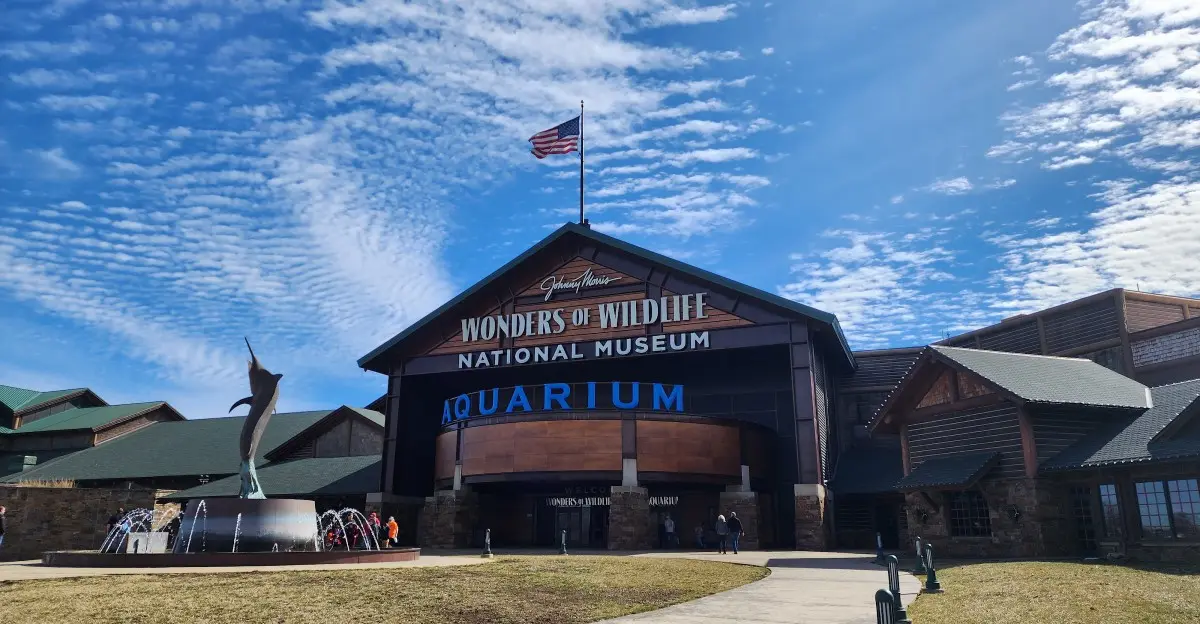
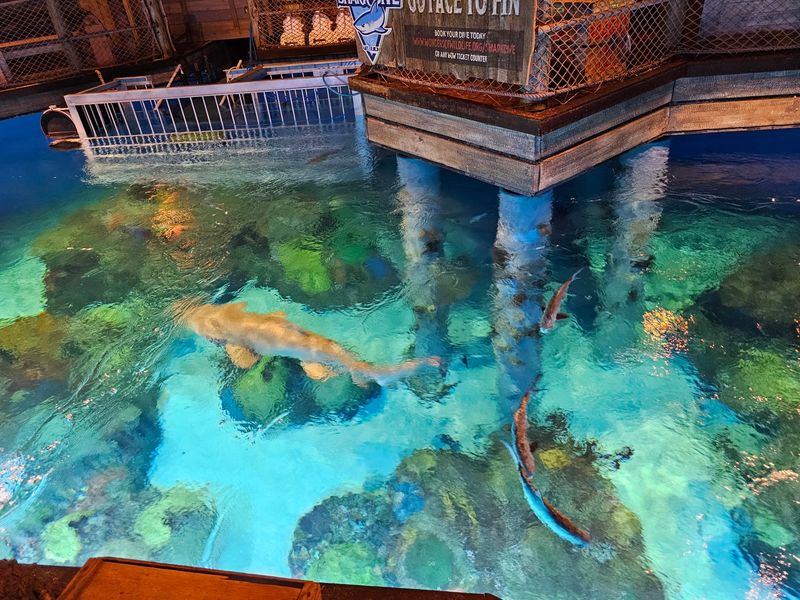
You can strap on a special helmet, climb into a steel enclosure, and sink down among sand tiger sharks. No diving certification required.
Your hair stays dry, too, which feels like cheating.
The sharks share their water with Atlantic goliath groupers, fish big enough to make a canoe nervous. Brown sharks cruise through the same space.
Three days a week, you can even time your visit for shark lunch.
All of this happens in Missouri, hundreds of miles from any ocean. The building holds 1.5 million gallons of fresh and salt water.
More than 800 species live inside, from penguins to piranhas.
I love that the wildest seat in the house is underwater. Most of us only see sharks through thick glass.
Here, the glass is optional, and the sharks seem perfectly fine with company.
You Can Climb In With The Sharks And Never Need A Diving License
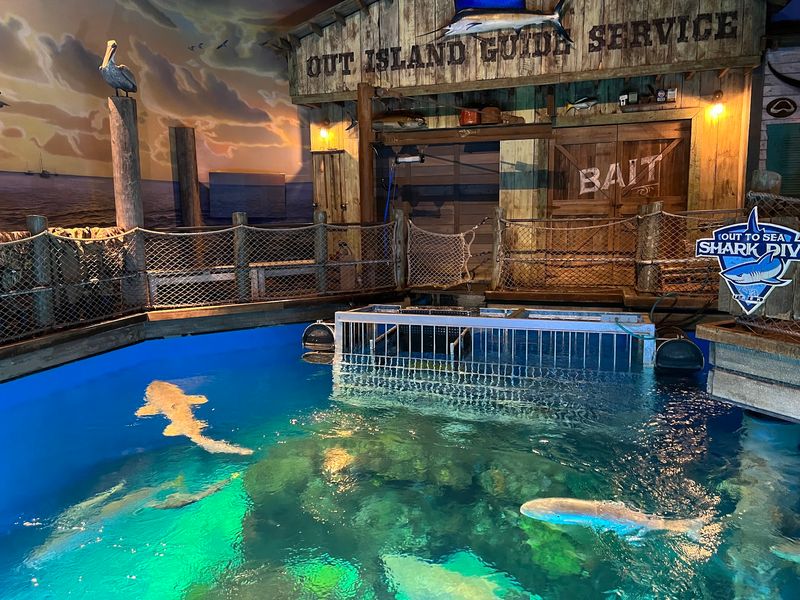
Most aquariums ask you to admire sharks from a polite distance. Johnny Morris’ Wonders of Wildlife National Museum and Aquarium hands you a helmet instead.
The Out to Sea Shark Dive puts you inside a steel enclosure underwater. Sand tiger sharks, brown sharks, and Atlantic goliath groupers swim right alongside you.
SeaTREK helmets let you breathe normally while your head stays dry. That means no scuba lessons and no certification card.
If you can stand in water, you’re mostly qualified.
The whole experience runs about an hour and a half. Around 15 to 20 minutes of that time happens in the water with the animals.
Wetsuits come in adult sizes XS through 6X and youth sizes 8 through 14. Lockers keep your phone and keys safe while you hang out with fish.
Want more action? The Out to Sea Feeding Frenzy happens during shark mealtime on Tuesdays, Thursdays, and Saturdays at 12:30 p.m.
There’s also an adaptive version of the dive. It welcomes guests with more than 26 different physical and cognitive disabilities.
That’s a thoughtful touch for an experience this unforgettable.
A Three-Story Fish Tornado Will Stop You In Your Tracks
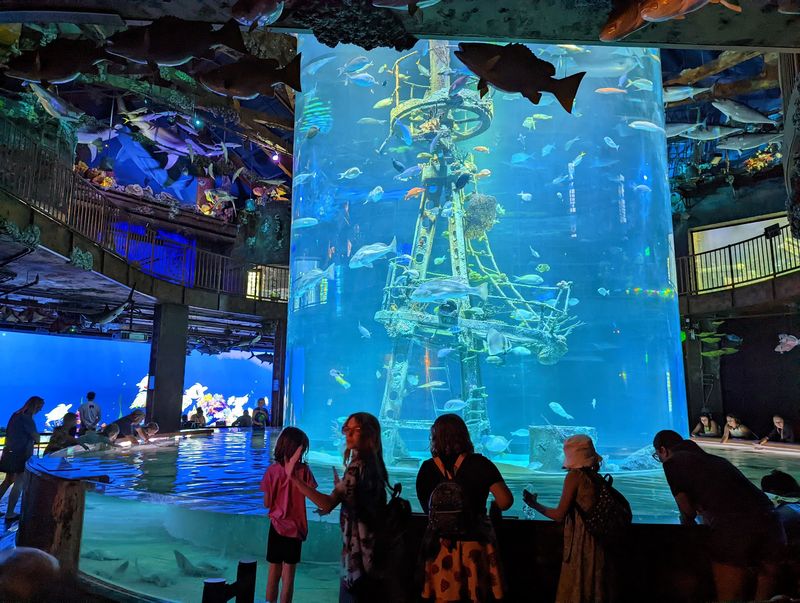
Thousands of silver herring swirl together like one giant, shiny creature. Sharks cruise through the middle of the crowd.
Welcome to the Bait Ball.
This tubular aquarium rises three stories tall. You can look up, down, and sideways, and the fish just keep moving.
In the wild, small fish bunch into tight balls to confuse hungry hunters. Here, you get a front-row seat to that survival trick without needing a boat.
Kids tend to press their faces close to the glass. Honestly, adults do too, and nobody’s judging.
The motion is almost hypnotic. One moment the school flashes bright, and the next it twists into a new shape.
Your camera will struggle to keep up, so maybe just watch for a minute.
The Bait Ball works as a great reminder that ocean life depends on teamwork. Little fish survive by sticking close.
Sharks survive by being patient.
Give yourself time here before rushing ahead. The tank looks different from every level, so wander the floors and compare views.
It’s one of the coolest tall things in Missouri, and it’s full of fins.
An Open Ocean Waits In A 300,000-Gallon Circle
Three hundred thousand gallons. That’s how much water fills the circular habitat in the Great Oceans Hall.
The tank is built to feel like the open sea. Zebra sharks, leopard rays, and sea turtles move through it at their own easy pace.
Zebra sharks are fun to spot because of their spotted bodies. The name comes from the stripes they have when young, which fade as they grow.
Nature loves a plot twist.
Leopard rays look like they’re flying instead of swimming. Their wide fins flap slowly, and they glide past with surprising grace.
Sea turtles steal plenty of attention too. They paddle around like they’ve got nowhere important to be.
Watching them might lower your heart rate a few beats.
Because the habitat is round, you can follow animals as they circle. Pick one turtle and track it for a lap.
It’s a simple game that keeps younger kids focused.
This space shows just how big the aquarium side really is. The whole Aquarium Adventure holds 1.5 million gallons of water.
This one tank alone could keep you busy longer than you planned.
Go Ahead And Pet A Stingray, They’re Expecting You
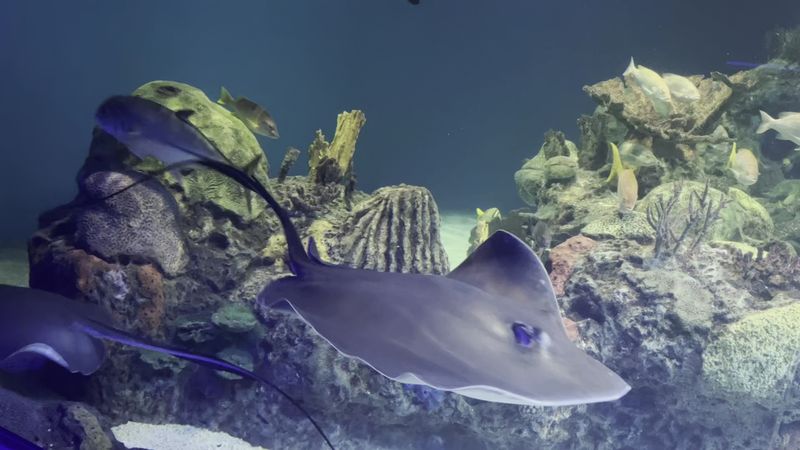
Feeding a stingray feels a bit like shaking hands with a pancake. A friendly, hungry pancake.
The Touch Stingrays experience lets guests feed several kinds of rays. You’ll find Atlantic, blue-spotted, cownose, southern, ribbontail, and yellow rays.
There’s even a mangrove whipray in the mix.
That variety makes it worth slowing down. Blue-spotted rays have bright dots on their backs.
Cownose rays have rounded heads that look a little like, well, a cow’s nose.
The rays glide right up to the edge of the pool. Keep your hand flat and calm, and let them do the work.
Food trays for the stingrays can be a hot item. Buying them ahead of time online is a smart move if feeding matters to your crew.
Other touch tanks let you meet horseshoe crabs and small sharks. Horseshoe crabs are ancient creatures that look like tiny armored tanks.
Kids usually have a lot of questions about them.
Bring hand sanitizer or plan a restroom stop afterward. Touching fish is fun, but nobody wants to snack with stingray fingers.
Pop Your Head Up Right In The Middle Of The Penguins
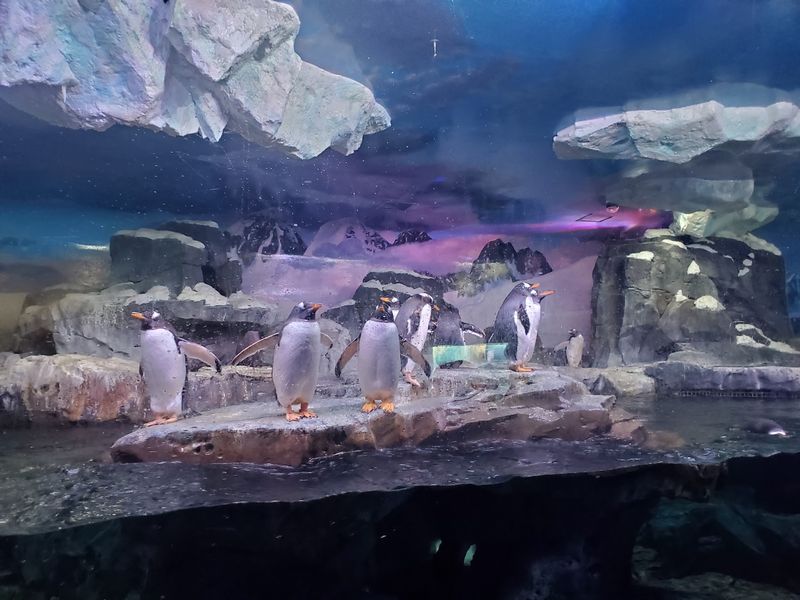
Gentoo penguins live here, and they don’t keep you at arm’s length. Penguin Cove includes clear pop-up bubbles that put you right inside their habitat.
These 360-degree domes let you peek out among the birds. It’s like being a very curious, very warm penguin.
Gentoos are known for their orange-red beaks and white patches above the eyes. They’re also speedy swimmers, so watch for quick zips through the water.
The bubbles are especially great for kids. Small visitors can crawl in and see the colony from penguin height.
Want even more time with these tuxedo-wearing birds? Penguin Encounters are offered as an additional experience.
It’s a nice add-on for any family member who’s obsessed with penguins.
Plan to linger here a bit. Penguins waddle, dive, groom, and squabble in ways that feel like a nature comedy.
This exhibit is a good reminder of how wide the animal list goes. You came for sharks, and suddenly you’re waving at birds from Antarctica-style rocks.
Springfield really packs a lot into one ticket.
Explore A Sunken Ship Without Holding Your Breath
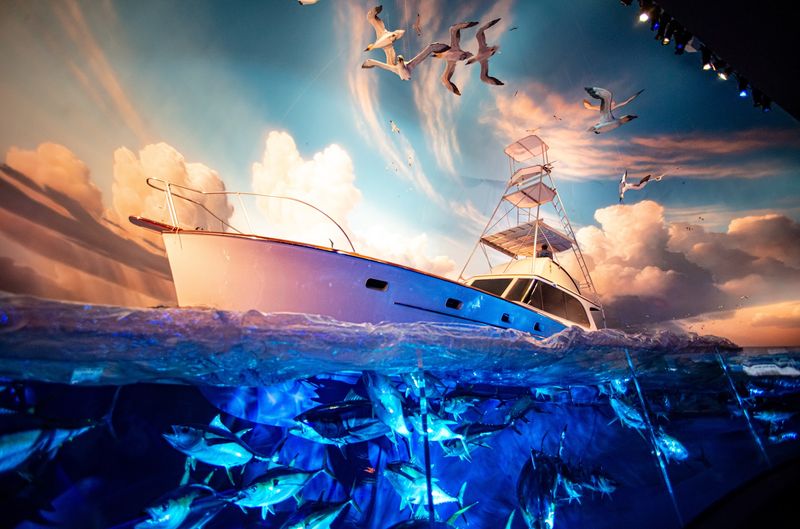
Sunken ships usually belong in pirate stories. At this aquarium, one became an exhibit called Shipwreck Reef.
The habitat recreates a shipwreck on the ocean floor. Colorful reef creatures, eels, goliath groupers, and lobsters call it home.
Eels love to tuck their heads out of cracks and stare back at you. It’s a little spooky and a lot of fun.
Goliath groupers here can be huge. They hover with a calm, grumpy face that feels oddly lovable.
One quick heads-up before you go. Parts of Shipwreck Reef are temporarily closed for renovations, and the Aviary is also closed for now.
Check what’s open before your trip so nobody gets surprised.
Even with some areas paused, the aquarium side still has plenty to see. The Amazon exhibit brings piranhas and rainforest waters.
Otters, black bears, brown bears, bats, and a two-toed sloth live here too.
That mix is part of the charm. One hallway feels like a reef, and the next feels like a jungle.
Comfortable shoes are your best friend in this place.
The Museum Side Is Just As Wild As The Water
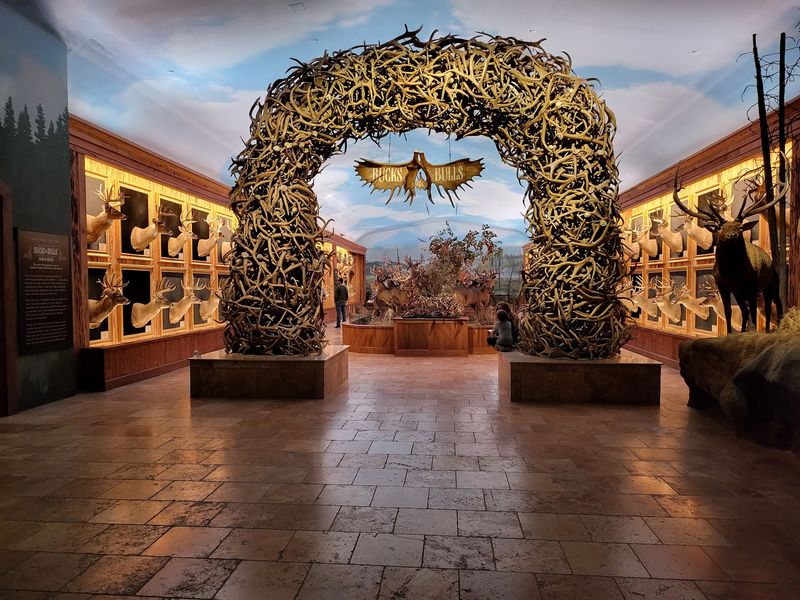
Sharks get top billing, but don’t skip the Wildlife Galleries. This museum half deserves its own afternoon.
The galleries use detailed 4D dioramas showing animals from around the world. You’ll travel from polar regions to the African savanna and the Amazon rainforest.
American prairies and national parks show up too. Each scene is built to feel like a real place, not just a display case.
The museum also holds the world’s largest collection of record-setting big game animals. Think deer, elk, moose, bison, caribou, bears, and bighorn-style sheep.
Seeing how big a moose really is changes your idea of road trips. You’ll never look at a Missouri deer crossing sign the same way.
Fishing fans get plenty to love here. The Bass Fishing Hall of Fame and the International Game and Fish Association Hall of Fame both live inside.
There’s also a mock-up of Johnny Morris’ first Bass Pro Shop. It’s a fun peek at how a big dream started small.
The museum focuses on conservation and honors hunters and anglers as caretakers of land and water.
Fuel Up Before Your Legs File A Complaint
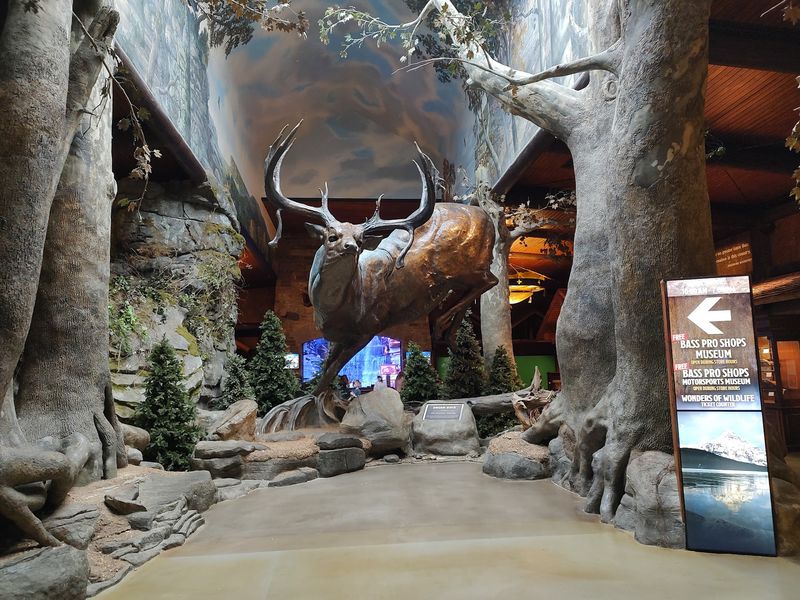
A place this big will test your snack strategy. Luckily, two food spots sit right inside.
Fish Tales Cafe covers the real meals. You’ll find coffee, soups, sandwiches, salads, and pizza.
There’s also a kid’s menu and gluten-free options. That makes it easier for families with picky eaters or special diets.
Need just a quick bite? The Shipwreck Snack Bar serves popcorn, slushies, and bakery treats.
A slushie break near the aquarium feels pretty fitting, honestly.
Hemingway’s Bluewater Cafe is also close by in the attached Bass Pro Shops. It’s handy if you want a sit-down meal after exploring.
Here’s my advice for planning. The museum and aquarium can easily fill several hours, so build a food stop into your day.
Hungry kids and long hallways rarely mix well.
Eating midway also helps you split the visit. Do the aquarium first, refuel, then tackle the Wildlife Galleries with fresh energy.
Your feet will thank you, and so will everyone in your group.
Smart Moves That Make Your Visit So Much Smoother
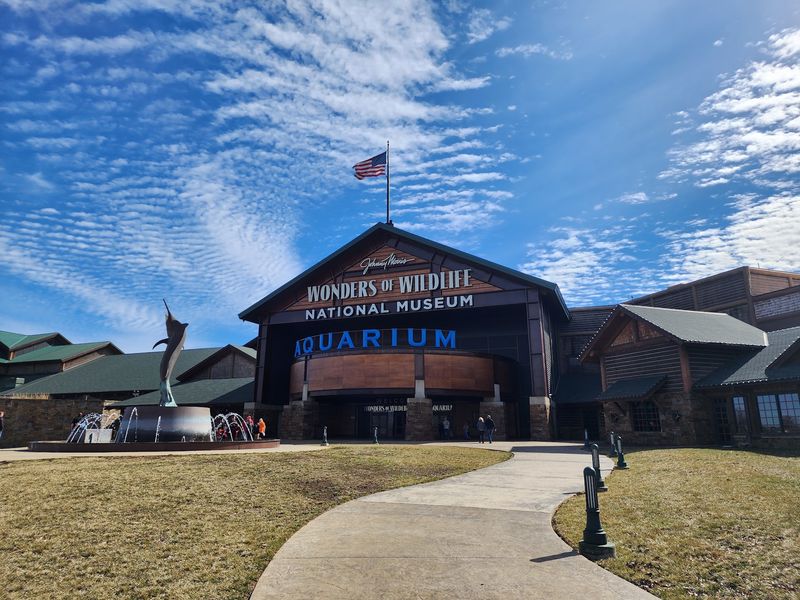
America’s Best Aquarium. USA Today readers have given Wonders of Wildlife National Museum and Aquarium that title a record eight times since 2017.
You’ll find it at 500 W Sunshine St, Springfield, MO 65807. It sits right next to the Bass Pro Shops Outdoor World flagship.
Parking is free, which always feels like a small win. Park in front of Bass Pro Shops or near the Great Oceans Hall.
The whole complex covers 350,000 square feet. More than 1.5 miles of exhibits and trails wind through it, so wear comfy shoes.
Accessibility gets real attention here. The building is wheelchair and stroller friendly, with elevators throughout.
Complimentary wheelchairs and electric scooter rentals are available.
Sensory kits and social stories help neurodivergent guests prepare. Stroller rentals exist too, but wagons and wagon-style strollers aren’t allowed.
Curious how it all runs? Behind the WOW tours take you backstage into the inner workings.
Hours change by day, so check before you go. Then clear your schedule, because this corner of Missouri doesn’t do quick visits.