A century-old staircase, worn brick walls, or an old storefront can make a hotel stay feel like stepping into another chapter of a town’s history. In South Carolina, historic buildings that once served very different purposes have been carefully given new lives as welcoming places to stay.
Former homes, warehouses, shops, and even a fire station now offer travelers a chance to sleep beneath original details while enjoying the comforts of a modern hotel. You might wake beneath old beams, walk through a preserved lobby, or settle into a room where the building’s earlier purpose still feels close at hand.
These South Carolina hotels are memorable not simply because they are beautiful, but because they help preserve the stories woven into their communities. From historic downtowns to quieter corners, these 12 stays reveal how old places can find a meaningful second life.
The Lantern Hotel Columbia
Red brick, tall doors, and a hint of old city grit make this place feel different before you even step inside. There is a quiet thrill in knowing the building once answered emergencies, and now it welcomes tired travelers instead.
That change gives the whole stay a story you can actually feel.
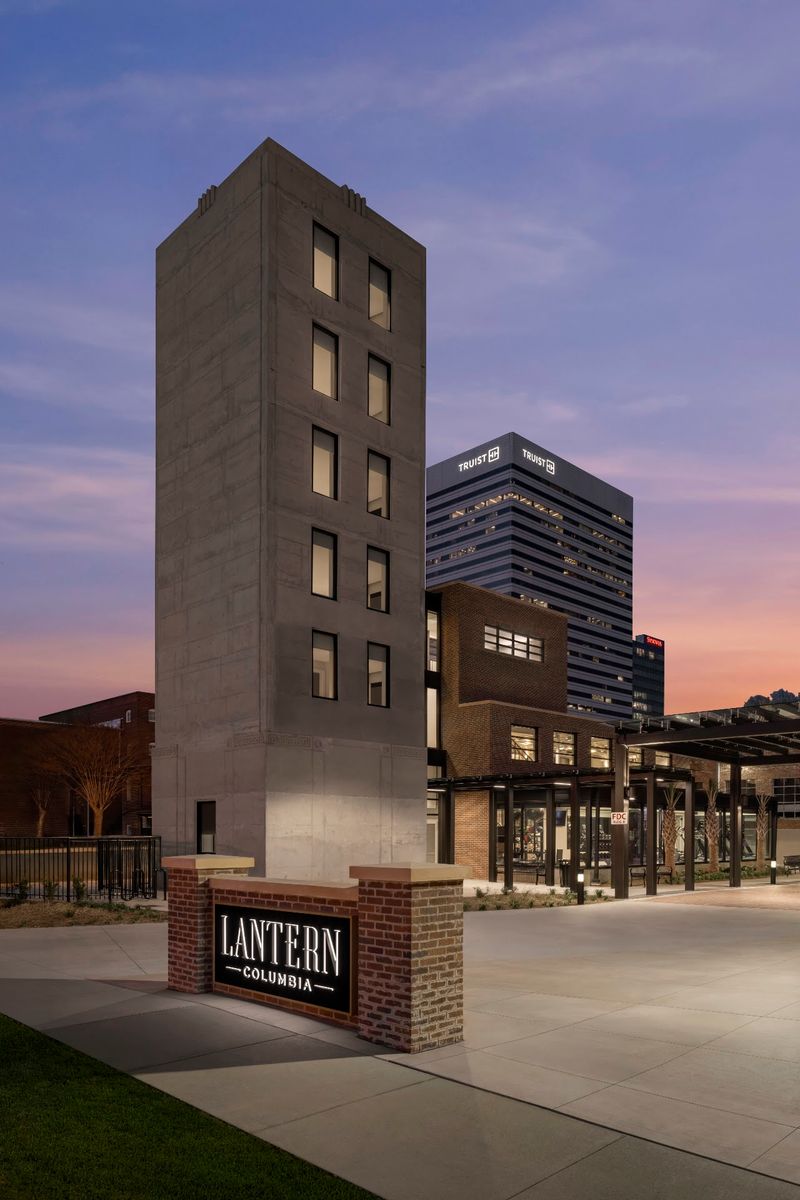
In Columbia, The Lantern Hotel Columbia brings the former Central Fire Station back to life with unusual charm. The old engine bay now houses Ladder 13, a restaurant where guests can settle in for a good meal after walking around the State House area.
A former training tower has also been reworked into suites with a layout you will not find in a standard chain hotel.
Look closely and the building still shows its working past, which is part of the fun. Anyone who likes architecture, local history, or clever reuse will find plenty to notice here.
Hotel Trundle
Some hotels feel polished in a generic way, but this one feels stitched together from real downtown life. Old storefront bones, bright design, and playful details give it a personality that stands out right away.
You get the sense that the building remembers a lot.
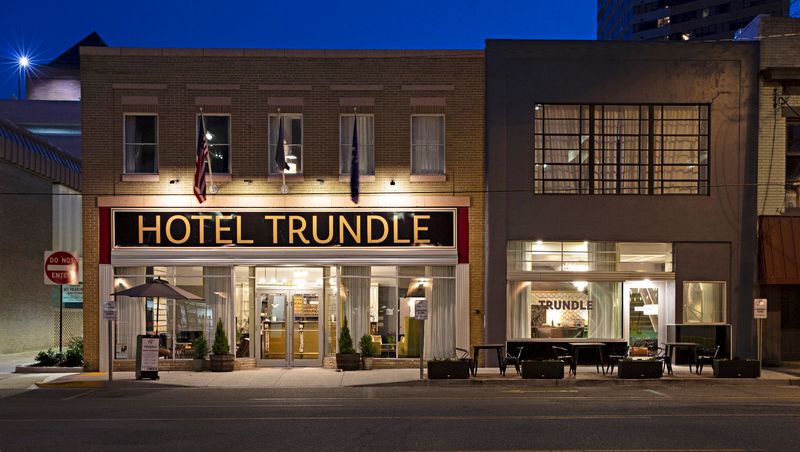
Hotel Trundle in Columbia grew from several older commercial spaces, including the Western Auto building, the Rose Talbert Paint Store, and Powell Furniture. Instead of hiding those roots, the hotel leans into them with cheerful color, local art, and preserved details that make the property feel tied to the street outside.
It sits in a very walkable part of town, handy for visiting Main Street, the Soda City Market, or grabbing coffee nearby.
Because of that history, staying here feels less like checking into a box and more like joining the rhythm of the neighborhood. It is a good fit for travelers who like places with a little wit and texture.
The Dewberry Charleston
Sharp lines and polished brass are not what many people expect from a building with a government past. Yet that contrast is exactly what makes this hotel memorable.
The mood feels calm and tailored, with just enough glamour to remind you that good design can completely change a place.
In Charleston, The Dewberry took over the former L. Mendel Rivers Federal Building and turned a once formal office structure into a stylish hotel.
Its mid-century look suits the original architecture, so the makeover feels thoughtful rather than forced. Guests often remember the handsome lobby, the rooftop views, and the easy walk to Marion Square and the shops along King Street.
There is something satisfying about seeing a serious old building become warm and welcoming without losing its backbone. For travelers who notice architecture first, this stay offers a clear lesson in how reuse can be both elegant and smart.
Emeline
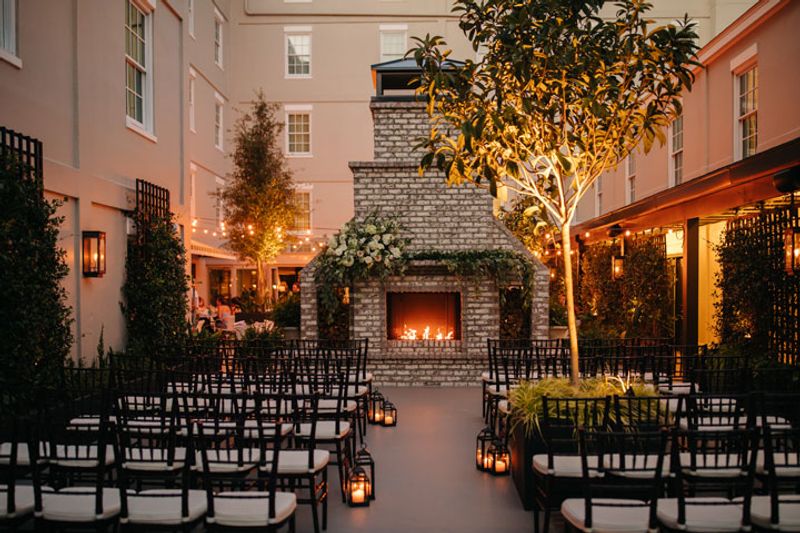
A hotel can feel most interesting when it seems to have lived several lives before yours crosses its path. That layered feeling is strong here, where business, trade, and everyday city life once filled the same address.
Now the pace is softer, but the past still hums in the background.
Emeline sits on Charleston’s Church Street in a building that once held a grocery, a provisions company, and later a bank. That history gives the property a grounded, practical charm beneath its polished look.
Inside, the spaces feel collected rather than flashy, and the location puts guests near the City Market, waterfront walks, and plenty of restaurants for an easy evening out.
One reason the place works so well is that it does not seem frozen in time. Instead, it feels like Charleston kept adapting the building until it became exactly the kind of stay many visitors hope to find, comfortable, central, and full of small stories.
The Pinch Charleston
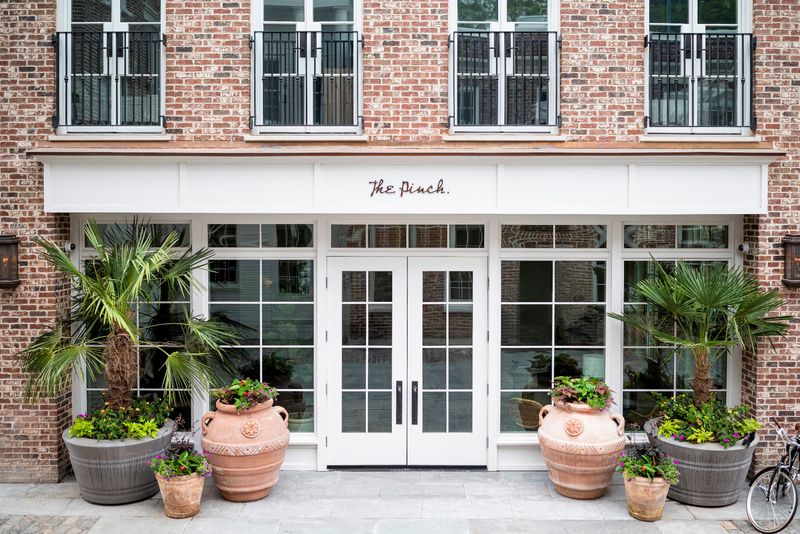
Behind the old walls, the mood feels a little residential, a little artistic, and far more personal than a typical hotel. You notice the sense of age first, then the comfort, and finally the clever way the two have been made to live together.
It is an easy place to imagine returning to.
The Pinch Charleston brings together Victorian commercial buildings and a former private residence near George Street. Because the property grew from several structures, it carries a layered look that feels richer than one single building often can.
Guests are close to college life, neighborhood cafes, and some of Charleston’s prettiest side streets, which makes wandering part of the experience.
Rather than smoothing every edge, the renovation seems to respect the odd corners and old proportions that make historic places interesting. That choice gives the hotel a quiet confidence.
Travelers who prefer character over sameness will likely appreciate how naturally the old and new sit side by side here.
The Vendue
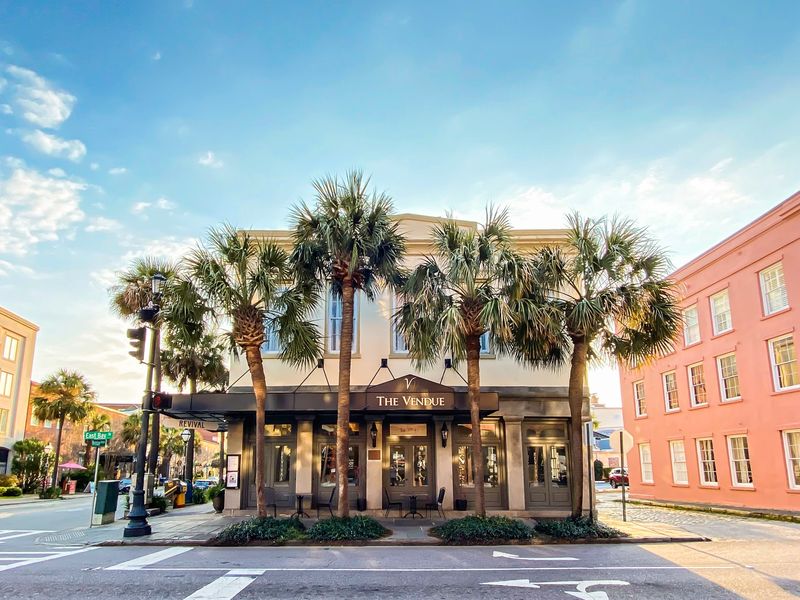
Salt air, old brick, and art on the walls create an unusual mix that somehow makes perfect sense. The area once worked hard for a living, and traces of that waterfront energy still shape the experience.
Staying here feels like sleeping inside a piece of Charleston’s harbor story.
The Vendue grew from historic buildings tied to the old wharf and warehouse district near the waterfront. Long before guests arrived with weekend bags, these structures served commercial needs connected to shipping and the fishing industry.
Today, the hotel balances that history with a creative spirit, adding gallery-style artwork and a rooftop perch where harbor views can steal the show.
Its location is a big part of the appeal. You can step out for a walk along the water, explore nearby cobbled streets, then return to a building that has already reinvented itself more than once.
That depth gives the stay a lived-in richness many newer hotels simply cannot copy.
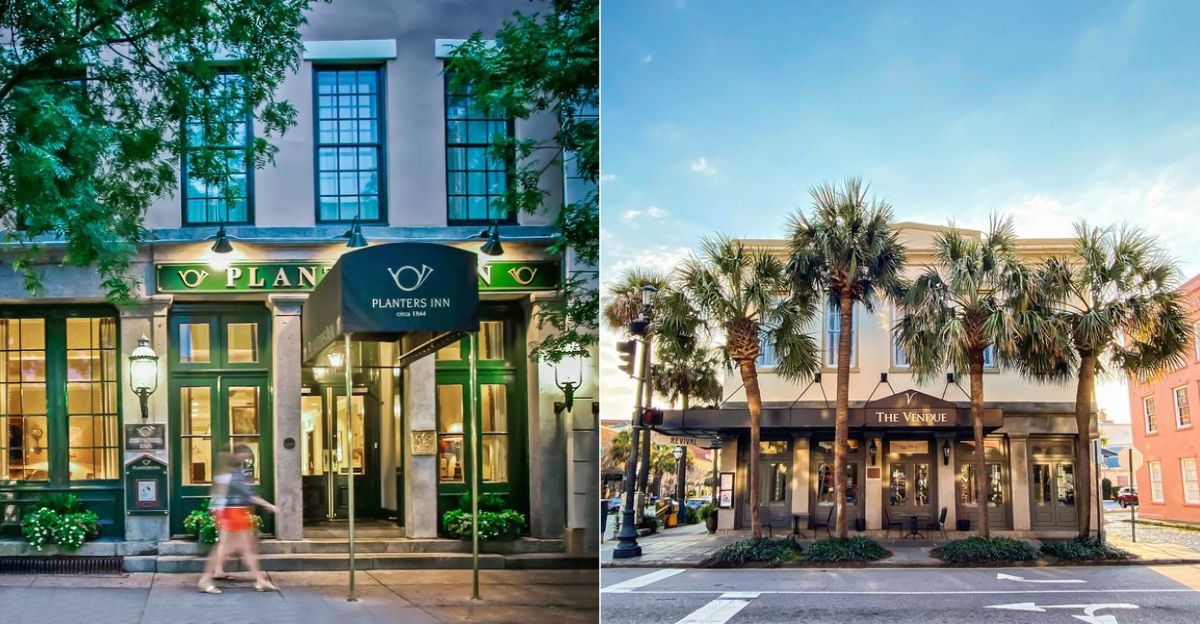
Planters Inn
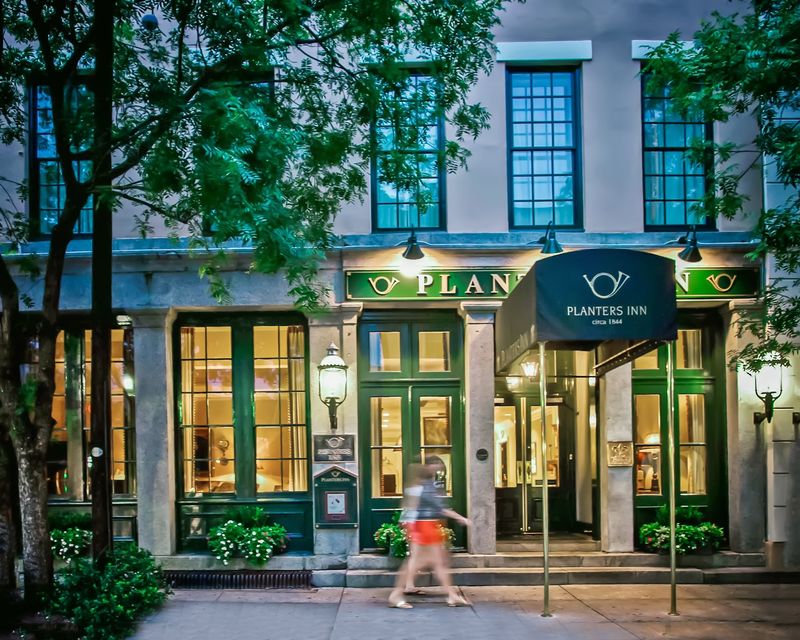
Some places carry themselves with the calm confidence of age, and this is one of them. The building has seen prosperity, decline, storm damage, and careful repair, which makes its present beauty feel earned.
There is comfort in a hotel that has survived enough to become wiser.
Planters Inn stands near Charleston City Market inside a structure built in 1844 as a luxury goods emporium. Its current life as an intimate hotel came after years of wear and a major restoration following Hurricane Hugo.
That backstory adds weight to the polished rooms, quiet common spaces, and easy access to market stalls, church steeples, and late evening walks through the historic district.
The setting suits travelers who want old Charleston close at hand without losing a sense of refuge. More than anything, the hotel shows how preservation can protect not just a facade, but a whole atmosphere.
You are not only booking a room here, you are stepping into continuity.
The Restoration Charleston
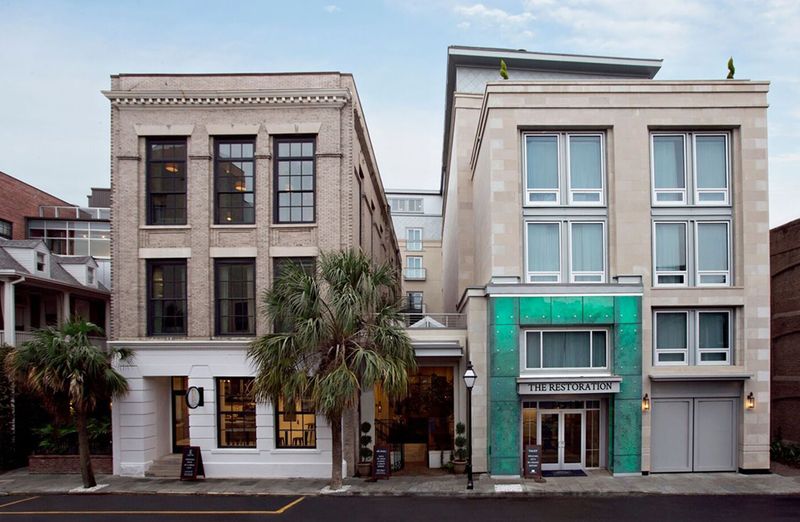
At first glance, the place feels almost like a tiny neighborhood gathered into one address. Different buildings, different pasts, and one shared future give it a layered rhythm that is hard to fake.
That patchwork quality is exactly what makes the stay memorable.
The Restoration Charleston combines several older structures, including commercial spaces, apartments, a row house, retail areas, and even a former telephone and telegraph building. Instead of forcing them into a rigid mold, the hotel uses that mix to create a property with varied corners and a courtyard-centered feel.
Guests can head up for rooftop views, then wander out to Wentworth Street, King Street shops, and nearby bakeries without much planning.
There is a pleasant sense of discovery built into the experience. Because the hotel came from many lives rather than one, each turn seems to reveal another clue about how Charleston evolved over time.
For curious travelers, that makes the property more than simply a convenient place to sleep.
Wentworth Mansion
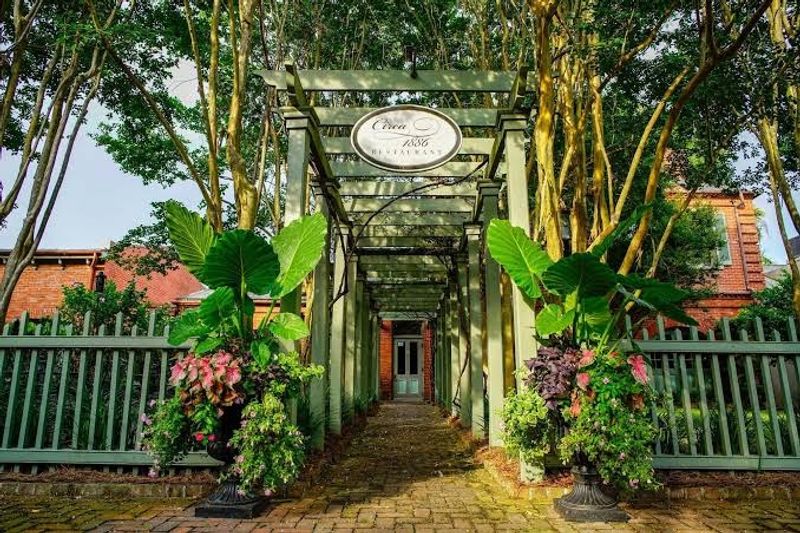
Grandeur can feel stiff in the wrong hands, but here it feels human. High ceilings, rich wood, and the hush of an old house invite you to slow down rather than stand at attention.
The result is stately without being cold.
Wentworth Mansion began in Charleston as a private Gilded Age residence, built for wealthy merchant Francis Silas Rodgers in the late nineteenth century. Its second life as a hotel lets guests experience a scale and craftsmanship that modern buildings rarely attempt.
The setting near Wentworth Street also makes it easy to pair mansion living with ordinary pleasures, like a neighborhood stroll, a carriage passing by, or dinner in town after a day of sightseeing.
What stays with many visitors is the feeling that the house still knows it was once someone’s home. That memory softens the formal architecture and gives the property heart.
For anyone drawn to history with a touch of drama, it offers a vivid overnight window into Charleston’s older world.
John Rutledge House Inn
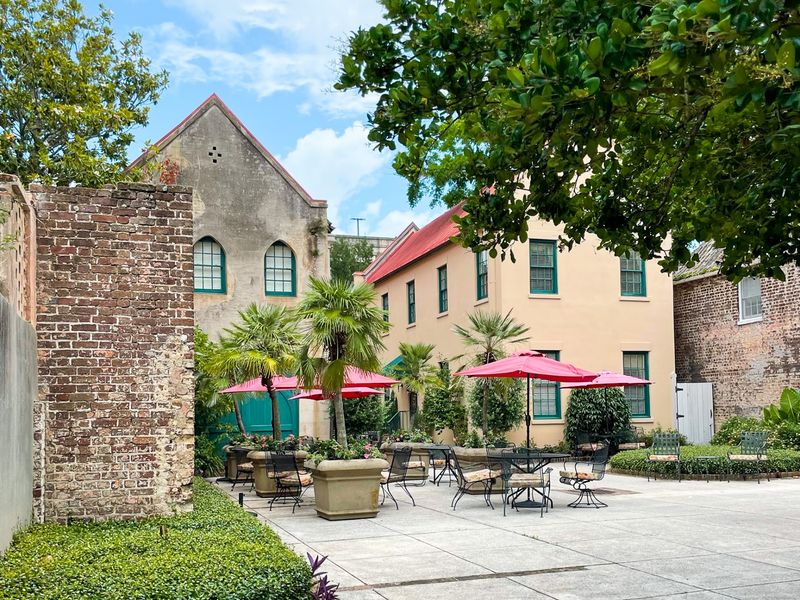
Time feels unusually close in a house like this. The proportions, the decorative details, and the quiet formality all hint at a much earlier Charleston, long before modern tourism shaped the city.
Yet the experience is not dusty. It feels intimate and surprisingly alive.
John Rutledge House Inn began as the private home of John Rutledge, built in 1763 on Broad Street. Today it works as a historic inn, letting guests sleep inside a National Historic Landmark that still carries its original character with pride.
From here, it is easy to wander past church spires, courthouse buildings, and hidden gardens that match the tone of the house itself.
A stay here suits travelers who care less about trendy flash and more about atmosphere. Even simple routines, like breakfast or an evening return to the front steps, seem shaped by the building’s long memory.
That sense of continuity is what gives the inn its quiet pull and lasting charm.
20 South Battery
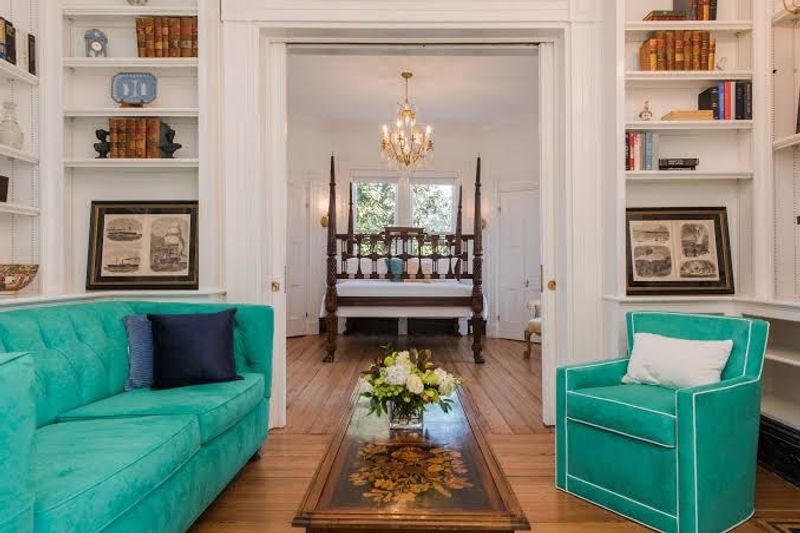
The breeze along the Battery changes the mood of everything nearby. Grand houses face the water with a kind of patient confidence, and this one carries that feeling especially well.
You sense both privilege and survival in the walls.
At 20 South Battery in Charleston, an 1843 mansion eventually found new purpose as a historic hotel after years that included residential life and a tourist motorcourt chapter. The property still centers on the preserved mansion and carriage house, so guests get a strong feeling of stepping into older domestic spaces rather than an ordinary lodging setup.
Outside, the seawall walk, harbor views, and rows of famous homes make it easy to fill an afternoon without rushing anywhere.
Its story is less about one dramatic makeover and more about steady reinvention over time. That makes the stay feel honest.
Travelers who enjoy seeing how old properties adapt to changing eras will find plenty to appreciate, especially in a setting as iconic as South Battery.
The Beaufort Inn
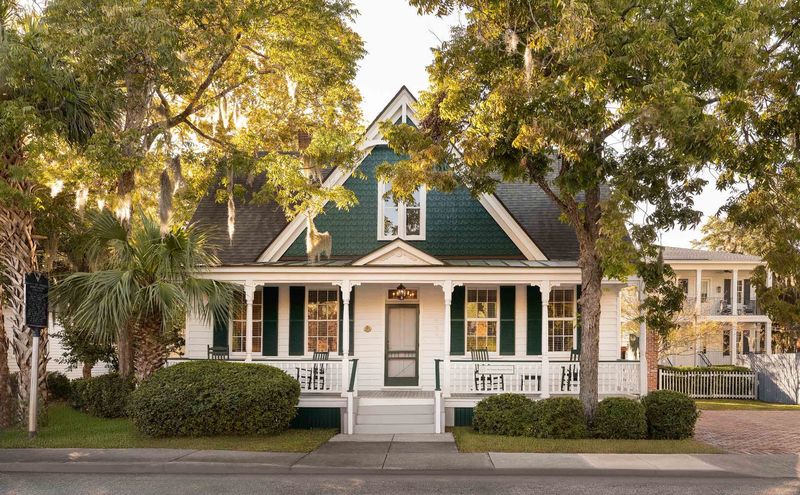
Spanish moss, porch shadows, and a slower pace make Beaufort feel like a place that prefers stories to schedules. In the middle of that gentle setting, this inn fits naturally, as if it had always been waiting to welcome guests.
The old house has grace, but not in a showy way.
The Beaufort Inn began as the Wallace Smith family’s summer mansion in 1897 before growing into a larger hospitality property over time. Its evolution included additional historic houses and cottages, which gives the inn a spread-out, village-like character rather than a single-building feel.
Guests are close to Bay Street, waterfront views, and easy walks past gardens, galleries, and old live oaks.
Because the property expanded through existing historic structures, the experience feels tied to Beaufort itself. You are not isolated from town life.
Instead, you sleep inside it. That balance between comfort, local texture, and a clear second-life story makes the inn especially appealing for travelers who like heritage without stiffness.