Every evening, three young girls in Hartford had one big demand for their famous father. They wanted a brand new story, made up on the spot, using the objects sitting on the fireplace mantel.
He had to start at one end of the shelf and work his way to the other, and he could not skip a single item. That father went on to write books that millions of kids still read in school.
The house where those bedtime contests happened still stands today, carefully restored and open for tours. It holds a library, a billiard room where classics took shape, and stories that surprise even longtime fans.
Keep reading to learn what makes this Connecticut landmark worth a trip, plus smart tips that will help you plan the perfect visit.
A Storybook Address on Farmington Avenue
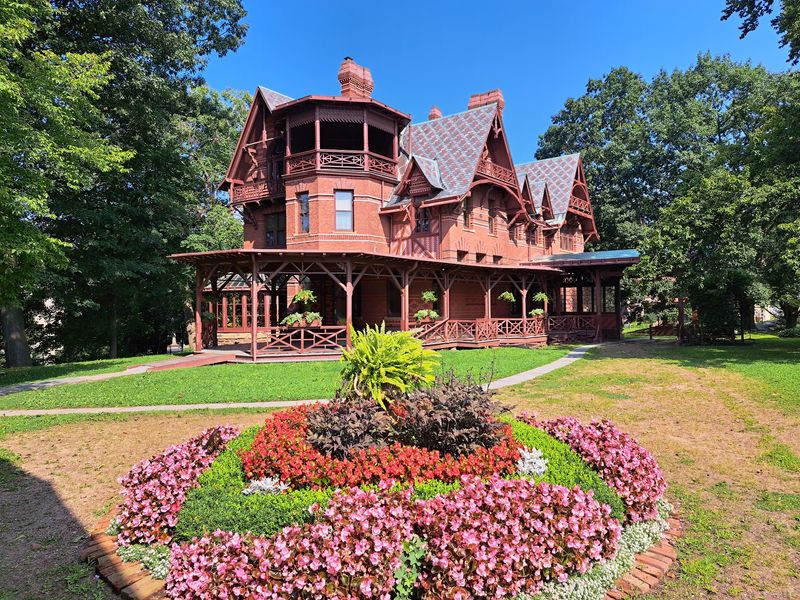
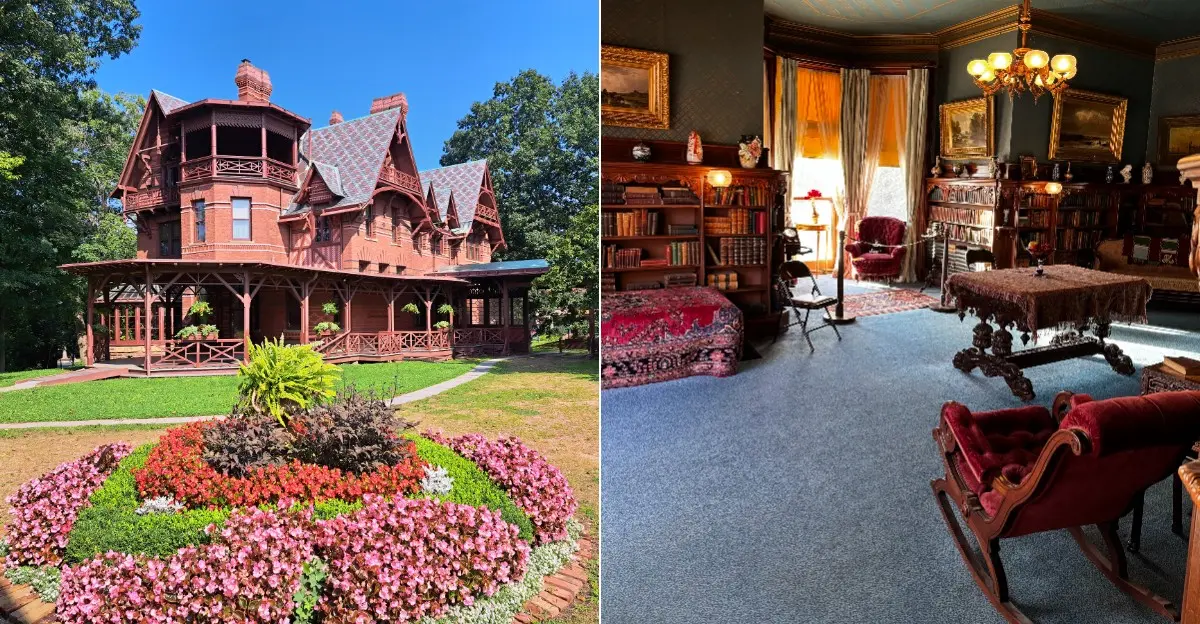
The address that started it all is 351 Farmington Ave, Hartford, CT 06105, in the United States. Here sits The Mark Twain House & Museum, the home where Samuel Clemens, better known as Mark Twain, lived with his family from 1874 to 1899.
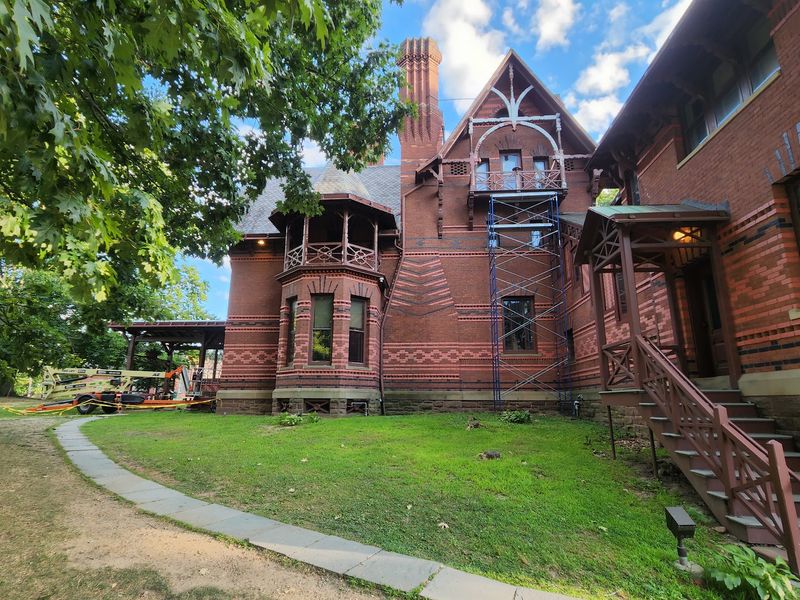
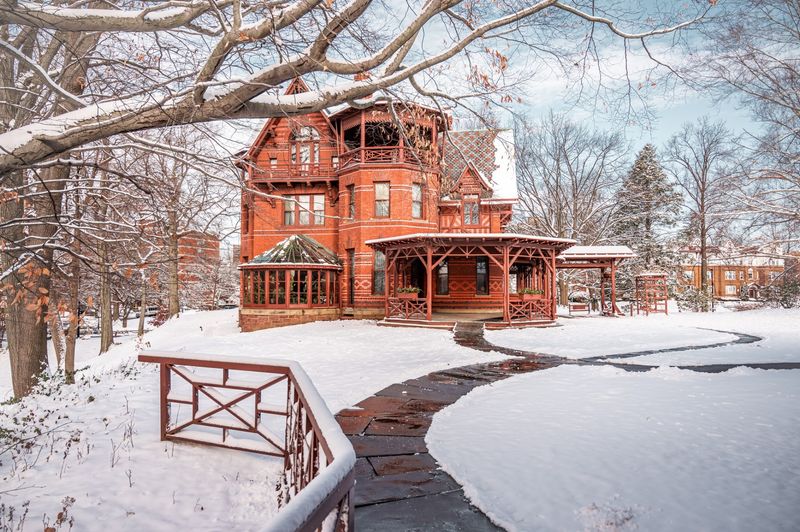
Calling it a house almost undersells it. The building is a Victorian Gothic showpiece with patterned brickwork, steep rooflines, and porches that wrap around the sides.
Twain and his wife, Olivia, called Livy, built the home and raised their three daughters there. Those girls, Susy, Clara, and Jean, filled the rooms with games, plays, and plenty of questions.
The site is often described as the birthplace of Tom Sawyer and Huck Finn. Some of Twain’s most famous characters came to life while he lived under this roof.
Today the property includes the restored home, a museum center, a gift shop, and a small café. It is open every day from 9:30 am to 5:30 pm, so planning a trip fits into almost any week.
Not a bad neighborhood for a legend.
The Mantel That Sparked Bedtime Tales
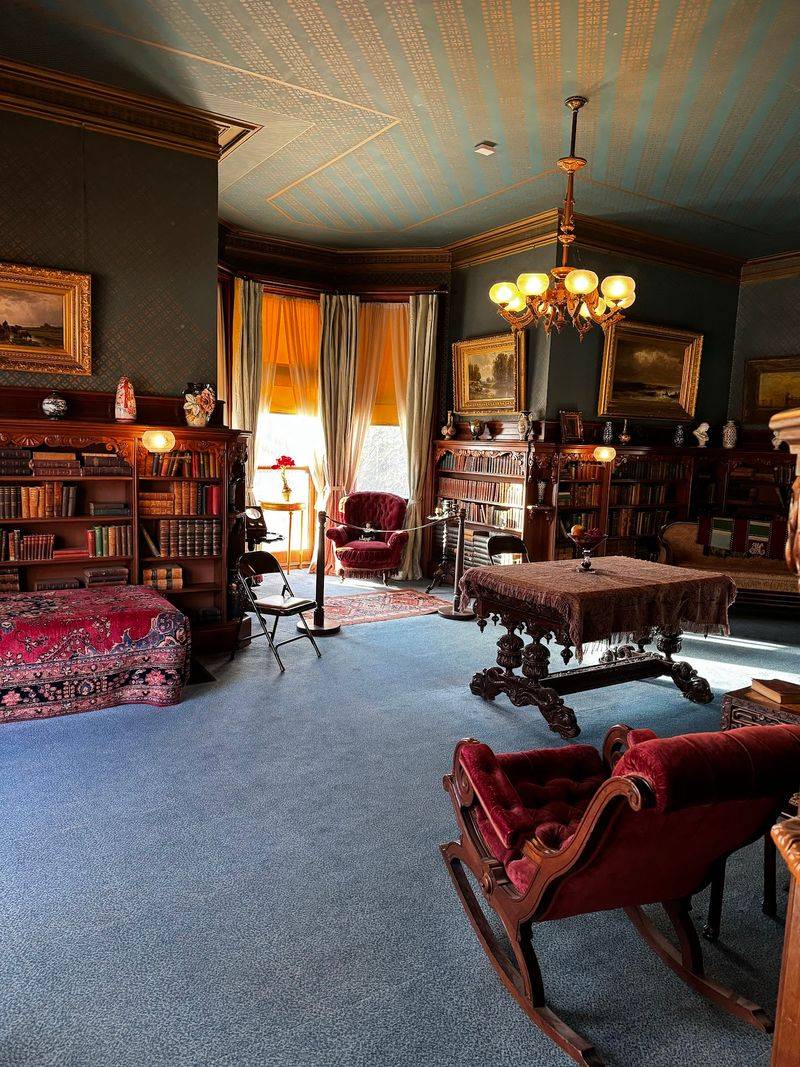
Here is a parenting challenge most of us would fail. In the library, Twain’s daughters asked him to invent stories using the paintings and knickknacks along the carved mantel.
The rule was strict. Each tale had to travel from one end of the shelf to the other, including every single object in order.
Repeating an old story was not allowed either. The girls wanted fresh adventures each time, and their father somehow kept delivering.
The library itself is one of the grandest rooms in the house. Its large carved mantelpiece and rows of shelves made it the heart of family evenings.
Guides often share this story during the tour, and it changes how you see the room. Instead of a fancy space for show, it becomes a place where a world-famous writer practiced his craft on his toughest audience.
Families with young readers might want to try the same game at home afterward. Grab a few items from a shelf and start talking.
Fair warning, kids will hold you to the rules.
Where Huck Finn Got His Start
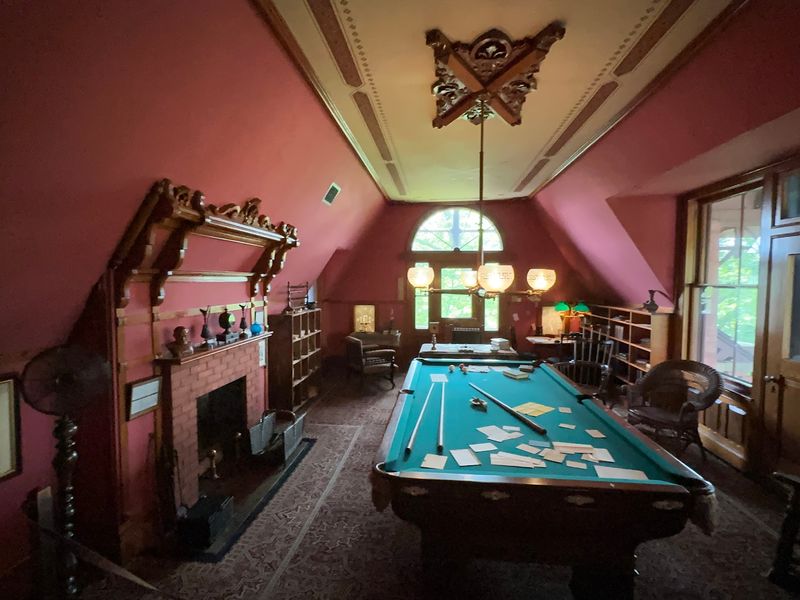
Top floors usually hold dusty storage. In this home, the third floor held a billiard room that doubled as Twain’s writing office.
He wrote at a desk tucked into that space, away from the daily bustle below. Major works connected to his years in Hartford include The Adventures of Tom Sawyer and Adventures of Huckleberry Finn.
Guides point out the spot where he worked, and seeing it helps the books feel more real. Many people on the tour remember reading these stories in school without ever thinking about where they were written.
The billiard table also tells you something about the man. Twain loved the game and often played late into the night with guests.
There was a balcony connected to this level too. Guests cannot stand on it, but guides explain how it fit into his routine.
The room may look playful, but serious work happened there. Classic American literature took shape between games of pool, which proves that breaks can be productive.
Guides Who Bring the Story Home
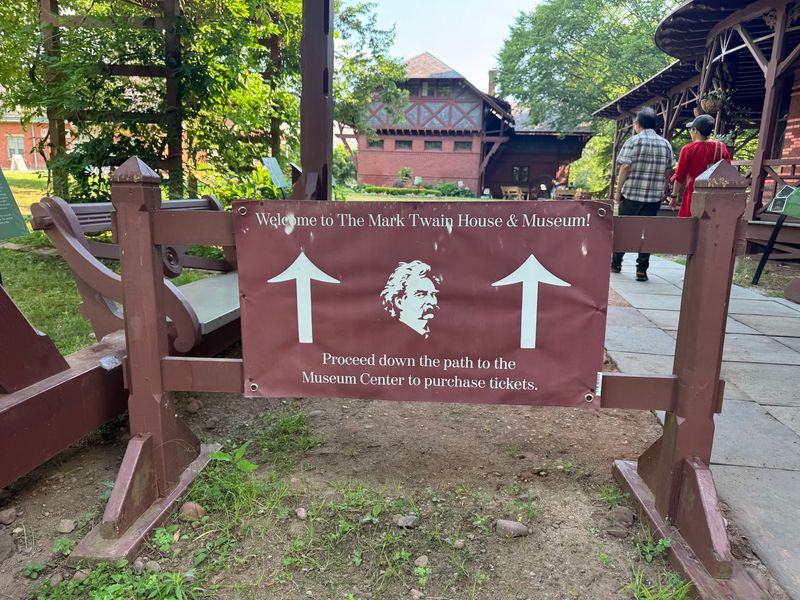
Plenty of museums hand you a map and wish you luck. This one puts you with a guide, and the guides are a major reason the place earns so much praise.
The home can only be explored through guided tours. That setup keeps groups small and gives everyone a chance to ask questions.
Guides here tend to go the extra mile. Some even research new topics after a tour group asks something they want to know more about, such as Twain’s link to Thomas Edison.
They also know how to handle young guests. Little ones get pointed toward safe things to look at, which keeps the rooms protected and the kids happy.
Expect to learn about Twain as a father, husband, inventor, and neighbor, not just as a writer from your English class. Many leave wanting to pick up one of his books again.
So go ahead and ask the odd question you have been holding onto. Odds are good your guide has an answer ready.
Meet Livy, or Maybe the Maid
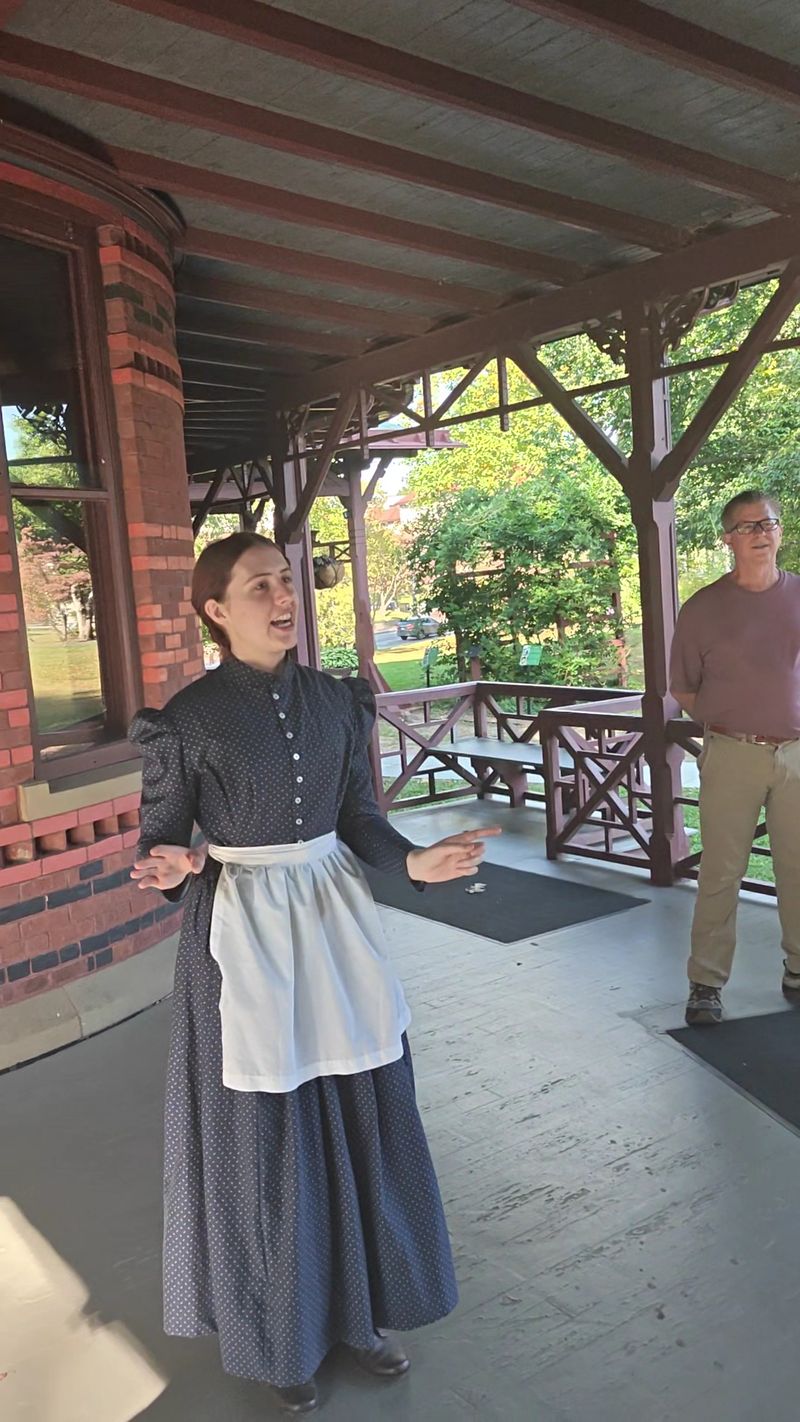
History gets a lot livelier when someone from the past greets you at the door. The Living History Tour is led by a costumed actor playing a person from the Clemens household.
Your guide might be Livy, Twain’s wife. On other tours, the role might be one of the household staff, such as a maid who worked in the home.
Each character shares events, family moments, and details about the furniture and objects from their own point of view. That angle makes the rooms feel lived in rather than frozen in time.
The character tour costs a bit more than the general tour. Many guests say the extra money is well spent, especially for groups that enjoy a bit of theater.
Kids and teens who usually yawn at museums often perk up here. A person in costume speaking as a family member is hard to ignore.
Choose the general tour for straightforward facts. Choose the living version if you want history with a little drama mixed in.
Stenciled Walls and a Daughter’s Help
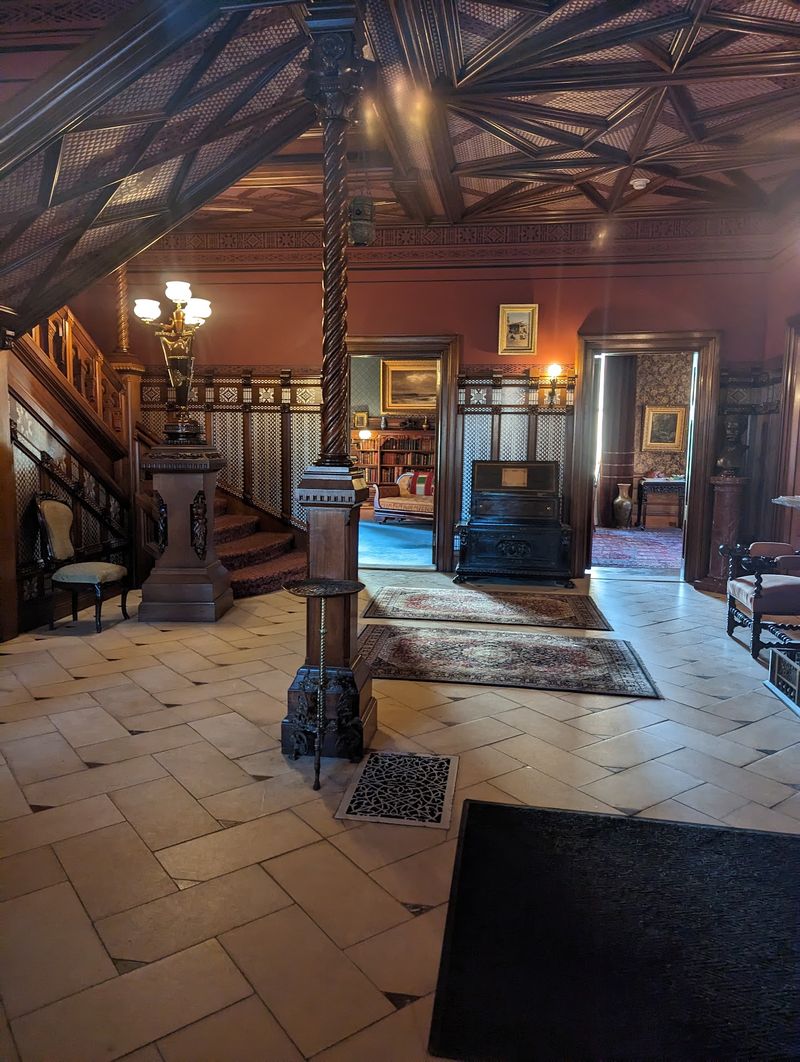
Restoring a home this detailed is no small chore. Patterned stenciled walls, carved woodwork, and rich decorative touches appear throughout the rooms.
The Clemens family hired designers to give the interior its fancy look. Wood paneling covers so many surfaces that it is easy to see the house was a costly project.
Here is a detail many people find touching. Clara Clemens, one of the daughters, helped with efforts to recreate the home as it once was.
Her memories helped experts understand how rooms were set up when the family lived there. That kind of firsthand help is rare for historic homes.
Some original family furniture is also on display. Other pieces match what the family would have owned during their Hartford years.
The interior is on the darker side, a style popular in that era. One fun theory jokes that this is why Twain liked wearing white suits later on.
Look closely at the walls during your tour. The patterns hold more stories than a quick glance suggests.
Twain the Inventor and Investor
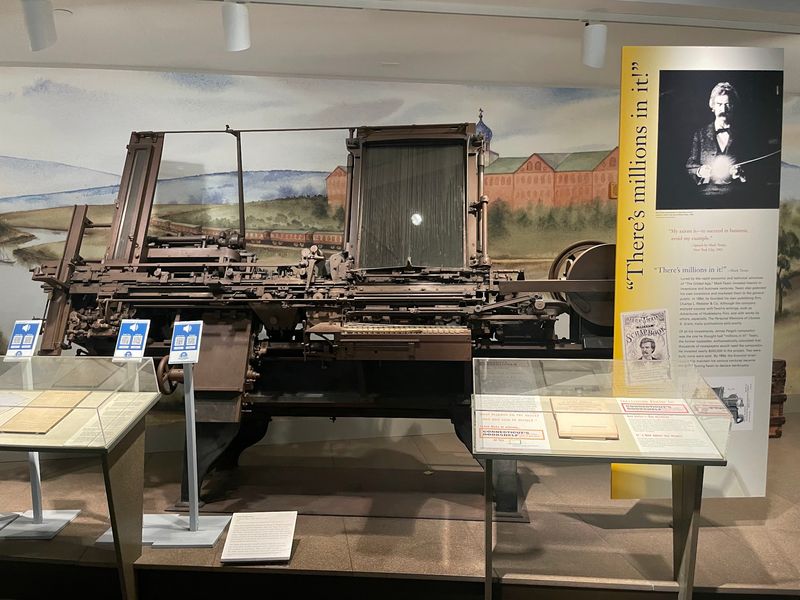
Few people know that Mark Twain held three U.S. patents under his real name. The museum center helps fill in this surprising side of his life.
One invention was a self-pasting scrapbook. Its pages had dry glue already on them, so you only needed to wet the page to stick in a clipping.
That scrapbook became his most successful idea and sold over 25,000 copies. He also patented an adjustable strap for clothing and a history memory game.
Not every idea worked out so well. Twain poured huge sums into the Paige Typesetter, a complicated printing machine that kept breaking down.
A simpler machine called the Linotype beat it to market. The money troubles that followed played a part in the family leaving Hartford.
The museum center also displays artifacts from the period and artwork inspired by people from Twain’s time. Admission for exhibits alone is available if you want to explore without a house tour.
Genius, it turns out, can come with a few costly misprints.
Camera Off, Eyes Open
Phones stay in pockets once the tour heads indoors. Photos and videos are not allowed inside the house.
Some guests feel a little let down by this rule at first. Many end up glad, since it keeps everyone focused on the guide and the rooms.
The policy also helps protect the delicate interior. Ropes block parts of certain rooms for preservation, though guides often let you peek in for a good look.
Outside is a different story. Photos are welcome on the grounds, and the brick exterior makes a great backdrop.
The museum center exhibits are also a spot where many people snap pictures. You can still leave with plenty of memories saved on your phone.
A useful approach is to take your outdoor shots before the tour starts. That way you are not rushing afterward.
Consider jotting down your favorite room in a notes app once you finish. Many guests name the library or family spaces as highlights.
Some moments are better kept in your head anyway.
Spooky Season on Farmington Avenue
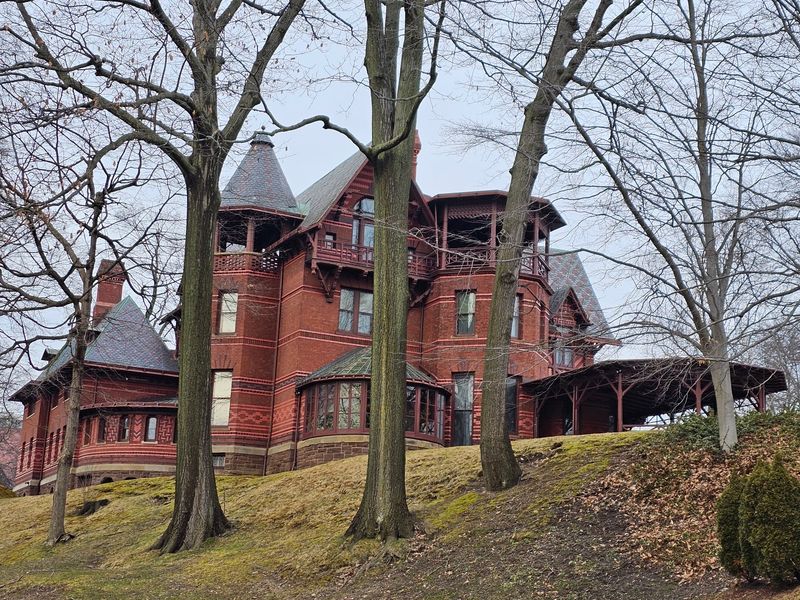
Old Victorian homes have a way of inviting rumors. This one is often listed among the most haunted homes in America.
The museum leans into that reputation with special ghost tours. These evening events offer a different spin on the house and its history.
Do not expect a horror movie. Most guests simply learn about the home and its past during these tours, with the spooky stories adding extra fun.
Ghost tours are popular, especially around Halloween. Booking ahead is the safest way to grab a spot before they fill up.
The Gothic style of the building adds to the mood. Steep rooflines and dark interiors make it easy to see why legends grew.
Families with older kids may enjoy this option the most. Younger children might prefer a daytime visit with a guide in costume.
Skeptics and believers both tend to leave satisfied. Even if nothing goes bump, the stories behind the house are worth hearing.
Bring curiosity, and leave the ghost hunting gear optional.
Smart Moves Before You Go
A little planning goes a long way here. Buy tickets online ahead of time, since some people arrive and find tours already full.
Same-day online booking can work if spots remain. Still, weekends and holidays are safer with an advance reservation.
Parking is free and easy to find, though the lot sits a short walk from the house. Clear signs point the way.
Public transit is an option too. Bus 66 stops nearby, which helps if you are exploring Hartford without a car.
The museum center has an elevator, clean restrooms, a small café, and a well stocked gift shop. Wheelchair users can access the first floor of the house.
Plan for at least an hour or more. The grounds around the carriage house are pleasant for a stroll after your tour.
The Harriet Beecher Stowe House is right next door. History fans can easily pair the two for a full afternoon.
Twain once raised a family full of stories here. Your visit just adds one more chapter.