Tucked into the Blue Ridge foothills of western North Carolina, Saluda is one of the smallest incorporated towns in the entire state, yet it carries a story far bigger than its size suggests.
With a population of just a few hundred people, this mountain community has held onto its railroad roots, its scenic charm, and its small-town spirit for well over a century.
Visitors who stumble upon Saluda often leave surprised by how much history, beauty, and personality can fit into just a few blocks.
Whether you love trains, mountain views, or quiet getaways, Saluda has something genuinely worth discovering.
Saluda’s “Smallest Incorporated Town” Identity
Few towns wear their small size as proudly as Saluda, North Carolina. With only a few hundred permanent residents, Saluda is regularly cited as one of the smallest incorporated towns in the state.
Yet despite its modest population, it functions with a full town government, elected officials, and a community that takes local identity seriously.
What makes this especially interesting is how Saluda manages to feel complete. Main Street has real businesses, a post office, community events, and a social calendar that keeps locals engaged year-round.
The town does not feel like a ghost town or a forgotten place. It feels very much alive.
Mountain living shapes everything here. Residents value quiet, clean air, and strong neighbor connections over big-city conveniences.
Many people choose Saluda precisely because of what it lacks: traffic, noise, and the rush of modern urban life. That intentional simplicity is part of its identity.
Saluda proves that a town does not need to be large to have real character, real governance, and a genuine sense of belonging that keeps people rooted for generations.
A Historic Mountain Gateway in the Blue Ridge
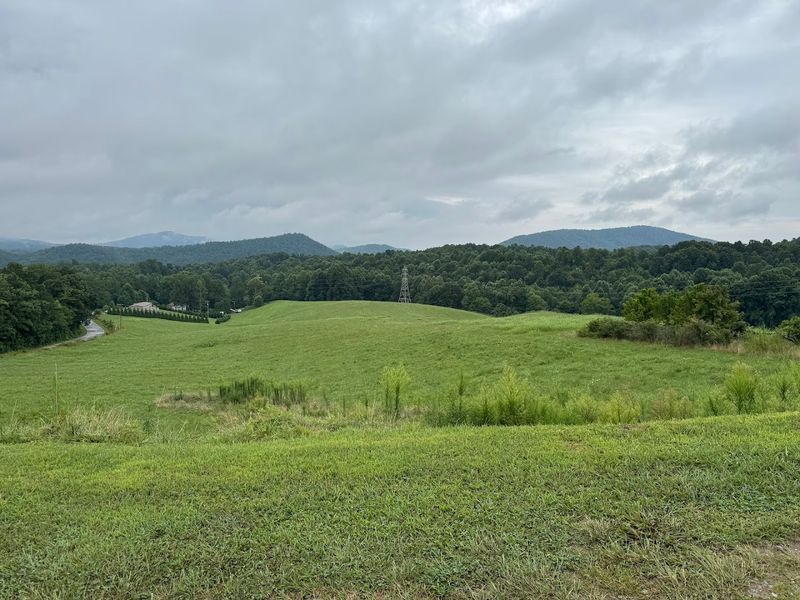
Perched at more than 2,000 feet above sea level, Saluda occupies a dramatic spot along the Blue Ridge foothills where the land rises sharply and the views open wide. The surrounding Appalachian landscape stretches in every direction, offering a visual feast of forested ridgelines, deep valleys, and distant peaks that change color with each season.
Cool temperatures are one of Saluda’s biggest natural gifts. Even during the hottest months, the elevation keeps things noticeably cooler than the lowland cities of the Carolinas.
That natural air conditioning made Saluda a popular retreat long before modern tourism existed. Wealthy families from Charlotte, Greenville, and Columbia once flocked here each summer just to escape the sweltering heat below.
The geography also gives Saluda its distinctive personality. Roads curve around hillsides, properties tuck into ridges, and the whole town feels nestled rather than sprawling.
There is a sense of being cradled by the mountains rather than simply sitting near them. For anyone who loves dramatic scenery without the crowds of larger mountain destinations, Saluda delivers an authentic Blue Ridge experience that feels refreshingly unhurried and genuinely breathtaking at almost every turn.
The Arrival of the Railroad Changed Everything (1878)
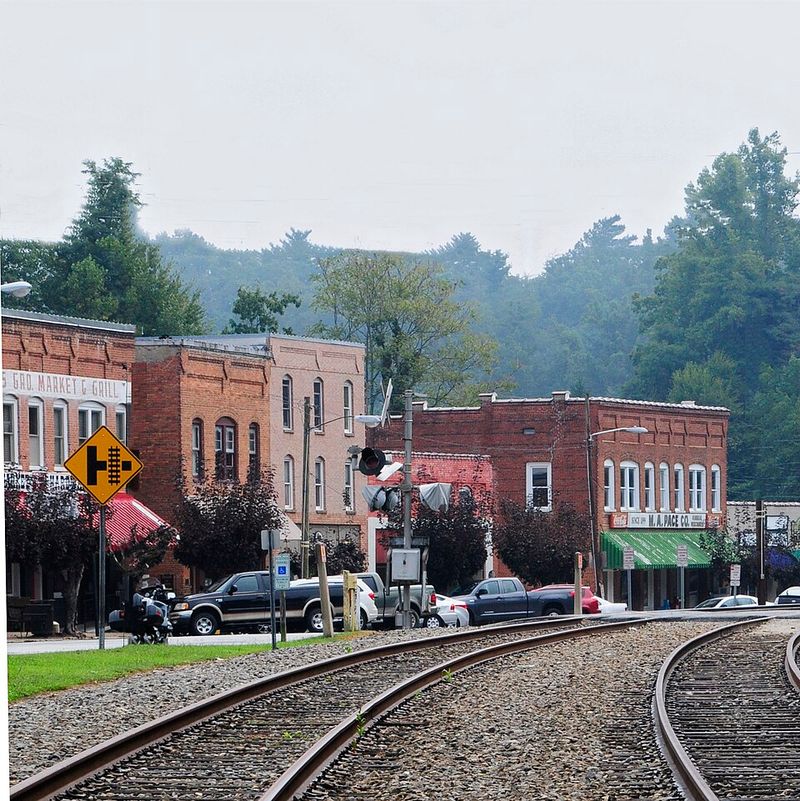
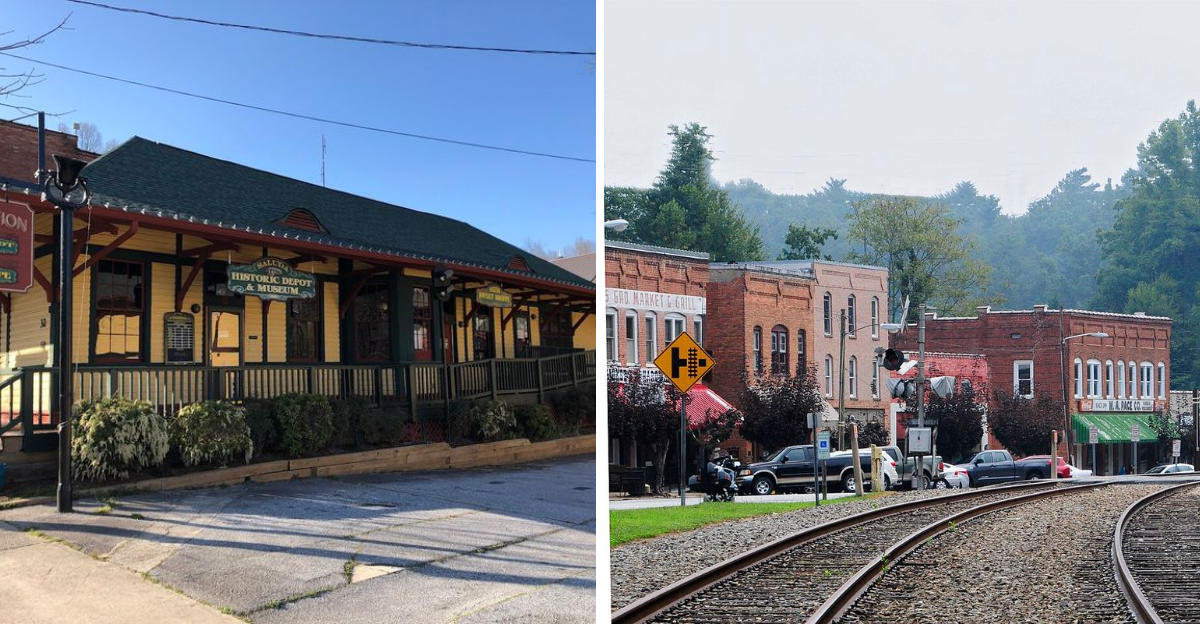
Before the railroad came, Saluda was little more than a remote mountain settlement with limited connections to the outside world. That all changed in 1878 when the Asheville and Spartanburg Railroad pushed its tracks through the rugged terrain of the Blue Ridge foothills.
The arrival of the railroad was not just a transportation upgrade. It was a total transformation of daily life.
Suddenly, goods that once required days of difficult wagon travel could arrive in hours. Farmers gained access to wider markets.
Merchants could stock their shelves more reliably. And perhaps most significantly, the railroad brought outsiders into Saluda for the very first time in meaningful numbers.
Tourists, business travelers, and summer visitors began streaming in almost immediately.
The economic ripple effect was enormous for such a small place. Hotels, boarding houses, and shops sprang up to serve the new flow of visitors.
The town began organizing itself around the rhythms of train arrivals and departures. That 1878 connection to the Asheville and Spartanburg Railroad essentially created the Saluda that exists today.
Without those tracks cutting through the mountains, this tiny community might have remained an obscure footnote in Appalachian history rather than a beloved mountain destination.
Home of the Legendary Saluda Grade
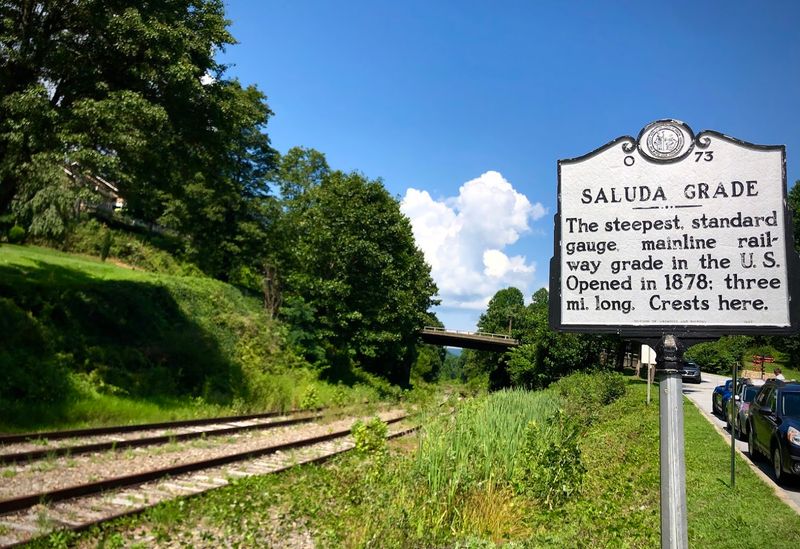
Just outside the quiet center of Saluda lies one of the most remarkable feats of American railroad engineering: the Saluda Grade. For much of its operational history, it held the title of the steepest standard-gauge mainline railroad grade in the entire United States.
That is not a small distinction. Railroads across the country dealt with mountains, but few tackled anything as steep as what the tracks outside Saluda had to climb.
The grade reaches an incline of nearly four to five percent in certain sections. To put that in perspective, most mainline railroads avoid grades steeper than two percent whenever possible.
Engineers consider anything above two percent a serious challenge for heavy freight trains. The Saluda Grade more than doubled that threshold, making every trip up or down the mountain a high-stakes mechanical challenge.
Train crews who worked the grade developed specialized skills and routines just to survive the run safely. Extra locomotives were often added for uphill climbs, and careful braking procedures were essential on the way down.
Railfans from across the country traveled to Saluda just to watch trains tackle the grade. Even after the line stopped carrying regular traffic, the grade remained a point of enormous pride for the community and a magnet for railroad history enthusiasts.
Engineering Feat: Built Straight Up the Mountain
When railroad engineers faced the challenge of crossing the Blue Ridge in western North Carolina, they had two basic options: tunnel through the mountain or climb over it. Tunneling would have been expensive and time-consuming.
The decision to go straight up the mountain face instead was bold, risky, and ultimately legendary. The resulting track became one of the most technically demanding pieces of railroad ever constructed in the American South.
Sharp curves were unavoidable. The grade required tight bends that forced trains to slow dramatically.
The limited right-of-way left almost no margin for mechanical failure. Every trip demanded precision from the crew, reliable equipment, and a deep understanding of how the mountain behaved in different weather conditions.
Rain, ice, and fog each added new layers of danger to an already unforgiving stretch of track.
Railroad historians often point to the Saluda Grade as a prime example of practical ingenuity under extreme geographic constraints. Builders worked with what the mountain gave them rather than reshaping the terrain entirely.
The result was a raw, uncompromising piece of infrastructure that demanded respect from every crew member who worked it. That spirit of rugged problem-solving mirrors the character of Saluda itself, a town that has always made the most of a challenging but beautiful landscape.
Runaway Trains and Railroad Danger
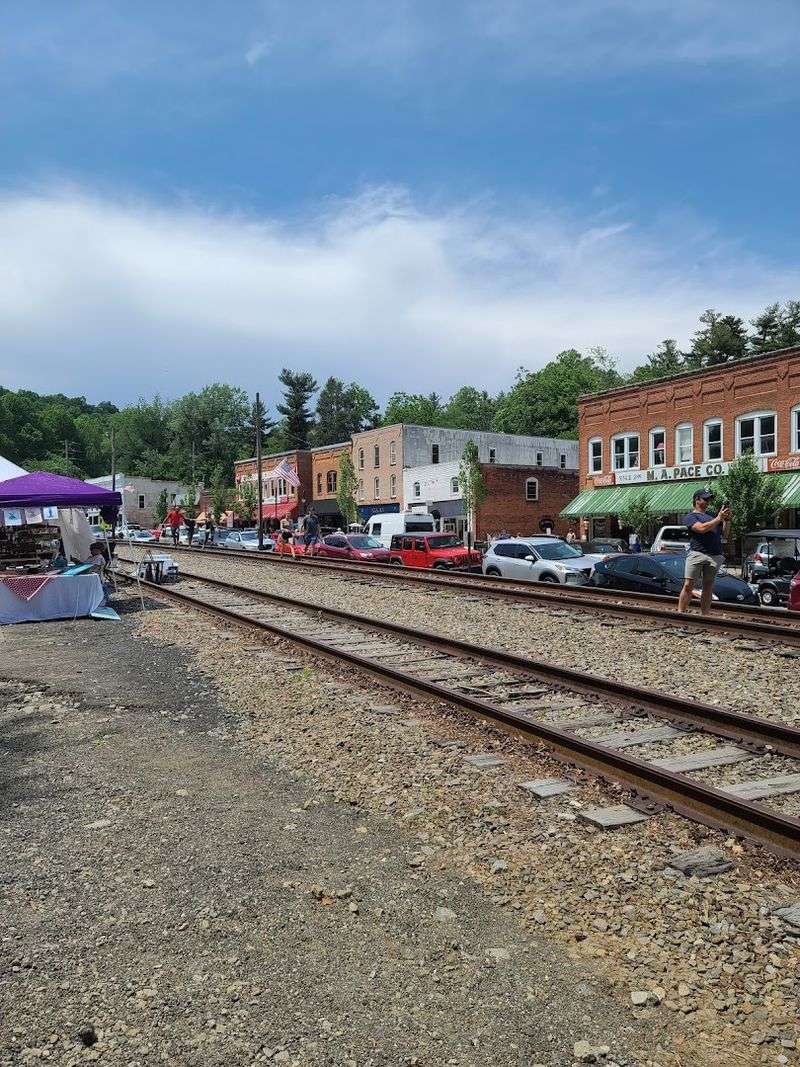
The Saluda Grade did not just challenge engineers during construction. It continued to test crews for decades after the tracks opened.
The steep descent created dangerous conditions for heavily loaded freight trains, and runaway incidents became a grim reality of life on this stretch of railroad. Brakes could overheat, fail, or simply prove insufficient against the relentless pull of gravity on a fully loaded car.
Runaway train events were terrifying. A consist that lost braking power on the Saluda Grade could accelerate rapidly, leaving crew members with almost no options.
Derailments and crashes were not hypothetical dangers. They happened.
Workers and passengers lost their lives on this stretch of mountain track, and the railroad community took those losses seriously.
To address the danger, engineers designed and built emergency runaway safety tracks, sometimes called escape sidings or safety spurs. These short sections of track branched off the main line and curved uphill into a dead end, using gravity itself to slow and stop a runaway train before it reached the valley below.
The safety tracks were a clever and practical solution to a genuinely life-threatening problem. They stand as a testament to the ingenuity of the people who operated the Saluda Grade during its most active and dangerous years.
A Railroad Town That Became a Tourism Stop
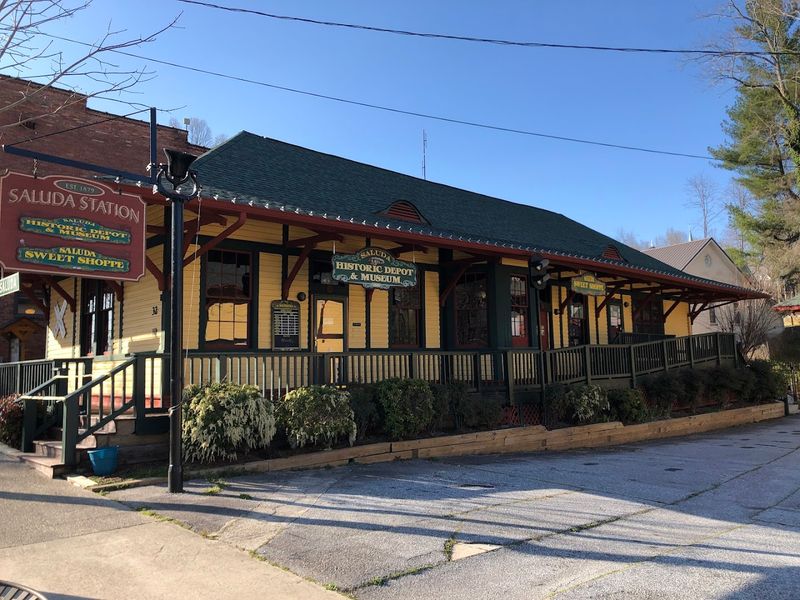
Once passenger trains began making regular stops in Saluda, the town’s identity shifted in a fascinating way. What had started as a railroad supply and shipping point gradually reinvented itself as a mountain retreat.
Wealthy families from the hot, humid lowlands of South Carolina and Georgia discovered that a short train ride could deliver them to cool mountain air and stunning scenery. Word spread fast.
Hotels and boarding houses multiplied along Main Street and the surrounding hillsides. Local families opened their homes to summer guests, creating an informal bed-and-breakfast culture long before that phrase existed.
Saluda became part of a broader network of Appalachian resort towns that catered to the growing American appetite for nature-based leisure during the late 1800s and early 1900s.
The tourism economy softened the rougher edges of railroad-town life. Shops became more refined, local cuisine evolved, and the social scene grew livelier during the summer months.
Saluda learned to balance its working-class railroad identity with the expectations of leisure travelers, a balancing act that the town continues to manage today. That long history of welcoming visitors gives modern-day Saluda a practiced hospitality that feels natural rather than forced, like a town that has always known how to make guests feel at home.
Downtown Saluda’s Walkable Historic Core
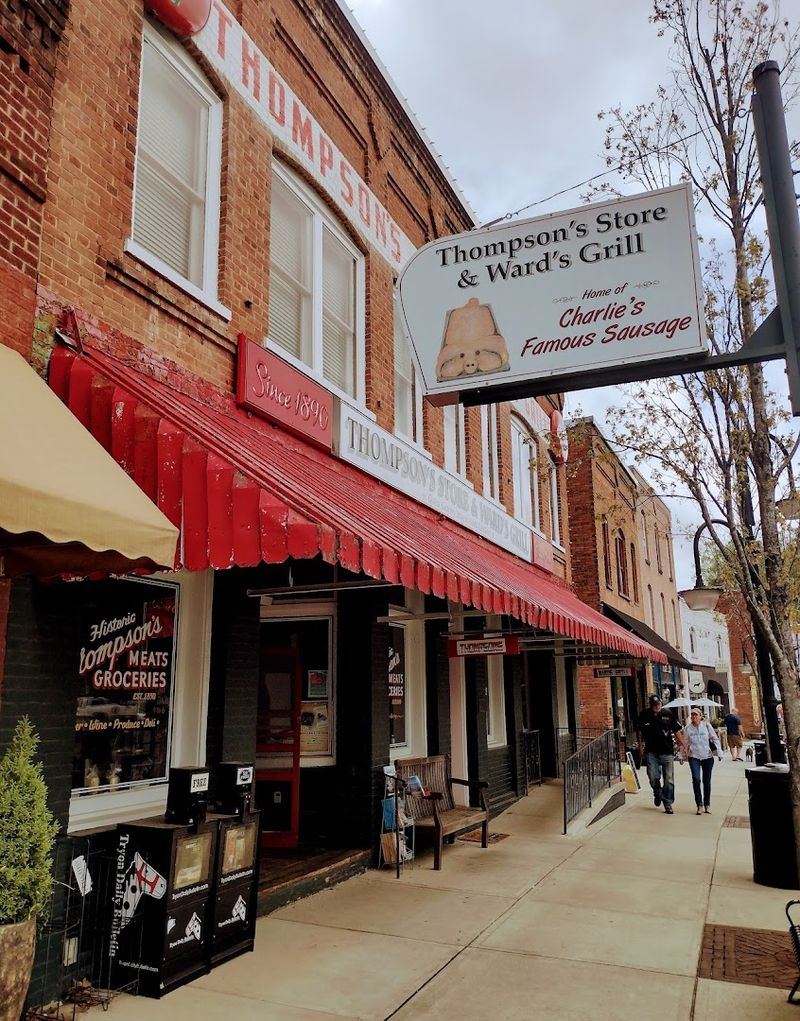
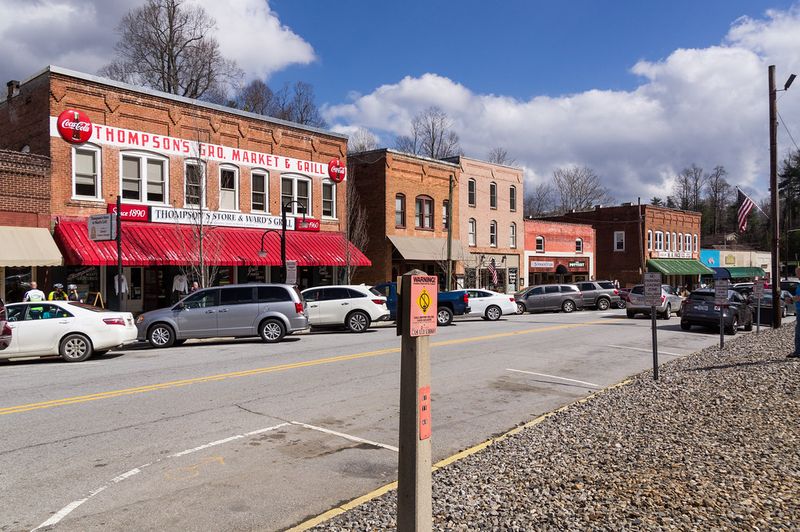
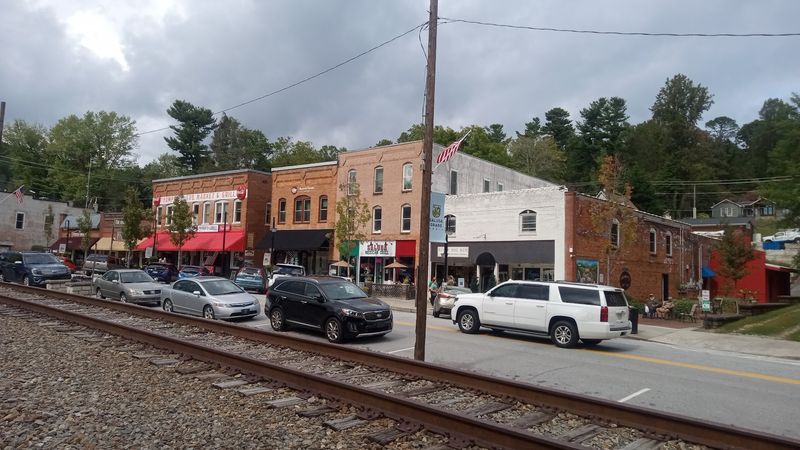
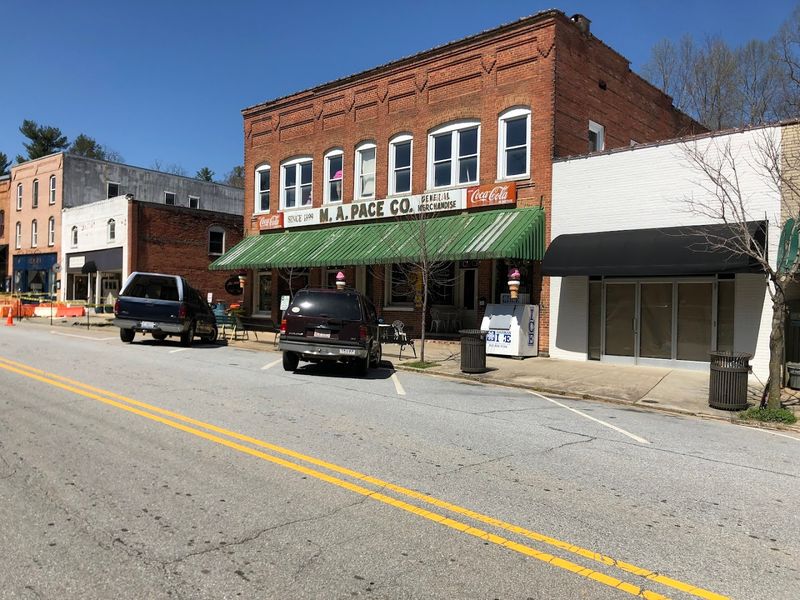
Main Street in Saluda is the kind of place that slows people down in the best possible way. The buildings are old, the sidewalks are narrow, and the whole strip can be walked end to end in just a few minutes.
But those few minutes are packed with character. Brick facades from the railroad era line both sides of the street, and many of the original structures have been preserved or lovingly restored rather than replaced.
Independent shops anchor the experience. You will find art galleries displaying work by regional Appalachian artists, small cafes serving locally sourced food, and specialty stores carrying handmade goods that reflect the mountain culture of western North Carolina.
There are no chain restaurants or big-box stores competing for attention. The downtown belongs entirely to locally owned businesses, which gives it an authenticity that is increasingly rare.
Weekend visitors tend to drift slowly from shop to shop, stopping to chat with owners who are genuinely knowledgeable about their products and proud of their community. Benches and open stoops invite people to sit, rest, and simply take in the atmosphere.
That unhurried quality is not accidental. It is the natural result of a town that has never tried to grow faster than its landscape and history would comfortably allow.
Outdoor Recreation All Around Town
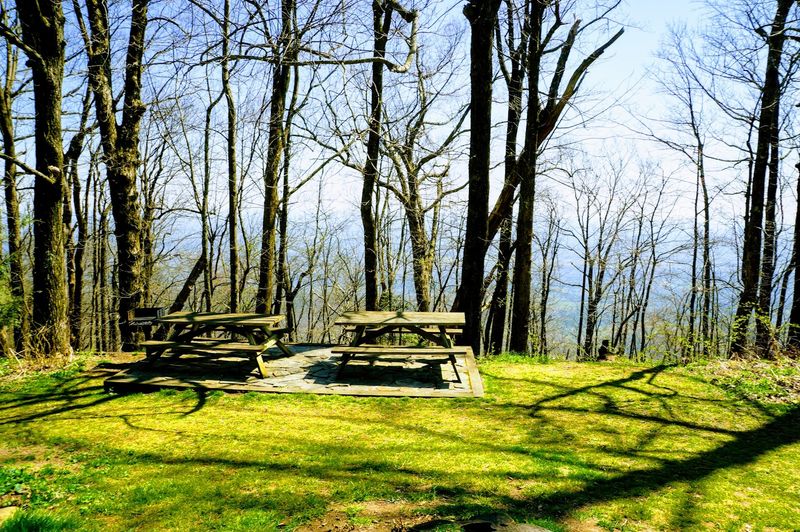
Step outside Saluda’s tiny downtown and the natural world takes over almost immediately. The town sits at the edge of a vast network of forests, rivers, and mountain terrain that offers outdoor activities for every skill level and interest.
Hikers, paddlers, cyclists, and wildlife watchers all find reasons to linger in this corner of western North Carolina well beyond a single afternoon.
Nearby waterways attract anglers and kayakers looking for moving water with genuine personality. The Green River, located just a short drive from town, is well known among whitewater enthusiasts for its exciting rapids and beautiful gorge scenery.
Calmer stretches of river appeal to those who prefer floating quietly through forested corridors while watching for herons and turtles along the banks.
Hiking trails fan out in multiple directions from Saluda, ranging from easy woodland walks to more demanding ridge climbs with rewarding summit views. Waterfalls are never far away in this part of the Appalachians, and several can be reached on day hikes accessible to families with children.
The combination of accessibility and variety makes Saluda an ideal base camp for nature-focused travel. You do not need to go far to find something wild, beautiful, and worth exploring in every direction from this small mountain town.
Visitor Info: Small Town, Big Experience
Planning a trip to Saluda does not require complicated logistics, and that simplicity is part of its appeal. The town is easy to reach from major cities like Asheville, Greenville, and Charlotte, making it a practical weekend getaway for a wide range of travelers.
Once you arrive, everything worth seeing and doing is either walkable or within a short drive.
Lodging options range from charming bed and breakfasts to vacation rentals tucked into the surrounding mountain neighborhoods. Many accommodations lean into the historic character of the area, offering guests a sense of stepping back in time without sacrificing modern comforts.
Booking ahead is strongly recommended during peak fall foliage season, when demand for rooms in small mountain towns like Saluda tends to outpace supply quickly.
Dining in Saluda leans toward comfort food with local flair. Small restaurants and cafes serve hearty meals that reflect the agricultural traditions of the western North Carolina mountains.
The pace of a meal here matches the pace of the town: unhurried, warm, and satisfying. Whether you come for the railroad history, the mountain scenery, or simply the chance to slow down in a place that has never been in a hurry, Saluda delivers an experience that feels genuinely memorable without ever feeling manufactured.