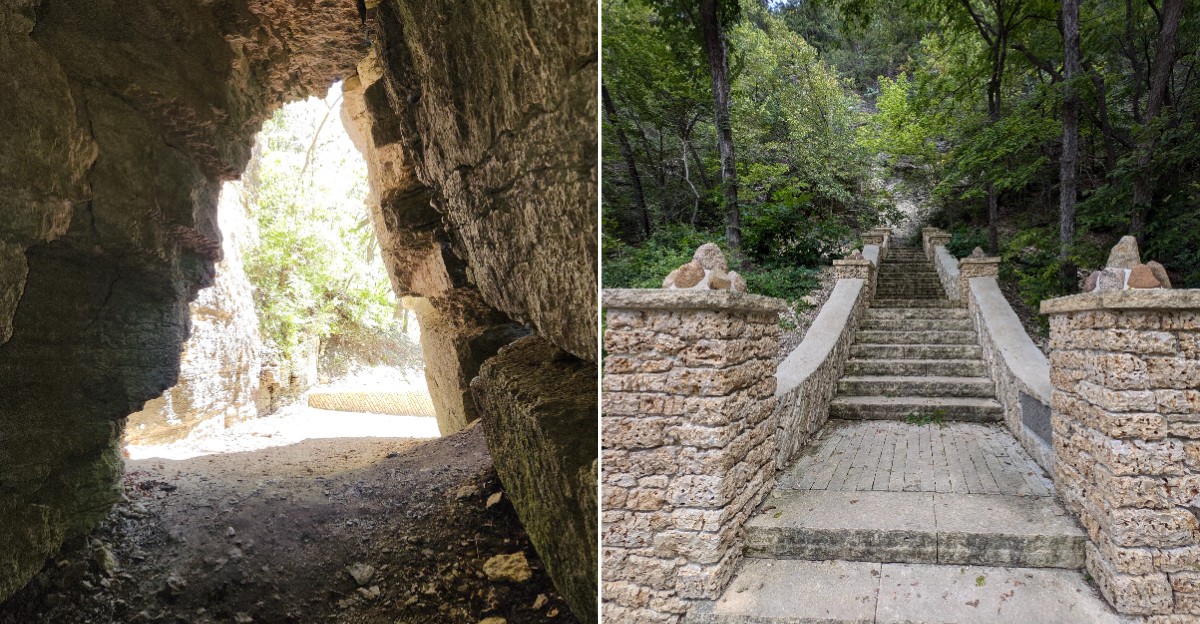
Summer can be in full swing in northeast Iowa while a small cave on a Decorah hillside still holds onto its ice.
The walk there is short and free, and kids tend to call it the best adventure of the day.
A quiet road, a set of old stone steps, and a dark limestone opening are all part of the trip.
The sections below cover where to park, when the ice shows up, what lives in the back of the cave, and how to plan an easy outing that fits a busy day in town.
Where the Cold Hides in Plain Sight
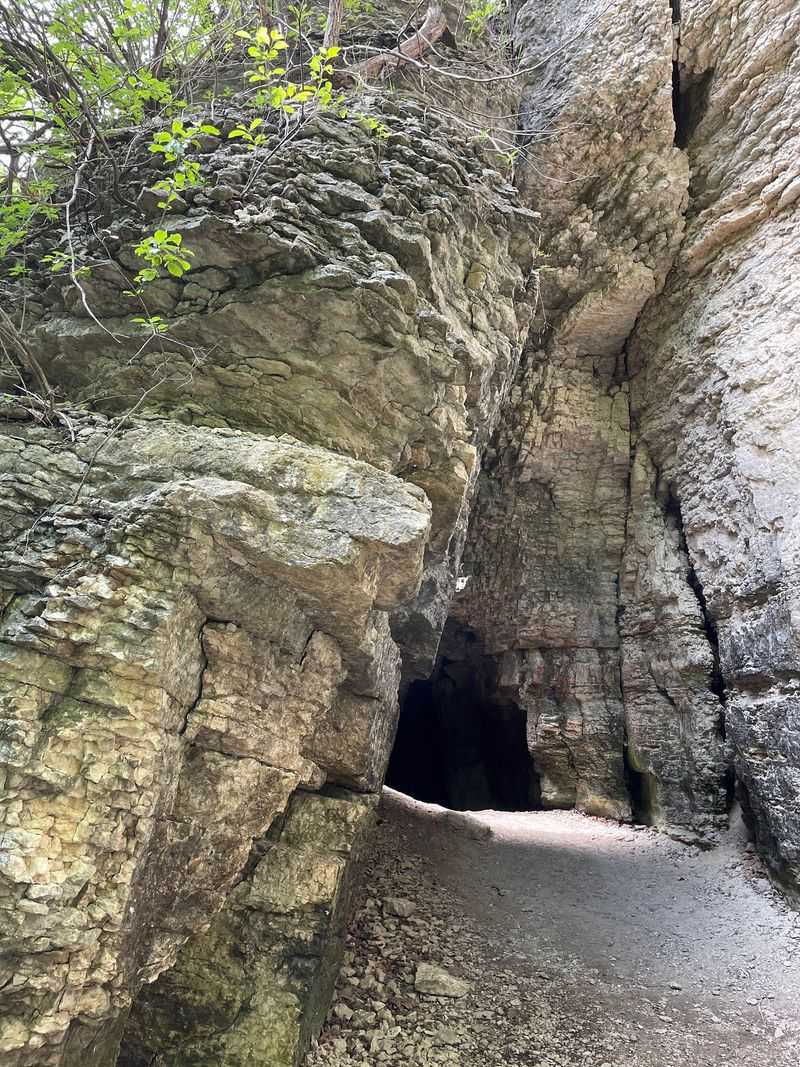
Tucked into a bluff on the edge of town, Ice Cave Hill Park sits at 2559-2539 Ice Cave Rd, Decorah, IA 52101, in the northeast corner of Iowa. It is a city park run by Decorah, and it covers about 105 acres of woods, rock, and trails.
The star of the show is a cave in the limestone cliff that stays chilly well into the warm months. Ice can linger inside long after the snow has melted from the yards in town.
The park is open every day from 7 am to 11 pm. There is no fee to visit, which makes it an easy add to any Decorah day trip.
Beyond the cave, the grounds include walking trails, a nearby waterfall area, and visitor facilities. Many people pair it with other parks close by.
Plan for a short visit if you only want the cave, or stay longer to hike. Either way, the hillside has a way of making a quick stop feel like a real outing.
A Road Built for Feet Now
Cars used to roll right up the hill, but those days are on pause. Erosion and road slippage closed part of Ice Cave Road, and now that stretch is open only to foot traffic and bikes.
The good news is that the pavement is still there. That means the walk is mostly smooth, with no roots or mud to dodge along the way.
Distance depends on where you start. From the Dunning’s Springs area, plan on roughly half a mile each way, while parking closer to the roadblock cuts it down a lot.
Stay on the road itself. The land on either side is private property, so wandering off the pavement is not allowed.
Little legs may grumble a bit, since the route can feel like a long stroll beside a road. A snack and a promise of a cold cave at the end usually helps.
Think of the walk as a warm-up, because the steepest part is still ahead.
Parking Smarts Save Steps
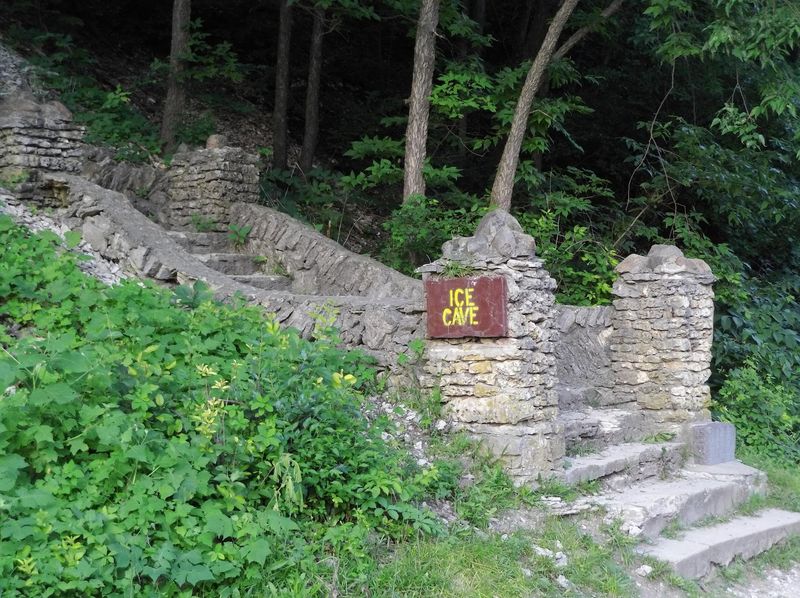
Here is a tip that can save a lot of backtracking. The cave shares a parking area with Dunning’s Springs, the waterfall spot just down the road.
Many people park on the waterfall side and walk up from there. It is simple, and you get to see the falls before or after the cave.
Another option is parking about half a mile west along Ice Cave Road. Some also come in from the west by way of Palisade Park.
Signage has not always been clear in the lot. A common mistake is taking the trail along the river, which can lead past the cave and force a long loop back.
The easiest plan is to follow the blocked-off paved road. It leads straight to the stairs below the cave.
If you want the shortest walk, try driving to the end of the open road near the roadblock. From there, it is only a few yards to the start of the climb.
Old Stone Steps With a Story
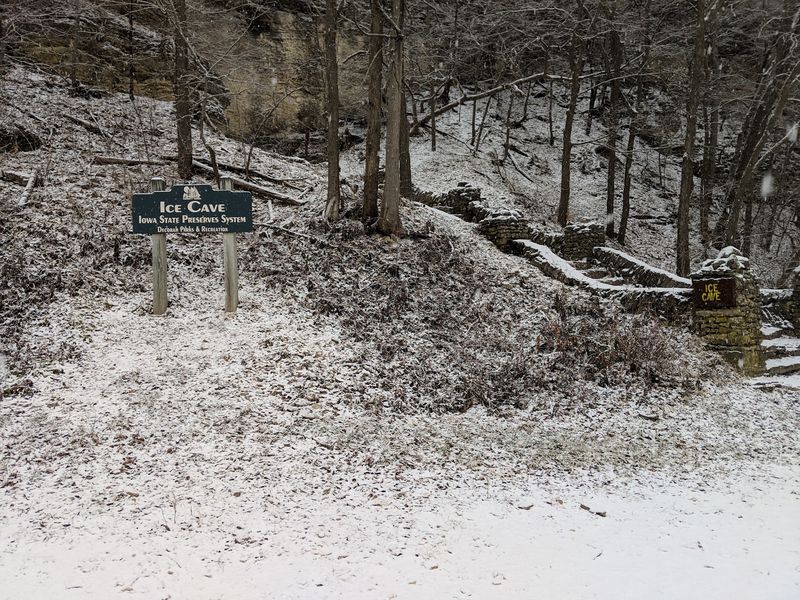
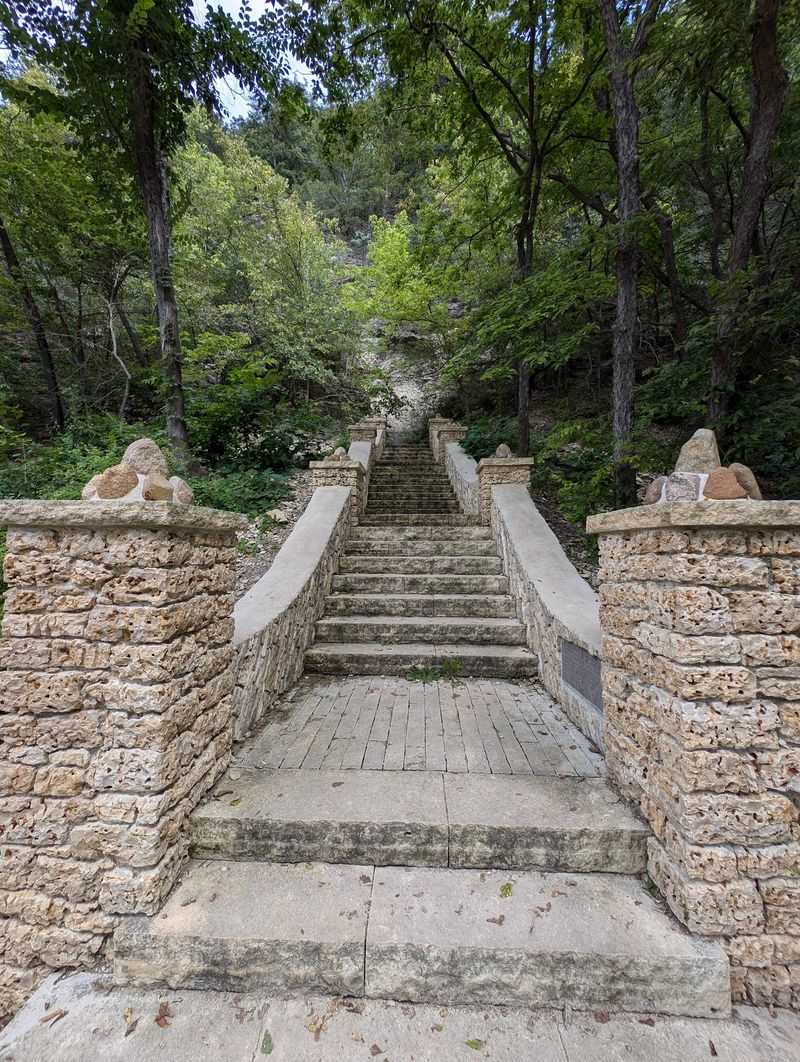
History waits at the base of the cliff in the form of a steep stone staircase. These historic steps carry you up the last stretch to the cave mouth.
One flight is all it takes. Most people reach the opening in a minute or less once they start climbing.
The stairs have needed some care over the years. At one point the stone entrance steps were being rebuilt, though the cave stayed open during the work.
Some sections have been crumbly in the past, so take your time. Hold small hands and watch each step, especially on the way down.
Good shoes matter here more than anywhere else on the trip. Sandals and slick soles are not a great match for old stone.
Part of the fun is knowing people have climbed these same steps for generations to peek inside. It gives the short climb a feeling of being part of something long-running.
At the top, the cave opens up and the air changes fast.
Why the Ice Sticks Around
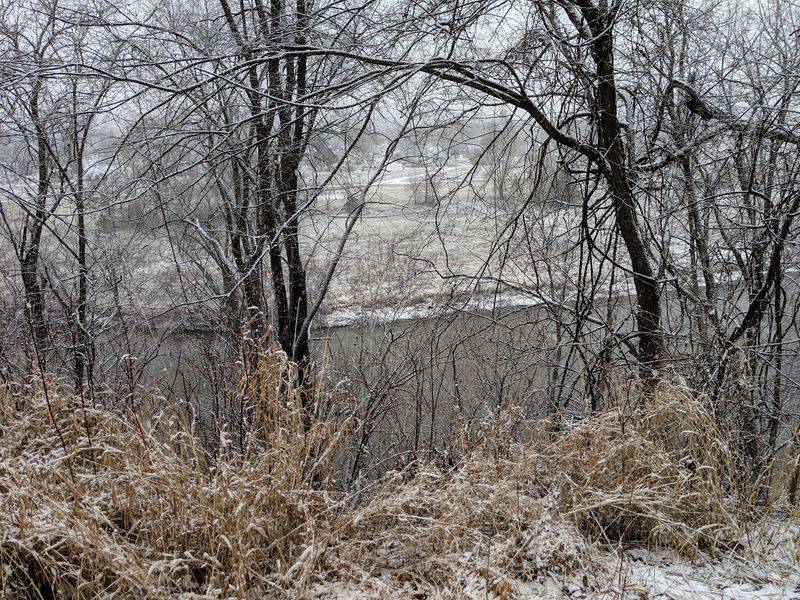
Most caves stay about the same temperature all year, but this one plays by its own rules. Cold winter air settles inside the rock, and the ice that forms can last deep into the warm months.
Timing is everything if you want to see it. Early to midsummer, around June and July, is often the best window for ice.
By August, it is usually gone. Fall trips tend to find bare walls, though the cave still runs much colder than the air outside.
Spring visits can bring a lot of ice, sometimes enough to make the floor slick. A few people have turned back for that reason, so step carefully.
Even without ice, the temperature drop is real. On a cool day you may even see your breath.
That steady chill is the whole reason the place earned its name. Come prepared to be surprised by how much colder it gets just a few feet past the opening.
Bring a Flashlight, Seriously
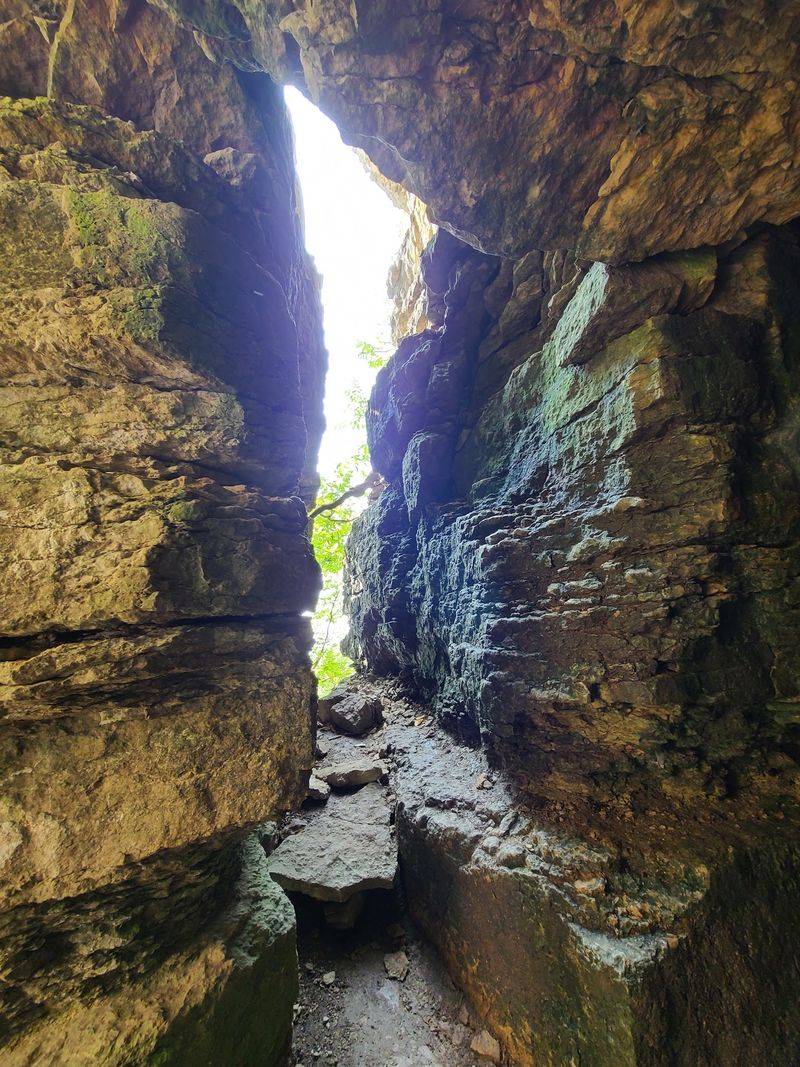
Darkness comes quickly once you move past the mouth of the cave. That is why a flashlight is one of the most useful things you can pack.
A phone light works in a pinch. A real flashlight or headlamp is better, since it frees your hands and lasts longer.
The floor is rocky and uneven, and it can be icy in some seasons. Light helps you see where to put your feet.
Each person having their own light makes things smoother for groups. Kids especially love being in charge of their own beam.
The cave is open and entered at your own risk. There are no guides or rangers posted inside, so caution is up to you.
Pack a light jacket too, even in July. The cold inside can feel like a different season.
With a light in hand and a careful pace, the short trip in becomes a lot more fun and a lot less guesswork.
Small Cave, Big Personality
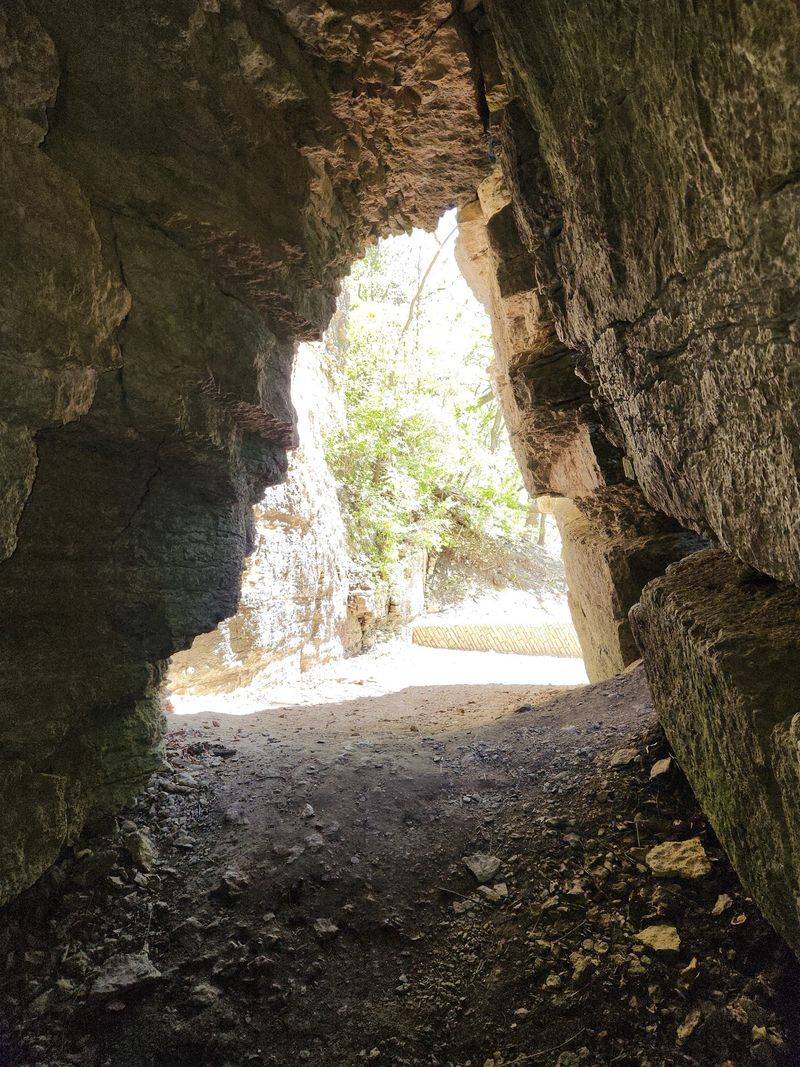
Expectations matter here. This is not a huge underground system, and it helps to know that before you arrive.
Fallen rock limits how far you can go. A slab of limestone and an old collapse near the entrance block deeper passages.
Depending on conditions, you might get a few feet in or close to 100 feet. At the back, the space splits toward two rooms before the way ends.
Still, there is plenty to notice. At the right time of day, sunlight slips through a tiny keyhole opening above and sends a beam into the cave.
Kids enjoy hunting for that opening from the outer trails. It turns into a small treasure hunt above ground.
Most groups spend around 30 minutes exploring. That makes it a great short stop rather than an all-day event.
Go in with curiosity instead of grand plans, and this little cave tends to deliver more charm than its size suggests.
Residents of the Dark
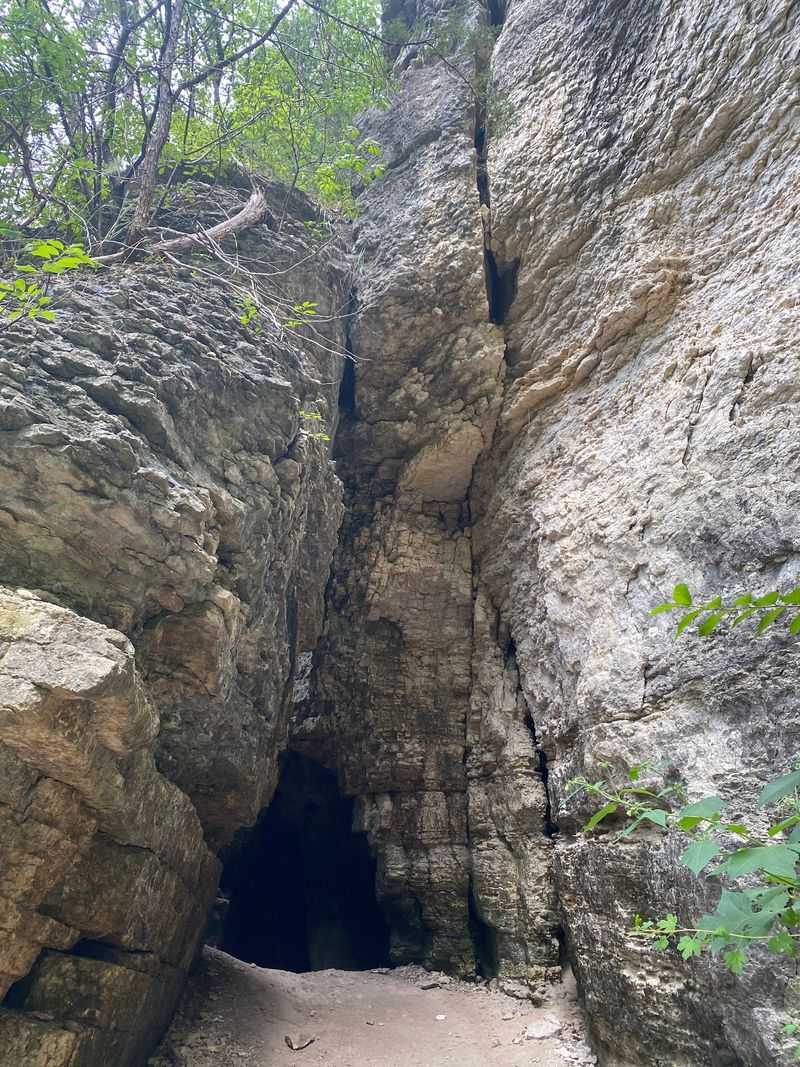
Some residents of the cave keep a very different schedule than you do. Bats live in the back, past roughly 30 feet from the entrance.
During the day, they mostly stay tucked away. If you go at dusk, they start getting active and flying around inside.
That can be a thrill for wildlife fans. It is also a good reason to stay calm and give them space.
Please do not touch or bother the bats. Keep voices low and lights pointed away from them when you can.
Bats play a helpful role in the area by eating lots of insects. Seeing them in their home is a neat bonus.
If anyone in your group is nervous, a midday visit keeps encounters to a minimum. Sticking near the entrance helps too.
Either way, the bats add a bit of wild mystery to the trip. Few city parks can claim neighbors quite this interesting.
Trails, Rocks, and Hilltop Views
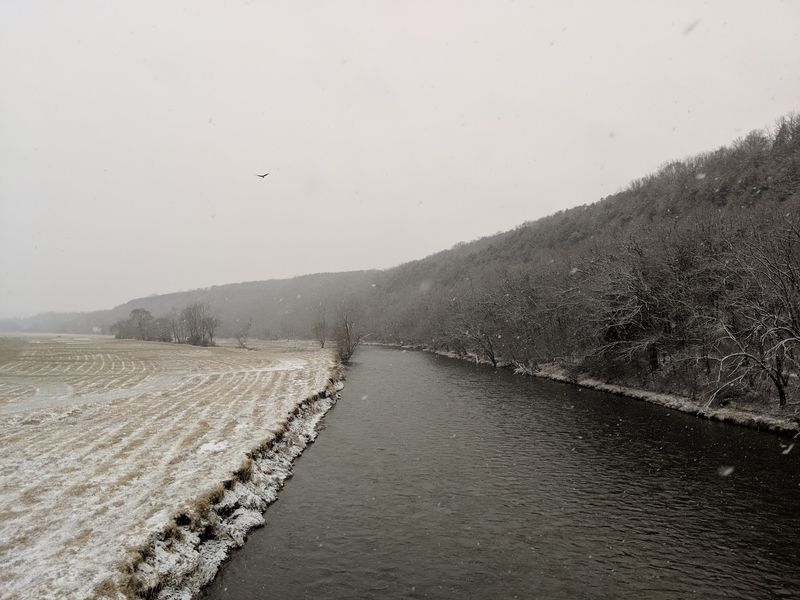
Once the cave is checked off, there is more park to explore. The 105 acres hold walking trails that wind through the woods on and around the hill.
Some routes are easy, while others take more effort. Wear proper shoes if you plan to go beyond the paved road.
The top of the hill offers nice views of the surrounding area. It is a rewarding spot after the climb.
Painted rocks have been a fun find here too. Families have enjoyed searching for them and sharing finds on a local social media page.
Dog walkers use the trails as well. Bring a leash and bags so everyone can enjoy the space.
Groups like scout troops find it a good fit for a short, easy walk. The mix of trail and cave keeps it interesting.
With waterways close by and woods all around, the park feels like a small escape just minutes from downtown.
Timing Your Trip Right
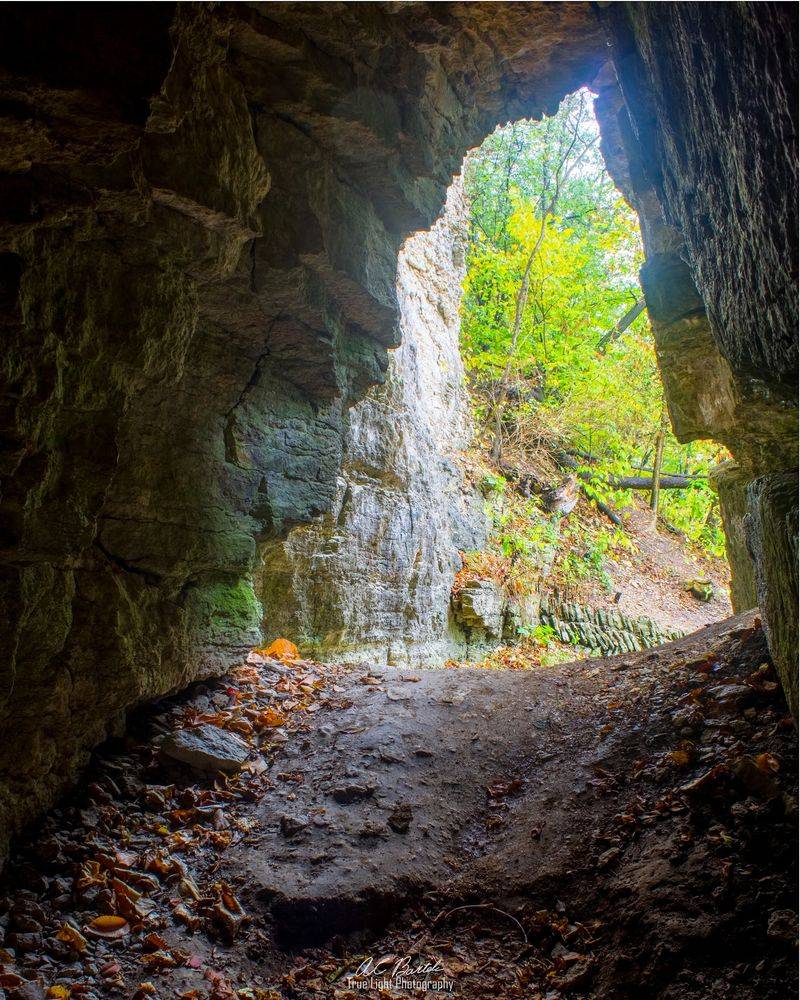
A hot summer afternoon might be the best excuse to visit. The cave offers instant relief from the heat outside.
Crowds are a different story. Decorah swells to several times its size during Nordic Fest in July, and parks fill up fast.
Parking can be tough that weekend. Weekdays give you a much better chance at a calm, easy visit.
For ice, aim for spring through early summer. For a quieter, ice-free look, late summer and fall work well.
Remember the park hours of 7 am to 11 pm. Dusk is great for bats but bring extra light for the walk back.
Pair the cave with Dunning’s Springs and time in town afterward. Decorah has plenty to fill the rest of your day.
A small amount of planning turns this hillside stop into a highlight. Grab your flashlight, lace up good shoes, and let the cold surprise you on a warm day.