Few places in America feel as haunted by unanswered questions as Fort Raleigh on Roanoke Island.
This is where England tested its colonial ambitions, where families vanished, and where one carved word still fuels centuries of debate.
When you walk the grounds today, history stops feeling distant and starts feeling deeply human.
Fort Raleigh is not just a landmark – it is one of the most intriguing mystery sites in the country.
England’s First Attempts To Colonize The New World
When you visit Fort Raleigh, you are standing where England made its earliest serious attempts to plant a lasting settlement in North America. The expeditions of 1585 and 1587 were risky, expensive, and filled with uncertainty, but they marked a major turning point in English exploration.
Long before Jamestown became the familiar story, Roanoke Island was where English colonial dreams first met the realities of the Atlantic world.
Sir Walter Raleigh sponsored these ventures with hopes of claiming territory, expanding trade, and challenging Spanish power. The men who arrived in 1585 were not simply explorers passing through – they were part of an ambitious test of whether England could survive and compete overseas.
That experiment did not unfold as planned, yet it opened the door to future colonies that would reshape the continent.
What makes Fort Raleigh so compelling is that it captures a beginning, not a conclusion. You can feel the uncertainty built into the landscape, where bold plans collided with isolation, limited supplies, and unfamiliar conditions.
Even in failure, these early colonies became a foundation stone for England’s later success in America.
Roanoke Island’s Strategic But Difficult Location
Roanoke Island looked promising on a map, but living there was another matter entirely. Its position along the Outer Banks offered access to Atlantic routes and coastal waterways, which made it attractive to English planners eager to establish a foothold.
From a strategic point of view, the island seemed like a place where trade, defense, and exploration could all begin.
Once you think beyond the map, the challenges become obvious. Barrier islands are beautiful, but they are exposed to storms, shifting inlets, salt air, and fragile resources that can quickly work against a struggling settlement.
Fertile land was limited, and the colony’s isolation made resupply difficult even under the best conditions.
That tension between opportunity and hardship defines Roanoke’s story. The same waters that connected settlers to the Atlantic also separated them from dependable support, while the same coastal setting that made the site strategic also made it vulnerable.
When you stand at Fort Raleigh today, it is easier to understand how geography shaped destiny and why survival there demanded more than courage alone.
The 1587 Lost Colony And The Arrival Of Families
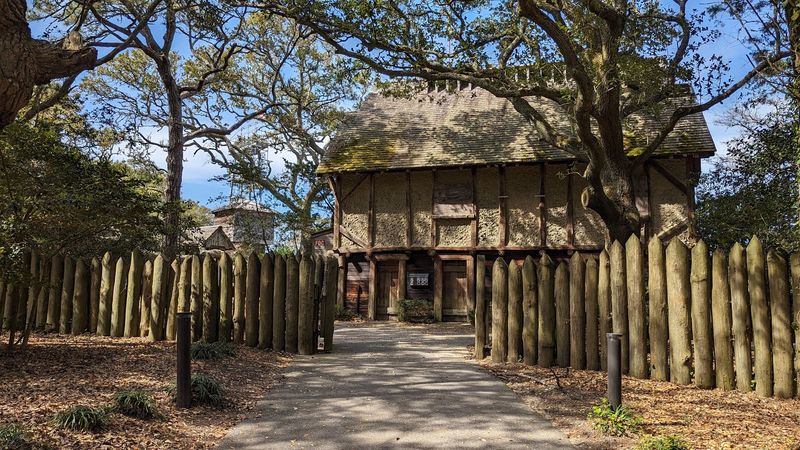
The 1587 expedition changed the story of Roanoke from military outpost to true settlement attempt. John White led roughly 115 to 120 colonists, and this group included women and children, signaling a plan to build a permanent community rather than a temporary camp.
That human detail matters, because it makes the Lost Colony feel less like legend and more like a vanished neighborhood.
Among the settlers was Virginia Dare, remembered as the first English child born in the Americas. Her birth has become one of the most famous details tied to Roanoke, partly because it symbolizes both hope and vulnerability.
Families had crossed the ocean expecting to begin new lives, yet they entered a landscape already proving difficult for English survival.
White soon returned to England for badly needed supplies, expecting to come back quickly. Instead, the colony was left exposed at the exact moment it needed stability, leadership, and support.
When you think about parents, children, and ordinary settlers trying to endure on a remote island, the mystery becomes more personal and far more unsettling.
John White’s Delayed Return
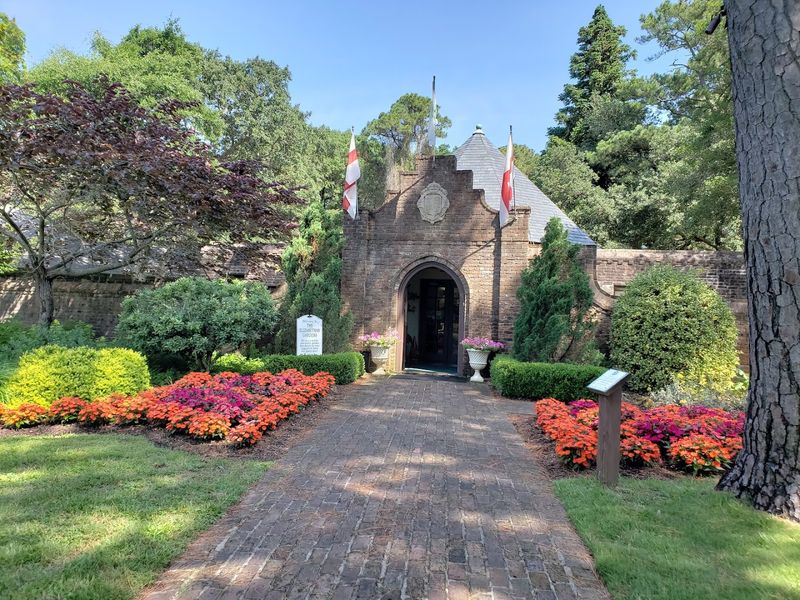
One of the most tragic parts of the Roanoke story is that John White did not intend to leave the colonists for long. He sailed back to England for supplies, but international conflict disrupted any hope of a quick return.
War with Spain, especially the crisis surrounding the Spanish Armada, pulled ships, attention, and resources away from Roanoke.
That delay stretched from months into years, turning a difficult colonial situation into a disaster waiting to happen. Imagine being left on an exposed island with limited supplies while the person expected to return with help remained trapped across the ocean.
By the time White finally made it back in 1590, the settlement had already passed beyond recovery and into mystery.
His return should have been a moment of rescue, yet it became one of history’s most unsettling discoveries. The colony was deserted, and the lives of the people he had left behind had vanished into silence.
When you walk Fort Raleigh now, it is hard not to think about how a geopolitical war in Europe helped seal the fate of one fragile settlement in coastal North Carolina.
The CROATOAN Clue
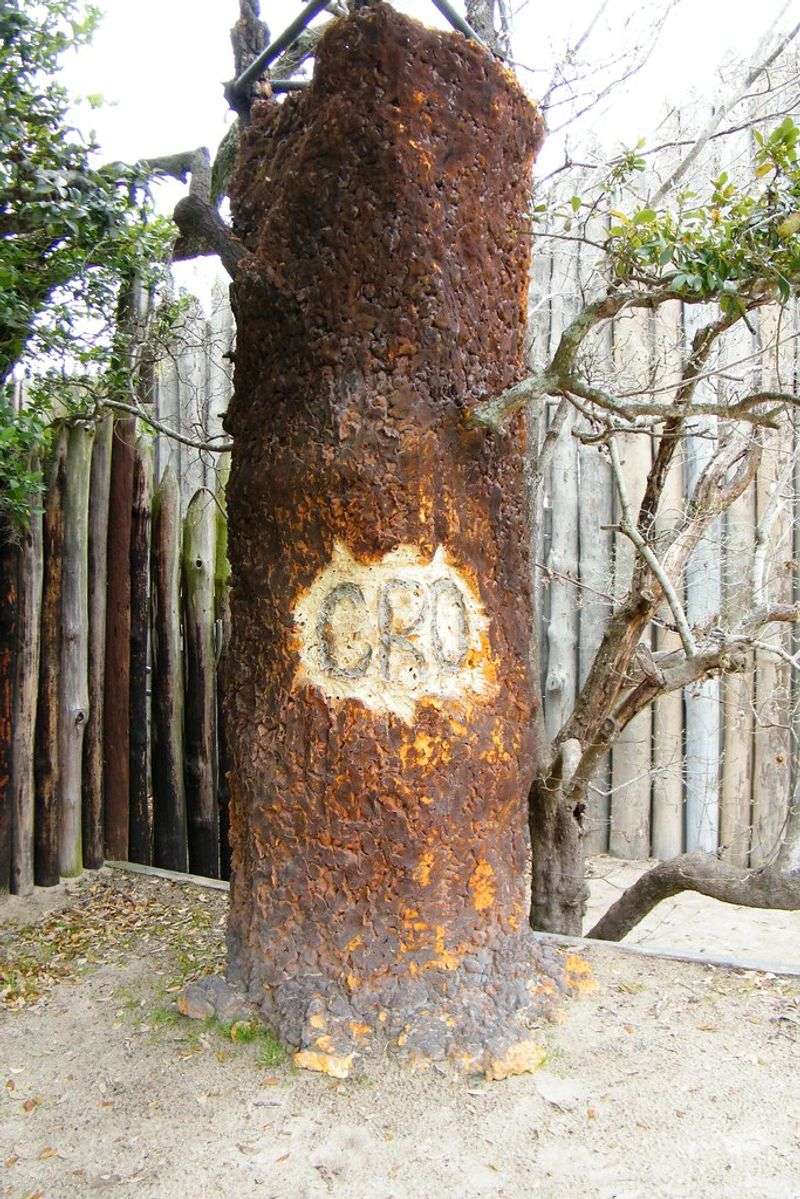
When John White reached the abandoned settlement, he did not find signs of battle, mass graves, or obvious destruction. Instead, he found one of the most famous clues in American history: the word CROATOAN carved into a post, along with the letters CRO on a nearby tree.
That small fragment of evidence has carried enormous weight for more than four centuries.
White had previously arranged that colonists would leave a cross if they were forced away under distress, and no such mark was found. Because of that, many historians believe the carving pointed to a planned relocation rather than a violent attack.
Croatoan likely referred to Croatoan Island, today’s Hatteras Island, where friendly Indigenous connections may have offered a better chance of survival.
The clue is tantalizing because it feels so close to an answer while remaining incomplete. You can build plausible theories from it, but none closes the case with certainty.
At Fort Raleigh, the mystery rests on this carved word, a message both specific and frustratingly open, inviting every visitor to wonder whether it was a hopeful sign, a desperate trail, or the last surviving whisper of the colony.
Why The Lost Colony Still Endures As A Mystery
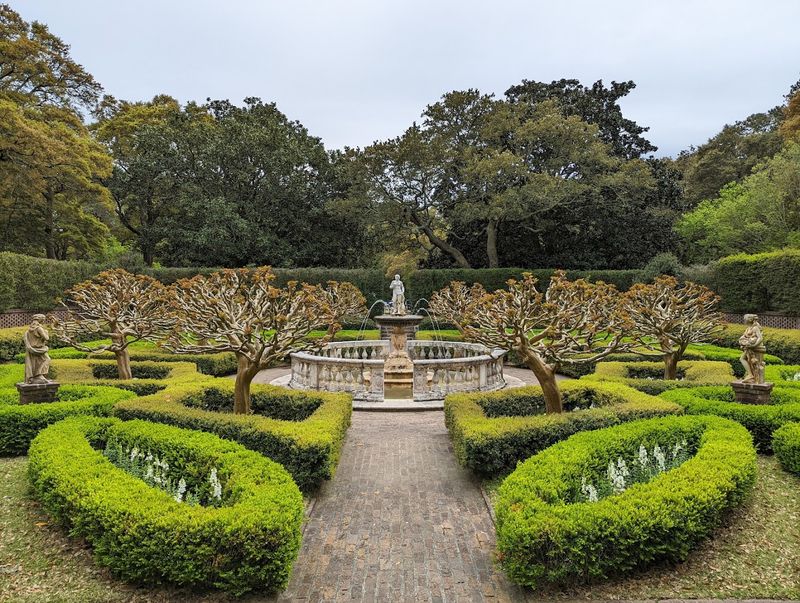
The Lost Colony continues to fascinate because no theory has ever fully solved what happened. Historians, archaeologists, and curious travelers have proposed explanations ranging from starvation and attack to relocation and assimilation, yet no single body of evidence has ended the debate.
That uncertainty is exactly what gives Roanoke its unusual power over the American imagination.
The most widely accepted theory suggests that at least some colonists joined nearby Indigenous communities and adapted to local life. This idea makes sense in practical terms, especially if settlers sought food, protection, or alliances after being cut off from England.
Even so, the archaeological record has not produced a decisive answer strong enough to move the story from probable to proven.
At Fort Raleigh, the mystery feels grounded rather than theatrical, because it is tied to real people whose names are known and whose fates are not. You are not just looking at a legend passed down for entertainment – you are confronting an unresolved historical disappearance.
That combination of human vulnerability, missing evidence, and lingering possibility is why Roanoke remains one of America’s oldest and most haunting unsolved mysteries.
Indigenous Peoples Of Roanoke Island Before Colonization
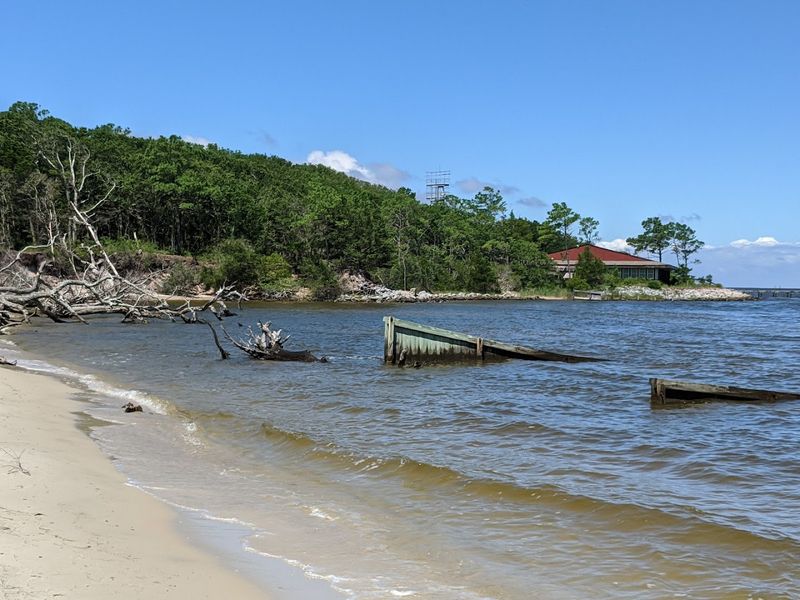
Long before English ships appeared off the Carolina coast, Roanoke Island and the surrounding region were home to Algonquian-speaking Indigenous peoples with established communities, trade ties, and deep environmental knowledge. These societies were not waiting to be discovered – they already understood how to live with the rhythms of marsh, forest, and sea.
Fishing, farming, hunting, and exchange shaped daily life in ways newcomers often failed to grasp.
Remembering this earlier history changes how you see Fort Raleigh. The site was not an empty stage for English ambition, but part of a lived Indigenous world with leadership structures, diplomacy, and practical systems for survival.
Coastal communities knew the waterways, seasonal resources, and regional relationships that determined whether outsiders could endure.
That context matters because the Roanoke story is often told only through the lens of European disappearance. In reality, the English entered a landscape already defined by Native presence, knowledge, and power.
When you visit the historic site, it helps to look beyond the colony mystery and recognize that the deeper history of the place begins with Indigenous peoples whose lives and networks shaped every early colonial encounter that followed.
Complex Relationships With Indigenous Leaders
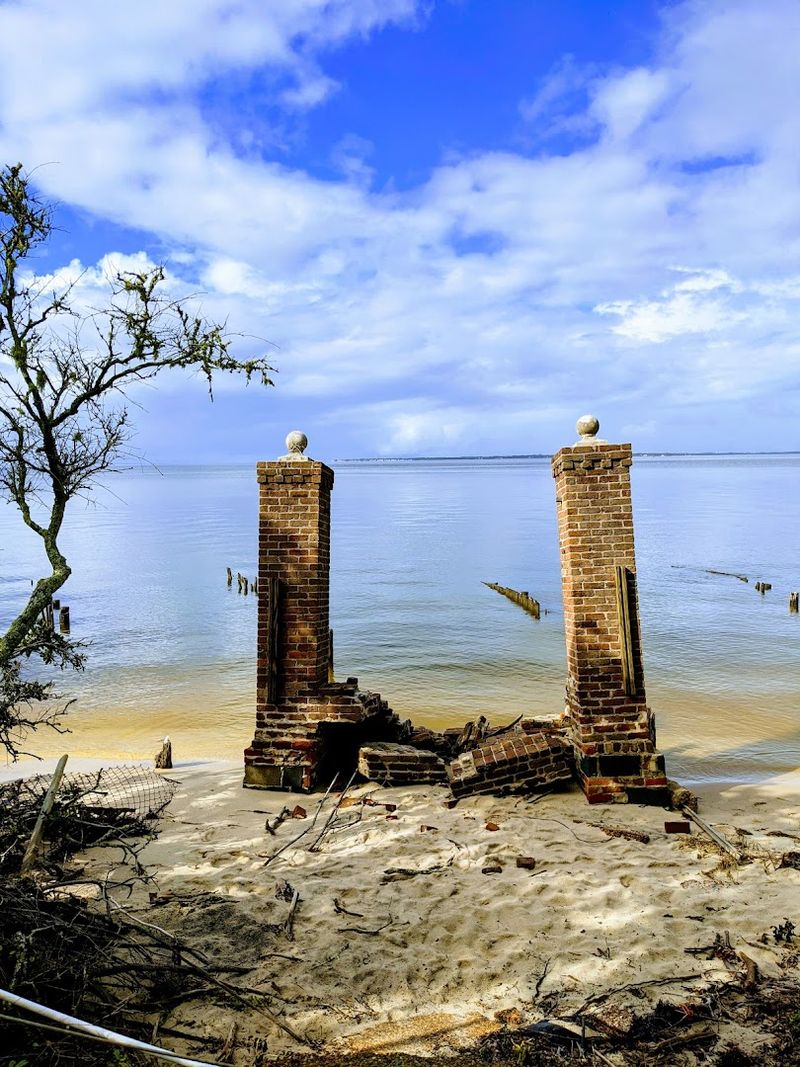
The relationships between English colonists and Indigenous groups around Roanoke were never simple, and that complexity sits at the heart of the colony’s fragile story. Some encounters involved trade, shared knowledge, and efforts at diplomacy, while others were shaped by mistrust, conflicting goals, and cultural misunderstanding.
At Fort Raleigh, these strained and shifting relationships become impossible to ignore.
Two figures often highlighted are Manteo and Wanchese, whose paths reflected different responses to the English presence. Manteo is generally remembered as an ally who worked with the colonists, while Wanchese came to distrust English intentions.
Their contrasting roles remind you that Indigenous communities were not monolithic and that political choices varied from person to person and group to group.
For settlers, these relationships could mean access to food, guidance, and security, or the opposite when trust broke down. For Indigenous leaders, the English were both potential partners and dangerous intruders whose long-term aims were difficult to predict.
Understanding this human and political complexity makes the Lost Colony story richer, because survival on Roanoke depended not just on supplies and geography, but on relationships that could shift as quickly as the coastal weather.
The Roanoke Island Freedmen’s Colony
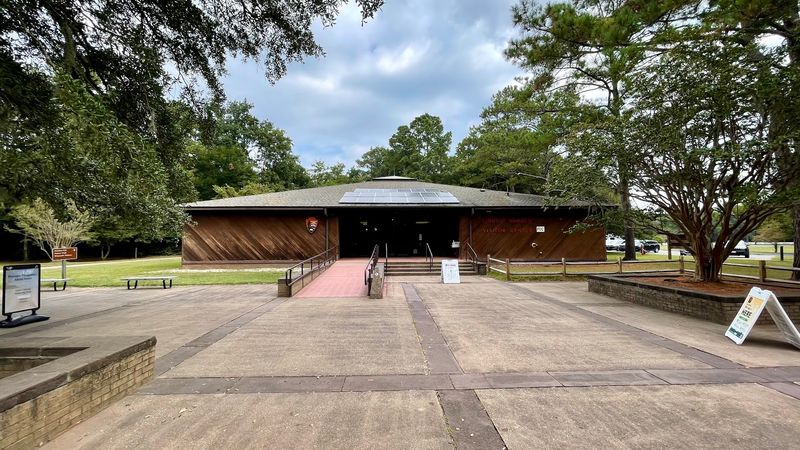
The Roanoke Island Freedmen’s Colony was established during the American Civil War in 1863, making Fort Raleigh National Historic Site a place layered with two very different but equally important chapters of history. After Union forces captured Roanoke Island in 1862, the area became a refuge for formerly enslaved people who had escaped from surrounding Confederate territories.
Seeking safety and independence, thousands of freedmen and women arrived, creating one of the earliest self-sustaining Black communities in the South during the war.
Under the supervision of Union officers and abolitionist missionaries, the colony was organized to provide land, work, and education. Families were given small plots to farm, and many residents worked for the Union Army, building fortifications, harvesting timber, and supporting military operations in the region.
Education was a central focus as well—Northern teachers established schools that provided formal instruction to both children and adults who had been denied access to literacy under slavery.
Although the colony faced serious challenges, including overcrowding, disease, and limited resources, it represented a significant step toward freedom and self-determination. At its peak, the community included more than 3,000 people.
When the Civil War ended, many residents left Roanoke Island to seek new opportunities, but the colony remains an important early example of Reconstruction-era Black communities and a powerful chapter in the broader story of American freedom.
Visiting Fort Raleigh National Historic Site Today
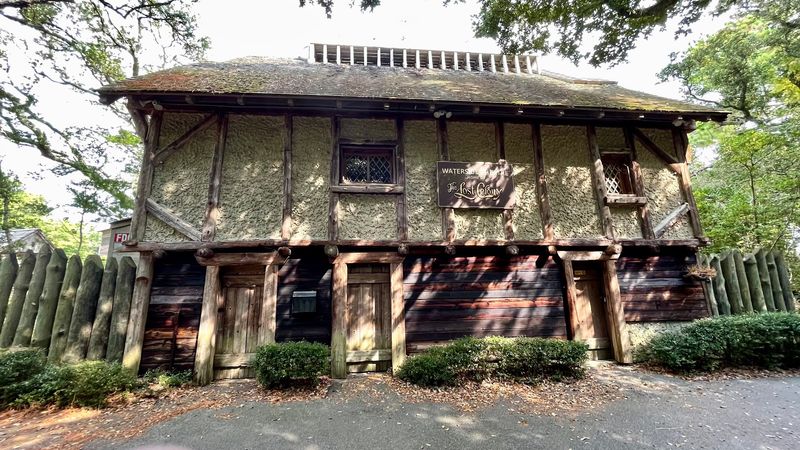
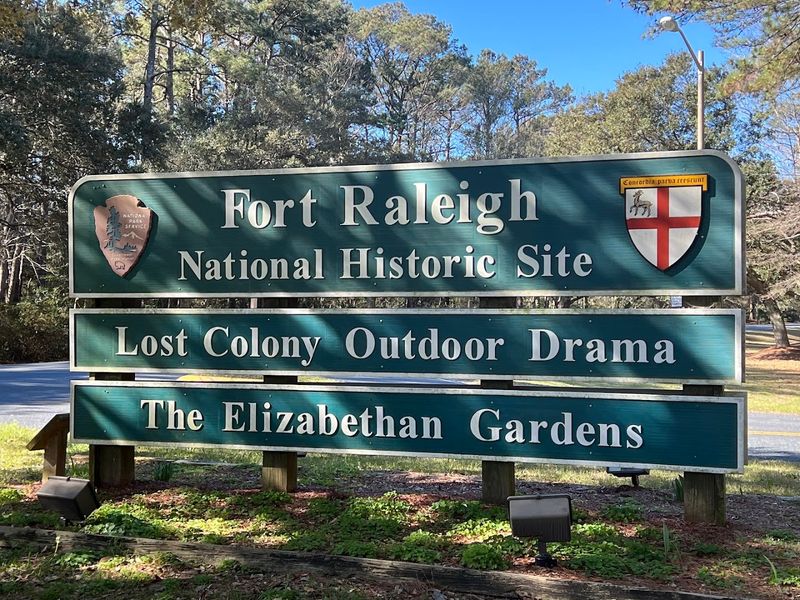
Fort Raleigh National Historic Site is located on the northern end of Roanoke Island, just a few miles north of the town of Manteo in North Carolina’s Outer Banks. The park preserves one of the most historically significant landscapes in the United States, where visitors can explore the story of the Lost Colony, early English exploration, and later Civil War-era history all in one place.
The site is open year-round, and its grounds are generally accessible daily, with the visitor center typically operating from morning to late afternoon depending on the season. Guests can walk the interpretive trails, view reconstructed earthworks from the original 16th-century fort, and explore exhibits inside the Lindsay Warren Visitor Center that detail the Roanoke voyages and archaeological findings.
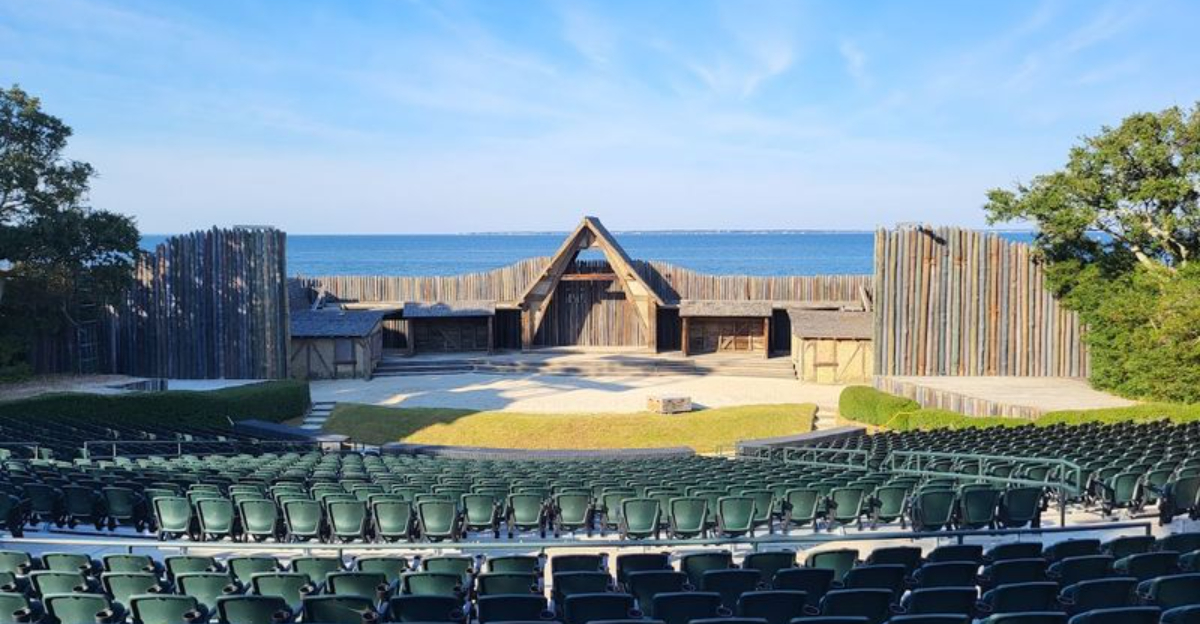
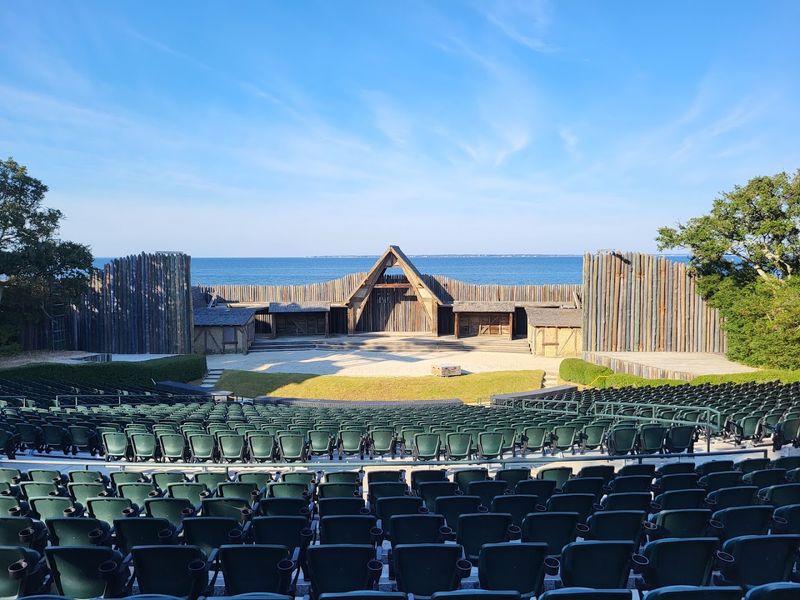
One of the highlights of a visit is the Waterside Theatre, where the long-running outdoor drama The Lost Colony has been performed since 1937, bringing the mystery of the vanished settlers to life each summer. Nearby, visitors can also explore the Elizabethan Gardens, a separate attraction honoring the first English colonists.
Address: Fort Raleigh National Historic Site, 1401 National Park Drive, Manteo, NC 27954
Phone: (252) 473-2111
Today, Fort Raleigh remains both a historical landmark and an active cultural site, offering a rare opportunity to experience over 400 years of layered American history in one coastal setting.