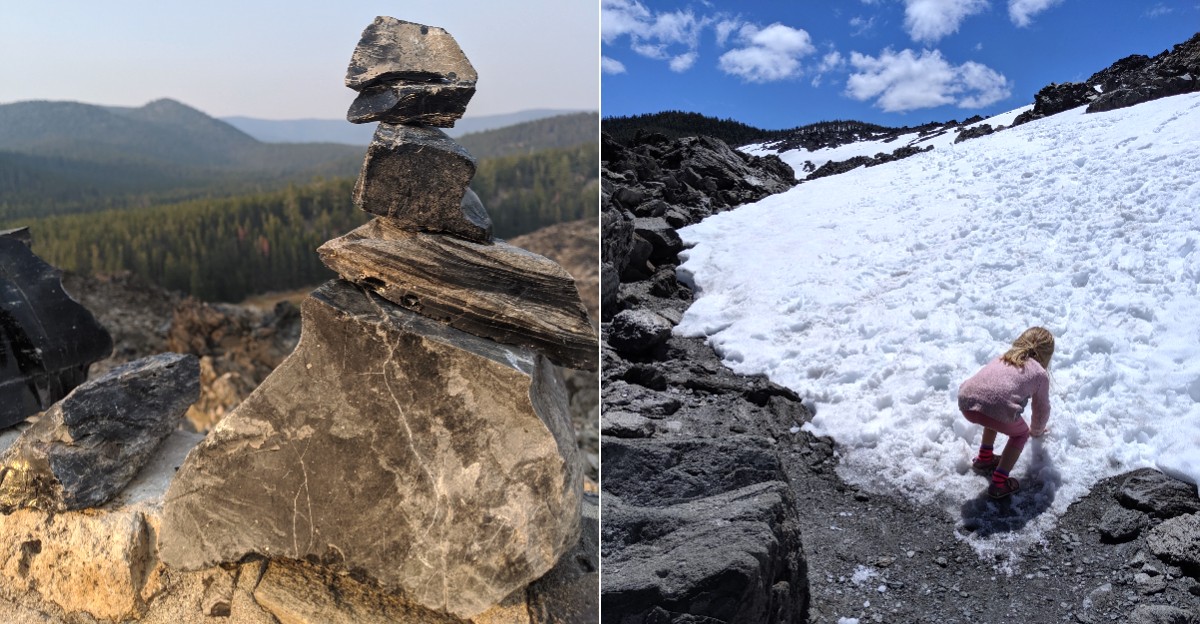
Somewhere south of Bend, a volcano left behind a giant field of natural glass, and families can walk right on top of it. This is not a museum display behind a rope.
It is a real trail that climbs a set of metal stairs and loops across a massive flow of black obsidian and pale pumice. The rocks here formed from one of the youngest eruptions in Oregon, and the scenery looks more like another planet than the Pacific Northwest.
Kids get to compare featherweight pumice with heavy glass, and adults get sweeping lake and mountain views.
Keep reading to learn where this spot is, when it opens, what to pack, and how to make the most of a short hike your family will talk about for years.
A Glass Mountain Hiding Near Bend
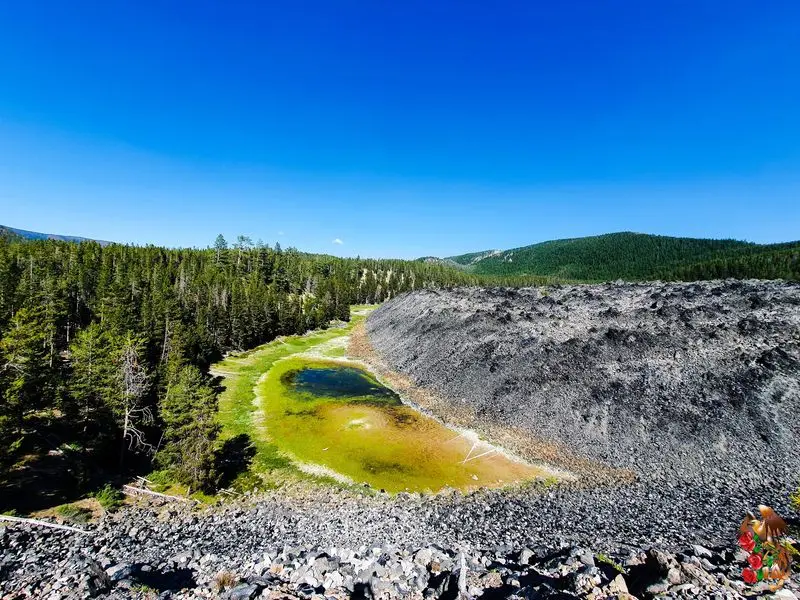
Few trailheads in Oregon lead straight onto a volcano’s leftovers. The Big Obsidian Flow Trailhead and Interpretive Site sits in Bend, OR 97701, United States, inside the Newberry National Volcanic Monument in the Deschutes National Forest.
The site is managed by the U.S. Forest Service.
It sits within the Newberry Caldera, a large bowl-shaped area left behind by the Newberry Volcano.
The flow itself is the youngest lava flow in Oregon, formed around 1,300 years ago. That means people were already living in this region when the eruption happened.
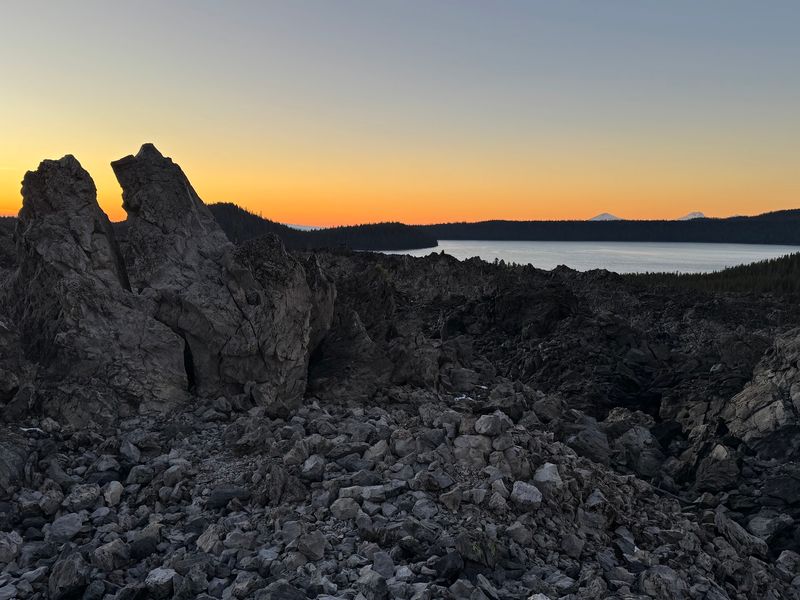
Today, the flow covers a huge area of the caldera floor. Much of it is made of obsidian, a natural volcanic glass, mixed with pumice and other rock.
The site is listed as open 24 hours, but seasonal snow closures matter far more than the clock. Plan ahead, check the Forest Service page, and get ready for a hike that feels nothing like a normal stroll through the woods.
The Stairs That Start It All
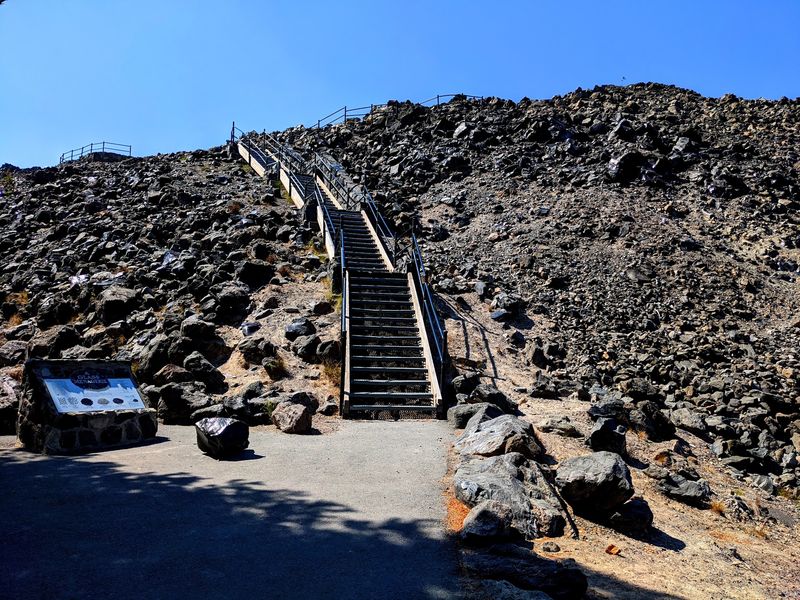
A paved path leaves the large parking lot and heads toward a tall wall of rock. That wall marks the spot where the lava stopped moving, and it is surprisingly tall up close.
About 100 feet from the parking area, a flight of metal stairs carries hikers from the base to the top of the flow. It is the only way up, and it makes the climb much easier than scrambling.
At the top of the stairs, there is a sitting area and a viewpoint. Some families stop right here, enjoy the scene, and head back down.
That is a perfectly fine plan for little kids or anyone with balance concerns.
Others keep going onto the rougher trail beyond. Either way, the top of the staircase delivers a solid look at the flow without much effort.
Tip for parents: let kids count the steps on the way up. It turns the climb into a game and gives tired legs a reason to keep moving.
Loop Like a Lollipop
Think of the trail shape as a stick with a loop at the end. Hikers follow one path out, circle the loop, and return the same way to the stairs.
The full route is roughly a mile round trip. That sounds short, and it is, but the ground is rocky, uneven, and not paved.
About halfway along, the path splits at a Y. Both directions bring you back to the same point, so nobody gets lost.
Going right at the split is often considered the easier way around.
Expect to step over chunks of rock in places. Groups of older hikers manage it fine when they take their time, so steady pacing matters more than speed.
A dusty, worn path marks the way, thanks to all the boots that came before. Stay on it.
The route also climbs to a lookout near the high point of the flow. Families who reach it earn some of the best views in the whole caldera.
Glass That Comes in Colors
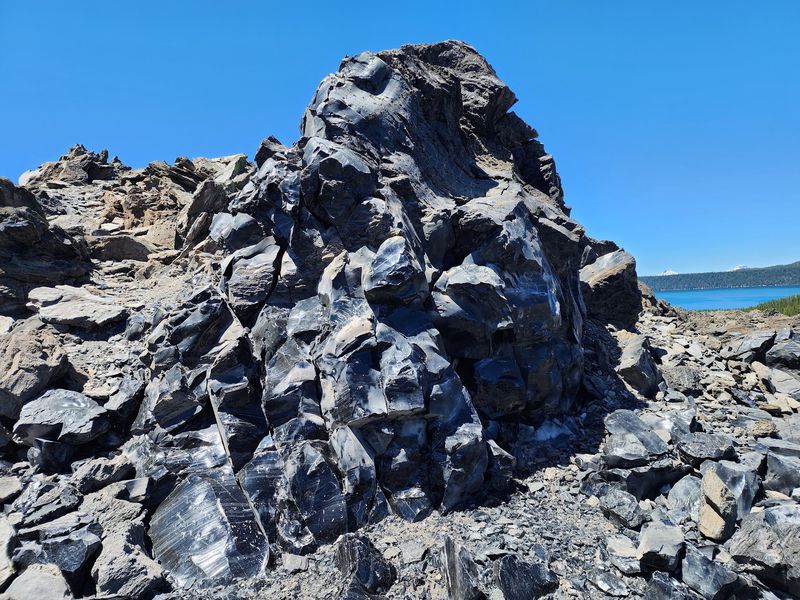
Black is the headline color, yet it is not the only one. Look closely and some obsidian pieces show shades of red, brown, blue, and green.
Obsidian forms when lava cools so quickly that crystals cannot grow. The result is a natural glass that breaks with very sharp edges.
Here is a fun fact for curious kids. Obsidian edges can be incredibly thin, which is why people throughout history shaped it into tools and blades.
Right next to the glass sits pumice, a rock full of tiny air pockets. Large chunks of it weigh hardly anything, and lifting one is a favorite moment for many families.
Comparing the two rocks side by side makes a great science lesson. They came from the same volcano but look and act completely different.
One firm rule applies, though. Collecting rocks is not allowed in the monument, so leave every piece where you found it for the next family to enjoy.
Signs Worth Stopping For
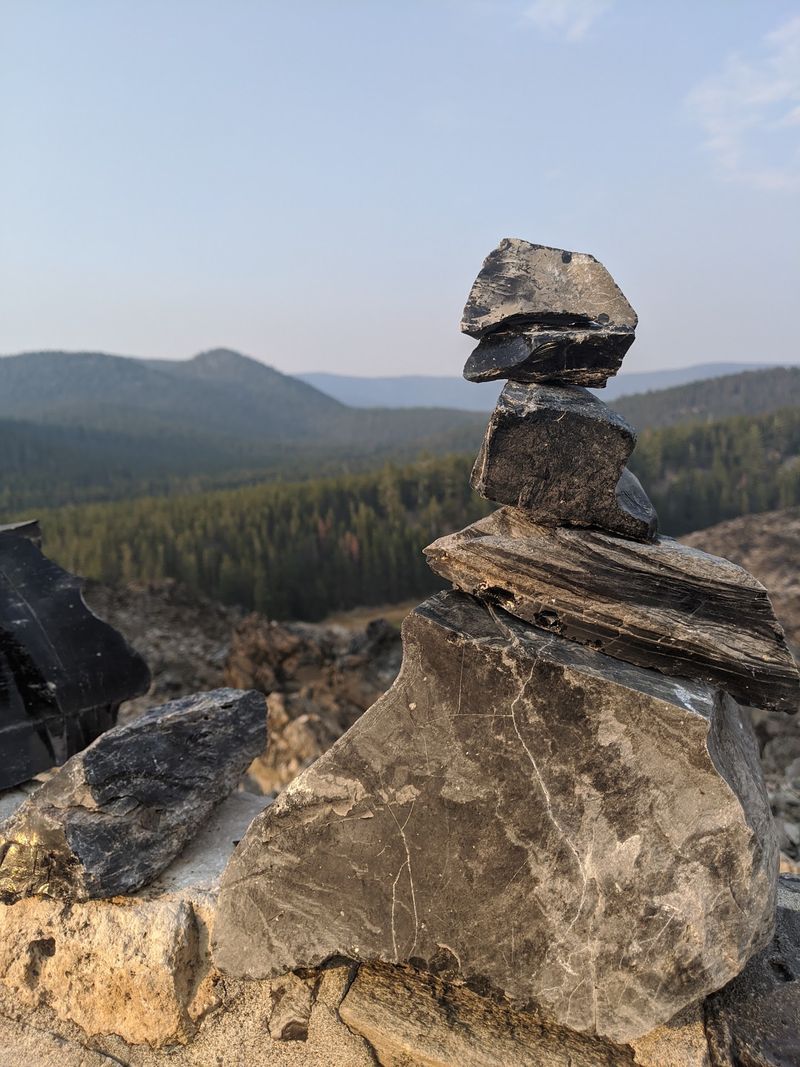
Homework rarely gets this much fun. Interpretive signs line the trail, explaining how the flow formed and why obsidian matters.
The placards are well done, professional, and easy to follow. They cover the geology behind the eruption and share history about how people used this glass.
Families can turn the signs into a scavenger hunt. Ask kids to find one surprising fact at each stop and share it at the next.
The signs also help explain what you are looking at. The flow is not smooth like a frozen river.
It is a jumble of large chunks of obsidian, pumice, and other rock piled up across the caldera.
Reading along the way gives tired hikers a natural reason to rest. Short breaks keep everyone happy, especially on hot days.
By the end of the loop, even kids who were not into rocks may start pointing out pumice and glass on their own. Consider that a win.
Views of Lakes and Peaks
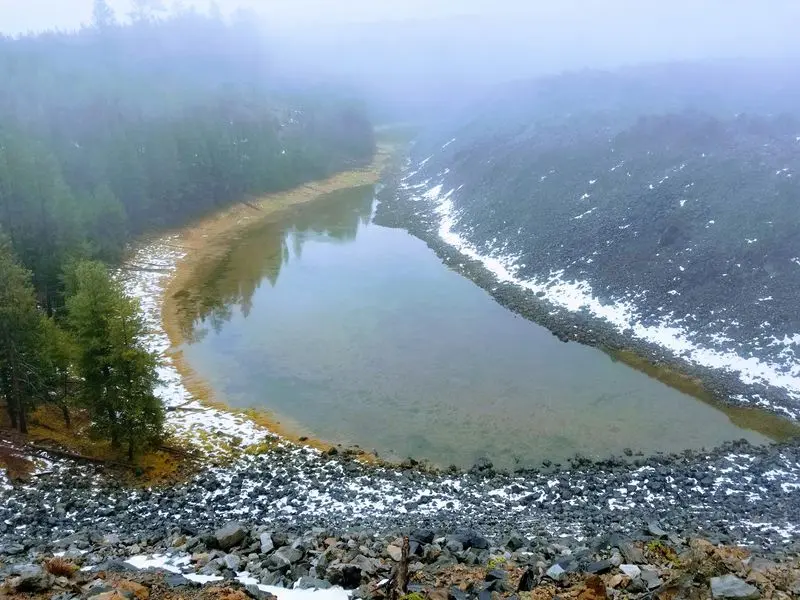
Up top, the reward goes way beyond rocks. The lookout offers views that stretch for miles in many directions.
Paulina Lake sits nearby, and on a clear day it makes a lovely backdrop for family photos. Distant Cascade peaks, often with snow, line up on the horizon.
Watch for pine trees growing straight out of the rock. These tough little trees show how life slowly returns to a lava field over hundreds of years.
Below the flow, a meadow sometimes attracts wildlife. A bear has even been spotted roaming the meadow from the trail, so keep a safe distance and stay alert.
For an even bigger look at the flow’s size, drive up Paulina Peak afterward when the road is open. From there, the whole flow spreads out below.
Bring a camera or phone with a full battery. Between the lake, the peaks, and the glassy ground, there are plenty of shots worth saving.
Packing Smart for Sharp Ground
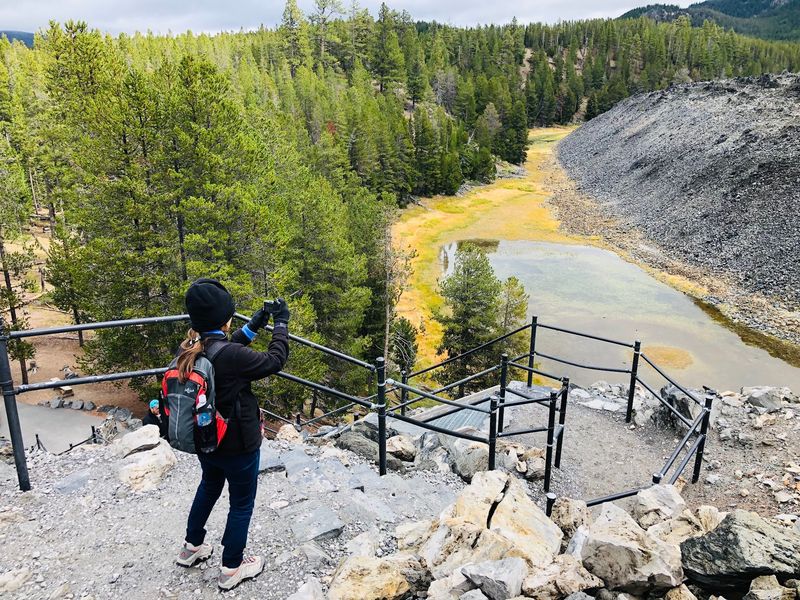
Flip-flops and volcanic glass are not friends. Sturdy, closed-toe hiking shoes are the most useful item for this trail.
Obsidian can be sharp, and rocks may be slick in spots. A fall here can hurt, so careful footing matters, especially on the way down.
Trekking poles help a lot on the uneven sections. They give extra support when stepping over boulders.
The trail is very exposed, with little to no shade. Hats, sunscreen, and plenty of water are must-haves on warm days.
Do not count on water fountains along the route. Restrooms and picnic tables are available at the site, which makes a snack break before or after the hike easy.
Summer brings crowds, so the trail can get busy. Arriving earlier in the day often means more room to move.
Keep small kids close and remind them not to slide or jump on the rocks. A little caution keeps the adventure fun.
Timing the Trip Right
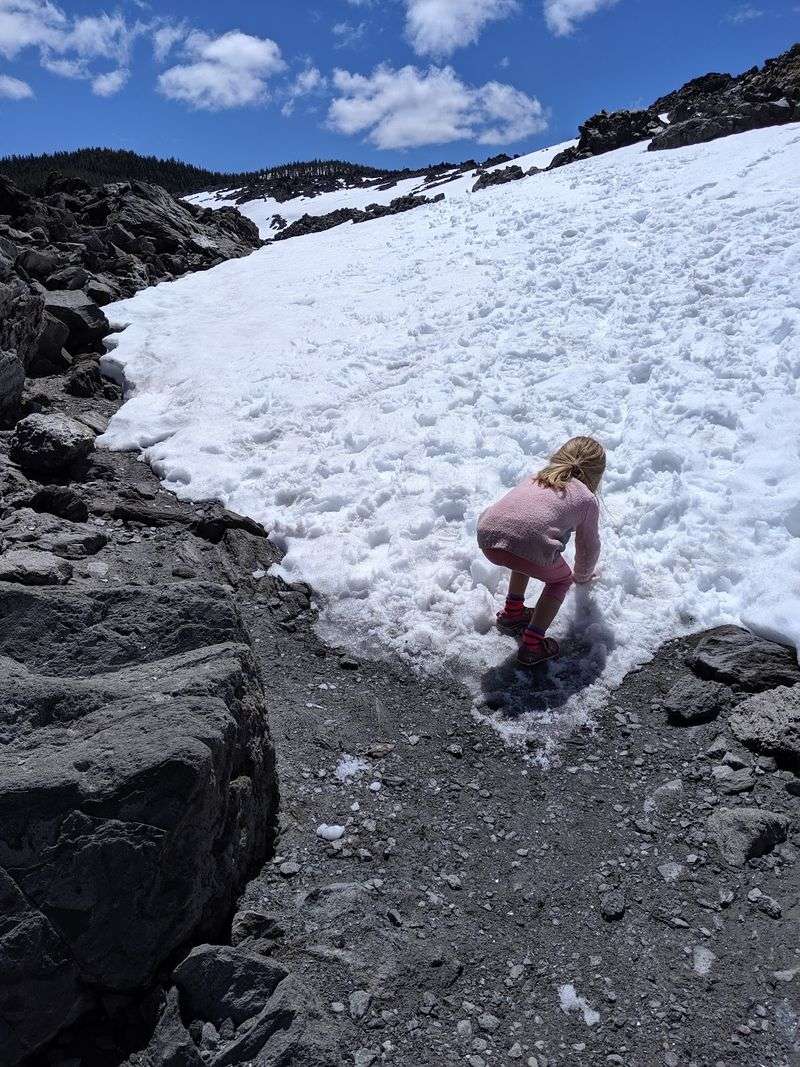
Snow decides the calendar up here. The area can stay snowed in until around mid-June, and icy patches may linger even after opening.
Late in the fall, the paved road can close as winter arrives. Checking the Forest Service website before driving out saves a lot of frustration.
A parking permit is required. Permits can be purchased at the booth on the drive up, where staff can also share maps and information about Newberry Caldera.
The location is remote, so come prepared with fuel, food, and water. Some nearby roads can be dusty and rutted.
Many families pair this hike with other stops in the monument, such as Paulina Falls and Paulina Lake. That turns a short walk into a full day of volcano exploring.
Summer offers the easiest access, while early season may come with leftover snow to play in. Pick the timing that suits your crew, and this glassy landscape will happily handle the rest.