One man turned plants rescued from nursery compost piles into hundreds of living sculptures. He did it with no formal training at all.
His goal at the start was simply to win a local Yard of the Month award.
He won it. Then he kept winning it until the city made the honor permanent.
That alone makes me grin.
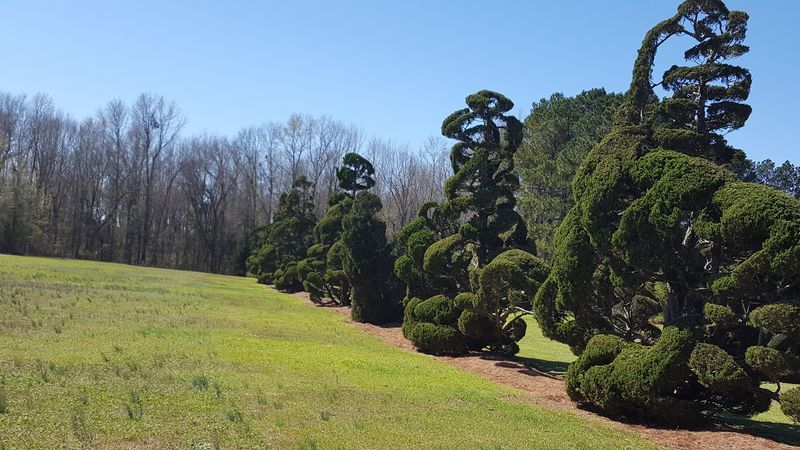
Today, this South Carolina yard holds spirals, arches, and a tree shaped like a giant fishbone. Junk metal fountains and words like Love and Peace sit among the greenery.
I like how every shape feels both silly and serious at once.
The gate is open, and nobody charges a cent to walk in. I can’t imagine a better place to rethink what a backyard can become.
So how did one ordinary lawn grow into a work of art people travel to see?
A Yard Of The Month Dream Grew Into Something Way Bigger
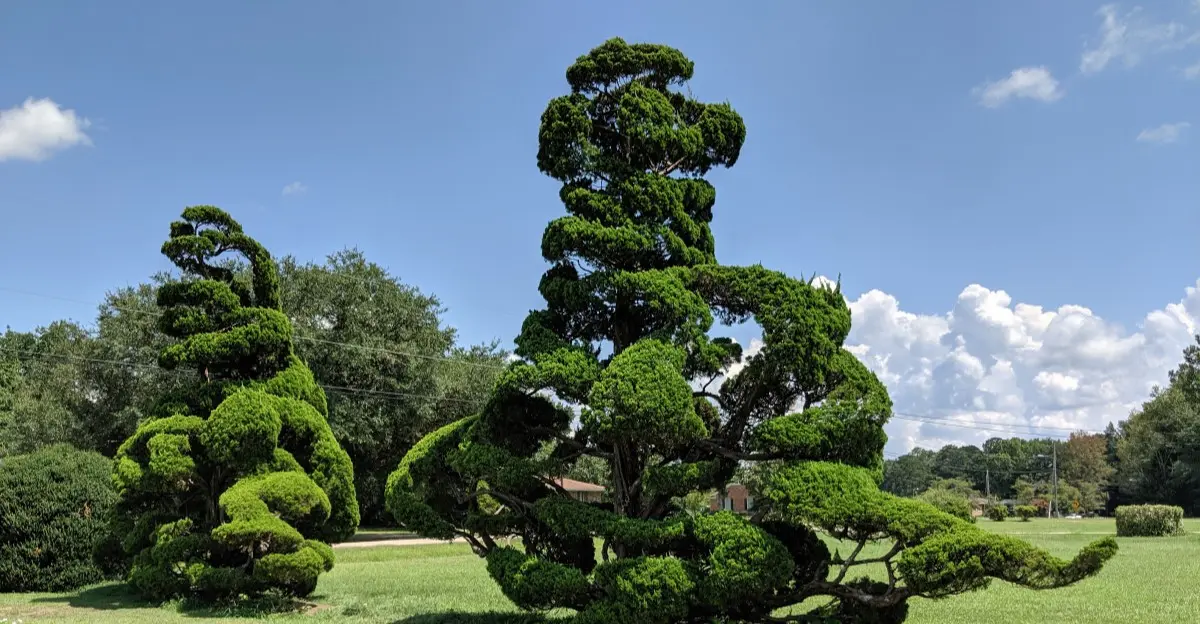
The Pearl Fryar Topiary Garden began with a pretty humble goal. Pearl Fryar wanted to win his town’s Yard of the Month award.
Fryar was born in Clinton, North Carolina, in 1939. He moved to Bishopville, South Carolina, in 1976 and started shaping his yard in the early 1980s.
His motivation went deeper than bragging rights, though. Some people doubted that an African American family would keep up their property in that neighborhood.
Fryar answered with clippers instead of arguments. Honestly, that’s one of the classiest comebacks in garden history.
He won Yard of the Month more than once. Eventually, the City of Bishopville gave his home permanent Yard of the Month status.
Think about that for a second. The contest basically retired his jersey.
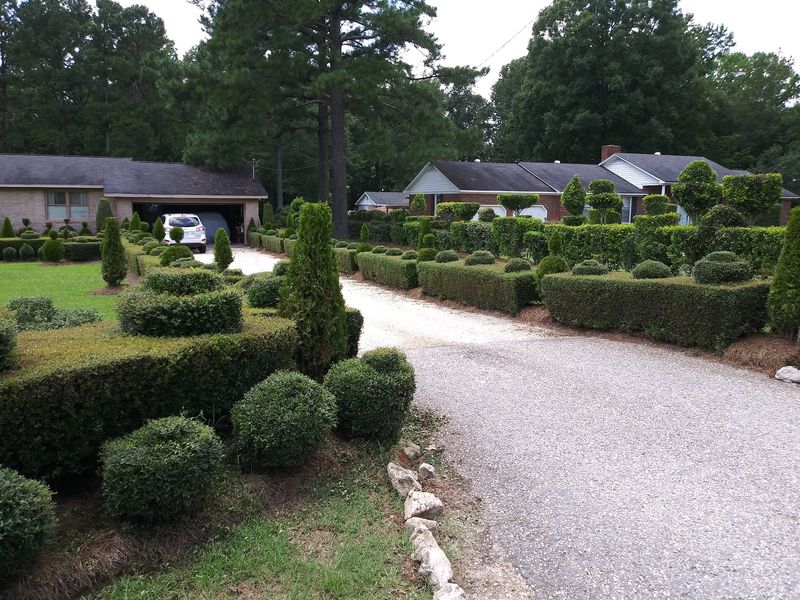
What started as a front lawn project kept spreading across the property. Shrubs turned into spirals, and hedges became arches and wild abstract forms.
The best part is how personal it all feels. You’re not visiting a polished estate built by a team of designers.
You’re walking through one determined man’s answer to a doubtful world. Keep that story in mind, and every curve looks a little sharper.
Good Luck Naming Every Shape You Spot Out Here
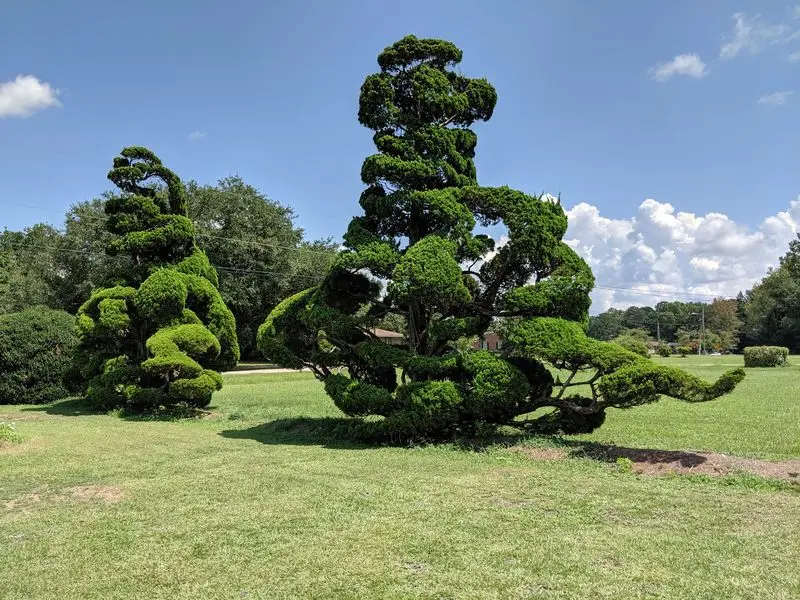
A tree trimmed to look like a fishbone is the garden’s signature piece. It’s the kind of sight that makes you tilt your head and smile.
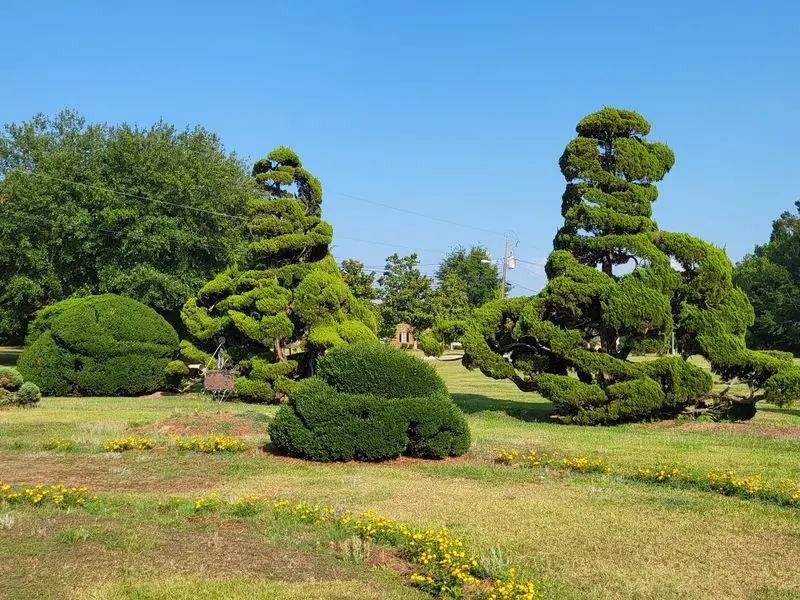
Hundreds of sculpted plants fill the grounds, with counts ranging from about 300 to over 400. Many of the shapes are abstract, so your brain gets a real workout.
Some forms are easier to name. You’ll find square trees, birdhouse trees, and mushroom-shaped live oaks that seem pulled from a storybook.
There are even sailing ships crafted from Hollywood junipers. Plants pretending to be boats on dry land is a delightful kind of nonsense.
Graceful arches and twisting spirals pop up everywhere. Geometric forms sit beside fantasy shapes that don’t match anything in real life.
That’s where the Edward Scissorhands comparison really clicks. The whole yard looks like someone gave the hedges permission to dream.
Here’s a fun game for families. Have everyone guess what each abstract shape resembles, then compare answers.
Nobody wins, and nobody loses. Fryar’s art invites imagination, so every guess counts as correct.
Rescued Plants Got A Second Chance At Stardom
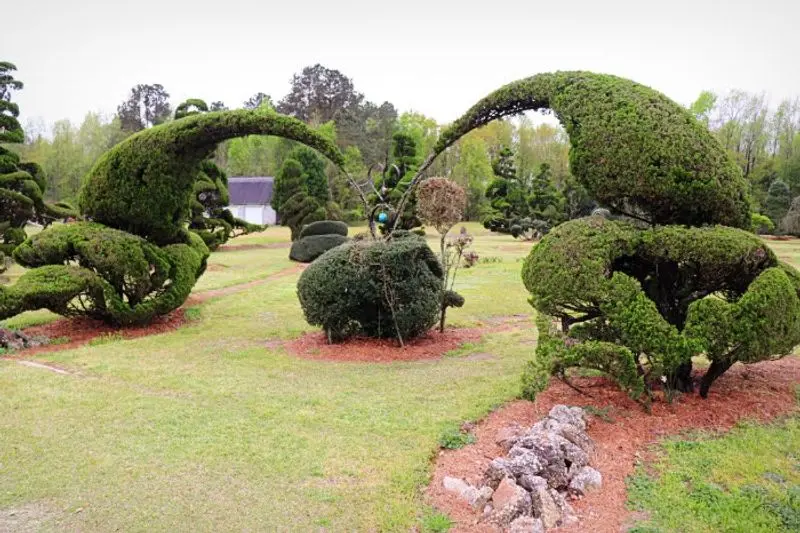
Plenty of these living sculptures started out as rejects. Fryar rescued many of them from nursery compost piles.
Those plants were headed for the trash heap. Instead, they became some of the most photographed shrubs in South Carolina.
I love this detail more than almost anything else about the place. It turns the garden into a story about second chances.
A scraggly plant that nobody wanted ended up shaped into art. Not a bad career change for a bush.
There’s a practical lesson for home gardeners here too. Discounted or struggling plants can still become something wonderful with patience.
Fryar had no formal horticultural training. He learned by doing, trimming, and trying again over many years.
That should give every beginner a little courage. You don’t need a fancy degree to start shaping your own yard.
Next time a sad clearance plant catches your eye, maybe give it a chance. Just don’t expect it to look like a fishbone by next weekend.
Scrap Metal Fountains Bring A Little Junkyard Magic
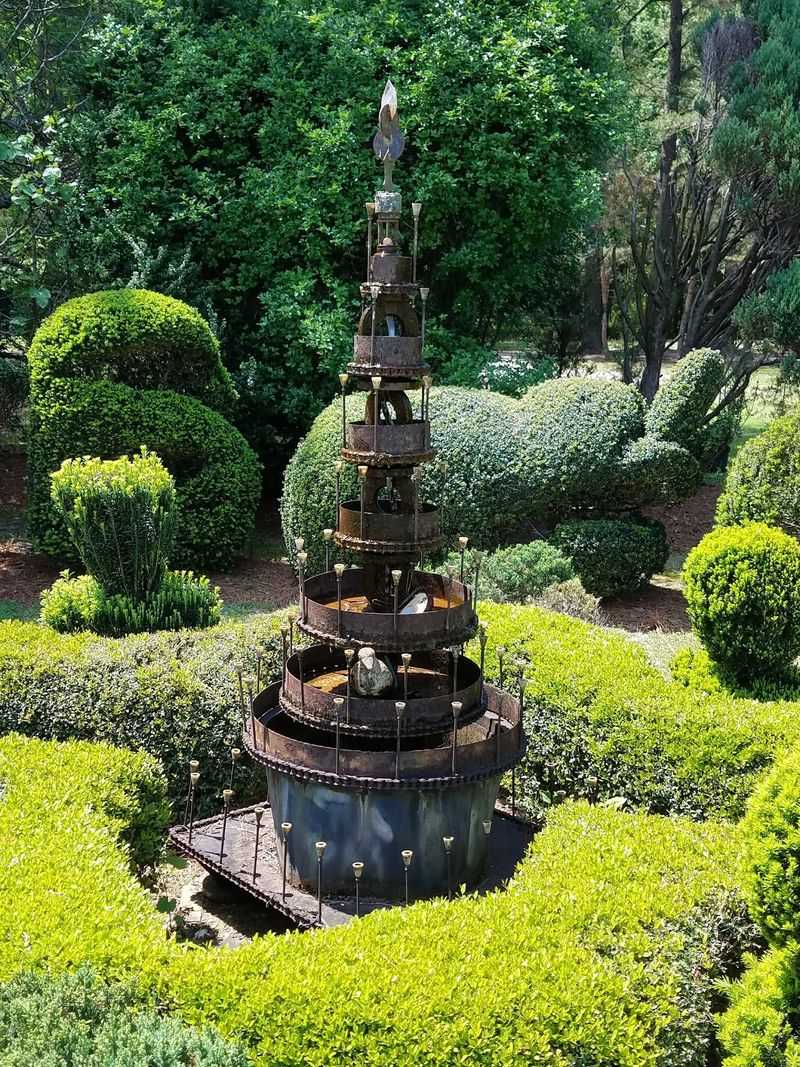
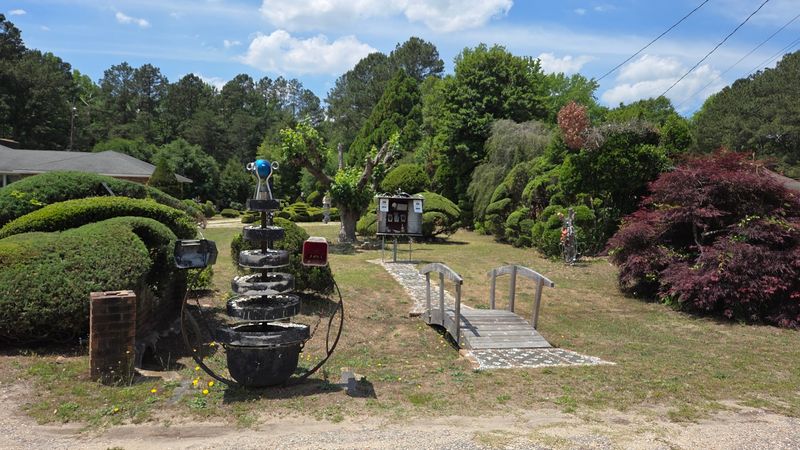
Shrubs aren’t the only artists on display. Homemade junk art sculptures and fountains made from scrap metal pop up around the grounds.
The mix of metal and greenery feels playful. It’s like the hedges invited a few quirky friends over for a party.
Fryar clearly saw creative potential in leftover materials. Old metal pieces got the same fresh start as his rescued plants.
That matching spirit ties the whole garden together. Nothing here seems too ordinary to become art.
Bring a camera and look closely at these pieces. The details reward anyone who slows down instead of rushing past.
Kids especially might enjoy hunting for the metal creations. They make a fun break from studying all the leafy shapes.
The folk art feel gives the yard real personality. It never feels stiff or formal like a fancy botanical garden.
Instead, you get something handmade and a bit wonderfully odd. Honestly, that’s a big part of the charm.
Some Of The Best Messages Here Are Written In Greenery
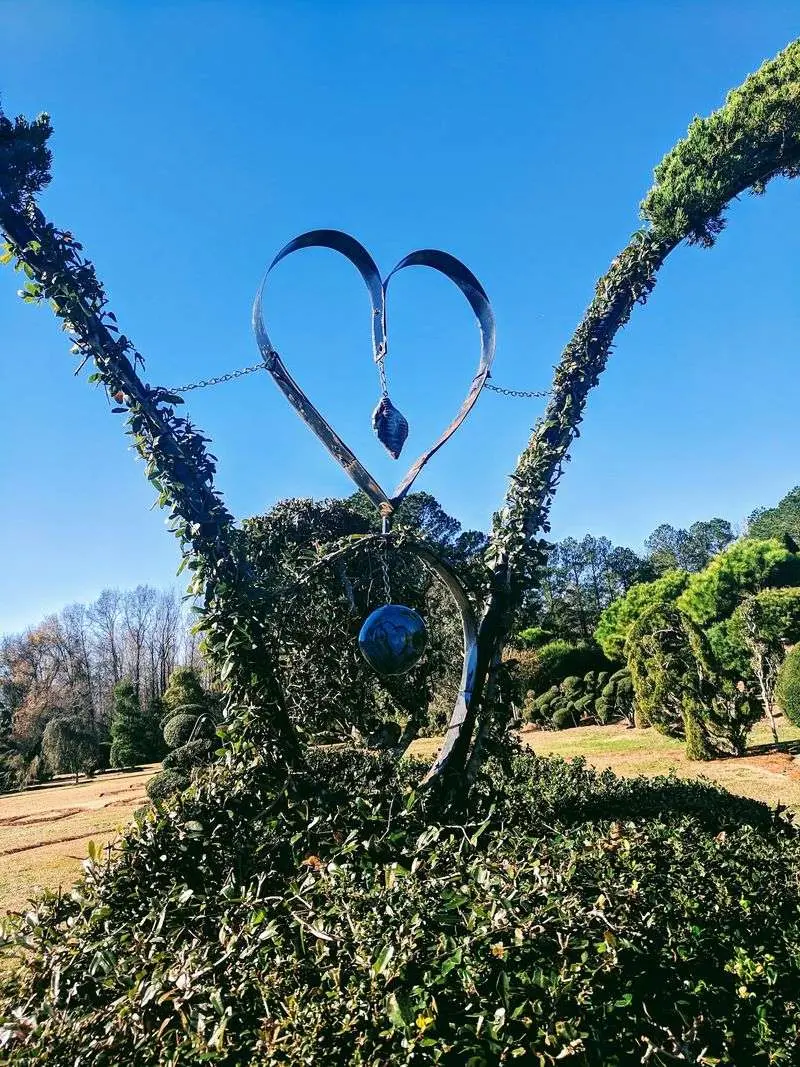
Love, Peace, and Goodwill all show up right in the landscape. These words are worked into the design of the Pearl Fryar Topiary Garden.
Another phrase, Hate Hurts, appears too. It’s short, direct, and hard to forget once you’ve read it.
Those messages connect straight back to Fryar’s story. He started this yard partly in response to prejudice from doubtful neighbors.
So the words aren’t decoration. They’re the heart of the whole project, spelled out where everyone can see.
I believe that’s what lifts this garden beyond a clever hobby. It’s beautiful, but it also has something to say.
Families could use these words to start a good conversation. Kids often remember a message better when they discover it outdoors.
Take a quiet minute near each one. They hit differently when you’re surrounded by years of patient work.
Most gardens want you to admire them. This one gently asks you to think about how you treat people.
Plan Your Visit Around These Easy Hours
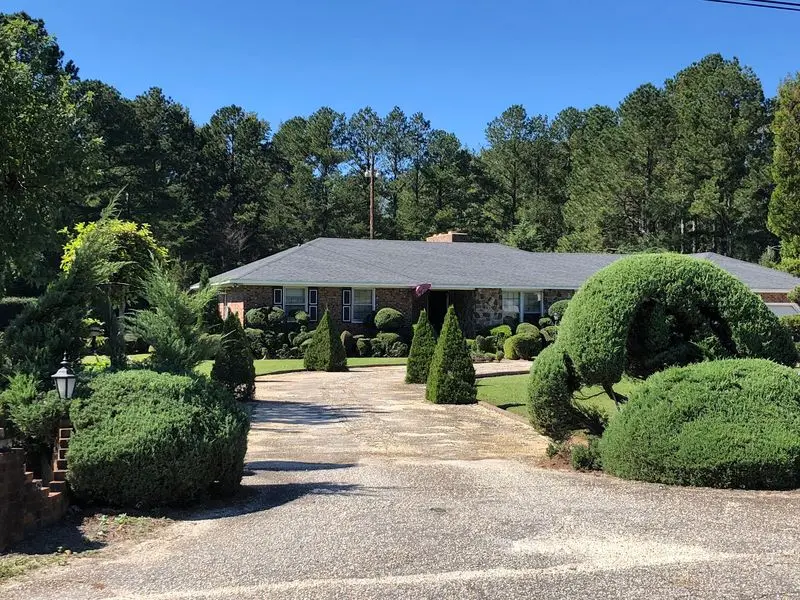
Free admission makes this an easy stop on any road trip. Donations are welcome and help support the garden’s maintenance and preservation.
You’ll find the garden at 145 Broad Acres Road, Bishopville, SC 29010. It sits in a residential neighborhood and can be easy to miss, so watch for the signs along the way.
The garden is open Tuesday through Saturday, from 10 a.m. to 4 p.m. It’s closed on Sundays and Mondays, so plan accordingly.
Visitors can stroll the grounds at their own pace. Scheduled tours are also available for 2026, offering additional background on Pearl Fryar and his work.
A public restroom and water fountain are located behind the main house on the right side. That’s good news for anyone traveling with kids.
Accessibility is limited, so keep that in mind. Visitors using wheelchairs or walkers may want to contact the garden before arriving to discuss access.
Wear comfortable shoes and bring sun protection on bright days. South Carolina sunshine doesn’t take breaks for art lovers.
Dropping a few dollars in the donation box helps support the garden’s upkeep. Those gifts help preserve the sculptures and keep Pearl Fryar’s legacy growing.
Address: 145 Broad Acres Road, Bishopville, SC 29010
Watch The Documentary Before You Go
In 2006, the award-winning documentary A Man Named Pearl brought this yard to a much wider audience. It tells Fryar’s life story and shows his work.
Watching it first is a smart move. The garden makes far more sense once you know the man who shaped it.
Fryar became a self-taught topiary artist with a national following. His creations even appear at the South Carolina State Museum in Columbia.
That’s quite a leap for someone chasing a neighborhood yard award. Talk about overachieving.
Pearl Fryar passed away peacefully at his home on April 4, 2026, at age 86. He was surrounded by the garden he spent decades building.
Today, the grounds continue as a living memorial to his legacy. Every spiral and arch carries a piece of his patience.
Seeing the film adds emotional weight to each step. Without it, you’ll admire the shapes.
With it, you’ll understand the person behind them. That makes the visit feel richer and more meaningful.
Fresh Updates Keep The Story Growing
Living art needs constant care. Shrubs keep growing whether anyone picks up the clippers or not.
That’s why The Pearl Fryar Topiary Garden, Inc. exists. This 501(c)(3) nonprofit works to preserve and support Fryar’s artistic and horticultural legacy.
From 2006 to 2021, The Garden Conservancy also lent a hand. It helped with preservation, fundraising, and organizational growth.
Recent improvements show the work is still moving forward. New plantings, general upkeep, and structural and electrical repairs have all happened.
A new cedar footbridge has joined the scenery too. It’s a handsome addition that fits the garden’s handmade spirit.
Even better, a Children’s Garden space is currently under development. Young visitors may soon have their own corner to explore.
I like knowing the garden isn’t frozen in time. It keeps growing, much like the plants themselves.
Your visit and donation become part of that effort. Not many road trip stops let you help shape what comes next.
Round Out The Day With Bishopville’s Quirkiest Neighbors
Bishopville packs plenty of personality for a small South Carolina town. After the topiaries, there’s more worth seeing nearby.
The South Carolina Cotton Museum shares the region’s farming history. It’s a solid pick for curious minds of every age.
The Button Museum is another fun local stop. Yes, buttons, and that alone sounds like a story worth hearing.
Nature lovers can head to Lee State Park. It offers a nice outdoor break after an afternoon of admiring trimmed shrubs.
The historic Bishopville Opera House adds a touch of small-town charm. It’s a great building to add to your photo collection.
Families might enjoy PNC Farms or Emmett Acres Alpaca Farm in nearby Lee. Alpacas and topiaries make a surprisingly fun pairing.
Then there’s Scape Ore Swamp, home of the famous Lizard Man legend. Spooky folklore makes a playful finale for any day trip.
Bishopville clearly loves the unusual. Somehow, a yard full of fishbone trees fits right in.