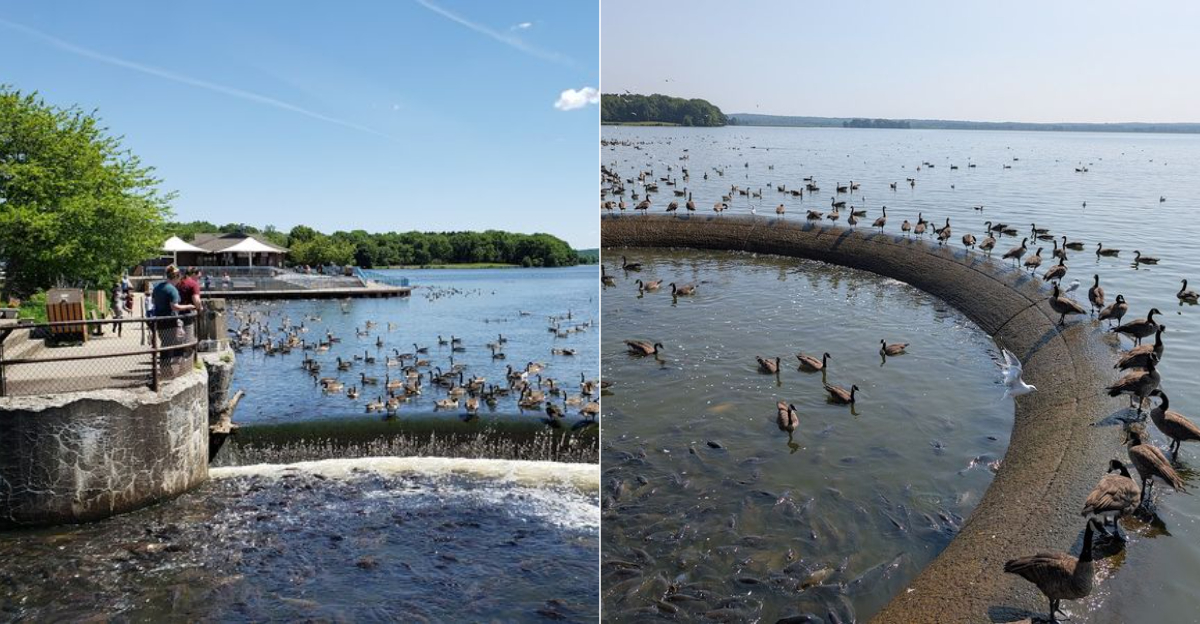
Have you ever seen ducks literally walking on water? At the Linesville Spillway in Pennsylvania, this isn’t magic but an amazing natural spectacle where thousands of hungry carp create such a dense carpet of fish that ducks can actually walk across their backs.
This quirky roadside attraction has been delighting families for decades with its unusual sight and hands-on feeding experience. Whether you’re looking for a unique day trip or a memorable stop on your Pennsylvania adventure, the spillway offers something you won’t find anywhere else.
The Famous Ducks Walk on Fish Phenomenon
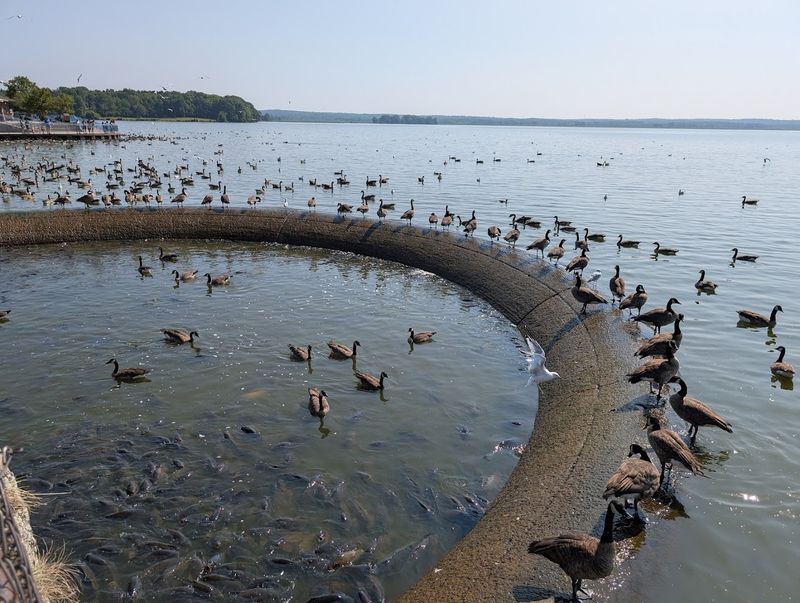
Picture a surface so packed with fish that birds can stroll across them like a living bridge. That’s exactly what happens at Linesville Spillway, where carp gather in such incredible numbers that they form a solid-looking mass.
The sight earned this place its famous nickname and continues to amaze visitors year after year.
When you toss bread into the water, the feeding frenzy intensifies instantly. Ducks, geese, and seagulls compete for food by standing directly on the backs of massive carp below.
It’s like watching nature’s most unusual balancing act unfold right before your eyes.
The density of fish creates an almost unbelievable scene that cameras struggle to capture. You’ll want to see it in person to truly appreciate this natural wonder.
Many visitors report feeling stunned by just how many carp can squeeze into one area.
This phenomenon happens because the spillway creates a perfect gathering spot for fish waiting for food. The structure of the dam and constant flow of visitors feeding them has trained generations of carp to congregate here.
It’s become a Pennsylvania tradition unlike anything else in the country.
Feeding Frenzy at the Spillway
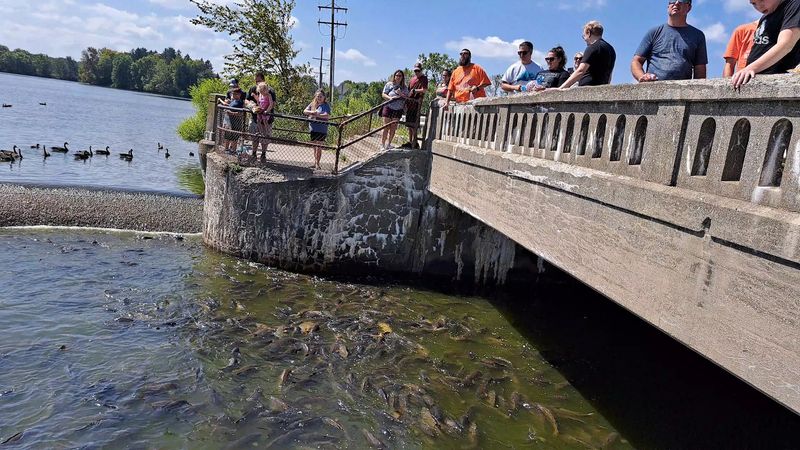
Bringing bread to feed the carp is the main attraction here, and visitors absolutely love this hands-on experience. The moment you approach the railing with food, hundreds of enormous carp mouths break the surface simultaneously.
Their eager anticipation creates splashing sounds and constant movement in the water below.
You can purchase day-old bread at the gift shop for just a dollar per bag, though seasoned visitors recommend bringing extra from home. One bag won’t last long with this many hungry mouths to feed.
The fish seem bottomless in their appetite, gobbling up every morsel instantly.
Throwing bread isn’t the only feeding technique people enjoy here. Some visitors toss pieces high into the air for seagulls to catch mid-flight.
Others prefer dropping bread straight down to watch ducks and fish compete for the same piece.
Remember that only bread is recommended for feeding the animals here, though signs sometimes suggest pellets instead. Bird seed works well for geese who prefer it over bread.
The key is participating safely while respecting the wildlife and keeping the area clean for everyone to enjoy together.
The Gift Shop and Concession Stand
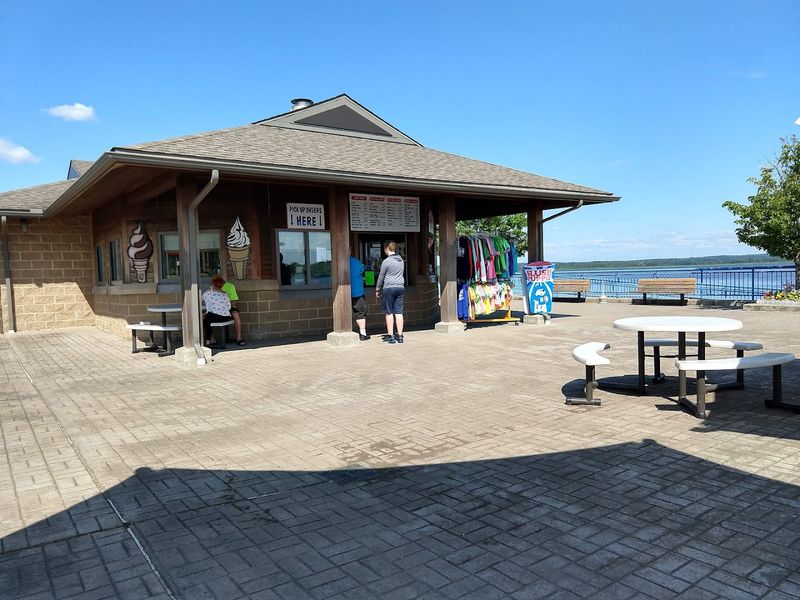
Right near the spillway sits a charming little shop that serves as headquarters for your visit. Inside, you’ll discover Pennsylvania souvenirs, snacks, and most importantly, bags of bread for feeding.
The shop carries ice cream, hot dogs, fries, and cold drinks perfect for cooling off on warm summer days.
One unique feature is the penny press machine where kids can create flattened souvenir pennies. Bring correct change and choose from several Linesville Spillway designs.
These make inexpensive mementos that children treasure long after the visit ends.
The concession menu offers simple fare that hits the spot after spending time outdoors. Think soft-serve ice cream, milkshakes, and classic snack bar items.
Prices remain reasonable, making it easy to grab lunch without breaking your budget.
Staff members are typically friendly and helpful, answering questions about the spillway and park. They understand that many visitors are first-timers needing guidance.
However, hours can be inconsistent, so the shop might be closed during your visit, especially off-season or on weekdays. Bringing your own supplies ensures you won’t miss out on feeding fun if the concession happens to be closed unexpectedly.
Planning Your Visit: Best Times to Go
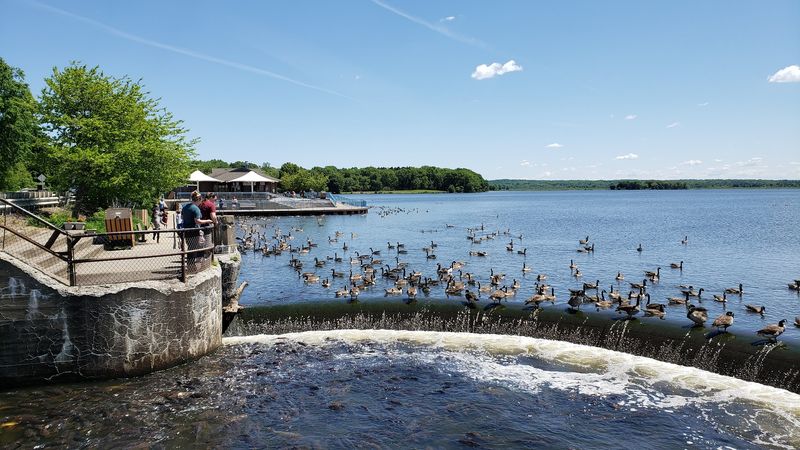
Weekends draw massive crowds to this popular attraction, especially during summer months when families flock here. Expect competition for railing space and parking challenges if you arrive mid-Saturday afternoon.
The upbeat energy can be fun, but some prefer quieter experiences.
Visiting on weekdays offers a more relaxed atmosphere with fewer people jostling for position. You’ll have better photo opportunities and more space to spread out.
Early mornings provide the calmest experience before tour buses and day-trippers arrive.
Summer brings the most dramatic feeding frenzies when carp are most active and numerous. Fall introduces different bird species, including more geese and seagulls than ducks.
Spring offers pleasant weather without overwhelming heat, though fish may be less active in cooler water temperatures.
Winter transforms the spillway into a stark, frozen landscape where ice encases the water and fish retreat deeper. While beautiful in its own way, winter visits lack the famous feeding spectacle that defines this place.
Plan accordingly based on whether you prioritize solitude, weather comfort, or witnessing the fullest expression of the phenomenon.
A Perfect Family-Friendly Destination
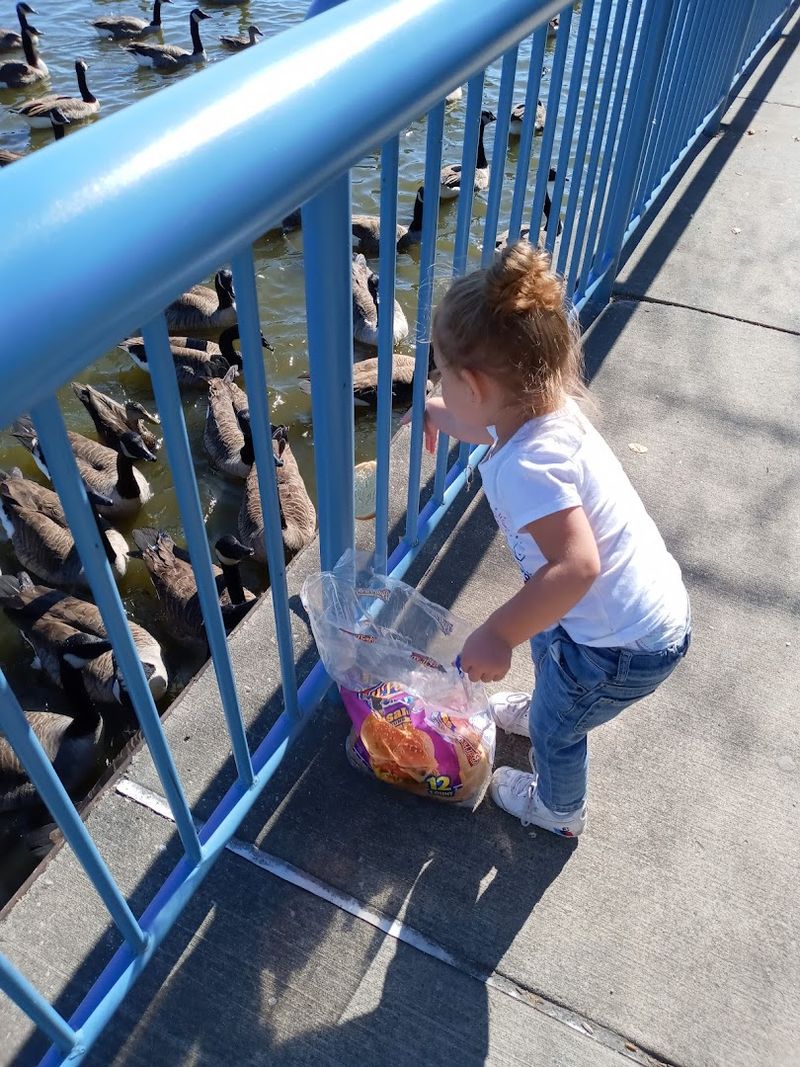
Generations of families have made annual pilgrimages to this spot, creating core childhood memories that last forever. Parents who visited as kids now bring their own children, continuing the tradition.
The spillway offers that rare combination of educational value, outdoor fun, and genuine excitement that appeals to all ages.
Young children absolutely light up when they see the fish for the first time. The massive scale and sheer number of carp captivates toddlers and elementary-aged kids equally.
Teens might act too cool initially but usually end up joining the feeding fun enthusiastically.
Best of all, admission is completely free, making this an affordable family outing. Your only expenses are bread, snacks, and perhaps a souvenir from the gift shop.
Compared to expensive theme parks or attractions, the spillway delivers remarkable entertainment value.
The area remains accessible for strollers and wheelchairs, with paved surfaces near the main viewing area. Restroom facilities provide necessary conveniences, though only one may be open during slower periods.
Picnic tables and benches let families take breaks between feeding sessions, making it easy to spend several hours here comfortably.
The History of Pymatuning Dam and Spillway
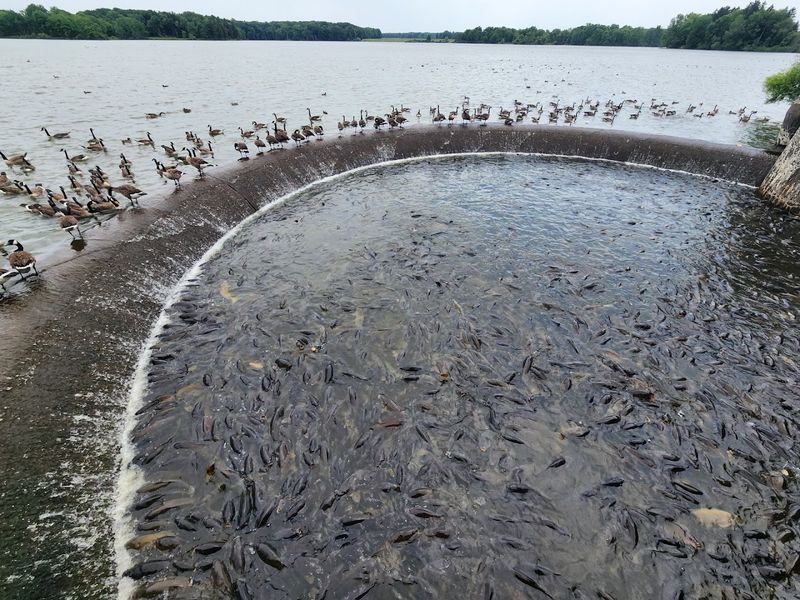
Understanding the spillway’s origins adds fascinating context to your visit. Engineers constructed Pymatuning Dam in 1934 by damming the Shenango River to control regional flooding.
This massive project created Pennsylvania’s largest lake and fundamentally altered the local landscape.
The spillway serves as the overflow control mechanism for the reservoir, managing water levels during heavy rainfall. Its engineering allows excess water to flow safely downstream without threatening the dam’s integrity.
This practical purpose created an unexpected side effect—a perfect gathering spot for carp.
Nobody planned for the famous fish phenomenon when designing the structure. Over decades, carp naturally congregated near the spillway where water movement and visitor feeding created an ideal habitat.
The behavior reinforced itself as more fish gathered, attracting even more, until it became the spectacle we see today.
The dam and spillway represent Depression-era infrastructure projects that provided employment while solving real problems. Standing here connects you to that legacy of American ingenuity and determination.
What started as a flood control solution became an iconic tourist attraction, proving that sometimes the best destinations emerge accidentally rather than through careful planning.
Bird Watching Opportunities Galore
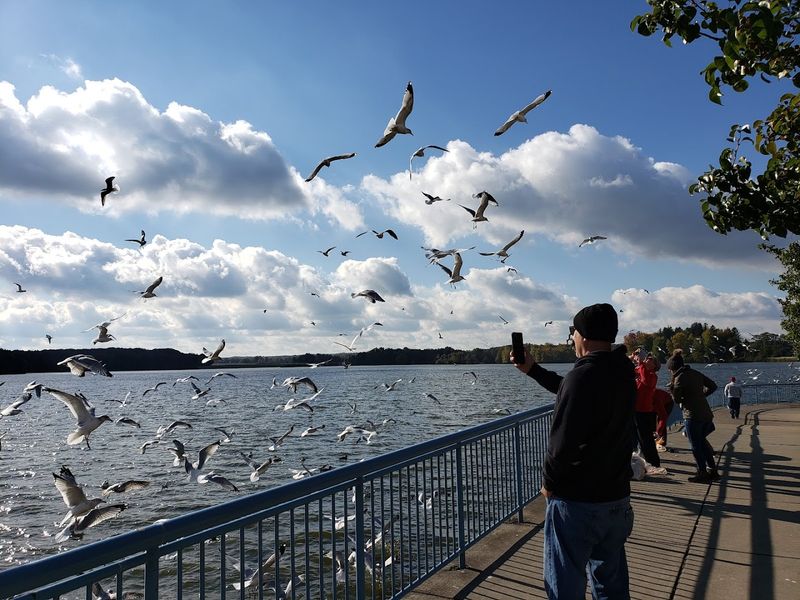
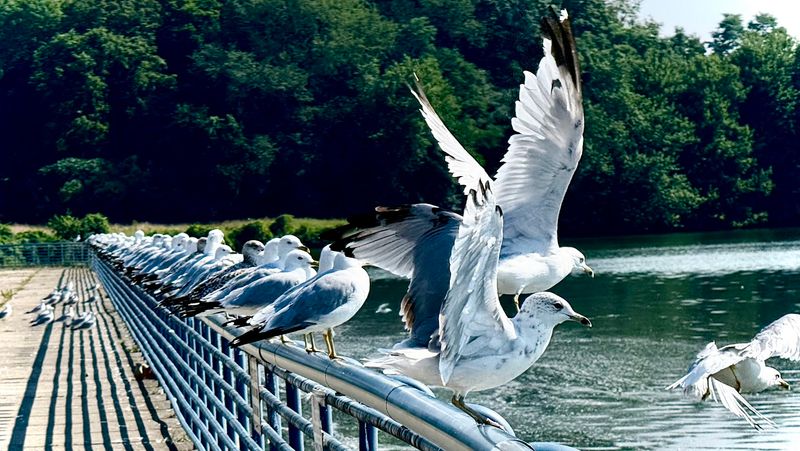
While the carp steal the spotlight, the diverse bird population deserves attention too. Mallard ducks, Canada geese, and ring-billed gulls create a constant aerial and aquatic show.
Watching their different feeding strategies provides endless entertainment and surprising insights into bird behavior.
Seagulls demonstrate impressive aerial acrobatics, snatching bread pieces mid-air with remarkable precision. Throw bread skyward and watch them swoop in from all directions.
Their competitive nature makes every catch a minor victory worth celebrating.
Geese prefer a more grounded approach, waddling along the edges and accepting offerings directly. They’re less aggressive than gulls but equally enthusiastic about free meals.
Some visitors find the geese’s calm demeanor more appealing than the chaotic gull feeding.
The bird population changes seasonally, with different species appearing throughout the year. Fall brings increased goose numbers as migratory patterns shift southward.
Spring welcomes returning waterfowl establishing nesting territories. Serious birders can spot interesting species beyond the common varieties, making the spillway worthwhile for nature observation beyond just the famous fish.
Picnic Areas and Park Amenities
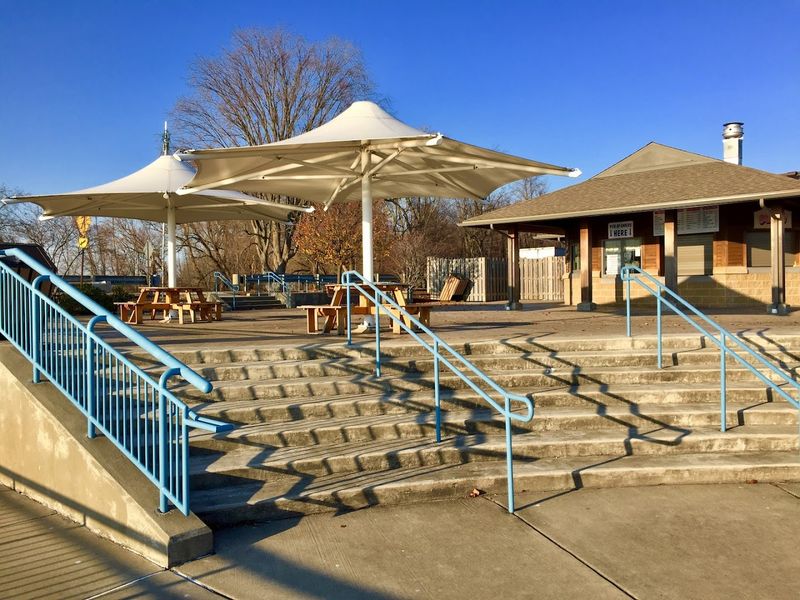
Pymatuning State Park surrounds the spillway with extensive recreational facilities worth exploring. Numerous picnic tables and benches provide shaded spots for enjoying packed lunches while watching the water.
The park maintains these areas well, keeping them clean and accessible for visitors.
Beyond the immediate spillway area, the park stretches across Pennsylvania and Ohio borders, offering trails, swimming areas, and additional attractions. Paved paths accommodate walkers and wheelchair users easily.
Dirt trails lead deeper into wooded areas for those seeking quieter natural experiences.
Restroom facilities near the spillway provide necessary conveniences, though availability varies by season and day. During peak summer weekends, expect longer lines and occasional closures for maintenance.
Planning bathroom breaks accordingly helps avoid frustration, especially when visiting with young children.
The beautiful lake scenery creates a postcard-worthy backdrop for your visit. Many families extend their spillway trip into a full day at the park, combining feeding fish with swimming, hiking, or simply relaxing lakeside.
The park accommodates large groups easily, making it popular for reunions, parties, and organized outings. This versatility ensures that even if someone in your group tires of the spillway quickly, plenty of alternative activities await nearby.
Spotting Bald Eagles and Other Wildlife
Sharp-eyed visitors sometimes spot bald eagles soaring above the spillway or perched in nearby trees. These magnificent raptors hunt fish in the reservoir, making the area prime eagle territory.
Bringing binoculars or a camera with zoom capabilities increases your chances of capturing these incredible moments.
Eagles typically appear during early morning or late afternoon hours when fish are most active near the surface. Their presence adds another layer of excitement to an already remarkable location.
Seeing America’s national bird in the wild remains a thrilling experience that elevates any nature outing.
Beyond eagles, the park ecosystem supports diverse wildlife including deer, waterfowl, turtles, and various fish species. Patient observers might spot catfish swimming among the carp, identifiable by their distinctive whiskers.
The variety of species makes each visit slightly different from the last.
Wildlife photography enthusiasts find endless subjects here, from dramatic eagle flights to intimate bird portraits. The concentration of animals in one location creates opportunities unavailable elsewhere.
Even casual smartphone photographers leave with impressive shots. Remember to stay alert and camera-ready, as wildlife appearances happen unexpectedly and disappear just as quickly.