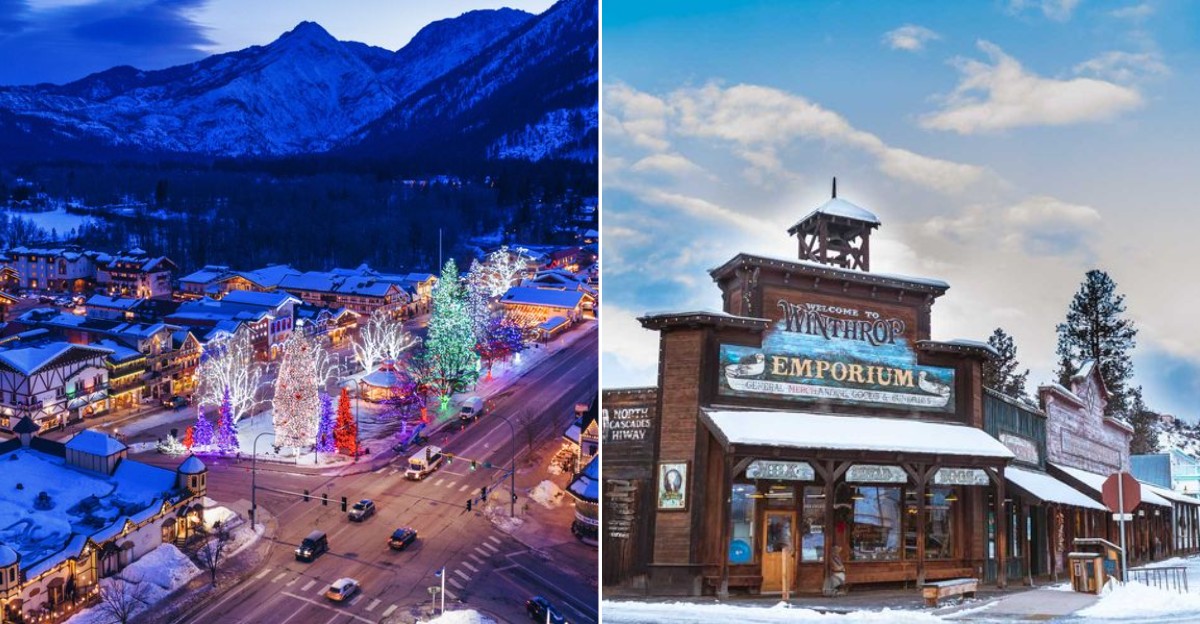
One Washington mountain town fought off hard times in the 1960s by redesigning itself to look like a village in the Alps.
Now its December lights pull in visitors from around the world.
I love that kind of bold, slightly wild idea.
Another town in the state chose Old West storefronts, and a third leans into its Norwegian roots with a full winter festival.
You get Victorian brick, harbor views, rolling farmland, and one main street that once played a fictional Alaska town on TV.
I find that last one especially delightful. Each one has its own personality, and none of them feels copied from a mall display.
Snow is never promised west of the Cascades, of course. But when a dusting hits these streets, who needs a picture book when you can walk around inside one?
Poulsbo
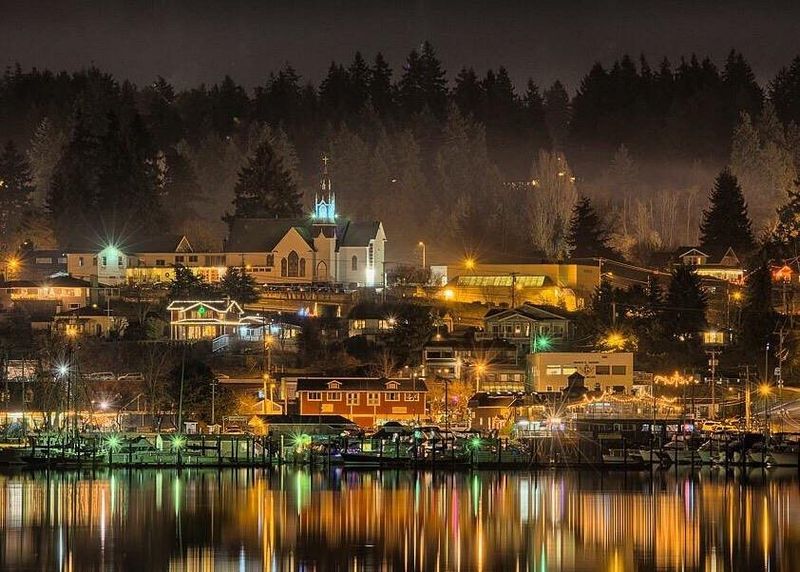
Uff da! Poulsbo wears its Norwegian heritage proudly, which is why folks call it Little Norway.
The town sits on Liberty Bay, and its downtown features Scandinavian-style buildings, painted rosemaling designs, and Viking touches. Front Street feels like a Nordic village that drifted across the ocean and parked itself in Washington.
Holiday time brings Julefest, a Scandinavian Christmas celebration put on by local groups. Past festivals have featured a Lucia procession, folk dancing, and a bonfire by the water.
Lucia, if you haven’t met her, is a figure from Scandinavian tradition who wears a crown of candles. The procession is a sweet sight, especially for kids.
Don’t leave without stopping at Sluys Poulsbo Bakery, a longtime Front Street favorite. Its windows full of pastries and breads are basically a holiday postcard on their own.
Check event dates before you go, since festival details can shift from year to year. Then grab a treat and wander along the waterfront boardwalk at Liberty Bay.
Bring a hat for the breeze off the bay. It can get chilly fast once the sun dips behind the hills.
Port Townsend
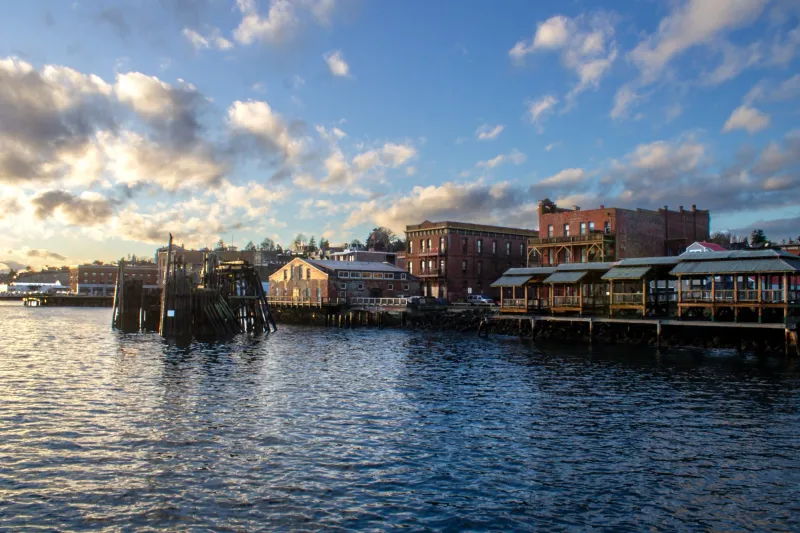
Victorian houses with turrets and fancy trim cover the bluff above Port Townsend. They look like they were built for garlands and candlelit windows.
The town’s historic district is a National Historic Landmark. Brick buildings from the late 1800s line Water Street, facing the busy waters near the entrance to Puget Sound.
Back then, locals expected the town to become a major West Coast port. The railroad never arrived as planned, so many of those grand buildings survived instead of getting replaced.
That lucky twist is your gain. Strolling Water Street feels like flipping through an old storybook, with independent shops, bookstores, and harbor views around each corner.
Head uptown for the mansions and quiet streets. Then drive out to Fort Worden State Park, where old officers’ houses and beaches add a bit of seaside drama.
Ferries connect Port Townsend with Coupeville on Whidbey Island. That makes it easy to pair this stop with another storybook town on the same trip.
Leavenworth
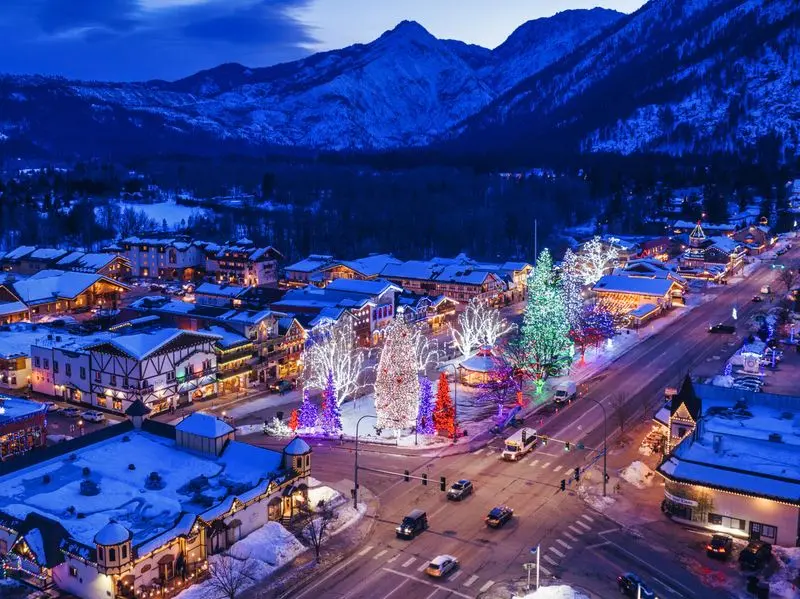
Few towns can say a costume change saved them, but Leavenworth can. In the 1960s, local leaders backed a plan to give the struggling railroad and logging town a Bavarian makeover.
Today, painted trim, steep rooflines, and Alpine-style storefronts line Front Street. Add a fresh layer of snow from the Cascades, and the scene looks like it came straight off a cookie tin.
December is the main event. December brings Village of Lights: Christmastown, when downtown glows with more than half a million lights.
Holiday music, strolling carolers, and festive activities add to the atmosphere, while the lights remain illuminated daily from Thanksgiving through February.
You can also visit the Leavenworth Nutcracker Museum, which holds thousands of nutcrackers from around the world. It’s a little quirky, a little charming, and very on theme.
Plan ahead, because festival weekends draw big crowds and lodging fills up early. Weekdays in December offer the same twinkling lights with a lot more elbow room on the snowy sidewalks.
Bring boots with good grip and a thermos of cocoa. Your future self, standing in the snow on Front Street, will thank you.
Coupeville
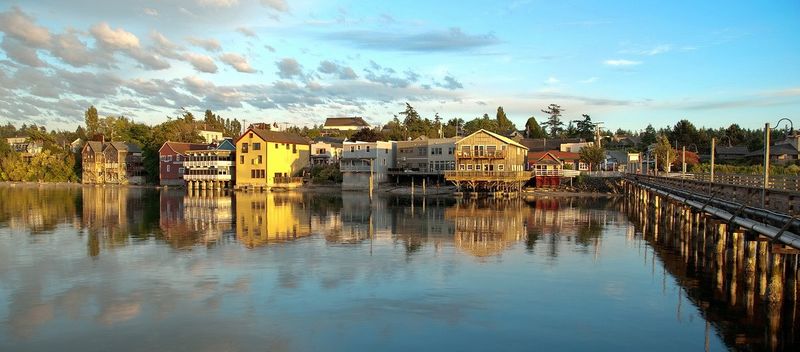
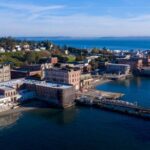
A red wharf building on stilts might be the most photographed sight on Whidbey Island. It stands at the end of Coupeville’s historic wharf, stretching out over Penn Cove.
Coupeville is one of the oldest towns in Washington, founded by sea captains in the 1850s. You can still see old homes and storefronts from that era along Front Street.
The whole town sits inside Ebey’s Landing National Historical Reserve. Created in 1978, it was the first reserve of its kind in the country, protecting farmland, prairies, and historic buildings.
That means your holiday drive comes with sweeping views of open fields and water. On a frosty morning, the farmland looks like a page from a winter picture book.
Penn Cove is also famous for its mussels. Seafood lovers can find them on menus around town, though offerings change with the season.
Bundle up and walk the wharf near sunset. The sky over the cove can turn pink and gold while the town lights flicker on behind you.
Roslyn
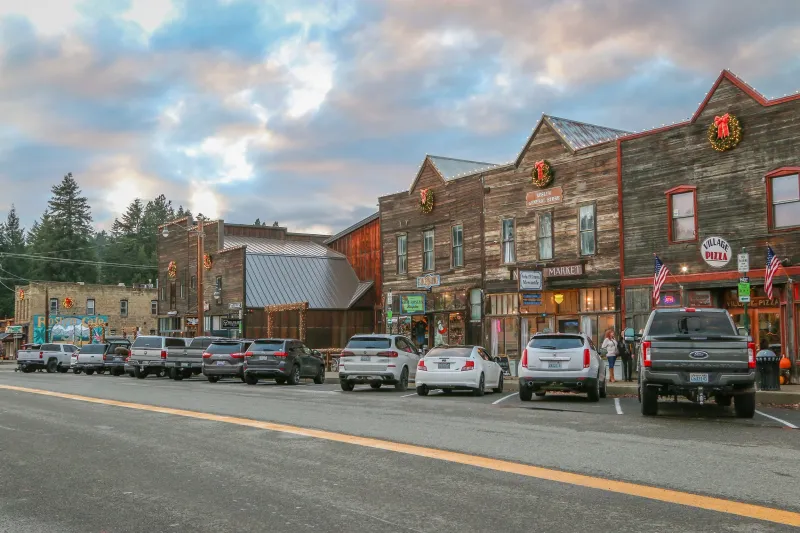
Fans of 1990s TV may spot something familiar here. Roslyn played the fictional town of Cicely, Alaska, on the show Northern Exposure.
The famous Roslyn Cafe mural, with its painted camel, still catches eyes downtown. Snap a photo and you’ll have a souvenir that TV fans will recognize instantly.
Long before cameras arrived, Roslyn was a coal mining town. Miners came from many countries, and that history still shows in its old brick buildings and churches.
The Roslyn Museum shares stories from those mining days. It’s a small stop that helps the old town’s past make sense.
Snow often blankets this corner of the Cascades in winter. Nearby trails and the Suncadia resort area give you plenty of ways to play outside.
Roslyn sits just off Interstate 90, east of Snoqualmie Pass, so it’s an easy stop on a winter road trip across Washington. Check pass conditions first, because storms can slow things down.
Downtown is only a few blocks long. That small size is part of the charm, since you can see the main sights in one easy stroll.
Winthrop
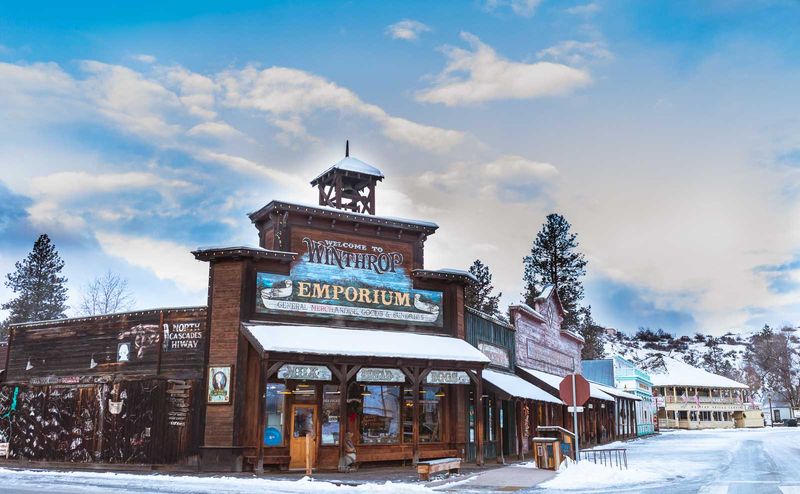
Saddle up, partner, because this Christmas card comes with hitching posts. Winthrop rebuilt its downtown with an Old West look in the early 1970s, complete with false-front buildings and wooden boardwalks.
Snow tends to pile up nicely in the Methow Valley. That makes the frontier storefronts look like a holiday scene from a classic western movie.
Winter here is all about getting outside. Methow Trails manages one of the largest cross-country ski trail networks in North America, and Winthrop sits right in the middle of it.
Never skied before? Rentals and lessons are available in the valley, so you can wobble along with plenty of company.
History fans should check out the Shafer Historical Museum, which shows off pioneer buildings and old mining equipment. Hours change with the seasons, so check before you go.
One tip matters a lot here. The North Cascades Highway closes seasonally, so winter visitors coming from western Washington need to use alternative routes through Stevens Pass or Snoqualmie Pass.
Always check mountain pass conditions before leaving.
Pack layers, a camera, and some patience for icy roads. The reward is a town that feels lifted from a snow globe wearing a cowboy hat.
La Conner
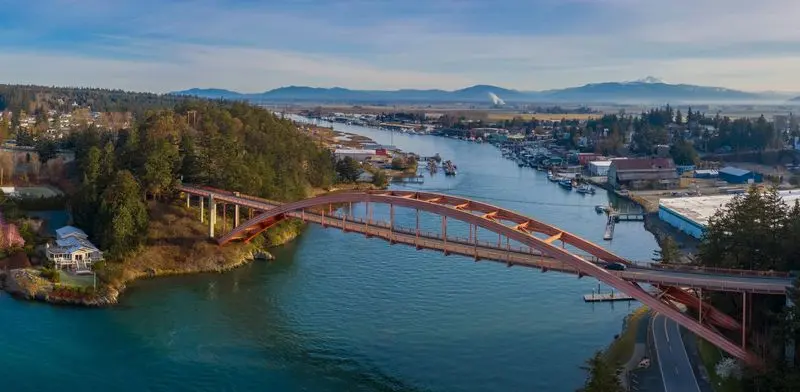
A bright orange bridge marks the edge of La Conner, and it’s hard to miss. The Rainbow Bridge arches over the Swinomish Channel, giving this little waterfront town a postcard welcome.
First Street runs along the channel with historic wooden buildings, galleries, and shops. In winter, the gray water and boats make a peaceful backdrop for holiday strolling.
Art lovers get a treat here. The Museum of Northwest Art focuses on artists from the Pacific Northwest, and it sits right in the middle of town.
La Conner is surrounded by Skagit Valley farmland. In winter, flocks of snow geese and trumpeter swans often visit those fields, which feels like a scene from a nature storybook.
Keep your binoculars handy on the drive in. Pull over only where it’s safe, since the farm roads can be narrow.
Spring brings the famous tulip crowds, but December is calmer. You can browse shops, grab a hot drink, and watch the water without bumping elbows.
Pack a scarf for the channel breeze. It sneaks up on you once the afternoon sun fades.
Langley
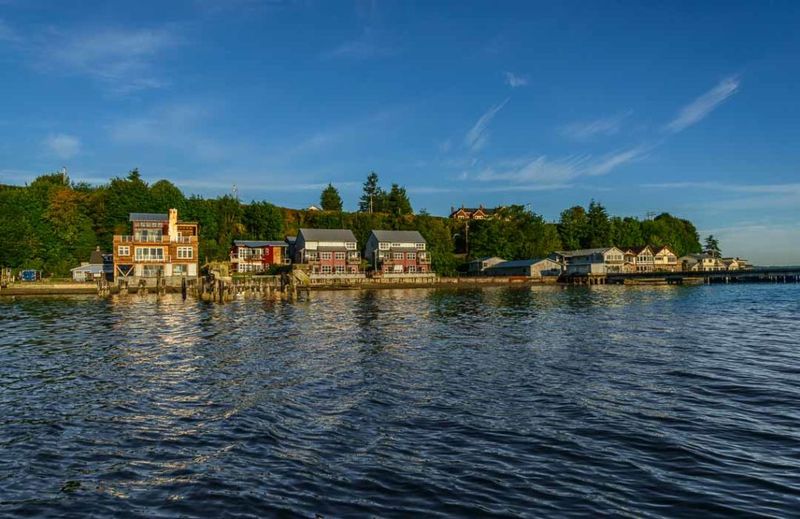
Perched on a bluff above Saratoga Passage, Langley might be the most charming tiny downtown on Whidbey Island. Its main streets are lined with galleries, bookshops, and cafes with water views.
Getting here feels like part of the story. Most visitors take the ferry from Mukilteo to Clinton, then drive a few miles north into town.
Langley’s Seawall Park runs along the shoreline below the village. It’s a great spot for watching boats and birds, and in spring, gray whales sometimes pass by.
Look for the bronze statue of a boy and his dog near the waterfront. It’s a popular photo spot and a sweet bit of small-town character.
Langley also hosts a Mystery Weekend each February, when downtown turns into a giant puzzle. Visitors follow clues around town to solve a fictional case.
For a December visit, wander First Street after dark when shop windows glow. Then end the night above the water, where Washington’s winter quiet feels like the last page of a good bedtime story.