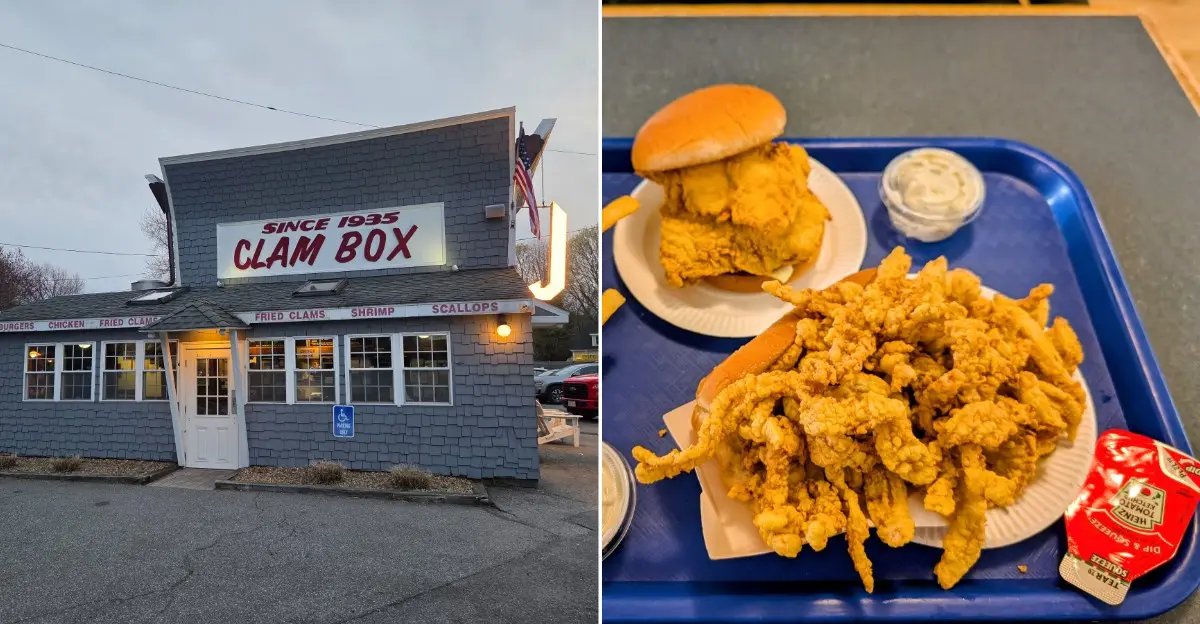
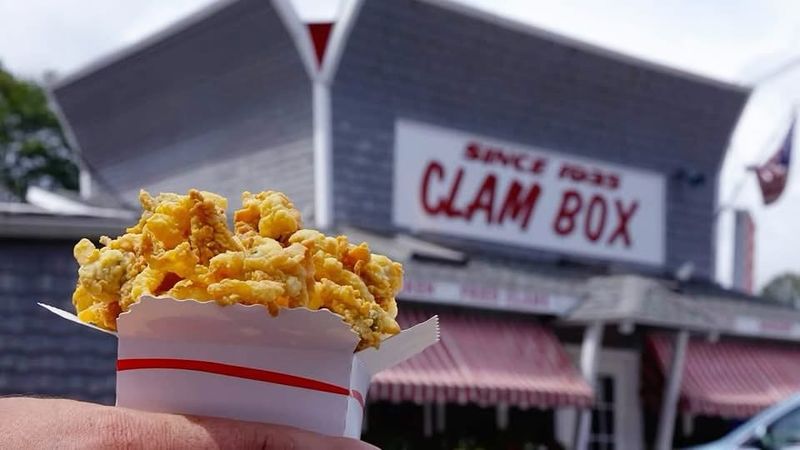
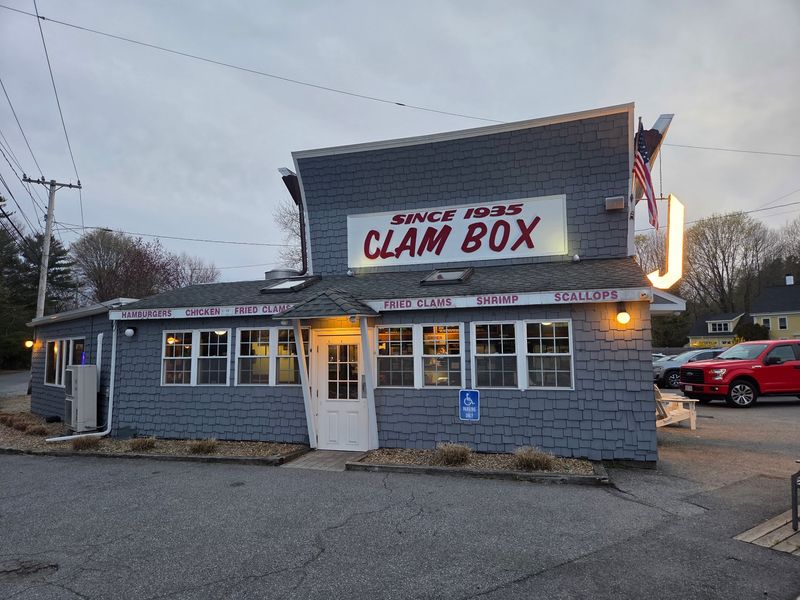
The building is shaped like a giant takeout box. Its flared roof copies the open flaps of a cardboard clam carton, and it has looked that way since 1935.
That alone would earn a photo stop. But the clams inside come from nearby beds, harvested daily by local fishermen.
They get dipped in evaporated milk, rolled in a corn and pastry flour blend, then fried twice.
I like how stubborn the whole operation feels. The fryer oil gets changed twice a day.
The season ends when the season ends, and on closing day they serve until the clams run out.
Massachusetts has no shortage of seafood shacks claiming the crown. So what makes a box-shaped stand on a busy road the one so many people keep driving toward?
A Roadside Building Shaped Like Your Lunch Will Stop You In Your Tracks
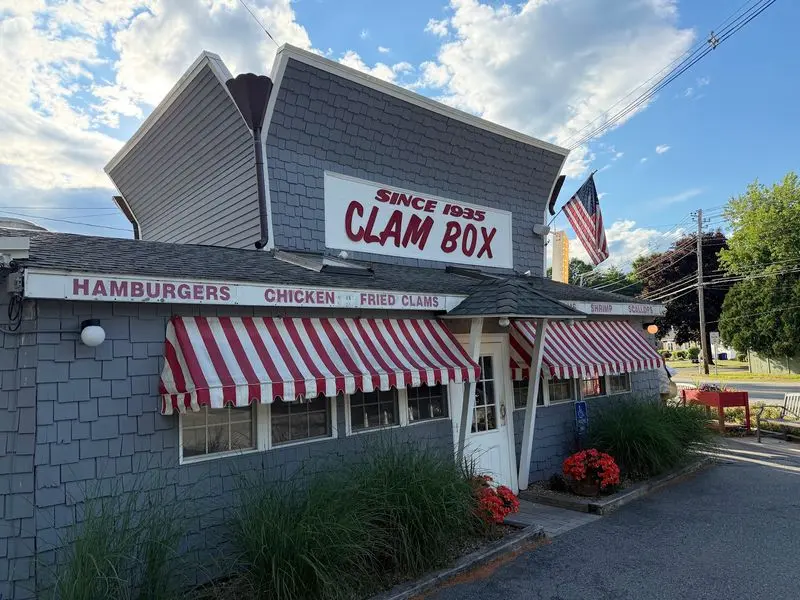
Few restaurants look exactly like the thing they serve food in. The Clam Box of Ipswich does, and it has since Dick Greenleaf designed it in 1935.
His idea was simple and a little brilliant. The building copies a giant open-topped cardboard takeout container, with a flared roof standing in for the open flaps.
Back then, it was built from homasote and painted silver with red trim. Today the outside wears shingles, often gray, which suits the New England coast nicely.
Look down, too. The landscaping sometimes features flowers spelling out CLAM BOX, which feels like the building introducing itself.
The structure is now a nationally recognized landmark. That’s quite a promotion for something designed to resemble a lunch carton.
Roadside architecture like this used to be a way to grab drivers’ attention. Most of those quirky buildings have vanished, so a survivor this old deserves a slow pass.
My advice is to snap your photo before you join the line. Once food is in your hands, the camera tends to lose priority.
Also, grab the shot from an angle. The roof flaps look best when you can see them flare out against the sky.
The Fried Clams Get More Care Than Most Birthday Cakes
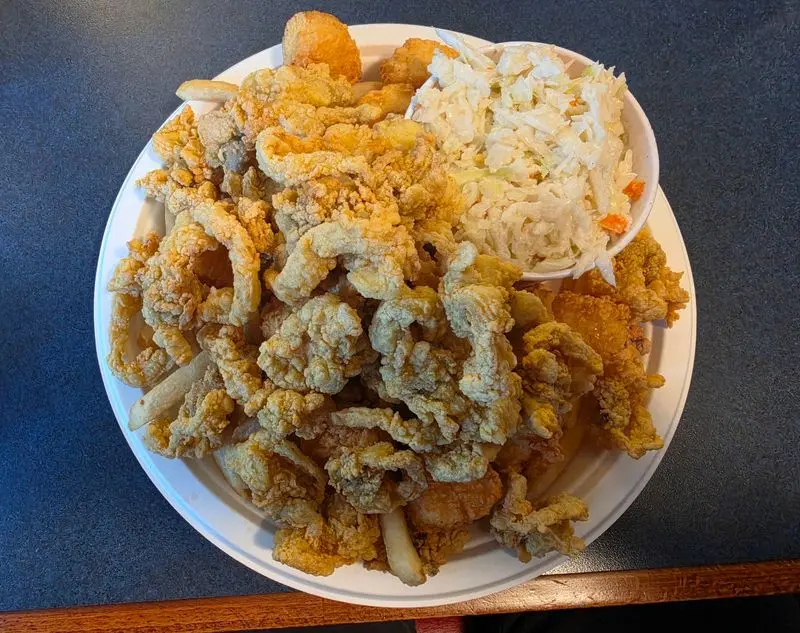
Evaporated milk is the first step. Each clam takes a dip before getting coated in a flour blend of three parts corn flour and one part pastry flour.
The coating isn’t just sprinkled on. It’s hand-kneaded so every clam gets covered thoroughly.
Then comes the two-step deep fry. The goal is a golden brown outside with a tender clam inside.
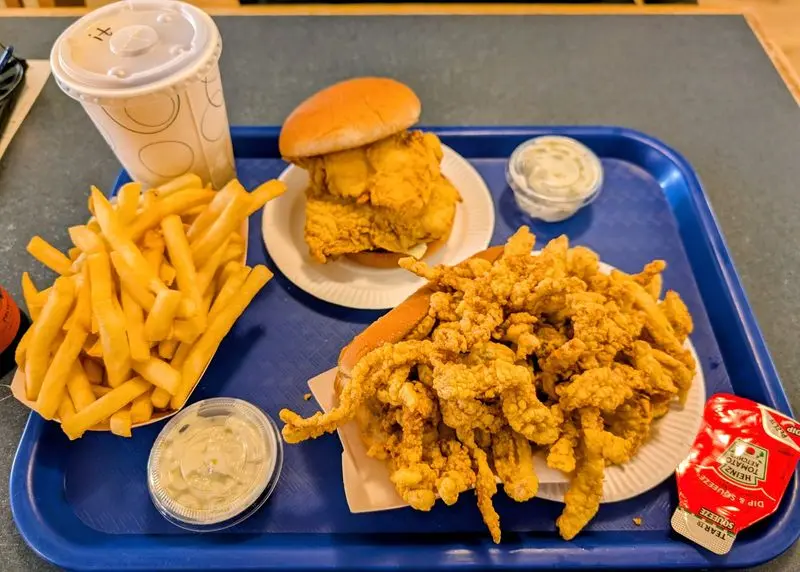
You can choose between whole-belly clams and strips. Bellies are the full clam, richer and more briny, while strips are milder and chewier for folks easing into clam life.
The clams themselves are native, harvested daily from nearby beds by local fishermen. That short trip from shore to fryer matters more than any fancy seasoning.
Speaking of seasoning, the batter skips it on purpose. The kitchen wants the seafood flavor to shine, and salt, pepper, and fresh lemon are there if you want a boost.
First-timers should try the whole bellies at least once. If you love them, welcome to the club.
If not, the strips make a fine backup plan, and nobody has to know.
Fresh Oil Twice A Day Sounds Small Until You Taste The Difference
Plenty of fry shacks stretch their oil as long as possible. At the Clam Box of Ipswich, it gets changed twice daily.
That rule traces back to Marina Chickie Aggelakis, who bought the place in 1984. She’s credited with setting many current habits, including a strict focus on fresh clams.
Why should you care about oil? Old oil can make fried food taste heavy and stale, even when the seafood is great.
Clean oil lets the light corn flour coating crisp up properly. It also keeps one batch of haddock from tasting like yesterday’s shrimp.
Habits like this rarely show up on a menu board. Still, they shape every single bite that comes out of the window.
Think of it as quiet craftsmanship. Nobody claps for an oil change, yet everyone notices when it’s skipped.
Chickie’s standards stuck around for a reason. Decades later, they’re still guiding how the kitchen works, and that kind of consistency is hard to fake.
So when your tray arrives golden and crisp, give a little silent thanks to the fryer schedule. It’s doing more work than you think.
Not A Clam Person? The Menu Has Your Back
Scallops, shrimp, oysters, calamari, and haddock all get the deep-fry treatment here. So the clam-shy members of your group won’t go hungry.
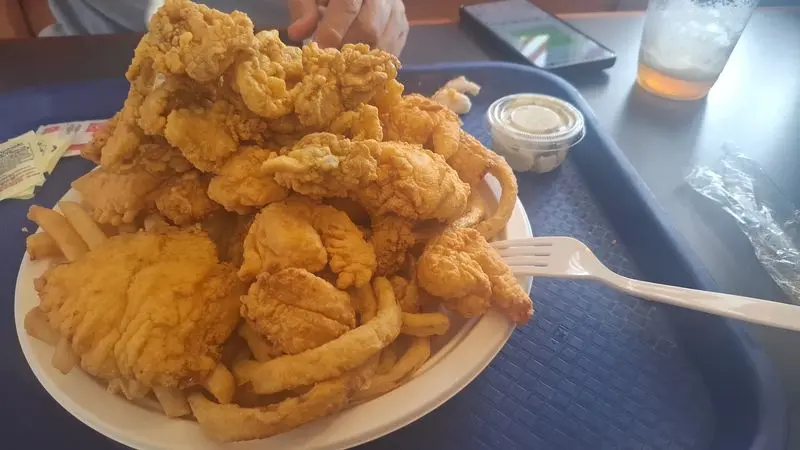
The fisherman’s platter piles several seafood favorites together, and it’s a smart pick for sharing. Trying to tackle one solo is a bold life choice.
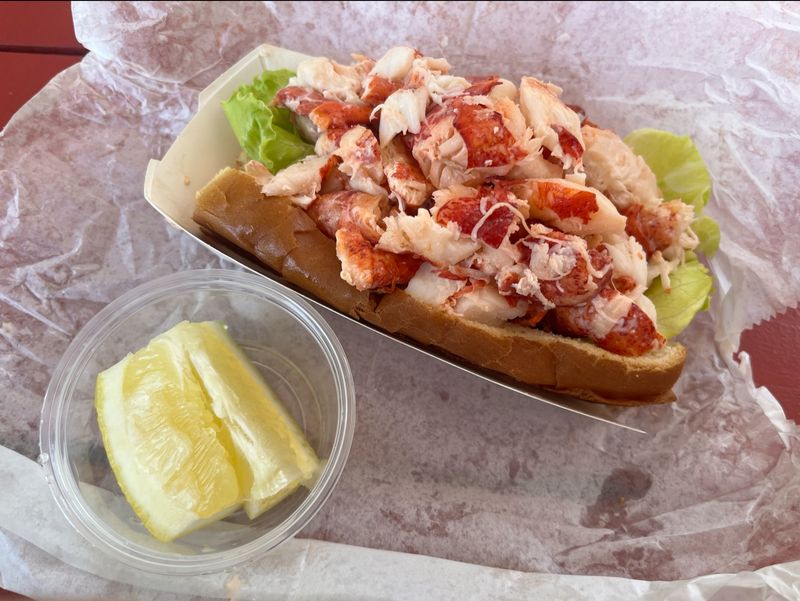
Craving something cold? The lobster roll uses both claw and tail meat, served chilled on a buttered, toasted split-top bun.
Kids or picky eaters can stick with hamburgers, cheeseburgers, hot dogs, or chicken fingers. Nobody gets left out of the road trip.
Sides deserve real attention. The onion rings are homemade, and so is the coleslaw.
There’s clam chowder too, plus dill pickles for a tangy break between fried bites. Homemade tartar sauce and cocktail sauce come along as backup.
A good game plan is ordering a few different things and passing them around the table. That way you taste the range without needing a nap afterward.
Just don’t skip the tartar sauce. Fried haddock with a swipe of it is a very good argument for coming back soon.
Order At The Window And Listen For Your Number
Self-service keeps things simple. You walk up to the window, place your order, pay, and get a number.
Then you find a seat and wait to be called. When your number rings out, you grab your tray and carry it to your table.
It’s old-school, and that’s part of the charm. No waiter hovering, no fancy menus, just you and a tray of fried seafood.
Credit cards are accepted, so there’s no need to hunt for an ATM. Restrooms and parking are also available on site.
Summer weekends can bring long lines that stretch out the door and into the parking lot. That’s the price of popularity in clam season.
A little planning helps. Arriving close to the 11 a.m. opening on a weekday gives you a better shot at a calmer start.
Know what you want before you reach the window, too. The folks behind you will appreciate it, and so will your growling stomach.
Got a dietary concern? Ask at the window about how items can be modified before you commit.
Grab A Picnic Table Under The Big Tent When The Weather Cooperates
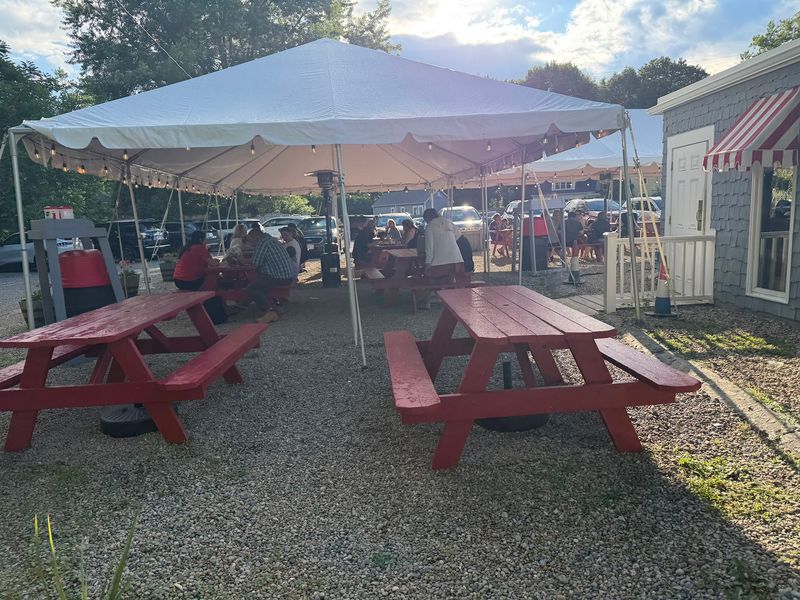
Outdoor seating is the favorite move on a nice day. A large tent covers rows of picnic tables beside the gravel parking area.
That tent is a gift. It shades you from strong sun and keeps a passing sprinkle from ruining lunch.
There’s also an outdoor deck. Both spots let you enjoy summer air while working through a plate of clams.
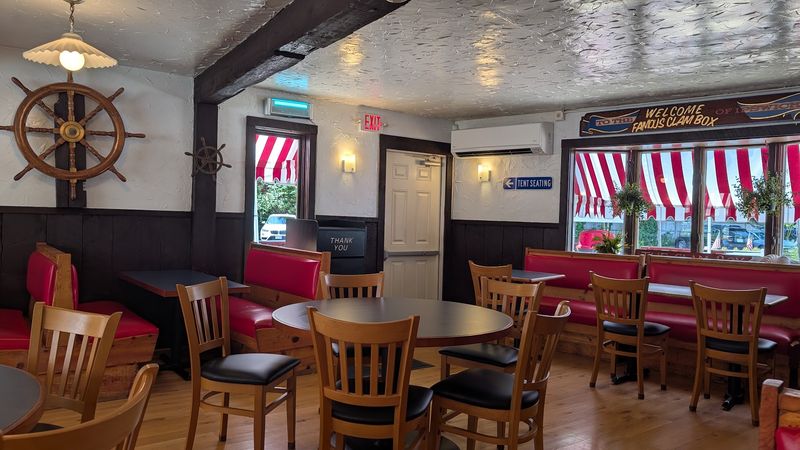
Prefer to stay inside? The indoor dining room is small, dimly lit, and decorated with a nautical theme.
That cozy room works well on cooler days. Remember that the season runs into late fall in New England, when a warm seat can feel pretty great.
Families often like the tent for the extra space. Kids can wiggle a bit without bumping into the next table.
One tip: send someone to save a table while another person waits in line. Teamwork makes busy days run smoother.
And bring napkins to the table generously. Fried seafood eaten at a picnic bench is wonderful, but it’s rarely tidy work.
A Love Story Started This Whole Clam Operation
Dick Greenleaf built the stand in 1935 as a present for his wife. She wanted to run a restaurant, and he delivered one shaped like a takeout box.
The gift paid off fast. The stand sold 50 to 80 gallons of clams each week early on.
The Greenleafs sold in 1962, and the business passed through several owners. An early addition was a one-story dining room.
Big change came in 1984 when Marina Chickie Aggelakis bought the place. Her standards still shape the kitchen.
Chickie led the Clam Box of Ipswich until 2020. Her son Dimitri took over briefly after her.
Today, Johanna Aggelakis, Chickie’s daughter-in-law, runs the restaurant. She started training under Chickie in 2015, so the lessons came straight from the source.
In 2025, the Clam Box celebrated its 90th anniversary. That’s nine decades of frying for Massachusetts families and visitors.
Knowing this history makes the meal feel warmer. Every basket comes from a long chain of people who cared about getting it right.
Television Crews And Food Writers Keep Finding Their Way Here
Yankee Magazine has featured it. So have The Food Network, Phantom Gourmet, and WCVB Channel 5’s Chronicle.
Even US Airways inflight publications gave it a spotlight. Imagine reading about fried clams at 30,000 feet with only pretzels nearby.
More recently, Opinionated About Dining ranked it on its Cheap Eats in North America list from 2023 to 2025. That’s a lot of attention for a box-shaped building.
The Clam Box of Ipswich is widely considered among the best fried clam spots in New England. Plenty of fans go further and call it the best in the country.
Is that fair? You’ll have to decide for yourself.
Still, media love doesn’t last decades by accident. Shows and magazines return because the story stays good and the food stays consistent.
Here’s a fun challenge for your visit. Try the clams first, plain, before adding any sauce.
Then add tartar sauce and compare. You’ll be doing your own little taste test, minus the camera crew and the makeup artist.
Plan Your Trip Around The Season Before The Fryers Go Quiet
You’ll find the shack at 246 High Street, Ipswich, MA 01938. It sits about 30 miles north of Boston in a historic beach town.
That makes it an easy day trip from the city. Pair it with a drive along the Massachusetts North Shore and you’ve got a pretty good Saturday.
Timing matters because the Clam Box is seasonal. Hours generally run 11 a.m. to 7 p.m., with a slightly later close on Fridays and Saturdays.
Tuesdays are closed, so don’t plan your big clam day then. Double-check hours before heading out, especially early or late in the season.
The 2026 season wraps up on Sunday, November 29. On that last day, they typically serve until the clams run out around 3 p.m.
Fall visits have their own appeal. Cooler air makes hot chowder and crispy fried seafood feel even more comforting.
Whatever month you pick, go hungry and bring a friend to split a platter. A giant takeout box is waiting, and it’s full of good reasons to make the drive.