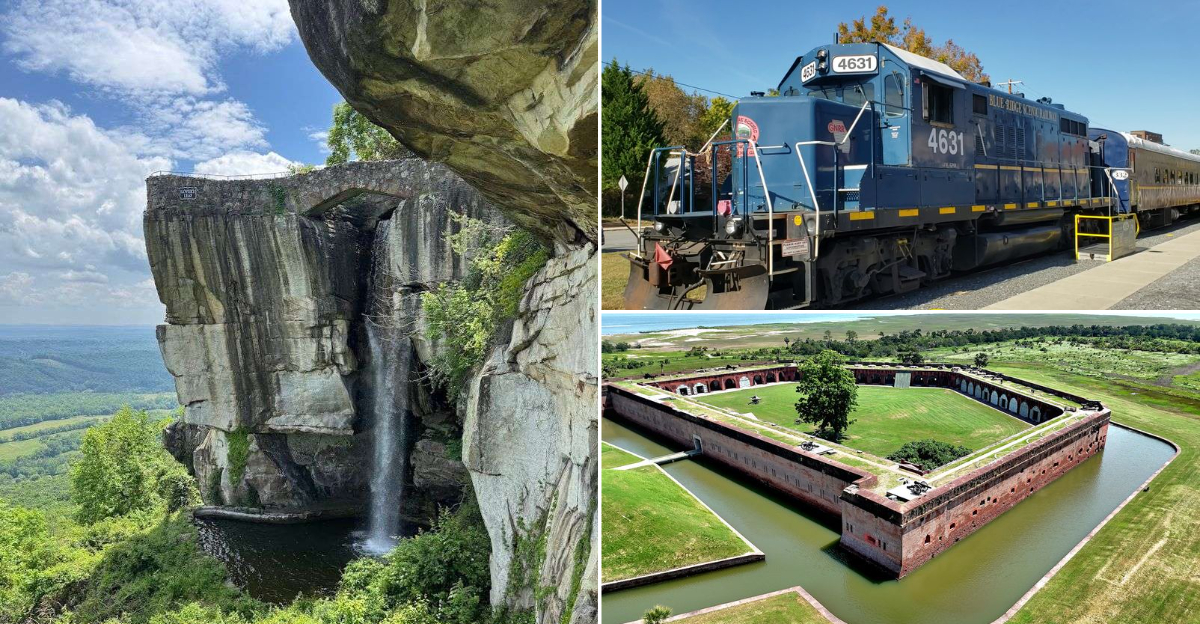
Georgia has a sneaky way of turning a simple road trip into a full-blown highlight reel, and that happened fast once we started mapping this adventure.
One minute you are planning a few scenic stops, and the next you are standing between Civil Rights history, ancient earthworks, waterfalls, wild horses, and train rides that make adulthood feel delightfully optional.
This state does not believe in being one thing only, which is exactly why it is so fun to explore, especially if you like your travel with equal parts meaning, beauty, and a little wow factor.
So before getting distracted by peach cobbler, charming downtowns, and the dangerous temptation to call every pretty overlook the best one, these are the ten iconic Georgia attractions we absolutely had to see first, from Atlanta landmarks to barrier island beaches and mountain views that deserve their own applause.
1. Martin Luther King Jr. National Historical Park – Atlanta
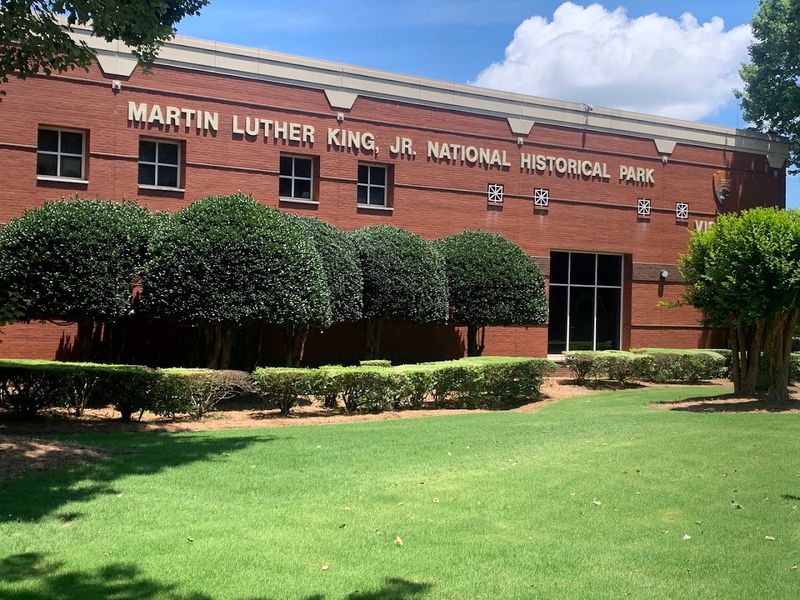
History speaks softly here, but it lands with real force.
In Atlanta’s Sweet Auburn neighborhood, Martin Luther King Jr. National Historical Park brings together the birth home, Ebenezer Baptist Church, and moving memorial spaces tied to one of America’s most important leaders.
Walking these blocks, you feel how an ordinary street shaped an extraordinary voice.
The visitor center helps connect the dots with exhibits on the Civil Rights Movement, nonviolent protest, and King’s lasting global influence.
Rangers often add context that turns names from textbooks into living people with urgency, courage, and flaws.
That human detail keeps the experience grounded instead of distant.
Ebenezer Baptist Church is especially powerful because it still feels intimate rather than oversized or staged.
Hearing King’s words in the place where he preached adds a layer no recording can fully duplicate.
Nearby, the reflecting pool and memorial tomb invite a pause that most travelers will not rush.
If you visit Atlanta and skip this park, the city story feels incomplete.
It is centrally located, easy to pair with other downtown stops, and far more affecting than a quick checklist attraction.
Come ready to listen, read carefully, and leave with more than photos, because this place lingers in the mind long after the day ends.
2. Cloudland Canyon State Park – Rising Fawn
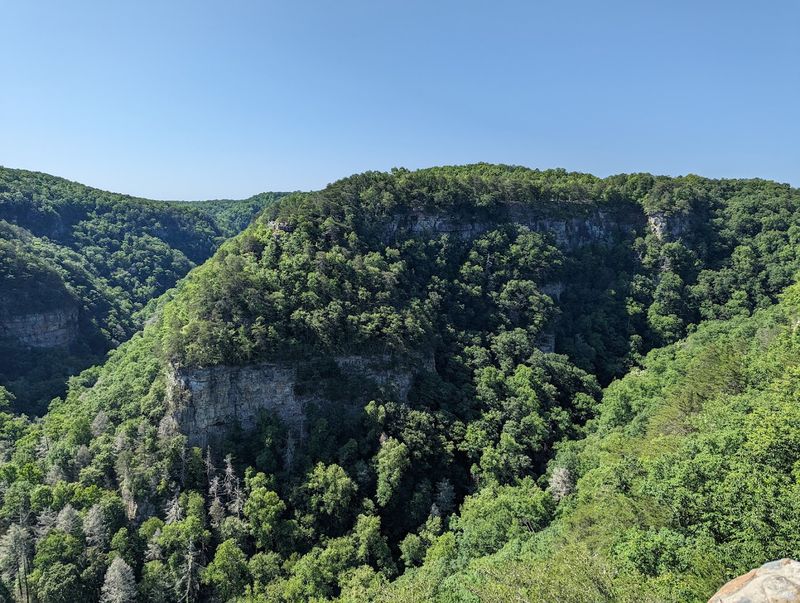
The first overlook at Cloudland Canyon feels like Georgia showing off a little.
Located in Rising Fawn on the state’s northwestern edge, this state park delivers massive canyon views, steep forested walls, and trails that make your calves file a formal complaint.
It is bold, scenic, and wonderfully worth the effort.
The park’s signature hikes lead to Cherokee Falls and Hemlock Falls, where stairs descend deep into the gorge.
That means the return climb is no joke, so water and realistic confidence help.
Still, every switchback pays you back with changing perspectives and that satisfying earned-it feeling.
Cloudland also works for travelers who prefer gentler adventure.
There are rim overlooks, picnic spots, campgrounds, cottages, and chances to catch sunrise fog drifting through the canyon like a stage effect.
In spring and fall especially, the color and light can look almost suspiciously perfect.
Because it sits on Lookout Mountain, the setting feels more Appalachian than many visitors expect from Georgia.
That surprise is part of the fun, along with the sense that you have stumbled into one of the Southeast’s most dramatic landscapes.
If your trip needs fresh air, big views, and a little stair-induced humility, Cloudland Canyon absolutely earns a spot on the list.
3. Amicalola Falls State Park – Dawsonville
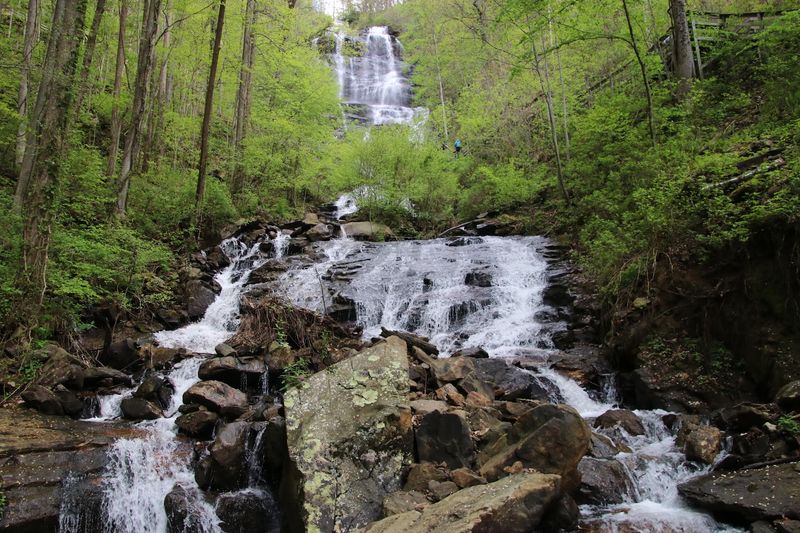
Water steals the spotlight at Amicalola Falls, and honestly, it has earned the role.
Near Dawsonville in North Georgia, this state park is home to one of the tallest waterfalls in the Southeast, dropping 729 feet through a series of dazzling cascades.
It is the kind of place that makes everyone reach for a camera, then forget to use it.
Several trails and access points let you choose your adventure level.
You can admire the falls from easier viewpoints or tackle the staircase route for closer looks and a memorable leg workout.
Either way, the sound of rushing water follows you like a dramatic soundtrack.
The park is also famous as a gateway to the Appalachian Trail approach route, which gives the area a quiet buzz of ambition.
Even if you are not thru-hiking to Maine, there is something inspiring about standing where big journeys begin.
The lodge, cabins, and treetop accommodations make it easy to linger longer.
Because the park sits within the Chattahoochee National Forest region, the surrounding mountain scenery adds plenty beyond the falls themselves.
Autumn is especially spectacular, but every season brings a slightly different mood.
If your Georgia itinerary needs grandeur, fresh mountain air, and a waterfall with main-character energy, Amicalola Falls is a very easy yes.
4. Cumberland Island National Seashore – Accessible by ferry from St. Marys

Wild horses on a quiet beach tend to get everyone’s attention.
Cumberland Island National Seashore, reached by ferry from St. Marys, feels wonderfully untamed, with broad Atlantic shoreline, maritime forests, marshes, and historic ruins spread across Georgia’s largest barrier island.
It is less a quick attraction and more a full mood.
Because access is limited, the island keeps a rare sense of space and calm.
You trade convenience for beauty, and that bargain pays off fast once you start walking under live oaks or along nearly empty sand.
Bring water, good shoes, and respect for the island’s rhythms.
The famous feral horses are descendants of animals introduced long ago, and seeing them in the dunes is unforgettable.
But they are only part of the story.
Cumberland also holds the haunting remains of Dungeness, a Carnegie-era mansion, plus long cultural and Indigenous histories that deepen every trail.
This is the kind of place that makes noise from the mainland feel very far away.
Birdwatchers, beach walkers, campers, and history lovers can all find their own version of wonder here.
If you want Georgia at its most elemental, where salt air, silence, and a little unpredictability shape the day, Cumberland Island absolutely deserves a place near the top of your list.
5. Blue Ridge Scenic Railway – Blue Ridge

Some trips are about speed, and this one cheerfully is not.
The Blue Ridge Scenic Railway departs from downtown Blue Ridge and rolls along the Toccoa River through North Georgia mountain scenery that seems determined to lower your blood pressure.
It is part transportation, part nostalgia, and part excuse to stare out the window without guilt.
Most excursions include a round-trip journey with a layover in the twin towns of McCaysville, Georgia, and Copperhill, Tennessee.
Yes, you can literally stand in two states, which never stops being a mildly delightful gimmick.
Shops, cafes, and river views make the stop easy to enjoy.
The vintage railcars add character, and seasonal rides bring extra charm.
Fall foliage trips are especially popular, while holiday departures lean into festive sparkle without apology.
Families love the novelty, but adults settle into the slower rhythm just as quickly.
Blue Ridge itself is already one of Georgia’s most appealing mountain towns, so the railway fits naturally into a weekend visit.
You can pair it with hiking, browsing galleries, or hunting down a good biscuit afterward.
When you want scenery without a strenuous climb and a travel experience that feels pleasantly old-school, this railway punches a first-class ticket to the must-see list.
6. Museum of Aviation – Warner Robins

Even before you step inside, the planes announce that this place thinks big.
The Museum of Aviation in Warner Robins, near Robins Air Force Base, is one of the largest aviation museums in the United States and offers an impressively broad look at flight, service, and technology.
It is also free, which feels like a delightful little miracle.
Inside the hangars, aircraft from different eras line up like a greatest-hits album with wings.
You can see massive bombers, nimble fighters, cargo planes, and exhibits on military history, engineering, and space-related achievements.
Kids usually go wide-eyed, but adults are hardly immune.
What makes the museum especially strong is its balance of scale and storytelling.
The artifacts are striking, yet the interpretation keeps the focus on the people who flew, maintained, and depended on these machines.
That human angle gives the shiny metal real emotional depth.
Because Warner Robins is in central Georgia, the museum works well as a destination stop or a break during a longer drive.
Plan more time than you think, because the collection spreads across multiple buildings and ramps.
For those who enjoy transportation history, engineering marvels, or simply standing under airplanes that look large enough to rearrange weather, this museum absolutely earns its iconic status.
7. Fort Pulaski National Monument – Savannah
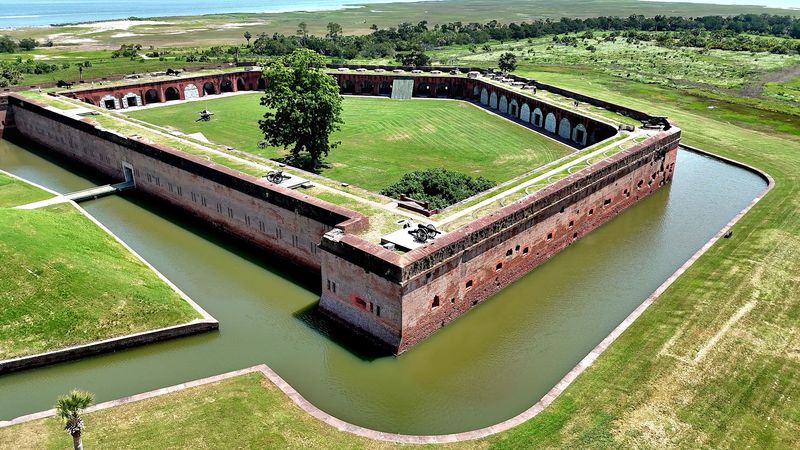
Brick never looked so battle-ready.
Fort Pulaski National Monument, east of Savannah near Tybee Island, is one of the country’s best preserved coastal forts, and its scale hits immediately when you cross the bridge over the moat.
It looks impressive in photos, but in person it feels satisfyingly formidable.
Completed in the nineteenth century, the fort became famous during the Civil War when rifled artillery proved masonry defenses were no longer unbeatable.
That military turning point gives the site importance beyond its handsome walls and echoing chambers.
Exhibits explain the siege clearly, so even casual history fans can follow the big-picture significance.
There is also a deeper story here about enslavement, freedom, and the people whose labor and lives were tied to this strategic place.
The park does a thoughtful job connecting engineering feats to human consequences.
That balance keeps the visit from feeling like a simple cannon-and-corridor stroll.
The surrounding salt marshes add beauty and birdwatching opportunities, making the monument feel both stern and serene.
It is an easy day trip from Savannah and pairs well with a coastal drive.
For those who like history with real weight, dramatic architecture, and a setting that smells faintly of sea air and consequence, Fort Pulaski absolutely deserves your time.
8. Arabia Mountain National Heritage Area – Lithonia
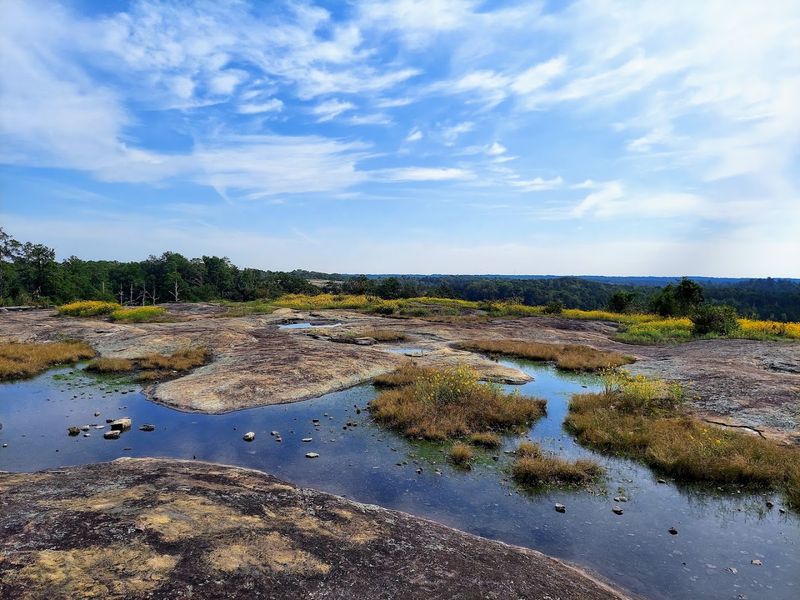
At first glance, Arabia Mountain looks almost lunar, which is not typical Georgia branding.
In Lithonia, east of Atlanta, Arabia Mountain National Heritage Area combines striking granite outcrops, lakes, wooded trails, and rich cultural history into a landscape that feels unusual in the best possible way.
It is quiet, spacious, and wonderfully photogenic.
The granite surface changes with weather and light, giving every walk a slightly different personality.
Seasonal pools support rare plants, and late-summer blooms can paint sections of the rock with surprising color.
That mix of toughness and delicacy gives the area real character.
Beyond scenery, the heritage area tells stories about local communities, railroads, farming, and the region’s granite industry.
Trails connect to historic sites and scenic stretches of the PATH network, so you can build a visit around exercise, learning, or both.
The boardwalks and lake views add even more variety.
One of the best parts is how accessible it feels from metro Atlanta while still seeming far from city noise.
Sunrise and sunset are especially beautiful, when the stone glows and the open sky takes over.
If you are looking for a Georgia destination that feels both grounded in history and pleasantly otherworldly, Arabia Mountain is a smart, memorable detour.
9. Rock City Gardens – Lookout Mountain
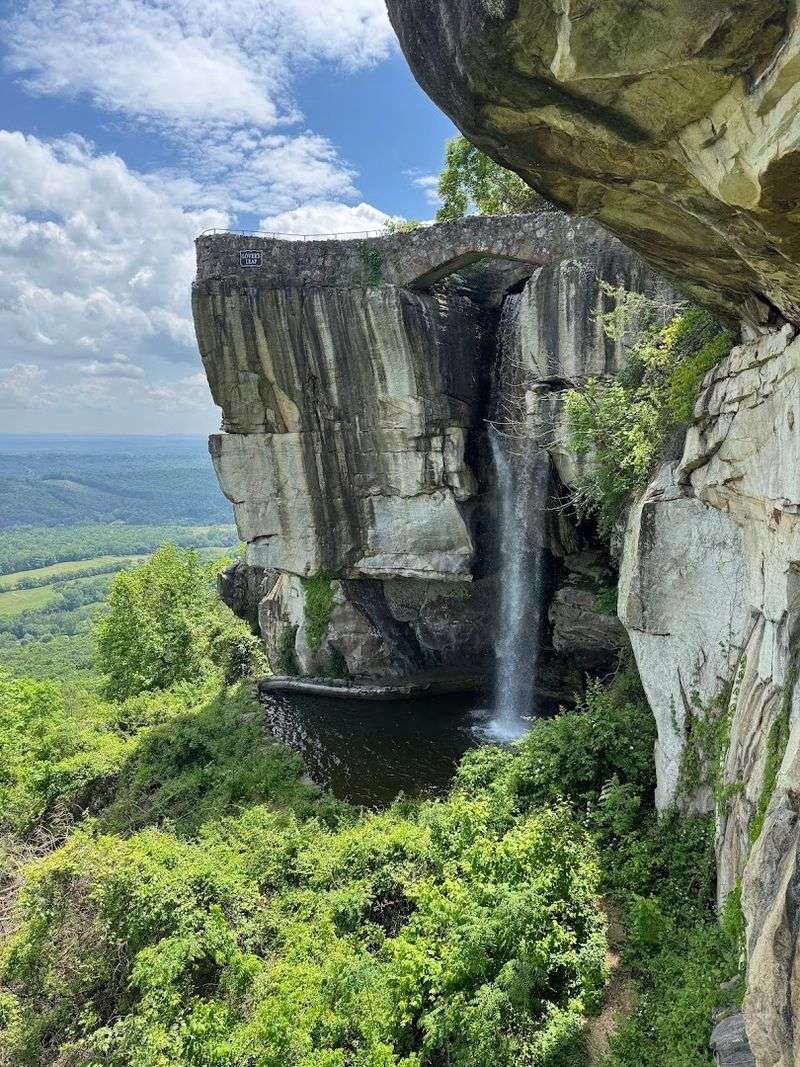
Whimsy arrives quickly at Rock City Gardens.
Perched on Lookout Mountain near the Georgia-Tennessee line, this famous attraction mixes giant rock formations, narrow passageways, planted gardens, and expansive overlooks into an outing that feels part nature walk, part storybook set.
It is unapologetically touristy, and that is part of the charm.
The highlight for many visitors is the panorama from Lover’s Leap, where clear days supposedly reveal seven states.
Whether you count all seven or not, the view is undeniably excellent.
Along the paths, you squeeze through Fat Man’s Squeeze and Needle’s Eye, which makes the visit pleasantly interactive.
Gardens and seasonal displays soften the rugged stone surroundings, creating a playful contrast.
Families love the winding routes and surprise features, while photographers appreciate the textures, elevation, and framing opportunities around every turn.
There is always something just a little theatrical around the bend.
Rock City has been drawing road trippers for generations, and the classic barn advertisements across the South helped seal its legend.
That history gives the place a nostalgic layer beneath the scenic fun.
With big views, quirky personality, and an attraction that fully commits to being memorable, Rock City Gardens still knows exactly how to put on a show.
10. Ocmulgee Mounds National Historical Park – Macon
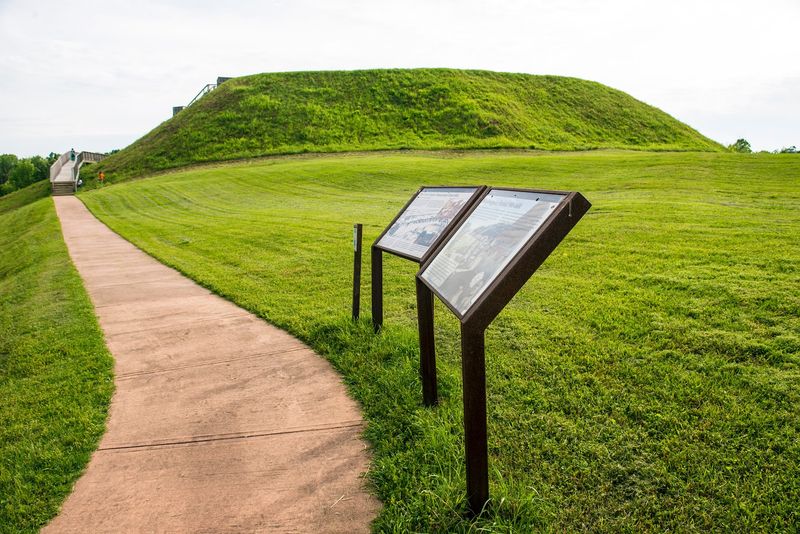
Ancient history rises quietly from the ground at Ocmulgee Mounds.
In Macon, this national historical park preserves thousands of years of human presence, including monumental earthworks built by ancestral Indigenous peoples in the Mississippian period.
It is one of Georgia’s most significant cultural sites, and it rewards slow attention.
The Great Temple Mound immediately stands out, offering a broad view across the surrounding landscape once you climb its steps.
Just as memorable is the reconstructed Earth Lodge, where the original floor remains and the atmosphere feels deeply rooted in ceremony.
That space alone can stop conversation in its tracks.
Museum exhibits help trace a long timeline of habitation in the Ocmulgee River corridor.
You learn not just about architecture and artifacts, but about continuity, community, and the importance of this place to the Muscogee people today.
That living connection gives the park depth far beyond archaeology alone.
Because the site sits close to downtown Macon, it is surprisingly easy to visit while exploring central Georgia.
The grounds are peaceful, the interpretation is strong, and the sense of age is profound without being overwhelming.
If you want a landmark that broadens your understanding of Georgia far beyond the usual postcard scenes, Ocmulgee Mounds is absolutely essential.