South Carolina knows how to surprise you when you least expect it.
One minute you’re cruising down the highway, and the next you’re staring at a giant peach, a mysterious historic landmark, or a roadside attraction so unusual you can’t help but pull over for a closer look.
Some of the state’s best memories aren’t found inside famous cities or crowded tourist spots.
They’re hiding beside quiet roads, tucked behind small towns, and waiting for curious travelers who don’t mind taking the scenic route.
These unforgettable stops blend local history, quirky art, larger-than-life landmarks, and a healthy dose of Southern charm. You’ll find places that make you laugh, spark your curiosity, and fill your camera roll with photos your friends won’t believe.
If your road trips could use a little more personality, this list is packed with roadside gems that turn an ordinary drive across South Carolina into an adventure you’ll be talking about long after the trip ends.
Peachoid – Gaffney
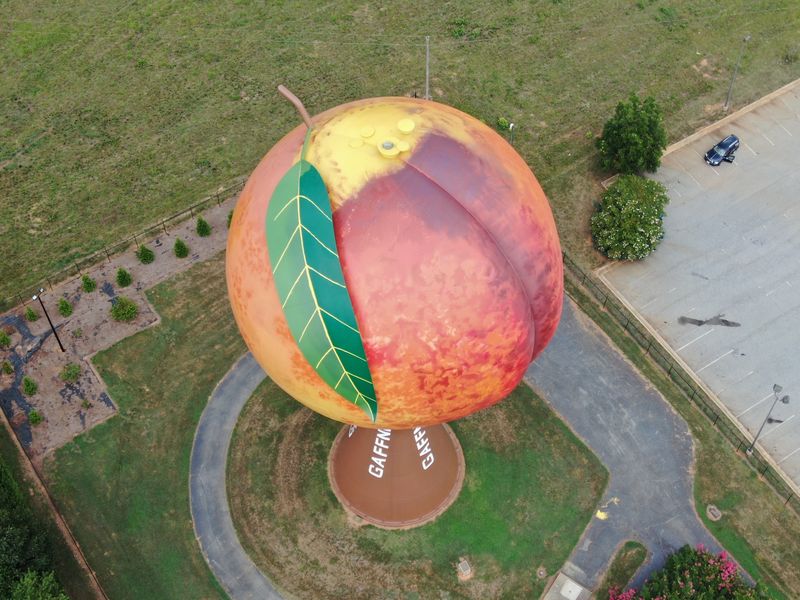
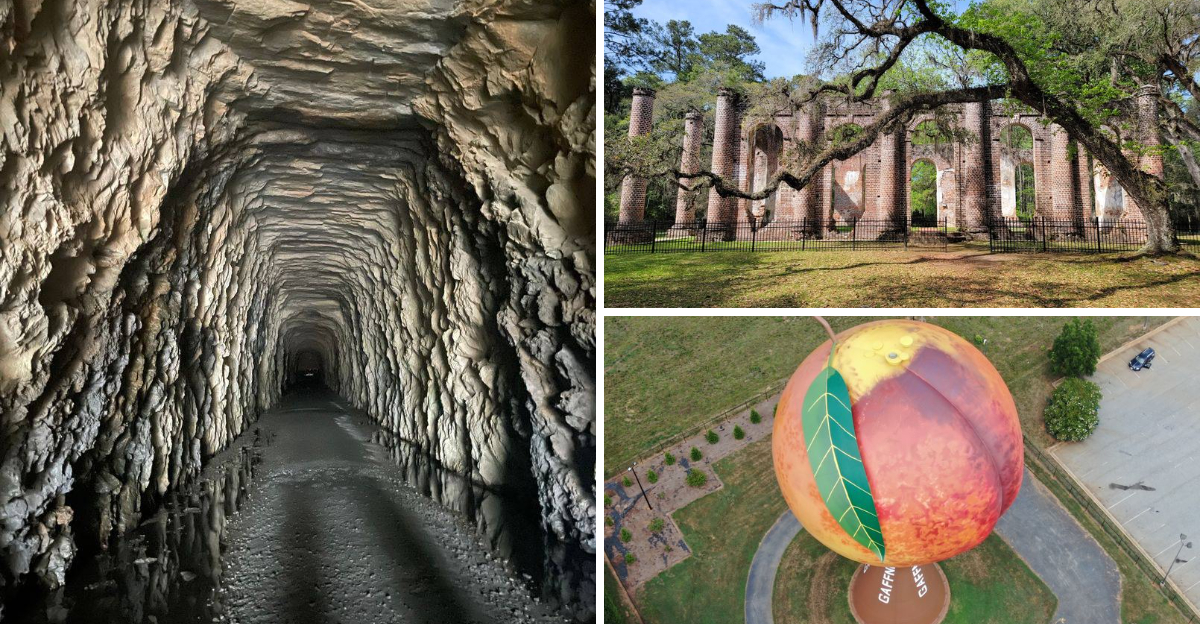
Standing 135 feet tall along I-85, this enormous peach-shaped water tower commands attention from miles away. Built in 1981, the Peachoid holds one million gallons of water while serving as a bold tribute to South Carolina’s agricultural heritage.
Drivers traveling between Charlotte and Atlanta simply can’t miss its bright peachy-pink exterior.
The structure’s realistic appearance, complete with painted leaf details, makes it look like a giant peach plucked straight from an orchard. Local artist Peter Freudenberg spent months perfecting the design to capture the fruit’s natural curves and coloring.
His attention to detail transformed a simple water tower into an iconic landmark.
Pulling off the highway for photos has become a beloved tradition for road trippers. The Peachoid appears in countless social media posts and travel blogs, proving that functional infrastructure can double as public art.
Kids especially love spotting this oversized fruit rising above the treetops.
Whether you’re a serious photographer or just need to stretch your legs, this peachy giant delivers pure roadside magic.
South of the Border – Hamer
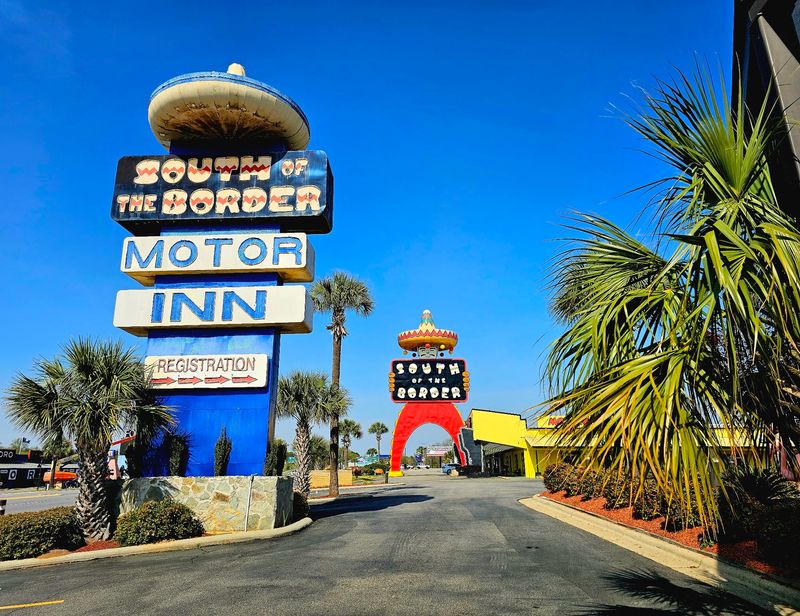
Bright neon signs, towering sombreros, and billboards stretching for miles announce this legendary highway stop. Pedro, the mustachioed mascot, greets visitors at every turn throughout this sprawling complex that covers nearly 350 acres.
Family road trips haven’t been the same since this attraction opened in 1949.
Owner Alan Schafer created a Mexican-themed wonderland that includes restaurants, gift shops, a reptile lagoon, and even an observation tower. The kitschy decorations and pun-filled signage add to the nostalgic charm.
Walking through feels like stepping back into mid-century America.
Generations of travelers have stopped here to fuel up, grab souvenirs, and experience the unapologetic retro vibes. The 200-foot Sombrero Tower offers panoramic views of the surrounding farmland.
Gift shops overflow with everything from Mexican blankets to quirky knickknacks.
Critics might call it tacky, but fans recognize South of the Border as a genuine piece of Americana. This colorful landmark refuses to fade away, continuing to delight curious motorists who crave authentic roadside nostalgia.
Pearl Fryar’s Topiary Garden – Bishopville
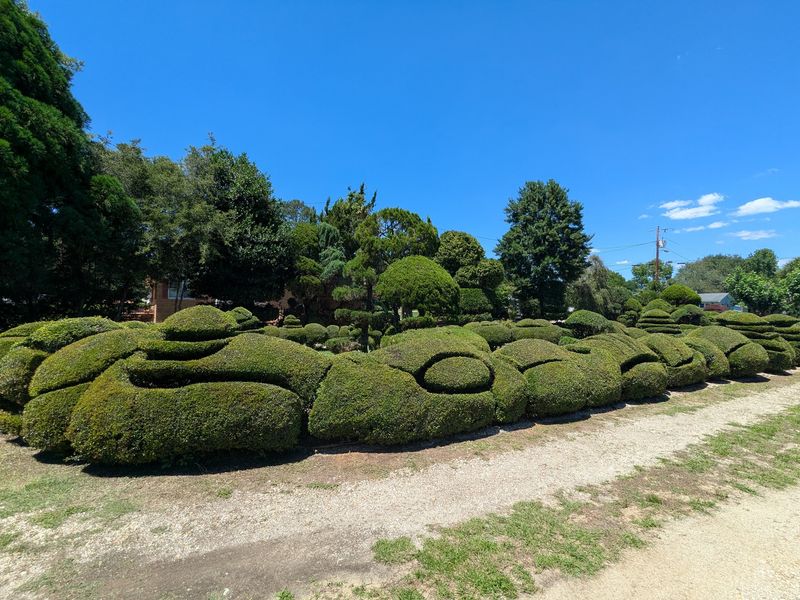
Pearl Fryar never studied horticulture or landscape design, yet he transformed his backyard into an internationally recognized garden masterpiece. Starting in the 1980s, this self-taught artist began rescuing plants destined for the trash heap at local nurseries.
His dedication turned rejected greenery into spiraling, geometric, and abstract sculptures.
Walking through the three-acre property reveals an outdoor museum where plants become living artwork. Junipers twist into spirals, shrubs form perfect spheres, and hedges curve into impossible shapes.
Every turn presents another botanical wonder that defies traditional gardening rules.
Visitors from around the world schedule tours to witness Fryar’s creative vision firsthand. He maintains hundreds of individual topiaries using hand pruners and ladders, spending countless hours perfecting each shape.
His message of possibility and perseverance resonates beyond the garden gates.
The garden earned recognition in garden design competitions and inspired a documentary film. Fryar proves that passion and determination can overcome any obstacle, including having zero formal training.
His topiary wonderland shows what happens when someone refuses to accept limitations.
God’s Acre Healing Springs – Blackville
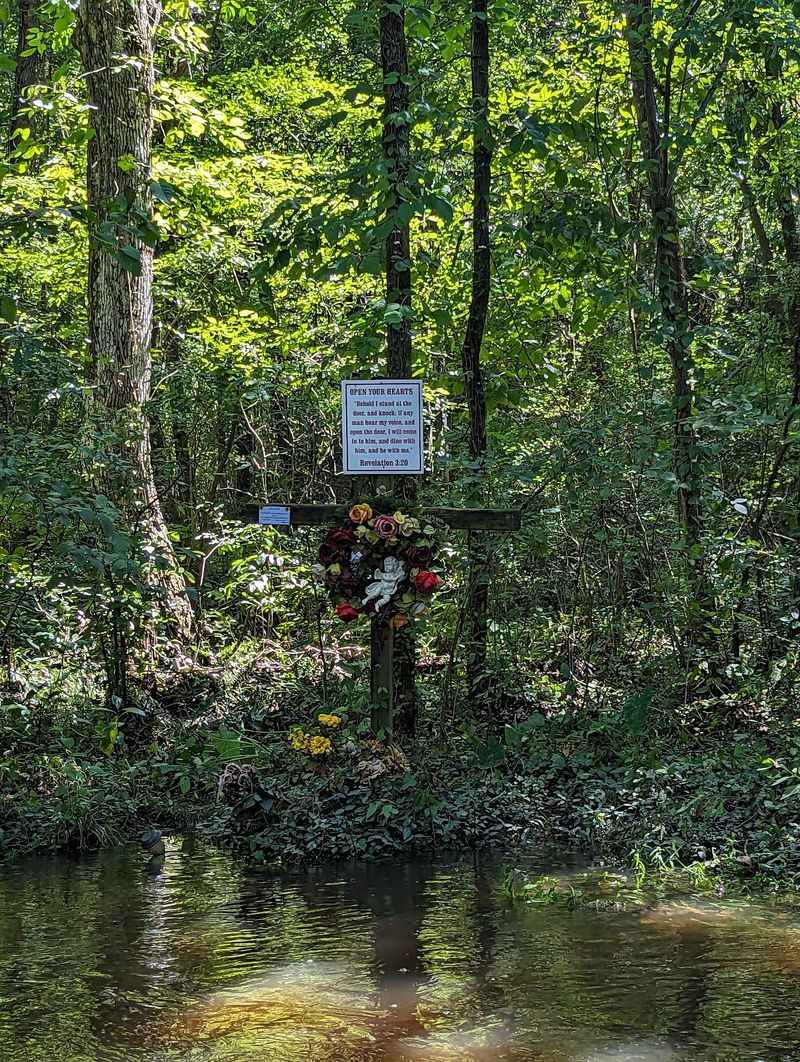
Crystal-clear water flows continuously from this natural spring tucked away in rural Barnwell County. Native Americans first recognized these waters as sacred, and that reverence continues today among visitors seeking the spring’s legendary healing properties.
A simple shelter protects the flowing water where visitors fill jugs and bottles to take home.
Local legends tell of remarkable recoveries attributed to drinking or bathing in this mineral-rich water. Scientific analysis reveals high concentrations of various minerals, though medical claims remain unverified.
Still, believers travel significant distances to collect the freely flowing spring water.
The peaceful setting invites quiet reflection beneath towering trees that shade the spring. Wooden benches provide spots to rest while listening to water trickling over smooth stones.
A historic marker explains the site’s cultural significance spanning centuries.
Whether you believe in miraculous healings or simply appreciate natural beauty, this spot offers tranquil respite from highway hustle. Bring empty containers to collect water, or just sit awhile and absorb the serene atmosphere.
Sometimes the best roadside stops provide exactly what your spirit needs.
Stumphouse Tunnel – Walhalla
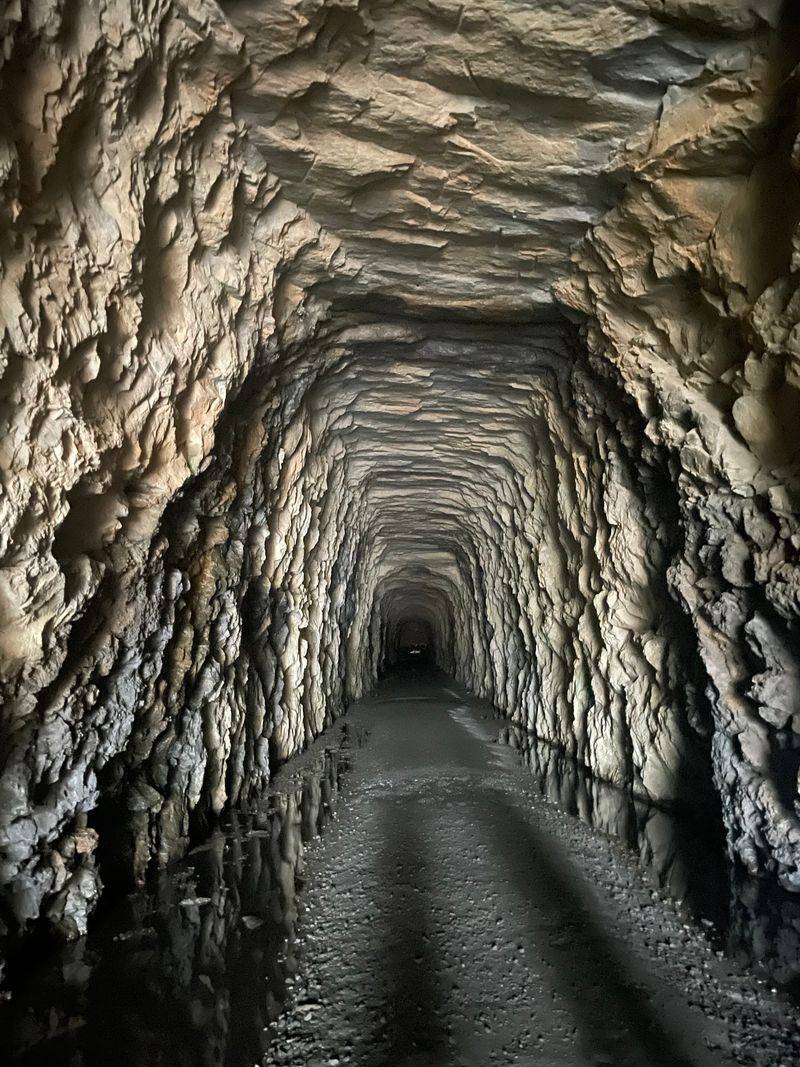
Railroad workers carved this tunnel into solid rock starting in 1856, intending to connect Charleston with the Midwest. Financial troubles and the Civil War halted construction, leaving behind a 1,617-foot passage leading nowhere.
The temperature inside stays around 50 degrees year-round, making it a refreshing escape during hot Southern summers.
Explorers entering the tunnel notice how darkness gradually swallows the light from the entrance. Flashlights reveal the chisel marks left by workers who labored under incredibly difficult conditions.
Walking through connects you directly to ambitious 19th-century engineering dreams that never reached completion.
The surrounding area features hiking trails, waterfalls, and picnic spots perfect for extending your visit. Issaqueena Falls cascades just upstream, adding natural beauty to this historical site.
Park facilities make accessing the tunnel straightforward for families.
Engineers later used the cool, consistent temperature for storing and aging blue cheese in the 1940s and 1950s. Today, visitors walk freely through this atmospheric remnant of railroad history.
Hard hats aren’t required, but sturdy shoes definitely help on the uneven tunnel floor.
Mars Bluff Atomic Bomb Marker – Mars Bluff
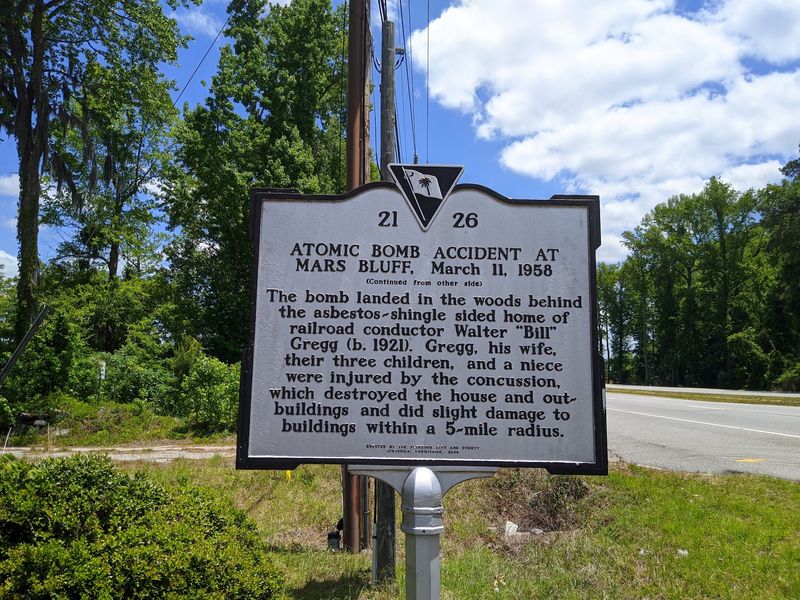
On March 11, 1958, a B-47 bomber accidentally released a Mark 6 nuclear bomb over this quiet rural community. The unarmed weapon lacked its plutonium core but still exploded with conventional explosives, creating a crater 75 feet wide and 30 feet deep.
Miraculously, the bomb landed in a field, and no one died despite severe injuries to several residents.
A modest roadside marker commemorates this bizarre Cold War incident that could have been catastrophic. The Walter Gregg family, whose home was destroyed, received $54,000 in compensation from the Air Force.
Photographs from that day show the massive crater and scattered debris across the farmland.
Visitors often express disbelief that such an accident actually occurred on American soil. The marker stands as a sobering reminder of nuclear-age dangers and fortunate circumstances.
Local residents occasionally share stories passed down through generations about that shocking day.
Finding this marker requires following rural roads through farmland, adding to the surreal experience. Few roadside attractions combine historical significance with such dramatic what-if scenarios.
Angel Oak – Johns Island
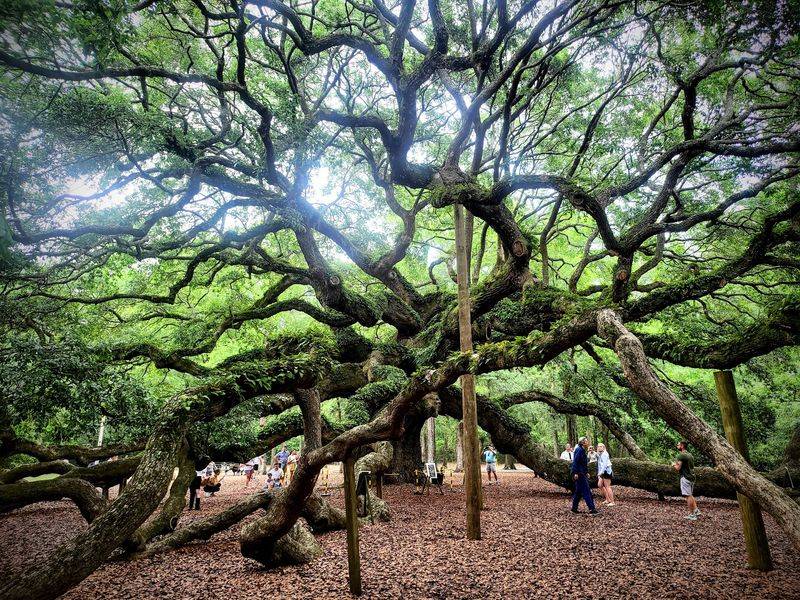
Massive limbs spread across 17,000 square feet beneath this ancient live oak estimated at 400-500 years old. Some branches grow so long they dip toward the ground before curving back skyward, creating natural archways perfect for exploration.
The main trunk measures over 28 feet in circumference, requiring several people linking hands to wrap around it.
Spanish moss drapes from every branch, adding an ethereal quality to this already magical tree. Visitors often speak in hushed tones while walking beneath the canopy, sensing they’re experiencing something truly special.
Photographers arrive during golden hour to capture light filtering through the sprawling limbs.
The tree survived countless hurricanes, floods, and human threats over the centuries. Local conservation efforts eventually secured protection for this natural wonder when development threatened the surrounding land.
A small admission fee supports ongoing preservation work.
Children love climbing on the lower branches while adults marvel at the tree’s impressive age and resilience. Angel Oak stands as a living connection to South Carolina’s distant past.
Visiting this gentle giant reminds us that some treasures require centuries, not construction crews.
Button King Museum – Bishopville
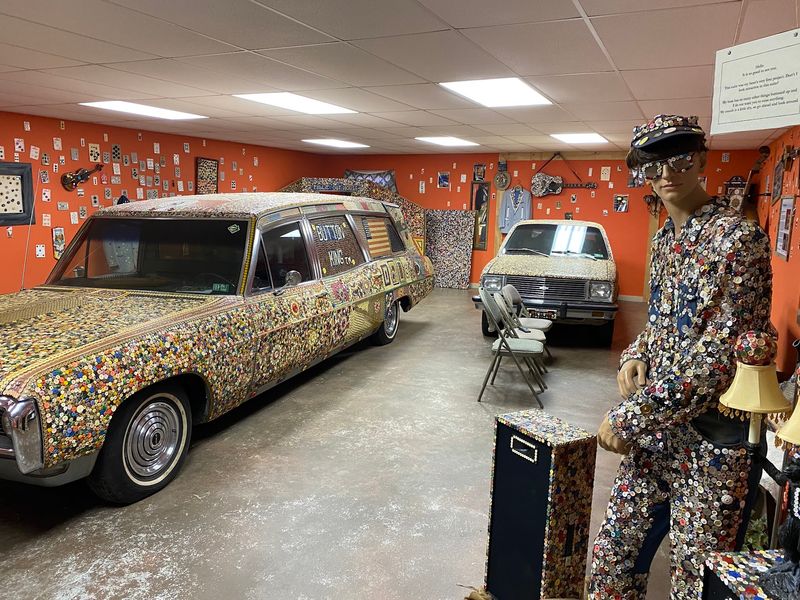
Dalton Stevens began sewing buttons onto a suit in 1983 to combat insomnia, never imagining it would become a lifelong obsession. That first suit eventually wore 16,333 buttons, weighing over 16 pounds.
His collection grew to include button-covered guitars, caskets, hearses, and even an entire outhouse.
The museum displays Stevens’ remarkable creations, showcasing thousands upon thousands of buttons in every imaginable color, size, and shape. Visitors wander through rooms filled with his decorated objects, each representing countless sleepless nights spent sewing.
The sheer dedication required to create these pieces amazes everyone who visits.
Stevens appeared on television shows and in magazines, gaining recognition for his unusual hobby turned art form. He estimated using over a million buttons throughout his creative career.
Each piece tells a story of persistence, creativity, and finding purpose during difficult moments.
Button collectors make pilgrimages here to see this unparalleled display. Regular folks simply appreciate the quirky dedication and unexpected beauty in button-covered objects.
This delightfully odd museum proves that extraordinary art can emerge from the most ordinary materials.
Pink & Gray Elephant Statues – Hardeeville
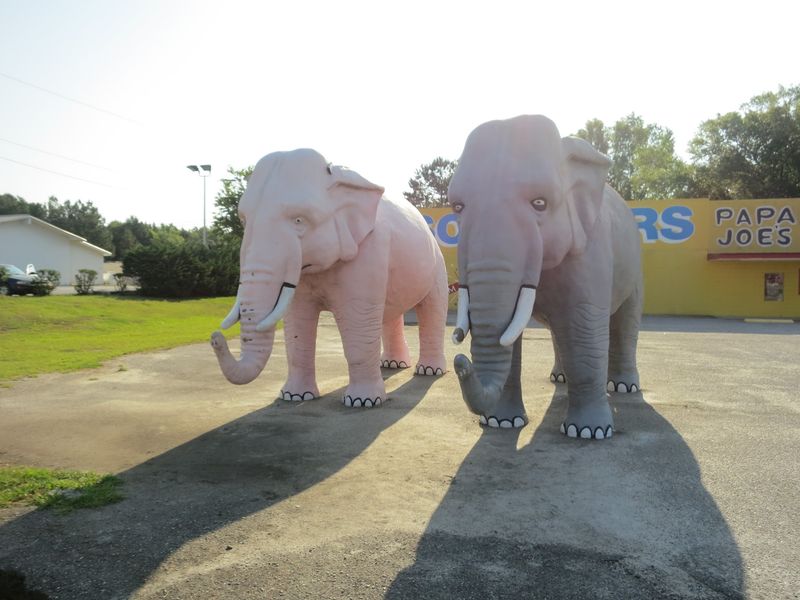
Two cheerful concrete elephants, one pink and one gray, have welcomed travelers along I-95 since the 1960s. These retro roadside mascots stand outside a travel plaza, representing an era when whimsical sculptures defined highway culture.
Their cartoonish features and bright paint jobs capture that innocent, optimistic spirit of mid-century American road trips.
Families traveling between Florida and northern states recognize these elephants as reliable landmarks marking their journey’s progress. Kids announce spotting them miles before arrival, turning the elephants into treasured travel traditions.
Countless vacation photos feature these friendly pachyderms in the background.
The statues underwent restoration to preserve their vintage charm for future generations. Original concrete work from decades ago still forms their sturdy foundation.
Fresh paint periodically refreshes their appearance without losing that authentic retro character.
Roadside attractions like these elephants remind us that travel involves more than reaching destinations efficiently. They represent joy found in simple pleasures and shared family moments.
Pulling over to snap a photo takes mere minutes but creates lasting memories. These smiling elephants prove great things come in surprisingly kitschy packages.
King Kong at the Hollywood Wax Museum – Myrtle Beach
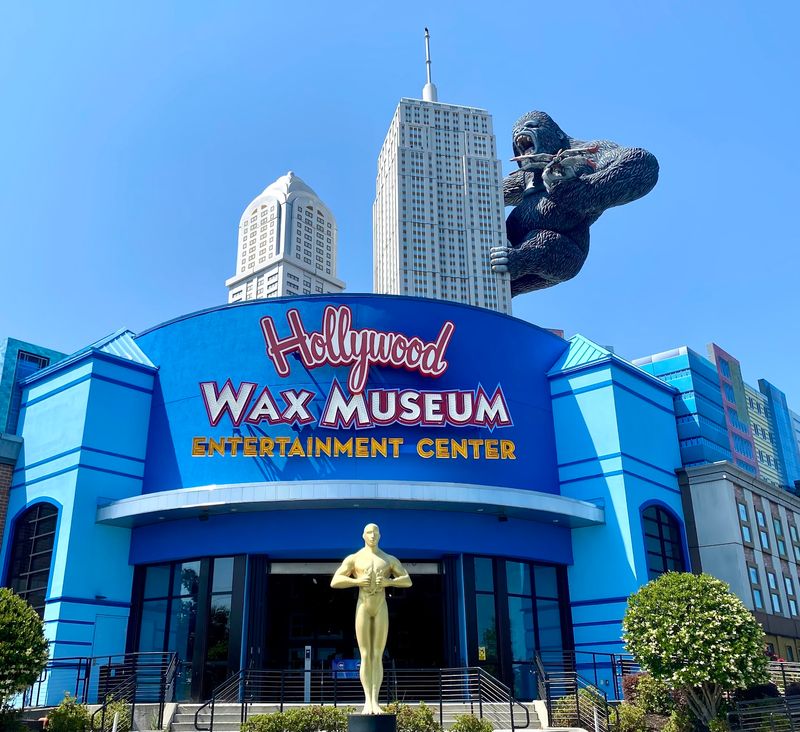
A massive King Kong sculpture scales the exterior of this popular tourist attraction, clutching the building while reaching toward the sky. Standing several stories tall, this fiberglass gorilla creates one of the most photographed scenes along Myrtle Beach’s bustling entertainment strip.
His fierce expression and dramatic pose capture the famous movie monster perfectly.
Drivers passing by do double-takes when they spot the enormous ape clinging to the museum’s facade. The sculpture references the classic 1933 film where Kong climbs the Empire State Building.
This coastal version has become just as iconic within the tourist community.
Inside the museum, visitors find wax figures of celebrities and movie characters, but Kong remains the star attraction visible from the street. His presence draws curious tourists who might otherwise drive past without stopping.
Marketing genius combined with nostalgic monster movie appeal creates an irresistible roadside spectacle.
Nighttime lighting adds extra drama to Kong’s threatening stance. Social media feeds overflow with photos of families posing beneath his massive form.
Sometimes the best attractions don’t require admission tickets, just a willingness to embrace delightfully tacky roadside entertainment.
Old Sheldon Church Ruins – Yemassee
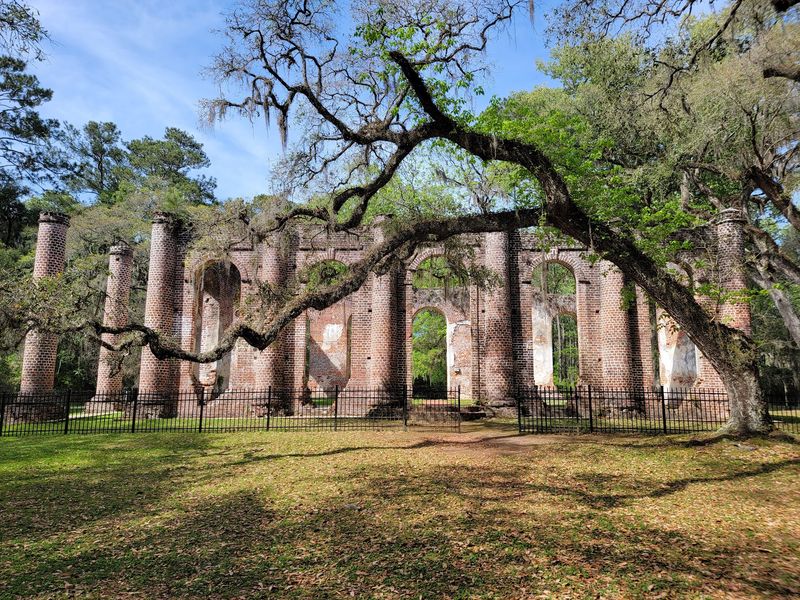
The Old Sheldon Church Ruins are one of South Carolina’s most hauntingly beautiful roadside stops, where towering brick walls and graceful arches stand as reminders of the state’s colonial past.
Originally built between 1745 and 1753 as Prince William’s Parish Church, the structure was burned during the Revolutionary War, rebuilt, and later destroyed again during the Civil War.
Today, its weathered ruins create a peaceful setting surrounded by towering live oaks draped in Spanish moss.
Visitors often pull off the highway for a quiet stroll through the historic grounds, where every angle offers a stunning photo opportunity. The site’s timeless beauty has made it a favorite for photographers, history lovers, and travelers exploring the South Carolina Lowcountry.
Although only the exterior walls remain, the craftsmanship and scale of the church are still impressive centuries later.
The grounds are open daily and admission is free. Since it’s an active historic site and sacred place, guests are encouraged to explore respectfully, take in the tranquil atmosphere, and enjoy one of South Carolina’s most memorable roadside landmarks.