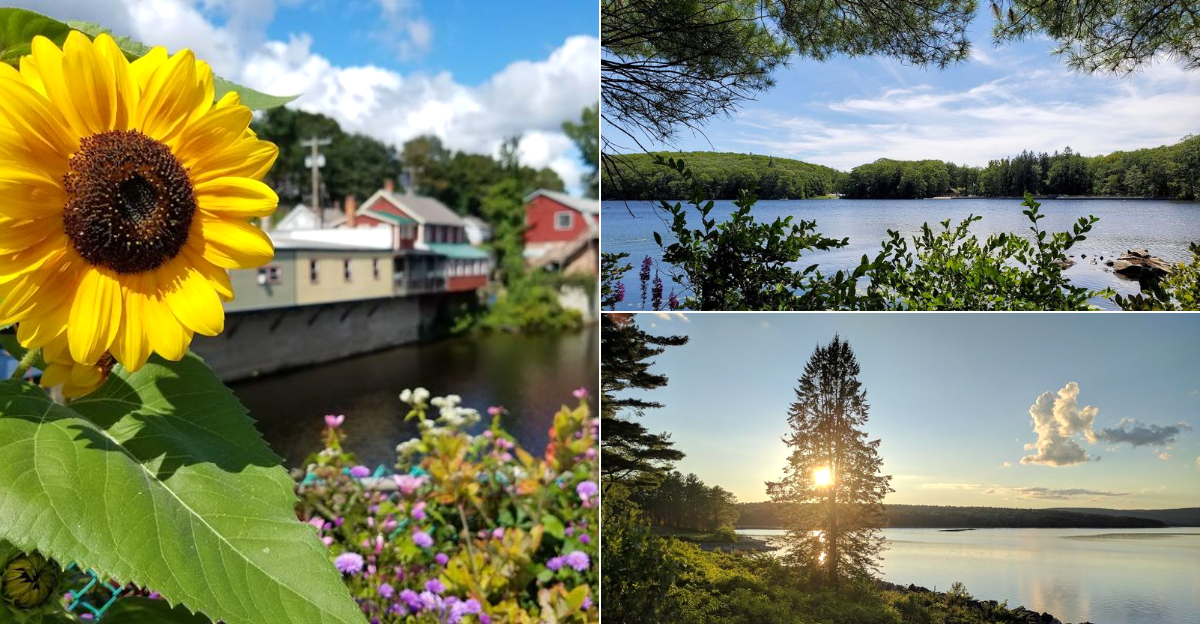
Massachusetts has a reputation that runs so deep into American history that it’s easy to assume you already know what the state has to offer.
Most people picture Boston and Plymouth, and while those are worth your time, the rest of the state has been quietly holding something back.
The Berkshires in the west, the rocky coast of Cape Ann, and the reservoir system that feeds Boston all hold places that stop you mid-hike and make you reconsider your itinerary.
Bash Bish Falls and Halibut Point don’t show up in the standard Massachusetts conversation, which makes finally seeing them feel like finding something the brochures forgot.
We visited all eleven spots on this list and left each one with a different kind of appreciation for how much this state packs into a relatively compact geography.
1. World’s End – Hingham, Plymouth County
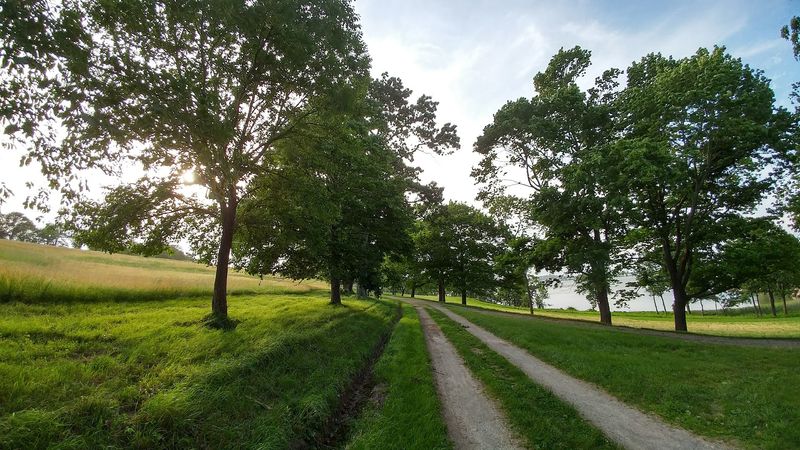
The first thing that hits you is the light.
It moves across the harbor in wide silver bands, making every hill and curve of shoreline feel almost theatrical.
That shifting beauty is exactly what makes World’s End in Hingham such a surprise, especially if you arrive expecting only a simple seaside walk.
Designed with paths influenced by Frederick Law Olmsted, this peninsula feels carefully shaped without losing its wild character.
The broad carriage roads loop over drumlins, opening to constant views of Boston Harbor, the skyline, and small islands scattered offshore.
You can keep your pace easy here, but the scenery keeps rewarding you as though you earned something more demanding.
Birders love the reserve during migration, and photographers get especially lucky near sunset when the grasses glow and the water deepens to steel blue.
Because The Trustees manages the property, the trails stay well maintained, making it approachable for families, casual walkers, and anyone craving a restorative afternoon outside.
Even on a popular day, the landscape somehow creates pockets of calm.
You get ocean air, rolling hills, city views, and a sense of escape without going far from Greater Boston.
That balance makes World’s End far more memorable than its understated name might suggest.
2. Monument Mountain – Great Barrington, Berkshire County
A little anticipation builds with every switchback.
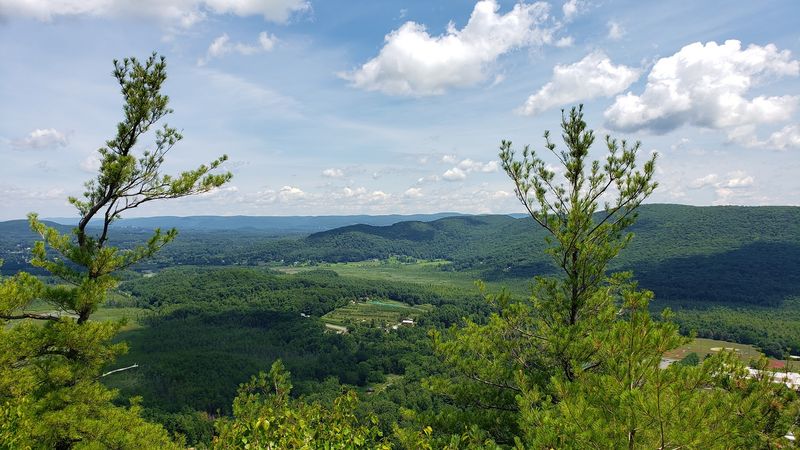
The woods feel close and shaded at first, then the terrain suddenly opens into cliffs and views that seem far grander than the hike’s modest reputation suggests.
That reveal is the magic of Monument Mountain in Great Barrington, one of the Berkshires’ most rewarding outings.
Managed by The Trustees, the reservation offers several trail options, but all of them build toward a striking sense of elevation and exposure.
The summit area includes dramatic rocky ledges and a famous feature called Devil’s Pulpit, which adds just enough legend to sharpen the mood.
Writers including Nathaniel Hawthorne and Herman Melville were inspired by this landscape, and it is easy to understand why.
You do not need technical skills to enjoy it, though sturdy shoes help on steeper sections and rocky stretches.
In spring and summer, the forest feels lush and alive, while autumn turns the surrounding valleys into a layered patchwork of gold, orange, and deep red.
The changing light across the Housatonic River Valley can make even a short stop feel cinematic.
It delivers literary history, accessible adventure, and a genuine summit payoff without requiring an all-day commitment.
Monument Mountain proves that a relatively quick Berkshire hike can still feel dramatic, thoughtful, and wonderfully complete.
3. Bash Bish Falls – Mount Washington, Berkshire County
You hear the power before you see it.
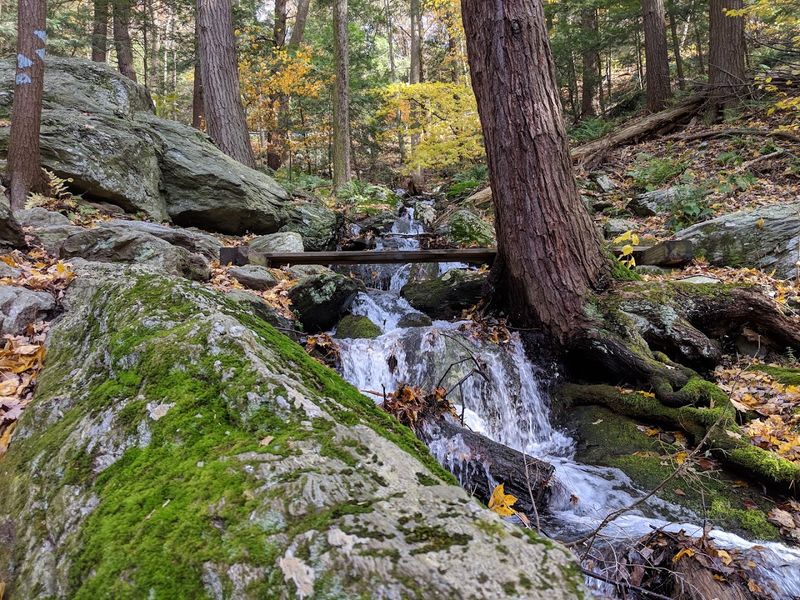
Water thunders through a narrow gorge, echoes off stone walls, and fills the forest with a cool, charged energy that instantly raises expectations.
Bash Bish Falls in Mount Washington meets that buildup with one of the most dramatic waterfall scenes in Massachusetts.
The falls are known for their striking twin-drop formation, pouring through a rugged chasm near the New York border.
Although the destination is famous, the atmosphere still feels wild, especially on damp mornings when mist hangs low and the rocks look almost black against the white water.
It is the kind of place where you naturally lower your voice, even when other visitors are nearby.
Trails approach the falls from Massachusetts and New York, with the New York side generally considered easier and the Massachusetts route a bit steeper.
Either way, proper footwear matters because roots, rocks, and slick sections can make the walk more challenging than casual visitors expect.
The state has also restricted swimming and climbing near the falls for safety, which is worth respecting completely.
It was how concentrated the whole experience felt, as if the forest, the ravine, and the sound were all funneling your attention to one unforgettable point.
Bash Bish Falls leaves a bigger impression than many larger attractions ever manage.
4. Mount Greylock – Adams, Berkshire County
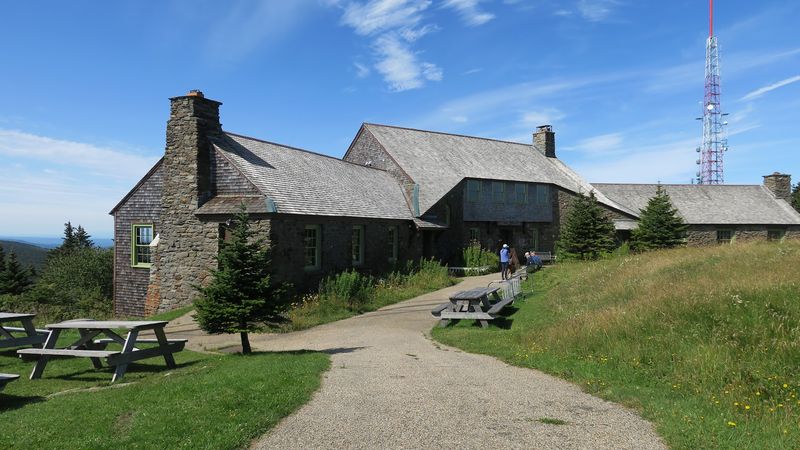
The air changes before the view fully arrives.
It grows cooler, thinner, and somehow cleaner, giving the climb an almost northern feel that stands apart from many other Massachusetts landscapes.
That elevated atmosphere defines Mount Greylock in Adams, the state’s highest peak and one of its most satisfying destinations.
At 3,489 feet, Greylock offers a summit experience that feels surprisingly expansive for southern New England.
On clear days, the views can reach into five states, and the ridgelines ripple outward in a way that makes the Berkshires look far larger than they are on paper.
The Veterans War Memorial Tower at the top adds both a landmark and a strong sense of arrival.
You can drive the scenic road in warmer months or hike a network of trails that range from manageable to strenuous.
The mountain has inspired artists and writers for generations, including Herman Melville, and its mix of forest, open ledges, and weather can feel almost alpine by regional standards.
In autumn, the summit becomes especially compelling as color spreads across the valleys below.
What impressed us was how complete the experience felt from base to peak.
Greylock is not just a high point on a map – it is a place where weather, history, and topography combine into something genuinely stirring.
5. Quabbin Reservoir – Belchertown and Ware, Hampshire County
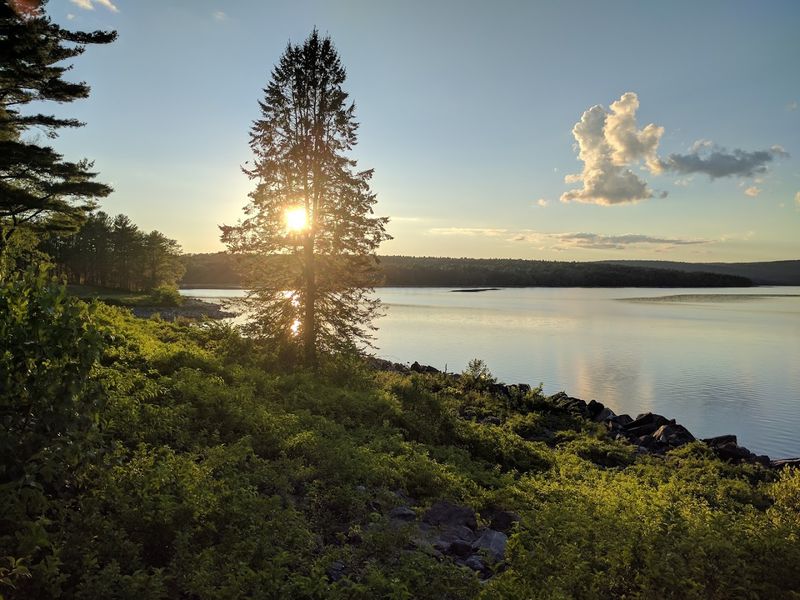
Silence feels bigger here than the map suggests.
Wind skims across miles of water, and the surrounding hills make the whole place seem less like a reservoir and more like a secret inland sea.
That is the spell of Quabbin Reservoir, stretching across towns including Belchertown and Ware in Hampshire County.
Built in the 1930s to supply drinking water to Greater Boston, Quabbin carries a complicated history beneath its peaceful surface.
Four towns were disincorporated and flooded to create it, and that backstory adds a reflective weight to every overlook and wooded road.
When you stand near the shore or climb the Winsor Dam area viewpoints, you feel both the scale of engineering and the cost of it.
The region now supports thriving wildlife, including bald eagles, loons, deer, and occasional moose sightings.
Protected land around the water creates an unusually undisturbed landscape, so hiking, biking, and scenic drives feel deeply immersive.
If you visit in fall, the mix of blue water and fiery foliage looks almost impossibly vivid.
You come for the panorama, but stay for the atmosphere, the history, and the sense of distance from ordinary life.
Quabbin Reservoir is not just beautiful – it is haunting, layered, and unforgettable.
6. Dighton Rock State Park – Berkley, Bristol County

Mystery is what pulls you in first.
A riverfront park might sound modest, but the questions surrounding its famous carved boulder give the whole site an unusually charged sense of curiosity.
That intrigue centers on Dighton Rock State Park in Berkley, a small place with an outsized place in New England folklore.
The main attraction is Dighton Rock, a 40-ton boulder covered with petroglyphs that have puzzled observers for centuries.
Different people have attributed the markings to Indigenous artists, Vikings, Phoenicians, and other visitors, though modern scholarship strongly emphasizes Native origin.
Seeing the rock in person, protected inside its museum building, makes the debates feel far more tangible than any summary ever could.
The park sits along the Taunton River, part of a region with deep Indigenous history and an environment that still feels calm and reflective.
Interpretive exhibits help frame the site, and the compact scale makes it easy to visit without feeling overwhelmed by logistics.
It works especially well for travelers who like places where landscape and unanswered questions overlap.
What impressed us was not sheer spectacle, but depth.
The setting encourages you to slow down, look carefully, and accept that some stories remain partly unresolved.
Dighton Rock State Park may be small, yet it lingers in your mind longer than many grander attractions.
7. Bridge of Flowers – Shelburne Falls, Franklin County
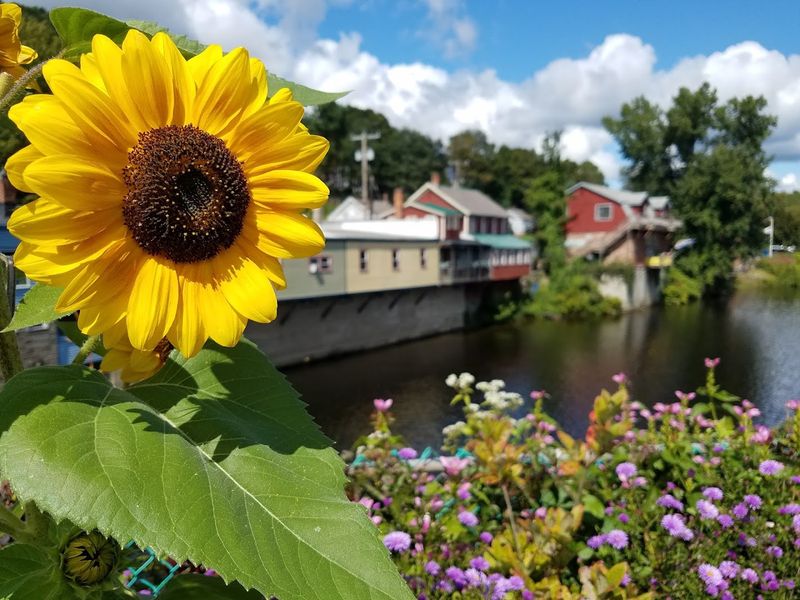
Color arrives all at once here.
Petals spill over railings, scent hangs in the air, and the river beneath adds just enough movement to make the whole scene feel gently enchanted.
That charm is the enduring appeal of the Bridge of Flowers in Shelburne Falls, one of Massachusetts’ most unexpected small-town delights.
Originally a trolley bridge, the structure was transformed in 1929 into a public garden spanning the Deerfield River.
That adaptive reuse alone is memorable, but the real pleasure comes from how lovingly the space has been planted and maintained across the growing season.
Depending on when you visit, you might see tulips, roses, dahlias, annuals, and trailing vines competing for your attention.
Because the bridge sits in the center of a walkable village, it pairs beautifully with a relaxed day of browsing shops, stopping for lunch, and visiting nearby glacial potholes.
The scale is intimate rather than monumental, yet that is exactly why it works so well.
You are not rushing toward a viewpoint here – you are noticing texture, fragrance, and small design details.
What surprised us most was how emotionally uplifting the place felt.
It could have been merely quaint, but instead it feels vivid, communal, and deeply cared for.
The Bridge of Flowers proves that one modest attraction, done beautifully, can leave a stronger impression than something much bigger.
8. Halibut Point State Park – Rockport, Essex County
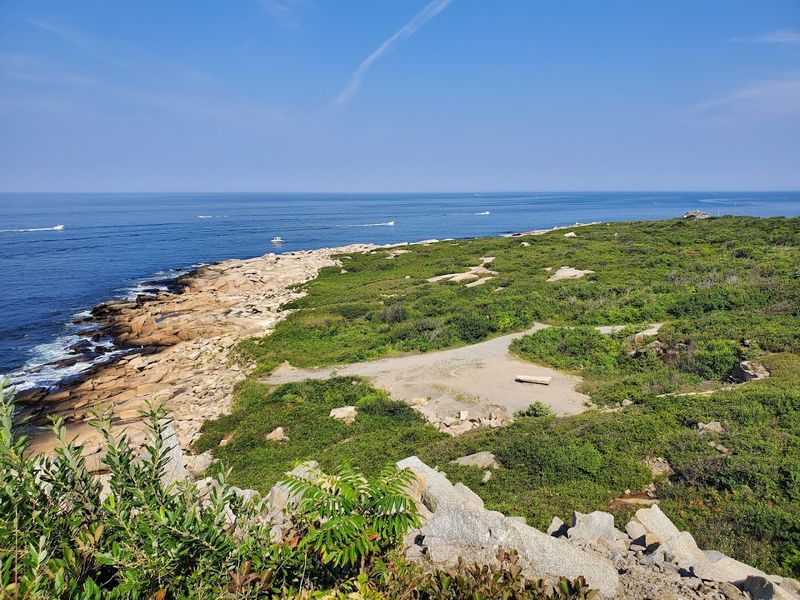
Sea wind and granite set the tone immediately.
The landscape feels stripped to essentials – rock, water, sky, and the kind of horizon that makes you pause without being told to.
That elemental beauty is the appeal of Halibut Point State Park in Rockport, one of the North Shore’s most satisfying coastal stops.
The park occupies the site of a former granite quarry, and that industrial past gives the scenery an extra layer of character.
Today, the flooded quarry, exposed stone, and Atlantic viewpoints create a setting that feels both rugged and unexpectedly polished.
Interpretive signs along the trails help connect geology, labor history, and coastal ecology without slowing the experience down.
Paths here are generally manageable, making it easy to spend an hour wandering or linger much longer with binoculars and a camera.
On clear days, you can look out toward Maine, while seabirds and changing tides keep the vistas from ever feeling static.
Sunrise and late afternoon are especially beautiful, when the granite picks up warm color against the cooler ocean tones.
What surprised us most was how much variety the park packs into a relatively compact footprint.
It offers quarry history, dramatic shoreline, open sky, and a meditative sense of space all at once.
Halibut Point feels less like a quick scenic stop and more like a distilled lesson in why Massachusetts coasts are so memorable.
9. Ipswich River Wildlife Sanctuary – Topsfield, Essex County
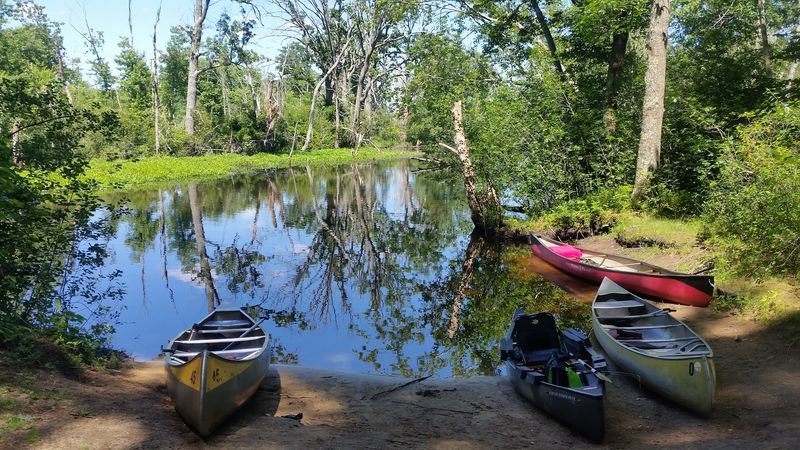
Still water and birdsong do most of the talking here.
The sanctuary feels hushed in a way that immediately slows your breathing, as if the landscape is quietly asking you to pay better attention.
That restorative mood defines Ipswich River Wildlife Sanctuary in Topsfield, one of the richest nature escapes in Essex County.
Managed by Mass Audubon, the property includes forests, wetlands, meadows, and boardwalks that make exploration feel immersive without becoming difficult.
More than ten miles of trails wind through varied habitats, so each turn offers a slightly different rhythm, from open pond views to shady woodland passages.
Depending on the season, you might spot turtles, herons, owls, migratory songbirds, or brilliant foliage reflecting in still water.
Families appreciate the educational programs and accessible stretches, while solo walkers often come simply for calm and sensory relief.
Because the sanctuary is so close to populated areas, its depth of quiet feels even more surprising.
What impressed us most was how alive the place felt without ever becoming loud.
Every boardwalk, pond edge, and meadow seemed to offer a new small discovery that rewarded patience rather than speed.
Ipswich River Wildlife Sanctuary proves that subtle landscapes can be every bit as memorable as headline-grabbing viewpoints.
10. Great Blue Hill – Milton, Norfolk County

The surprise begins with how quickly the city seems to fall away.
One steady climb lifts you above surrounding suburbs, and suddenly the landscape opens into a broad horizon with Boston shimmering in the distance.
That dramatic payoff is what makes Great Blue Hill in Milton such a standout destination near the metropolitan core.
At 635 feet, it is not enormous, but prominence matters more than raw elevation here.
The summit sits within the Blue Hills Reservation and offers sweeping views across Greater Boston, the harbor, and on especially clear days, much farther than first-time visitors expect.
The historic Eliot Tower at the top adds both a recognizable landmark and another elevated vantage point.
Trails range from gentle to moderately challenging, so you can shape the outing to your energy level.
The reservation also carries scientific significance because the Blue Hill Meteorological Observatory, operating since the nineteenth century, has one of North America’s longest continuous weather records.
That layer of history makes the hill feel important beyond its scenic value.
What impressed us most was the mountain-like satisfaction packed into such an accessible trip.
You get exercise, geology, skyline views, and a real sense of separation from daily noise in a relatively short visit.
Great Blue Hill is proof that a close-to-home adventure can still feel unexpectedly expansive and refreshing.
11. Beartown State Forest – Monterey, Berkshire County
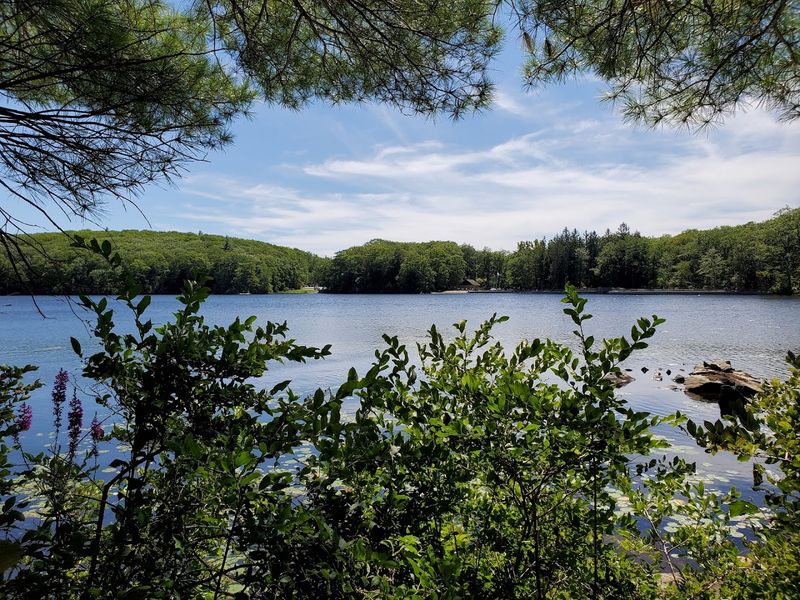
Deep woods create the mood long before any landmark appears.
Roads narrow, the forest thickens, and the ordinary pace of the day starts to dissolve into something calmer and more self-contained.
That sense of immersion is what makes Beartown State Forest in Monterey such a rewarding Berkshire retreat.
Covering more than twelve thousand acres, the forest offers ponds, trails, wetlands, and rugged backcountry that feel notably expansive for Massachusetts.
Benedict Pond is a favorite focal point, with easy shoreline access, paddling opportunities, and a campground that lets you extend the quiet beyond a day visit.
Elsewhere, longer trails invite hikers to disappear into hemlock groves, mixed hardwoods, and the rolling terrain of the southern Berkshires.
The forest is also ecologically significant, supporting diverse habitats and wildlife that reward patient observation.
Because the area is less polished than some marquee destinations, it appeals especially to travelers who prefer texture over spectacle and solitude over crowds.
In fall, the color can be extraordinary, but the place remains compelling even under summer shade or spring rain.
Beartown does not rely on one iconic overlook or one famous feature to justify the trip.
Instead, it impresses by surrounding you with enough space, silence, and variety to make the outside world feel pleasantly far away.