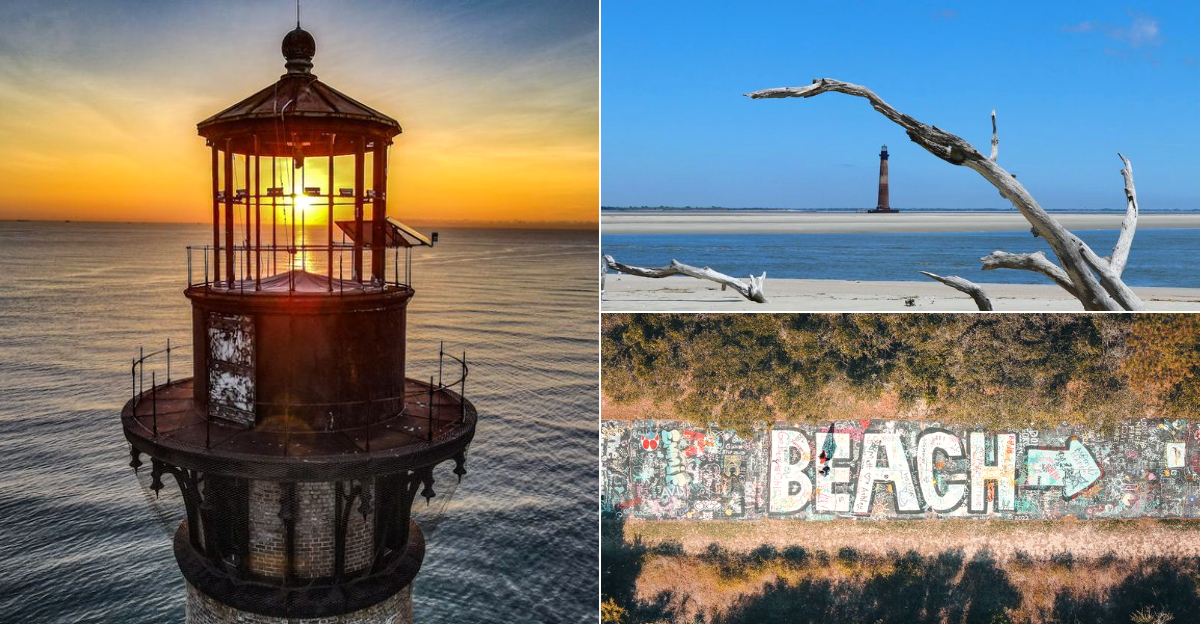
Off the coast of Folly Beach, South Carolina, a red-brick lighthouse rises out of the open water, not from land, but from the sea itself.
Morris Island Lighthouse has been standing in the Atlantic since 1876, and what makes it so unusual is that the shoreline it once stood on has entirely eroded away over time.
Today it’s one of the most photogenic and mysterious landmarks on the South Carolina coast, visible from the beach and accessible only by boat or kayak.
The lighthouse was decommissioned over a century ago, but local preservationists have been working for years to restore and protect it from further erosion.
Whether you spot it from shore or paddle right up to its base, Morris Island Lighthouse is one of those rare sights that stays with you long after you’ve left the Carolina coast.
1. The First Surprise From Shore
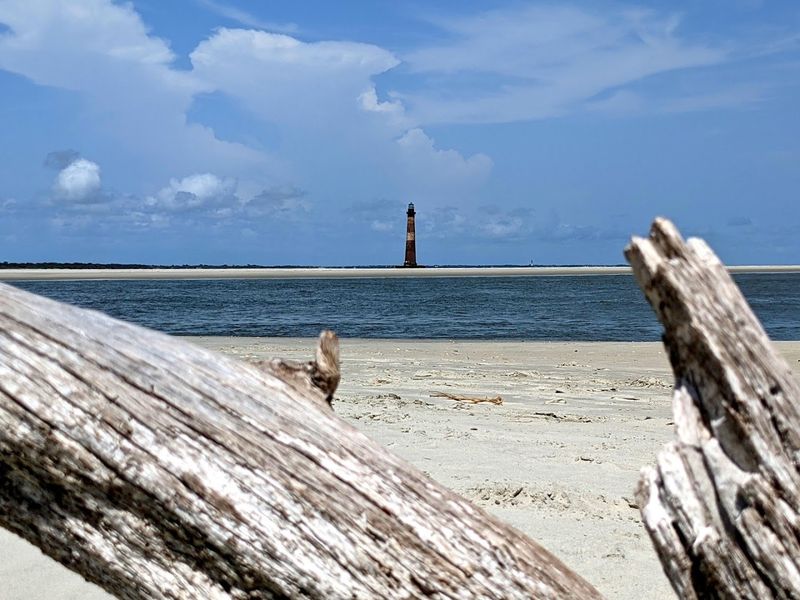
At first glance, the scene feels slightly unreal.
A striped tower rises beyond the sand, detached from the land it was built to serve.
That separation is exactly what makes this lighthouse so unforgettable to anyone seeing it for the first time.
Instead of standing safely behind dunes, it now appears marooned in the water, exposed to tides, wind, and changing light.
You can feel the tension between permanence and loss just by watching the waves move around its base.
It looks like a mistake in geography, but it is really a lesson in how coastlines never stay still.
The tower was originally constructed on solid ground to guide ships approaching Charleston Harbor.
Over generations, the shoreline around it retreated as storms and erosion steadily removed the protective beach.
What seems mysterious today is actually the visible result of long coastal change, not a structure intentionally placed offshore.
That lonely position is why the view feels so dramatic and why visitors keep asking the same question.
The answer begins with a lighthouse built for navigation, then reshaped by nature over decades.
Standing apart from the shore, it tells its story before you ever read a single sign.
2. Built To Guard Charleston Harbor
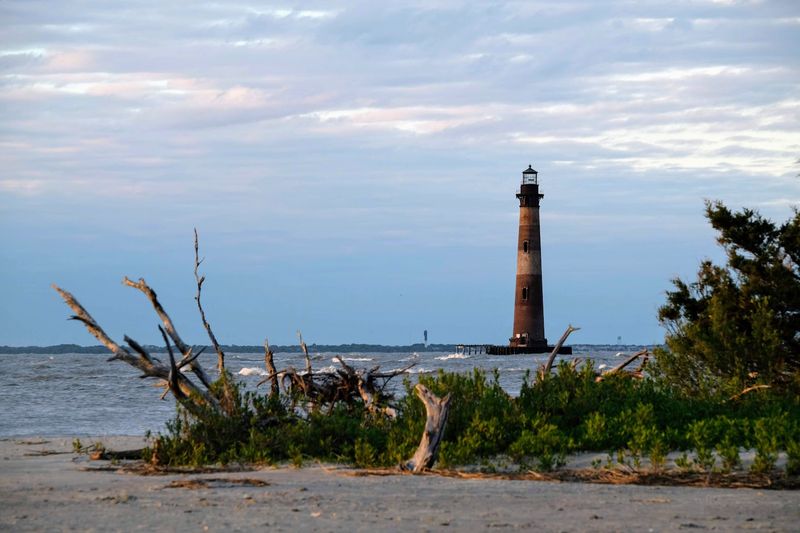
Long before its isolation became the main attraction, this beacon had a straightforward purpose.
It was built to help mariners navigate one of the busiest and most important harbor approaches on the South Carolina coast.
For ships entering and leaving Charleston, a dependable light here was essential.
The present tower dates to the nineteenth century after earlier versions were destroyed and replaced.
Its sturdy brick construction and bold pattern gave it visibility by day, while its light guided vessels after dark.
Everything about it reflected practical maritime needs rather than scenic appeal.
That original function matters because it explains why the lighthouse stood where it did.
Engineers chose a strategic point that best marked hazardous approaches and aligned with navigation through nearby waters.
No one imagined that the edge of land around it would later retreat so dramatically.
When you picture its earliest years, the lonely offshore image starts to shift.
This was once an active piece of harbor infrastructure, grounded on a wider barrier island and connected to a very different shoreline.
Its current isolation feels extraordinary only because the surrounding landscape has changed so much since the light first began guiding ships.
3. How Erosion Rewrote The Coastline
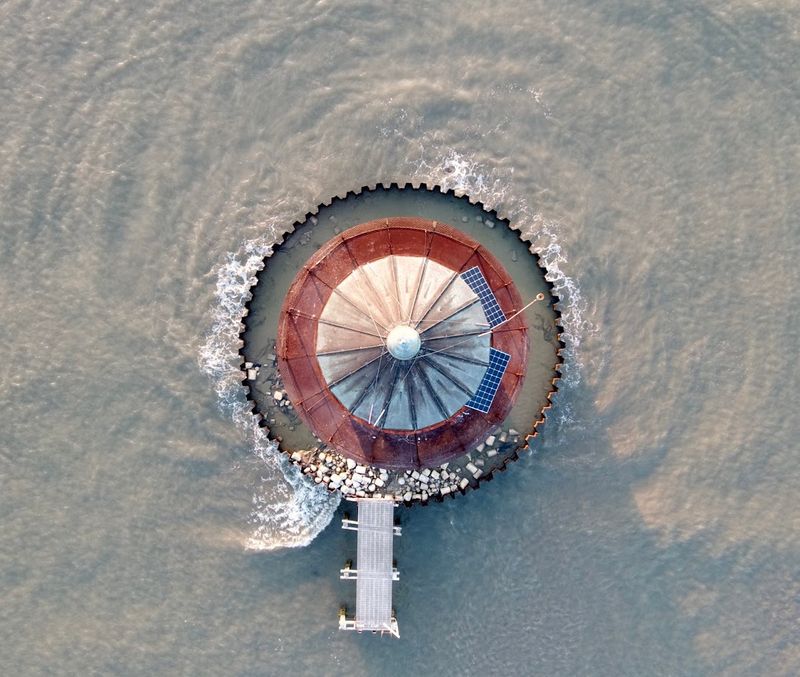
Nothing dramatic had to happen all at once for the landscape to change this much.
Year after year, tides, currents, and storms quietly removed sand from the island surrounding the tower.
That slow process of erosion is the real reason the lighthouse now stands offshore.
Barrier islands are naturally mobile landforms, constantly shaped by wind and wave action.
When protective dunes weaken and beaches narrow, the sea can eat farther inland with each major storm.
Over time, ground that once felt permanent simply disappears.
Here, that retreat was substantial enough to sever the lighthouse from the broader beach environment people expect.
What had been dry land around the base eventually gave way to open water and exposed tidal margins.
The tower did not move, but the shoreline did, and that distinction explains almost everything.
This is why the lighthouse feels both sturdy and vulnerable at the same time.
It remains standing as evidence of strong engineering, yet its setting reveals how powerful natural coastal processes can be.
If you want the simplest answer to why it stands alone in the water instead of on the shore, erosion changed the map faster than the structure disappeared.
4. Storms That Accelerated The Change
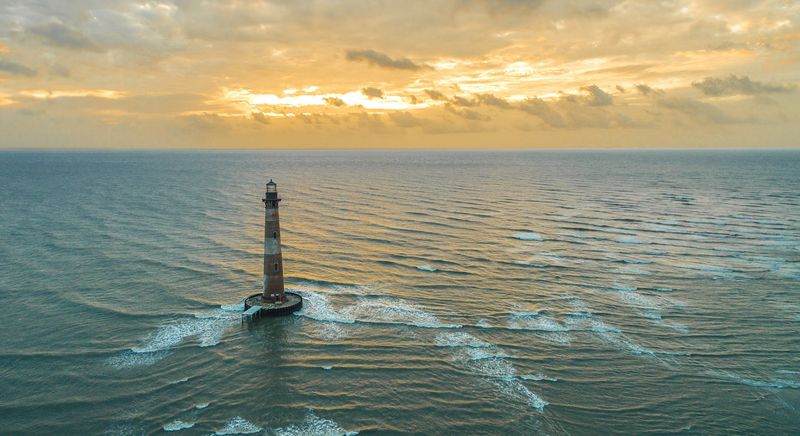
Calm days can make the lighthouse seem timeless, but storms tell the truer story.
Major coastal weather repeatedly reshaped the island, stripping away sand and weakening the natural buffer around the tower.
Each powerful system helped speed up a transformation already underway.
Hurricanes and nor’easters are especially destructive along exposed stretches of the Atlantic coast.
They can cut new inlets, flatten dunes, flood low ground, and carry enormous amounts of sediment elsewhere.
After enough events, the shoreline that once supported a structure may look completely different.
For this lighthouse, storms were not the sole cause of isolation, but they amplified the erosion cycle.
Instead of one single disaster placing it in the water, repeated weather impacts pushed the coast farther from its historic footprint.
That slower, cumulative change is part of what makes the story so compelling.
You are really looking at the aftermath of many seasons of rearranged sand, altered currents, and exposed edges.
The tower survives as a marker of what used to be land, while the sea occupies space that earlier generations would have walked across.
Its lonely setting is therefore not just beautiful or eerie, but also a visible record of how storms can accelerate an already fragile coastline.
5. A Survivor Of War And Reconstruction
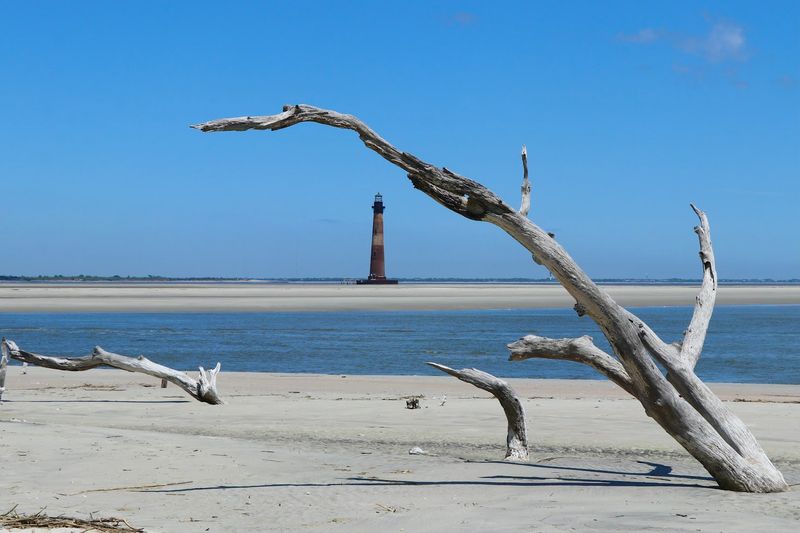
There is more to the tower’s survival than weather alone.
Its history also includes destruction, rebuilding, and the kind of resilience that makes old maritime landmarks especially meaningful.
That layered past adds weight to every photograph you take from the beach.
An earlier lighthouse on the site was lost during the Civil War, and the present structure was later rebuilt in the nineteenth century.
That means the beacon you see today already represents a second chapter rather than an untouched original.
Even before erosion isolated it, the site had experienced major upheaval.
This matters because the lighthouse was never just a pretty coastal feature.
It was part of a working harbor system shaped by conflict, commerce, engineering, and recovery after wartime damage.
The fact that it still stands at all gives the offshore silhouette even greater emotional force.
When you look at it now, you are seeing a structure that has outlasted more than one threat.
War erased one version, rebuilding created another, and nature later changed the ground around it without toppling the tower itself.
That combination of loss and endurance is a big reason the lighthouse feels so haunting, and why its isolated position resonates far beyond simple scenic curiosity.
6. What Visiting It Actually Feels Like
Reaching the viewpoint feels like a small adventure rather than a quick roadside stop.
The approach builds anticipation, especially because the lighthouse stays just distant enough to feel slightly out of reach.
That separation becomes part of the experience instead of a disappointment.
At Morris Island Lighthouse, 1750 E Ashley Ave, Folly Beach, SC 29439, most visitors arrive by walking the half mile route toward the inlet.
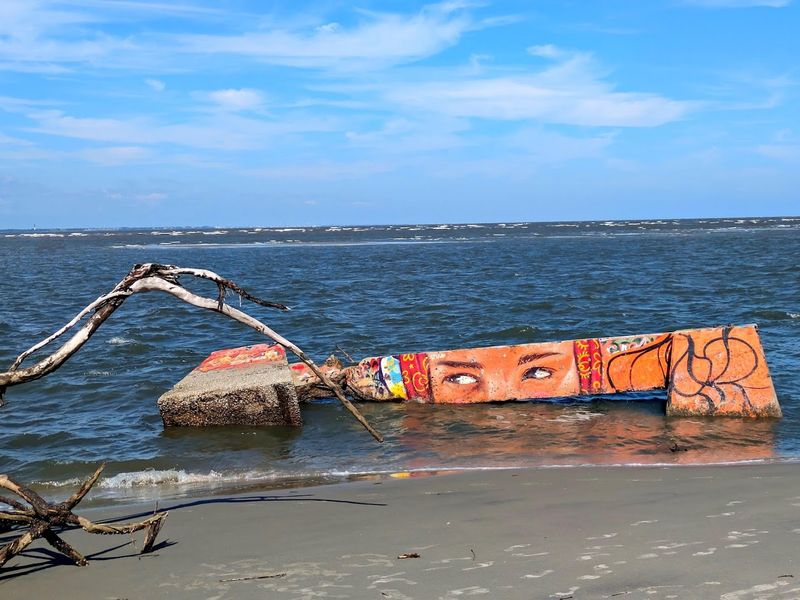
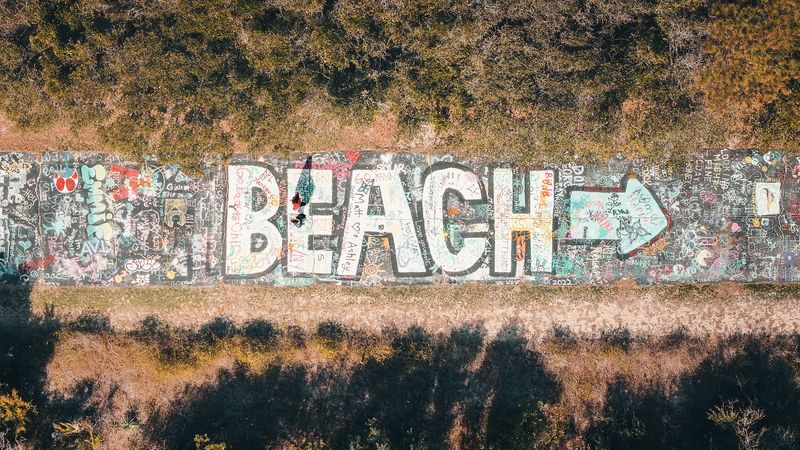
Reviews often mention the graffiti-covered path, the final stretch of soft sand, and the reward of wide-open views at the end.
Low tide can reveal more beach, driftwood, shells, and better angles for photos.
You cannot simply stroll up to the tower from shore, and that is the point this landscape makes so clearly.
The water between the lighthouse and the beach is the visible proof that erosion changed the site.
Warning signs about currents are worth taking seriously, because this is a place to observe, not to force access.
That distance gives the visit its unusual mood.
You stand on land that remains, looking at a landmark stranded where land used to be.
Once you see it in person, the answer to the shoreline mystery feels less abstract and much more powerful.
7. Preservation Without Rebuilding The Beach
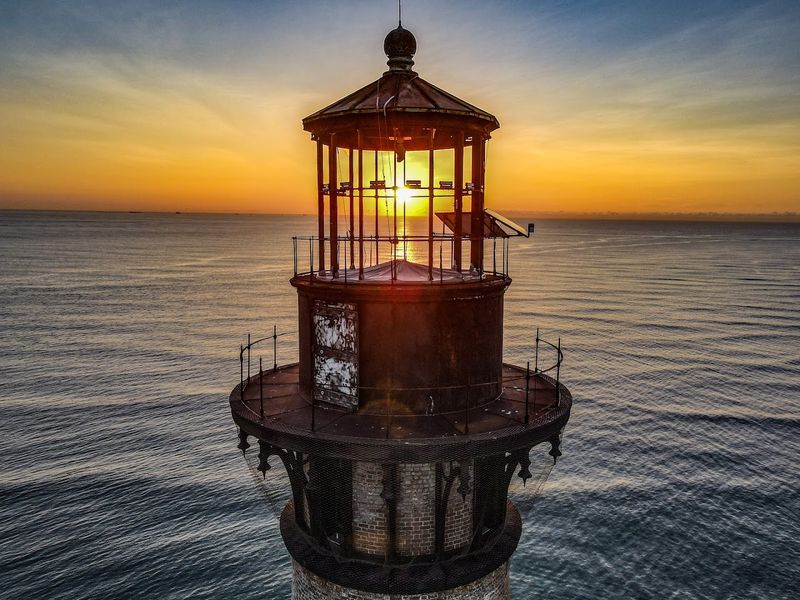
One of the most interesting parts of this story is that preservation does not always mean restoring everything to the past.
In this case, saving the lighthouse has meant stabilizing the structure while accepting that the surrounding shoreline has fundamentally changed.
That balance is practical, honest, and surprisingly moving.
Rather than pretending the beach can simply be reset to an earlier century, preservation efforts focus on protecting the tower itself and interpreting its history.
The offshore position has become part of the landmark’s meaning.
It now teaches visitors about maritime history and coastal vulnerability in a single glance.
This approach respects both engineering heritage and environmental reality.
Trying to force the entire landscape back into its former shape would be enormously difficult and likely temporary anyway.
Barrier coasts are dynamic systems, and the lighthouse is now inseparable from that fact.
That is why its solitude in the water feels less like failure and more like testimony.
The tower survives not as a perfectly restored artifact on a neat shoreline, but as a witness to change that no museum exhibit could explain so vividly.
If you leave with a stronger sense of how history and nature interact, then this isolated beacon has done its job beautifully.
8. The Real Answer In One Image
Some places require a long explanation, but this one delivers its answer visually.
A lighthouse stands alone in the water because the land that once held it has been worn away.
Everything else in the story adds depth, yet that central truth is visible in a single frame.
You are seeing the combined effects of history, engineering, storms, and relentless coastal erosion.
The tower was built for a practical purpose on solid ground, then outlasted the island’s retreat around it.
Its present position is therefore both accidental and completely logical.
What makes the site memorable is that it does not feel ruined in the ordinary sense.
The lighthouse still rises confidently, striped and unmistakable, even though the geography around it has been transformed.
That contrast between endurance and exposure is what gives the landmark its emotional power.
By the time you finish taking it in, the mystery becomes clearer and more profound.
This is not a lighthouse misplaced in the sea, but a survivor left standing after the shoreline changed its mind.
That is why this South Carolina beacon stands alone in the water instead of on the shore, and why the image stays with you long after the visit ends.