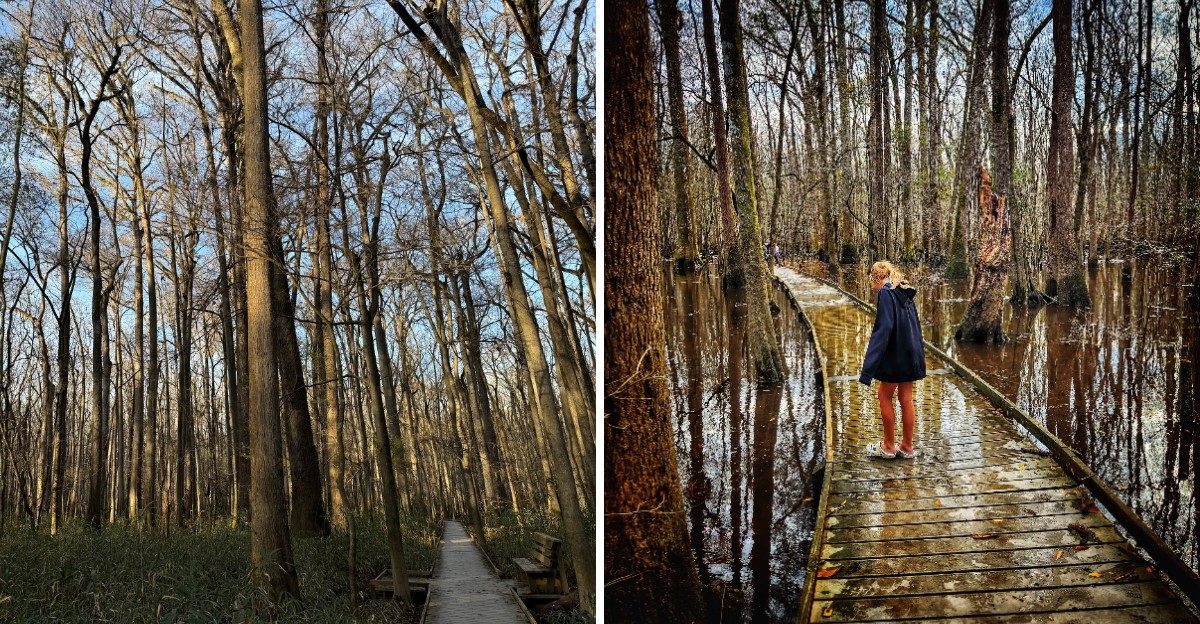
Forget crowded fall roads—South Carolina has a giant-tree wonderland hiding in plain sight.
Congaree National Park feels like stepping into a forest built for giants.
Some of the tallest trees in the eastern United States rise above the floodplain, while 15 champion tree records give this quiet park plenty of bragging rights.
Fall brings cooler days, fewer mosquitoes, and splashes of gold and red among the towering trunks.
The boardwalk makes it easy to wander through the forest without turning your visit into a serious hike.
Then there are the cypress knees, winding trails, wildlife, and massive trees that seem to stretch forever.
Bring your walking shoes and a little curiosity, because Congaree is the kind of place where one peaceful stroll can turn into a surprisingly wild adventure.
Walk Beneath Congaree’s Towering Champion-Sized Trees
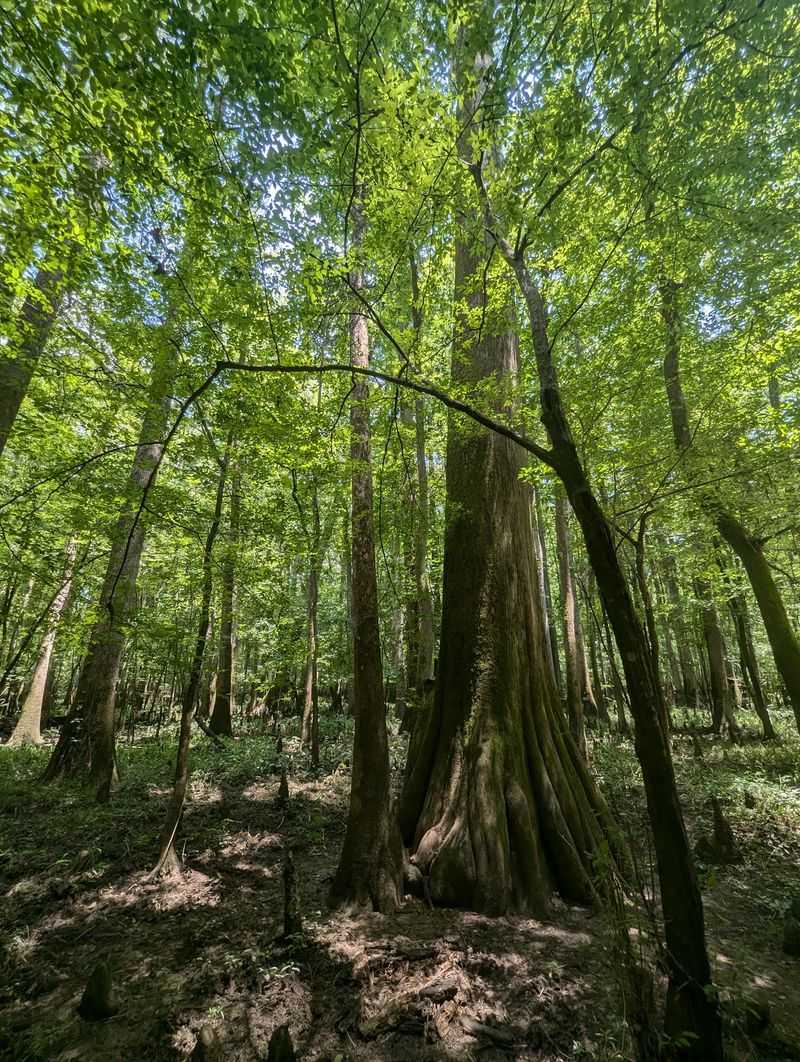
Picture tipping your head back so far that your hat almost falls off. That is a normal moment at Congaree, where some trees stretch taller than a 15-story building.
The park protects one of the highest forest canopies found anywhere in the world.
Champion trees are the biggest known trees of their kind, measured by height, trunk size, and crown spread. Congaree has held records for species like loblolly pine, sweetgum, cherrybark oak, and swamp tupelo.
Walking among them feels a bit like visiting a museum where the exhibits are alive and still growing.
Fall makes the experience even better. Sweetgums turn shades of purple and red, while oaks and hickories add warm browns and yellows.
The cooler weather also means fewer mosquitoes, which locals will tell you is a big deal here.
Bring a friend and try a simple game. Have one person hug a trunk while another tries to reach around from the other side.
With many of these giants, your hands will not even come close to touching.
Take the 2.6-Mile Boardwalk Loop Through the Old-Growth Forest
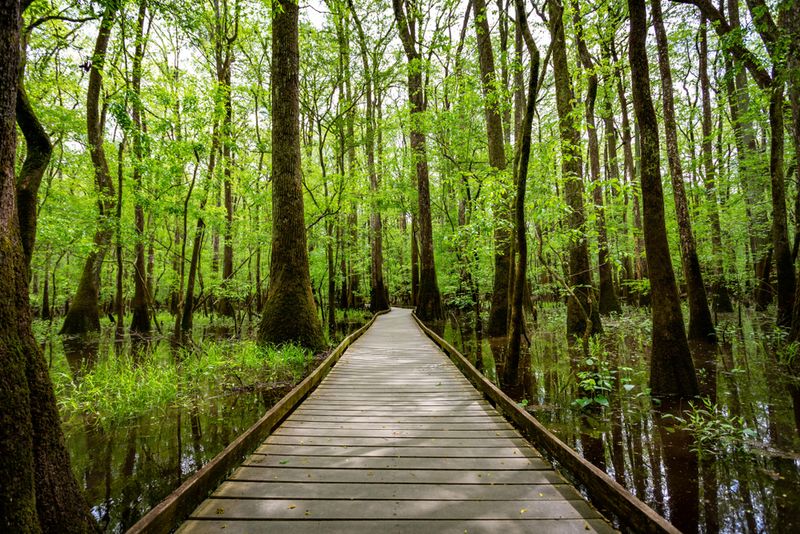
Good news for anyone who does not love muddy hiking boots. The Boardwalk Loop lets you stroll right through a swampy floodplain while staying high and dry on wooden planks.
At about 2.6 miles, it takes most people one to two hours.
The route starts near the Harry Hampton Visitor Center and is mostly flat. Part of it is elevated above the forest floor, while another section sits lower to the ground.
That mix gives you two different views of the same amazing woods.
Families with young kids, older walkers, and people using strollers often find this loop a perfect fit. You can go at your own pace and stop whenever something catches your eye.
Benches along the way make nice spots for a snack break.
Here is a helpful tip. Walk the loop slowly and listen.
On calm fall mornings, you might hear woodpeckers drumming, leaves crunching under a squirrel, or owls calling in the distance. The boardwalk may be easy, but the sights along it are anything but ordinary.
Look for the Famous Loblolly Pine
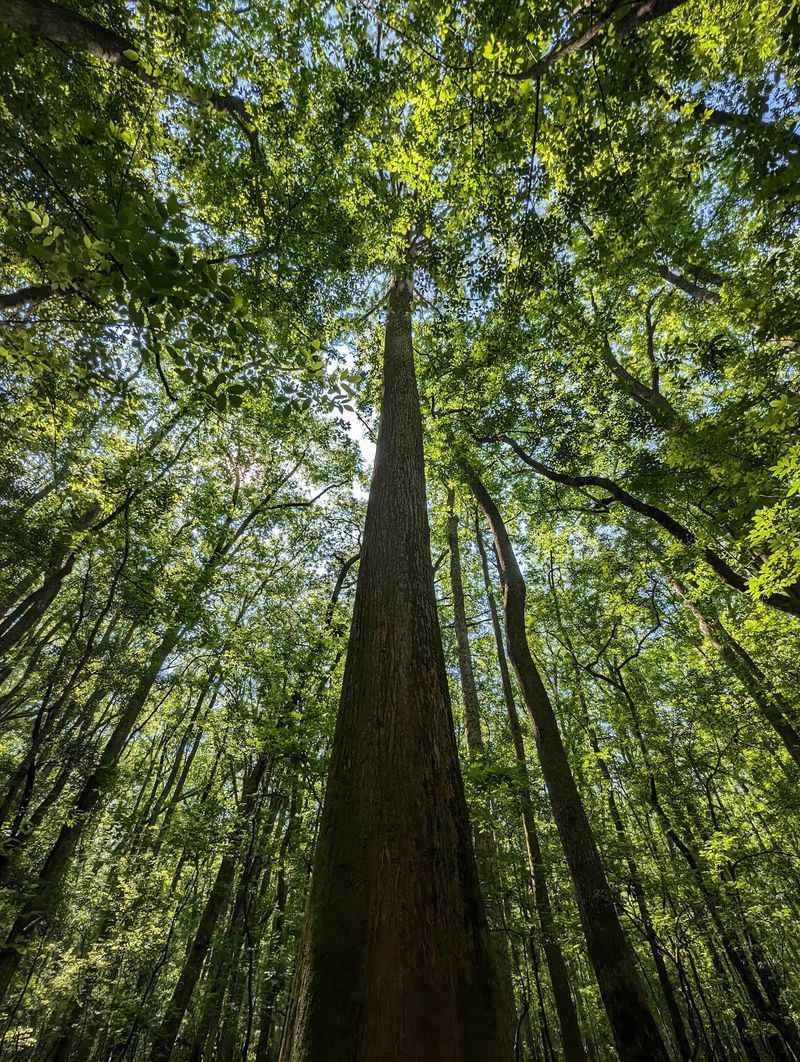
Most loblolly pines you see in backyards or along highways are fairly ordinary. Congaree’s giant loblollies are a whole different story.
Some here rise over 160 feet, making them among the tallest of their kind ever measured.
A loblolly pine in Congaree has held national champion status, earning its place on the official list of America’s biggest trees. Its trunk is thick and covered in rough, plate-like bark that looks almost like puzzle pieces.
Standing next to it can make you feel tiny in the best way.
Fun fact: the word loblolly is an old term for a thick porridge or a muddy puddle. The tree got its name because it often grows in wet, low places.
That makes Congaree’s soggy floodplain a fitting home.
Ask a ranger at the visitor center for tips on spotting the biggest pines along the trails. Pines stay green in fall, so they stand out nicely against the changing hardwoods.
Snap a photo with someone standing at the base to show its true size.
See Bald Cypress Knees Rising From the Forest Floor
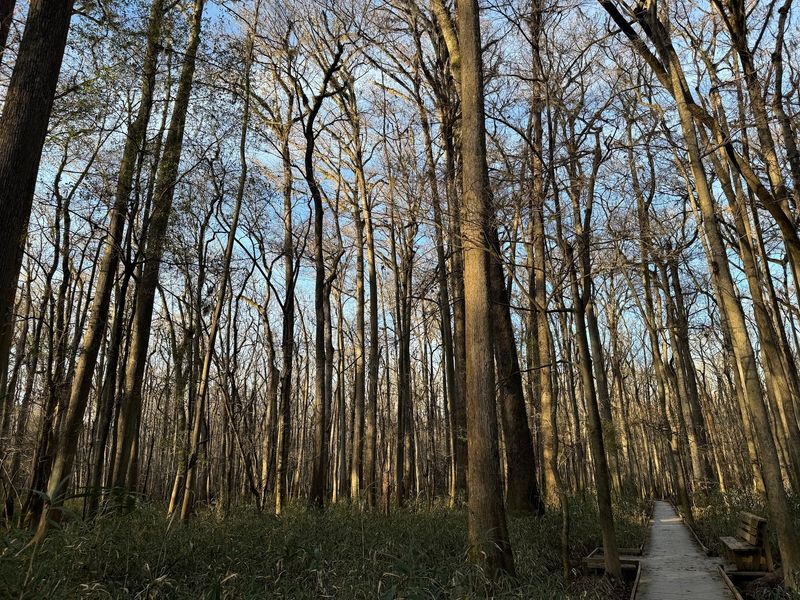
Gnomes, tiny wizards, or little castle towers? Kids and grown-ups alike love guessing what cypress knees look like.
These knobby wooden bumps poke up from the ground and water all around Congaree’s wetter areas.
Cypress knees grow from the roots of bald cypress trees. Scientists still debate their exact purpose.
Some think they help steady the tree in soft, muddy soil, while others believe they might help roots get air. Either way, they give the swamp a magical, storybook feel.
Some knees in Congaree stand several feet tall. You will often spot dozens clustered around a single big cypress trunk.
Look near low spots along the boardwalk where water collects after rain.
Autumn adds a special bonus. Bald cypress is one of the few cone-bearing trees that drops its needles each year, which is how it earned the word bald in its name.
In fall, those needles turn a rusty orange before falling, creating a colorful scene around the knees below.
Pause Along the Old-Growth Forest Boardwalk Stops
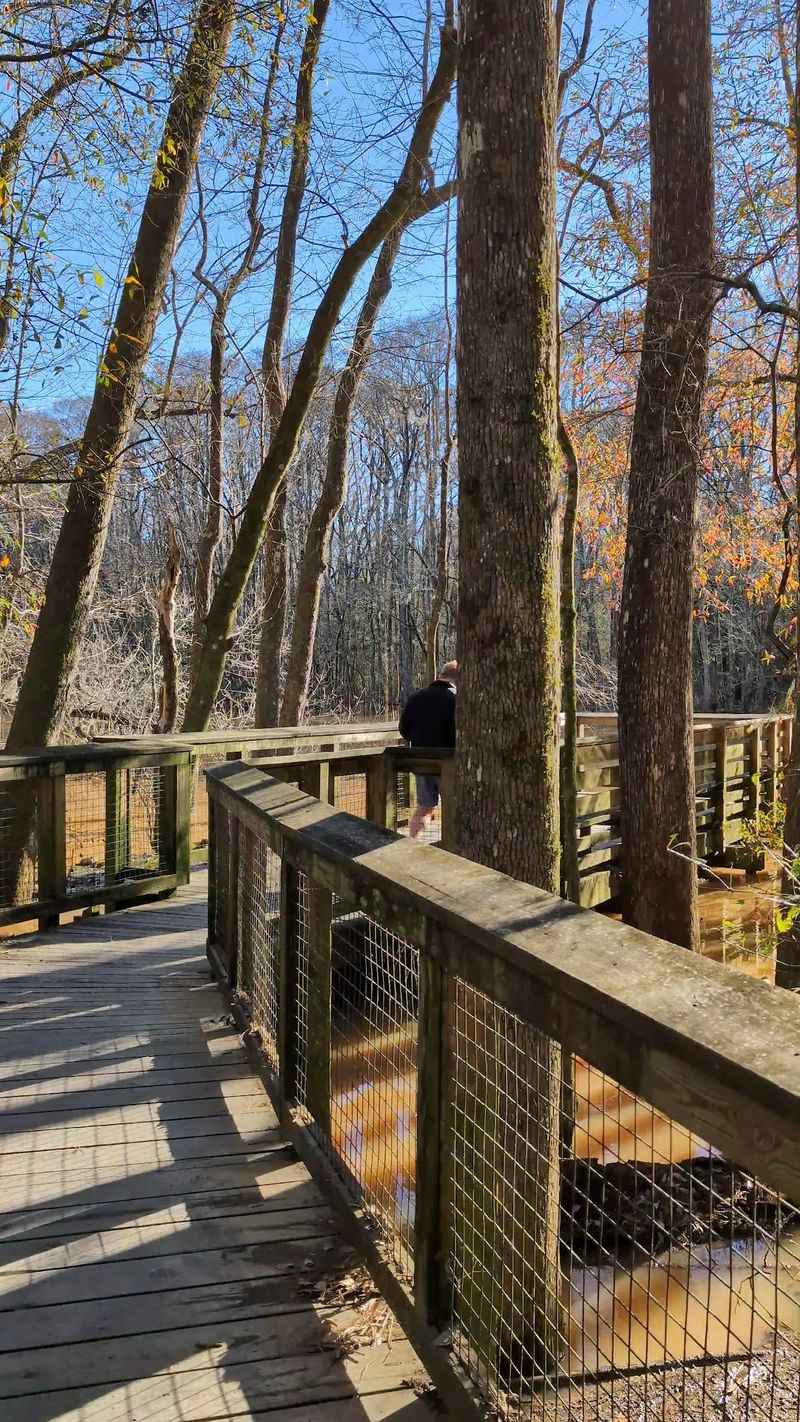
Reading signs on a walk might sound like homework. At Congaree, though, the numbered stops along the boardwalk turn the forest into a fascinating story.
You can pick up a trail guide at the visitor center or use the park’s app to follow along.
Each stop points out something worth noticing. One might explain why a dead standing tree, called a snag, is valuable housing for woodpeckers and bats.
Another shows how a fallen giant opens a sunny gap where young trees race to grow.
Old-growth forest means the woods have never been heavily logged. That gives you the chance to see every stage of a tree’s life in one place.
Tiny seedlings, middle-aged trees, ancient giants, and rotting logs all work together like a team.
Slow down at each stop and look around before moving on. Touch the spongy moss on a fallen log or count the mushrooms growing on old bark.
You will leave knowing far more about how forests stay healthy over hundreds of years.
Follow the Bluff Trail for a Different Fall View
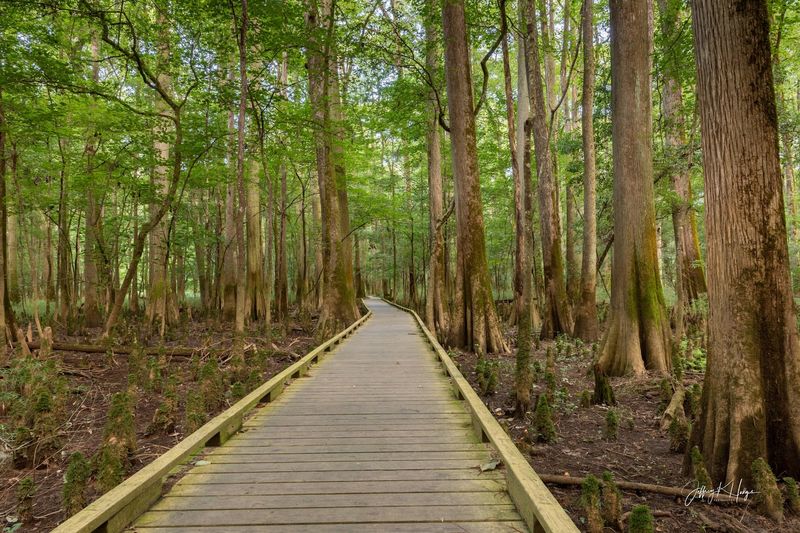
Short on time but craving a little more adventure than the boardwalk? The Bluff Trail is a great answer.
This dirt path loops for about 1.7 miles near the visitor center and campground.
Unlike the swampy floodplain, the Bluff Trail sits on slightly higher, drier ground. The forest here changes, with more pines and upland trees mixed in.
It is a neat way to see how just a few feet of elevation can create a completely different habitat.
Because the trail is mostly dirt, it feels more like a classic woodland hike. Fall leaves crunch nicely underfoot, and the open feel lets more sunlight reach the ground.
Keep your eyes open for deer, squirrels, and colorful songbirds passing through on their fall migration.
Many visitors combine the Bluff Trail with part of the boardwalk for a well-rounded day. Wear sturdy shoes since roots and sandy patches can be uneven.
It is also a smart pick when the lower trails are flooded, though checking with rangers first is always wise.
Walk the Weston Lake Trail for Cypress, Water and Wildlife
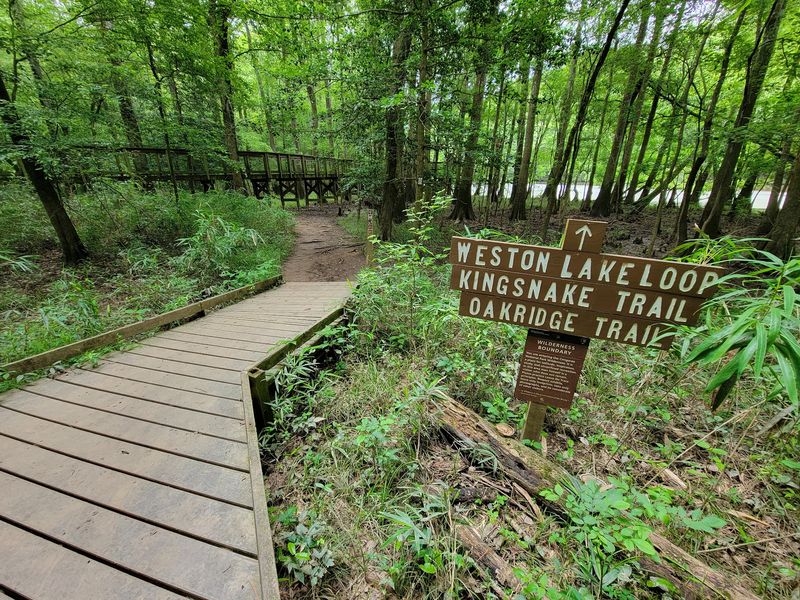
Turtles sunning on logs. Herons standing perfectly still.
Maybe even a river otter slipping through the water. The Weston Lake Loop Trail is where Congaree’s wildlife often shows off.
This roughly 4.4-mile loop starts from the boardwalk and follows Cedar Creek before circling a cypress-tupelo slough called Weston Lake. A slough is a slow, shallow body of water that was once part of an old river channel.
The still water creates beautiful reflections of giant trees, especially on clear fall days.
Plan on two to three hours to enjoy it without rushing. Pack water, a snack, and binoculars if you have them.
Bird lovers may spot barred owls, pileated woodpeckers, and wood ducks.
Remember to give all animals plenty of space. Snakes, including cottonmouths, live in the park, so watch where you step and never reach into logs or holes.
Stay calm and back away if you see one. With a little care, this trail can be the highlight of your whole trip.
See How Flooding Shapes Congaree’s Giant Forest
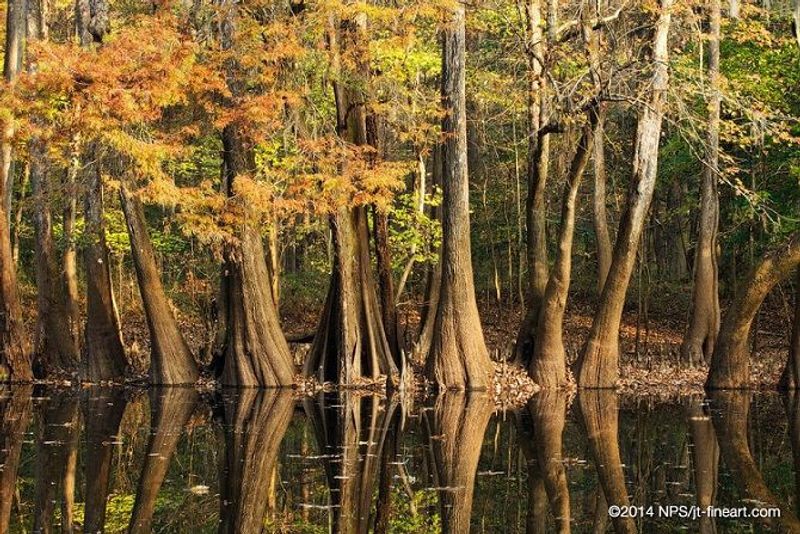
Floods usually sound like bad news. At Congaree, they are actually the secret ingredient behind the massive trees.
The park sits in a floodplain where the Congaree and Wateree rivers overflow their banks several times a year.
When floodwaters spread across the forest, they carry rich soil and nutrients from upstream. That natural fertilizer settles on the ground and feeds the trees.
Over centuries, this cycle has helped the forest grow some of the tallest hardwoods in North America.
Here is a cool detail to look for. Many tree trunks have dark stain lines several feet up the bark.
Those marks show how high the water reached during past floods. Kids often enjoy guessing which flood line is the highest.
Flooding also explains why Congaree is not technically a swamp, even though many people call it one. A true swamp stays wet most of the time, while a floodplain forest floods and then drains.
The next time you see standing water here, remember it is helping giants grow.
Slow Down and Enjoy the Quiet Fall Atmosphere
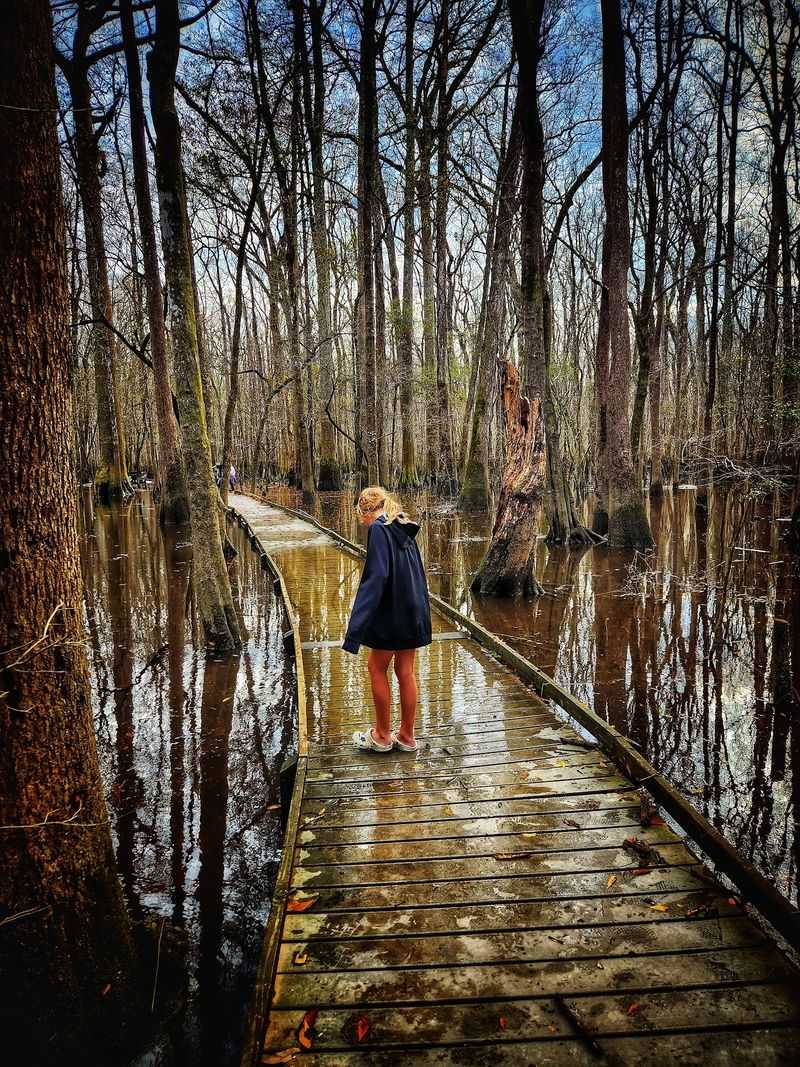
Close your eyes for a moment on the boardwalk. You might hear a woodpecker tapping, wind rustling through high branches, and leaves drifting to the ground.
Moments like these are what make Congaree feel so special.
Compared to famous parks like the Great Smoky Mountains, Congaree gets far fewer visitors. That means quieter trails, shorter waits, and plenty of room to breathe.
Weekday mornings in fall are especially calm.
Try leaving your phone in your pocket for a while. Notice how the light changes as clouds pass over the canopy, or how the air smells earthy and fresh after a rain.
Some visitors bring a small notebook to sketch trees or write down birds they spot.
Fall also brings the chance to see the forest change in real time. Each week, more leaves turn, and more sunlight filters through the thinning branches.
Visiting twice in one season can feel like seeing two different parks. There is no prize for finishing fastest here, so wander, wonder, and enjoy.
What to Know Before You Go
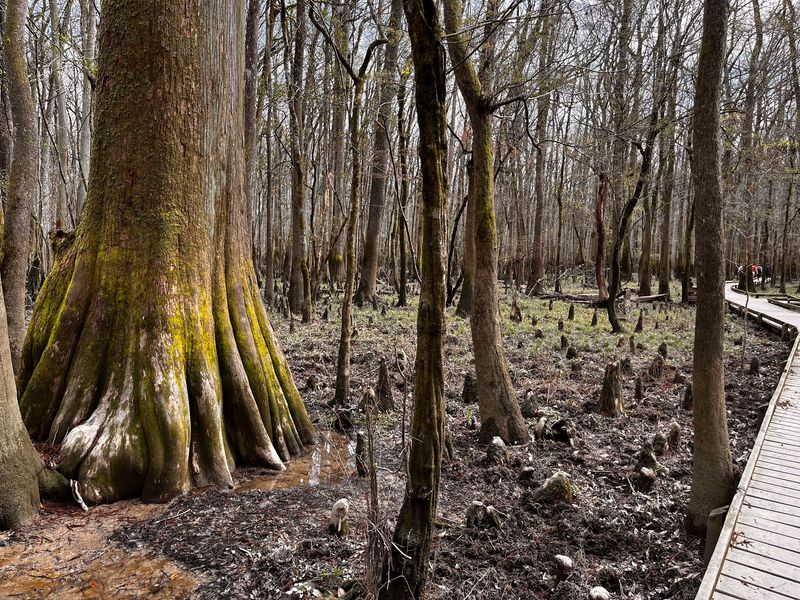
Planning ahead makes your Congaree trip smooth and fun. The Harry Hampton Visitor Center is at 100 National Park Road, Hopkins, South Carolina, about 20 miles southeast of Columbia.
Admission is free, and so is parking near the center.
Visitor center hours can change by season, so check the official park website before you leave. Restrooms, water fountains, maps, and friendly rangers are all found there.
The elevated boardwalk sections are wheelchair and stroller friendly, though some lower parts can be rough.
Conditions change quickly after heavy rain. Trails and even parts of the boardwalk may flood or close, so always check current park alerts first.
Fall weather is usually pleasant, ranging from the 50s to the 70s, but mornings can feel chilly.
Wear comfortable, waterproof shoes and bring plenty of water, snacks, bug spray, and sunscreen. Leashed pets are welcome on trails and the boardwalk.
Pack a light jacket, a trash bag to carry out litter, and a camera for those giant trees.