Georgia is hiding a granite giant in plain sight.
Just outside Atlanta, Panola Mountain rises above the woods with slabs of ancient rock, giving this Stockbridge park a wild character that feels removed from the city.
The exposed granite is the beginning.
Rare plants cling to thin pockets of soil, rugged rock surfaces catch the sunlight, and trails reveal a side of Georgia that many visitors never expect to find so close to Atlanta.
Panola Mountain State Park also protects one of the region’s most unusual natural areas, making every overlook and forest path feel like part of a bigger story.
Whether you come for the geology, the scenery, or the thrill of discovery, these formations deserve a closer look.
Here’s why you’ll want to see them for yourself.
A 100-Acre Granite Mountain Hides in Plain Sight
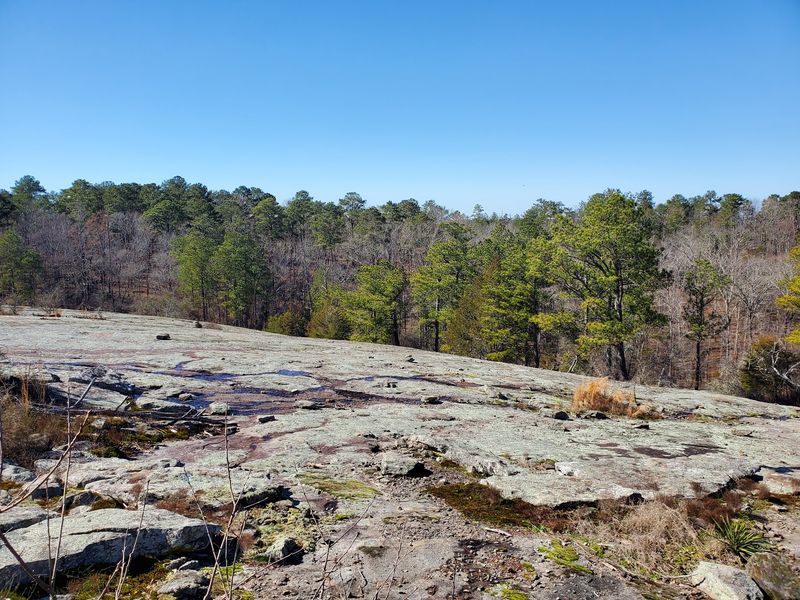
Panola Mountain stands as one of Georgia’s most remarkable geological features, though many people drive past without ever knowing it’s there. This pristine granite monadnock covers roughly 100 acres and rises dramatically from the surrounding Piedmont terrain.
What makes Panola so striking is the contrast between its bare, exposed rock and the thick forest wrapping around it. The granite surfaces create an almost otherworldly appearance, especially when sunlight catches the stone at certain angles throughout the day.
Unlike mountains covered entirely in trees and vegetation, Panola’s exposed rock tells its own story. The smooth, weathered granite has resisted erosion for millions of years while softer surrounding rock wore away.
This geological survivor offers visitors a rare chance to see what lies beneath Georgia’s typical forested landscape. The mountain’s unusual ecosystem developed because of these harsh granite conditions, creating habitat found in few other places.
Standing near the exposed rock, you get a sense of deep time and natural forces that shaped our region long before humans arrived.
The Rock Outcrops Tell a Story Written in Granite
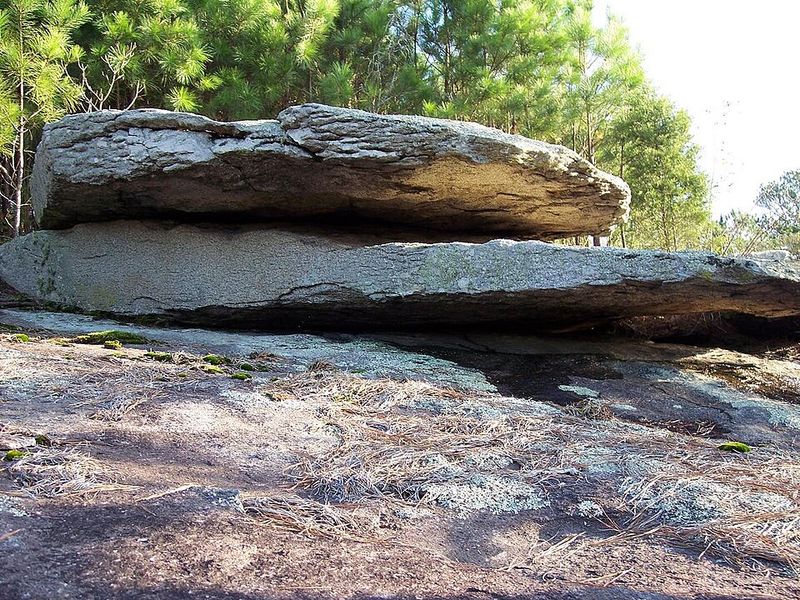
Geology enthusiasts find Panola Mountain endlessly fascinating because the exposed granite acts like a textbook you can walk through. Every crack, weathering pattern, and surface feature reveals information about the forces that created and shaped this mountain over countless millennia.
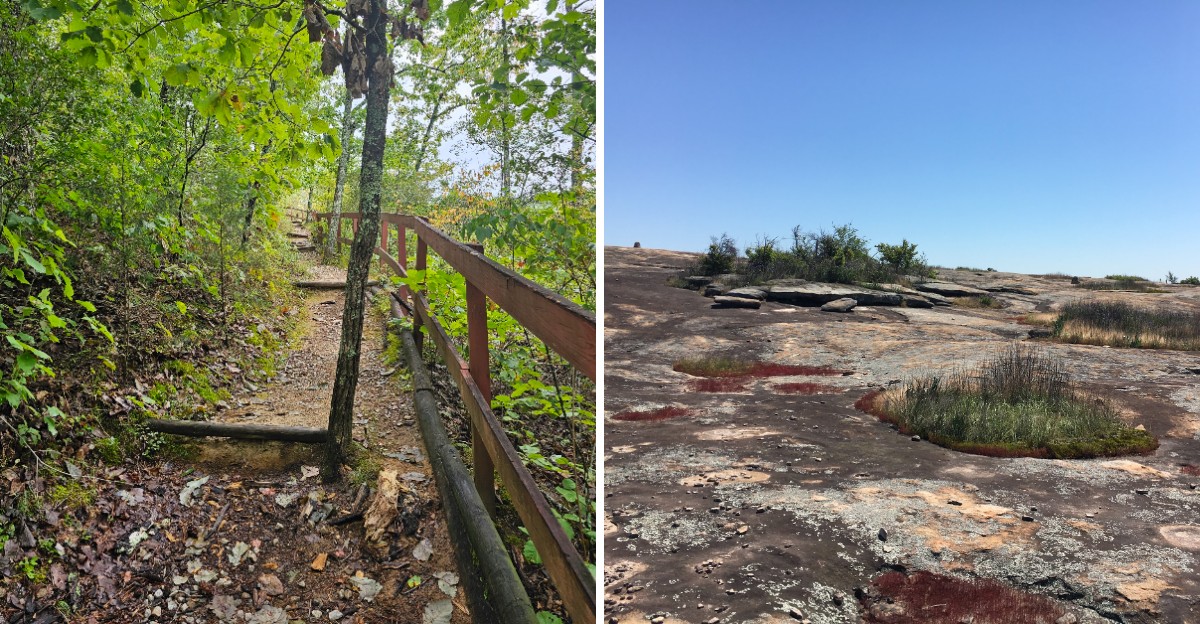
The Rock Outcrop Trail provides the perfect introduction to understanding these geological wonders. This accessible path winds through pine-oak forest before emerging at overlooks where the granite landscape spreads before you.
Erosion has been both sculptor and storyteller here, carving patterns into the resistant granite while washing away softer materials. You can actually see evidence of these processes frozen in stone, from rounded depressions where water pooled to the smooth surfaces polished by wind and weather.
Educational interpretive information along the trail helps visitors understand what they’re seeing. The granite formed deep underground under intense heat and pressure, then was gradually exposed as overlying rock eroded away over millions of years.
Walking this trail, you’re essentially traveling back through geological time with each step toward the mountain.
This Is a Monadnock, Not Just Another Georgia Hill
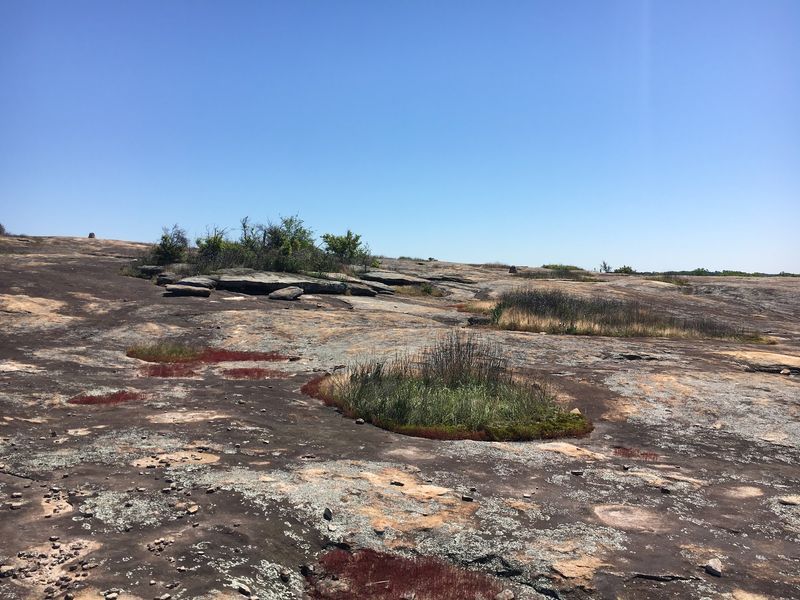
Most people have never heard the word monadnock, but once you understand what it means, you’ll never look at Panola Mountain the same way. A monadnock is an isolated mountain made of particularly resistant rock that remains standing while surrounding terrain erodes away.
Georgia State Parks specifically recognizes Panola as one of the Atlanta area’s most distinctive geological formations. The mountain isn’t just a random hill but represents something geologically special and relatively rare in our region.
Picture it this way: millions of years ago, this entire area sat at a much higher elevation. As softer rocks gradually wore down, the tough granite that forms Panola Mountain resisted, creating the isolated peak we see today surrounded by lower ground.
This geological uniqueness is exactly why the park receives protection. Similar granite monadnocks exist in Georgia, like Stone Mountain and Arabia Mountain, but each represents a precious example of these erosion-resistant survivors.
Understanding Panola as a monadnock helps visitors appreciate they’re not just looking at pretty rocks but witnessing geological processes spanning unimaginable time.
You Can See the Mountain Without Climbing It
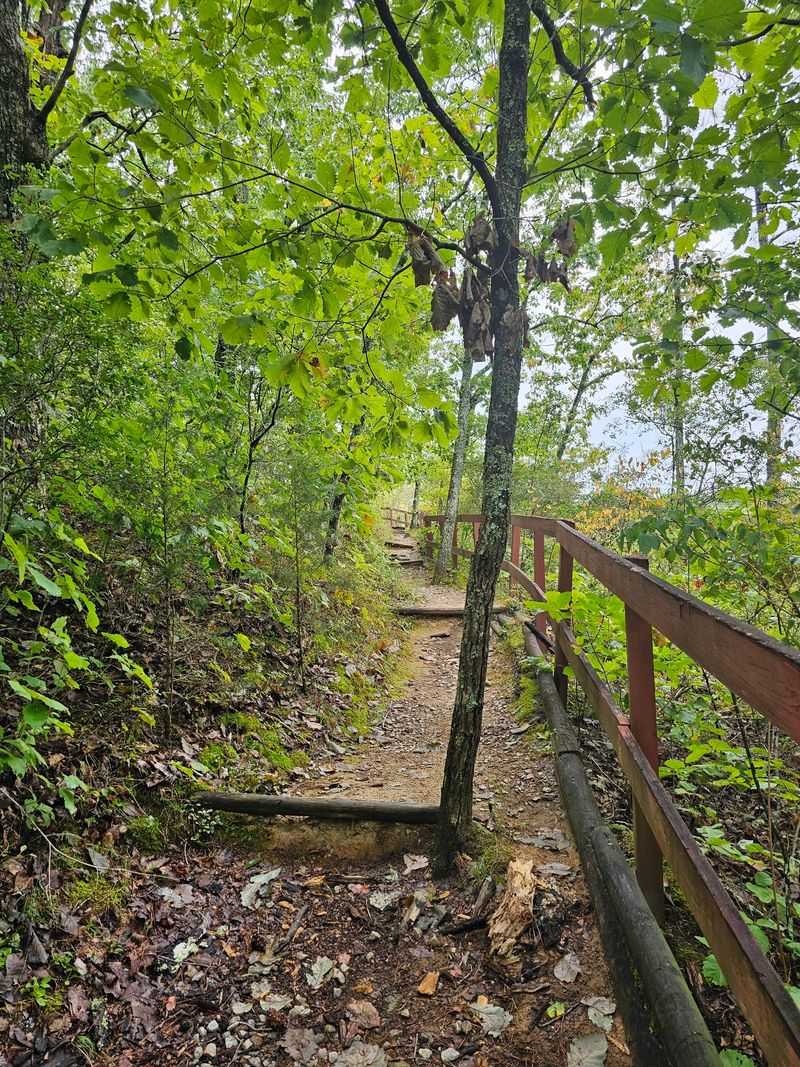
Not everyone wants to scale a mountain, and at Panola, you don’t have to. The Rock Outcrop Trail offers an easier alternative that still delivers impressive views and geological insights without requiring serious climbing effort.
This roughly three-quarter-mile trail is rated easy, making it accessible for families, beginners, and anyone who prefers a gentler outdoor experience. The path meanders through lovely pine-oak forest before reaching viewpoints where you can see the granite landscape and Panola Mountain itself.
The trail’s overlook areas provide excellent photography opportunities and places to simply sit and absorb the scenery. You get a real sense of the mountain’s scale and distinctive appearance from these vantage points.
Many visitors appreciate this option because it introduces them to the area’s geology and ecosystem without physical demands. The forest walk itself is pleasant, with typical Piedmont vegetation creating a peaceful atmosphere.
After experiencing the Rock Outcrop Trail, some people decide they want to join a guided summit hike. Others feel perfectly satisfied having seen the granite formations from these accessible overlooks, which honestly provide fantastic views on their own.
The Summit Is Protected for a Reason
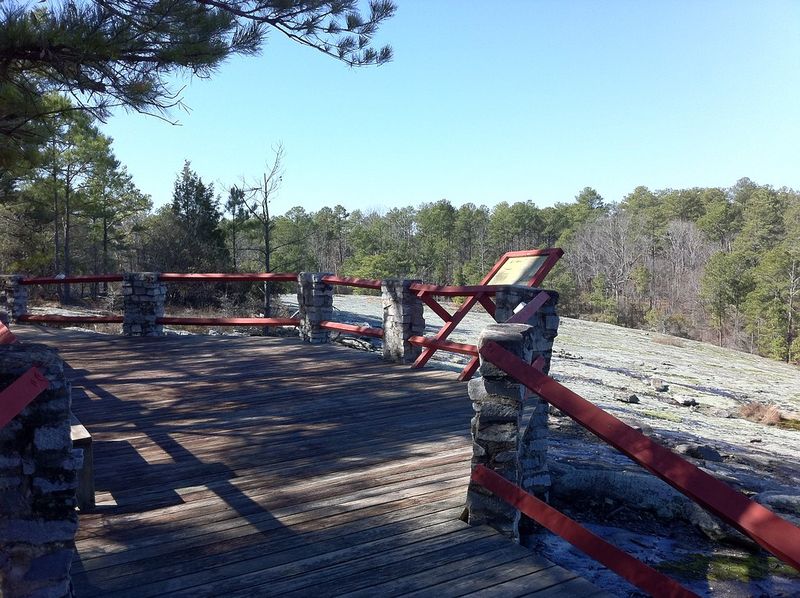
Here’s something that surprises many first-time visitors: you can’t just wander up to Panola Mountain’s summit whenever you feel like it. The entire mountaintop is protected, and access requires joining a ranger-led hike with advance reservations.
This might seem restrictive until you understand why. The granite ecosystem supporting rare plants and animals is incredibly fragile, easily damaged by unrestricted foot traffic.
Even well-meaning hikers can inadvertently harm these specialized communities. A single footstep in the wrong place might crush a rare plant that took years to establish itself in the harsh granite environment.
Multiply that by thousands of visitors, and the damage becomes catastrophic.
The ranger-led hikes limit group sizes and follow specific routes that minimize impact while maximizing the educational experience. Rangers share information about the geology, ecology, and conservation efforts that casual hikers might miss.
This protection policy has successfully preserved Panola Mountain’s unique ecosystem for decades. Other similar sites that allowed unrestricted access suffered severe degradation, losing rare species and geological features forever.
Reserving your guided hike takes minimal effort and ensures future generations can enjoy these formations too.
Rare Plants Survive on the Bare Rock
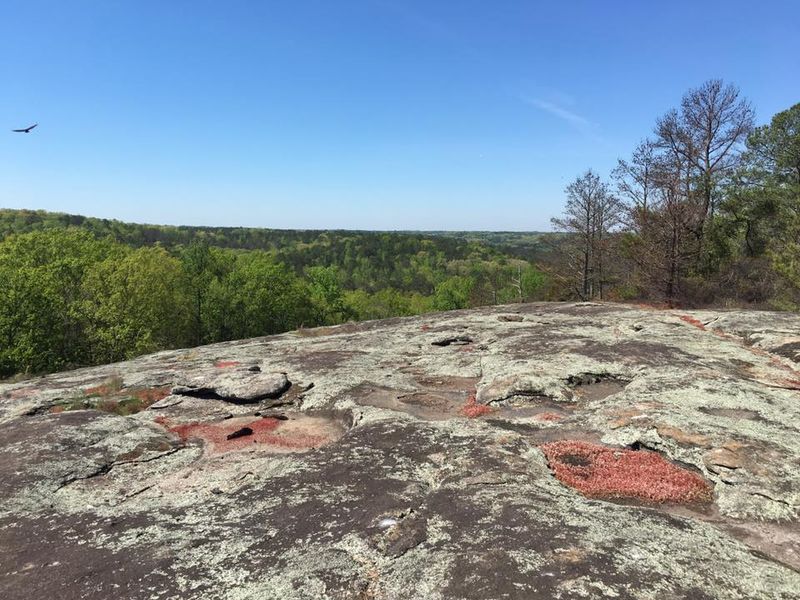
Bare granite might look lifeless at first glance, but look closer and you’ll discover a surprising world of botanical survivors. Specialized plants have evolved remarkable adaptations to thrive where most vegetation cannot survive.
The conditions on exposed granite are brutal: scorching sun exposure, minimal soil, intense heat radiating from rock surfaces, and limited water retention. Yet certain plant species have developed strategies to handle these challenges that would kill typical forest vegetation.
Some plants grow extremely slowly, conserving resources and developing deep roots that reach into tiny rock fissures. Others have specialized leaf structures that reduce water loss or reflect excessive sunlight.
The park protects these granite-outcrop plant communities because several species are exceptionally rare, found in only a handful of locations worldwide. Losing habitat like Panola Mountain could push these plants toward extinction.
Scientists study these hardy plants to understand how vegetation adapts to extreme conditions. The strategies these species developed might someday help us understand how plants could survive climate change or even colonize harsh environments beyond Earth.
Walking near these formations, you’re seeing evolution and adaptation in action, written in tiny leaves and determined roots.
The Rock Landscape Changes Completely With the Seasons
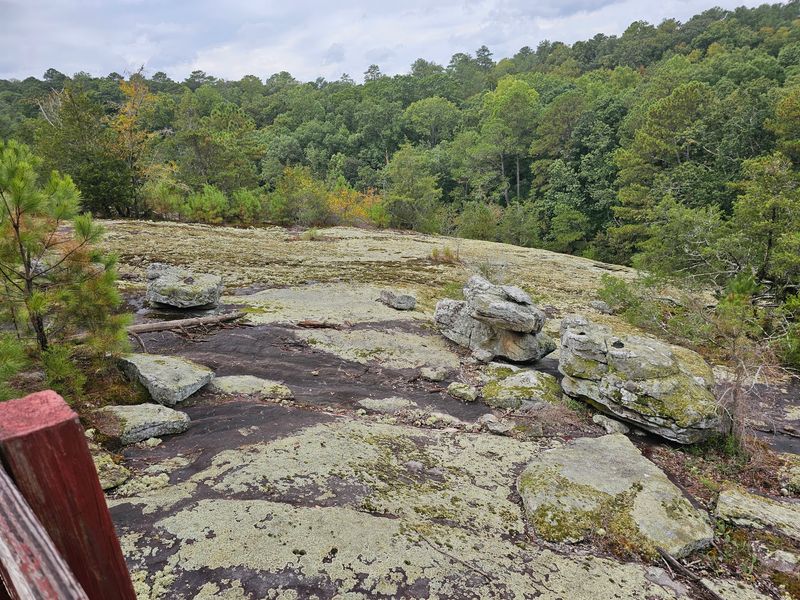
Timing your visit to Panola Mountain can dramatically affect what you see. The exposed granite takes on completely different characters as seasons shift and specialized plants respond to changing conditions.
Late winter brings one of the most spectacular transformations when diamorpha, a tiny succulent plant, turns brilliant red across the granite surfaces. This crimson display creates stunning contrast against the gray rock, especially on sunny days when the colors seem almost impossibly vivid.
As spring arrives, those same diamorpha plants produce delicate white flowers, shifting the palette entirely. The transition from red to white against unchanging granite creates photography opportunities found in few other places.
Summer brings its own drama as heat intensifies and only the most drought-resistant species remain green. The harsh conditions become obvious, helping visitors understand why this ecosystem requires such careful protection.
Fall adds another dimension when surrounding forests change color while the granite remains constant. This interplay between changing and unchanging elements gives each season distinct character.
Georgia State Parks specifically mentions these seasonal changes, suggesting they consider the varying appearances an important part of the Panola Mountain experience worth planning around.
Granite Boulders Add Another Layer of Adventure
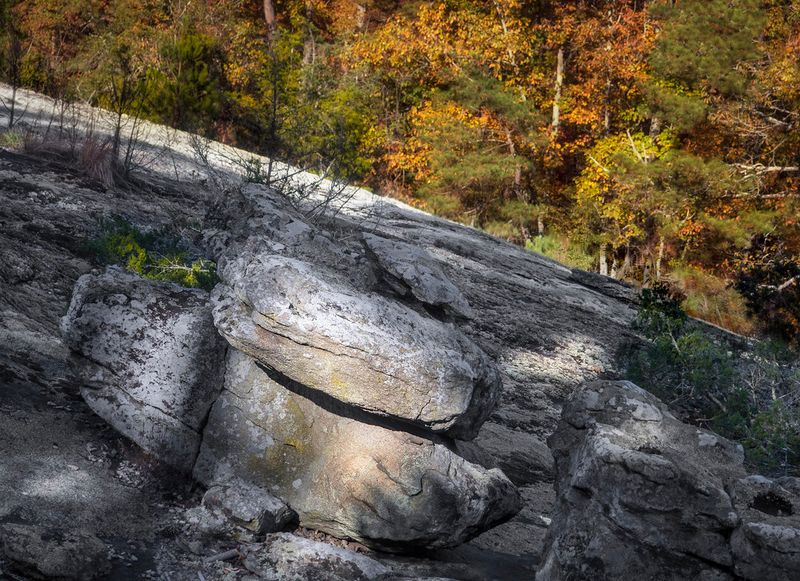
Beyond the mountain itself, adventure seekers discover another granite attraction at Panola: designated bouldering areas featuring challenging boulder problems. This adds an entirely different dimension to the park’s rock-related offerings.
Bouldering involves climbing relatively short rock formations without ropes, relying on crash pads and spotters for safety. The granite boulders at Panola provide various difficulty levels that attract climbers from throughout the Atlanta metro area.
Important regulations apply, though. Anyone interested in bouldering must obtain a permit and check in at the Nature Center before heading to the boulder fields.
This helps park staff monitor usage and ensure climbers understand the rules.
The park specifically prohibits top-roping, sport climbing, and traditional climbing to focus use on bouldering, which causes less impact to rock surfaces and surrounding areas. These restrictions help balance recreation with conservation.
Climbers appreciate Panola’s bouldering areas because quality granite climbing opportunities are relatively limited in Georgia. The rock quality is excellent, and the variety of problems keeps experienced boulderers engaged while remaining accessible to beginners working on basic techniques.
Even non-climbers find watching boulderers fascinating, as the physical problem-solving and strength required are impressive to observe.
Plan Your Visit
Successfully experiencing Panola Mountain requires a bit of advance planning, especially if you hope to join a ranger-led summit hike. The park is located at 2620 Highway 155 SW in Stockbridge, conveniently accessible from the Atlanta metro area.
Operating hours run from 7 a.m. to dusk daily, giving visitors flexibility for morning or afternoon adventures. Current information indicates a five-dollar parking fee, though confirming this detail on the official Georgia State Parks website before visiting makes sense.
The Nature Center serves as your essential starting point, providing trail maps, current information about conditions, and the schedule for guided mountain hikes. Staff can answer questions and help you plan the best experience based on your interests and abilities.
Here’s the crucial planning point: since the summit requires a guided hike, check the official schedule and make reservations before arriving. Simply showing up hoping to independently hike the mountain will leave you disappointed.
The Rock Outcrop Trail and other public trails remain available without reservations, providing excellent alternatives if guided hikes are full. Many visitors return multiple times, exploring different aspects of the park during each visit and gradually building their understanding of this remarkable granite landscape.