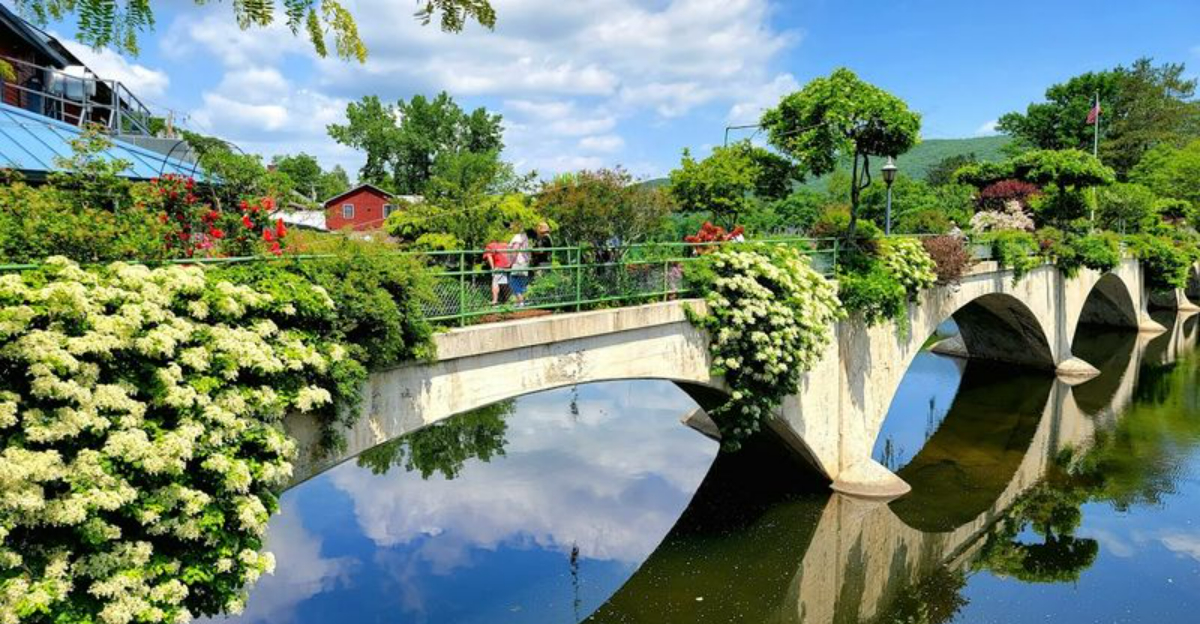
Tucked into the small town of Shelburne Falls in western Massachusetts, the Bridge of Flowers is exactly what its name promises — a real bridge completely covered in blooming plants. Built in 1908 as a trolley bridge, it was rescued from demolition in 1929 and turned into a volunteer-maintained garden walkway that stretches 400 feet over the Deerfield River.
Every year, from April through October, thousands of visitors cross it just to see what’s in bloom. What started as a community project has quietly become one of the most beloved hidden gems in all of New England.
A Small Western Massachusetts Town With an Unusual Landmark
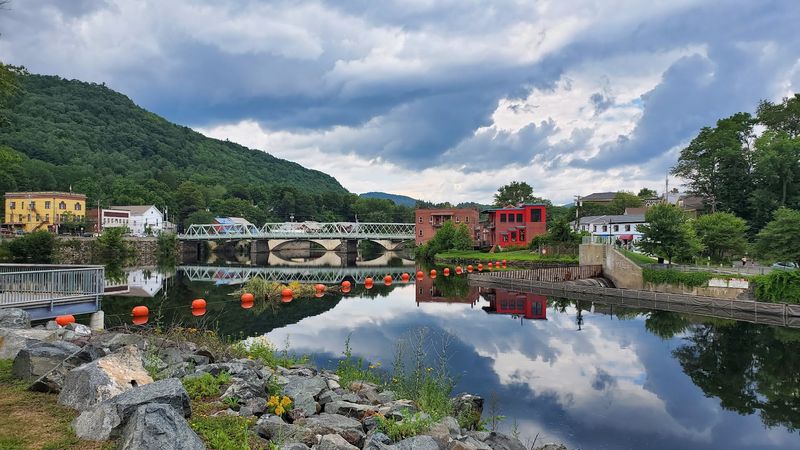
Most people have never heard of Shelburne Falls before someone mentions the bridge. Nestled in the Pioneer Valley of western Massachusetts, this compact little town sits where the Deerfield River bends through a valley framed by rolling hills.
You can walk most of downtown in under an hour, past old mill buildings and locally owned storefronts that have been there for generations.
What makes this town stand out on any map is a single repurposed structure that spans the river and draws visitors from across New England every warm season. It does not advertise aggressively, and there is no flashy entrance fee or ticket booth.
People simply find it, often through word of mouth, and many end up returning year after year.
Shelburne Falls has the kind of lived-in, unhurried energy that feels rare these days. The bridge is the reason most visitors show up — but the town itself is the reason many of them stay longer than planned.
What the Bridge of Flowers Actually Is
Here is something genuinely surprising: the Bridge of Flowers is not some decorative structure built to look pretty. It started life as a working trolley bridge, constructed in 1908 to carry streetcars across the Deerfield River.
When the trolley line shut down in 1927, the bridge sat unused and was nearly torn down entirely.
That is when the Shelburne Falls Area Women’s Club stepped in. In 1929, they claimed the old concrete structure and began planting it with flowers.
Nearly a century later, they are still the ones keeping it alive — through volunteer labor, community donations, and a lot of dedicated gardening. No city department runs it.
No corporation sponsors it.
Over 500 varieties of flowers, vines, and shrubs now grow across the bridge, ensuring something is always in bloom between April and October. It is widely considered the only flower bridge of its kind in the United States, which makes it genuinely one of a kind.
The Structure Underneath: Concrete Arches Built to Last
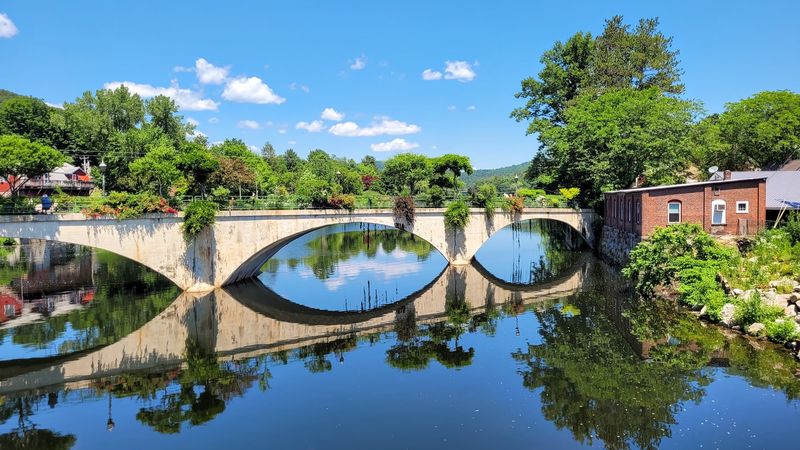
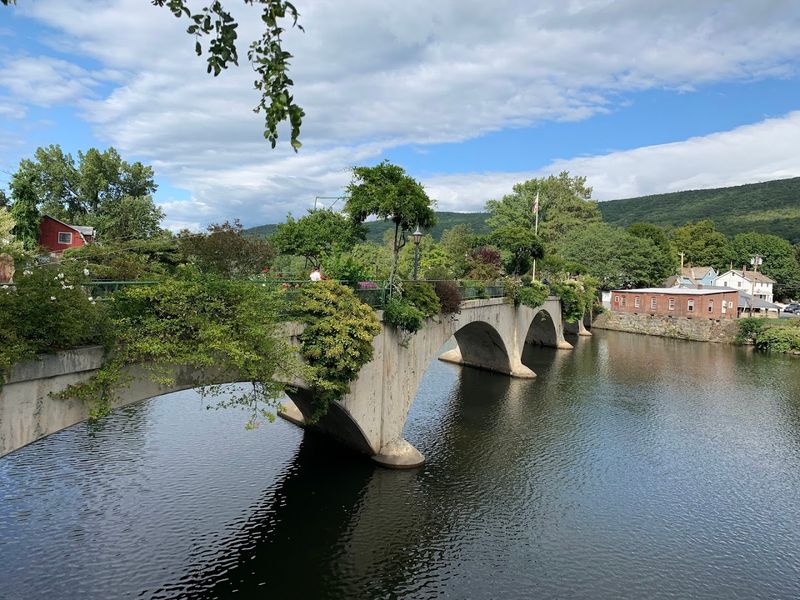
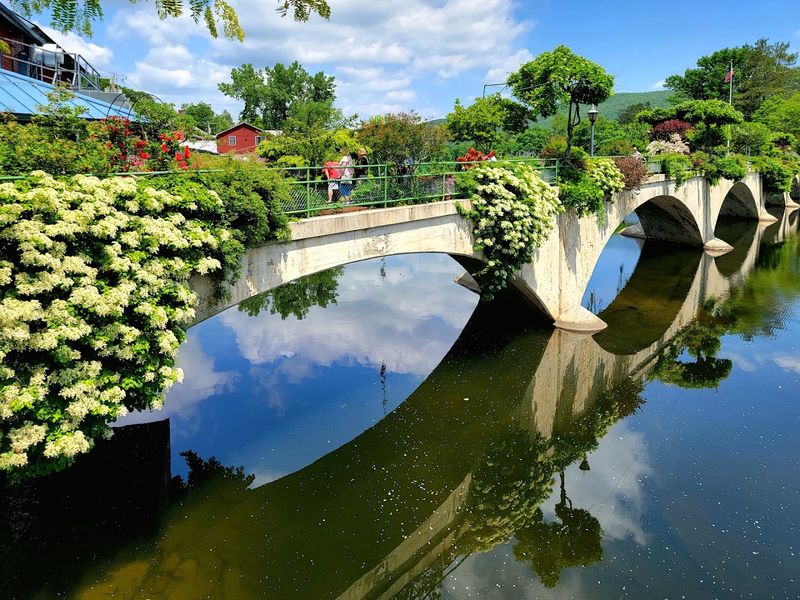
Beneath all those petals and vines, something remarkably sturdy holds everything up. The Bridge of Flowers rests on a series of solid concrete arches that were originally engineered to carry the weight of streetcars — which means the structure is far more heavy-duty than a garden walkway needs to be.
That overbuilt foundation is a big reason the bridge has lasted as long as it has.
Standing on the riverbank below and looking up at those arches is one of the more interesting visual experiences the site offers. The contrast between the rough industrial base and the cascading, colorful plants growing above it creates a layered look that photographs beautifully from the water’s edge.
In 2024, the bridge underwent its most significant structural repairs in decades, including new railings and a completely resurfaced pathway. It reopened in spring 2025 looking better than ever.
The bones of this bridge were built to outlast almost everything around them — and so far, they have.
The Planting Season: When the Bridge Wakes Up
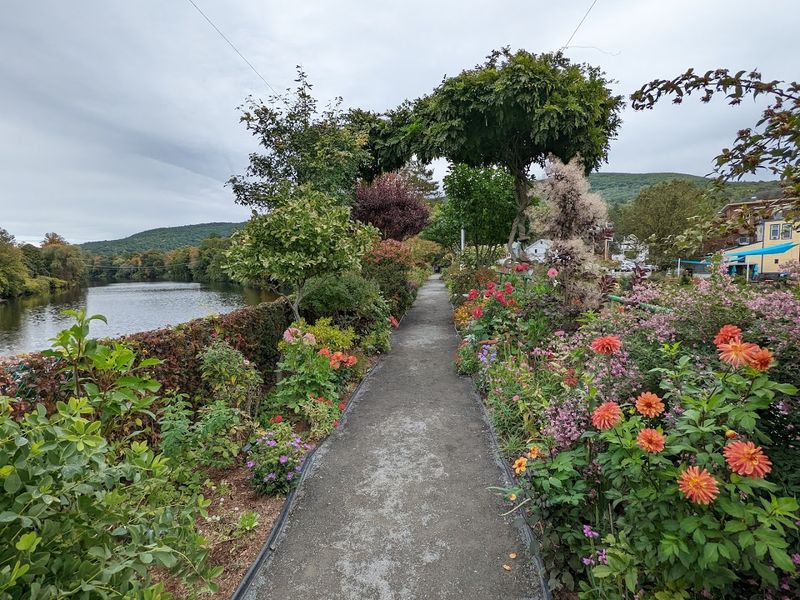
Every spring, something almost theatrical happens on this old concrete bridge. Volunteers arrive with flats of seedlings, bags of soil, and tools, and they begin the seasonal ritual of waking the bridge back up after winter.
The bridge officially opens to visitors on April 1st, though the real color explosion usually builds through May and hits its stride by June.
What keeps repeat visitors coming back is that the planting mix changes every year. Annuals, perennials, climbing vines, and small shrubs are rotated and rearranged so that no two seasons look exactly alike.
A visit in early June — when the first wave of blooms opens — feels completely different from one in late August, when the summer heat has pushed everything into overdrive.
By October, late-season performers like zinnias, marigolds, and sedums carry the bridge through to its closing date of October 30th. The growing season is short, but the people tending it make every week count.
What the Experience Feels Like on Foot
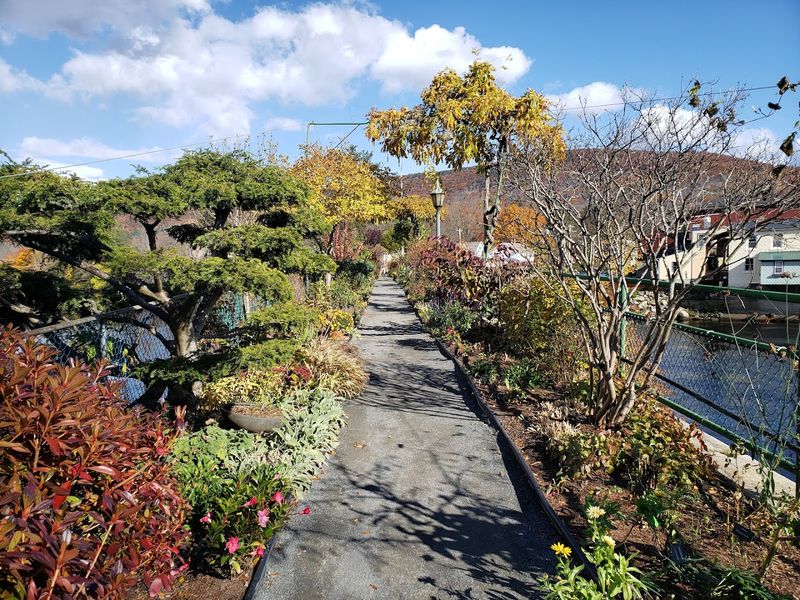
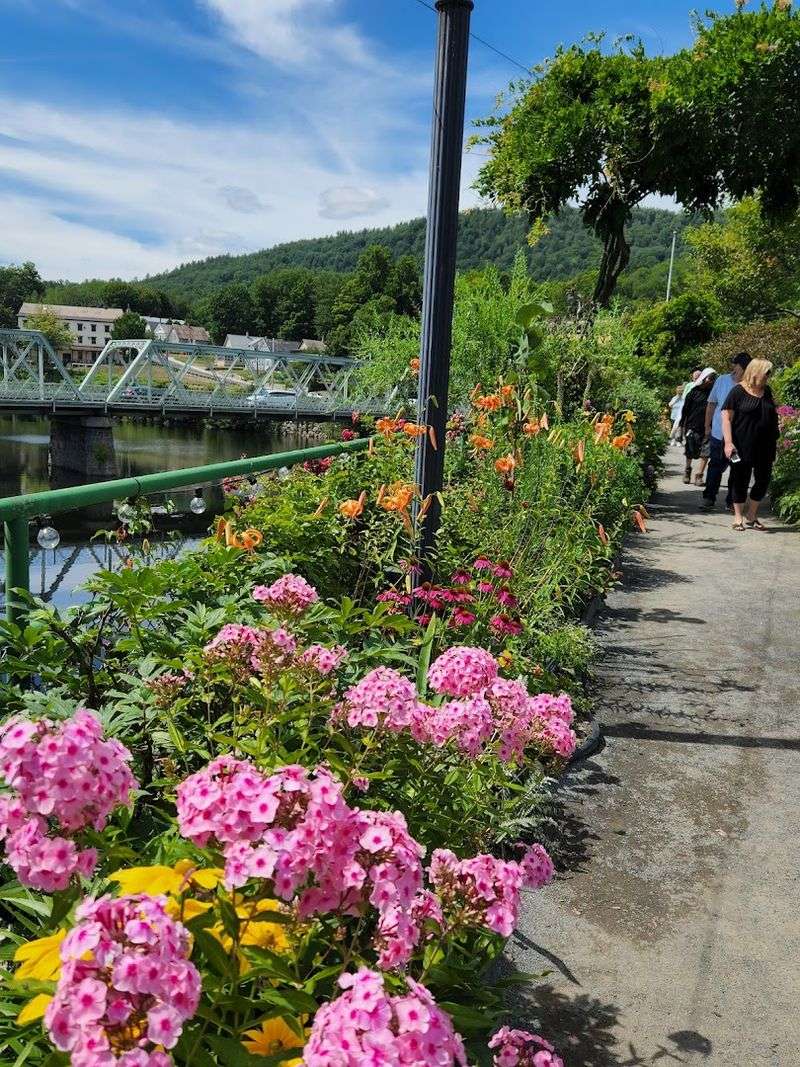
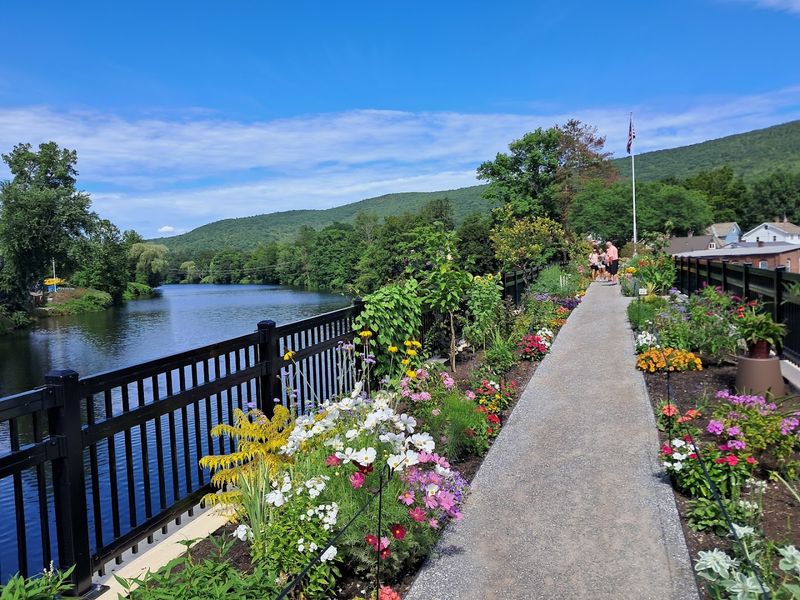
Crossing the Bridge of Flowers on foot is quieter and more immersive than most people expect. The walkway is wide enough for two people to pass comfortably, with plantings at every height — ground-level creepers near your feet, medium-height perennials at waist level, and climbing vines that reach well above the railing on both sides.
You are essentially walking through a tunnel of living color.
The Deerfield River is visible beneath you the whole time, and the sound of moving water adds something to the experience that no photograph can quite capture. On a warm morning, the air smells like a mix of whatever is in bloom — sometimes sweet, sometimes herbal, occasionally sharp and citrusy depending on the season.
Benches are placed at intervals along the bridge, and people actually use them. Sitting down mid-crossing to watch bees work through the flowers or listen to the river below turns a two-minute walk into something worth lingering over.
Bring comfortable shoes and no particular rush.
Who Actually Keeps This Running
Since 1929, no city department has been responsible for the Bridge of Flowers. The Shelburne Falls Area Women’s Club runs it — and has run it continuously for nearly a century — through volunteer labor and community donations.
That is not a small thing. Maintaining over 500 plant varieties across a 400-foot bridge through a full growing season takes real, consistent effort from real people.
Each volunteer typically manages a specific section of the bridge, returning week after week to weed, deadhead, water, and replant as needed. Visit on a quiet weekday morning and there is a good chance you will see someone at work — kneeling between the planters, hands in the soil, doing the unglamorous work that makes the whole thing look effortless.
There is a donation box at the bridge entrance, and contributions go directly toward plants, tools, and upkeep. Dropping something in feels less like a transaction and more like tipping the people who clearly love what they are doing.
This garden runs on community belief, not a budget line.
The Natural Formation Just Downstream
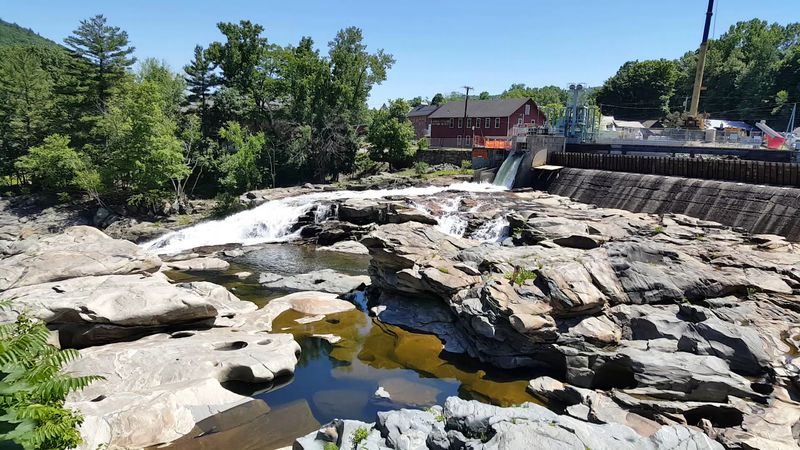
Just a short walk from the bridge, Salmon Falls holds one of the most accessible and genuinely strange geological features in New England. Glacial potholes — smooth, perfectly circular holes carved into the bedrock — dot the riverbed in a formation that looks almost too deliberate to be natural.
Some are just a foot or two across. Others are wide and deep enough to sit inside comfortably.
These holes were carved during the last ice age, when meltwater carrying spinning stones drilled into the riverbed over thousands of years. The result is a series of bowls and channels worn so smooth they feel almost polished.
You can walk right up to the edge and run your hand along the curved stone walls — no barriers, no ropes, just the rock and the river.
Pairing the glacial potholes with a walk across the Bridge of Flowers makes for a visit that covers both the human-made and the geological in one afternoon. Most visitors spend 20 to 30 minutes exploring the falls area before heading back into town.
Downtown Shelburne Falls: Where to Eat and Browse
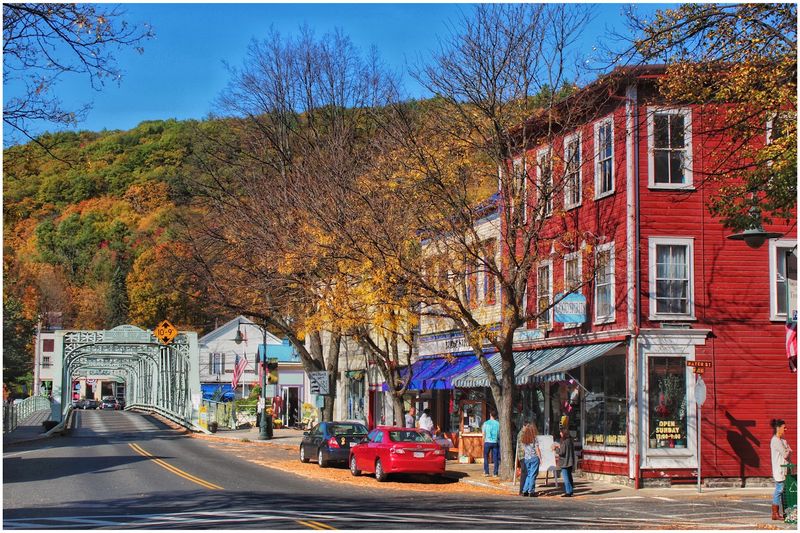
After crossing the bridge, most visitors drift naturally into the village center, where Bridge Street offers a walkable strip of independently owned businesses that feel genuinely local rather than curated for tourists. There is a cooperatively run cafe that serves good coffee, a bookshop with a solid selection, and a handful of galleries showcasing work by artists from the surrounding region.
Nothing here is pretending to be something it is not. The shops are open because people who live nearby run them and believe in them — not because a developer decided a flower-bridge town needed a gift shop.
That authenticity comes through in the way the place feels on an ordinary Wednesday afternoon.
Lunch options are limited but solid. A few spots near the river offer food that reflects the area’s farm-to-table leanings, and the pace of service matches the pace of the town — unhurried.
Plan to spend at least an hour wandering after your bridge visit. Most people end up staying longer than they intended, which is usually a good sign.
Photography on the Bridge: What Actually Makes a Good Shot
Few places in Massachusetts offer this many natural compositions in such a short stretch of walking. The bridge photographs well from at least four distinct angles, and knowing which one to use first saves a lot of backtracking.
The walkway itself, shot from one end toward the other during peak bloom, gives you a tunnel of color with the river framed at the far end. That is the classic shot, and it earns its reputation.
From the riverbank below, the concrete arches with flowers spilling over the sides create a completely different image, more architectural, less dreamy, and honestly underused by most visitors who never think to walk down to the water’s edge. The far bank of the river during late summer, when the blooms are at maximum density, offers a wide shot that shows the full scope of what volunteers have built.
Morning light hits the south-facing side most directly. Arriving before 10 AM in summer gives you warm, even light without harsh midday shadows.
After a rain shower, the petals catch water droplets that make close-up macro shots particularly striking.
Why People Come Back Year After Year
A static display gets old fast. The Bridge of Flowers avoids that problem entirely because it is never the same bridge twice.
The planting mix shifts each season, the volunteer-managed sections evolve based on what grew well the year before, and the structural renovations completed in 2024 gave the whole bridge a refreshed look when it reopened in spring 2025. There is always something new to notice.
Many visitors describe coming back annually as a personal tradition not unlike checking in on a place that marks time in a meaningful way. Local media interviews with regular visitors often turn up the same language: it feels personal, not commercial.
You are not visiting a brand. You are revisiting a living thing that has changed since you last saw it.
Some people come in June for the early-season color, then return in August when the summer bloomers peak, then again in September to catch the late-season display before the bridge closes for winter. Three visits in one year is not unusual for people who live within driving distance.
Getting There and Making a Full Day of It
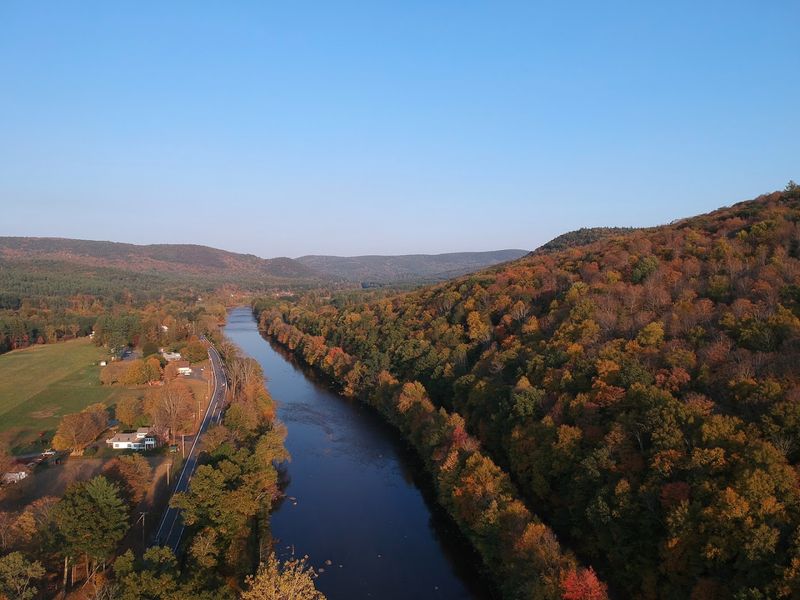
Shelburne Falls sits about 45 minutes west of Northampton and roughly two hours from Boston, which puts it comfortably within day-trip range for most of central and eastern Massachusetts. The drive west on Route 2 the Mohawk Trail is scenic enough to count as part of the experience, especially during fall foliage season when the ridge lines turn orange and red.
Free two-hour parking is available on the west side of the river, clearly marked with signs. The bridge entrance at 22 Water Street is easy to find, and the visitor sign-in sheet, donation box, and informational pamphlets near the entrance help orient first-timers before they step onto the walkway.
A well-paced full day looks like this: cross the bridge in the morning, walk down to the glacial potholes, browse downtown for an hour, have lunch at one of the local spots, and head home before traffic builds. Pets are not allowed on the bridge, but accessible parking is available nearby for visitors with mobility needs.