Tucked along Boylston Street in Boston’s Back Bay neighborhood, the Boston Public Library is one of those rare places that genuinely stops you in your tracks. Built in 1895, this stunning Renaissance-style building was designed as a “palace for the people,” and it still lives up to that promise today.
From massive John Singer Sargent murals to a reading room that stretches nearly the length of a football field, there is so much to explore here — and best of all, entry is completely free. Whether you are a history buff, an art lover, or just looking for a peaceful spot in the city, the Boston Public Library has something that will leave a lasting impression.
The McKim Building and Its 1895 Renaissance Architecture
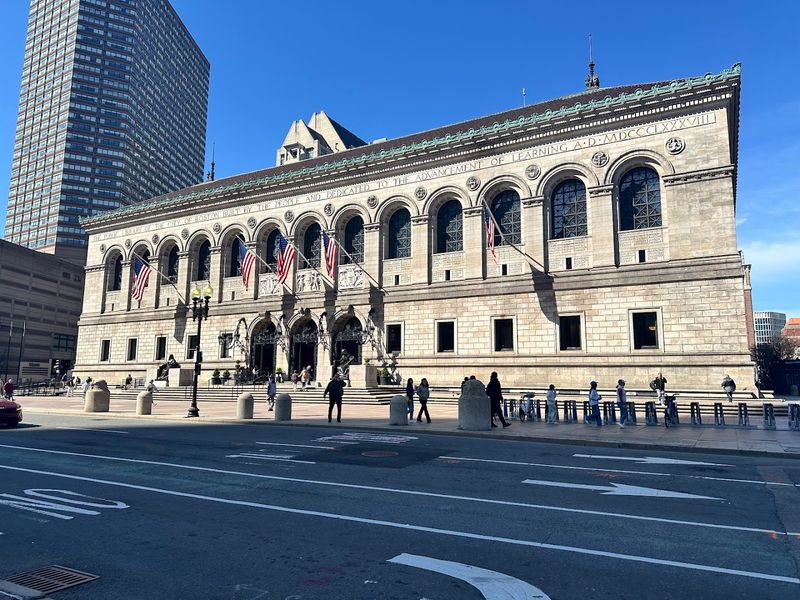
Standing outside the McKim Building for the first time, most visitors stop walking altogether. The sheer scale and elegance of this 1895 structure is genuinely hard to prepare for, even if you have seen photos.
Designed by architect Charles Follen McKim of the firm McKim, Mead and White, the building draws heavily from Italian Renaissance palazzo design, with rusticated granite walls, arched windows, and rows of carved names honoring great thinkers throughout history.
The exterior alone tells a story. Every detail — from the torch-bearing bronze lanterns flanking the entrance to the bas-relief panels above the doorways — was chosen with purpose.
McKim wanted the building to feel monumental yet welcoming, a civic statement that public knowledge deserved a grand home.
What makes this architecture so special is how it balances grandeur with accessibility. You do not need a ticket or a reservation to walk through those doors.
The building was always meant to serve everyone, and that democratic spirit is baked into every stone. Visiting on a clear morning, when sunlight catches the pale granite facade, is one of Boston’s most quietly spectacular free experiences.
Plan to linger outside before you even step in.
Bates Hall — The Iconic 218-Foot Reading Room
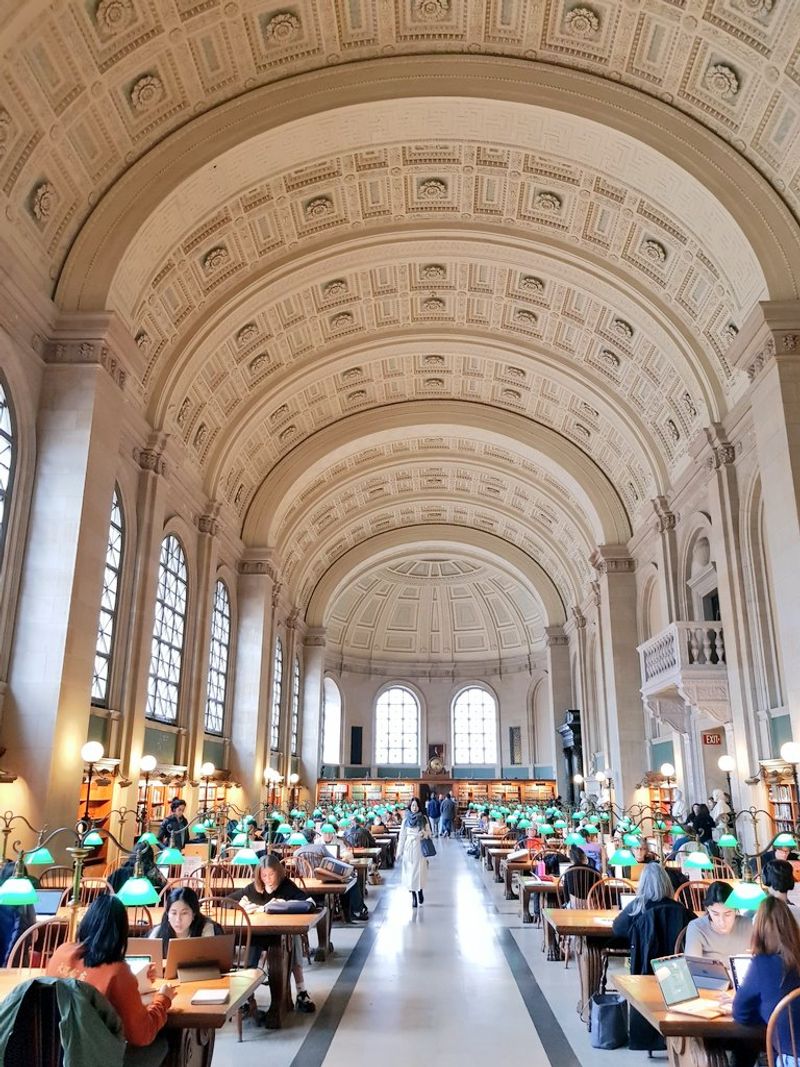
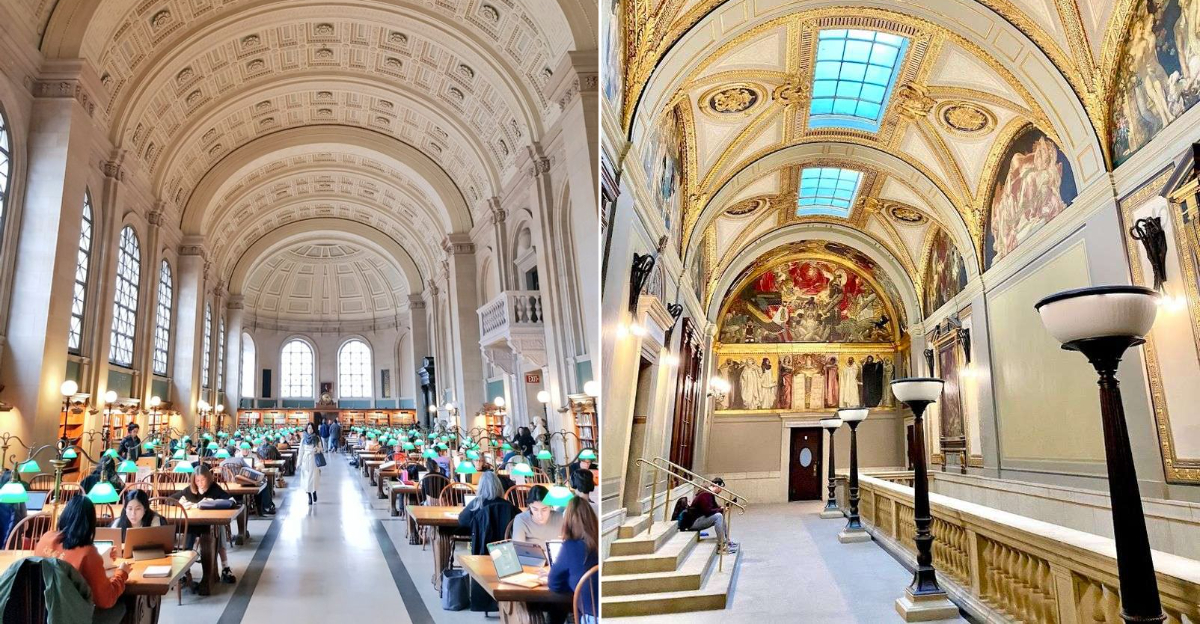
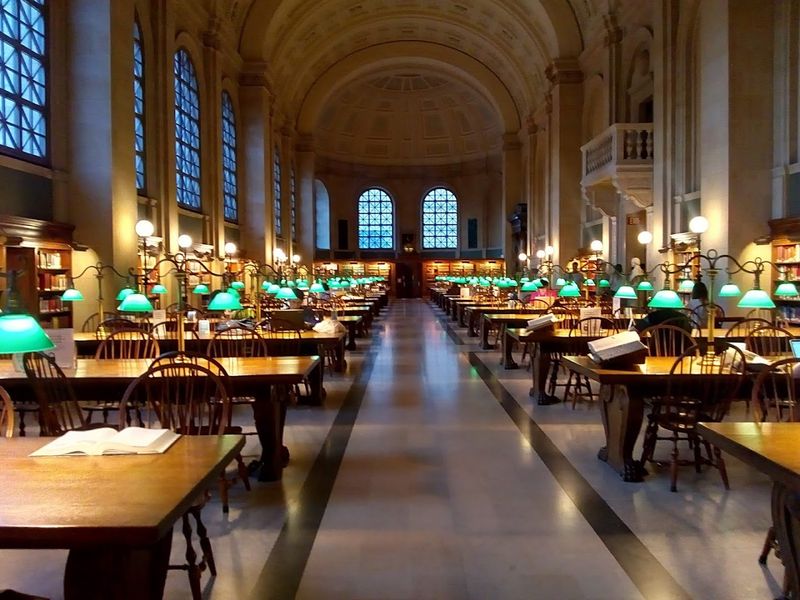
Few rooms in America feel quite like Bates Hall. Stretching an extraordinary 218 feet from end to end, this reading room is the beating heart of the McKim Building, and stepping inside for the first time can genuinely take your breath away.
The barrel-vaulted ceiling soars overhead, painted in warm ochre and cream tones, while rows of long oak tables lined with glowing green banker’s lamps create an atmosphere that feels both scholarly and cinematic.
The room was named after Joshua Bates, a Boston-born banker who donated $50,000 to help establish the library in the 1850s — one of the most significant private gifts to a public institution in American history at that time. His generosity helped make free public reading a reality for Boston’s residents.
Visiting Bates Hall today, you will find students, researchers, and curious tourists all sharing the same space in companionable quiet. The tall arched windows flood the room with natural light during the day, and the acoustics create a hushed, almost reverent atmosphere.
Bring a book, pull up a chair, and soak it all in. Spending even thirty minutes here feels like a genuine privilege that money simply cannot buy.
John Singer Sargent Murals in the Sargent Gallery
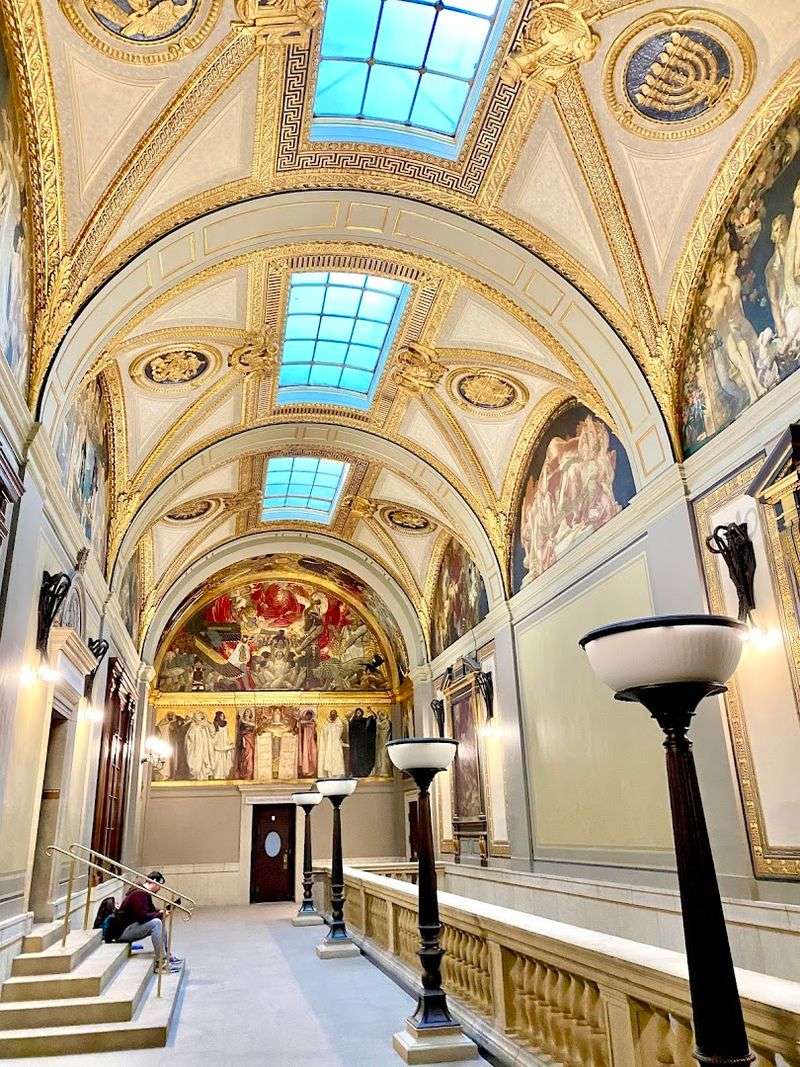
Tucked on the third floor of the McKim Building, the Sargent Gallery holds one of the most ambitious and underappreciated works of public art in the entire country. John Singer Sargent — best known today for his elegant portrait paintings — spent nearly thirty years, from 1890 to 1919, creating this sweeping mural cycle exploring the history of religion.
The result is layered, dramatic, and deeply personal in a way that surprises most first-time visitors.
The murals cover the walls and ceiling of a long hall, weaving together imagery from Judaism, Christianity, and ancient pagan traditions. Sargent used rich, jewel-like colors and theatrical compositions that draw the eye upward and across the room in a continuous visual narrative.
Some sections feel almost overwhelming in their detail and emotional intensity.
Art historians have debated the meaning and legacy of these murals for decades, with some panels generating genuine controversy over their portrayal of religious themes. That complexity makes them even more worth seeing.
Sargent never fully completed the cycle — he died in 1925 with one final panel unfinished — which adds a bittersweet note to the whole experience. Admission to the gallery is completely free, making this one of Boston’s most accessible cultural treasures.
The Central Courtyard with Its Arcaded Garden and Fountain
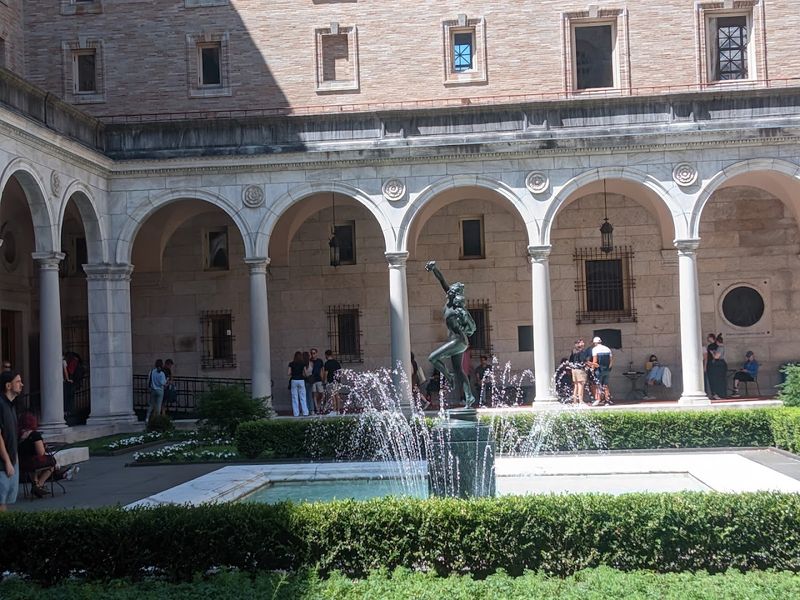
Right in the middle of the McKim Building, hidden from the street, lies one of Boston’s most peaceful secrets. The central courtyard is an open-air garden enclosed by graceful stone arcades on all four sides, with a shallow reflecting pool at its center.
On a warm afternoon, it feels like someone quietly transported a corner of Florence or Rome into the heart of a busy American city.
The arcade design was inspired by the Palazzo della Cancelleria in Rome, and the proportions are so carefully balanced that the space feels both grand and intimate at the same time. Visitors can sit on the stone benches lining the arcades, listen to the soft sound of the fountain, and watch pigeons and sparrows go about their business with cheerful indifference to the surrounding architecture.
The courtyard is also a surprisingly popular spot for wedding photography, and it is easy to see why. The way light filters through the arches at different times of day creates constantly shifting moods — golden and warm at midday, soft and mysterious in the late afternoon.
There is no extra charge to access it, and it remains one of the most genuinely restorative free spaces in all of downtown Boston. Do not rush through it.
The Grand Entrance Staircase and Puvis de Chavannes Murals
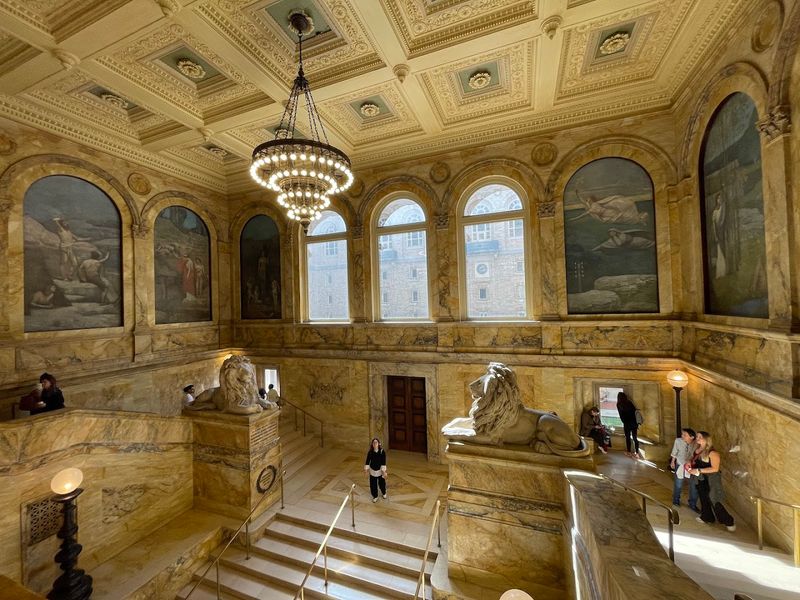
The moment you walk through the main entrance doors on Boylston Street, the grand staircase announces itself with quiet authority. Wide marble steps flanked by two famous recumbent lion sculptures — carved by sculptor Louis Saint-Gaudens — lead you upward through a sequence of increasingly beautiful spaces.
The lions are not aggressive or imposing; they have a calm, dignified quality that perfectly sets the tone for everything that follows.
Lining the staircase hall are the celebrated mural paintings by French artist Pierre Puvis de Chavannes, created between 1895 and 1896. These large-scale allegorical works depict the Muses of Inspiration in soft, luminous colors that feel almost dreamlike.
Puvis de Chavannes never actually visited Boston — he painted the canvases in Paris and shipped them across the Atlantic — but they fit the space with remarkable precision.
Walking up this staircase for the first time is one of those experiences that feels genuinely ceremonial. The combination of cool marble underfoot, warm mural colors at eye level, and vaulted ceilings overhead creates a sensory experience that no photograph fully captures.
Many visitors later say this moment was their single strongest memory of the entire library. Take your time on the way up, and do not forget to look behind you on the way down.
Norman B. Leventhal Map and Education Center
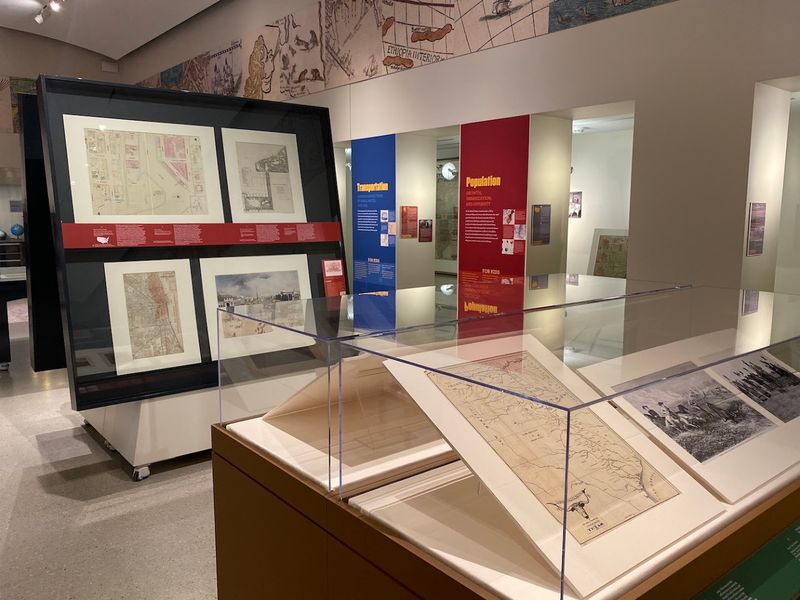
Hidden away on the ground floor of the McKim Building, the Norman B. Leventhal Map and Education Center is the kind of place that makes you completely lose track of time.
The center holds one of the finest collections of historic maps in the entire country — over 200,000 maps and 5,000 atlases — covering Boston, New England, and the wider world across several centuries of cartographic history.
For anyone even mildly curious about how cities grow and change, this is genuinely thrilling. You can trace the evolution of Boston’s famous landfill projects, watch the Back Bay neighborhood emerge from tidal flats in map after map, and see how the city’s street grid shifted and expanded over generations.
The collection includes maps dating back to the 1500s, and the detail and artistry in some of the older examples are stunning.
Rotating exhibitions mean there is almost always something new to see, even for repeat visitors. The staff are knowledgeable and enthusiastic, happy to point out highlights or answer questions about specific maps.
One recent reviewer specifically recommended not skipping this room, and that advice is worth repeating loudly. The Leventhal Center is free to enter and open during regular library hours — a genuinely world-class resource hiding in plain sight.
Free Public Access and the Library’s Democratic Mission
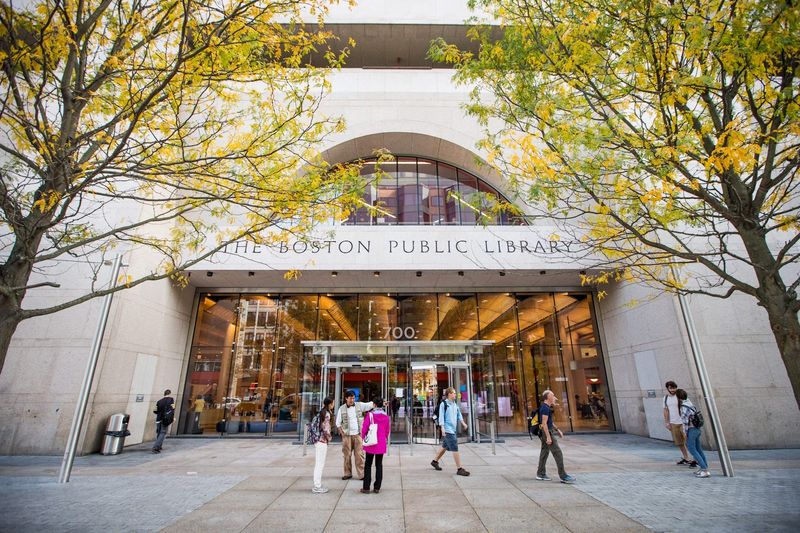
When the Boston Public Library opened in 1854, it was a genuinely radical idea. For the first time in American history, a major city was offering its residents free access to books they could actually borrow and take home.
Before that, most libraries were private clubs requiring membership fees that ordinary working people could never afford. Boston changed that equation permanently, and the ripple effects shaped public library systems across the entire country.
Today, that founding mission feels just as alive as ever. Anyone can walk through the doors of the Central Library without paying a single cent.
You do not need a library card to explore the building, admire the art, sit in Bates Hall, or wander through the courtyard. The library serves students, researchers, tourists, remote workers, and people simply looking for a warm and beautiful place to spend an afternoon.
The Boston Public Library was also the first library in the United States to establish a dedicated children’s room, recognizing early on that young readers deserved their own welcoming space. That progressive instinct has never faded.
With approximately 24 million items in its collection, it ranks as the third-largest public library in the country. Visiting here is a reminder that truly great public institutions belong to everyone, equally and without exception.
The Abbey Room and Edwin Austin Abbey’s Quest Murals
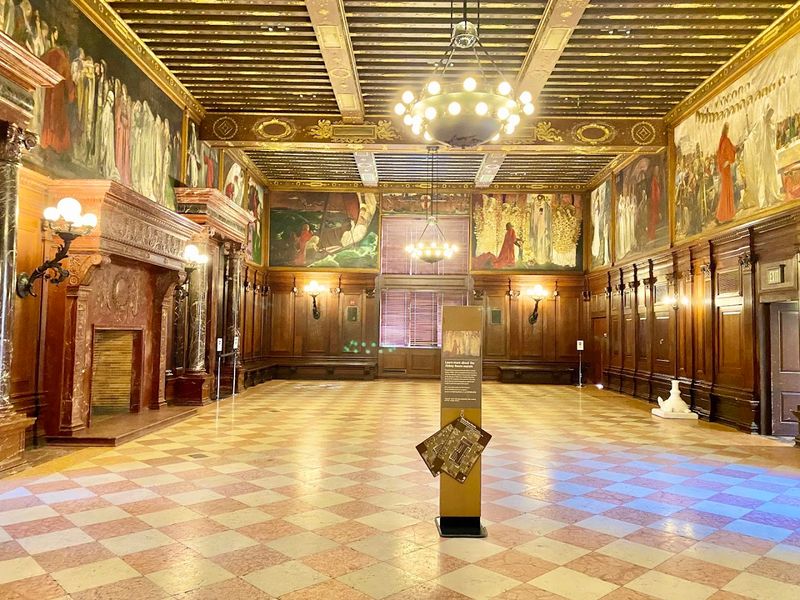
Before you reach the Sargent Gallery on the third floor, there is another remarkable painted room worth slowing down for. The Abbey Room — formally known as the Book Delivery Room — features an extraordinary series of mural paintings by American artist Edwin Austin Abbey depicting the legend of the Holy Grail.
Abbey worked on these paintings from 1890 to 1902, and the sheer scale and narrative ambition of the project is immediately apparent when you step inside.
The fifteen panels wrap around the upper walls of the room, telling the story of Sir Galahad’s quest with vivid medieval imagery, richly patterned costumes, and a warm, golden palette that glows in the room’s light. Abbey was deeply influenced by Pre-Raphaelite painting and medieval manuscript illumination, and both influences are visible in every carefully composed panel.
The work is simultaneously grand and intimate, with small details rewarding close attention.
Many visitors rush past this room on their way to the more famous Sargent murals, which is a genuine shame. The Abbey paintings have a warmth and storytelling clarity that makes them accessible even to viewers with no prior knowledge of Arthurian legend.
Give yourself at least fifteen minutes here, and read the panel descriptions provided by the library — they transform the experience considerably.
The Courtyard Cafe, Tea Room, and On-Site Dining Options
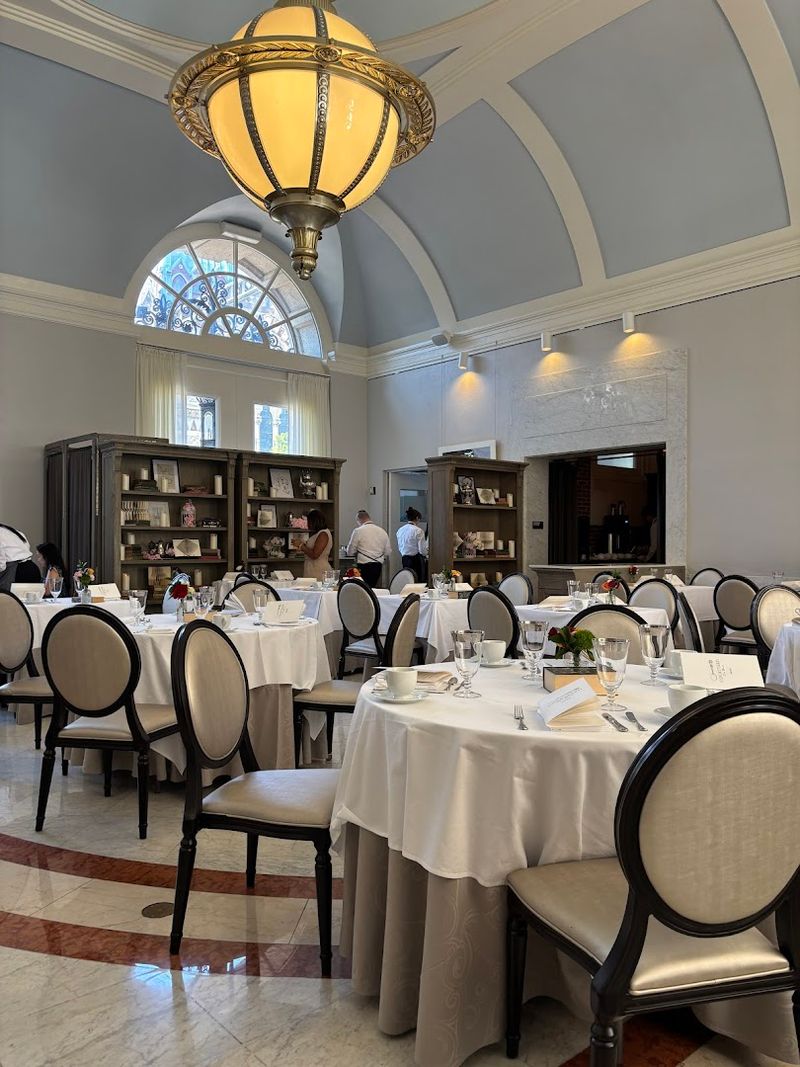
Spending a full afternoon at the Boston Public Library is entirely practical, partly because the building offers real dining options that match the grandeur of its surroundings. The most celebrated of these is the Library’s Tea Room, located in what was once the map room on the ground floor of the McKim Building.
It serves afternoon tea in a setting that feels genuinely special — think white tablecloths, ornate ceilings, and the particular pleasure of sipping something warm in a room full of beautiful old architecture.
For something more casual, a cafe near the main entrance provides coffee, pastries, and light bites at reasonable prices. It is a popular spot for students and remote workers who want to fuel up without leaving the building.
The combination of good coffee and extraordinary surroundings makes for a hard-to-beat mid-morning break.
One reviewer mentioned there is also a small bar and restaurant in the basement level, which adds yet another dimension to the library’s surprisingly social atmosphere. The building has a way of encouraging people to linger, and having quality food and drink options on-site makes that easy to do.
Whether you want a quick espresso or a proper sit-down afternoon tea, the library has a comfortable option ready for you. Reservations for the Tea Room are recommended.
Visiting Tips, Hours, and Getting the Most From Your Trip
Getting the most out of a visit to the Boston Public Library takes a little planning, but not much. The Central Library at 700 Boylston Street in Copley Square is open Monday through Thursday from 9 AM to 8 PM, Friday and Saturday from 9 AM to 5 PM, and Sunday from 11 AM to 5 PM.
Arriving early on a weekday morning means fewer crowds in Bates Hall and the Sargent Gallery, which makes for a noticeably more peaceful experience.
Parking is available nearby at the Prudential Center shopping mall, just a short walk away. One reviewer pointed out that stopping at Eataly inside the Prudential Center can provide parking validation information, which is worth knowing if you are driving in.
The library is also directly accessible via the MBTA Green Line at Copley Station, making it easy to reach from most parts of the city without a car.
Free guided architectural tours of the McKim Building are offered regularly and are absolutely worth joining if your schedule allows. The tours cover the murals, the reading rooms, the courtyard, and the building’s fascinating history in a structured way that casual self-guided wandering often misses.
Check the library’s official website at bpl.org for current tour schedules, special exhibitions, and any events happening during your visit. Entry remains free for all.