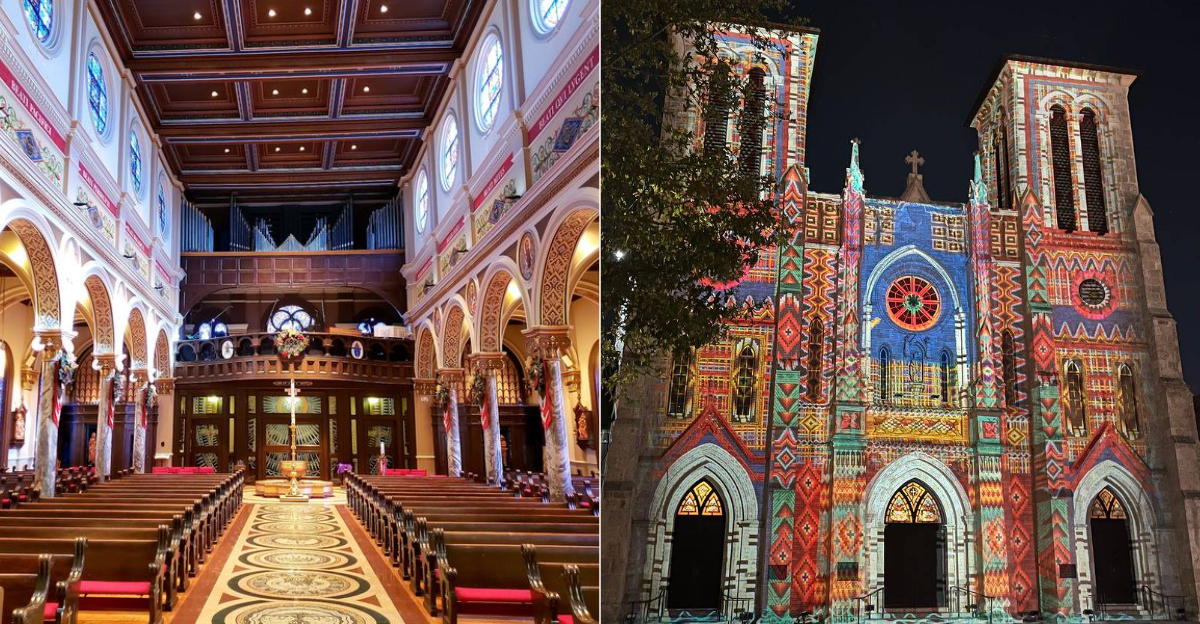
A weathered church door can open onto a story that began centuries ago. Inside, sunlight may fall across worn stone, painted walls, carved wood, or quiet pews that have witnessed generations of celebrations, struggles, and everyday prayers.
Across Texas, historic churches reveal a side of the state that is easy to miss when you are focused on highways and big cities. Some are tied to Spanish missions and early settlements, while others reflect the traditions of communities that grew around them.
Their architecture offers plenty to admire, but the details often make the strongest impression—the faded colors, handmade touches, and signs of time that remain visible today.
Visiting these historic churches in Texas is a chance to slow down and see local history in a more personal way. From remarkable missions to beautifully preserved sanctuaries, these 11 places offer plenty to stop and take a second look.
Mission Concepción
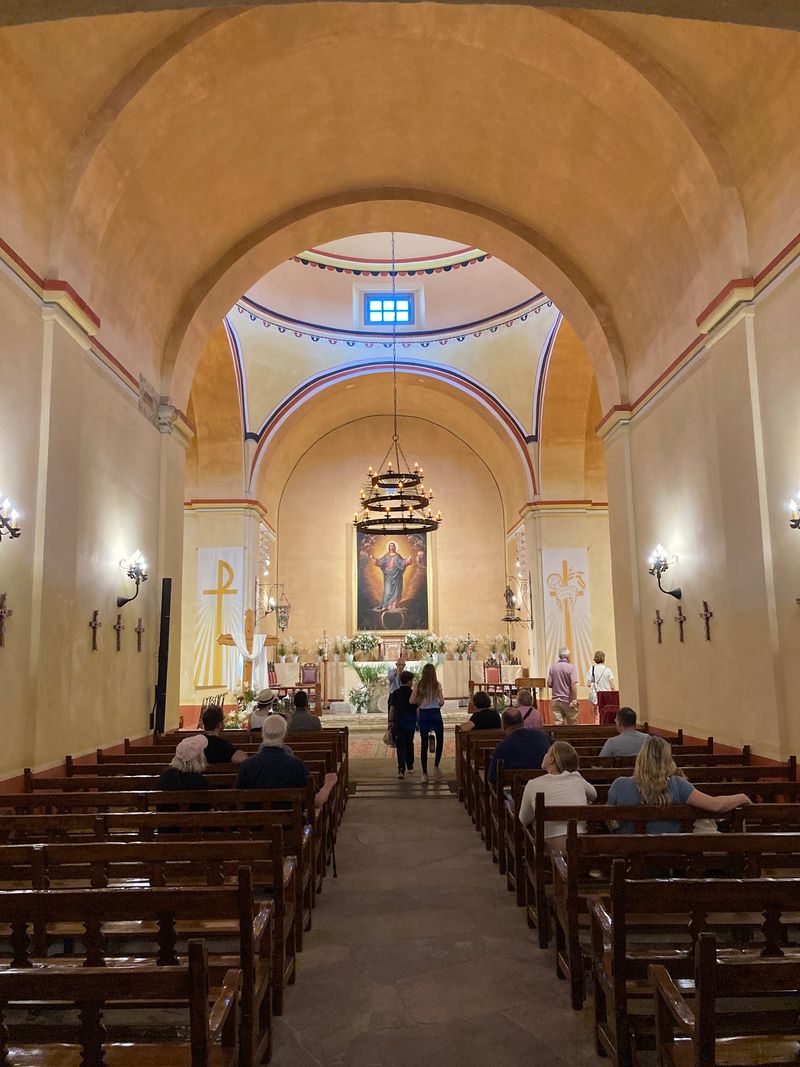
Morning light can make old stone look almost soft, and that is the first surprise here. What seems plain from a distance turns rich up close, with weathered walls, carved details, and faint traces of color that hint at a brighter past.
Later, when you step inside Mission Concepción in San Antonio, the age of the place becomes easier to feel. Completed in 1755, it is one of the oldest unrestored stone churches in the country.
Look carefully for remaining frescoes and the red pigment near the bell tower windows, small details that reward patient visitors.
The grounds are part of the San Antonio Missions World Heritage site, but the church is still active today. That matters, because it does not feel frozen behind glass.
It feels used, cared for, and connected to the neighborhood around it.
If you go, give yourself time to walk slowly and stay quiet for a minute. The nearby river trail and mission grounds add even more context, turning a quick stop into a deeper look at early Texas history.
Mission San José
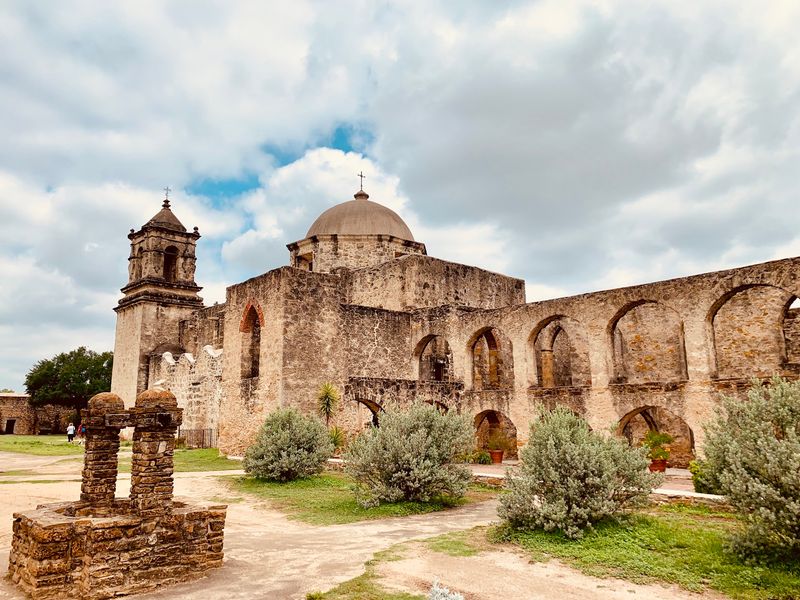
Some buildings carry themselves with a kind of quiet confidence, and this one does exactly that. The wide facade, heavy stone, and open grounds feel grand without trying too hard, which explains why many people call it the Queen of the Missions.
Mission San José in San Antonio began in 1720, and its present stone church took shape later in the eighteenth century. The best known feature is the Rose Window, an intricate carved stone opening that pulls your eyes straight to it.
Even people who know little about architecture usually stop and stare.
There is more to notice than one famous detail. Around the site, old walls and mission spaces help you picture a self-supporting community where worship, farming, and daily work happened side by side.
Ranger programs can make the visit even more meaningful.
Bring comfortable shoes and take your time crossing the grounds. The scale of the place tells part of the story, but the craftsmanship tells the rest.
By the end, the church feels less like a monument and more like a community that never fully disappeared.
Mission San Juan
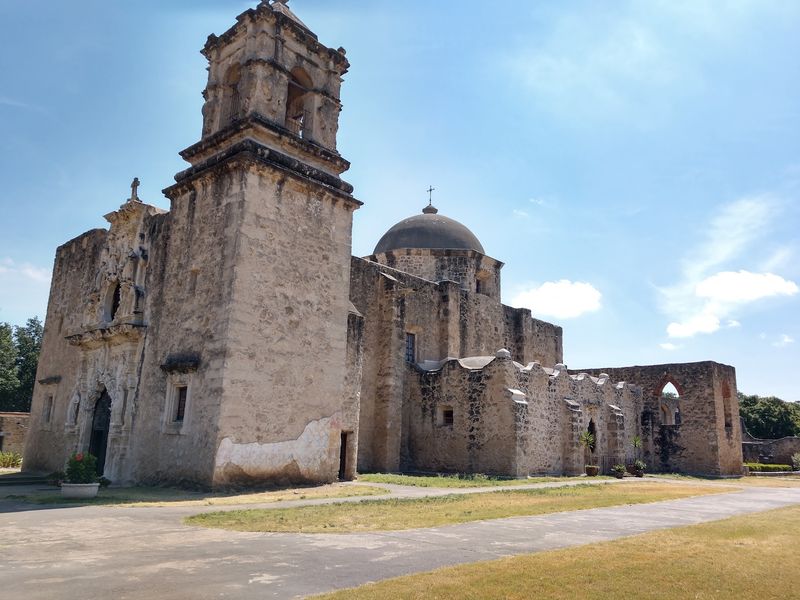
Quiet can be powerful, especially when it settles over a place that has stood for centuries. Instead of dramatic size or bright decoration, this church draws attention with calm space, sun-warmed stone, and a feeling that life once moved here at a slower pace.
Mission San Juan in San Antonio traces its current church to the eighteenth century, with the stone church completed in 1756. It is part of the national historical park, yet it feels more tucked away than some better known landmarks.
That softer mood makes the experience memorable.
One of the most interesting parts of visiting is thinking about the land around the mission, not just the sanctuary itself. Farming mattered here, and nearby traces of old irrigation systems help explain how the community survived.
History becomes practical, not just decorative.
It helps to visit without rushing from one mission to the next. Spend a few minutes looking across the grounds and imagining fields, tools, and daily chores beside prayer.
That balance between faith and ordinary work is what gives Mission San Juan its lasting pull.
San Fernando Cathedral
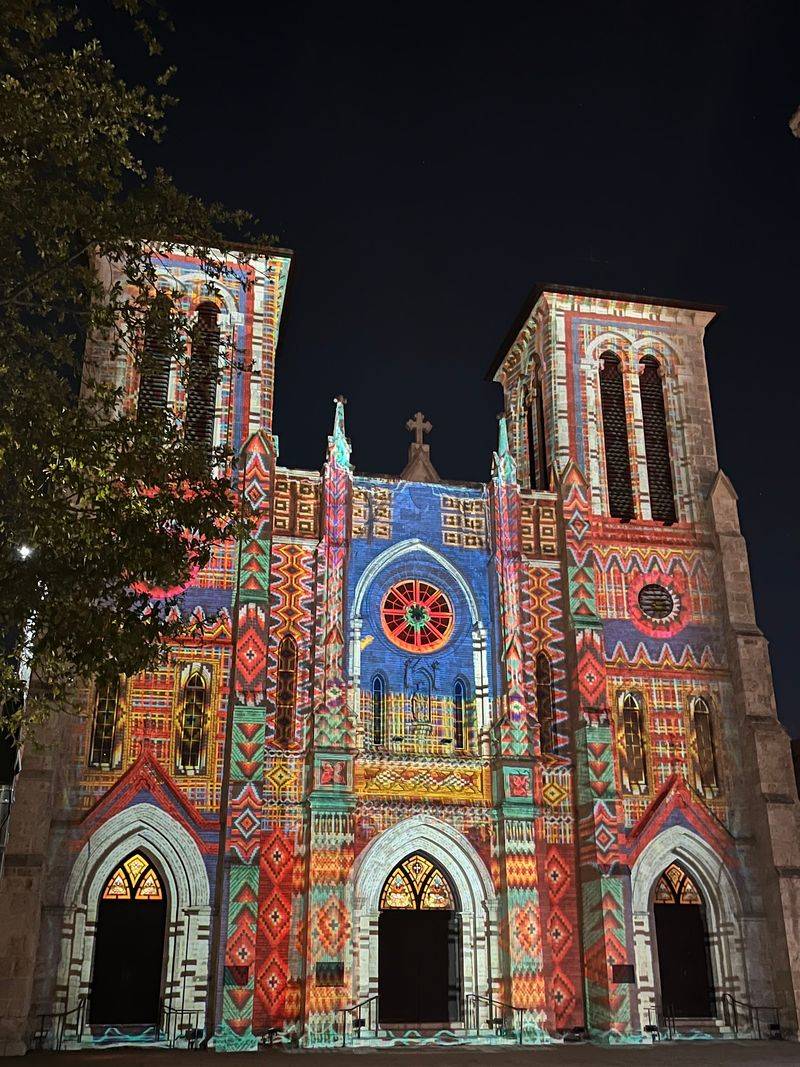
Right in the middle of city life, this cathedral has a way of making noise fade into the background. Cars pass, people gather in the plaza, and then the old facade pulls your attention back to a much earlier San Antonio.
San Fernando Cathedral stands on Main Plaza, and its parish story reaches to the 1730s. Parts of the original church survive within the later cathedral, which gives the building an unusual sense of layering.
It is not one single moment in history. It is many moments built together.
That mix makes a visit especially interesting for people who enjoy cities with visible roots. You can look at the front, step inside, and think about how generations kept adapting the space without breaking its connection to the past.
Few downtown landmarks feel this alive.
If your schedule allows, come when the plaza is active, then step into the quieter interior for contrast. Nearby cafes, public art, and the walkable center of San Antonio make it easy to pair this stop with more exploring.
The cathedral anchors it all with calm authority and deep memory.
St. Joseph Catholic Church
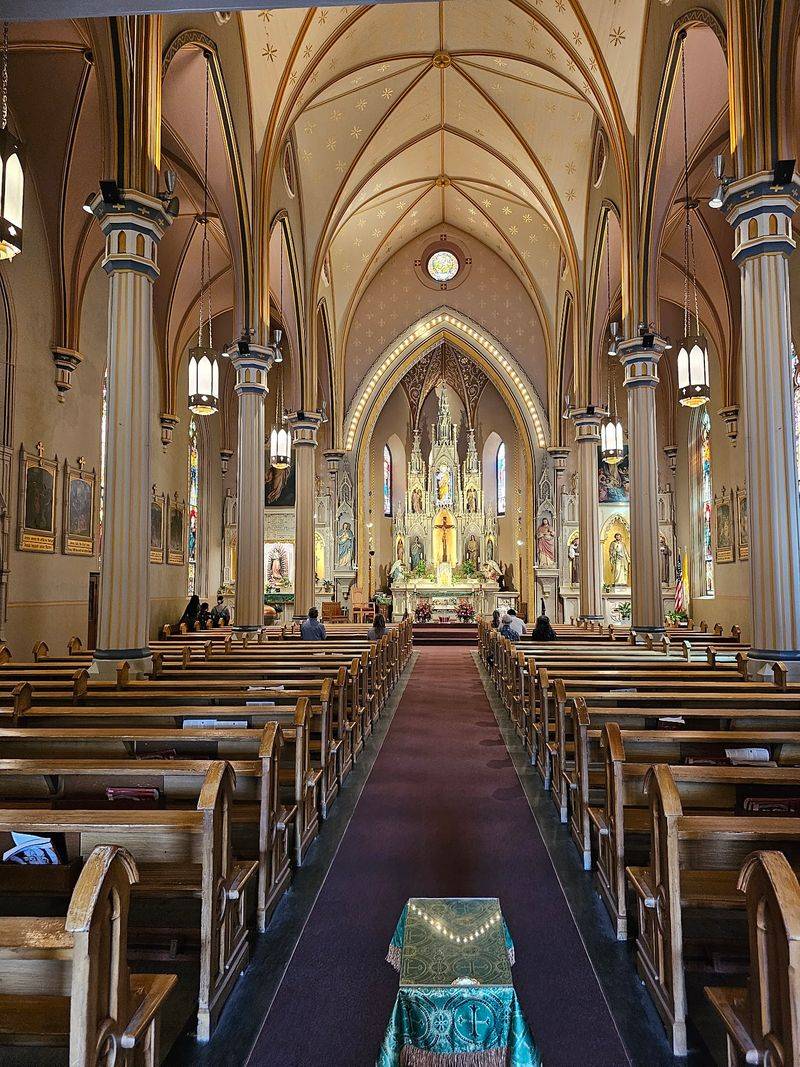
Glass towers and busy sidewalks are not where most people expect to find a church with this much character. That contrast is the fun of it.
The building feels like a stubborn piece of history that refused to be pushed aside.
In downtown San Antonio, St. Joseph Catholic Church is known for the unusual way its present structure was built around an earlier church instead of replacing it completely. Once you know that story, every wall and angle seems more interesting.
Preservation here feels personal, not just official.
Inside, the mood changes quickly from city rush to quiet focus. Stained glass, woodwork, and high ceilings create a softer world only steps from shopping and traffic.
It is the kind of place where even a short visit can reset your pace for the day.
Try pairing your stop with a walk through the nearby downtown blocks, especially if you want to see how old San Antonio sits beside newer development. Good food is never far away, but this church is the part you remember later.
Its story is clever, humble, and unexpectedly moving.
St. David’s Episcopal Church
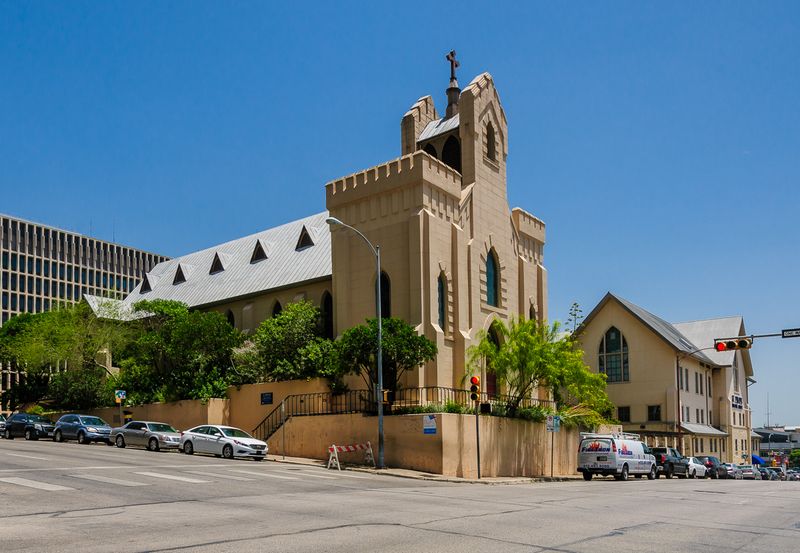
Austin moves fast, so places that hold still can feel especially meaningful. Tucked into the downtown grid, this church offers a pause that seems almost rare, with old stone, shade, and a kind of calm that does not need to announce itself loudly.
St. David’s Episcopal Church, founded in 1848, includes its 1855 historic building within the parish story. That makes it one of the city’s oldest continuing places of worship.
In a capital known for growth and reinvention, the church acts like a quiet memory that never left.
Visitors often appreciate how naturally it fits into the city around it. Government buildings, music venues, and coffee shops are all part of modern Austin, yet this church still holds its own.
The contrast tells you something important about the city’s deeper foundations.
If you are exploring downtown on foot, this is an easy stop that adds texture to the day. Sit for a moment, notice the windows and woodwork, and let the pace slow down.
Sometimes history does not need spectacle. Sometimes it just needs a doorway and time.
Saint Mary Catholic Cathedral
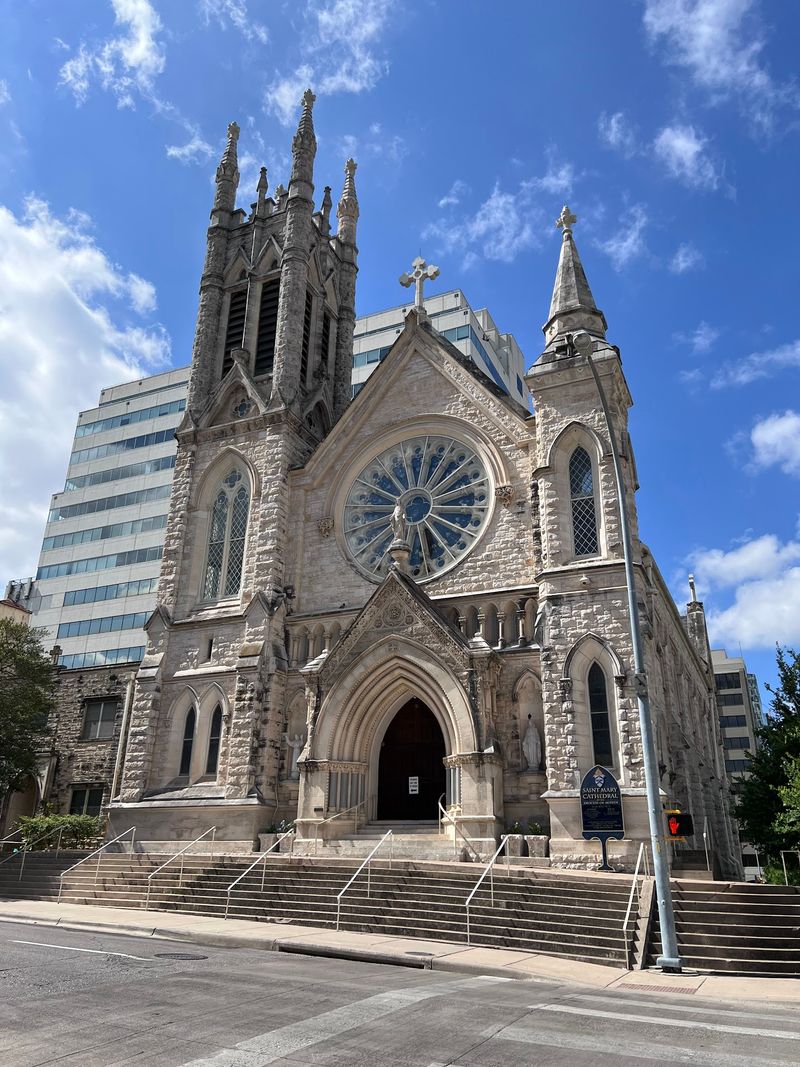
Sharp spires, carved stone, and colored light give this church a dramatic first impression. Even in a busy part of Austin, the building feels a little theatrical in the best way, like it belongs to a different century and is perfectly fine with standing apart.
Saint Mary Catholic Cathedral was completed in 1884 and remains one of the city’s strongest Gothic Revival landmarks. The exterior draws you in, but the inside does just as much work, with stained glass, lofty arches, and details that reward people who actually look up.
Because it is listed on the National Register of Historic Places, many visitors arrive expecting something important. What surprises them is how welcoming and active it still feels.
The church is not a museum piece. It is part of present-day Austin, and that living energy matters.
Make time to walk the nearby blocks after your visit, because the contrast between the cathedral and the modern city gives both places more character. Grab coffee or lunch downtown, then think back to the stillness inside.
Some buildings impress you first, then stay with you quietly afterward.
1859 St. Joseph’s Church
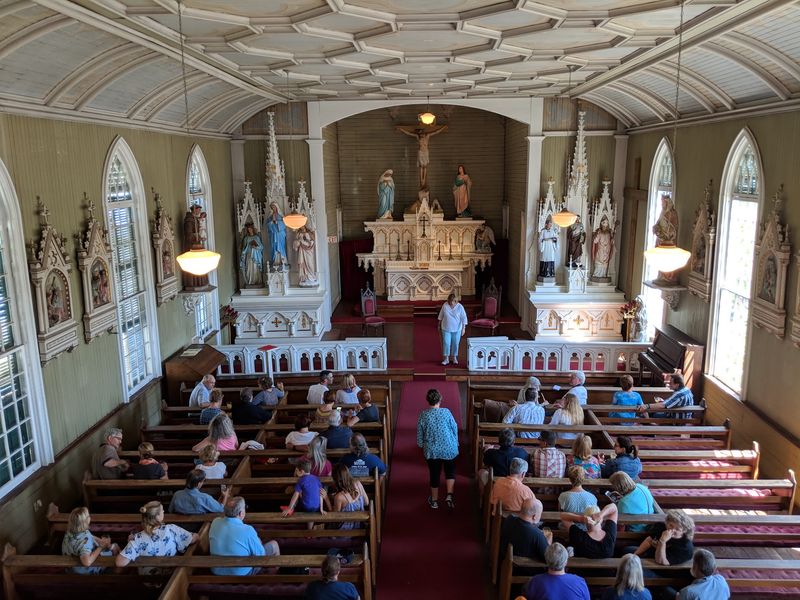
Salt air changes everything a little, and old buildings on the coast seem to wear their years differently. That weathered quality gives this church a grounded, resilient presence, as if it has learned how to stand firm while the island around it keeps changing.
In Galveston, 1859 St. Joseph’s Church connects visitors to the city’s nineteenth-century Catholic history. The name itself announces its age, and that simple detail adds charm before you even step closer.
You start thinking about storms, rebuilding, and the generations who kept returning here.
The church may not compete for the flashiest interior in Texas, but it does not need to. Its appeal comes from endurance and setting.
Nearby historic streets, old homes, and breezy island views help frame the visit, making the church part of a bigger Galveston story.
Plan a little extra time to explore the area on foot and maybe stop for seafood afterward. Places like this work best when they are part of a day, not just a checklist stop.
By then, the church feels less like an artifact and more like a steady witness to island life.
Ysleta Mission
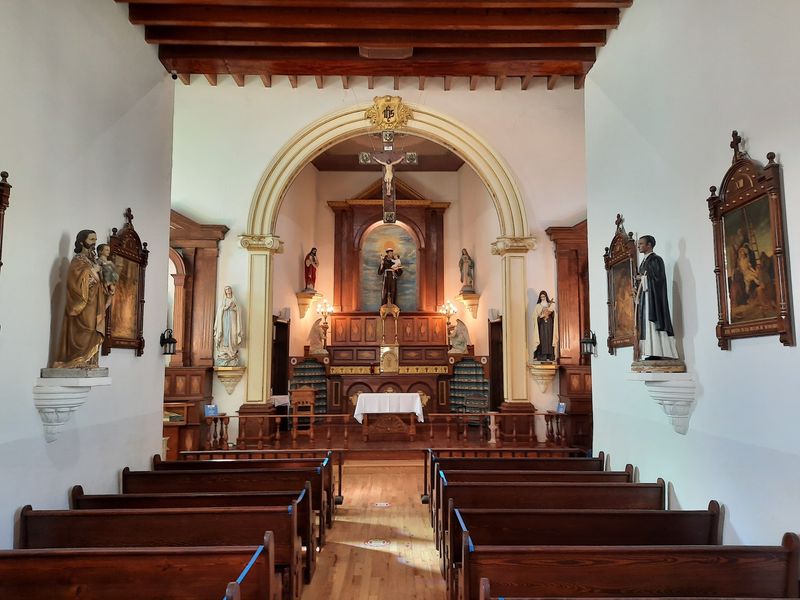
Desert light gives old adobe a special glow, and that soft earth color makes this mission feel deeply rooted from the first glance. Nothing about it seems rushed or flashy.
Instead, it carries a steady presence that suggests long memory and hard-earned continuity.
Ysleta Mission in El Paso was founded in 1680, and the present church dates to 1744. It remains closely tied to the Tigua community, which gives the site a living cultural importance beyond architecture alone.
You are not only seeing an old mission. You are stepping near an ongoing story.
That deeper connection is part of what makes the visit memorable. The setting, the simple lines, and the long timeline all remind you that Texas history did not begin with modern borders or highways.
Here, faith and identity have been intertwined for centuries.
If you visit, take time to notice the surrounding neighborhood and the regional food nearby, because place matters as much as structure. El Paso’s borderland character helps frame the mission in a fuller way.
The result is thoughtful, moving, and unlike almost any church experience elsewhere in the state.
Presidio Chapel of San Elizario
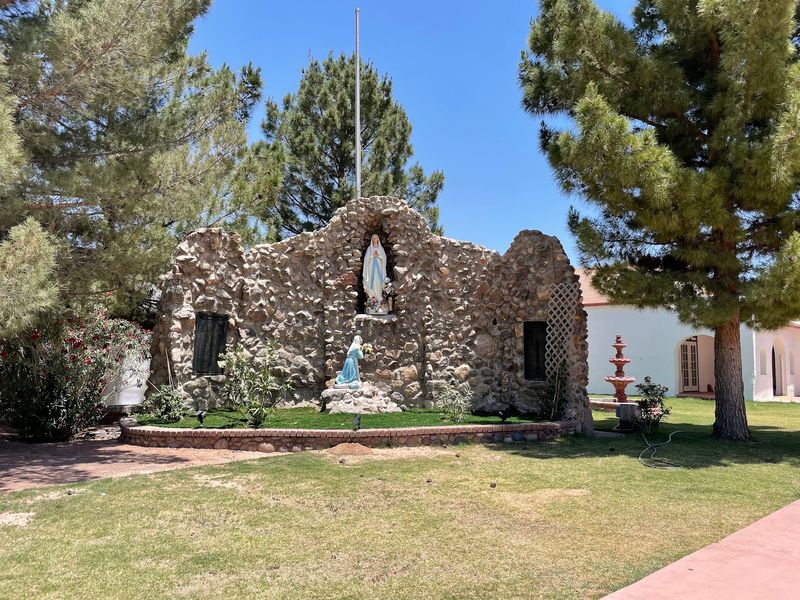
Dusty roads and open sky can make a historic chapel feel even more cinematic, and that is part of the magic here. The building looks modest at first, then gradually reveals the weight of the route, region, and people connected to it.
The Presidio Chapel of San Elizario stands on the site of an earlier Spanish presidio chapel and was built between 1877 and 1882. Its connection to the old Camino Real gives the church an extra layer of frontier history.
You can almost picture travelers, soldiers, and families passing through.
Architecture does some quiet storytelling here. The bell tower, the pale walls, and the desert setting create a strong sense of place that would feel out of step anywhere else.
In San Elizario, though, it fits naturally into the borderlands landscape.
Consider pairing your stop with a walk through the historic district and a local meal nearby, because the town adds depth to the chapel experience. The visit is not about grand scale.
It is about atmosphere, endurance, and the feeling of standing beside a road that carried centuries of lives.
St. Anthony Cathedral Basilica
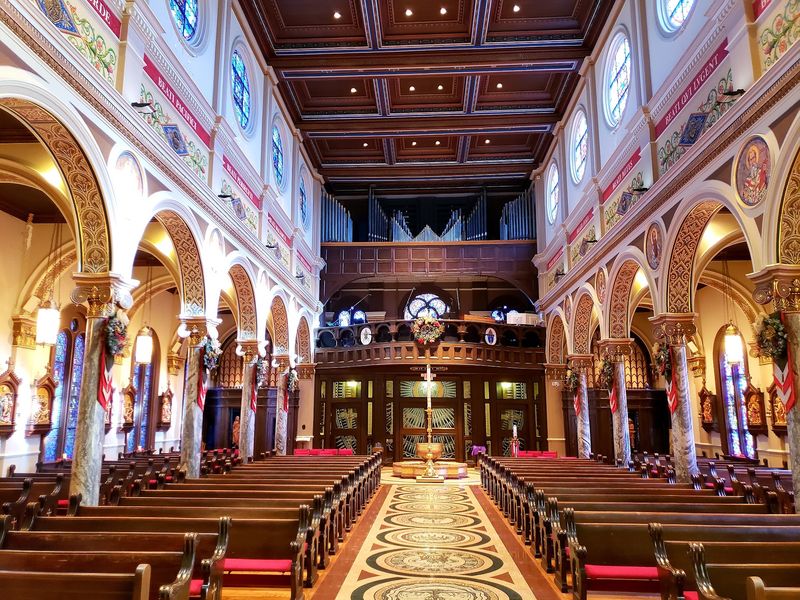
Some churches feel intimate. Others feel built to lift your eyes right away.
This one belongs in the second group, with a broad, formal presence that rises above downtown Beaumont and signals that something important has been happening here for a long time.
St. Anthony Cathedral Basilica dates to the early twentieth century, became a cathedral in 1966, and was named a minor basilica in 2006. That progression gives the building a story of growing significance, not just age.
Visitors can sense that importance in both the scale and the details.
Inside, the large nave, stained glass, and carefully arranged altars create a mood that is both grand and welcoming. It is easy to imagine major celebrations taking place here, but the church also works well for a quiet weekday visit when the space feels almost personal.
Beaumont is often overlooked by travelers crossing Texas, which makes this stop feel like a genuine discovery. Add a local lunch and a walk through nearby streets, and the cathedral becomes part of a fuller East Texas experience.
It is elegant, confident, and worth a longer look.