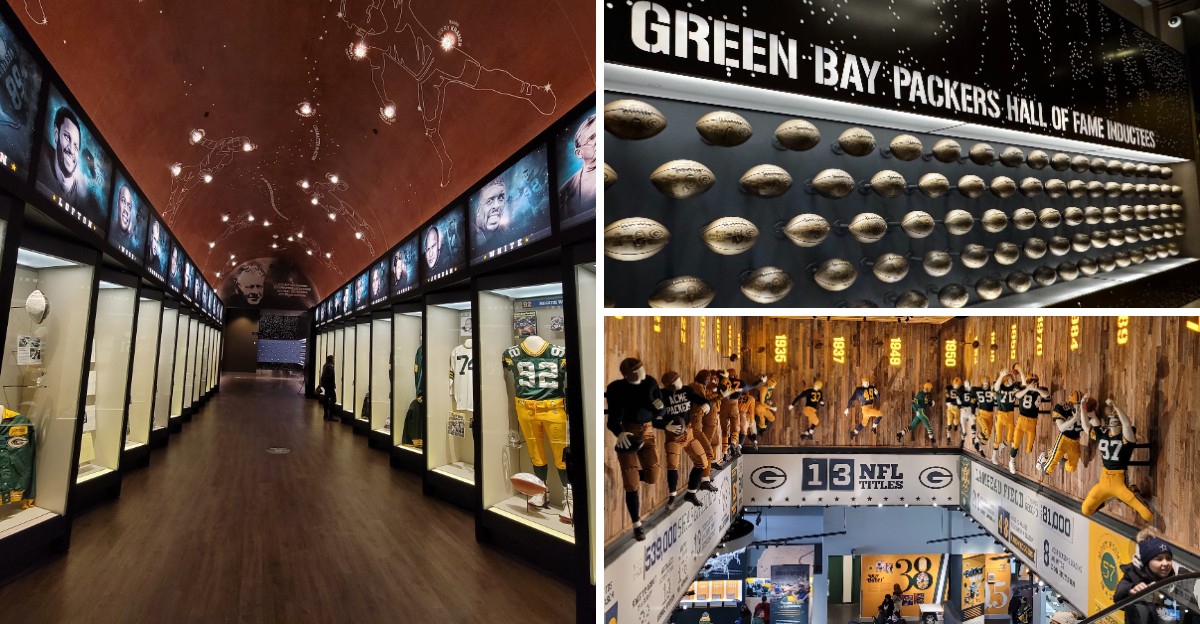
Football history hits differently when you can walk right into it.
Inside Lambeau Field, the Green Bay Packers Hall of Fame turns decades of Wisconsin football into a walk through memories, legends, and unforgettable moments.
Trophies gleam behind glass, famous jerseys tell their own stories, and old game footage brings the roar of the crowd rushing back.
You do not have to be a lifelong Packers fan to get caught up in it.
The exhibits reveal how a team from a small Wisconsin city built a football legacy that reaches far beyond Green Bay.
From championship glory to larger-than-life players, every corner offers another reason to stop and look twice.
Come for the football. Stay for the nostalgia.
Walk Through the Packers’ Long History
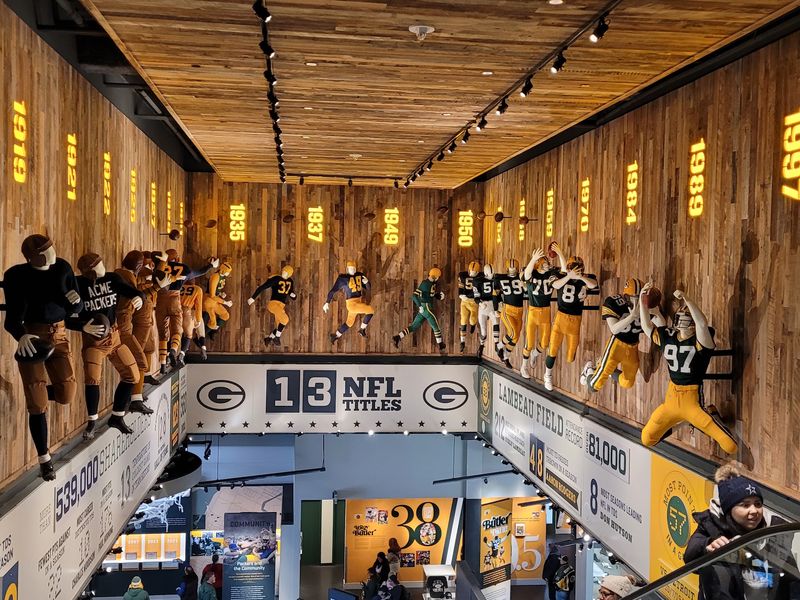
Back in 1919, a group of young men in Green Bay gathered in a newspaper office and decided to start a football team. A local meatpacking company paid for their jerseys, and that is how the Packers got their name.
Over a century later, that scrappy club is one of the most famous teams in sports.
The Hall of Fame lays out this journey like chapters in a book. You will see how the team survived money troubles, joined the NFL in 1921, and grew into a powerhouse.
Old photos, faded programs, and early equipment help you picture what football looked like long ago.
Take your time reading the timeline panels. Small details, like how the team was saved by fans buying shares, explain why Green Bay is still owned by its community today.
Did you know? The Packers are the only publicly owned major pro sports team in the United States.
Starting here gives every other exhibit more meaning, so try not to rush past it.
See the Packers’ Championship Trophies
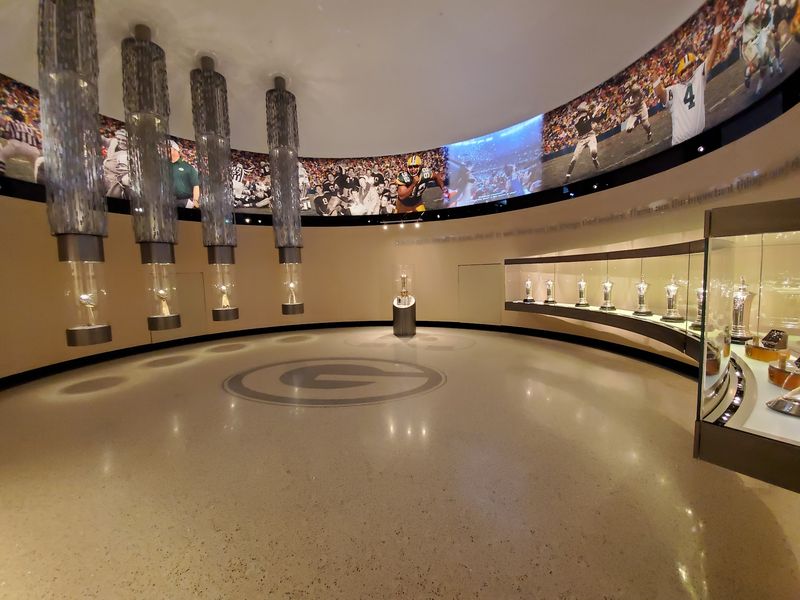
Thirteen world championships. No other NFL team has won more, and the Hall of Fame makes sure you feel every one of them.
The trophy area is often the busiest spot in the museum, and for good reason.
Front and center are the four shining Lombardi Trophies from Super Bowls I, II, XXXI, and XLV. Seeing them up close is a bit of a goosebumps moment.
The silver footballs sparkle under the lights, and each one carries memories of a special season.
Displays also honor the titles won before the Super Bowl existed. Those older championships from the 1920s through the 1960s are just as important to Packers fans.
Signs explain each win, so you can learn which players and coaches made them happen.
Here is a helpful tip for families. Kids love posing near the trophy display, so have your camera ready.
Just be patient, since crowds can gather, especially on weekends and game days. A quiet weekday morning often gives you the clearest view.
Step Inside Vince Lombardi’s Office
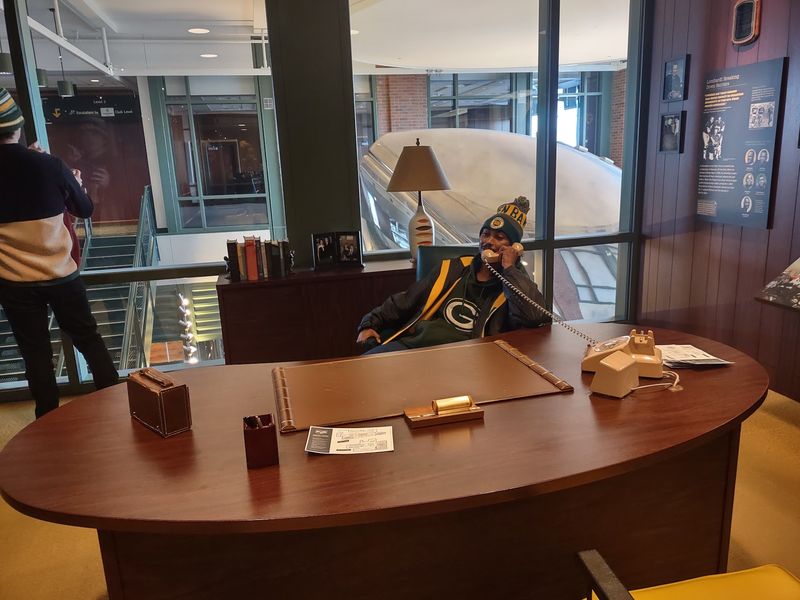
Picture a man in his fifties, hat on the desk, scribbling plays while the phone rings. That was Vince Lombardi’s world, and the Hall of Fame lets you peek right into it.
The replica of his office is one of the most talked-about stops in the building.
The room is set up to match the feel of the 1960s. You will notice a simple wooden desk, old-fashioned furniture, and items that hint at his serious, hardworking style.
It feels less like an exhibit and more like the coach just stepped out for a moment.
Lombardi led the Packers to five championships in seven years, including the first two Super Bowls. His famous belief in hard work and teamwork still inspires people far beyond football.
That is why the NFL named its Super Bowl trophy after him.
Stand quietly for a minute and imagine the big decisions made in a space like this. It is a great place to talk with kids about leadership and never giving up.
Meet the Packers Legends
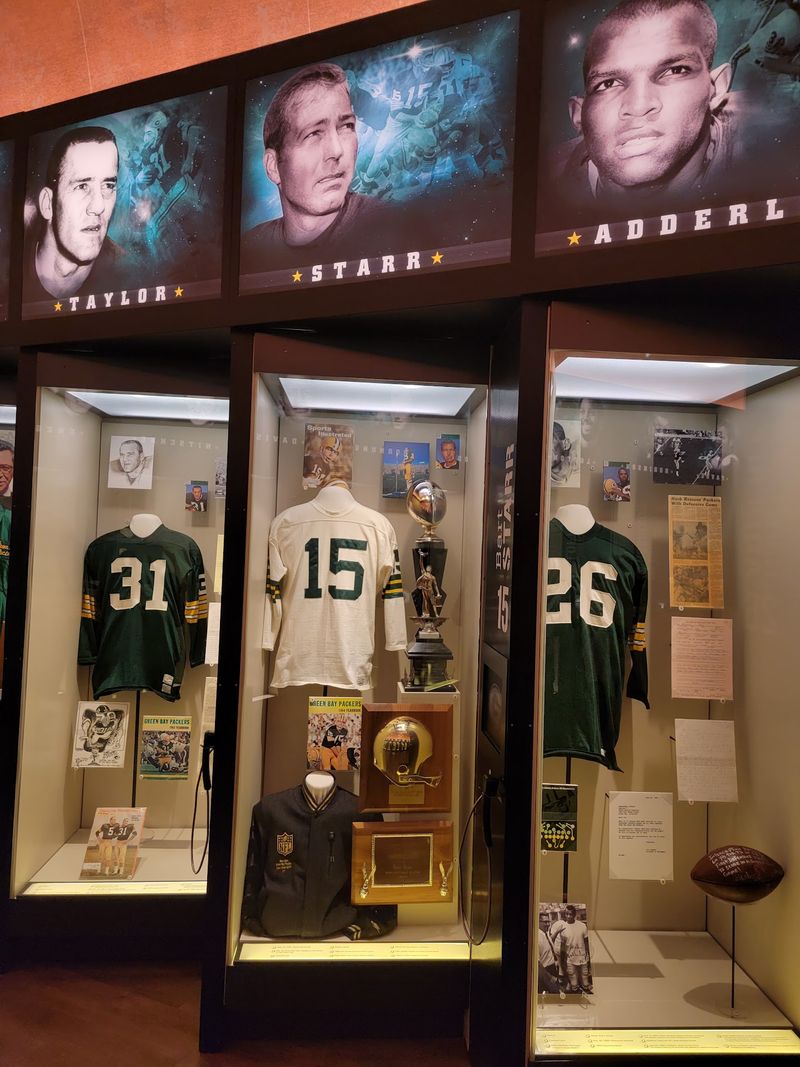
Bart Starr. Reggie White.
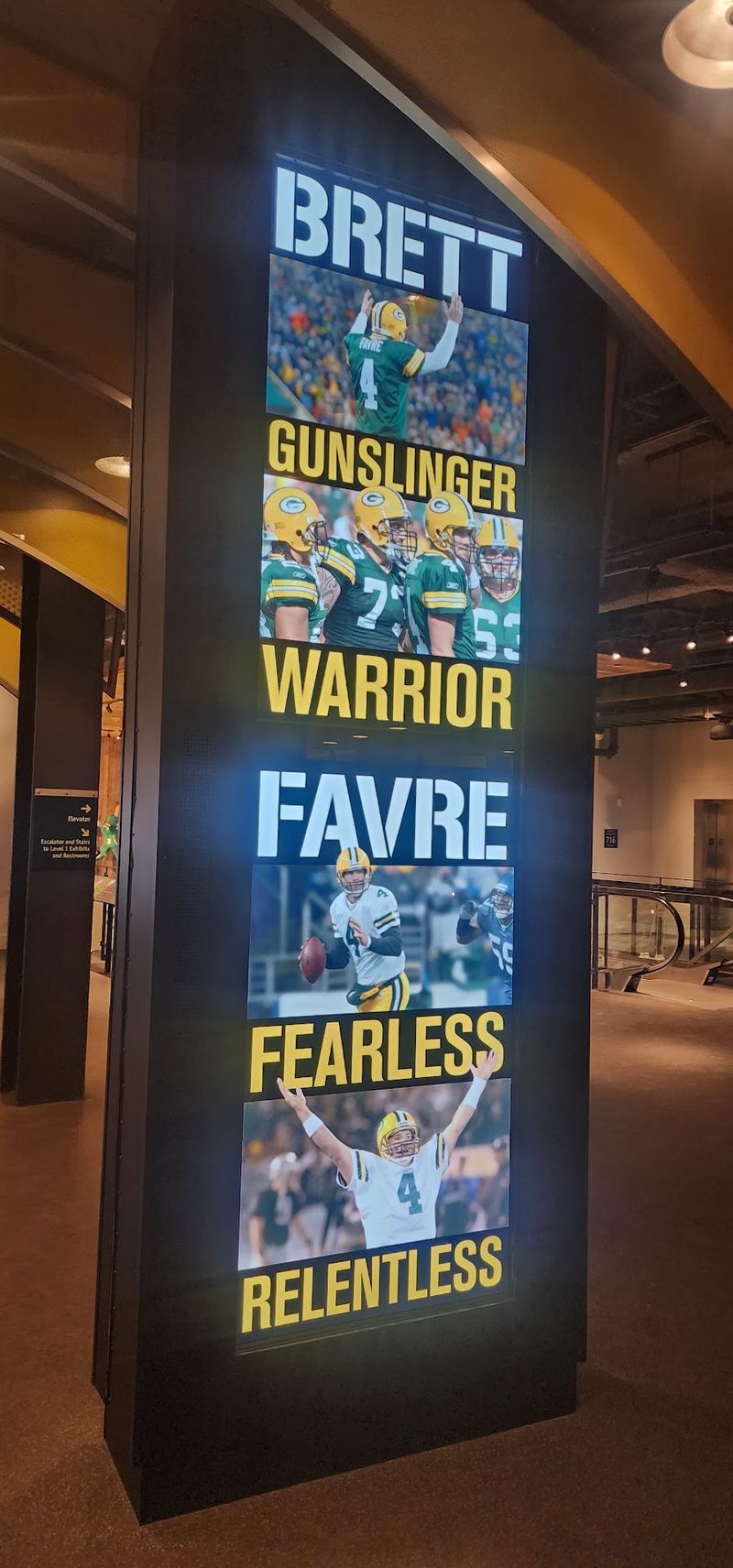
Brett Favre. Just saying those names can make a Packers fan smile.
In this part of the museum, the heroes of Green Bay get the spotlight they earned.
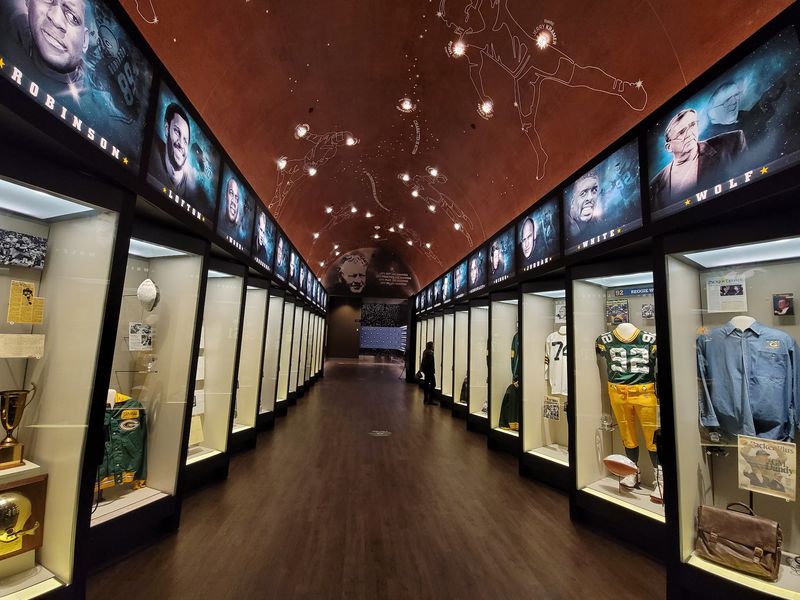
Exhibits honor players, coaches, and other key people who shaped the team. You will find jerseys, helmets, game balls, and personal items that tell each person’s story.
Some displays cover famous stars, while others celebrate lesser-known contributors who mattered just as much behind the scenes.
What makes this area fun is how it connects generations. Grandparents might point out the stars they watched in the 1960s.
Parents may get excited about the 1990s heroes, and kids can spot names from more recent seasons.
Try a little game while you explore. Have each person in your group pick a favorite legend and share one cool fact they learned.
It turns the visit into a conversation instead of just a walk past glass cases. You might leave with a brand new favorite player.
Relive Historic Games Through Interactive Displays
Ever wished you could have been in the stands for the Ice Bowl? You cannot go back in time, but the interactive displays here come pretty close.
Touchscreens, videos, and audio clips bring famous games right to your fingertips.
You can watch old game footage, hear radio calls, and browse photographs from big moments. Stories from Packers legends add a personal touch.
Hearing a player describe a play in his own words feels much more exciting than reading about it.
These exhibits are perfect for younger visitors who like to push buttons and explore. Kids who might get bored reading signs often light up once a video starts.
Adults tend to enjoy them too, especially when a clip brings back an old memory.
Fun fact: the 1967 Ice Bowl was played in temperatures around 13 degrees below zero. Players and fans braved brutal cold, and Bart Starr’s last-second sneak won the game.
Spend some extra minutes here, since there is a lot of hidden content to discover.
Discover the Story Behind Curly Lambeau
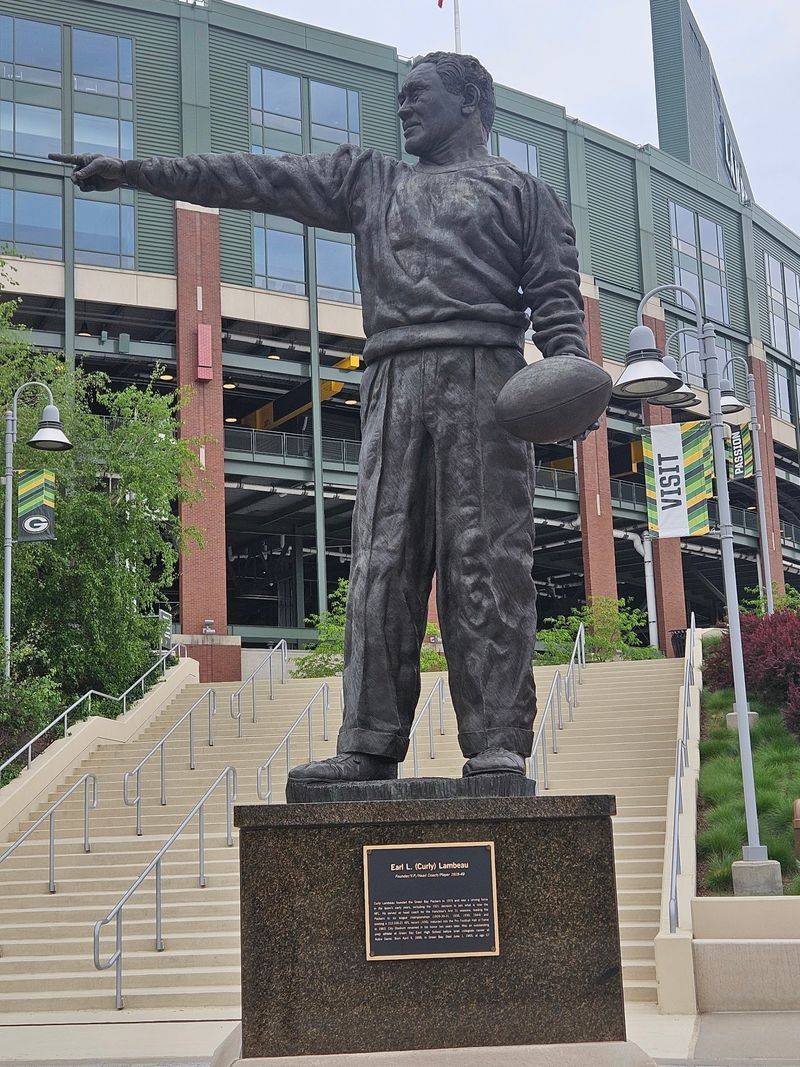
A hometown kid with big dreams, Earl “Curly” Lambeau helped turn a pickup team into a pro franchise. Most people know his name from the stadium, but fewer know the man himself.
The Hall of Fame fixes that.
Lambeau co-founded the Packers in 1919 when he was just 21 years old. He was not only a leader off the field but also a star player.
He threw passes at a time when most teams still mainly ran the ball, which made him ahead of his time.
As coach, he guided the Packers to six championships. Exhibits about his life include photos and stories from those early years, when players often had regular jobs during the week and played football on weekends.
Learning about Curly makes walking around the stadium feel extra special. Every time you see his name on the building, you will remember the young man who started it all.
Did you know? The stadium was renamed Lambeau Field in 1965, shortly after he passed away.
Explore the Packers’ Most Memorable Eras
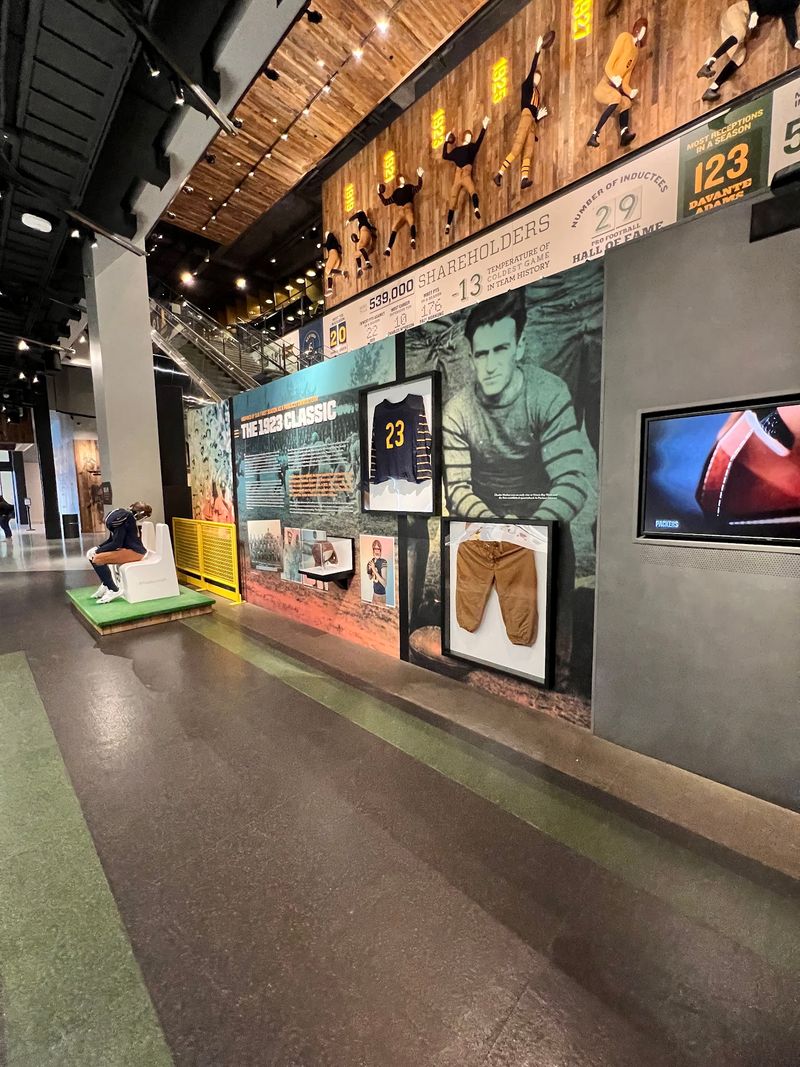
Leather helmets with no face masks. Bulky shoulder pads.
Sleek modern gear. One fun way to see how football has changed is by looking at the equipment, and this museum is full of it.
The Hall of Fame follows the Packers through many generations. There are the early days of the 1920s and 1930s, the glory years under Lombardi, the comeback seasons of the 1990s, and the more recent era led by stars like Aaron Rodgers.
Each period has its own feel and its own heroes.
Artifacts help tell these stories in a hands-off but eye-opening way. Uniforms, balls, tickets, and photos show how the game, the players, and even the fans have grown over time.
Try comparing an old helmet to a new one. It is a simple way to start a talk about safety and science in sports.
Many visitors are surprised by how thin early gear really was. By the end, you will appreciate just how tough those early players had to be.
Explore the Hall of Fame’s Two Levels
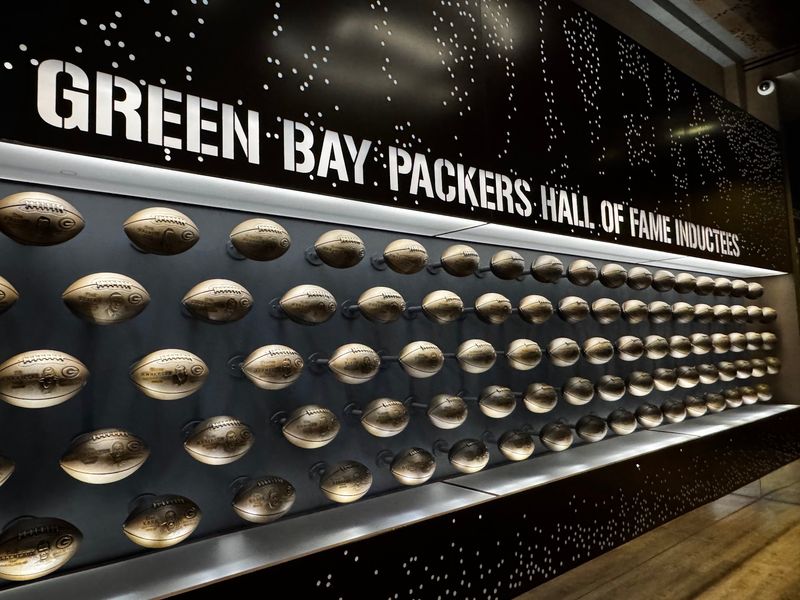
Fifteen thousand square feet. That is a lot of space for football memories, and it is all packed into two floors inside the Lambeau Field Atrium.
Give yourself enough time, because there is more to see than many visitors expect.
Both levels are filled with memorabilia, trophies, videos, photographs, and hands-on exhibits. The layout guides you through the story, so it is easy to follow without getting lost.
Benches and open areas offer spots to rest if little legs get tired.
Most people spend about one to two hours here. Big fans who read every sign and watch every video might stay even longer.
Planning ahead helps, especially if you also want to grab lunch or shop in the Atrium.
Here is a smart move. Wear comfortable shoes and grab a map or check the layout when you arrive.
That way you will not miss any hidden corners. The Atrium is also home to restaurants and the Packers Pro Shop, making it easy to turn your visit into a full afternoon.
Pair the Hall of Fame With a Lambeau Field Tour
Walking through the players tunnel and seeing the field open up in front of you is a moment fans never forget. A Lambeau Field stadium tour makes it happen, and it pairs perfectly with the Hall of Fame.
Tours take you to areas most fans never see on game day. Depending on the tour you choose, you might visit special seating areas, learn stadium history, or walk near the field itself.
Guides share fun stories and answer questions along the way.
Doing both on the same day gives you the full picture. The museum explains the history, and the tour lets you stand where that history happened.
Many visitors buy combo tickets, which can save time and sometimes money.
Tours can sell out, especially in summer and around holidays. Booking ahead is a good idea if your schedule is tight.
Also remember that tour options may change on game days or during special events. Bring a camera, because the view of the famous green field and bowl of seats is truly breathtaking.
Plan Your Visit
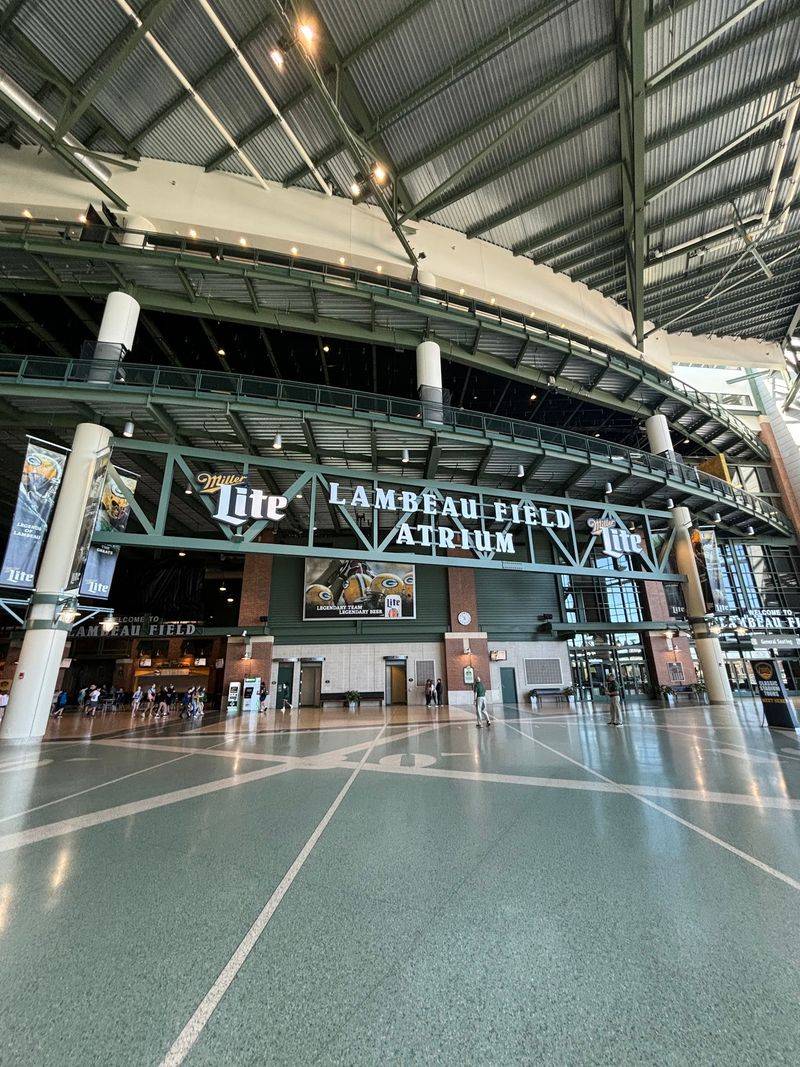
A little planning goes a long way toward a great day at Lambeau. The Green Bay Packers Hall of Fame sits at 1265 Lombardi Avenue in Green Bay, inside the stadium’s Atrium.
It is easy to find, since the giant stadium is hard to miss.
Before you go, check current museum hours and ticket prices. Schedules can shift during the season, and special exhibits may come and go.
You can call the Hall of Fame at +1 920-569-7512 if you have questions about hours, tours, or accessibility.
Game days are a whole different experience. Crowds are huge, parking gets tricky, and some areas may have limited access.
If you want a calm visit, pick a non-game day instead.
Parking details can change too, so look them up ahead of time. Do not forget to stop by the bronze statues of Vince Lombardi and Curly Lambeau outside.
They make a perfect photo spot to wrap up your trip and remember your visit to football’s most famous small town.