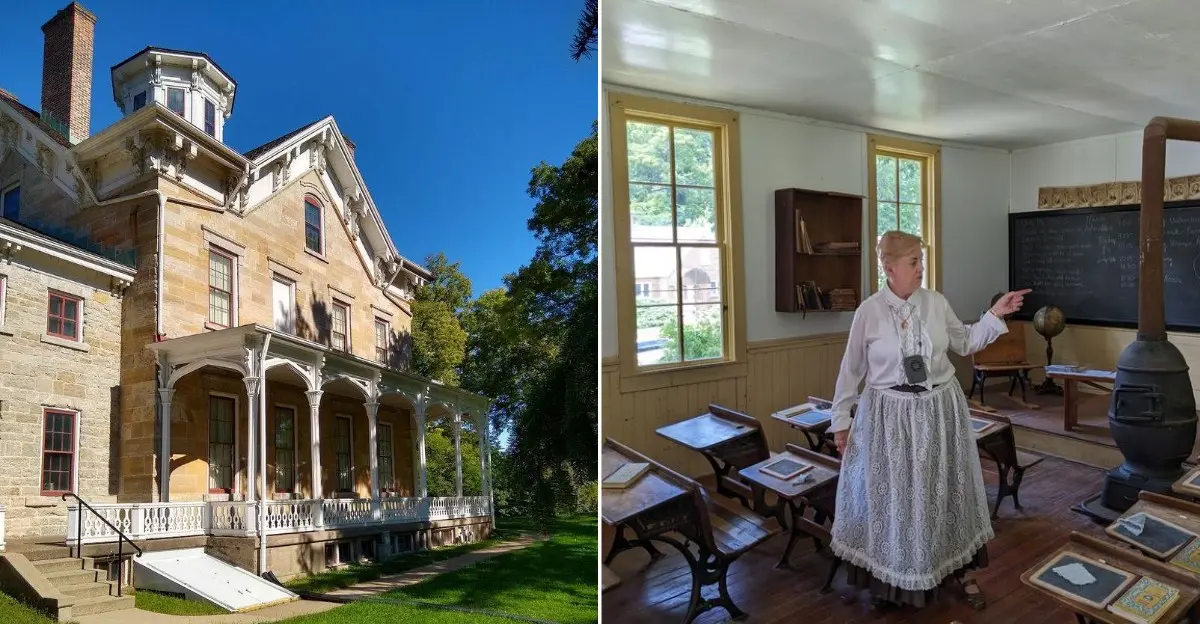
High on a bluff in Dubuque, Iowa, a stone house has been watching the Mississippi River since before the Civil War.
It was built by a man who made his fortune in lead mining and river trade, and it still stands with its tower pointed at the sky.
Today, guides in period clothing lead small groups through its rooms and share stories about how people lived in the 1800s.
Many longtime locals admit they drove past it for years before finally going inside, and they were surprised by how much they had missed.
Kids find it fun, history fans find it rich, and curious travelers find plenty of questions worth asking.
Keep reading to learn about the house, its tours, its famous Fourth of July party, and the practical tips that will help you plan a smooth visit.
A Mansion With an Address Worth Remembering
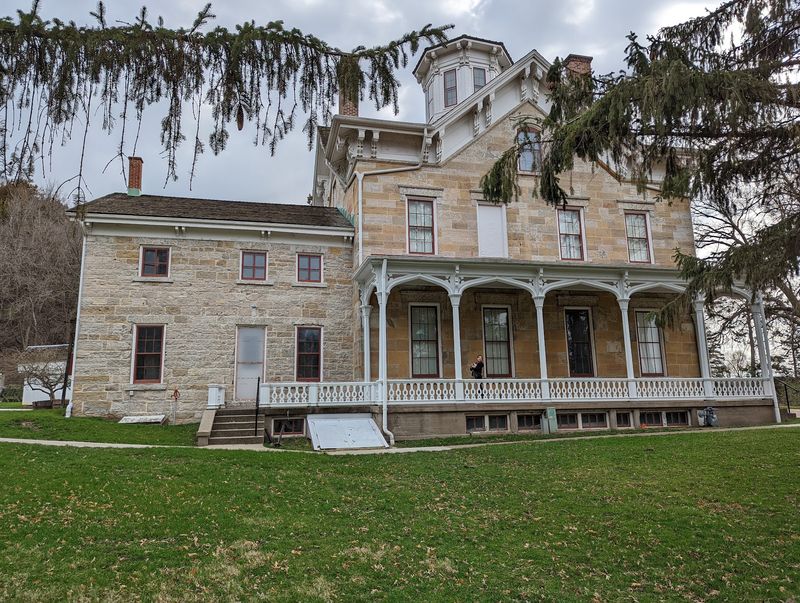
Some houses blend into the neighborhood, but this one was built to stand out. The Mathias Ham Historic Site sits at 2241 Lincoln Ave, Dubuque, IA 52001, in the state of Iowa in the United States.
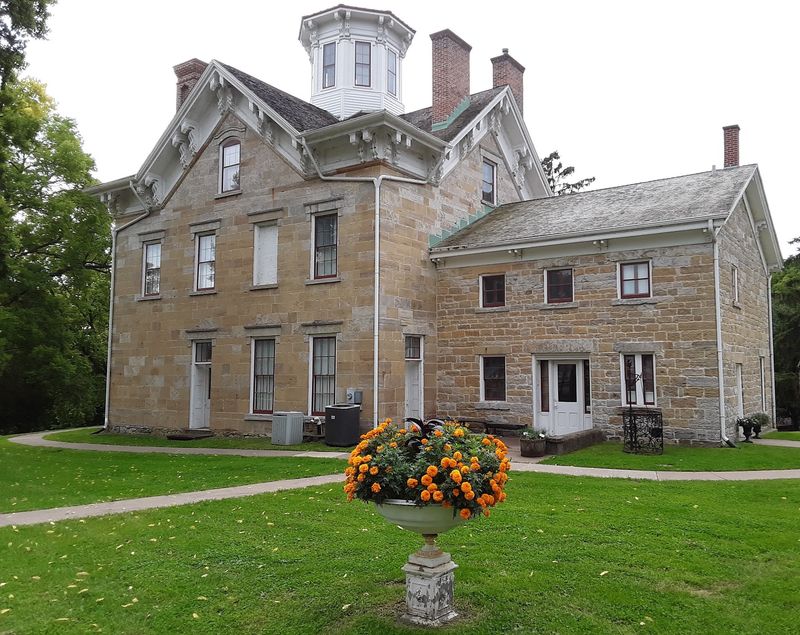
The home dates to 1856, which makes it older than the Civil War. It was designed in the Italianate style, a popular look for wealthy families of that time.
Look up and you will spot the square tower on top, called a cupola. From there, the owner could watch the Mississippi River and the boats moving along it.
The house is built of limestone, and it has been kept in good shape for well over a century and a half. Today it is run as a museum connected to the National Mississippi River Museum and Aquarium.
Plan to arrive a little early so you can take in the grounds before your tour starts. A quick stroll around the outside helps you understand the size of the place before you even walk through the front door.
Who Was Mathias Ham, Anyway?
Mathias Ham was one of Dubuque’s early movers and shakers. He came to the area in the 1830s, when the town was young and rough around the edges.
Lead mining brought many settlers to this part of Iowa, and Ham was among them. He also worked in other businesses tied to the river, which was the main highway of the day.
His success gave him the money to build a grand family home on the bluff. The first part of the house went up in 1856, and it grew over the following years.
Guides share stories about Ham, his family, and the ups and downs they faced. Fortunes in the 1800s could rise and fall quickly, and this family was no exception.
One honest note helps set expectations. Not many of the items inside actually belonged to the Ham family.
Instead, the rooms are filled with pieces from the same era. The goal is to show how a well-off household would have looked, and the stories fill in the rest of the family’s tale.
Guides Dressed for Another Century
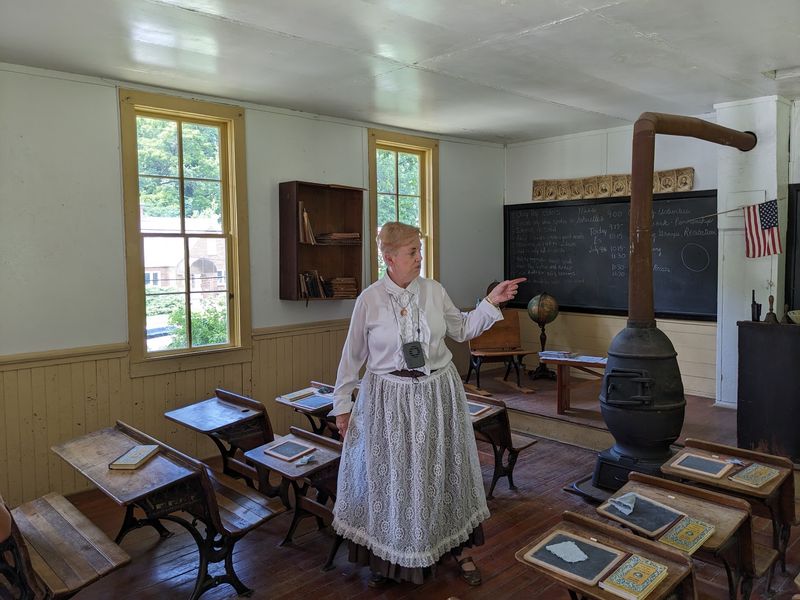
Costumes are not just for Halloween here. Tour guides often wear clothing from the 1800s, which makes the history feel a lot less like a textbook.
The real star, though, is what these guides know. They explain how families cooked, cleaned, dressed, and spent their evenings in the late 19th century.
Questions are welcome, and that is a big part of the fun. Families who come with a long list of curious questions often leave with answers to things they never thought to ask.
Guides are also good at adjusting the story for younger guests. Even a six-year-old can follow along when the facts are explained in simple terms.
Some groups have even discovered surprising family links to the house during their tour. That kind of moment turns a simple outing into something people talk about for years.
Tip for the day: let the guide set the pace. Lingering in each room and chatting openly is the best way to get the most from your time.
Rooms Frozen in the 1800s
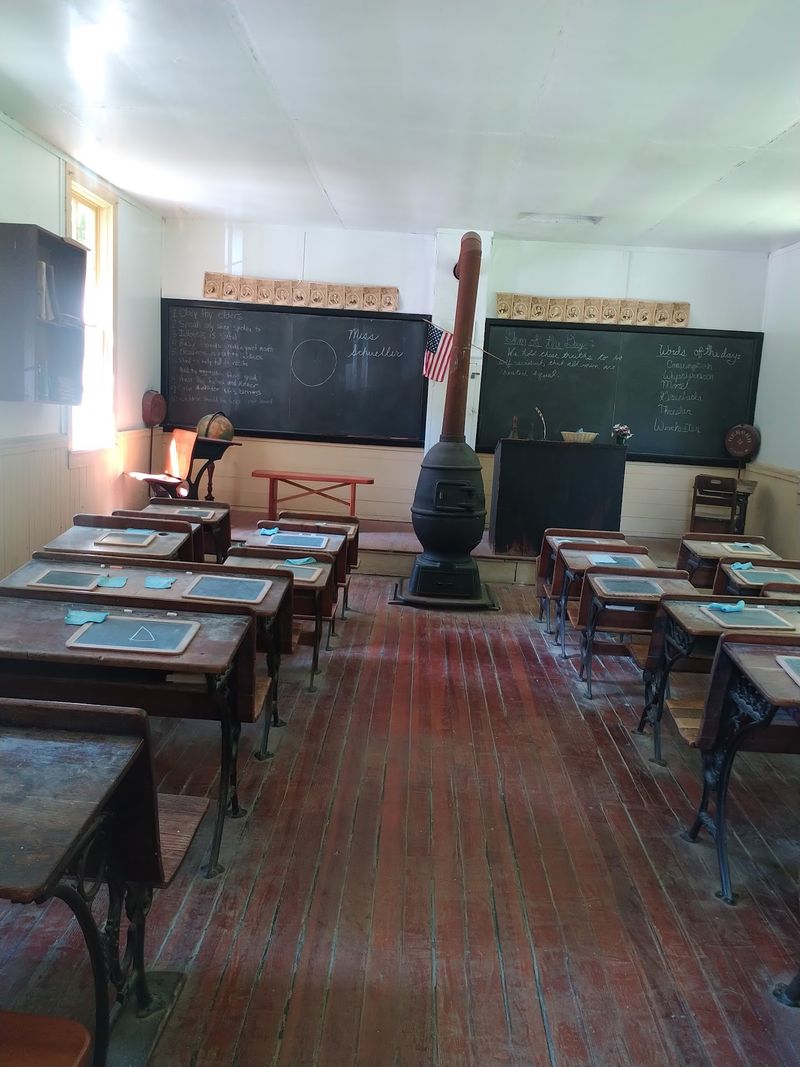
Furniture tells stories too, if you know how to listen. Each room in the mansion is set up to show daily life during the Victorian era.
Fancy furnishings, period decor, and examples of clothing help explain what mattered to families of that time. Guides point out how certain objects were used and why.
The architecture itself is a big draw. Tall ceilings, detailed woodwork, and original features give a strong sense of how the house was built and lived in.
Many of the items come from the same general era rather than from the Ham family. Some pieces date from slightly different periods, so think of the house as a window into the 1800s and early 1900s as a whole.
Even folks who do not call themselves history buffs tend to enjoy it. The mix of building design and old-time objects keeps things interesting from room to room.
Bring your curiosity and a few questions. The details are where this house really shines.
That Famous Tower on Top
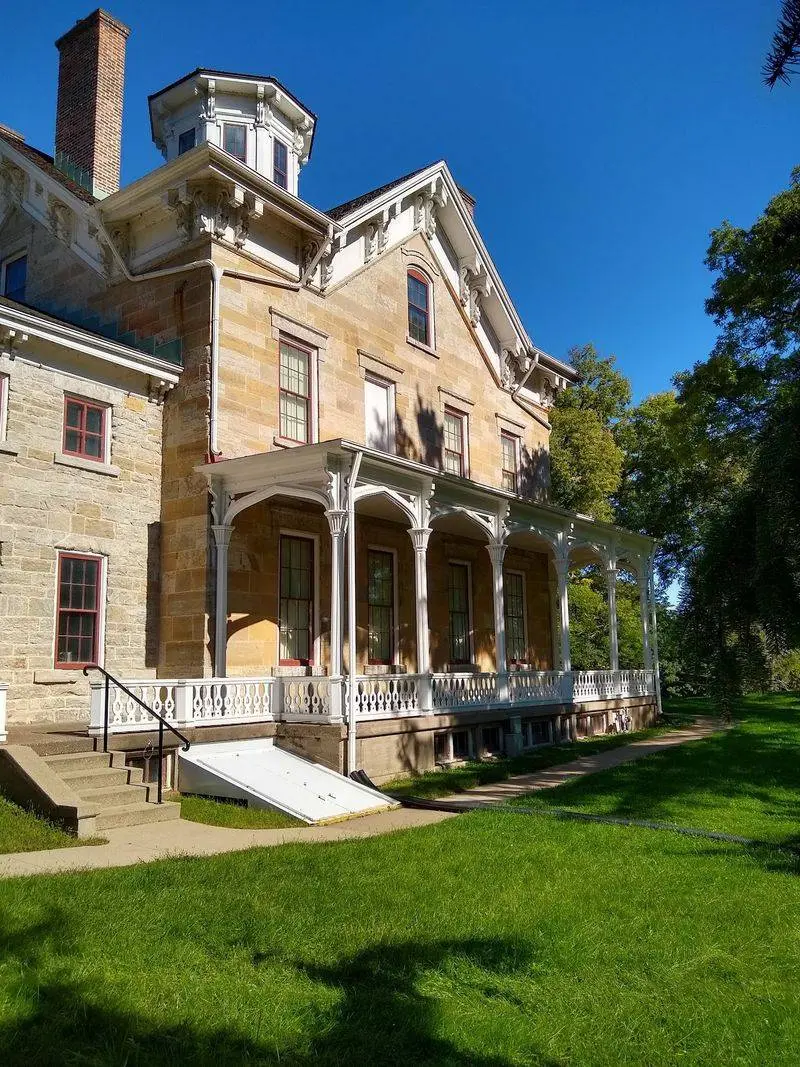
Every grand house needs a crown, and this one has a cupola. The square tower on the roof is one of the most recognizable parts of the building.
In the 1800s, a high lookout had a practical side. From up there, the owner could keep an eye on the Mississippi River and the boats moving goods up and down the water.
Italianate homes often featured towers like this. They showed off wealth and gave the house a strong, stately look from the street.
Photographers, take note. Pictures are not allowed inside the house, but you are free to snap shots outside.
That makes the exterior the best spot to grab your souvenir photos. The tower framed against the sky makes for a classic shot of Dubuque history.
Walk around the building to find your favorite angle. Different sides show off different parts of the design, and a slow loop around the outside is well worth the extra few minutes.
Fourth of July, Ice Cream Style
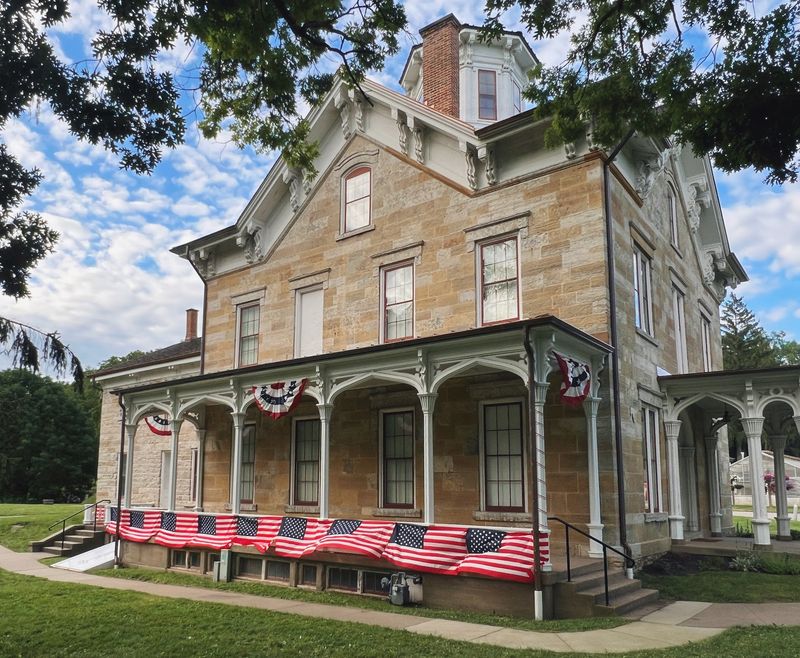
Independence Day is the biggest day on the calendar here. The Audrey Hammer Fourth of July Ice Cream Social has become a true local tradition.
The event brings music, food for purchase, and activity stations spread across the grounds. Special tours and exhibits also run during the celebration.
Kids have plenty to keep them busy. Hands-on stations show how things were done in the 1800s and early 1900s, so teens and little ones alike find something they enjoy.
One crowd favorite is a demonstration involving a real cannon being fired. It is a memorable way to connect the holiday to history.
Some families return every single year, even when the July heat is strong. For many locals, it is how the Fourth simply has to be celebrated.
Expect bigger crowds than on a normal day. Arrive early, bring sun protection, and plan for parking to fill up as the afternoon goes on.
Seasonal Events Beyond Summer
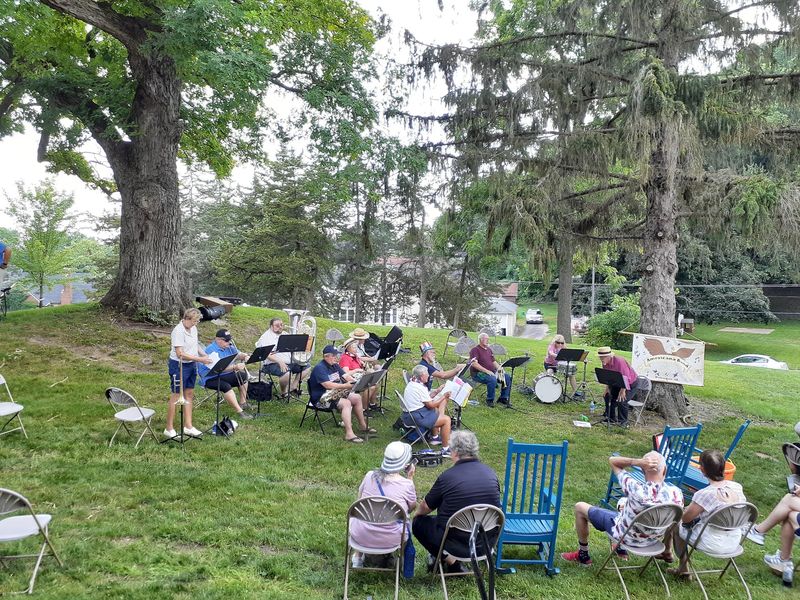
Summer is not the only season with something going on. The site hosts special seasonal events throughout the year, and they tend to draw a lively crowd.
Some guests visit because of the house’s spooky reputation. Kids especially love the idea that an old mansion might be a little mysterious.
Halloween tours offer a different spin on the place. However, those events focus less on the house itself.
If you want deep detail about the building and its history, the regular tour season is the better choice. That is when guides spend the most time on rooms, objects, and the family story.
Special events can get busy, while ordinary days are usually quiet. Choose based on what you want: festive energy or a calm, detailed look around.
Check the official website before your trip for current dates. Event schedules can change from year to year, so a quick look ahead saves any surprises.
A Family Outing That Teaches Without Preaching
History lessons go down easier when they come with stories. That is why this house works so well for families with kids of different ages.
Guides can simplify facts for younger children while still keeping older kids and adults interested. A teenager and a preschooler may each find a favorite part of the visit.
Seeing real rooms and objects helps kids connect with the past. It is one thing to read about the 1800s and another to stand in a home from that time.
Encourage kids to think up questions before you go. Something like asking how people kept warm, or what children did for fun, can spark great conversations.
Remind young ones that photos are not allowed inside. That small rule actually helps everyone focus on the tour instead of their screens.
Afterward, talk about what surprised each person most. Those car-ride chats are often where the best learning happens.
Part of a Bigger River Story
Dubuque grew up alongside the Mississippi, and so did this house. The site is operated as part of the National Mississippi River Museum and Aquarium family of attractions.
That link makes sense. Mathias Ham built his life around the river, mining, and trade, and the house helps tell that larger story of early Iowa.
The museum’s website, rivermuseum.com/hamsite, is the best place to check hours, tour times, and admission details. Opening times can vary by season, so it pays to look before you go.
Pairing a visit here with a trip to the river museum downtown makes for a full day of local history. The two places together paint a clear picture of how the town took shape.
Volunteers also play a big role in keeping the house running. Their work helps preserve the building and share its story with new guests.
Supporting the site helps keep this piece of Dubuque open for the next generation of curious minds.
Smart Tips Before You Go
A little planning goes a long way at an old house. Start by checking the website for the current season, hours, and any special events.
Choose the guided tour. It is the heart of the experience, and the stories shared make the rooms come alive with meaning.
Leave the camera in your bag once you go inside. Photos are allowed outside, so save your snapshots for the exterior and the grounds.
Wear comfortable shoes, since historic homes often include stairs and uneven spots. Older buildings were not designed with modern convenience in mind.
Bring questions, and do not be shy. Guides here are known for patiently answering even long lists of them.
Finally, keep expectations realistic about the collection. Most items represent the era rather than the Ham family itself.
Many locals say they waited years to visit and wished they had come sooner. A free afternoon in Dubuque is the perfect excuse to finally knock on this historic door and step back into 1856.