Portland did not earn the nickname City of Roses by accident. High in the West Hills, a public garden has been growing, testing, and showing off roses for more than a century, and it has never once charged an entry fee.
The idea started during a world war, when growers worried that rare European roses could disappear forever.
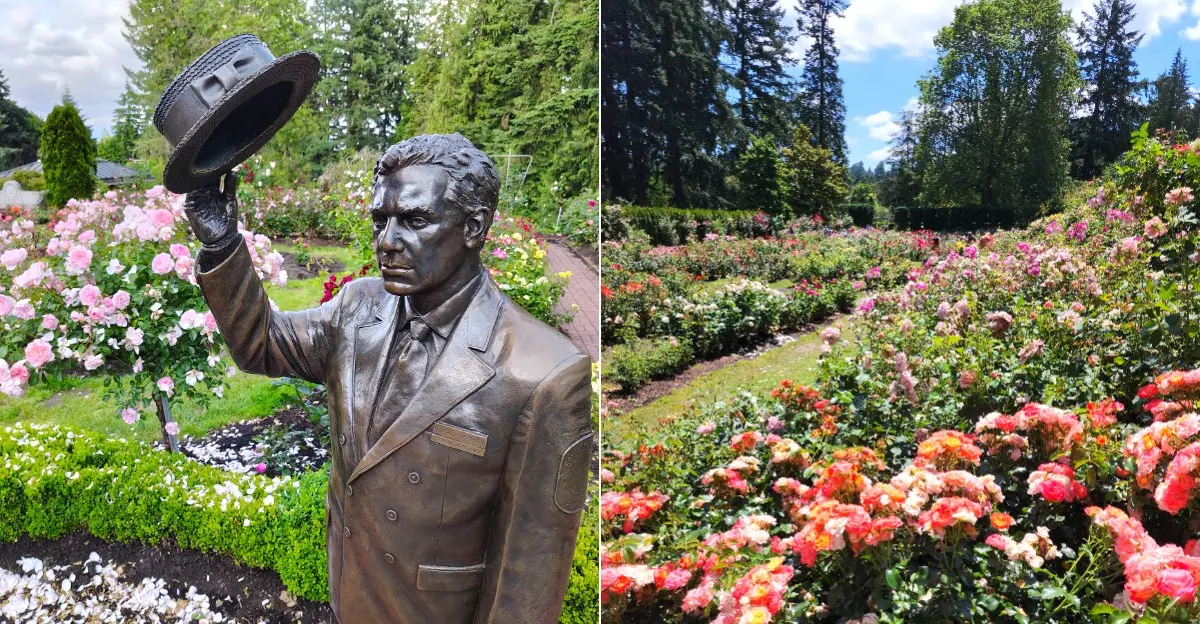
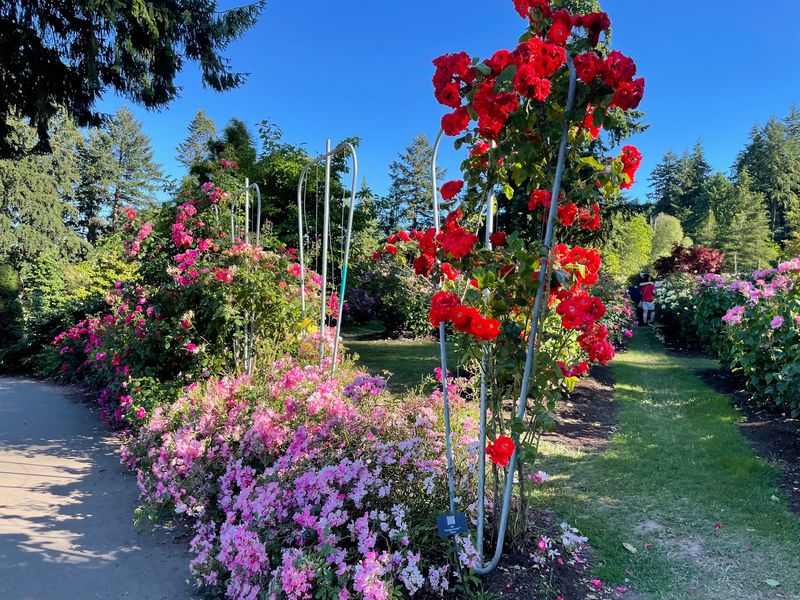
Today the grounds hold more than 10,000 rose bushes, with labeled beds, terraced paths, and city views that stretch toward a snowcapped mountain on clear days.
Couples get married here, musicians play here, and squirrels act like they own the place.
Keep reading to learn the history, the best time to go, and the small details that turn a quick stop into a favorite memory.
A Hillside Address Worth Writing Down
Finding the garden is the first small adventure. The International Rose Test Garden sits at 400 SW Kingston Ave, Portland, OR 97205, tucked inside the larger Washington Park in the city’s West Hills.
The spot is only a few minutes from busy neighborhoods like Nob Hill. Even so, the hillside setting makes it feel like a separate little world above the city.
The garden is run by Portland Parks and Recreation, so it is a public park in every sense. Gates are not really the point here, since the grounds open early at 5 AM and stay open until 10 PM every single day of the week.
Those long hours give you plenty of freedom. Early birds can stroll before work, and night owls can wander after dinner.
Washington Park also holds several other big attractions nearby. That means the rose garden can easily be the first stop of a full day instead of a quick photo break.
Put the address in your phone, and the rest of the day can bloom from there.
Born During a World War
Back in 1917, the world was at war, and rose lovers had a strange worry on their minds. Growers feared that rare rose varieties in Europe could be wiped out by the fighting.
Portland stepped up with a plan. The city created a safe place where those roses could be sent, planted, and protected far from the battlefields.
That idea grew into the garden you can visit today. It is known as the oldest continuously operated public rose test garden in the United States, which is quite a title to carry for more than 100 years.
Think about how much has changed since then. Cars, phones, and cities have all transformed, yet roses are still being planted on this same hillside.
The history makes a walk here feel a little deeper. Every bed is part of a long promise to keep beautiful plants alive and growing.
Not bad for a project that started as a rescue mission, right? Some roses here are basically living history books with petals.
So What Exactly Gets Tested?
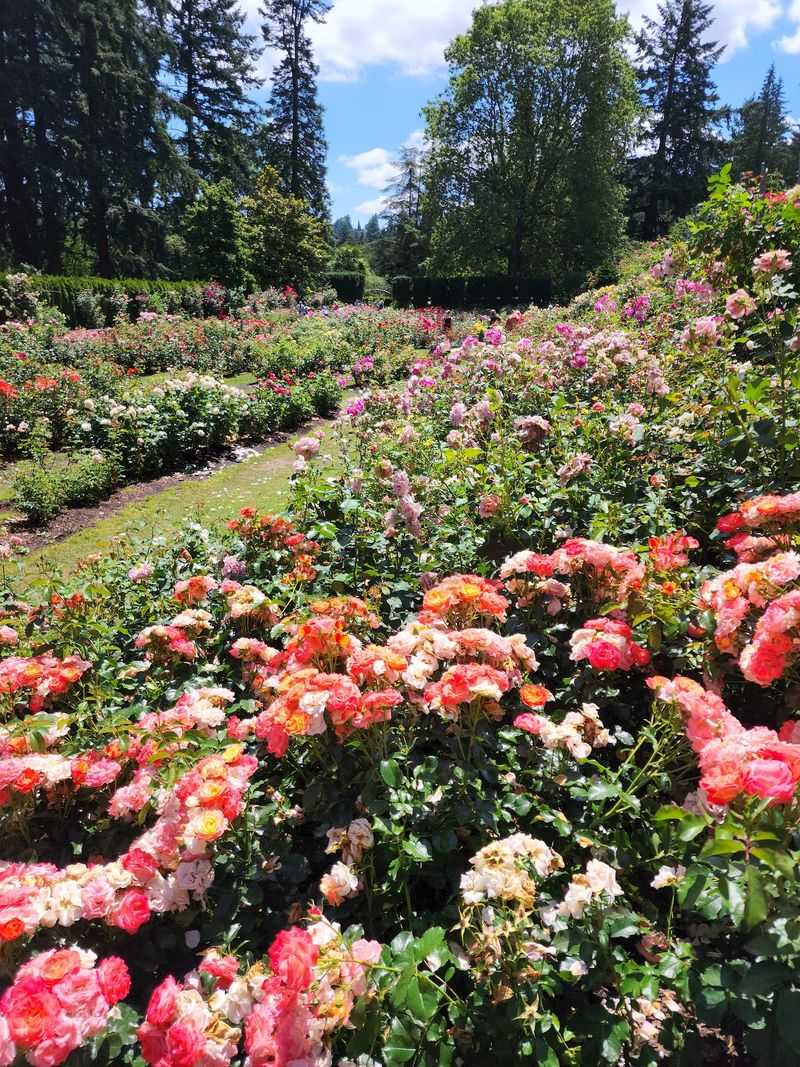
The word test in the name confuses plenty of people. Nobody is giving the roses a math quiz, although the idea is not that far off.
A test garden is a place where new rose varieties are planted and watched closely. Experts check how well each plant grows, how healthy it stays, and how its blooms hold up over time.
Roses that do well can go on to earn awards. Some even end up in garden shops across the country, so a rose in a backyard somewhere may have passed its exams right here.
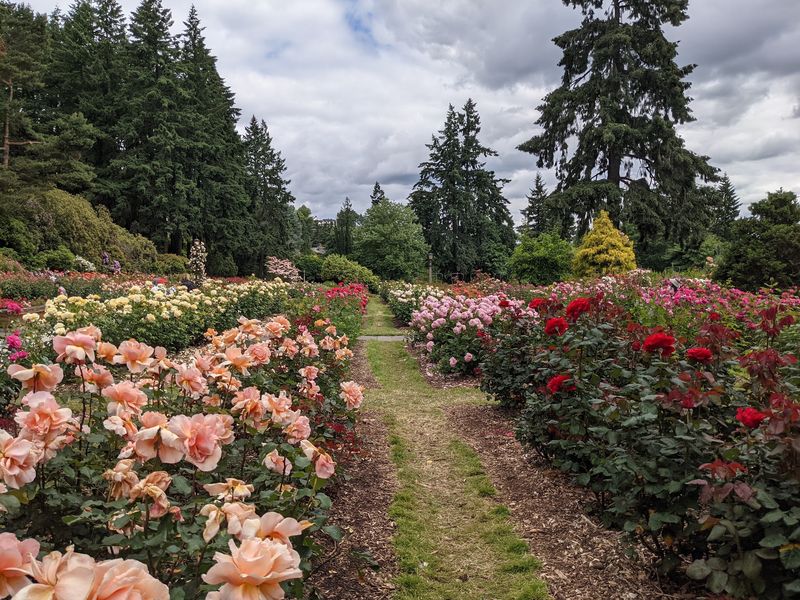
That is also why the collection is so huge. The grounds hold more than 10,000 plants representing hundreds of different varieties.
Many beds carry small labels with names. Reading them becomes a fun little game, because some rose names are sweet, some are funny, and a few are downright fancy.
Bring a notebook or snap photos of the signs. Your future garden might thank you for the homework.
Timing the Big Bloom
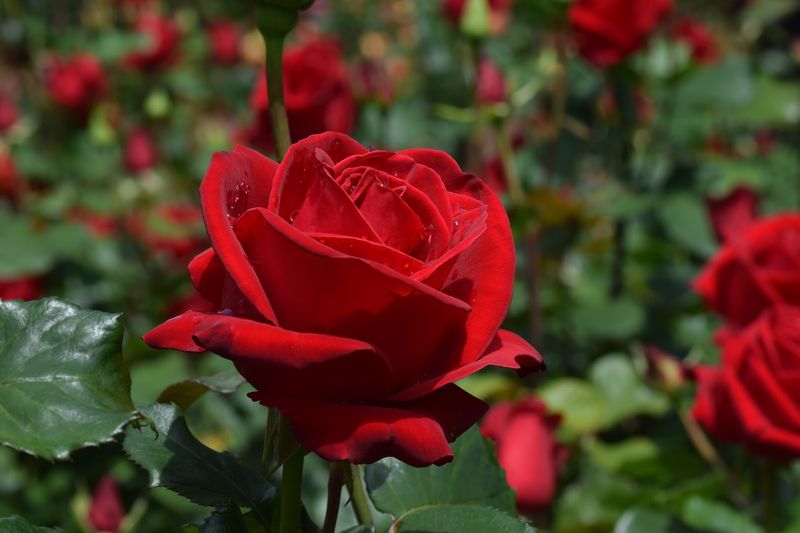
Here is the honest truth about roses: they keep their own schedule. Showing up at the wrong time can mean more leaves than flowers.
The best window usually runs from late spring into early summer. June is often the star month, when thousands of bushes burst open at once and the whole hillside turns into a color chart.
Timing is not perfect every year, though. Some mid-June trips find blooms already starting to fade, so checking recent photos or the city parks website before you go is a smart move.
The good news is that different varieties open at different times. That spreads the show out, so later summer can still offer plenty to see.
Winter and early spring are much quieter. The beds are mostly bare, yet the trees, benches, and views still make for a calm walk.
Plan ahead, stay flexible, and let the roses decide the details. They have been setting the calendar here since 1917.
Terraces, Stairs, and Easy Paths
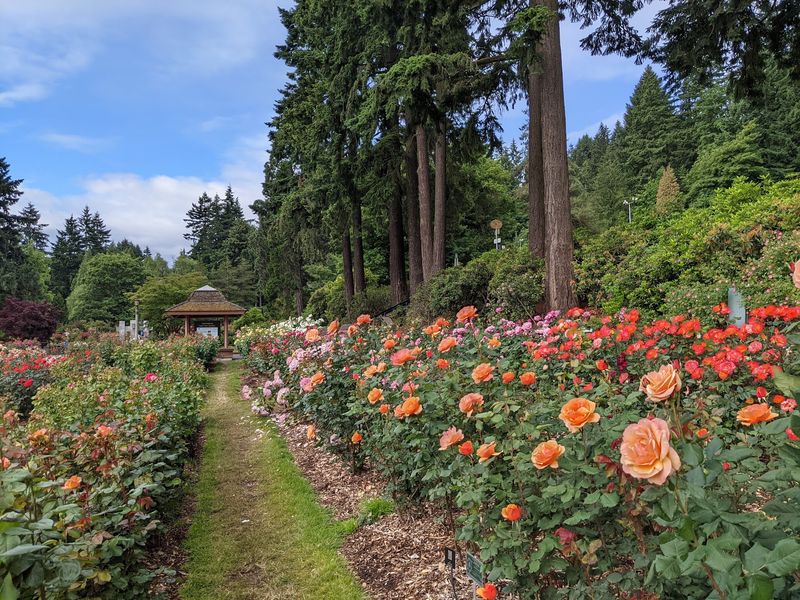
Hillside gardens come with one built-in workout. The grounds are laid out in terraces, so expect stairs and a fair amount of walking.
Do not let that scare you off. Signs point out different paths and how steep each one is, which helps people with limited mobility choose an easier route.
The terraced layout is actually a big part of the charm. Each level shows off a new section, so you keep finding fresh beds as you move along.
Plenty of benches line the walkways. Shady trees and a few gazebos also offer a break when the sun gets strong.
Comfortable shoes are a must. Sandals that look cute in photos may not love the stairs as much as you do.
The garden is not enormous, yet many people easily spend one to two hours wandering. Rushing through would be like reading only the first page of a great book.
Slow down, take the steps one at a time, and enjoy the climb.
Skyline and Mountain Views

Roses get top billing, but the background deserves an award too. On clear days, the garden offers sweeping views of downtown Portland.
Look farther out, and Mount Hood may appear in the distance. Its snowy peak rising behind the city is a classic Oregon photo moment.
Weather plays a big role here. Portland is famous for clouds and rain, so the mountain sometimes hides, which makes a clear-day sighting feel like winning a small prize.
Certain spots along the upper terraces give the best angles. Walk around a bit and test different viewpoints before settling on your favorite.
Photographers often love the golden hour before sunset. The evening light makes the roses and the city below look extra special, and the late closing time gives you room to stay.
Charge your phone before you arrive. Between the flowers in front and the skyline behind, your camera roll is about to get very full.
Few city parks can claim this kind of double feature.
Squirrels, Kids, and Easy Family Fun
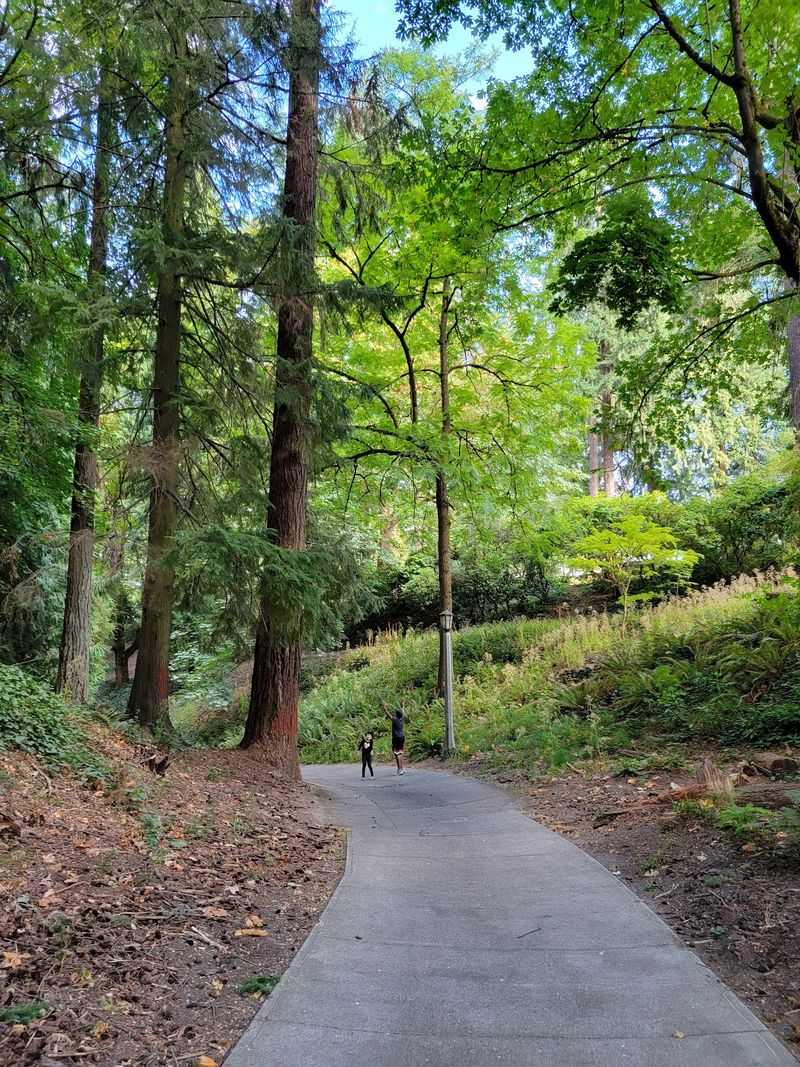
Meet the unofficial garden staff. Lots of squirrels race around the grounds as if they were hired to inspect every bed.
Kids usually find them just as exciting as the roses. Watching them dash across the paths can keep little ones entertained for a surprisingly long time.
A playground sits nearby too. That makes the area an easy pick for families who need a mix of quiet strolling and active play.
Since entry is free, the garden is a budget-friendly outing. You can stay for twenty minutes or two hours without feeling like you wasted a ticket.
A few simple rules help everyone enjoy the space. Remind children to stay on the paths, leave the flowers on the bushes, and admire the squirrels without feeding them.
Strollers can handle many routes, though the stairs may require some lifting. Check the path signs for gentler options.
Fun does not always need a big price tag. Sometimes it just needs fluffy tails and a lot of roses.
Neighbors That Complete the Day
One stop is good, but Washington Park makes it easy to collect several. The rose garden sits right next to the Portland Japanese Garden.
The two are so close that some people have trouble telling where one ends and the other begins. Just remember that the Japanese Garden is a separate attraction with its own entry rules.
Pittock Mansion is another popular pairing. It is only about five to seven minutes away by car, and the two places together make a relaxed afternoon or evening.
Walking trails also wind through the surrounding park. Lace up your shoes and you can turn the visit into a longer outdoor adventure.
Plan your route ahead to avoid backtracking. Starting early at the roses, then moving on to nearby sights, helps you beat the midday crowds.
Portland’s love for roses is easy to understand after a visit here. More than a century later, this hillside is still growing a story worth stopping for.