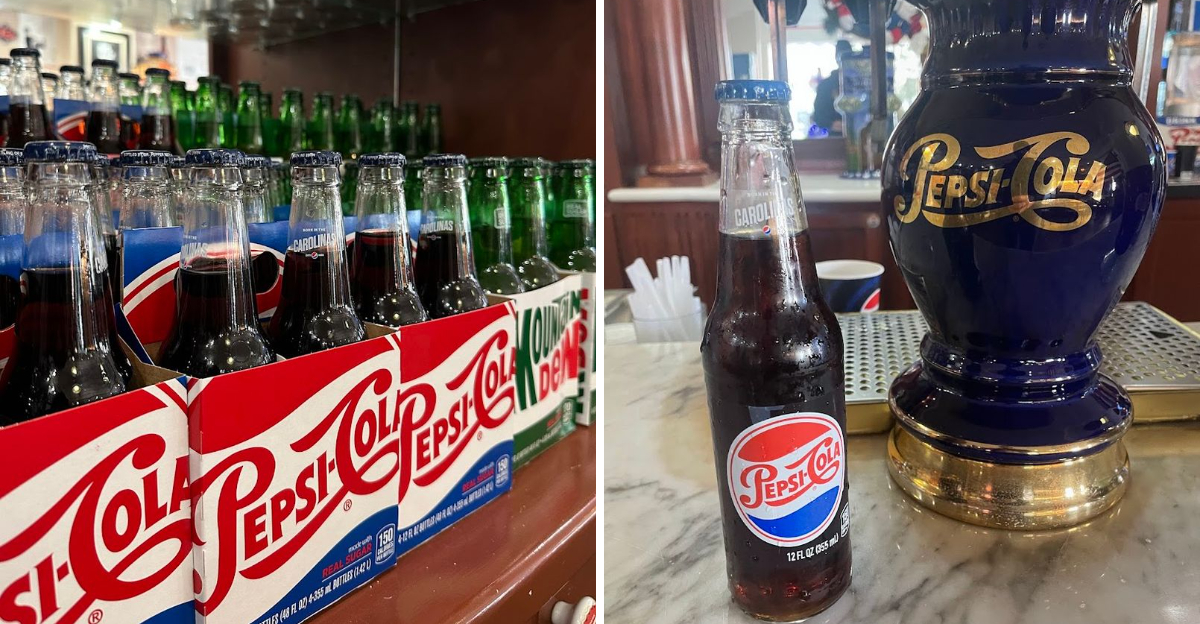
Most people crack open a can of Pepsi without ever wondering where it all began.
Believe it or not, one of the world’s most famous soft drinks was born behind a small pharmacy counter in New Bern, North Carolina, way back in 1898.
A pharmacist named Caleb Bradham cooked up a fizzy, sweet drink that would eventually change the beverage industry forever.
The best part?
You can still visit the exact spot where it happened today.
A Small Pharmacy That Changed Soft Drink History (1898)
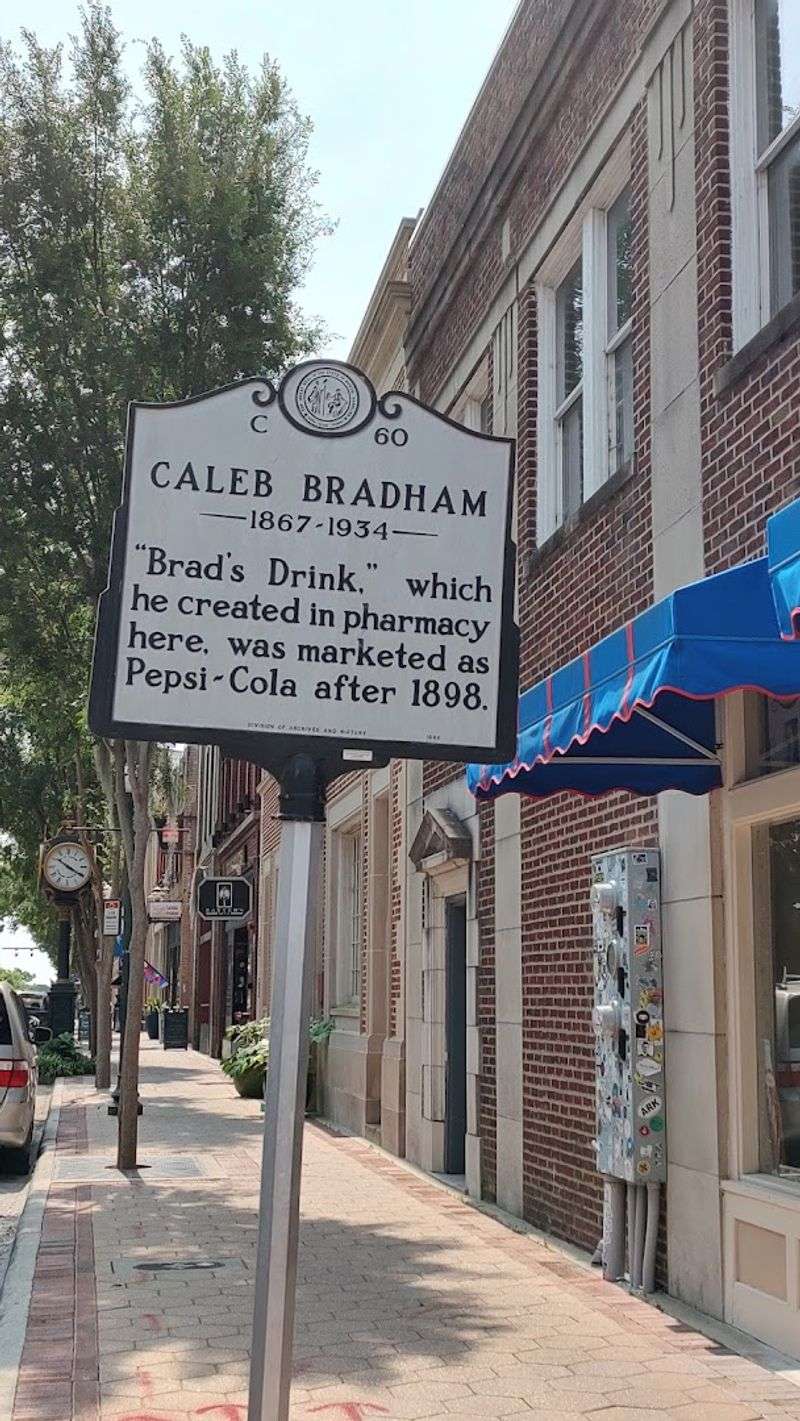
Behind a simple wooden soda fountain counter in 1898, a pharmacist named Caleb Bradham quietly mixed together something that would eventually shake up the entire beverage world. Working in his drugstore in downtown New Bern, North Carolina, Bradham was experimenting with flavored syrups and carbonated water — the kind of thing pharmacists did all the time back then.
His creation was sweet, bubbly, and surprisingly refreshing. Customers kept coming back for more, and word spread quickly through the small town.
What started as a fun side project at the soda fountain counter became something much bigger than Bradham likely imagined.
He officially renamed his popular drink Pepsi-Cola in 1898, marking the true birth of a global brand. That single decision — made in a modest North Carolina pharmacy — launched a soft drink dynasty that would one day compete with the biggest names in the world.
The story is a reminder that massive ideas can come from the most unexpected and ordinary places imaginable.
Caleb Bradham’s Original Drugstore Location
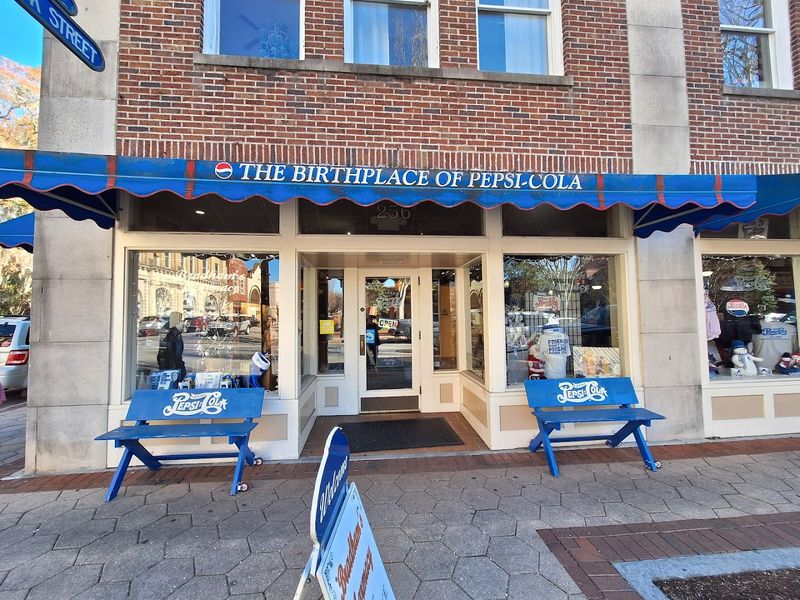
Stand at the corner of Middle Street and Pollock Street in downtown New Bern today, and you are standing on one of the most underrated pieces of American food history. This is the exact spot where Caleb Bradham ran his pharmacy and operated the soda fountain that gave birth to Pepsi-Cola.
The building has been carefully preserved so visitors can feel connected to that original moment.
Bradham chose a smart location — downtown New Bern was a busy commercial hub in the late 1800s, full of locals stopping in for everyday needs. His pharmacy was a natural gathering place, and the soda fountain made it even more popular.
People came for medicine and stayed for the drinks.
The corner still draws curious visitors from all over the country who want to see where a billion-dollar brand got its humble start. Walking those same streets that Bradham’s customers once walked gives the whole story a tangible, real feeling.
History does not always happen in grand buildings or famous cities — sometimes it happens on a quiet street corner in a small Southern town that most people have never heard of.
Brad’s Drink Before Pepsi Was Born
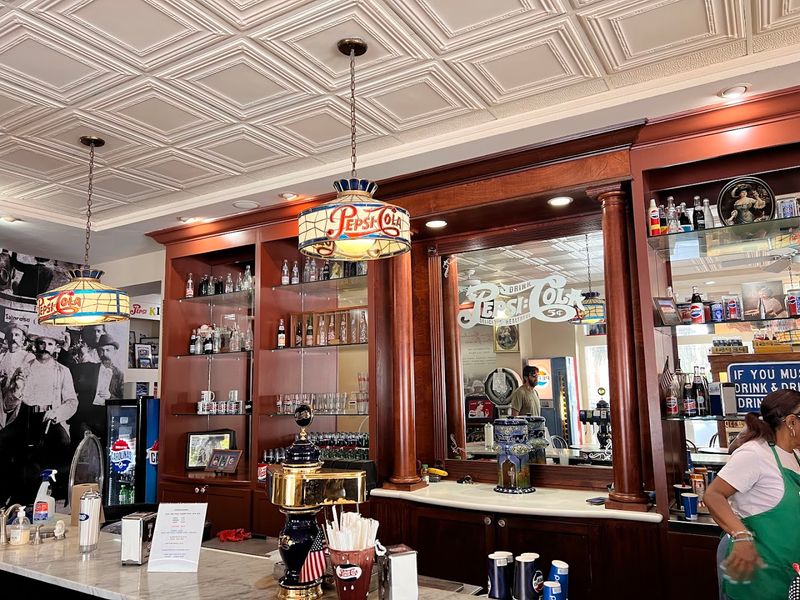
Long before anyone had ever heard the name Pepsi-Cola, there was a simpler, homespun creation called Brad’s Drink. Caleb Bradham first whipped it up around 1893, mixing a blend of sugar, water, caramel, lemon oil, and other natural additives at his pharmacy soda fountain.
He marketed it as a digestive aid — something that could help settle your stomach after a meal.
The name was about as no-frills as it gets. Brad’s Drink was literally named after its creator, which was pretty common for homemade pharmacy concoctions of that era.
What made it stand out was the taste — customers genuinely enjoyed it, not just for its supposed health benefits but because it was simply delicious.
For five years, the drink built up a loyal local following under that original name. People in New Bern knew it well and looked forward to stopping by Bradham’s counter for a glass.
It took until 1898 for Bradham to give his creation a more polished, marketable identity. Renaming it Pepsi-Cola was the move that transformed a beloved neighborhood treat into the foundation of one of history’s most recognizable soft drink empires.
Why It Was Named Pepsi-Cola
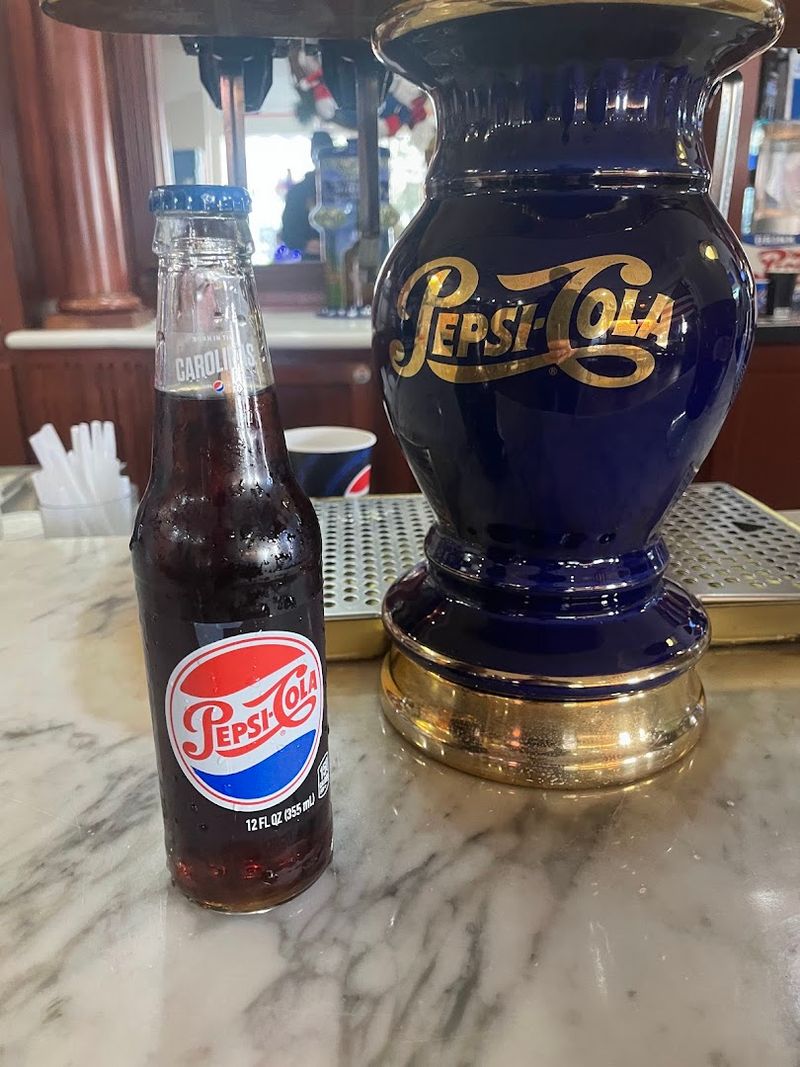
Naming a product well can make all the difference, and Caleb Bradham clearly understood that. When he rebranded his drink in 1898, he drew inspiration from two key ingredients that were popular in health-conscious circles at the time — pepsin, a digestive enzyme, and kola nuts, which were known for providing a natural energy boost.
Pepsin was associated with better digestion, which was a big selling point in the 1890s when stomach ailments were common and people were always looking for gentle remedies. Kola nuts, on the other hand, contained caffeine and were seen as an energizing ingredient.
Combining both concepts into one name was a clever marketing move that signaled health and vitality.
The name Pepsi-Cola rolled off the tongue easily, sounded modern for its time, and carried a sense of purpose beyond just being a tasty drink. Bradham was essentially telling his customers that his soda could make them feel good inside and out.
Whether or not the health claims held up scientifically, the name worked — it stuck, it spread, and it became one of the most recognized brand names on the entire planet over the next century.
The Pharmacy Soda Fountain Culture of the 1890s
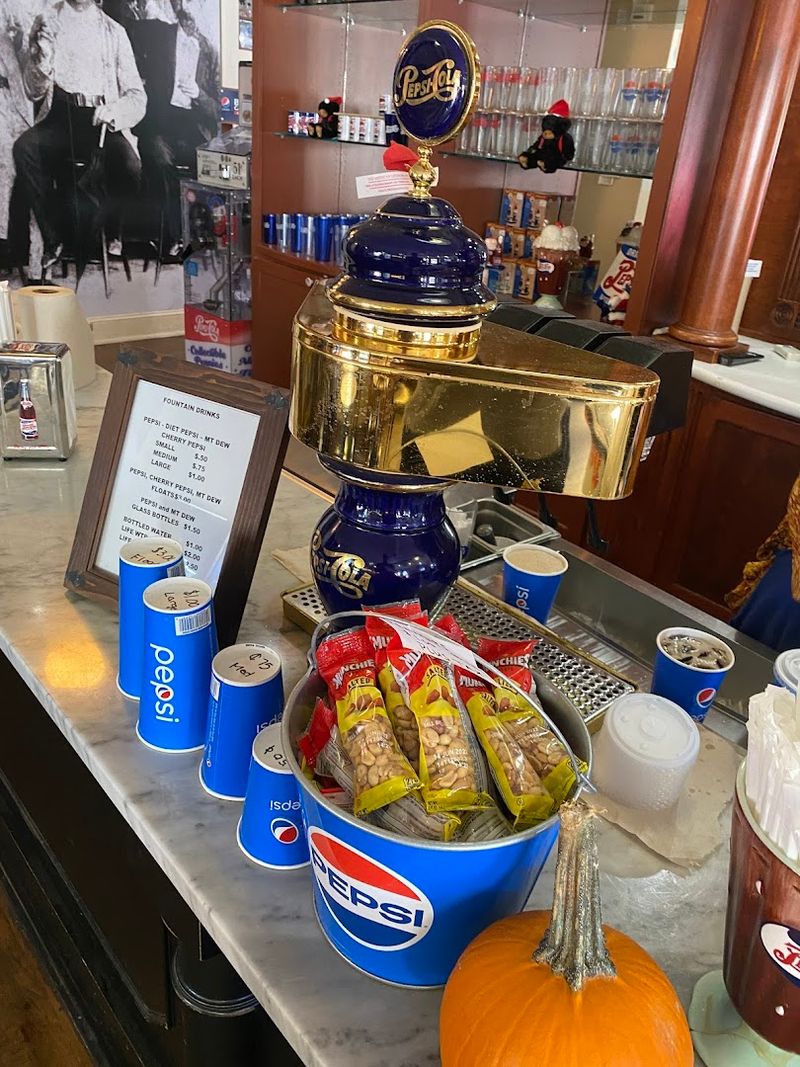
Walk into any American drugstore in the 1890s and you would likely find two things — medicine shelves and a soda fountain. This combination sounds unusual today, but back then it made perfect sense.
Pharmacists were trusted community figures, and they often created flavored syrups mixed with carbonated water that were sold as health tonics or simply as refreshing treats.
Soda fountains became the social hubs of their neighborhoods. Families, young couples, and workers would stop in after a long day to enjoy a cold, fizzy drink in a time before refrigerators and convenience stores existed.
The atmosphere was warm, communal, and a little bit magical for people of that era.
Caleb Bradham was very much a product of this culture. His pharmacy soda fountain in New Bern was not unusual for its time — what was unusual was what he created there.
By tapping into the established tradition of pharmacist-crafted beverages, Bradham had the perfect platform to test, refine, and promote his drink. The soda fountain culture of the 1890s was essentially the original startup incubator, and Bradham used it brilliantly to launch something that far outlasted the era that inspired it.
Early Commercial Success from a Local Counter
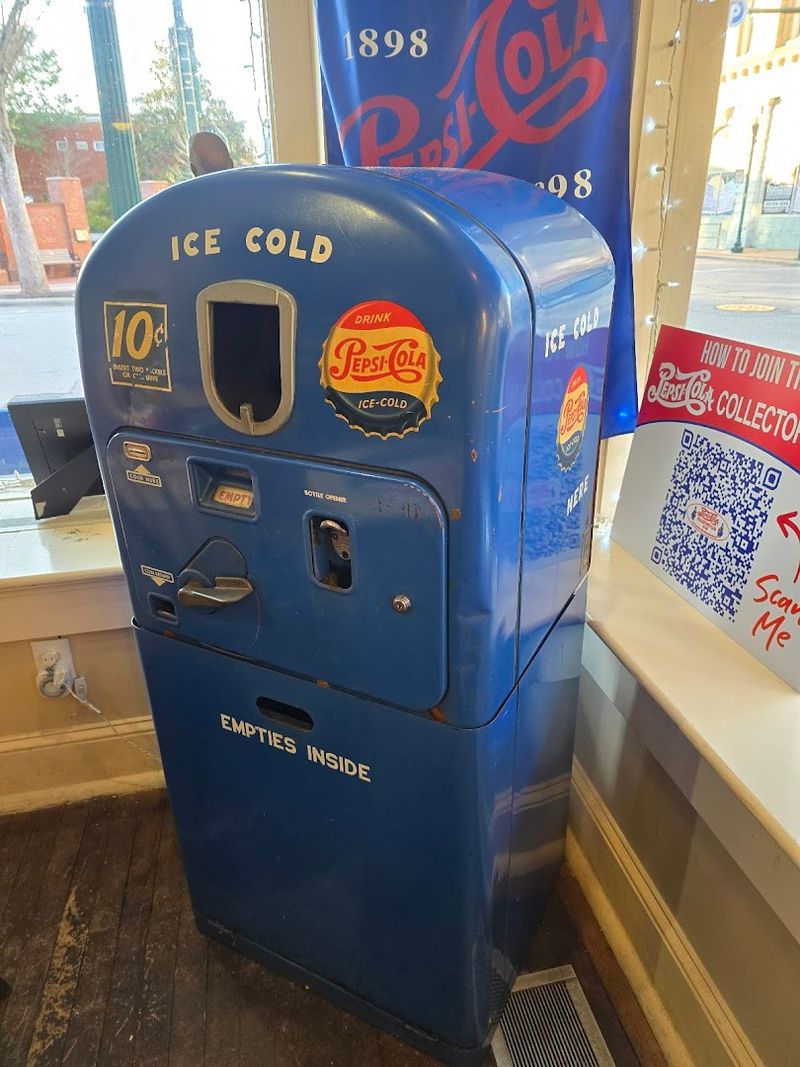
Something interesting happens when a great product meets the right moment — it grows fast. That is exactly what happened with Pepsi-Cola after 1898.
What began as a drink poured fresh at Bradham’s pharmacy counter quickly became too popular to stay contained within a single storefront. Locals were not just drinking it on-site; they wanted to take it home.
Recognizing the opportunity, Bradham began bottling his drink in the early 1900s. This was a significant shift — moving from a soda fountain specialty to a bottled product meant Pepsi-Cola could reach customers who never set foot in the pharmacy.
Sales climbed steadily, and Bradham started thinking bigger than New Bern.
The early commercial success was fueled by genuine word-of-mouth enthusiasm. No massive advertising campaigns, no celebrity endorsements — just a really good drink that people talked about.
Bradham’s ability to scale up from a counter-side creation to a bottled product showed real business instinct. He understood that the drink had potential far beyond his small-town roots, and he acted on it.
That leap from local pharmacy favorite to bottled beverage was the first major step toward Pepsi becoming the global brand it is recognized as today.
Formation of the Pepsi-Cola Company (1902)
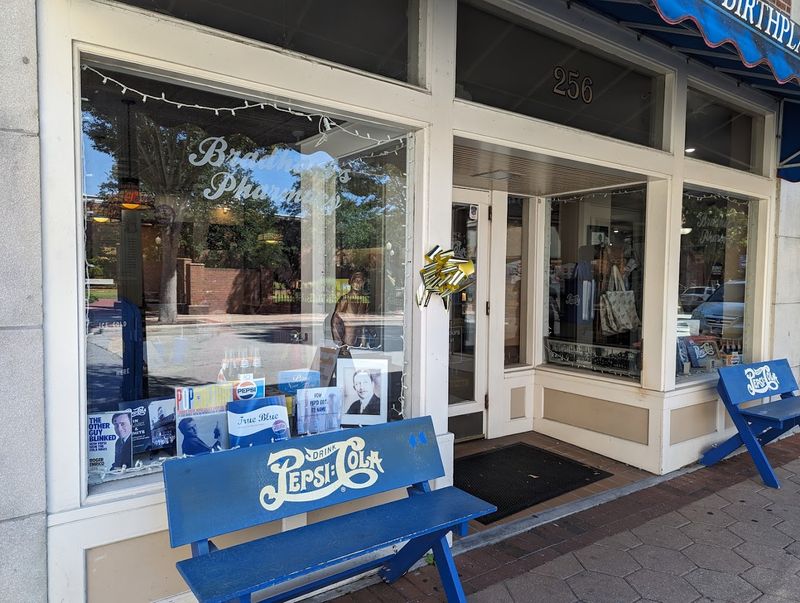
By 1902, Caleb Bradham had outgrown the informal side-project phase of his soda venture. He made it official by incorporating the Pepsi-Cola Company, giving his growing drink business a real legal identity and a structured foundation to build on.
This was a bold move for a small-town pharmacist operating in the early 20th century.
Incorporation meant Bradham was serious — this was no longer just a fun experiment at the soda fountain. He now had a company with a name, a product, and ambitions that stretched well beyond New Bern.
The move signaled that Pepsi-Cola was transitioning from a local curiosity into a legitimate commercial enterprise ready to compete in a broader marketplace.
The timing was smart. The American soft drink industry was still young and wide open for new players.
Bradham jumped in early, armed with a product people genuinely loved and a growing bottling operation to support distribution. Founding the Pepsi-Cola Company in 1902 was the moment the brand crossed from personal passion project into business history.
It laid the legal and commercial groundwork for everything that followed — the expansions, the rivalries, the advertising wars, and the global reach that defines Pepsi today.
Expansion Beyond New Bern
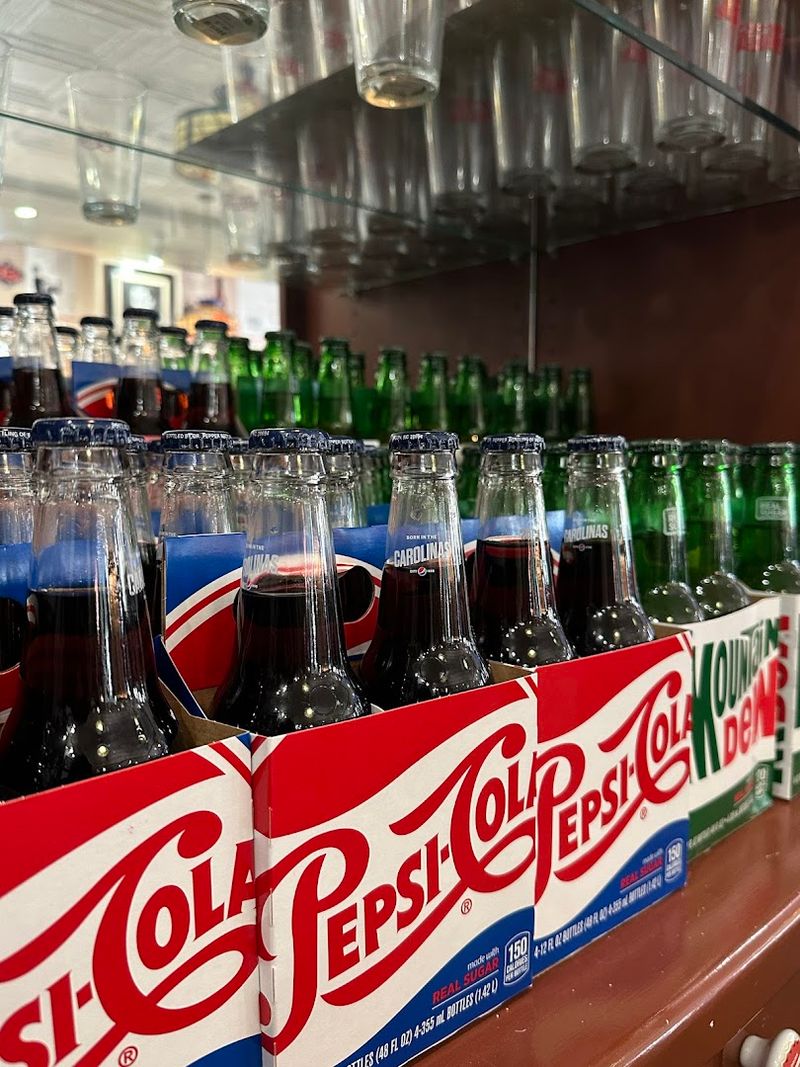
New Bern was just the beginning. After incorporating in 1902, Caleb Bradham wasted little time pushing Pepsi-Cola beyond the borders of his home state.
Within just a few years, the drink was being bottled and distributed across multiple states, riding the wave of America’s growing appetite for carbonated beverages. The expansion was remarkable for its speed.
Bradham built a network of bottling franchises, which allowed local operators in different regions to produce and sell Pepsi-Cola under his brand. This model was efficient and scalable — it let Pepsi grow without Bradham having to personally manage every bottle produced.
At its peak before World War I, the company had hundreds of bottling franchises operating across the United States.
The journey from a single pharmacy counter in a small North Carolina town to a multi-state operation in just a handful of years is genuinely impressive. It speaks to how well Bradham had crafted both his product and his business strategy.
The expansion phase proved that Pepsi-Cola had real staying power and broad appeal. New Bern had given the drink its soul, but America’s open market gave it the room it needed to grow into something truly national in scale and reach.
The Modern Birthplace of Pepsi Experience
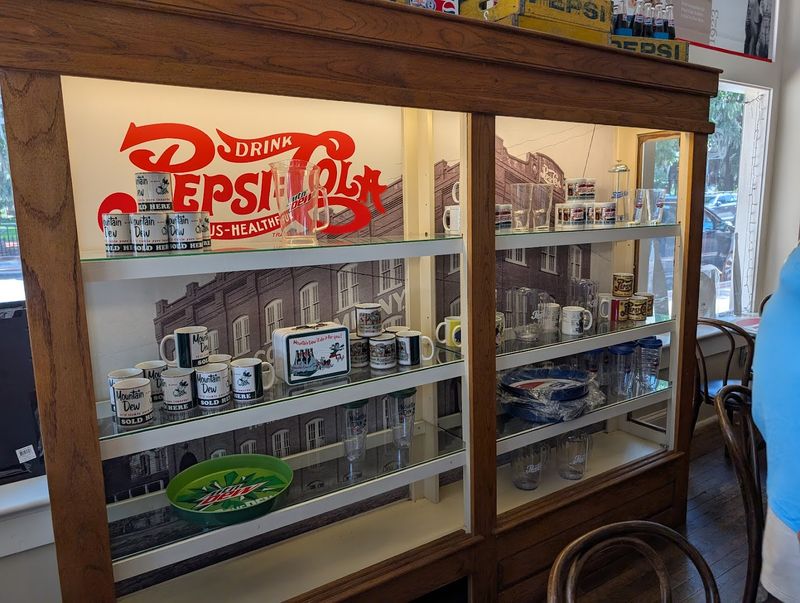
Today, visitors to Birthplace of Pepsi-Cola can step directly into the story of one of America’s most iconic soft drinks. Located on the same downtown corner where pharmacist Caleb Bradham first served his creation, the restored site blends a small museum with a nostalgic soda fountain experience.
Inside, exhibits highlight the early days of Pepsi, including vintage advertising, historic bottles, and the evolution of the brand from a local remedy to a global beverage.
One of the most memorable parts of a visit is the working soda fountain, where guests can order a Pepsi made the old-fashioned way—mixed by hand and served in a glass, much like it would have been in the late 19th century. The space is designed to reflect the charm of a classic drugstore, giving visitors a sense of what it felt like when “Brad’s Drink” was first poured.
Beyond the exhibits, the site also functions as a gift shop filled with retro-themed merchandise, making it a fun and interactive stop. Whether you’re a history enthusiast or simply curious, the experience offers a unique blend of storytelling and small-town atmosphere.
Visitor Info and Downtown Heritage Stop
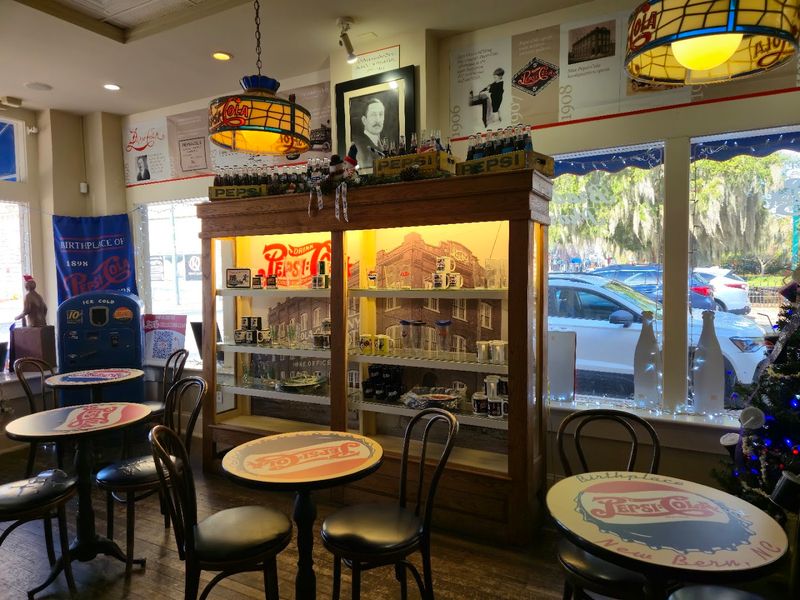
Located in the heart of historic downtown New Bern, the Birthplace of Pepsi-Cola is an easy and worthwhile stop for anyone exploring the area’s rich heritage. The site sits at 256 Middle Street, right at the corner where Caleb Bradham first created Pepsi, making it both a cultural landmark and a convenient addition to a downtown walking tour.
Visitors can typically stop in Monday through Saturday from 10 a.m. to 6 p.m., and Sunday from 12 p.m. to 4 p.m., with free admission and a quick visit time that makes it ideal for a casual drop-in between other attractions. The location is surrounded by New Bern’s historic district, where brick sidewalks, preserved colonial-era buildings, and locally owned shops create a charming, walkable atmosphere.
Because of its central setting, the Birthplace of Pepsi pairs naturally with nearby stops like riverfront parks, historic homes, and small museums, allowing visitors to experience multiple layers of the city’s history in one outing. Whether you’re planning a short visit or a full day in town, this spot serves as both a fun attraction and a gateway to discovering why New Bern is often called the place where modern soda—and a piece of American culture—began.