Along the banks of the Ocmulgee River in Macon, Georgia, sits a place that holds secrets stretching back more than 12,000 years.
Ocmulgee Mounds National Historical Park preserves the footprints of countless generations of Native Americans who lived, worked, and worshipped on this sacred ground.
From ancient Ice Age hunters to the powerful Mississippian culture, this incredible site tells the story of human civilization in the Southeast.
Walking through these grounds is like stepping through time itself, where massive earthen mounds and ancient ceremonial spaces still stand as reminders of the vibrant cultures that once thrived here.
A 12,000-Year Living Landscape
Few places on Earth can claim such an unbroken connection to human history. Ocmulgee Mounds stands as one of North America’s most important archaeological treasures, preserving over 12,000 years of continuous human presence.
From the earliest Ice Age hunters tracking woolly mammoths to sophisticated Mississippian societies building massive ceremonial centers, this land along the Ocmulgee River has witnessed it all. Archaeological layers buried beneath your feet contain countless stories of adaptation, innovation, and survival.
What makes this site truly remarkable is how different cultures built upon the foundations of those who came before. Each generation left their mark, creating a layered timeline that archaeologists still study today.
The river valley’s rich resources attracted people for millennia, providing fresh water, abundant wildlife, and fertile soil.
Standing on these grounds connects you directly to ancestors who shaped the Southeast’s cultural landscape. Their legacy lives on through the earthen monuments they constructed, the artifacts they left behind, and the sacred spaces they created.
This living landscape continues teaching us about resilience, community, and the deep roots of American civilization.
The Paleo-Indian First Inhabitants
Imagine Georgia during the Ice Age, when the climate was cooler and giant animals roamed the land. The first people to discover Ocmulgee were brave Paleo-Indian hunters who arrived over 12,000 years ago, following herds of mastodons, mammoths, and giant bison.
These early inhabitants were highly skilled, crafting distinctive stone tools and spear points for hunting massive prey. They lived in small, mobile groups, constantly moving to track animals and find fresh resources.
Life was challenging, but these resourceful people adapted brilliantly to their environment.
Archaeologists have uncovered stone artifacts from these ancient hunters, including projectile points and cutting tools made from high-quality stone. These discoveries prove that Ocmulgee’s river valley attracted humans from the very beginning.
The location offered everything needed: water, animals, and shelter.
These Paleo-Indians represent the beginning of an incredible 12,000-year story. While mammoths eventually disappeared, the human presence at Ocmulgee never did.
Their descendants would continue inhabiting this land, developing increasingly complex societies. Every artifact they left behind helps archaeologists piece together how humans first thrived in the Southeast.
Woodland Period Communities and Early Settlements
Around 3,000 years ago, something revolutionary happened at Ocmulgee: people stopped wandering and started putting down roots. Woodland Period communities chose to stay in one place, farming the land and building permanent homes.
This shift changed everything about how people lived.
These settled societies developed incredible new skills. They created beautiful pottery decorated with intricate patterns, storing food and water in clay vessels they shaped by hand.
Agriculture became increasingly important, with families growing corn, beans, and squash in garden plots near their homes.
Perhaps most significantly, Woodland peoples began constructing the first burial mounds. These earthen structures honored their deceased loved ones and demonstrated early forms of organized community effort.
Building a mound required cooperation, planning, and shared beliefs about life and death.
The traditions established during this period laid critical groundwork for future cultures. Pottery techniques improved over generations, agricultural knowledge expanded, and mound-building became more sophisticated.
Without the Woodland Period’s innovations, the magnificent Mississippian civilization that followed might never have emerged. Their contributions deserve recognition as essential stepping stones in Ocmulgee’s long history.
The Rise of the Mississippian Culture
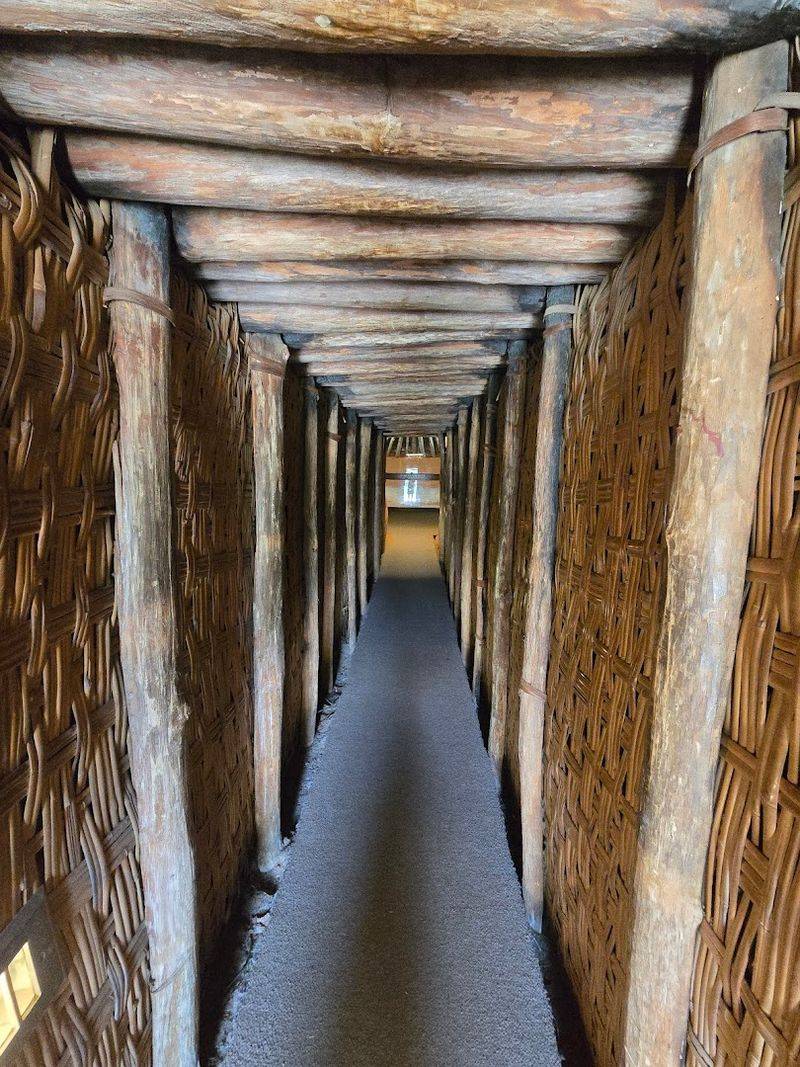
Everything changed around 900 CE when the Mississippian culture arrived and transformed Ocmulgee into something extraordinary. These organized societies built one of the most impressive ceremonial centers in the entire Southeast, creating a regional powerhouse that influenced communities for hundreds of miles.
Mississippian people were master architects and engineers. They constructed massive platform mounds entirely by hand, carrying millions of baskets filled with earth to create elevated foundations for important buildings.
On top of these platforms stood temples, elite residences, and gathering spaces where community leaders made crucial decisions.
Social organization became highly structured, with chiefs, priests, and nobility occupying positions of power. Craftspeople created stunning pottery, carved shell ornaments, and wove intricate textiles.
Farmers cultivated extensive fields that fed growing populations, while traders connected Ocmulgee to distant communities.
The Mississippian transformation represents the peak of pre-contact Indigenous civilization in the region. Their engineering achievements, artistic traditions, and complex society flourished for centuries.
Walking among the mounds they built, you witness the results of extraordinary human ambition, cooperation, and cultural sophistication. These ancestors created something meant to last forever.
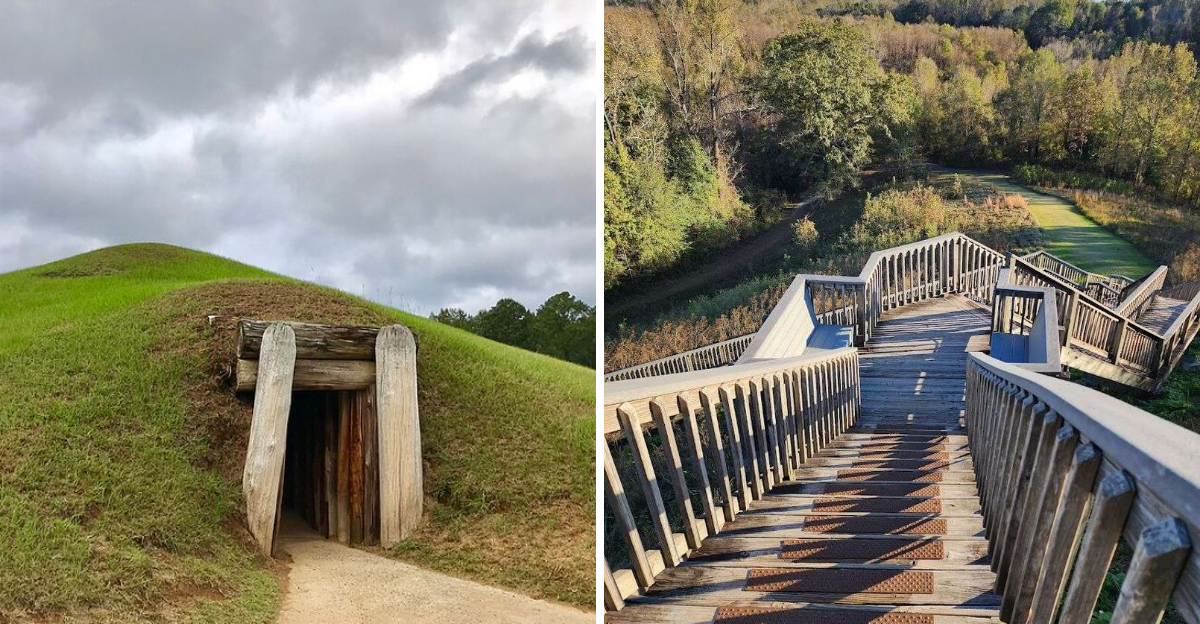
The Great Temple Mound – The Park’s Iconic Landmark
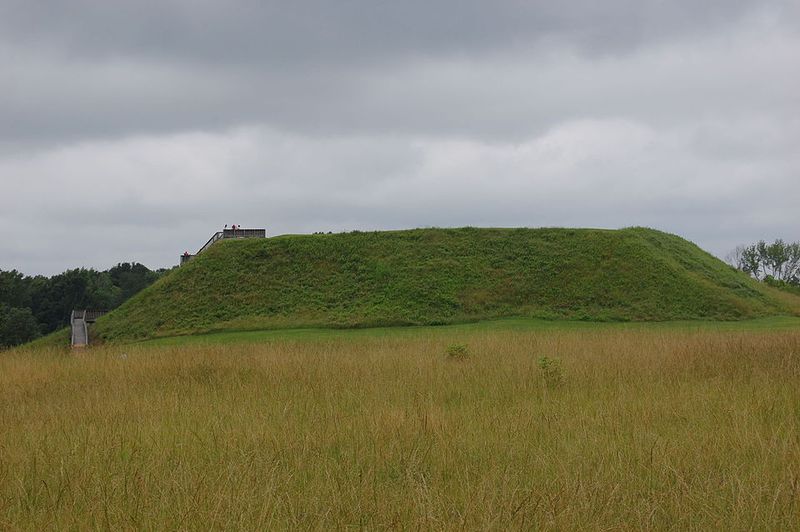
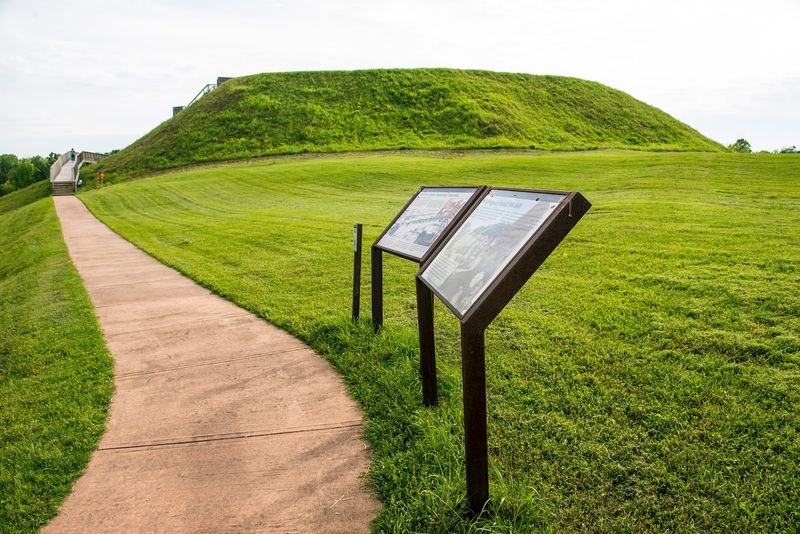
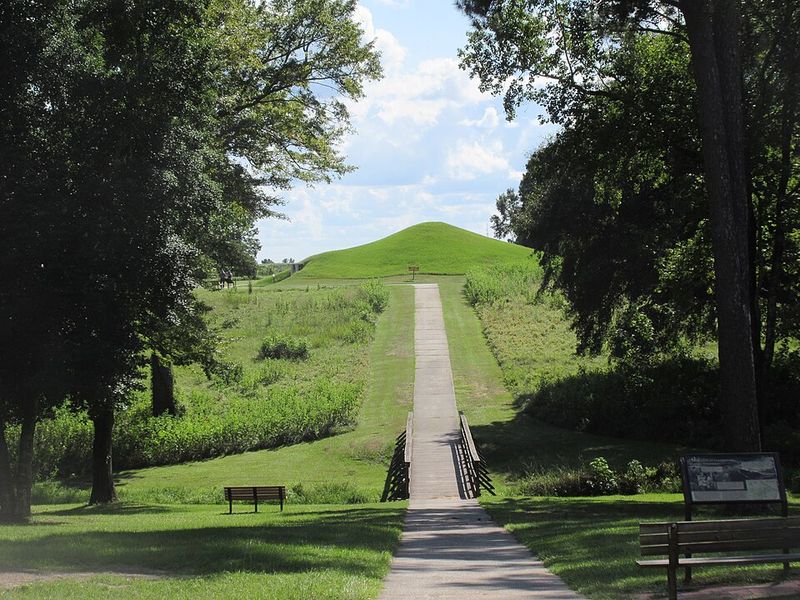
Rising 45 feet above the surrounding landscape, the Great Temple Mound dominates Ocmulgee’s skyline just as it did a thousand years ago. This isn’t just any hill—it’s a human-made masterpiece constructed basket by basket, representing countless hours of community labor and shared purpose.
Building this monument required astonishing effort. Imagine thousands of people carrying baskets of dirt up steep slopes, day after day, year after year.
Archaeologists estimate millions of basket loads went into its construction. The flat top once supported significant structures where religious ceremonies took place and leaders conducted important community business.
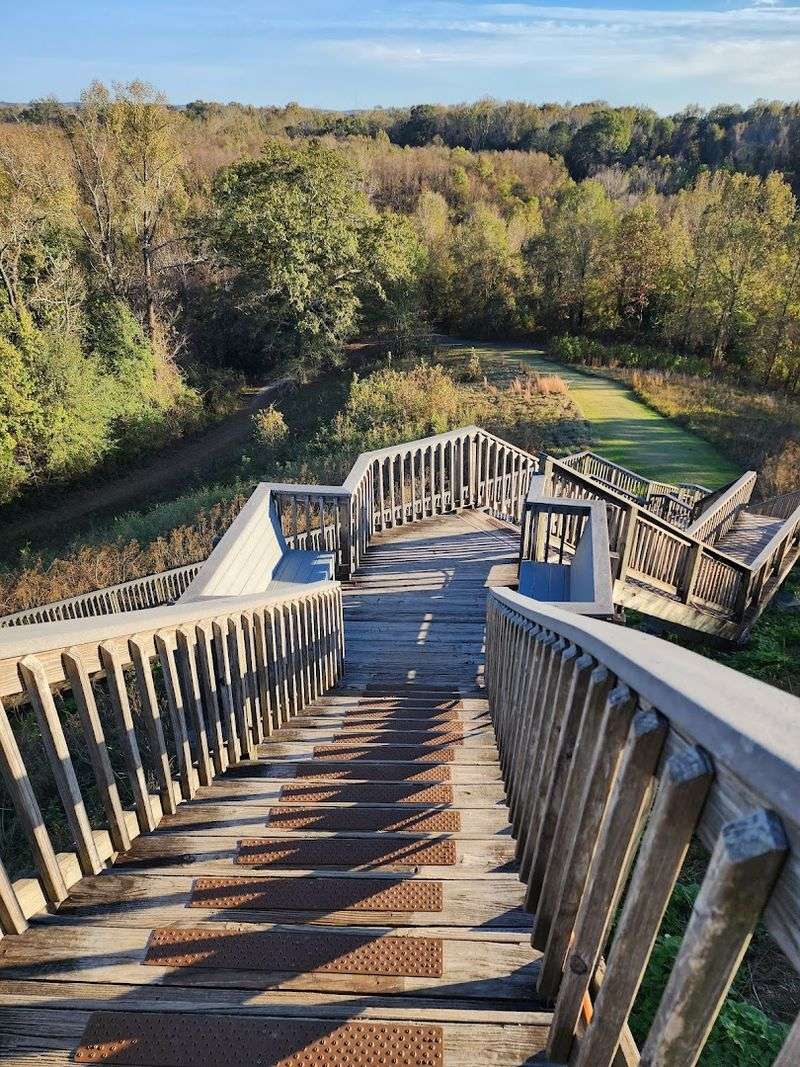
Today, visitors can climb stairs to the summit and experience breathtaking panoramic views of Macon and the Ocmulgee River valley. Standing there, you occupy the same space once reserved for priests and chiefs.
The perspective helps you understand why this location was chosen: it commands the entire landscape.
The Great Temple Mound represents more than architectural achievement—it symbolizes community unity, spiritual devotion, and cultural identity. Every basket of earth carried represented belief in something greater than individual existence.
This monument continues inspiring awe centuries after its builders passed into history.
The Earth Lodge – A Rare Archaeological Treasure
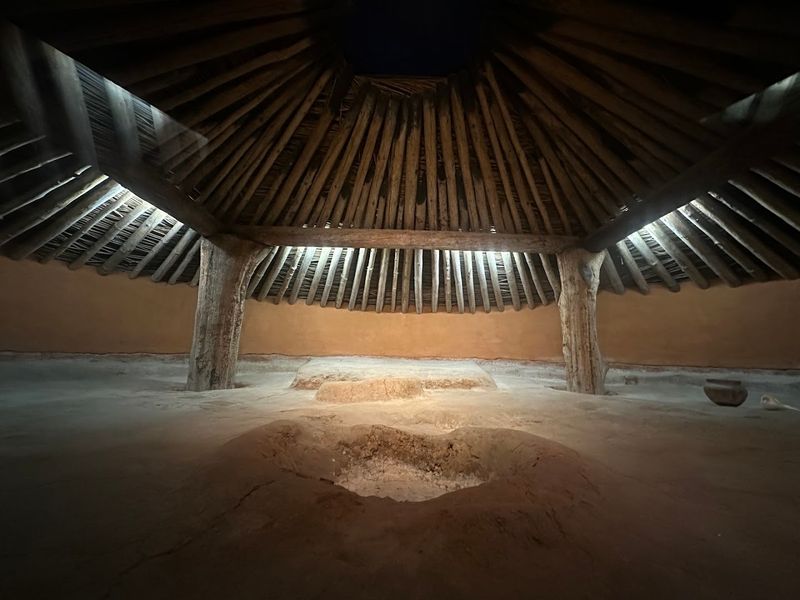
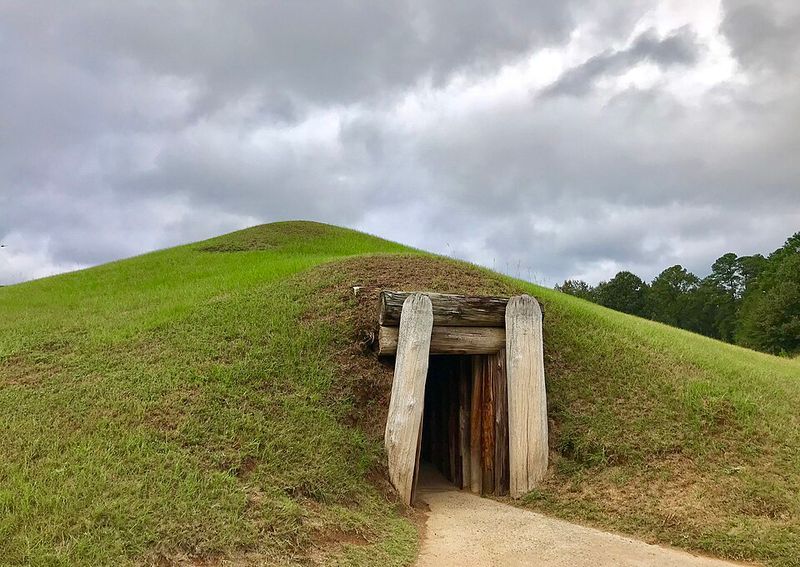
Step inside the Earth Lodge and prepare for something genuinely unique. This reconstructed ceremonial structure is one of only a handful of spiral-shaped council chambers known to exist anywhere in Indigenous North American archaeology.
Its distinctive design makes it absolutely extraordinary.
Built around 1015 CE, the original lodge served as a sacred meeting space where community leaders gathered for important decisions. The circular chamber could accommodate about 50 people seated on a raised clay platform encircling the room.
A central fire pit provided warmth and light during ceremonies that might last hours or even days.
The spiral entrance passage adds mysterious symbolism that archaeologists still debate. Some believe it represented spiritual journeys or seasonal cycles.
Others think it served practical purposes, controlling airflow and maintaining comfortable temperatures inside. Whatever its meaning, the design demonstrates sophisticated architectural thinking.
Today’s reconstruction sits directly over the original floor, which remains preserved underneath. Bird-shaped effigies molded into the clay platform still survive from a thousand years ago.
Standing in this space, surrounded by earthen walls, you experience what ancient council members felt during their most important gatherings.
Lesser-Known Mounds and Ceremonial Complexes
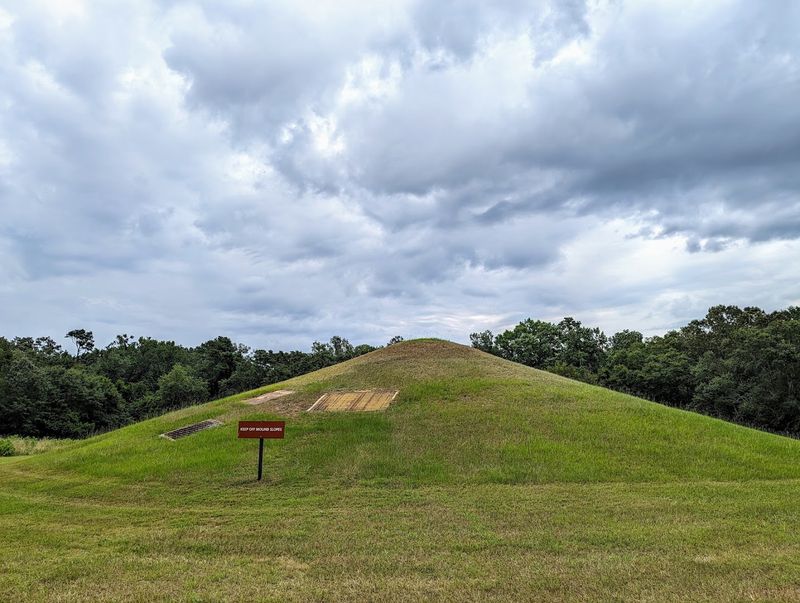
While the Great Temple Mound steals the spotlight, Ocmulgee contains numerous other mounds that reveal fascinating details about Mississippian life. These lesser-known structures include platform mounds, burial mounds, and ceremonial spaces connected by walking trails waiting for curious explorers.
Each mound served specific purposes within the community. Platform mounds elevated important buildings and residences for elite families, literally placing them above ordinary citizens.
Burial mounds honored deceased community members, with grave goods revealing social status and beliefs about the afterlife. Some mounds held public plazas where festivals and markets took place.
The spatial arrangement wasn’t random—archaeologists believe the mound complex reflected careful city planning. Pathways connected different areas, creating a ceremonial landscape that organized daily life, religious practice, and social hierarchy.
Understanding this layout helps visitors appreciate Mississippian sophistication.
Modern trails guide you through this ancient city, with interpretive signs explaining what archaeologists have learned. Taking time to visit these quieter mounds rewards you with deeper understanding.
Each structure adds another piece to the puzzle, showing how complex and thoughtfully organized this civilization truly was. Don’t rush past them!
Trade, Travel, and the Ocmulgee River Corridor
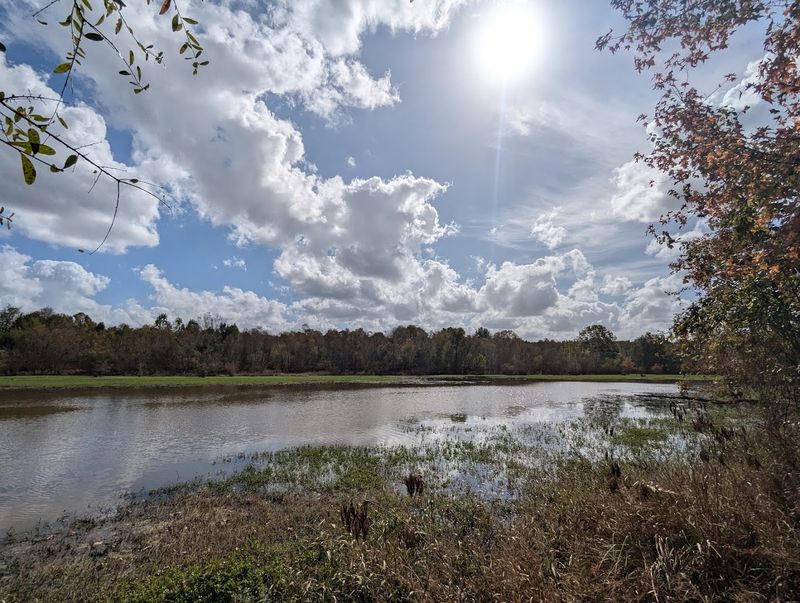
Rivers were ancient highways, and the Ocmulgee River served as a major interstate connecting Indigenous communities across hundreds of miles. This waterway explains why so many cultures chose this exact location: it was perfectly positioned for trade, travel, and communication.
Canoes paddled by skilled traders carried goods up and down the river, linking Ocmulgee to distant regions. Archaeological evidence shows shells from the Gulf Coast, copper from the Great Lakes, and mica from the Appalachian Mountains all reached this site.
In return, Ocmulgee exported pottery, agricultural products, and locally crafted goods.
The river didn’t just move objects—it transported ideas, technologies, and cultural practices. When traders met, they exchanged news, stories, and innovations.
Marriage alliances formed between communities. Religious concepts spread.
New farming techniques traveled from village to village. The river created a vast communication network.
Ocmulgee’s strategic location at a key river bend made it a natural hub where many paths converged. Being positioned at this crossroads helped the site grow influential and powerful.
The river’s importance continues today, reminding us how waterways shaped human civilization throughout history.
Museum and Archaeological Collections
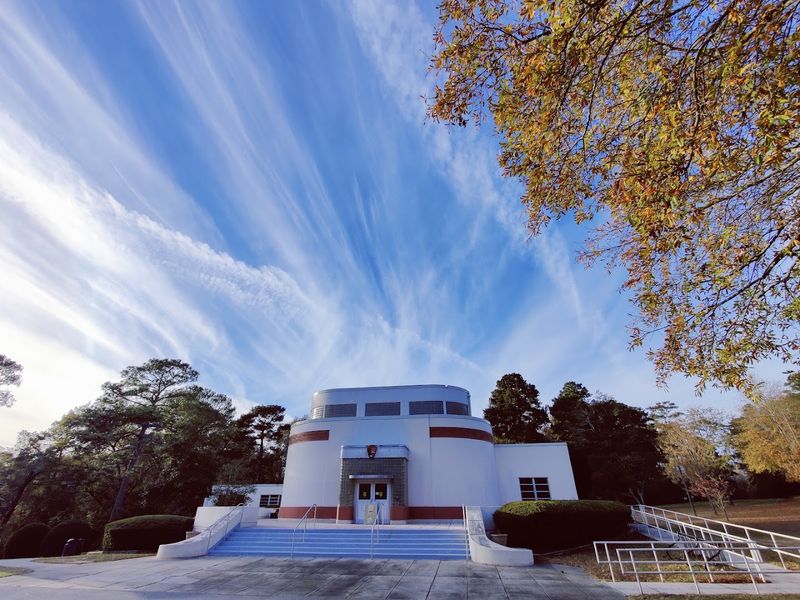
Did you know Ocmulgee houses one of the largest Native American artifact collections managed by the National Park Service? The park’s museum contains thousands of objects spanning 12,000 years of human occupation, offering an unmatched window into Indigenous life.
Glass cases display stunning pottery vessels decorated with intricate designs, stone tools shaped by skilled craftspeople, and shell ornaments that once adorned community leaders. Each object tells stories about daily activities, artistic traditions, and spiritual beliefs.
Some artifacts are remarkably well-preserved, maintaining details from centuries ago.
Interactive exhibits help visitors understand how archaeologists work, showing excavation techniques and explaining how experts date artifacts. You’ll learn about stratigraphy—how different soil layers reveal different time periods.
Touchable replicas let you experience artifact textures and weights firsthand.
The museum regularly rotates displays, so repeat visitors always find something new. Educational programs offer deeper exploration of specific topics like pottery-making or tool technology.
Whether you’re a history enthusiast or casual visitor, the collections provide educational value that textbooks cannot match. Plan extra time to thoroughly explore these incredible treasures—they truly bring Ocmulgee’s ancient inhabitants to life.
Visitor Information – What to Know Before You Go
Planning your visit? Ocmulgee Mounds National Historical Park is located at 1207 Emery Highway in Macon, Georgia.
The park grounds typically open daily from 8:00 a.m. to 5:00 p.m., while the Visitor Center and Earth Lodge operate from 9:00 a.m. to 5:00 p.m. Best news?
Admission is completely free!
Wear comfortable walking shoes since you’ll explore trails connecting different mounds and archaeological features. The terrain includes some slopes and uneven surfaces.
Most visitors spend two to three hours fully experiencing the museum, Earth Lodge, and trail system. Bring water bottles, especially during Georgia’s warm months.
Important rules protect these irreplaceable resources: never climb on the mounds themselves. Designated stairs and pathways provide appropriate access without damaging ancient structures.
Photography is encouraged, but respect posted guidelines in sensitive areas.
The park closes on Thanksgiving, Christmas, and New Year’s Day. Most facilities concentrate near the main Visitor Center, making navigation straightforward.
Rangers offer helpful information and occasionally lead guided tours. Check the park website before visiting for any schedule changes or special events.
This remarkable place welcomes everyone interested in exploring America’s deep Indigenous heritage.